
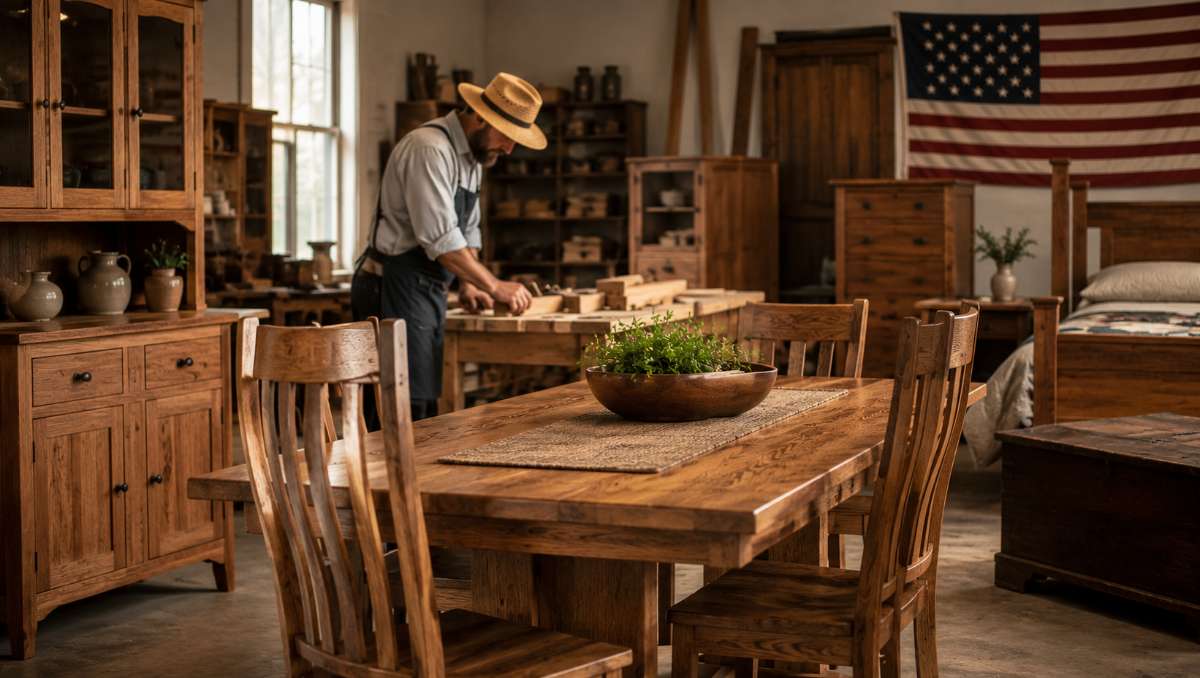
Not every piece labeled “Amish” actually comes from an Amish workshop, which makes the higher price tag a fair thing to question. Authentic Amish furniture is built entirely in the USA, and it’s widely regarded as one of the strongest American-made furniture options available today. Buyers pay a premium for handcrafted construction, solid domestic hardwoods, and decades of durability, not for a label.
Key Takeaways:
- Authentic Amish furniture is sourced, constructed, and finished in the same American workshops, not just labeled after the fact.
- The higher price reflects premium hardwood, hand-fitted joinery, and fair American labor costs, not a markup on the name.
- For buyers planning to keep a piece for decades, the lower cost per year of ownership makes the investment hold up against cheaper, shorter-lived alternatives.
Is Amish Furniture Made in the USA?
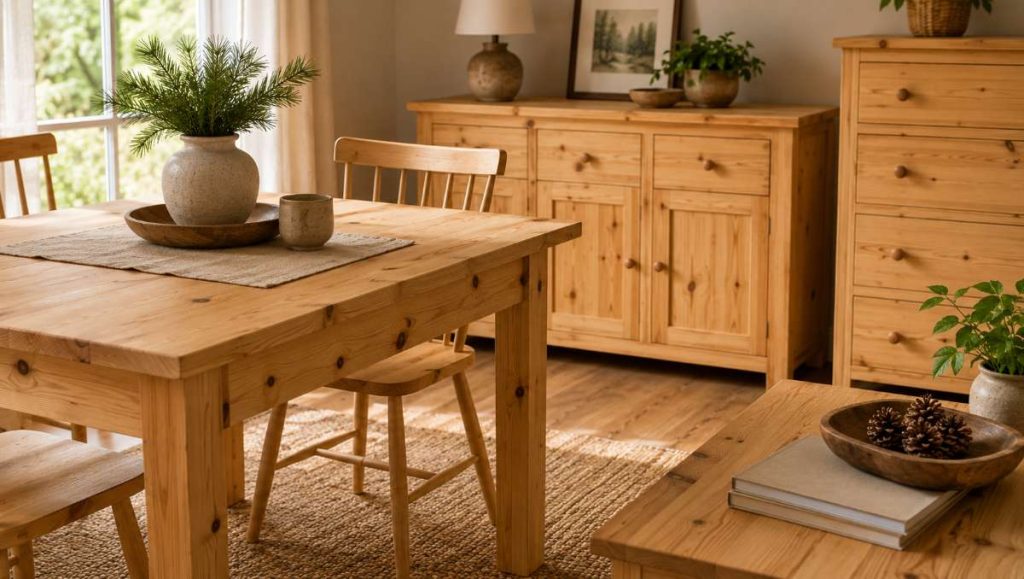
Authentic Amish furniture is built in the same small workshops where it’s designed, cut, and finished. There are no overseas factories involved at any stage. Confirming where a piece actually comes from is the first step to understanding what’s really being paid for.
Most authentic Amish furniture comes out of a handful of well-established Amish communities:
- Pennsylvania: It’s home to some of the oldest and largest Amish woodworking traditions in the country
- Ohio: Locations include Holmes County, one of the largest Amish settlements in the world
- Indiana: The community, especially the Elkhart-LaGrange area, is known for furniture-specific craftsmanship
- Iowa: Several Amish communities and Iowa Amish stores offer handcrafted pieces, making the state a worthwhile option for shoppers looking for Amish-made furniture closer to home.
- Other Amish communities: Smaller settlements across states like New York, Wisconsin, and Michigan also produce high-quality furniture
What Makes Amish Furniture Made in the USA Different?
The difference between Amish furniture and typical retail furniture comes down to who builds it, what it’s built from, and how the pieces come together. Each of those factors shows up years later, in how long a piece holds up and how it feels to use every day.
Handcrafted by Skilled Amish Craftsmen
A single craftsman often takes a piece from rough lumber to a finished product, rather than passing it down an assembly line. That level of hands-on involvement means small imperfections get caught and corrected before a piece ever leaves the shop.
Built from Solid American Hardwoods
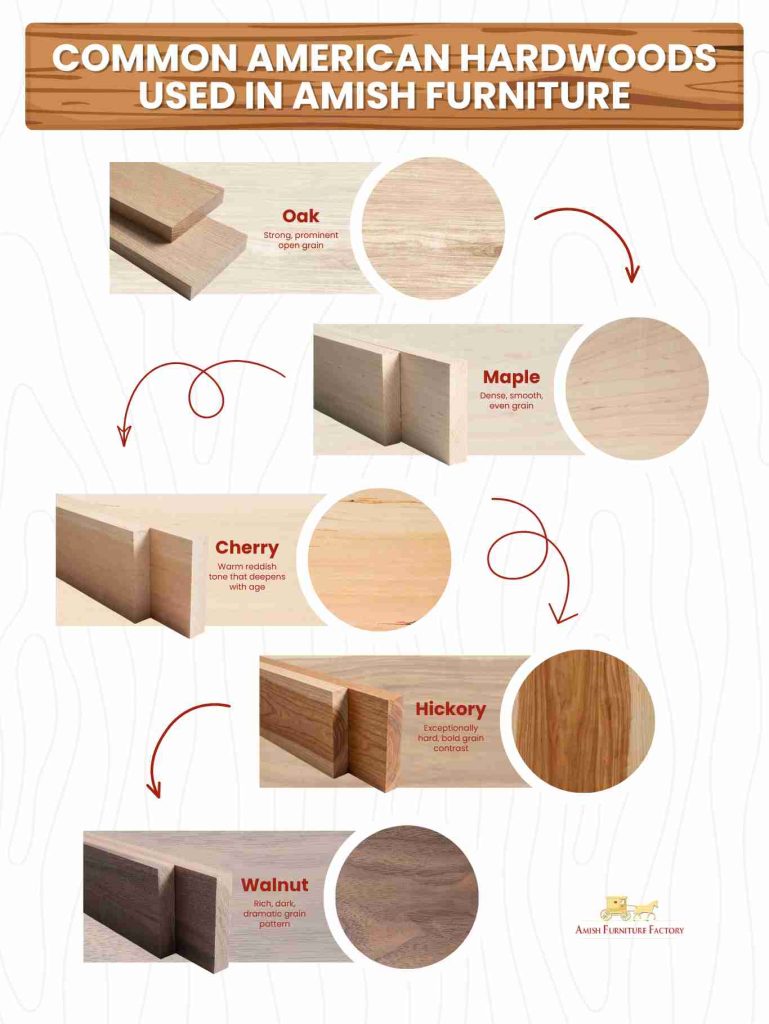
One of the defining characteristics of Amish furniture is its use of solid American hardwoods rather than engineered materials like particleboard or MDF. These hardwoods are valued for their strength, stability, and ability to withstand decades of daily use. Many Amish craftsmen carefully select wood species based on the furniture’s intended purpose, balancing durability, appearance, and long-term performance.
Over time, solid hardwood develops a natural patina that adds character and can enhance the piece’s appearance rather than diminish it. Because the wood extends throughout the entire piece, scratches, dents, and surface wear can often be repaired or refinished. This helps the furniture remain functional and attractive for generations. This emphasis on quality materials is one reason Amish furniture is frequently considered heirloom-quality and built to last far longer than most mass-produced alternatives.
Traditional Joinery Instead of Staples and Glue
Rather than relying on staples, screws, or cam locks, Amish furniture typically uses mortise-and-tenon or dovetail joinery — methods where the wood pieces physically interlock. These joints hold up to decades of wood movement in a way that glued or stapled joints generally can’t.
Built-to-Order Rather Than Mass Produced
Because Amish furniture isn’t made on a production line, Amish furniture builders can adjust dimensions, wood species, or finish for an individual order. That flexibility isn’t available with furniture built for a retail floor in bulk.
Benefits of Buying Amish Furniture Made in the USA
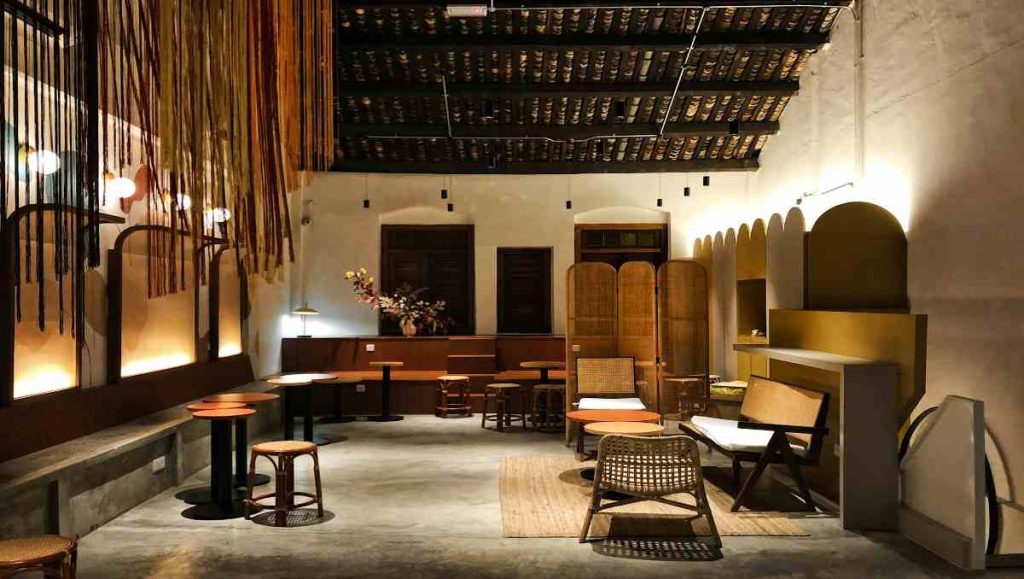
The advantages of Amish furniture go beyond craftsmanship alone, touching everything from customization to long-term sustainability. Together, these benefits explain why the higher price tag pays off well past the day a piece is delivered.
Exceptional Craftsmanship
Hand-fitted joinery, careful wood selection, and finish work applied by hand all show up in details that aren’t visible on day one. A drawer that still glides smoothly after ten years, a tabletop that hasn’t warped despite seasonal humidity changes.
Long-Lasting Durability
Solid hardwood, joined without relying on adhesive alone, is built to withstand decades of regular use. Many pieces stay in daily use for 30 years or more before ever needing repair.
Extensive Customization Options
Since each piece is typically built to order, buyers can request a specific wood species, stain color, dimension, or hardware finish to match an existing room or replace a piece that’s been in the family for years.
Supports American Manufacturing
Purchasing Amish furniture keeps the entire production process, from lumber sourcing, building, and finishing, inside American communities, rather than funding overseas factory labor.
Sustainable Materials and Responsible Production
Solid wood is a renewable resource, and furniture built to last decades and then be refinished rather than replaced produces far less long-term waste than disposable, mass-produced pieces. Many builders also use low-VOC, natural oil finishes instead of synthetic coatings.
Why Amish Furniture Costs More Than Imported Furniture
The price gap between Amish furniture and imported alternatives isn’t arbitrary. It traces back to a handful of specific cost drivers. Understanding where that money actually goes makes the higher price tag easier to evaluate.
Premium Hardwood Materials
Solid oak, maple, cherry, hickory, and walnut all cost significantly more per board foot than the particleboard, MDF, and thin veneers used in most imported furniture.
Handcrafted Construction
Hand-fitted joinery and finish work take far more labor hours than machine assembly. That labor cost is built into the price, not padded on top of it.
American Labor Costs
Paying domestic craftsmen a fair wage costs more than overseas factory labor. That difference shows up directly on the price tag. It’s a labor cost difference, not a markup.
Furniture Built to Last Generations
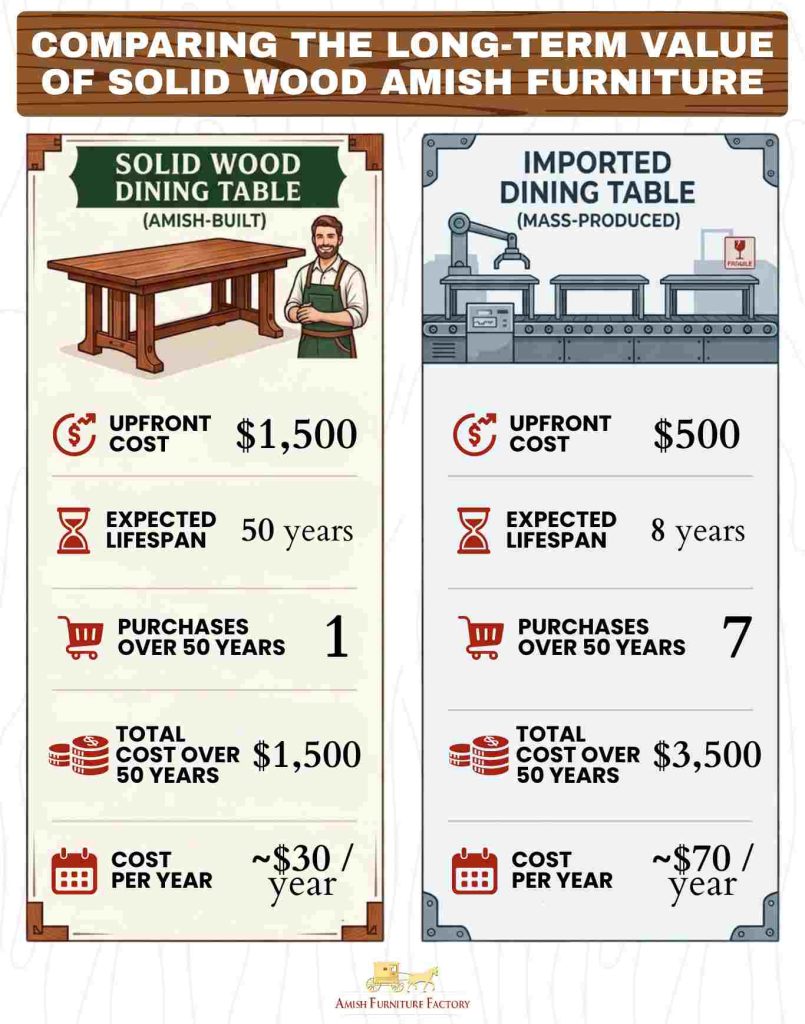
A higher price reflects a piece designed to be repaired and refinished rather than replaced. Spread across the decades a piece is likely to last, the actual cost per year of ownership often ends up lower than furniture that needs replacing every 5 to 10 years.
Amish Furniture Made in the USA vs Imported Furniture
Seeing the two options side by side makes the practical differences easier to weigh than reading about them separately. The table below breaks down how Amish furniture made in the USA compares to typical imported pieces across the factors that matter most.
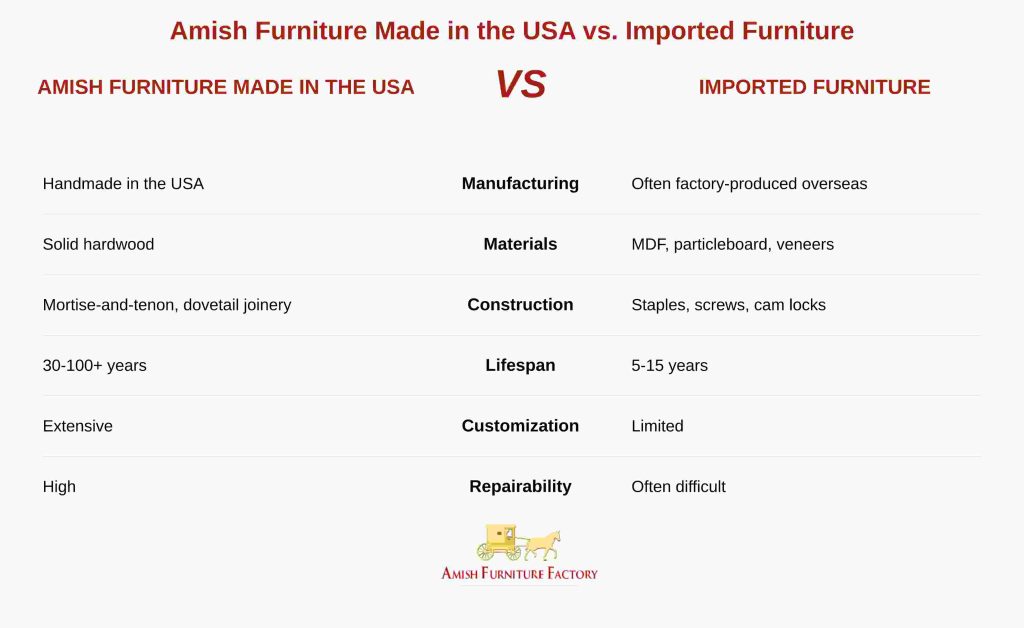
Browse Amish Furniture Factory’s handcrafted collection to see solid hardwood construction firsthand.
How to Verify Amish Furniture Is Made in the USA
Not everything labeled “Amish” is actually built by Amish craftsmen in the USA. A few checks help separate the real thing from a marketing label.
Ask Where It Was Built
A reputable retailer should be able to name the specific shop, region, or builder responsible for a piece, not just say “handmade” without details.
Look for the Builder’s Information
Authentic Amish furniture often comes with documentation identifying the builder or workshop, sometimes including a signature or maker’s mark on the piece itself.
Check the Wood Species
Retailers should be able to confirm the exact wood species used, like oak, maple, cherry, hickory, or walnut, rather than a vague “solid wood” claim that could include lower-grade lumber.
Beware of “Amish Style” Labels
Furniture marketed as “Amish-style” or “Amish-inspired” is a red flag. That phrasing usually signals a mass-produced piece designed to look similar without any actual Amish craftsmanship involved.
Buy From Reputable Amish Furniture Retailers
Working with an established retailer that sources directly from known Amish workshops removes most of the guesswork and typically comes with a warranty backing up the claims.
Best Types of Amish Furniture Made in the USA
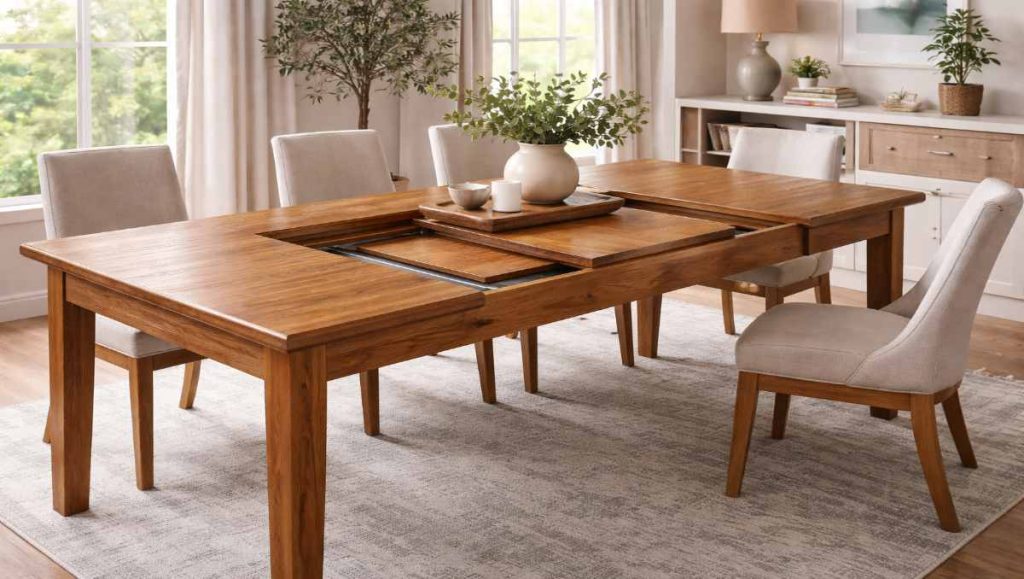
Certain furniture categories tend to benefit the most from solid wood construction and traditional joinery. The pieces below are some of the most commonly requested, each suited to different rooms and daily demands.
Dining Tables
A solid hardwood dining table is one of the most requested Amish furniture pieces. It is built to withstand daily meals, holidays, and everything in between for decades.
Bedroom Furniture
Bed frames, dressers, and nightstands built from solid wood hold up to decades of daily use far better than particleboard bedroom sets.
Living Room Furniture
Entertainment centers, bookcases, and coffee tables built with traditional joinery resist the sagging and loosening common in mass-produced versions.
Office Furniture
Solid wood desks and file cabinets offer the same durability benefits for a home office or study. It’s built to handle daily use for years.
Outdoor Poly Furniture
Amish craftsmen also build outdoor furniture from recycled poly lumber. It’s a weather-resistant material that won’t rot, warp, or splinter, built with the same attention to construction quality as indoor pieces.
Who Should Buy Amish Furniture Made in the USA?
Amish furniture made in the USA isn’t the right call for every home or every budget, and it doesn’t need to be. It tends to line up best with a specific set of priorities and buying situations:
- Want heirloom-quality pieces worth passing down, like solid wood dining tables built to outlast a lifetime of use
- Prefer supporting American-made products over imported alternatives
- Value craftsmanship and construction quality over short-lived trends
- Need custom sizes, wood species, or finishes for a specific space, available through made-to-order furniture
- Want furniture that lasts for decades rather than needing replacement every few years
It’s a less ideal fit for buyers who move frequently, redecorate often to chase trends, or need to furnish a space on the tightest possible budget right now.
Is Amish Furniture Made in the USA Worth the Investment?
Craftsmanship, cost drivers, and durability all point in the same direction. But the real test is what they add up to over time. Weighing the upfront cost against what that investment actually returns settles the question.
The upfront cost of Amish furniture runs higher than imported alternatives. That’s a real budget consideration, not something to gloss over. But that higher price buys a lower lifetime ownership cost. A piece expected to last 30 to 100+ years costs less per year of ownership than a piece that needs replacing every 5 to 15 years.
Beyond the math, solid wood furniture holds a timeless appearance rather than following a trend cycle. It typically retains better resale value than particleboard or veneer pieces since it can be refinished rather than discarded. Taken together, the cost per year, appearance, resale value, and replacement frequency, the investment case holds up for buyers planning to keep a piece for the long term.
Frequently Asked Questions
Is all Amish furniture made in the USA?
Authentic Amish furniture is built in the USA, but not everything labeled “Amish” actually is. Furniture marketed as “Amish-style” is often a mass-produced imitation, so confirming the builder and location matters before assuming a piece is the real thing.
What states produce Amish furniture?
Pennsylvania, Ohio, and Indiana are the primary states for authentic Amish furniture production. These places are homes to some of the largest and most established Amish woodworking communities in the country.
Does Amish furniture use solid wood?
Yes, authentic Amish furniture is built from solid hardwoods like oak, maple, cherry, hickory, and walnut, rather than particleboard or veneer — giving it a heirloom-quality feel that holds up to generations of use.
Why is Amish furniture so expensive?
The price reflects premium hardwood materials, hours of handcrafted construction, and fair American labor costs, rather than machine assembly — a different production model that results in long-term value instead of a lower sticker price.
How long does Amish furniture last?
With basic care, solid hardwood furniture routinely lasts 30 to 100+ years, often getting refinished and passed down as heirloom furniture rather than replaced.
Conclusion
Every section above builds toward the same question: Is this furniture worth what it costs? The summary below ties that reasoning together.
Authentic Amish furniture made in the USA costs more upfront than imported alternatives. That price difference is easy to justify once the full picture comes into view. The premium domestic hardwood, hand-fitted joinery, and fair American labor are all built into a piece designed to last generations rather than years. For buyers furnishing a home for the long term, Amish Furniture Factory’s handcrafted collection reflects exactly what that investment buys — furniture built the way it’s supposed to be built.
Browse Amish Furniture Factory’s handcrafted collection to see the difference solid wood makes.