
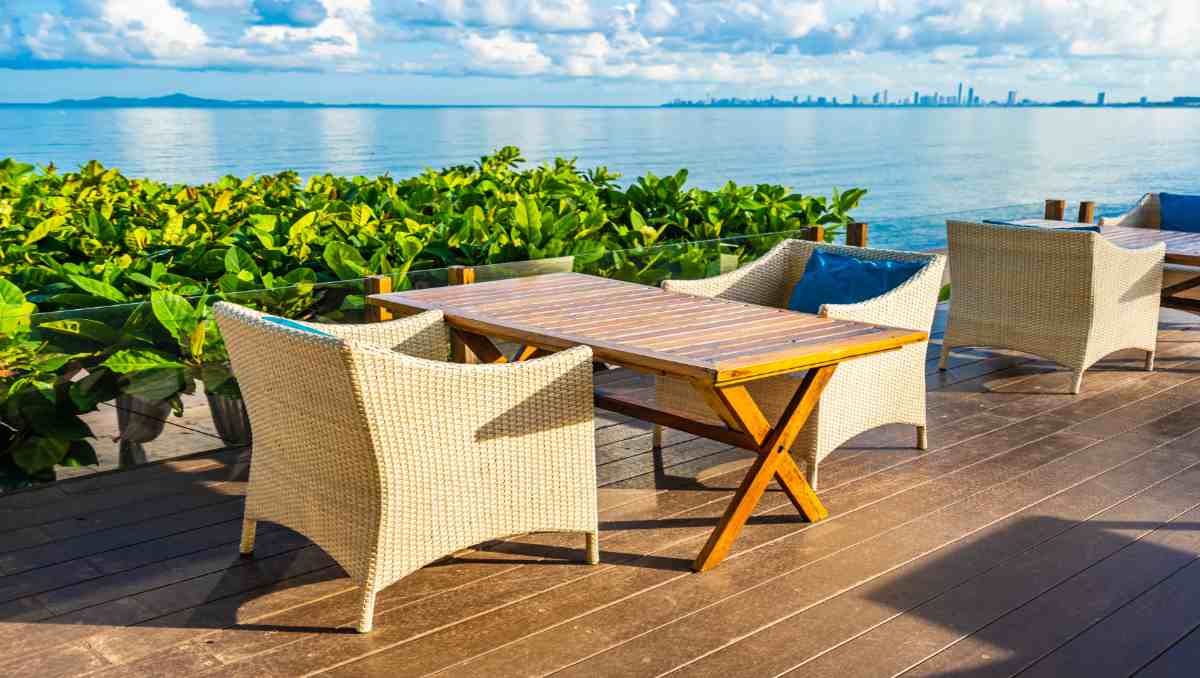
Outdoor wood furniture is built for long-term durability, but it still needs proper care to handle years of outdoor exposure. The best way to protect wood from sun damage on outdoor Amish furniture is to apply a UV-resistant exterior finish, clean it regularly, and limit prolonged exposure to direct sunlight whenever possible. With the right maintenance routine and protective measures, you can preserve your furniture’s beauty, color, and structural integrity for decades.
Key Takeaways:
- Use UV-resistant finishes, shade, and durable wood types to prevent fading and cracking.
- Clean, inspect, and reseal outdoor wood furniture to keep it in good condition.
- Use covers, place furniture wisely, and avoid care mistakes to protect your investment.
The Science of Sun Damage on Wood
Wood may seem durable, but prolonged UV exposure gradually breaks it down. UV rays degrade lignin, the natural polymer that binds wood fibers together. As lignin deteriorates, the wood begins to fade, develop a rougher texture, and the finish becomes brittle. As James Bruyn, Home Designer and owner of HVKDC, explains:
“Much like any other living product (such as skin), if you don’t protect it, the sun’s rays will dry it out, fade the color, and can even cause cracking in the surface (think of logs on a fireplace). I always suggest to my clients that they protect the wood in a few different ways.”
Over time, sun damage can fade your Amish furniture and shorten its lifespan. To measure UV resistance, manufacturers use accelerated weathering tests that simulate years of sun exposure. Many manufacturers test their finishes and sealants to standards such as ASTM G154 or ASTM D4587 to evaluate their resistance to UV exposure and weathering, helping ensure better long-term protection against sun damage.
How to Protect Outdoor Wood Furniture From Sun Damage
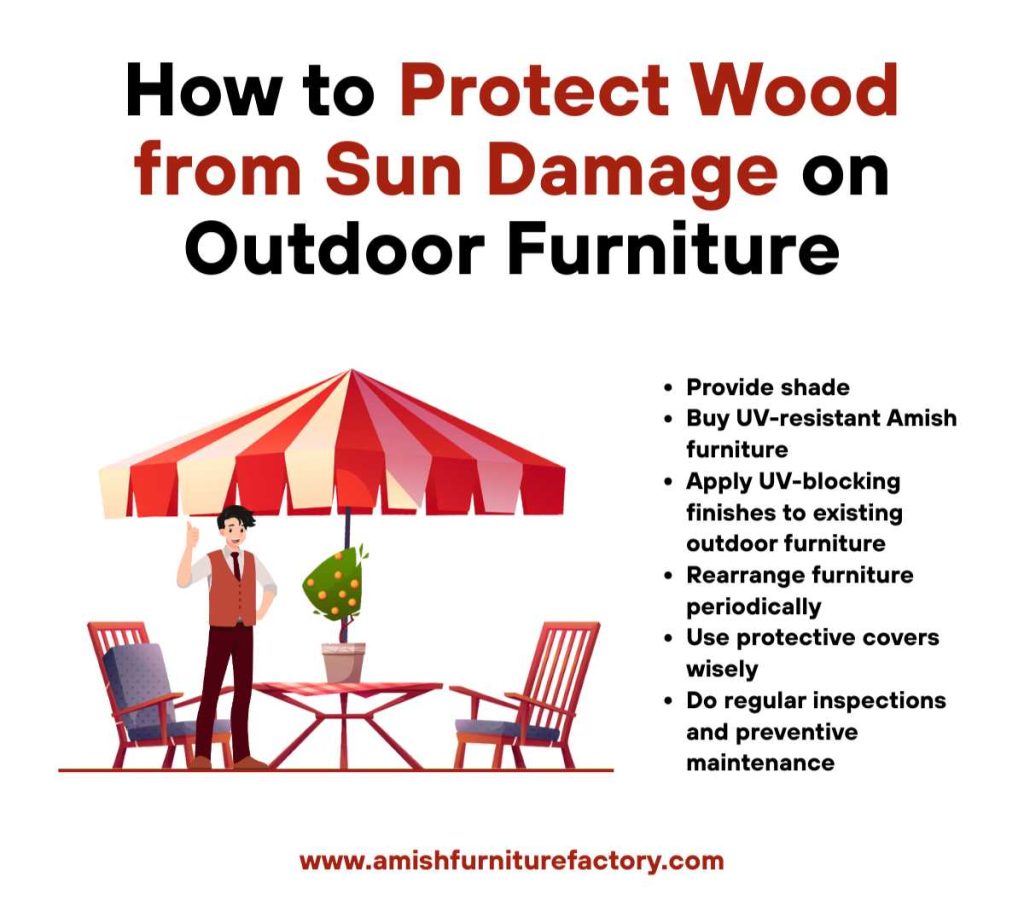
To protect natural wood furniture from sun damage, you’ll want to combine physical barriers like covers, umbrellas, or pergolas with protective treatments such as UV-resistant sealants, oils, or exterior varnishes. Just as important is keeping up with regular cleaning and furniture maintenance, since dust, dirt, and moisture can accelerate deterioration.
1. Provide Shade (Your First Line of Defense)
The simplest and most effective way to prevent sun damage is to limit direct exposure. Shade keeps UV rays from constantly beating down on your outdoor furniture. This can be as easy as placing a table beneath a patio umbrella or investing in a pergola or covered porch area. Even moving pieces to a spot that only gets morning or late-afternoon sun can make a difference.
2. Choose Naturally UV-Resistant Woods for Outdoor Furniture
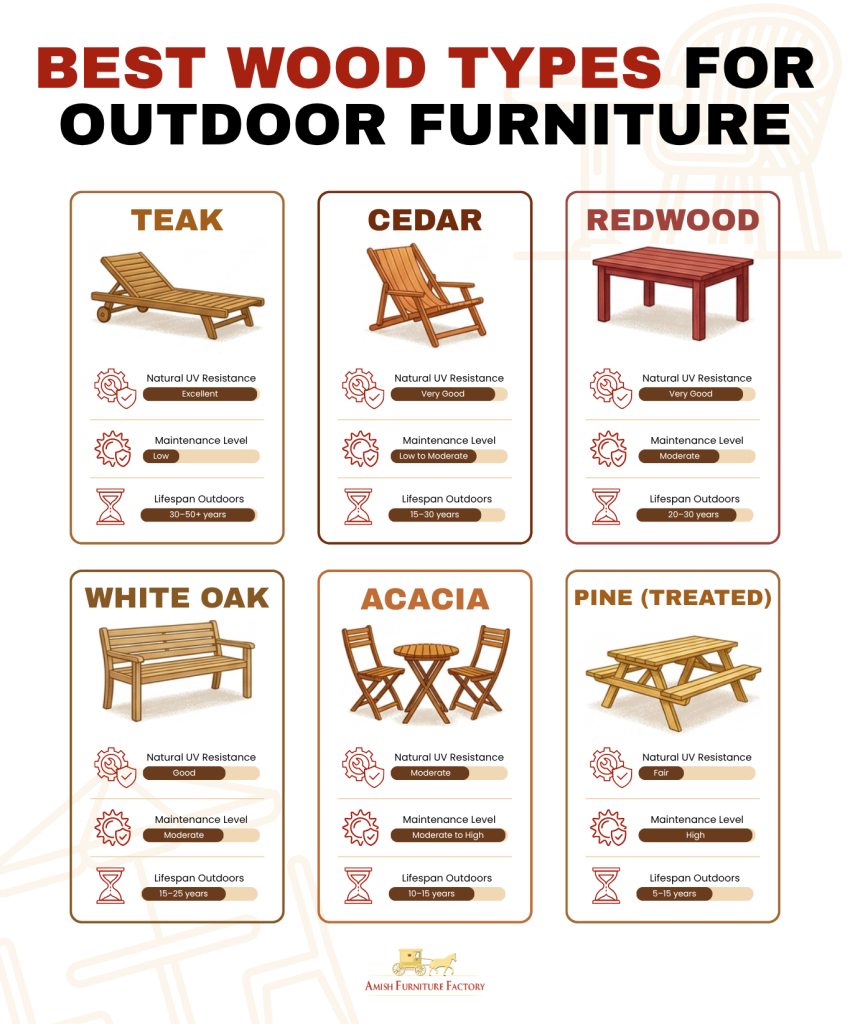
The type of wood you choose plays a major role in how well your outdoor furniture withstands sun exposure. While no wood is completely immune to UV damage, some species naturally resist fading, drying, and weathering better than others. Many Amish furniture makers use durable hardwoods or naturally weather-resistant species for outdoor pieces and can also apply UV-protective finishes for added longevity.
Below is a comparison of popular outdoor wood options and how they perform in sunny conditions.
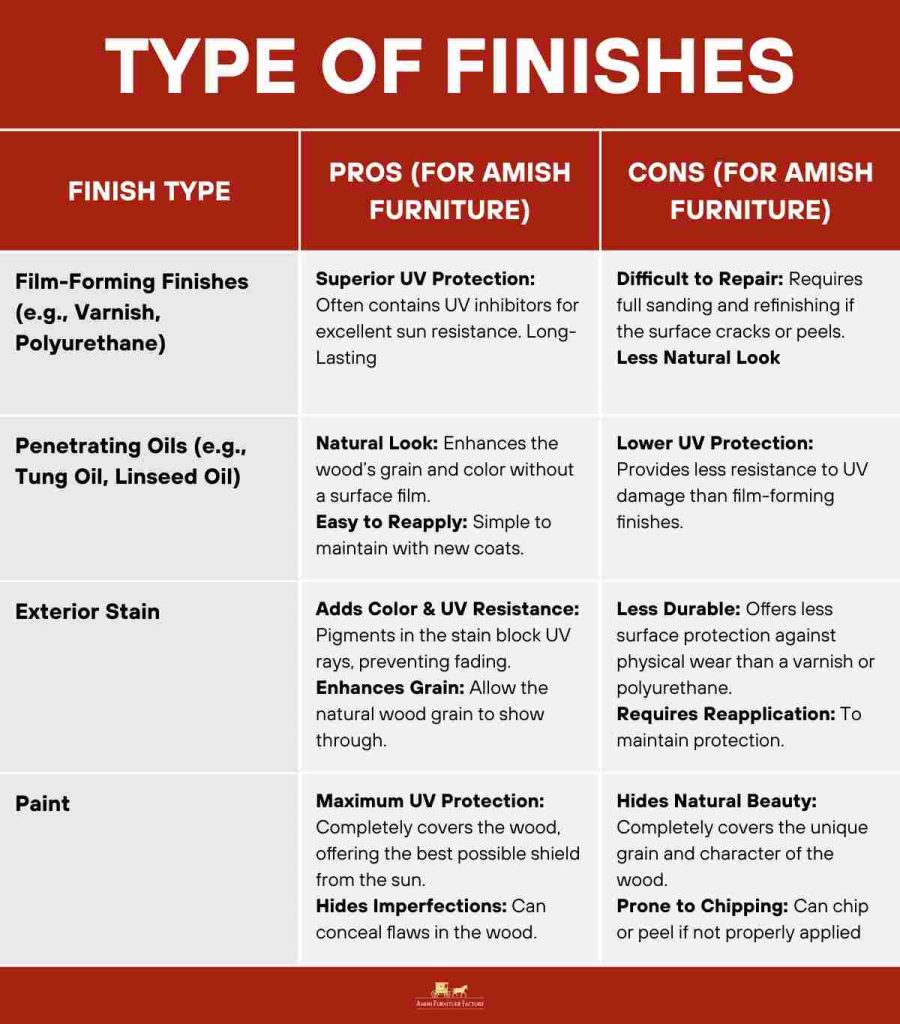
3. Apply UV-Blocking Finishes to Existing Outdoor Furniture
If your furniture already lives outside, adding a UV-resistant finish is one of the most effective ways to extend its life. Exterior varnishes, penetrating oils, or sealants with UV inhibitors act as a shield, slowing down lignin breakdown while preserving color. James recommends:
“Make sure that there is a UV protective finish (many different types exist). I also like penetrating oils with UV inhibitors (like teak oil) as they help maintain the wood while also protecting [it].”
For best results, clean the furniture thoroughly before application and reapply every one to two years, depending on climate and sun intensity.
4. Rotate Furniture Seasonally
If moving your furniture isn’t practical, simply rotating it a few times a year can help minimize uneven sun damage. Rotating chairs, benches, and tables every few months helps distribute UV exposure more evenly, preserving a consistent color and finish. This simple maintenance habit is especially useful for furniture placed in uncovered patios, decks, or other areas with prolonged sun exposure.
5. Use Protective Covers Wisely
Furniture covers are a double-edged sword. They can shield against sun, dust, and rain, but poor-quality covers trap moisture and encourage mold. The best approach is to invest in breathable, water-resistant covers that fit properly and use them during long stretches of non-use. As James points out:
“When the furniture isn’t being used, you want to cover it with something that is breathable and waterproof (helps prevent and minimize mold and mildew from growing). Using a cover and shade of some sort can help extend the life of any piece of furniture (even some shade is better than none.).”
💡 Pro Tip
Store wooden furniture vertically during the off-season to minimize sun exposure and prevent water from pooling on flat surfaces. This simple adjustment reduces the risk of UV damage, warping, and moisture-related wear over time.
6. Do Regular Inspections & Preventive Maintenance
Consistent upkeep goes a long way toward keeping outdoor furniture in top condition. Inspect your pieces every few months for fading, rough patches, or cracks in the finish. Early intervention like cleaning, sanding, or resealing, can prevent small issues from becoming irreversible damage. James advises:
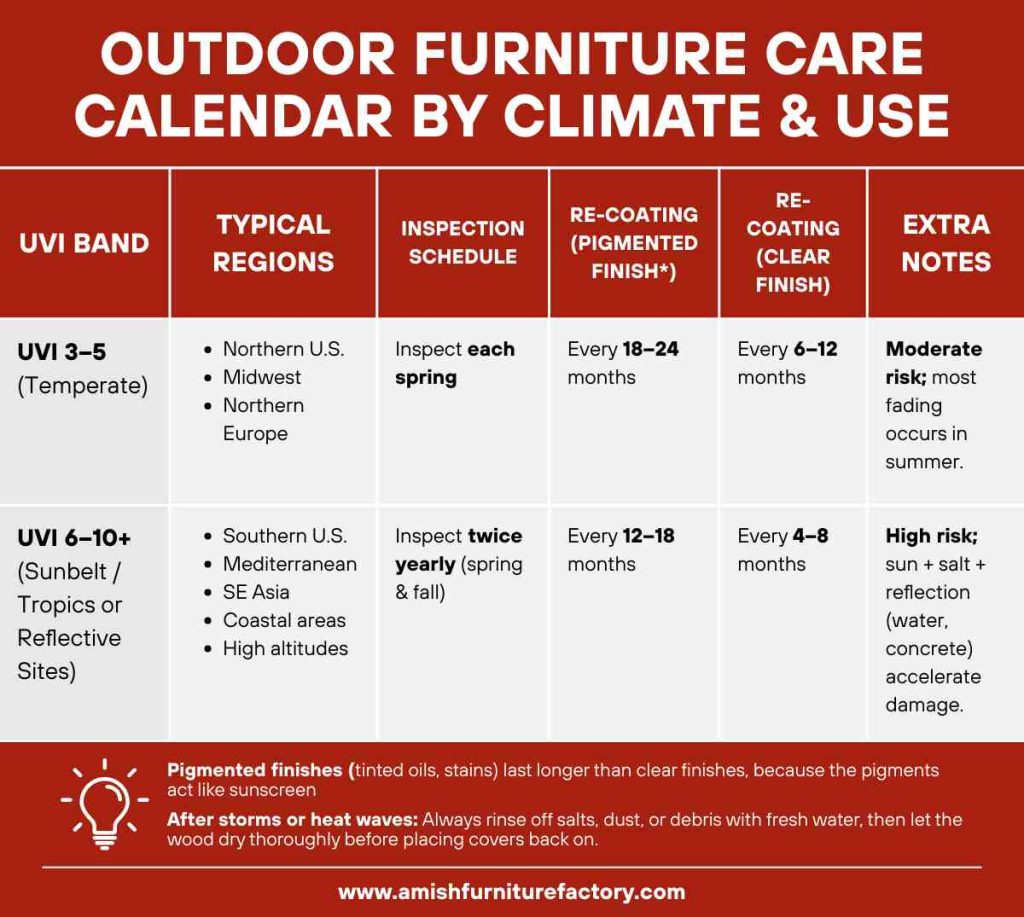
“You don’t want to purchase the furniture once and never do any upkeep, so make sure you make time for regular maintenance. I suggest reapplying oils or sealants at least once a year (ideally 6 months, depending on the manufacturer’s suggestions).”
The World Health Organization (WHO) defines a UV Index (UVI) of 3 or higher as the level where sun protection becomes important for people. While this guidance is intended for human skin, it can also serve as a practical benchmark for outdoor furniture care. As a general rule, if your area frequently experiences a UV Index of 3 or above, consider inspecting and maintaining your outdoor Amish furniture more often to help protect the wood and its finish from increased sun exposure.
How to Fix Sun-Damaged Wood Furniture
Even with preventive care, outdoor furniture can still show signs of wear after a few seasons. Fortunately, most damage is repairable with a little attention.
-
Clean Before Repairing: Begin by washing the piece thoroughly with mild soap and water to remove dirt and chalky residue left behind by UV breakdown. Ensure the furniture dries completely before proceeding. Avoid applying new finishes over dirt, mildew, or loose coatings, as grime prevents proper bonding.
-
Sand Away Graying and Roughness: Because UV rays typically affect only the uppermost layers of wood, a light sanding will easily remove the faded gray surface, smooth out raised grain, and expose fresh wood underneath. Never use a pressure washer on hardwood during prep, as high-pressure water aggressively erodes wood fibers and strips away protective finishes.
-
Address Cracks or Checking: For furniture showing small surface cracks or checking, apply wood fillers or exterior-grade epoxies before refinishing to prevent future moisture intrusion.
-
Refinish with Protection in Mind: Apply a fresh coat of a UV-resistant oil, stain, or varnish. Choose a pigmented option to restore lost color while delivering superior long-term sun protection. Always use exterior-grade products; never use indoor polyurethane outdoors, as it lacks the formulation needed to withstand UV rays and temperature fluctuations, causing it to fail prematurely.
-
Know When to Call a Professional: If wood is deeply cracked, warped, or brittle, skilled local woodworkers can often revive pieces that seem completely beyond saving. Additionally, ensure pieces are never covered while damp—trapping moisture beneath a cover creates an ideal breeding ground for mold, mildew, and wood rot—and prevent furniture from sitting in standing water or on wet surfaces that accelerate decay.
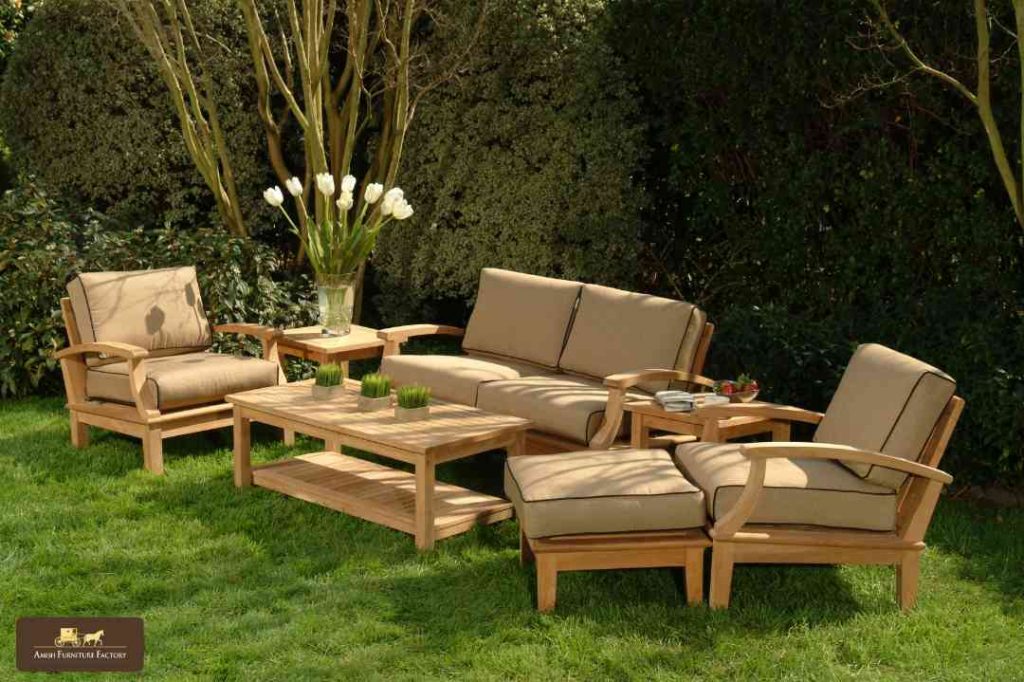
Explore our collection of Amish outdoor furniture, where timeless craftsmanship meets durable, sun-resistant design. Invest in pieces that are beautiful and meant to last!
Final Thoughts on Protecting Outdoor Wood Furniture
Protecting outdoor Amish furniture from sun damage comes down to a combination of smart placement, UV-resistant finishes, regular cleaning, and timely maintenance. These simple steps help preserve the wood’s natural beauty, prevent premature fading and cracking, and extend the life of the finish.
Outdoor pieces from Amish Furniture Factory are handcrafted to deliver exceptional durability, but like any quality wood furniture, they perform best with routine care. By following the maintenance practices outlined in this guide, you can keep your outdoor Amish furniture looking beautiful and ready to enjoy for many years.
Frequently Asked Questions
Does oil protect wood from UV?
Oil offers some protection against moisture, but most natural oils do not provide strong UV protection unless they’re specially formulated with UV blockers. For better sun protection, look for outdoor oils labeled as UV-resistant.
Does paint protect wood from the sun?
Yes, paint provides a solid barrier that protects wood from both UV rays and moisture. Light-colored, high-quality exterior paints offer the best sun resistance.
Is it okay to paint wood in direct sunlight?
It’s not recommended to paint wood in direct sunlight, as heat can cause the paint to dry too quickly and lead to poor adhesion or blistering. For best results, paint in the shade or during cooler parts of the day.
What is the best outdoor coating for wood?
The best outdoor coating depends on your goals, but high-quality exterior paint or UV-resistant spar varnish are top choices for durability and sun protection. For a more natural look, UV-protective oils or stains work well.
Is it better to oil or varnish outdoor wood?
Varnish provides a harder, more durable surface that offers better protection against sun and moisture. Oil gives a more natural look and is easier to apply but usually needs more frequent maintenance.