
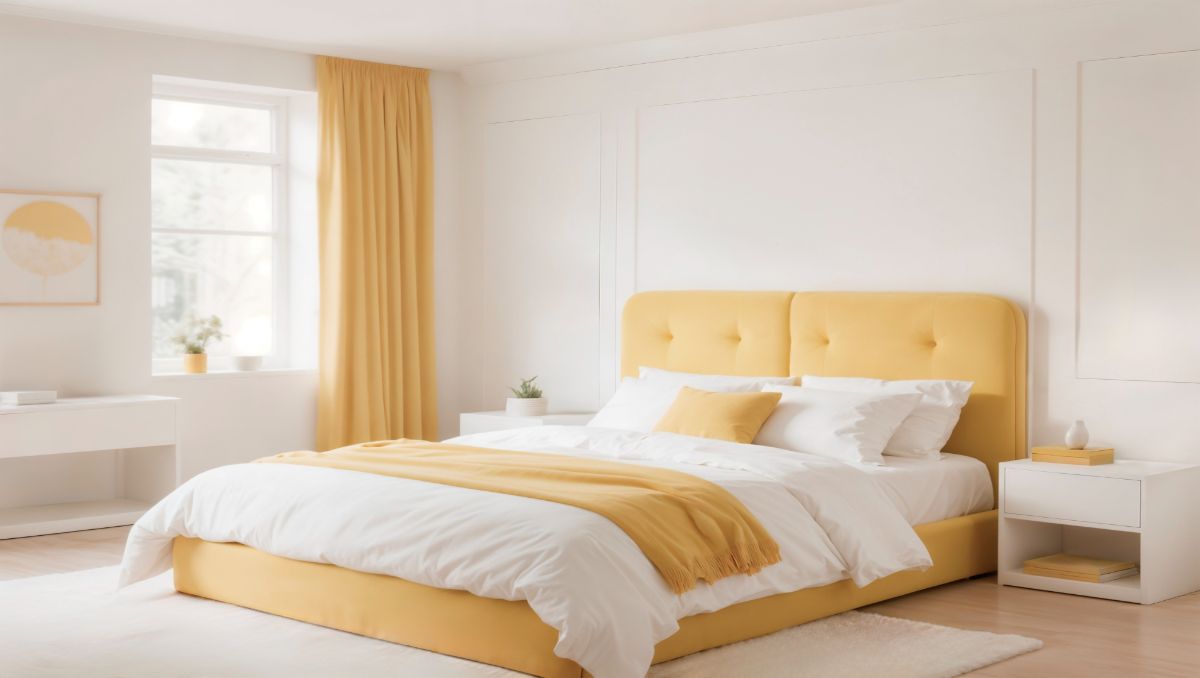
Shopping for a new bed frame sounds simple until you start comparing styles, support systems, and materials. One option that keeps standing out is the platform bed, a design known for its clean profile, sturdy support, and versatility. Unlike traditional bed frames that rely on a box spring, platform beds are built to support a mattress directly, creating a streamlined look that works in both contemporary and rustic bedrooms.
Key Takeaways:
- A platform bed is a low-profile bed frame with a built-in solid or slatted base that supports a mattress without a box spring.
- Its main benefits include a modern look, strong mattress support, and a space-saving design.
- Amish platform beds stand out for their solid hardwood construction, handcrafted joinery, and long-lasting durability.
In this guide, we will break down what a platform bed is, how it differs from traditional bed frames, and how Amish woodworkers design these beds with long-term quality in mind.
What Is a Platform Bed?
A platform bed is a bed frame with a built-in solid or slatted base that supports a mattress without a box spring. Its low-profile design creates a clean, modern look that works with many bedroom styles. Platform beds combine practicality with timeless design. Some feature sleek, minimalist lines, while others showcase natural wood and handcrafted details, offering both sturdy support and lasting style.
How Platform Beds Differ From Traditional Bed Frames
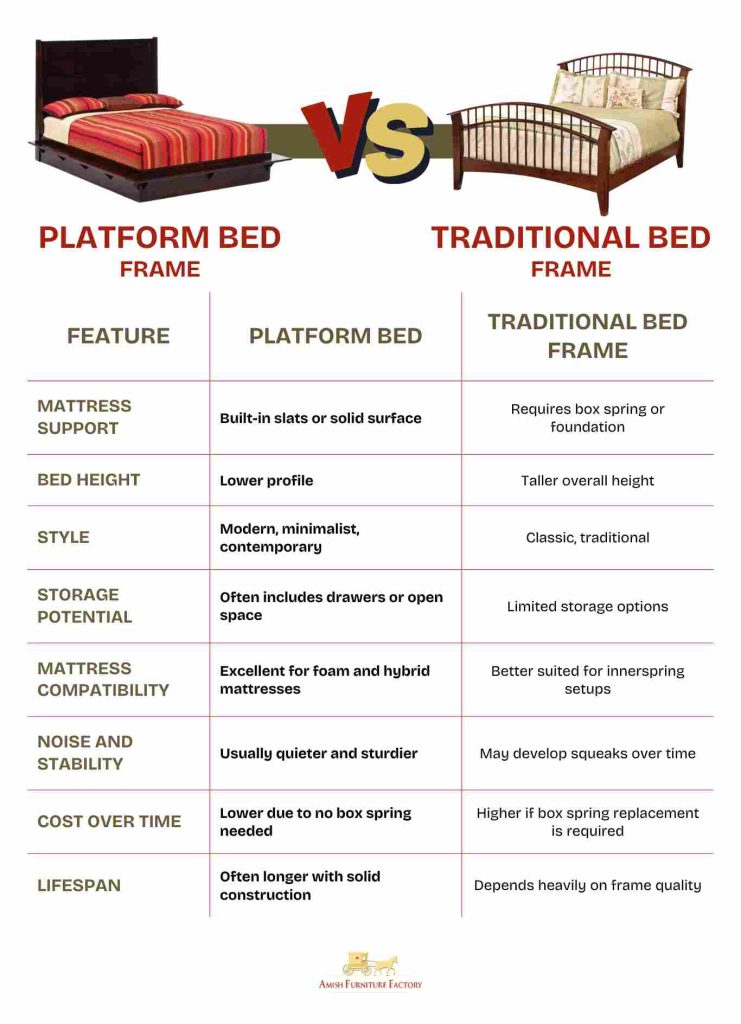
The main difference between a platform bed and a traditional bed frame is how the mattress is supported. Traditional frames are designed to work with both a mattress and a box spring, while platform beds eliminate the need for a box spring by using built-in slats or solid panels for support. This integrated design creates a cleaner, more streamlined look and often a lower profile. In contrast, traditional bed frames typically have a more layered structure with visible rails and separate components, whereas platform beds combine everything into a single, unified frame.
Many shoppers compare platform beds and traditional frames when deciding whether they need a box spring or a more modern foundation system. Here’s a detailed side-by-side comparison:
Common Types and Styles of Platform Beds
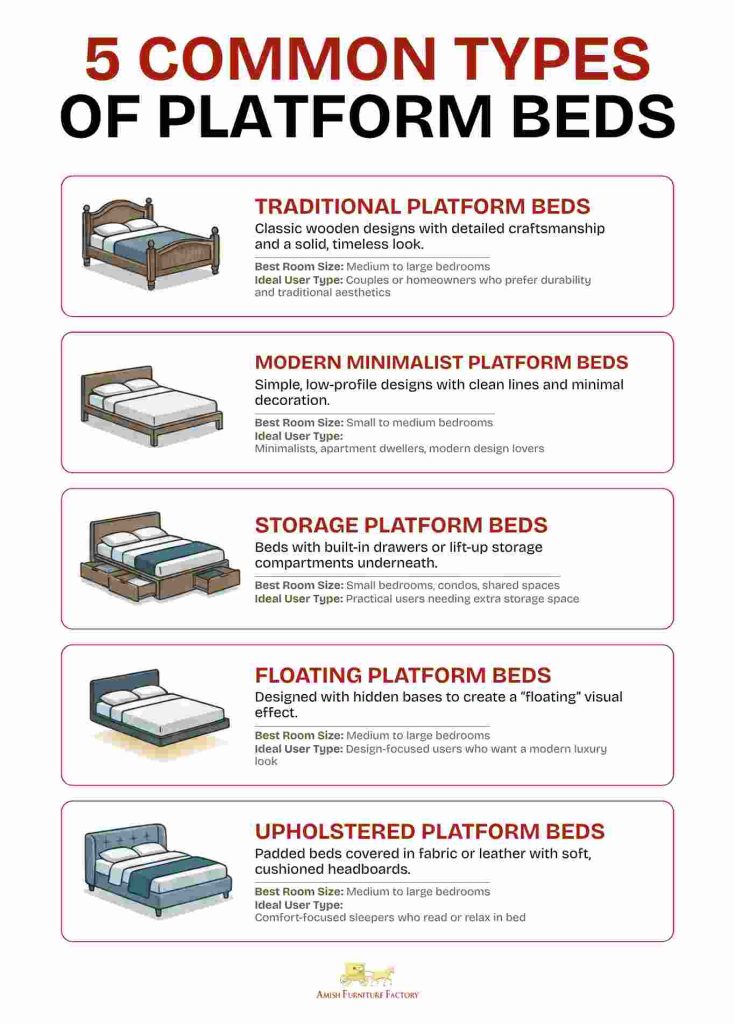
Platform beds come in a wide range of styles, which is one reason they work well in so many homes. Here are the 5 most common:
Traditional Platform Beds
Traditional platform beds feature detailed headboards, solid frames, and visible natural wood grain that creates a warm, timeless appearance. Many Amish-made designs fall into this category due to their focus on craftsmanship, durability, and long-lasting materials. This style works best in medium to large bedrooms and for individuals or couples who prefer a sturdy, classic bed that fits rustic, farmhouse, Craftsman, or transitional style interiors.
Modern Minimalist Platform Beds
Modern minimalist platform beds emphasize clean lines, low profiles, and simple, uncluttered designs. Without heavy ornamentation, they help create a more open and airy feel in the bedroom. These beds are especially well-suited for small to medium-sized rooms where maximizing visual space is important. They are ideal for apartment dwellers, minimalist sleepers, or anyone who prefers a sleek, modern aesthetic with a lighter visual footprint.
Storage Platform Beds
Storage platform beds are designed with built-in functionality, often featuring drawers or lift-up compartments beneath the mattress. This makes them a practical solution for storing clothing or seasonal items without needing extra furniture. They work particularly well in small bedrooms, condos, or shared spaces where storage is limited.
Floating Platform Beds
Floating platform beds are designed to create the illusion that the bed is hovering above the floor by recessing or concealing the base support. This gives the room a lighter, more modern, and visually spacious appearance. They are best suited for medium to large bedrooms where the design effect can be fully appreciated without feeling cramped.
Upholstered Platform Beds
Upholstered platform beds combine a solid frame with padded fabric or leather coverings, often highlighting a cushioned headboard for added comfort. Materials like linen, velvet, faux leather, and performance fabrics are commonly used to enhance both style and softness. These beds work well in medium to large bedrooms and are ideal for those who enjoy reading, watching TV in bed, or simply prefer a softer, more relaxed sleeping environment.
What Makes Amish Platform Beds Different?
Amish platform beds are built for long-term durability and everyday use. Unlike mass-produced furniture made with particleboard or veneers, they’re crafted from 100% solid hardwoods like oak, maple, cherry, and walnut, which offer better strength, stability, and resistance to warping over time. The result is a sturdier, more reliable bed frame designed to handle years of daily use.
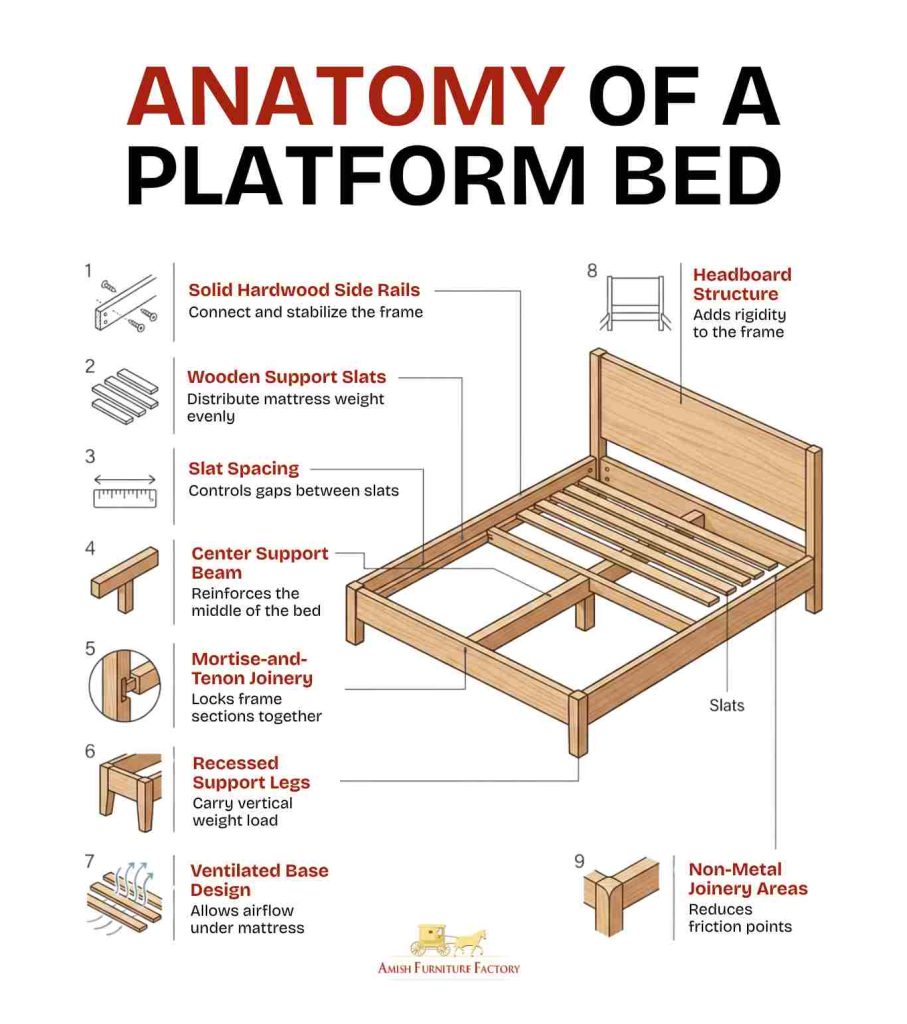
What also sets Amish platform beds apart is the craftsmanship behind them. Amish woodworkers use traditional joinery techniques like mortise and tenon, dovetail, and tongue-and-groove construction to create stronger, longer-lasting connections without relying heavily on metal brackets or screws. Combined with reinforced support systems, thicker slats, and precision-fitted components, these beds are built to prevent sagging, allow easier repairs, and often last 20 years or more.
Common Concerns About Platform Beds
What are the disadvantages of a platform bed? The answer often depends on personal comfort preferences, room layout, and mobility needs. Here are potential drawbacks:
Lower Height May Not Suit Everyone
Some people enjoy the modern low-profile look, but others may find it uncomfortable to sit down or stand up from a lower sleeping position. This can be especially noticeable for taller adults or individuals with mobility concerns.
Heavier Frames Can Be Difficult to Move
Solid wood platform beds are known for durability, but that strength also comes with extra weight. Larger wood bed frames can be difficult to move, disassemble, or reposition once fully assembled. This is particularly true for king-size models with thick support systems.
Mattress Compatibility Issues
Although platform beds work well with many modern mattresses, not every mattress is compatible with every platform design. Some mattresses require closely spaced slats or additional support to prevent sagging and maintain warranty coverage. Using the wrong support system can affect comfort and mattress lifespan.
Upgrade your bedroom with the timeless durability of a 14″ Amish Platform Bed, handcrafted to provide the perfect blend of height and rock-solid support.
How to Choose the Right Amish Platform Bed

Choosing the right Amish platform bed comes down to more than just style. It’s about finding a piece that fits your space, supports your mattress properly, and matches how you use your bedroom every day.:
- Start with room size and layout: The first consideration is proportion. In smaller bedrooms, lower-profile or minimalist frames help maintain visual openness, while larger rooms can comfortably accommodate heavier, more traditional designs with substantial headboards.
- Choose the right hardwood type: Wood selection affects both appearance and longevity. Oak offers strong grain definition, maple provides a cleaner look, and cherry deepens beautifully with age.
- Think about storage early: Storage is easiest to plan at the design stage. If your space is limited, drawer-based platform beds or lift-up storage designs can eliminate the need for extra furniture.
- Match bed height to daily comfort: Height affects both usability and feel. Lower platform beds create a grounded, modern look. Slightly taller frames offer easier access for some users.
- Match your mattress correctly: Not all mattresses behave the same on a platform base. Memory foam and hybrid mattresses typically perform well on slatted support. Heavier mattresses may benefit from tighter slat spacing or a solid base.
Simple Ways to Maintain a Platform Bed
Proper care for a platform bed is mainly about maintaining stable environmental conditions and using the right cleaning methods. Keep indoor humidity ideally between 35% and 55% to prevent the wood from expanding, contracting, or developing small gaps over time. For cleaning, use pH-neutral, non-ammonia, and non-alcohol wood cleaners, or simply a lightly damp cloth followed immediately by a dry one. Avoid harsh chemicals like bleach or all-purpose sprays, as they can damage the finish and dry out the wood surface.
Long-term care also involves protecting the bed’s structure and finish from environmental stress. Avoid excess moisture and never let water sit on the wood, as even small amounts can affect joints and finishes over time. It’s also important to keep under-bed areas clear to maintain airflow, which supports both mattress longevity and frame stability.
Final Thoughts: Why Platform Beds Stand Out
Platform beds stand out for their simple, functional design, with the mattress supported directly by a solid base or wooden slats instead of a box spring. This creates a lower profile, a cleaner look, and a versatile style that works well in a wide range of bedrooms while still providing strong, reliable support. When built by Amish woodworkers, this design is elevated through the use of solid hardwood, traditional joinery, and careful hand-finishing, resulting in furniture that is both durable and timeless. At Amish Furniture Factory, the focus is on creating platform beds that combine everyday practicality with long-lasting craftsmanship.
Frequently Asked Questions
Can you use a box spring on a platform bed?
In most cases, no. Platform beds are designed to support a mattress directly using slats or a solid base. Adding a box spring is unnecessary and can make the bed too high or unstable.
What is the point of a platform bed?
The main purpose of a platform bed is to provide direct mattress support without needing a box spring. It creates a lower-profile, more modern look while maintaining strong and even weight distribution.
Can you put a regular mattress on a platform bed?
Yes, most regular mattresses work well on a platform bed, especially foam, hybrid, and latex types. The key is making sure the slats are properly spaced to prevent sagging and support the mattress warranty requirements.
How long does a solid wood Amish platform bed typically last?
A solid wood Amish platform bed can last for decades, often 20 years or more with proper care. Because it is built using hardwood and traditional joinery, it is designed for long-term daily use rather than short-term replacement.