
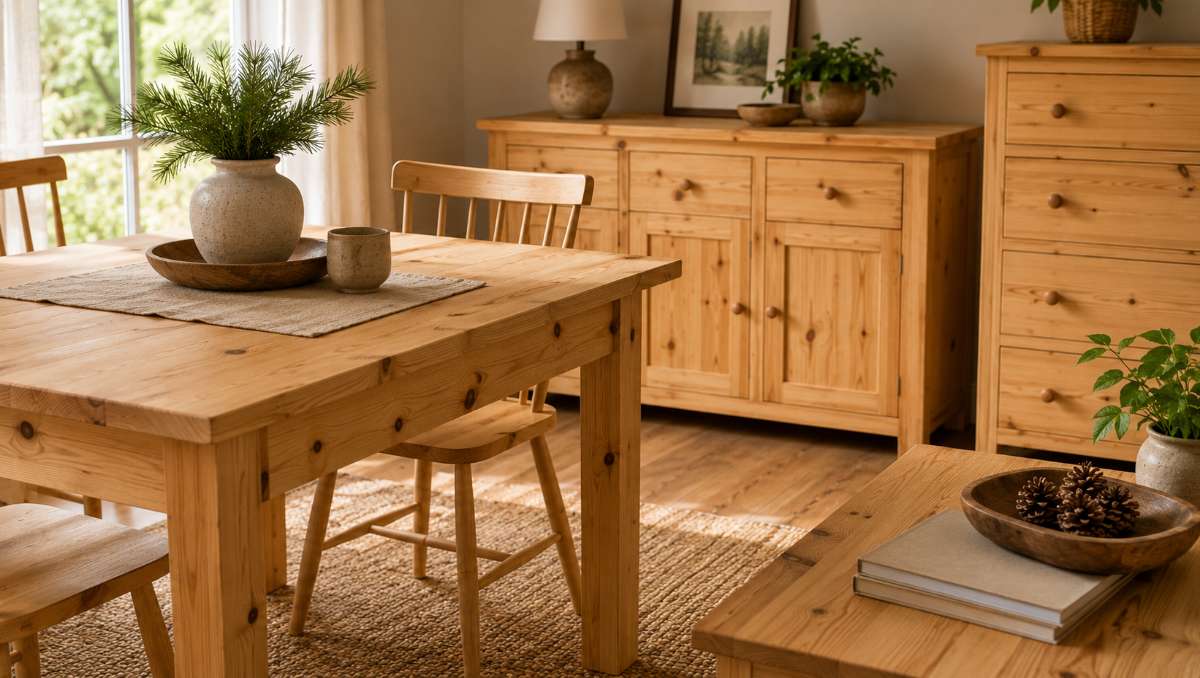
Pine is a solid, budget-friendly wood that works well for furniture, offering warmth, versatility, and sustainability, though its softer surface means more care against dents and moisture than hardwoods like oak or cherry. It’s a smart choice for kids’ rooms, farmhouse pieces, and DIY projects, just not for a dining table that takes a daily beating.
Key Takeaways:
- Pine is a budget-friendly and attractive solid wood that offers excellent value for furniture.
- Its natural beauty, lightweight construction, workability, and sustainability make pine incredibly versatile.
- Pine’s softer surface requires a bit more care, since it is more susceptible to dents, scratches, and moisture damage than hardwoods.
What Is Pine Wood? A Closer Look
Pine wood comes from trees in the Pinus genus, which includes more than 100 species found across the Northern Hemisphere. It is classified as a softwood, meaning it comes from coniferous trees that produce cones instead of flowers. Despite the name, “softwood” doesn’t always mean weak. Many pine species are surprisingly strong and durable, making them suitable for a wide range of furniture applications.
One of pine’s defining characteristics is its light color, straight grain, and distinctive knots that give furniture a warm, rustic appearance. Pine trees grow much faster than most hardwood species, allowing forests to be replenished more quickly and making pine a more sustainable source of timber.
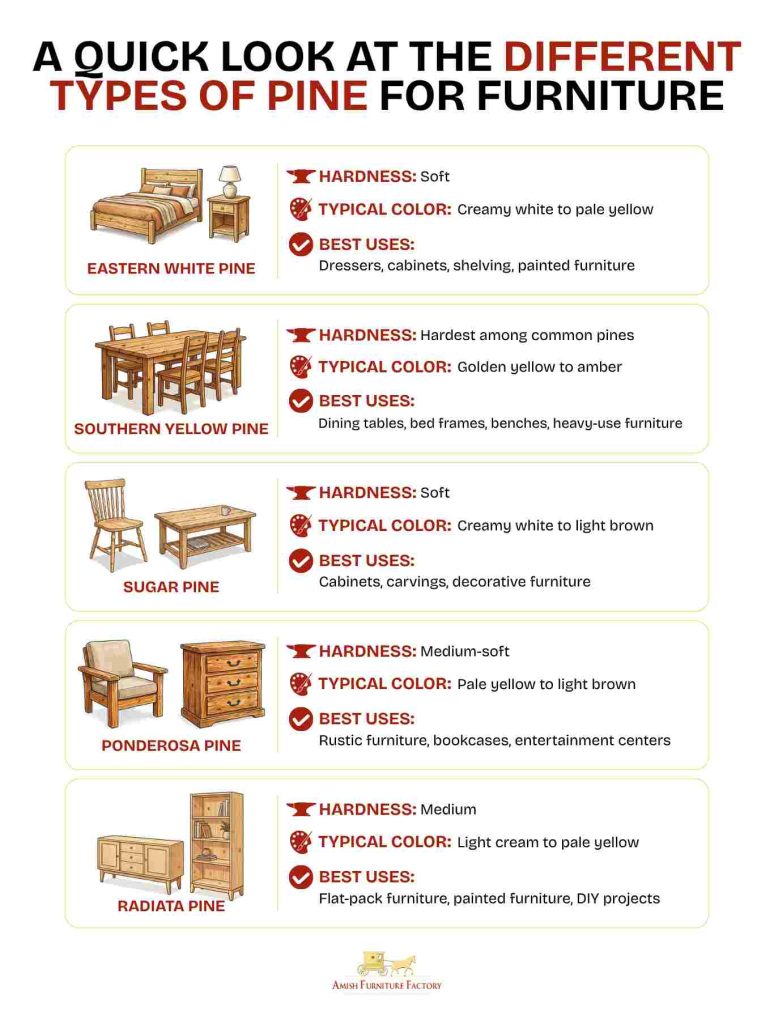
Here’s a quick look at the different types of pine wood for furniture:
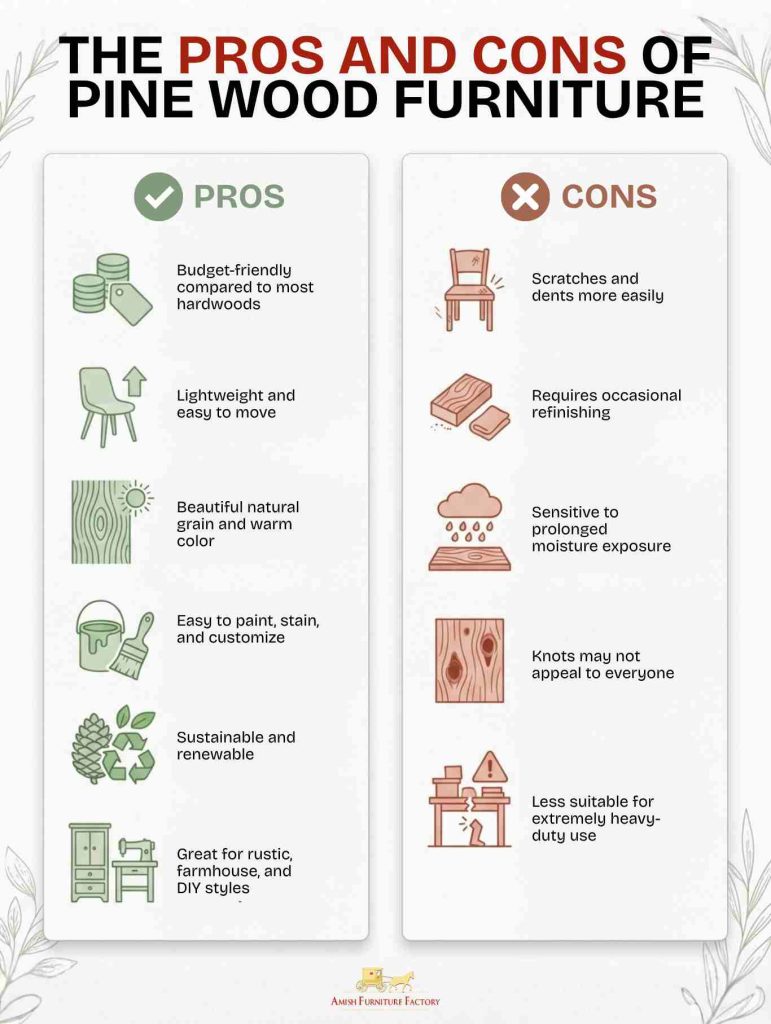
Pros of Using Pine Wood for Furniture
Pine has many advantages that make it a popular choice for furniture. Here’s why pine is such a favored material in many homes:
Affordability
Pine trees grow quickly and are plentiful, especially in North America. This rapid growth makes pine more affordable and easier to harvest compared to slower-growing hardwoods like cherry or oak. Pine is also simpler to cut and process, further reducing costs. Its local availability helps keep transportation expenses low. As a result, pine offers a cost-effective option for families and budget-conscious buyers looking for quality furniture at a reasonable price.
White Pine is typically priced at $3.50 to $4.50 per board foot, while Yellow Pine ranges from $2.50 to $3.50. These prices reflect the wood’s accessibility and lower processing costs, making pine furniture an attractive choice for those seeking quality at a lower price.
Versatility
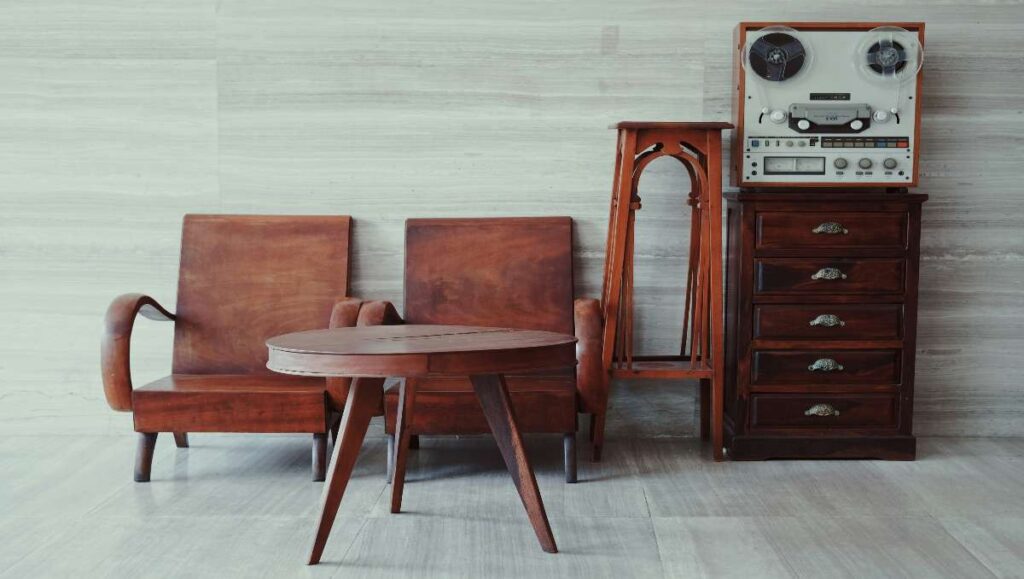
Pine wood’s versatility allows it to be used for various furniture pieces, from bed frames to kitchen cabinets. Its light color and grain pattern fit well with different decor styles, including rustic, country, and modern. Pine also absorbs stains and paints evenly, offering many customization options. Homeowners can either enhance its natural grain with a clear stain or change its look with bold colors, making it easy to match pine furniture to their personal style and home decor.
Aesthetic Appeal
The natural beauty of pine wood is evident in its light color and distinctive grain, complete with unique knots that add character to each piece. Its warm, rustic appearance brings a cozy, welcoming feel to any room, making it a favorite for farmhouse and country-style interiors. Pine can also be stained to resemble more expensive woods or painted to suit any color scheme, providing endless customization options.
Cons of Using Pine Wood for Furniture
So what are the disadvantages of pine wood? Most come down to its softer nature, which makes it more prone to wear over time.

Softness and Durability
One major drawback of pine wood is its softness, which makes it more prone to dents and scratches compared to harder woods like oak. This makes pine less ideal for high-traffic areas or heavily used furniture, like dining tables in busy homes. Pine is also more susceptible to moisture damage, leading to warping and swelling due to its porous nature.
Research indicates that pine wood’s strength and elasticity decrease after 25-75 years of use, especially under varying temperature, humidity, and load conditions. This means pine furniture may lose its structural integrity faster than harder woods over time.
Requires More Maintenance
Because pine is softer, it often needs a little more care to keep it looking its best. Minor scratches, worn finishes, or small dents may require occasional touch-ups. Fortunately, pine is relatively easy to refinish. Light sanding followed by a fresh coat of stain, paint, or protective finish can restore much of its original appearance.
Knots May Affect Appearance and Stability
One of pine’s signature features is its natural knots, but they can be viewed differently depending on personal taste. Many people appreciate the rustic charm and unique character that knots bring, while others prefer a smoother, more uniform appearance.
In well-made furniture, knots are usually stable and pose little concern. However, lower-quality pine furniture may contain loose or poorly sealed knots that can weaken certain areas or create finishing issues over time.
Best Uses for Pine Wood Furniture in the Home
Pine furniture shines in spaces where warmth, comfort, and practicality matter most. Here are best uses for pine wood furniture at home:
- Children’s Furniture: Pine is widely used for cribs, toy storage units, bookshelves, and study desks thanks to its affordability, lightweight construction, and ability to be painted in a variety of colors.
- Rustic and Farmhouse Furniture: The visible grain and natural knots make pine a perfect match for farmhouse, cottage, country, and cabin interiors. Dining benches, console tables, coffee tables, and entryway furniture all benefit from its appearance.
- Decorative Pieces and DIY Projects: Pine is an excellent material for floating shelves, blanket ladders, picture frames, plant stands, accent tables, and countless woodworking projects because it’s easy to cut, shape, stain, and finish.
- Bedroom Furniture: Beds, dressers, nightstands, wardrobes, and storage chests are among the most popular uses for pine because they experience relatively moderate wear while showcasing the wood’s natural beauty.
While pine furniture is an excellent choice for many homes, it may not be the best option in every situation. Because it is softer than hardwoods, pine is more susceptible to dents and scratches, making harder wood species a better fit for heavily used dining tables, high-traffic commercial settings, or households with large pets and young children. Untreated pine is also unsuitable for outdoor use, as prolonged exposure to moisture, sunlight, and changing weather conditions can lead to warping, rot, and insect damage.
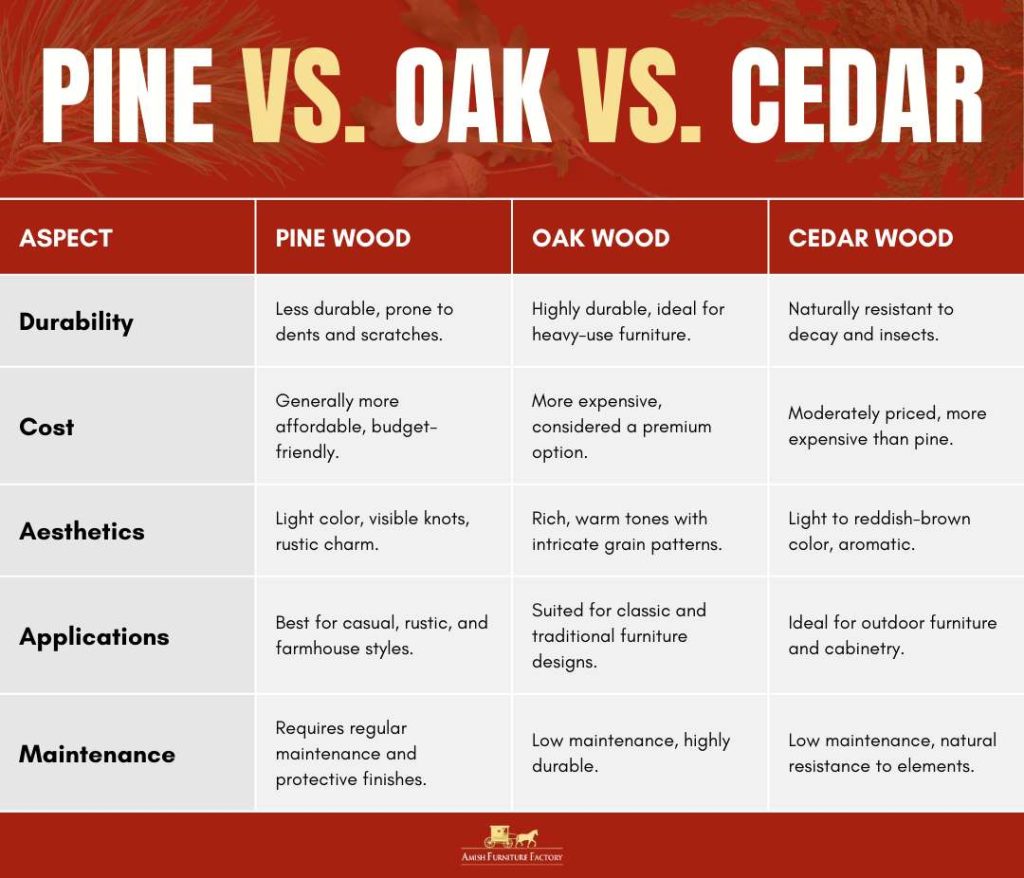
Comparing Pine Wood to Other Woods
When selecting wood for a project, understanding the characteristics and advantages of pine compared to other types of wood can significantly impact your decision-making process. Here’s how pine wood compares with other wood types for furniture:
Experience the ultimate blend of durability and timeless charm by upgrading to our beautifully handcrafted Fireside Rustic Pine Bed today.
How to Care for and Maintain Pine Furniture
With proper care, pine furniture can remain beautiful for decades. One of the easiest ways to prevent damage is by protecting surfaces from scratches and dents. Use felt pads under lamps, décor, and chair legs to reduce friction. Coasters and placemats help prevent water rings and heat marks. If you have children or pets, consider adding protective pads to furniture that sees frequent use.
Moisture control is equally important. Pine performs best when indoor relative humidity stays between 30% and 50%, which helps reduce expansion and contraction caused by seasonal humidity changes. For routine cleaning, dust regularly using a microfiber cloth and wipe surfaces with a slightly damp cloth followed immediately by a dry one.
Additionally, applying furniture wax or a quality wood polish once or twice a year can help maintain the finish and provide an extra layer of protection.
Conclusion: Making the Right Choice for Your Home
So, is pine wood good for furniture? For many homeowners, the answer is yes. Pine offers an appealing combination of affordability, natural beauty, versatility, and sustainability, making it an excellent choice for a wide range of furniture. While its softer surface makes it more prone to dents, scratches, and moisture-related damage than hardwoods, these drawbacks can be minimized with proper care and by choosing the right applications.
At Amish Furniture Factory, we build pine furniture the same way we build every piece: solid joinery, honest materials, and a finish that’s made to last. Whether pine is the right call for your home comes down to how it’ll be used — and we’re happy to help you figure that out.
Frequently Asked Questions
Is pine wood waterproof?
No, pine wood is not naturally waterproof. However, it can be treated with sealants or finishes to improve its resistance to moisture.
Does pine wood get harder with age?
No, pine wood does not get significantly harder with age. However, it may become more brittle over time, especially if exposed to fluctuating environmental conditions.
Can you leave pine furniture unfinished?
Yes, you can leave pine furniture unfinished, but it will be more vulnerable to moisture, stains, and damage. Applying a protective finish is recommended to extend its lifespan.
How long does pine wood furniture last?
High-quality solid pine furniture can easily last 20 to 50 years or more with proper care. Keeping it indoors, protecting it from excessive moisture, and refinishing the surface when needed can significantly extend its lifespan.
How do you stop pine knots from bleeding through white paint?
Before painting, seal the knots with a shellac-based or stain-blocking primer specifically designed to prevent resin bleed. After the primer dries, lightly sand the surface and apply two coats of high-quality paint. Proper sealing prevents the amber-colored resin from staining the finished paint over time.