
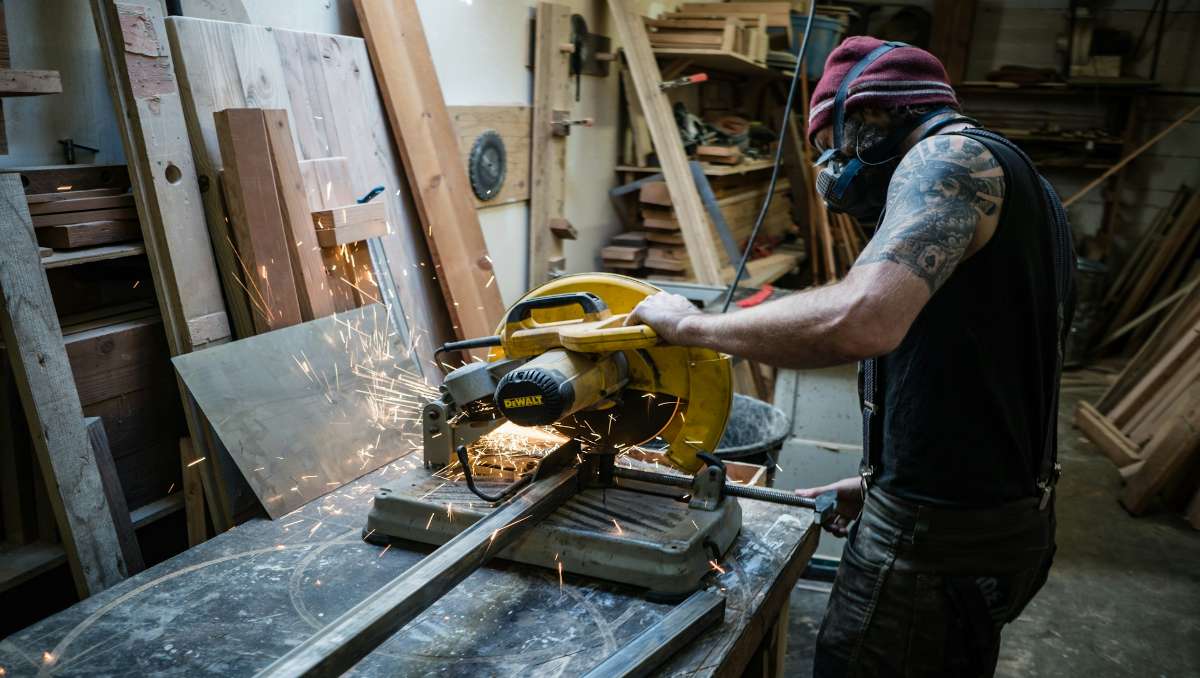
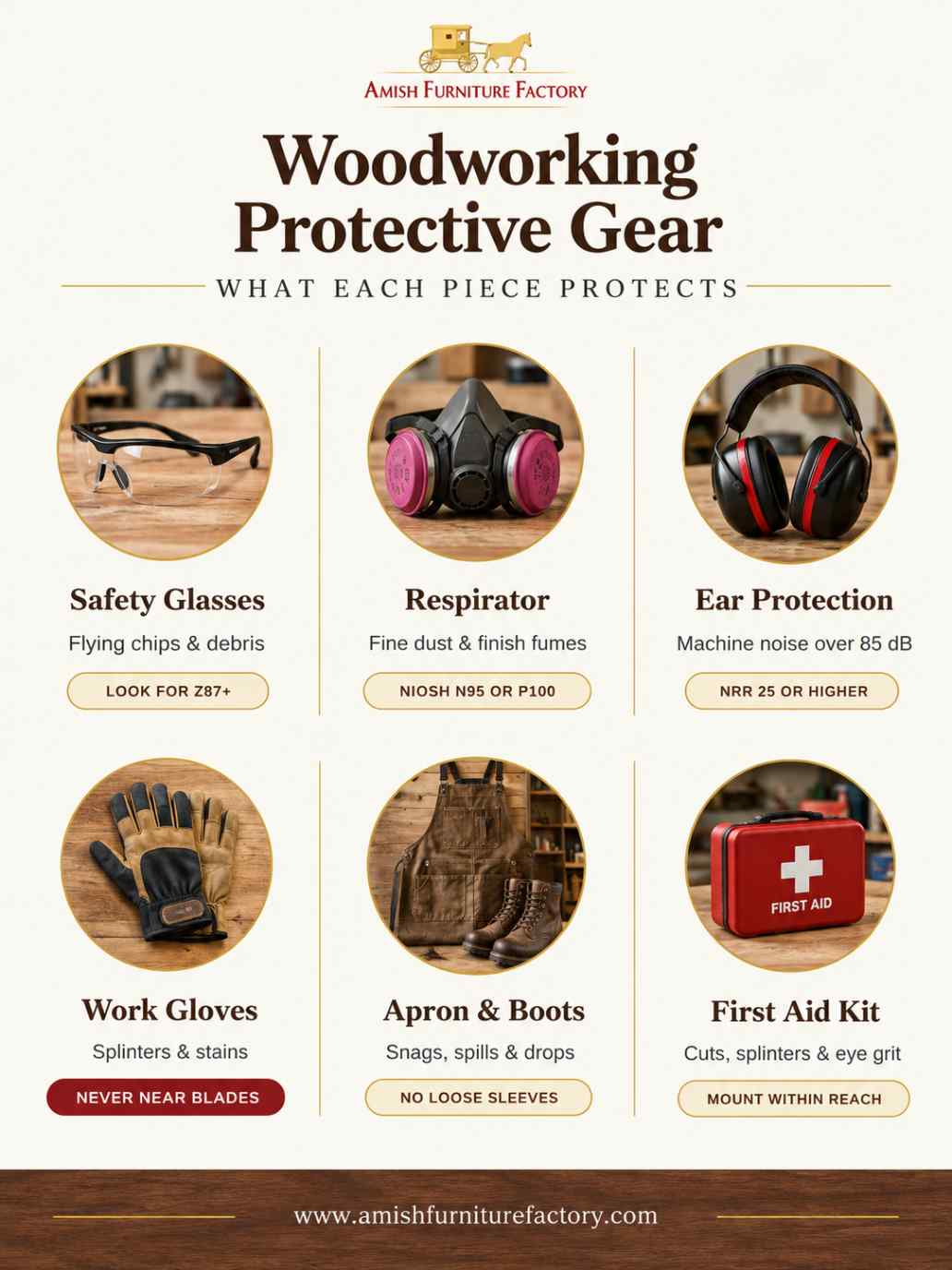
The best woodworking protective gear for beginners includes safety glasses, respiratory protection, hearing protection, task-appropriate gloves, close-fitting clothing, sturdy footwear, and a basic first-aid kit. When you’re learning to measure, cut, and shape wood, it’s easy to focus on the finished piece and overlook the small hazards that come with the process. A good set of protective gear helps make safety part of the routine from the start. Knowing what each piece of gear does makes it easier to choose what you actually need.
Key Takeaways:
- Match the safety gear to the task, not the shop. Hand-planing, sanding, and finishing each call for different protection.
- Every beginner needs Z87+ safety glasses, a NIOSH-approved respirator, and hearing protection before running any power tool.
- Safety gear is only one layer. A clean, well-lit shop, inspected tools, and an unhurried pace prevent most injuries.
Woodworking Hazards and Why Protective Gear Matters

Learning woodworking packs different kinds of hazards into one room: flying chips, airborne dust, loud machinery, solvent fumes, and spinning blades. Most of them don’t feel dangerous at the moment. Table saws alone account for roughly 30,000 emergency-room visits a year from blade contact, according to U.S. Consumer Product Safety Commission estimates, and several thousand of those are amputations.
Woodworking protective gear matters because it covers the gap between good intentions and real-world mistakes. Even careful woodworkers deal with kickback or lose track of how long the planer has been running. The right gear won’t make a careless habit safe, but it turns many small slips into minor annoyances instead of permanent injuries. That’s why experienced craftsmen put it on before they plug anything in.
Essential Woodworking Protective Gear for Beginners
Each piece answers a specific hazard involved, so think of the kit as a set of tools rather than a uniform. The goal is to understand what each item protects and when to reach for it.
Vision Defense: Safety Glasses and Goggles
Your eyes are the most exposed part of your body when you begin woodworking. Start with safety glasses marked ANSI Z87.1, the U.S. standard for eye protection. A “Z87+” marking means the lens has passed high-impact testing, which is what you want around woodworking power tools.
Safety goggles seal against your face, so they’re the better choice for heavy sanding, overhead work, and mixing or spraying finishes. For lathe turning or grinding, wear a full face shield over your safety glasses, never in place of them.
Breathing Protection: Respirators and Dust Masks
For most beginner sanding and cutting, a NIOSH-approved N95 multi-purpose valved respirator is the starting point. If you spend long sessions in the shop, a reusable half-mask with P100 filters seals better and costs less over time.
Dust and fumes are different problems. An N95 or P100 filters particles but does nothing for the solvent vapors from stains, lacquers, and oil-based finishes, which need a half-mask fitted with organic vapor cartridges. Either one only works if it seals, and a beard will break that seal no matter how good the respirator is.
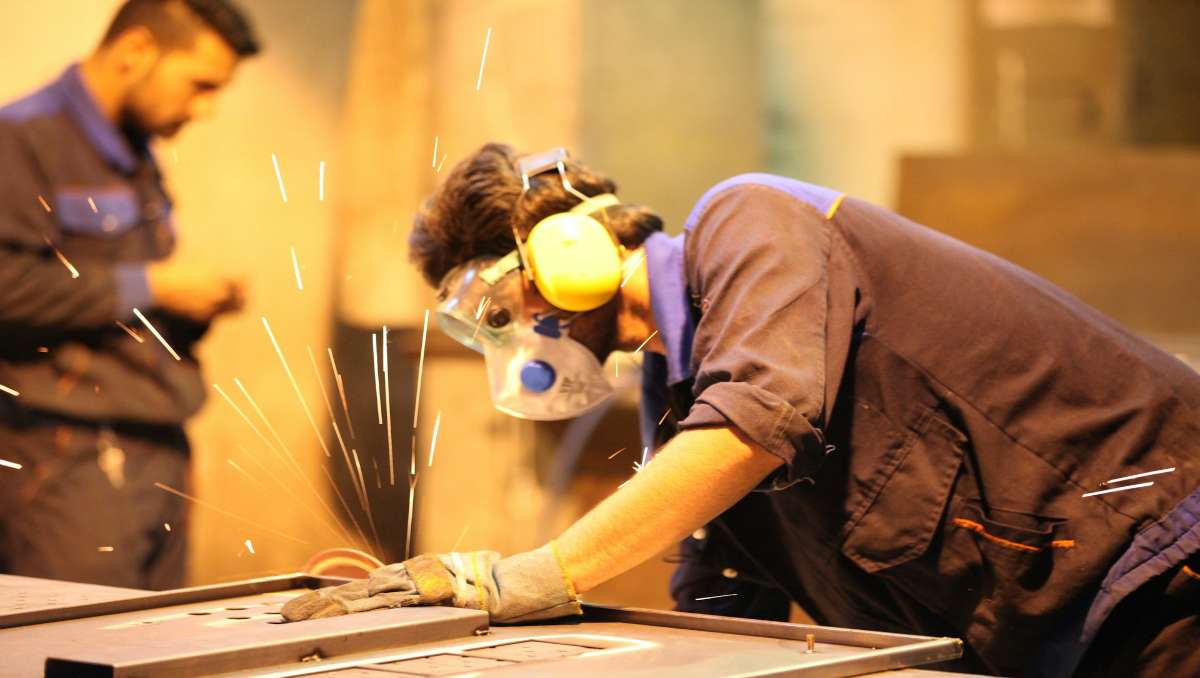
Hearing Protection: Ear Plugs and Ear Muffs
Hearing loss from shop noise is permanent, and it creeps in without pain. NIOSH sets its recommended noise exposure limit at 85 decibels averaged over a workday.
Foam ear plugs are inexpensive and very effective when you roll them tight and seat them deep in the ear canal. Ear muffs slip on and off quickly, which suits a beginner who switches between quiet hand work and loud machines. For the loudest jobs, like planing a stack of boards, wear both.
Look for a Noise Reduction Rating of at least 25 decibels on ear muffs. Real-world protection usually falls short of the label because of fit, glasses, and hair.
Protecting Hands: Gloves and Hand Safety
Gloves are the one item beginners often get wrong. Around anything that spins, like a circular saw, router, drill press, or lathe, a glove can catch and pull your hand toward the cutter. Keep your hands bare near rotating tools.
Gloves do earn their place for the jobs around the cut. Leather work gloves protect against splinters when you’re hauling rough lumber. Nitrile gloves keep stains, oils, and solvents off your skin during finishing. Cut-resistant gloves help when you’re sharpening chisels or doing hand carving.
Protecting the Body: Clothing, Aprons, and Footwear
Choose close-fitting clothes, roll or button your sleeves, and remove rings, bracelets, and watches before you start. Tie back long hair, and tuck in anything that dangles, including hoodie strings.
A canvas or leather shop apron keeps dust off your clothes and holds pencils, tape measures, and marking tools close at hand. On your feet, wear sturdy closed-toe leather shoes or boots with slip-resistant soles, because sawdust on a concrete floor gets slick.
First Aid: Keep a Basic Kit Within Reach
Even a careful woodworker will deal with splinters, nicks, and the occasional dust-filled eye. A well-stocked kit mounted on the wall near your bench should include:
- Adhesive bandages in several sizes, including knuckle and fingertip shapes
- Sterile gauze pads, rolled gauze, and medical tape
- An elastic or pressure bandage for heavier bleeding
- Antiseptic wipes or wound wash
- Fine-point tweezers and a magnifier for splinters
- Sterile eyewash or saline solution
- An instant cold pack for bumps and pinches
- Disposable nitrile gloves and small scissors
Check the kit every few months and restock what you use. Post emergency numbers beside it. For deep cuts, debris stuck in the eye, or bleeding that won’t stop with firm pressure, skip the kit and get medical help right away. Keep an ABC-rated fire extinguisher mounted by the shop door, not at the back of the room, so you are never walking toward a fire to reach it.
Workshop Habits That Keep Beginners Safer
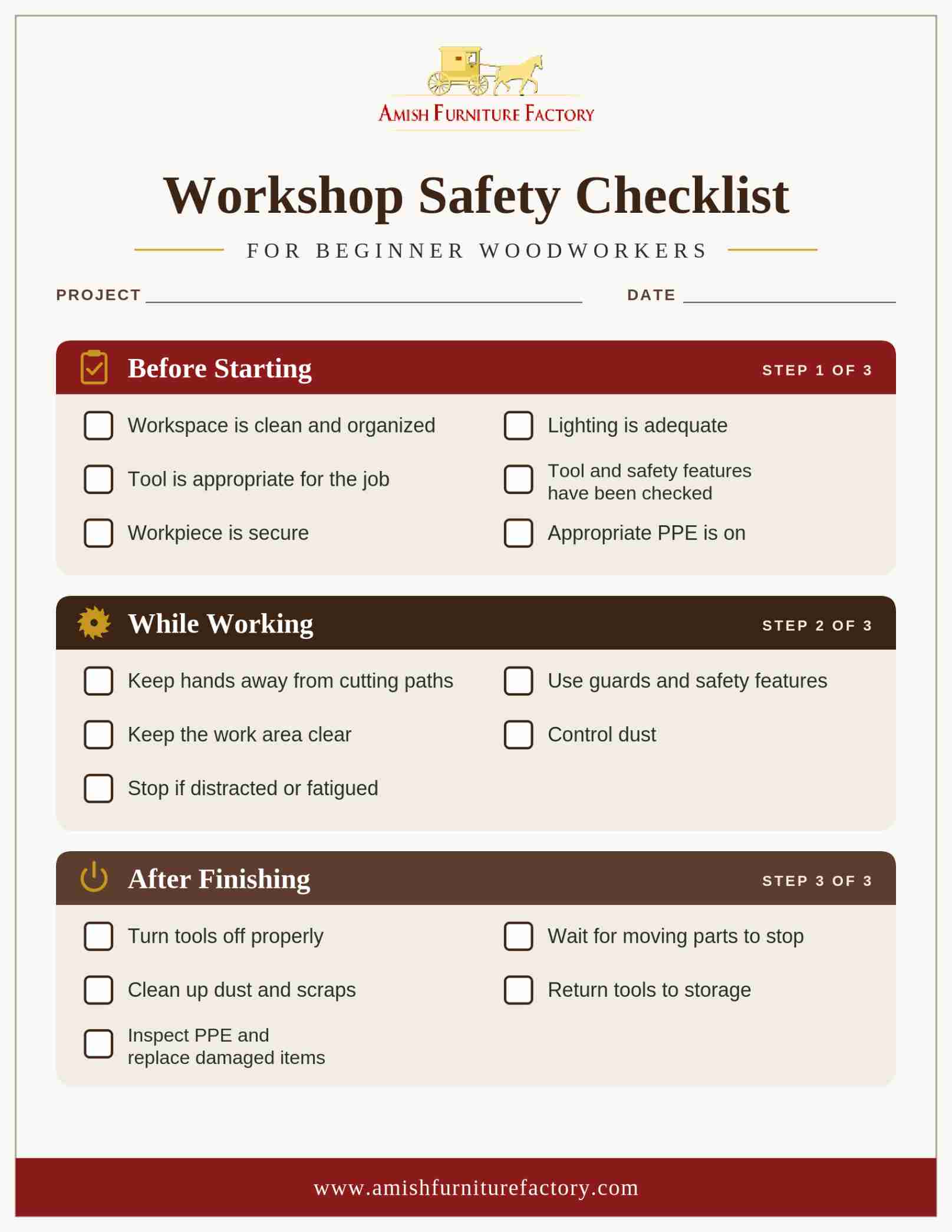
Personal protective gear is your last line of defense, not your first. How you set up your space and how you work decide whether things go wrong in the first place.
Create a Clean and Organized Workspace
A cluttered shop causes accidents. Give every tool a home and put it back when you’re done. Sweep or vacuum sawdust often. It turns a concrete floor slippery, and fine dust that builds up on shelves and light fixtures is a fire risk. Rags soaked in oil-based finishes can heat up and catch fire on their own, so lay them flat outdoors to dry or store them in a sealed metal can filled with water.
Get the Lighting Right
Aim for bright, even overhead lights across the whole shop, then add task lights at your main bench and machines. Position lights so your own body doesn’t cast a shadow over the cut. Good lighting also cuts down on eye strain, which keeps you sharper through a long session.
Inspect Tools and Protective Gear Before Use
Take a minute before you start. Look for frayed cords, loose handles, and dull blades. Your protective gear needs the same check. Scratched safety glasses blur your view, clogged respirator filters make you breathe around the seal, and earmuff cushions leak with age. Replace anything that’s damaged instead of making it work for one more woodwork project.
Follow Tool Instructions and Safety Features
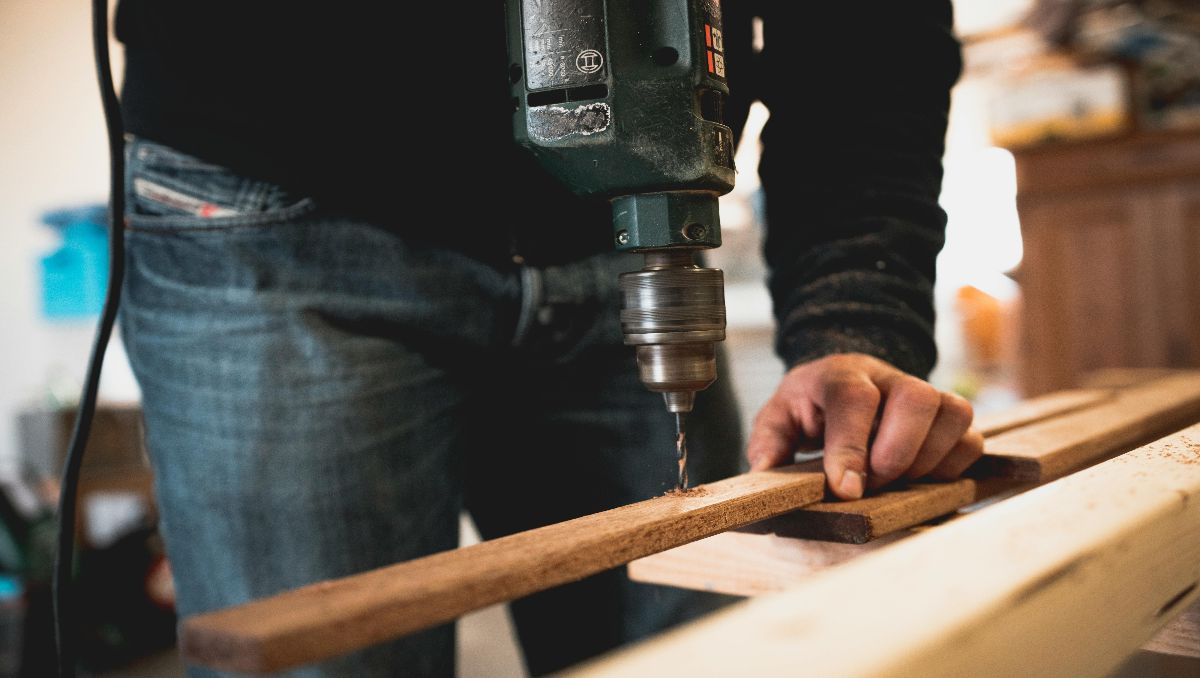
Every power tool comes with a manual, and beginners should read it cover to cover. It tells you the tool’s limits, the right blade or bit for each job, and how its safety features work. A few rules hold true for almost every machine. Unplug the tool before changing a blade or making adjustments. Clamp your workpiece instead of holding it by hand whenever you can.
Keep push sticks and push blocks within reach of every saw. They do the job gloves cannot, which is keeping your hands out of the blade’s path while still controlling the cut.
Don’t Rush the Job
Most shop injuries happen when people are tired, distracted, or in a hurry to finish. If you catch yourself rushing, stop, step back, and come back to it tomorrow. The builders behind our Amish bedroom furniture work at a steady, deliberate pace, and it shows in every fitted drawer and tight joint. Patience protects your hands and improves your work at the same time.
Transform your home with handcrafted furniture that blends timeless style and unmatched durability. Explore our exclusive lamb woodworking collection of custom cabinets and hutches to elevate your space today.
Gear Up, Build Smart, and Enjoy the Craft
Good woodworking starts long before the first cut. Safety glasses, a proper respirator, hearing protection, sensible clothing, and a stocked first aid kit cover the hazards your body can’t handle on its own. Pair that gear with a shop cleanliness, good light, sharp tools, and an unhurried pace, and you’ll spend your time learning the craft instead of recovering from it.
As your skills grow, you’ll start to notice the details that separate a quick build from a lasting one: a tight mortise-and-tenon joint, a finish that brings out the grain of oak, cherry, or walnut. Those are the details our Amish craftsmen put into every piece, from Amish dining chairs to full bedroom sets. Want to see and feel what solid hardwood looks like up close? Order free wood samples from Amish Furniture Factory and study the grain your next project could aspire to.
Frequently Asked Questions
What is the correct PPE for woodworking?
The core woodworking Personal Protective Equipment (PPE) is ANSI Z87.1-rated safety glasses, a NIOSH-approved respirator or N95 mask, earplugs or earmuffs, close-fitting clothing, and sturdy closed-toe shoes. Add goggles or a face shield for lathe work and heavy sanding, and nitrile gloves for finishing.
What type of eye protection would be most appropriate for a woodworker?
Safety glasses marked Z87+ are the best everyday choice because they’re rated for high impact. Switch to sealed goggles for heavy dust protection or finishing work, and wear a face shield over your glasses when turning on a lathe or grinding.
Can I use regular prescription safety glasses instead of dedicated woodworking safety glasses?
No. Regular prescription lenses aren’t impact-rated and leave the sides of your eyes open to flying debris. Wear over-the-glasses safety goggles or fit-over safety glasses, or order prescription safety glasses with a Z87+ marking and side shields.
Should I wear gloves when using woodworking tools?
Not around rotating tools like table saws, routers, drill presses, or lathes, where a glove can catch and pull your hand in. Gloves are useful for handling rough lumber, applying stains and finishes, and sharpening or carving. Use push sticks and push blocks to protect your hands at the saw.
What is the minimum Noise Reduction Rating (NRR) I should look for in workshop earmuffs?
Look for earmuffs with an NRR of at least 25 decibels for loud machines like planers, routers, and table saws. Real-world protection is usually lower than the label because of fit, glasses, and hair. For the loudest jobs, wear foam earplugs under your earmuffs.
How often should you replace respirator filters?
Change a disposable N95 when it gets dirty, damp, or harder to breathe through, and replace P100 filters on the schedule the manufacturer sets or sooner if breathing resistance increases. Organic vapor cartridges have a shorter service life and should be replaced once you can smell the finish through them.