
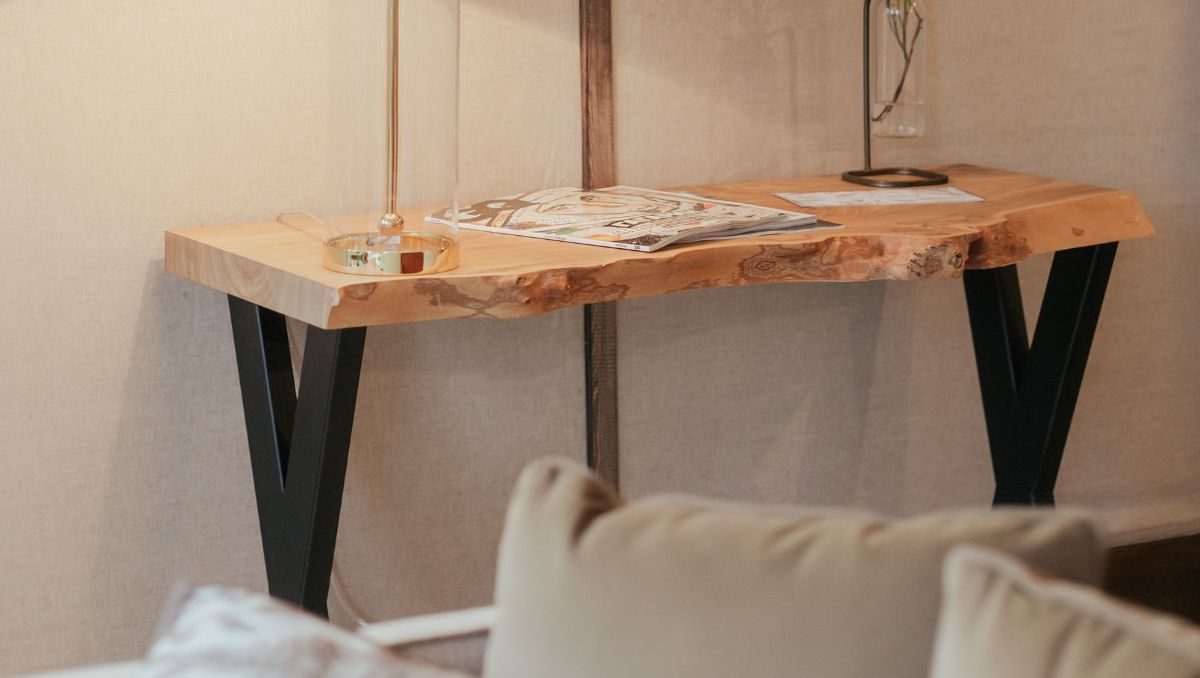
Most furniture is designed to look perfectly clean, straight, and identical. Live edge Amish furniture takes the opposite approach. Instead of cutting away every curve and natural detail, Amish craftsmen preserve the original edge of the wood to showcase the tree’s raw beauty. Known as live edge wood, this style highlights the natural grain, knots, and organic shape of solid wood, creating furniture that feels warm and completely one of a kind.
Key Takeaways:
- Live edge wood is lumber that keeps the tree’s natural, uncut edges instead of being shaped into straight, uniform boards.
- It offers unique benefits like one-of-a-kind design, natural beauty, and durability.
- Live edge wood requires thoughtful selection and care due to its higher cost, weight, and maintenance needs.
What Is Live Edge Wood?
Live edge wood is a woodworking style that preserves the natural edge of the tree instead of cutting it into straight, uniform lines. Craftsmen keep the wood’s original curves, knots, and contours visible to highlight its organic character while still carefully shaping, sanding, and finishing the piece.
The style originates from traditional woodworking techniques that embraced the tree’s natural form, but it gained mainstream popularity in the mid-20th century through the work of American craftsman George Nakashima, whose handcrafted tables helped popularize organic furniture design.
Popular Wood Species Used in Live Edge Furniture
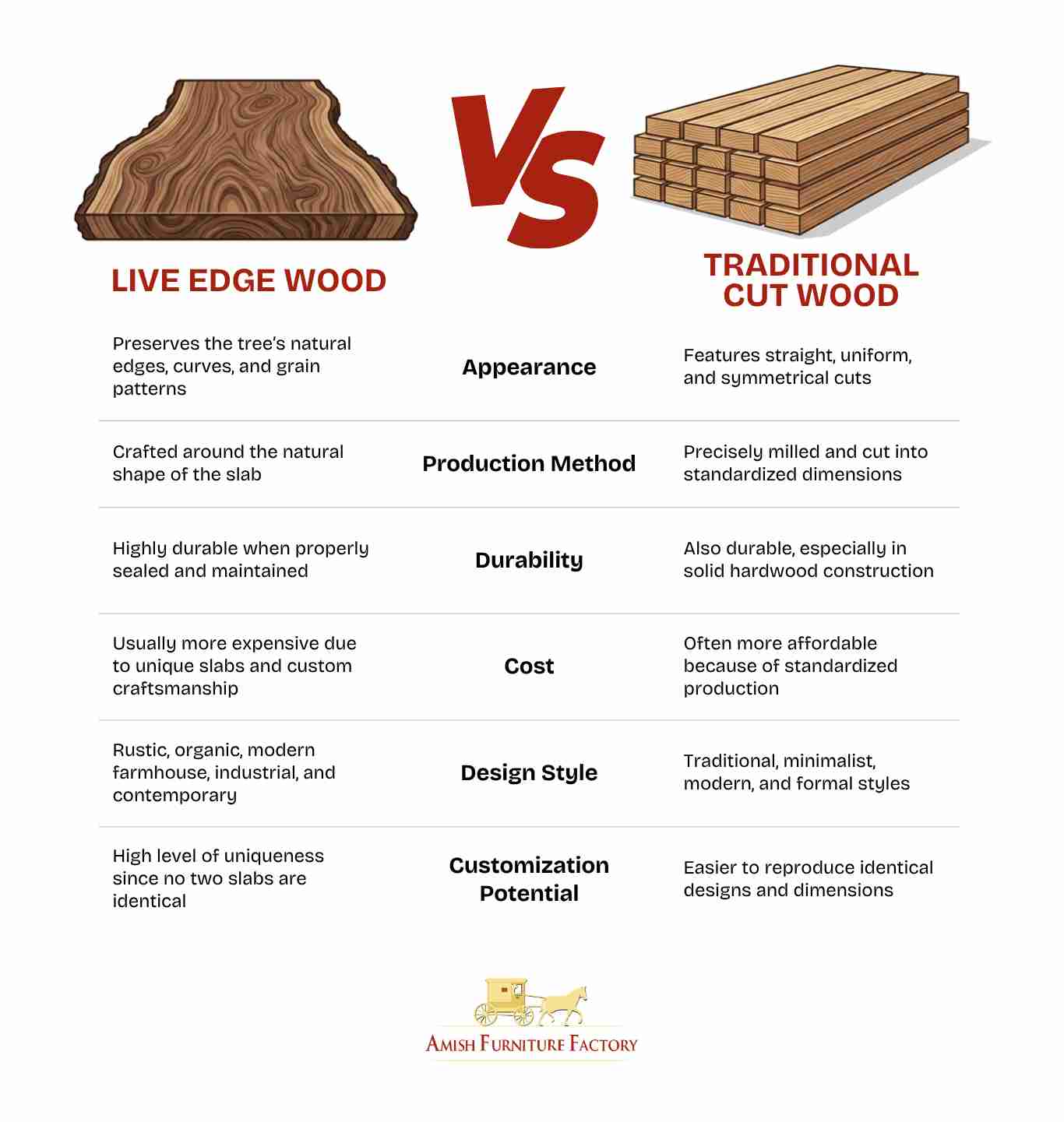
Not every type of wood works well for live edge furniture. Some species are better at showing dramatic grain patterns, while others are prized for their strength, rich color, or smooth finish.
- Walnut: Walnut is one of the most sought-after woods for live edge furniture because of its deep brown tones and flowing grain patterns.
- Oak: Oak is known for its durability and prominent grain texture. It works well for larger furniture pieces that need long-term strength, such as dining tables and desks.
- Maple: Maple has a lighter color and a smoother grain pattern compared to walnut or oak. It is often used when homeowners want a brighter and more minimalist style.
- Cherry: Cherry wood is appreciated for its rich reddish tones that deepen over time. Its smooth grain and elegant appearance make it a favorite for refined live edge furniture.
- Elm and Other Specialty Woods: Elm, hickory, sycamore, and acacia are also used in live edge furniture for their unique textures and dramatic grain patterns. These specialty woods often create more distinctive and artistic-looking pieces.
What Makes Live Edge Wood Furniture Special?
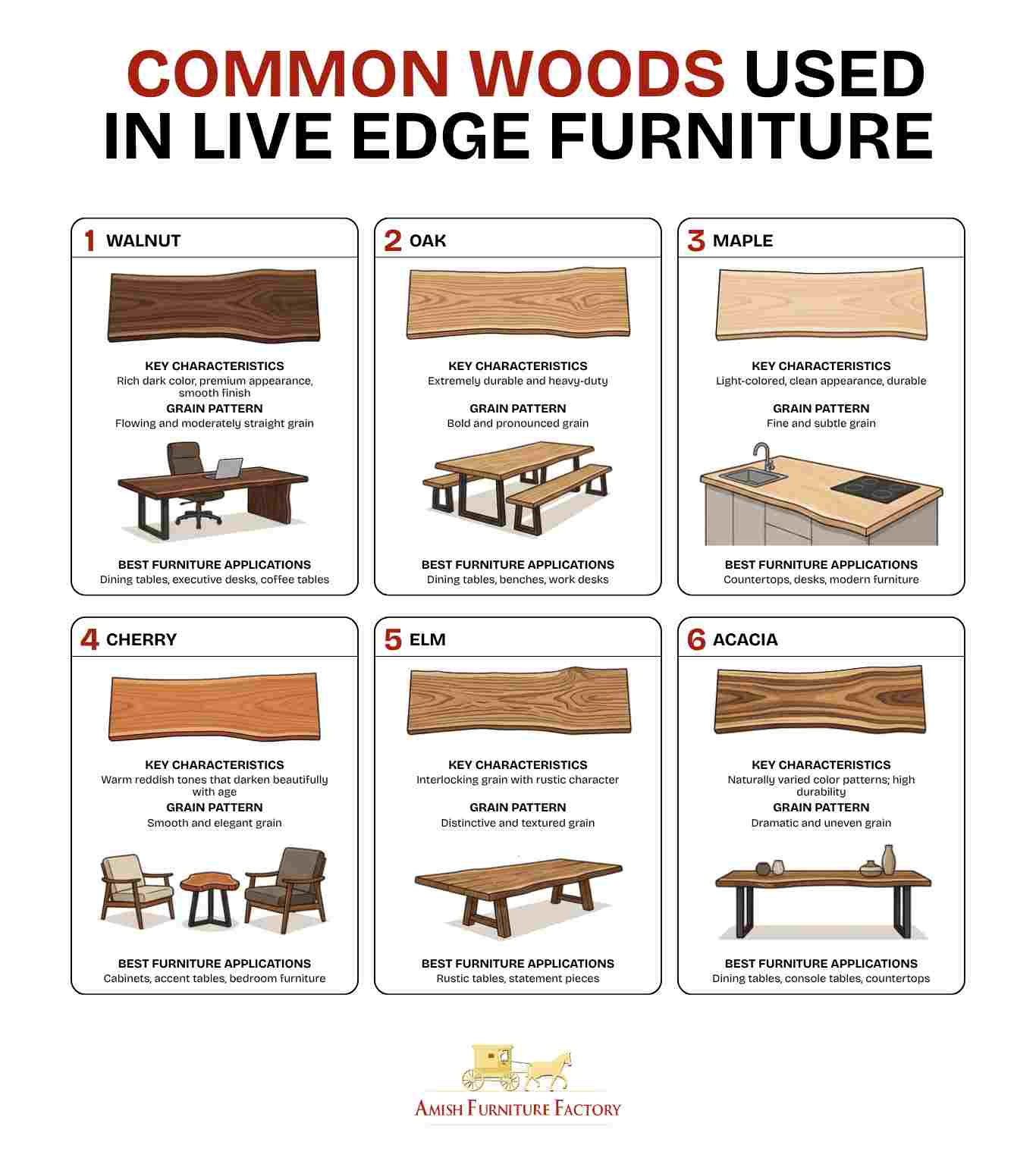
Live edge wood furniture stands out for its distinctive visual appeal and strong connection to natural design trends. It brings an organic, artisan feel to interiors while blending functionality with statement-making style.
One-of-a-Kind Appearance
No two live edge slabs are ever identical. The grain patterns, knots, curves, and natural edges vary from tree to tree, which makes every furniture piece unique. That individuality gives live edge tables, desks, and countertops a custom look that feels less mass-produced.
Strong Craftsmanship and Long Lifespan
Most live edge furniture is made from thick slabs of solid hardwood such as walnut, oak, maple, or cherry, making it far more durable than mass-produced furniture. With proper care, high-quality live edge furniture can easily last 40–100+ years and is often passed down through generations. Amish craftsmen strengthen that longevity through traditional joinery techniques designed for stability and long-term use.
Sustainable Appeal When Responsibly Sourced
Live edge furniture can also be an environmentally conscious option when the wood is responsibly harvested. Many craftsmen use locally sourced hardwoods or slabs cut from naturally fallen trees, reducing unnecessary waste. Since the natural shape of the slab is preserved instead of heavily trimmed down, more of the original wood is often utilized during production.
Downsides to Consider Before Buying Live Edge Furniture
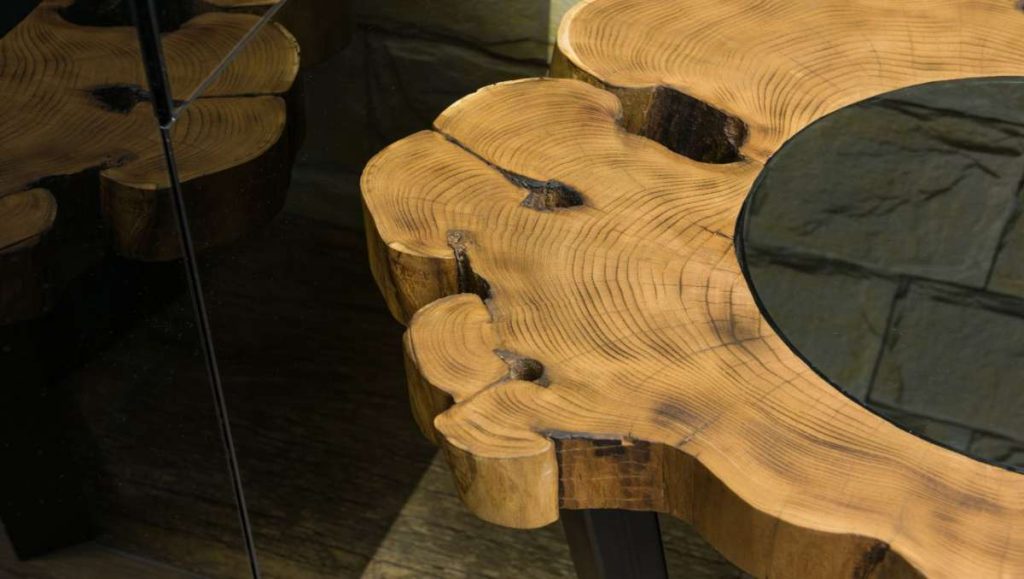
Live edge furniture brings natural character and a distinctive aesthetic, but it’s not without its drawbacks. Before making a purchase, it’s important to understand the potential limitations that can affect durability, maintenance, and long-term usability.
Higher Cost
Live edge furniture is usually more expensive than standard furniture because of the materials and labor involved. Smaller live edge pieces like coffee tables may start around $300–$1,500, while handcrafted dining tables commonly range from $1,500–$6,000 or more, depending on the wood species, slab size, customization, and level of detail.
Heavy Weight
Solid wood slabs can be extremely heavy, especially in larger dining tables or conference tables. While that weight adds stability and durability, it can make moving or rearranging furniture more difficult.
Maintenance Needs
Like most solid wood furniture, live edge pieces need regular care to maintain their appearance. Wood can react to humidity, temperature changes, and direct sunlight over time. Occasional oiling and protecting the surface can help preserve the slab’s natural beauty for years.
Live Edge Wood in Amish Furniture Making: The Process
Amish live edge furniture is valued for its craftsmanship and attention to detail, but creating these pieces takes far more work than standard furniture production. Here’s what the process typically looks like:
1. Selecting the Right Slab
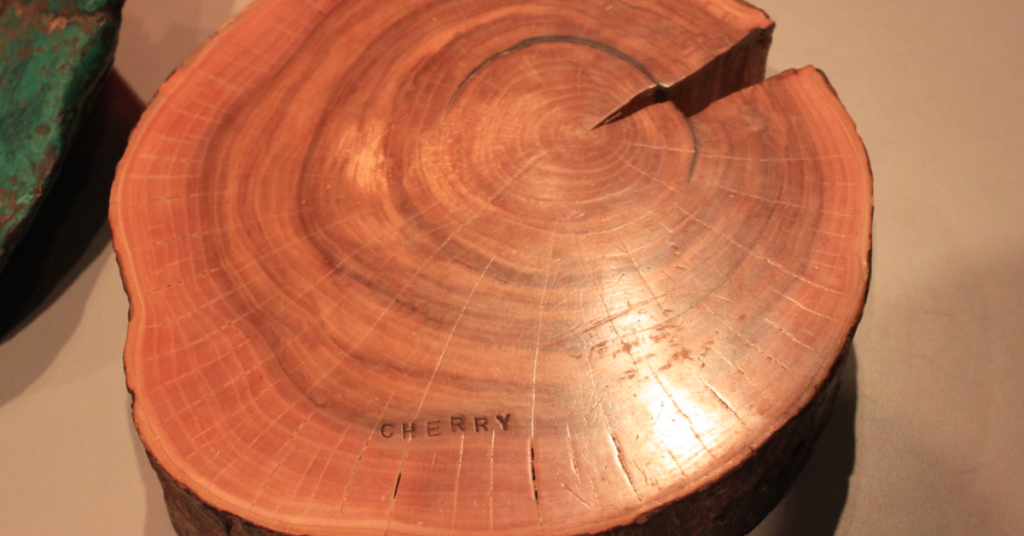
Everything begins with choosing the right slab of hardwood. Craftsmen evaluate the wood’s grain pattern, natural edges, knots, coloration, and structural stability to determine whether it is suitable for a table, desk, bench, or other piece. Since no two slabs are identical, this stage largely determines the final appearance of the furniture.
2. Drying and Curing the Wood
Freshly cut wood contains a high amount of moisture, so the slab must be properly dried before it can be turned into furniture. Many hardwood slabs are first air-dried for about one year per inch of thickness, a common industry guideline for reducing internal moisture gradually. After that, the wood is often kiln-dried for several additional weeks or months to reach a stable moisture level suitable for indoor furniture. Proper drying helps minimize future cracking, warping, and shrinking.
3. Preserving the Natural Edge
Instead of trimming the slab into perfectly straight lines, craftsmen preserve the tree’s original contours. The edges are cleaned, smoothed, and stabilized while maintaining the organic curves and natural character that define live edge furniture.
4. Building the Furniture Base
Because live edge slabs are often thick and heavy, the base must be carefully designed for balance and strength. Depending on the style, builders may use solid wood or metal bases that support the slab without overpowering its natural appearance.
5. Finishing and Protective Coatings
The final step focuses on both appearance and protection. Craftsmen sand the surface smooth and apply oils, stains, or clear finishes that enhance the wood grain while helping protect the furniture from moisture, scratches, and everyday wear.
💡 Did You Know?
Some premium live edge tables use “bookmatched” slabs, where a single slab is cut and opened like a book to create mirrored grain patterns. This technique creates a dramatic symmetrical appearance while still preserving the wood’s natural character.
Common Mistakes When Buying Live Edge Furniture
One of the biggest mistakes people make when buying live edge furniture is getting caught up in how it looks and forgetting to check the build quality. A good piece should be made from properly dried hardwood, so it doesn’t warp, crack, or shrink later on. It’s also worth checking how stable the slab is, how clean and natural the live edge looks, and whether the base is sturdy enough to support the weight over time.
Another thing people overlook is functionality and the finish. A dining table should be tough enough for everyday use, and a desk should feel smooth and comfortable to work on. Bad finishing techniques can create problems at both ends of the spectrum. Thick epoxy layers or excessive staining can hide the wood’s natural grain and texture, while inadequate sealing leaves the surface vulnerable to scratches and warping. The best live edge furniture looks beautiful but is also built to last and work well in everyday life.
Ready to bring nature’s raw masterpiece into your home? Explore our signature Amish Live Edge Dining Table today!
How to Care for Amish Live Edge Furniture
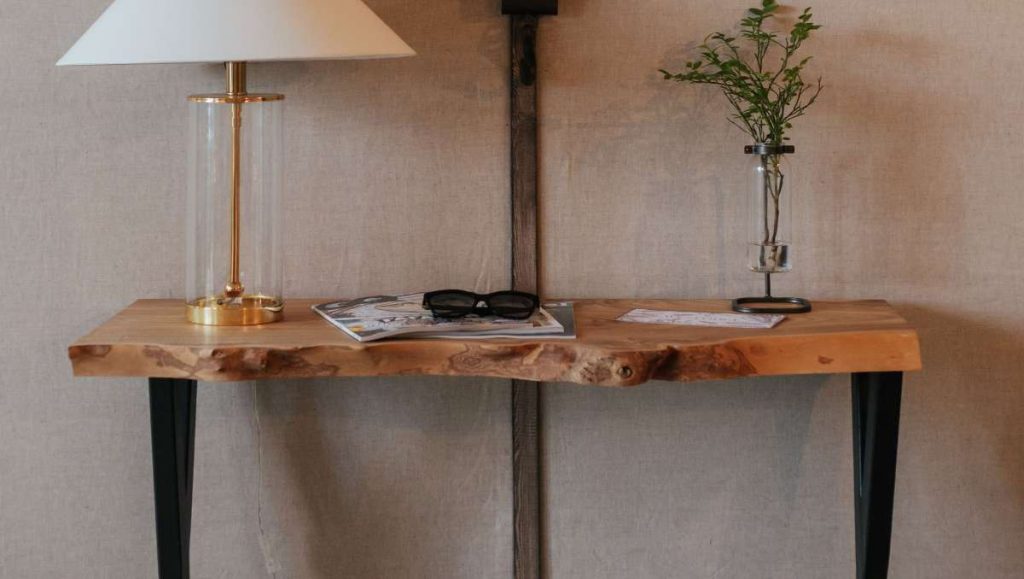
Proper care helps live edge furniture retain its beauty and structural integrity for decades. Because it is crafted from solid hardwood, the wood naturally expands and contracts with changes in humidity. To minimize movement, maintain indoor humidity between 35% and 55%. Avoid placing furniture near heating vents and limit prolonged exposure to direct sunlight. Using coasters, placemats, and felt pads also helps protect the surface from moisture, heat, and scratches.
For routine maintenance, dust regularly with a soft microfiber cloth and clean spills promptly using a damp cloth followed by drying. Avoid silicone-based polishes, harsh chemicals, and abrasive cleaners that can damage the finish. Furniture finished with natural oils may benefit from re-oiling every 6–12 months. Following the manufacturer’s care recommendations and inspecting the finish periodically will help preserve both the live edge character and the durability of the piece.
Conclusion: Is Live Edge Furniture Worth the Investment?
Live edge furniture stands out because it keeps the natural shape and character of the wood intact, giving every piece a unique look that cannot be exactly replicated. When combined with skilled Amish craftsmanship and solid hardwood construction, it becomes more than just furniture. It is a long-lasting piece with real personality and character.
While live edge furniture usually costs more and may need a little extra care, many people find the investment worthwhile. You are not just buying a table, desk, or bench. You are getting something durable, timeless, and completely one of a kind. For anyone who values natural beauty, craftsmanship, and furniture that adds warmth and individuality to a space, live edge furniture is absolutely worth considering.
Frequently Asked Questions
Why is live edge wood so expensive?
Live edge wood is expensive because high-quality slabs are rare. Each piece requires skilled craftsmanship to preserve its natural shape. The drying, selection, and finishing process also takes time, which adds to the overall cost.
Why do they call it live edge wood?
It is called “live edge” because the natural edge of the tree is left intact instead of being cut into a straight line. This keeps the original shape of the tree visible in the finished furniture.
What is another name for live edge wood?
Live edge wood is also commonly referred to as “natural edge wood” or “raw edge wood,” depending on the style and finishing approach.
Does live edge furniture crack over time?
It can develop small cracks or movement over time because it is made from natural solid wood. However, proper drying, sealing, and maintenance greatly reduce this risk and help the piece stay stable for years.