
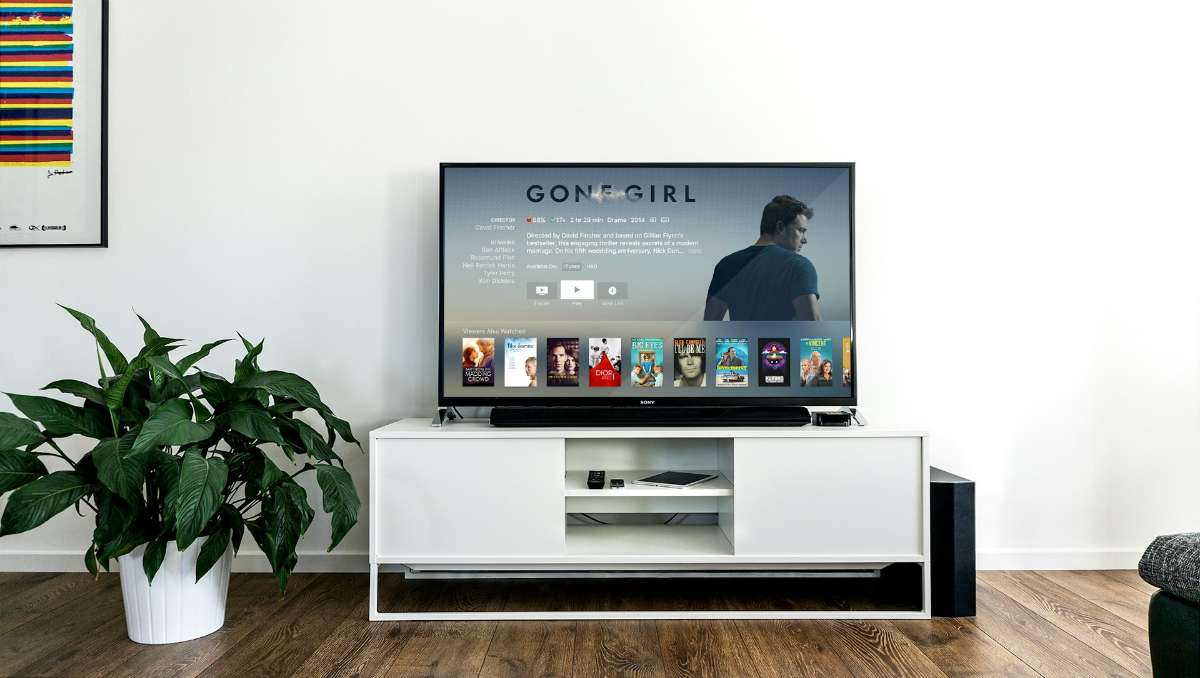
One of the most common living room design mistakes is choosing a TV stand that doesn’t properly fit the space or the television itself. A stand that’s too small, too tall, or too bulky can make the entire room feel unbalanced and even affect viewing comfort. The right TV stand size not only improves the overall look of your living room but also enhances storage, traffic flow, and everyday functionality, whether your style is modern or traditional. That is where a TV stand size guide becomes useful, helping you quickly understand the right proportions for a balanced and well-designed setup.
Key Takeaways:
- A TV stand should be at least 2–6 inches wider on each side of the TV for proper balance.
- Ideal viewing setup usually places the TV stand with 24–36 inches of clearance around walkways.
- Proper sizing depends on both your TV dimensions and your available room space.
In this TV stand size guide for modern and traditional living rooms, we’ll walk through the most important sizing considerations, including width, height, depth, and room layout.
Why the Right TV Stand Size Matters
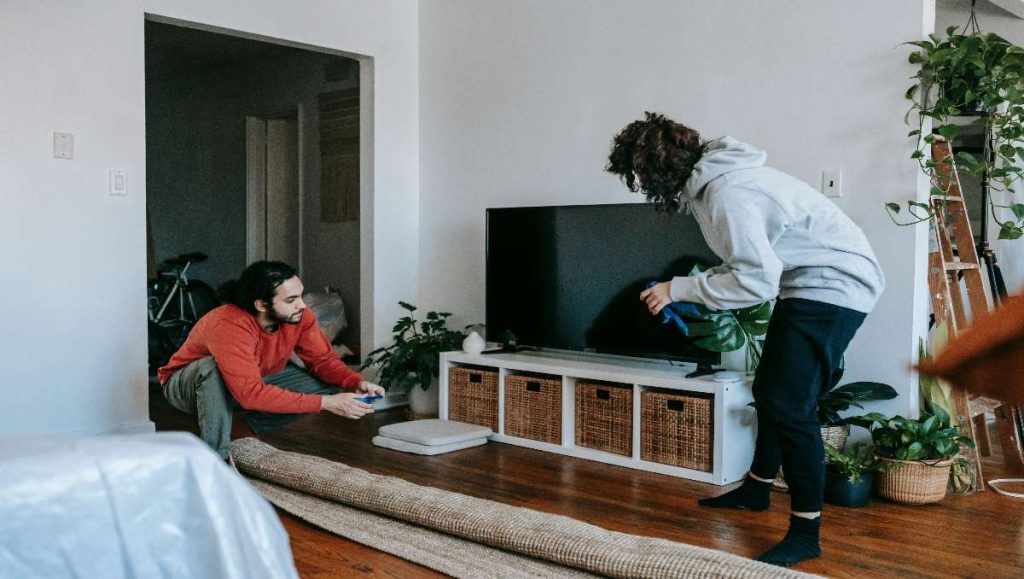
In custom furniture consultations, we often see homeowners focus on TV size first and room proportions second, which usually creates imbalance. A TV stand that is the wrong size can make your entire living room feel off, even if everything else looks great. Too small and the TV looks oversized, too bulky and it overwhelms the space and disrupts traffic flow. The right dimensions create a setup that feels comfortable, functional, and visually balanced.
TV stand size also affects everyday usability. Proper width supports stability, the right height improves viewing comfort, and enough depth ensures your media devices fit with proper airflow. At Amish Furniture Factory, we often remind homeowners that getting the proportions right first makes it easier to achieve a polished living room, whether modern or traditional.
Key Measurements for Choosing the Right TV Stand Size
Finding the right TV stand size comes down to a few key measurements. Below are the most important sizing guidelines to follow before choosing a TV stand.
Width
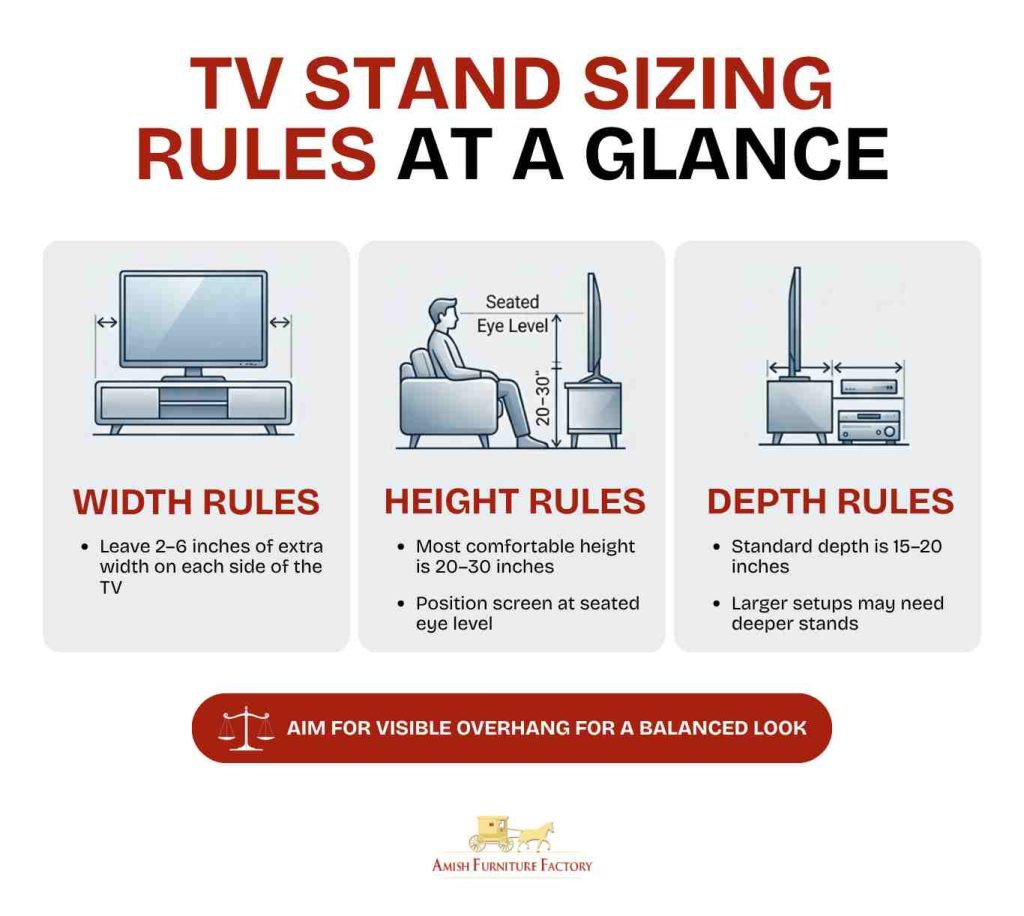
Your TV stand should always be wider than your television to create a stable and visually balanced setup. As a general rule, your TV stand should be at least 2–6 inches wider than the TV on each side. Larger living rooms and traditional furniture layouts often look better with even more extra width.
Here’s our recommended TV stand width by TV size:
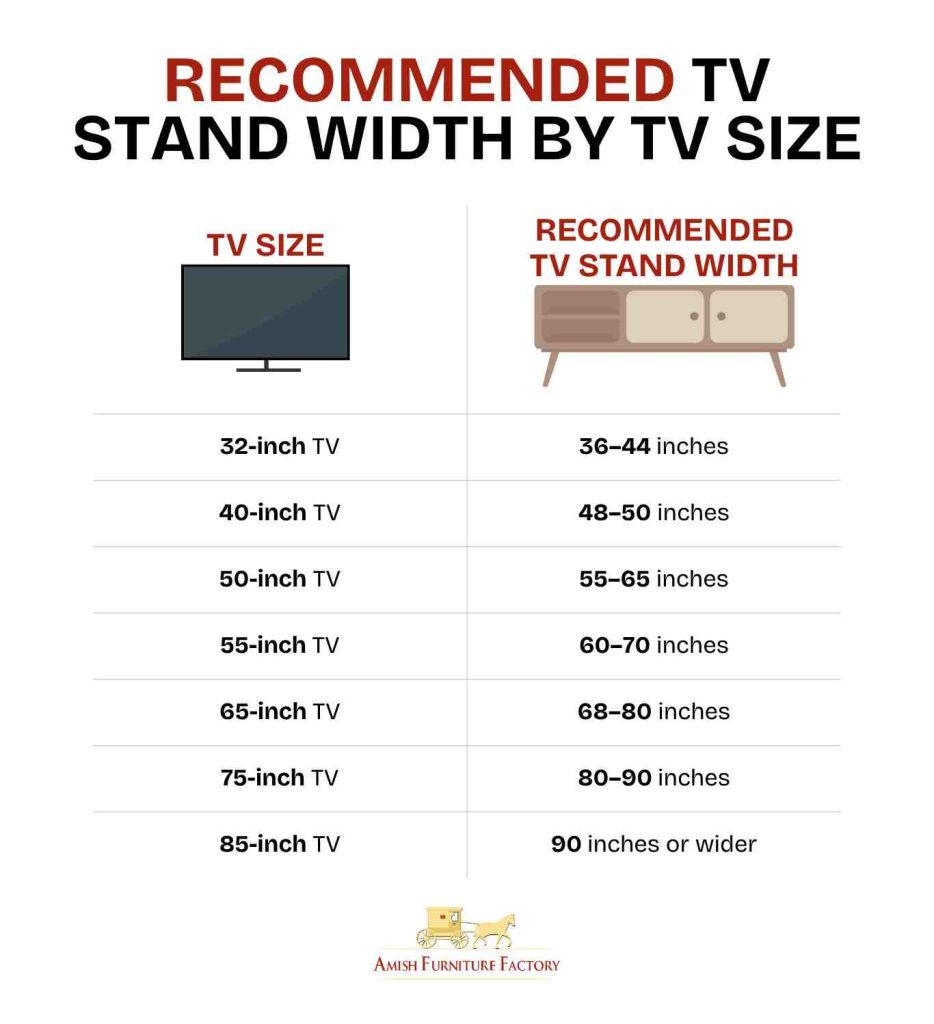
Note: Always check the actual width of your TV model since bezel thickness varies slightly by manufacturer.
Height
Most TV stands fall between 20 and 30 inches tall, which works well for standard sofas and seating arrangements. For the most comfortable viewing experience, the center of the TV screen should typically sit at or slightly below seated eye level, which is usually around 42–48 inches from the floor for most sofas.
Depth
For most setups, a depth of 15–20 inches works well. If you have larger entertainment systems, soundbars, gaming consoles, or cable boxes, you may need additional depth for cable management and airflow. In tighter living rooms, slimmer modern-style TV stands can help the space feel more open.
Overhang
Overhang refers to the amount of extra space between the edge of the TV and the edge of the stand. This detail may seem small, but it makes a big difference visually. A good target is about 2–6 inches of visible stand space on both sides of the TV. Traditional furniture styles often look better with a slightly larger overhang.
How to Choose the Right TV Stand Size
Before choosing a style, it helps to focus on a few practical guidelines first. Here are important considerations:
Match the TV Stand to Your Room Size
A TV stand looks best when it covers about 60–80% of the wall width. Measure your wall, nearby furniture, and walkways, leaving 24–36 inches of clearance (18–24 inches for tighter spaces).
Consider Your Viewing Distance
Your viewing distance affects both comfort and the overall TV stand setup. A common guideline is to sit about 1.5–2.5 times the diagonal size of your TV away from the screen. Here’s a quick example:
- 55-inch TV: about 7–11 feet away
- 65-inch TV: about 8–13 feet away
- 75-inch TV: about 9–15 feet away
Think About Storage Needs
TV stands often store consoles, remotes, and media devices. At Amish Furniture Factory, many homeowners choose solid wood TV stands with a mix of open and closed storage because they offer flexibility without sacrificing style.
Choose the Right TV Stand Material
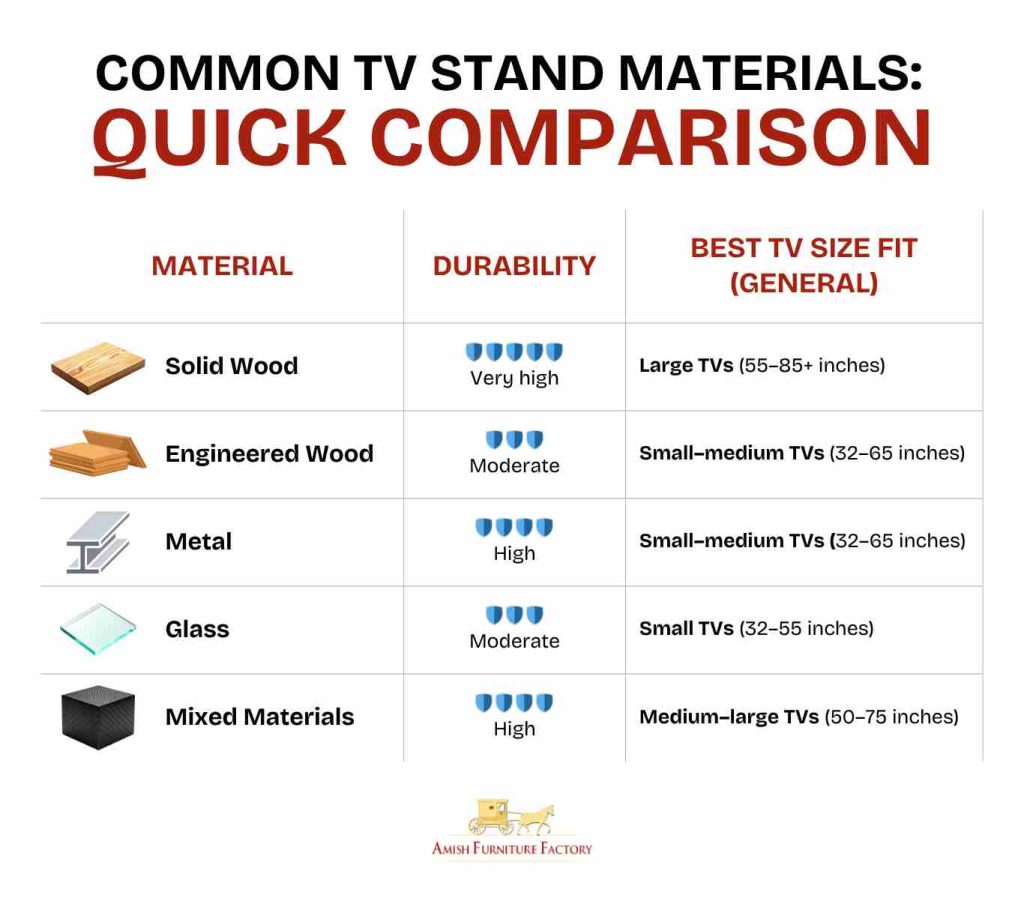
TV stand material affects more than style; it also impacts how well the stand supports your TV’s size and proportions. Solid wood offers the strongest, most stable base for larger TVs that need wider stands, while metal and glass work well for smaller setups where a lighter visual footprint helps maintain balance. Engineered wood is a cost-effective option best suited for mid-sized TVs with standard width requirements. Choosing the right material ensures your TV stand is not only durable but also properly aligned with your TV size and overall room fit.
Below is a quick comparison of common TV stand materials:
Keep Traffic Flow Clear
Make sure the stand doesn’t block movement. Maintain clear walkways and ensure doors and drawers can open fully without obstruction.
Choosing Between Wall-Mounted and Stand-Mounted TVs
Whether you choose a wall-mounted or stand-mounted TV directly impacts the size and type of TV stand you need. Wall-mounted TVs free up surface space and allow you to choose a lower, narrower media console since it no longer needs to support the screen’s weight. Prioritizing living room storage and proportion rather than load-bearing strength is easier with this type.
Stand-mounted TVs, however, require a wider and sturdier TV stand that can safely support the screen’s size and weight while also providing enough surface area for balance and visual stability. This setup typically demands more attention to stand width, height, and depth to ensure the TV feels properly supported and proportioned within the room layout.
Where to Place a TV Stand in Your Living Room
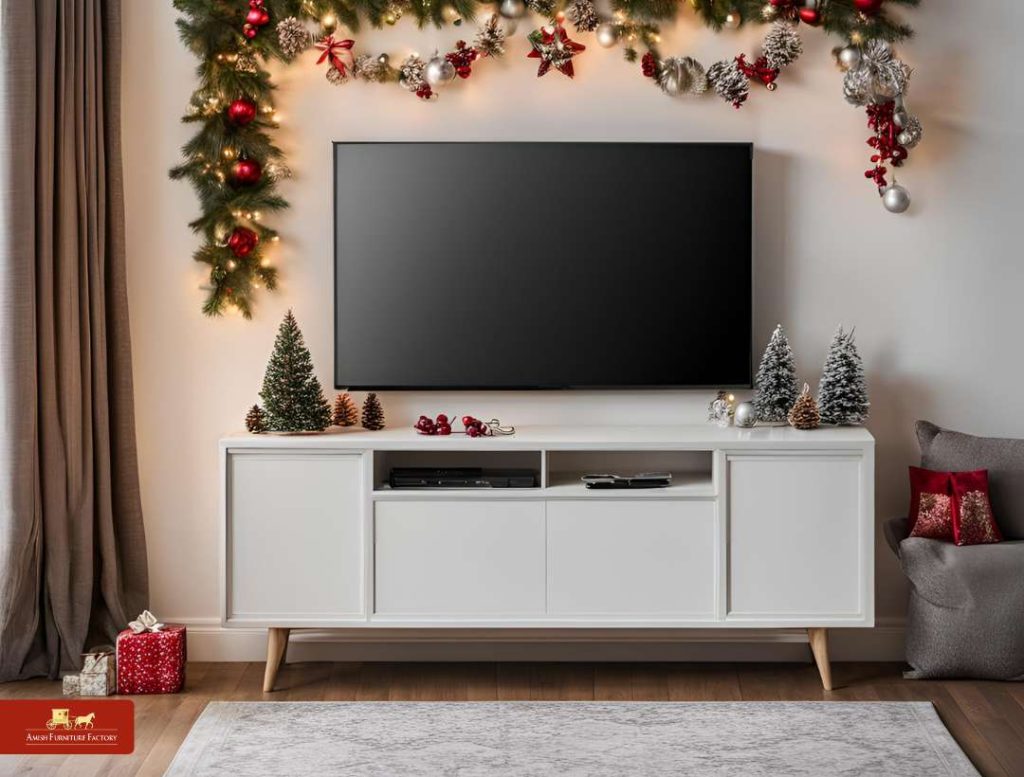
Where you place your TV stand can be just as important as the stand itself. The right placement improves viewing comfort, room flow, and overall balance, while thoughtful styling keeps the setup clean and visually intentional.
The Living Room Corner
Corner placement works well for smaller or irregular rooms, helping save wall space and improve viewing angles, especially with L-shaped seating or open center layouts. Keep styling light here since corners can feel visually tight, using minimal TV stand décor and maintaining open surfaces.
Main Living Room Wall
This is the most common choice, creating a strong focal point and working best with symmetrical furniture arrangements in larger spaces. For styling, balance the look with a simple color palette of two to three tones and avoid overcrowding the surface to maintain a clean focal area.
Opposite the Main Seating
Placing the stand directly across from the main seating area allows for comfortable, straight-on viewing, typically at a distance of 7 to 15 feet, depending on TV size. Keep décor low and minimal here so nothing distracts from the screen, and vary object heights slightly for subtle visual interest.
As a Room Divider
In open-concept spaces, a TV stand can act as a subtle divider between the living room and dining or kitchen areas. Low-profile stands work best here so the space still feels open while defining zones without walls.
Away From Glare and Heat Sources
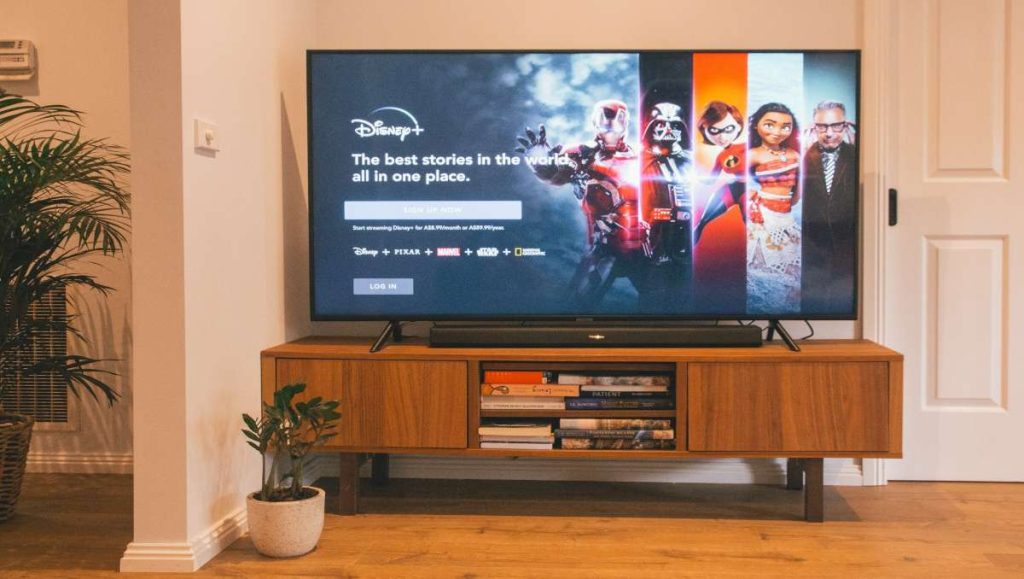
Avoid placing the TV opposite large windows or strong light sources to reduce glare, and keep it away from heat sources unless the furniture is designed for that placement. This also helps protect any decorative items on the stand from fading or damage.
Keep the setup intentional by mixing functional and decorative pieces like books, plants, and baskets, and varying heights for balance. Leave enough empty space so the stand does not feel crowded, typically around 30 to 40 percent of the surface. Use cable management solutions where possible to maintain a clean, finished appearance.
Ready to find the perfect fit for your media room? Browse our collection of Amish Mission TV stands to find a handcrafted piece that matches your screen size and style.
Conclusion: Choosing the Right TV Stand Size for Your Living Room
Choosing the right TV stand size comes down to finding the right balance between your TV, your room, and how you use the space every day. The stand should be wide enough to support your TV properly, tall enough for comfortable viewing, and deep enough to accommodate your devices without feeling crowded. It also needs to fit naturally into your layout, allowing enough space for movement and keeping the room visually open.
When accurate measurements are paired with thoughtful placement and simple, intentional styling, the TV stand becomes more than just storage. It becomes a grounding element that ties the living room together. Whether your style is modern, traditional, or somewhere in between, getting the size right is what creates a space that feels cohesive, comfortable, and well-designed.
Frequently Asked Questions
Should a TV stand be wider than the TV?
Yes. A TV stand should always be wider than your TV to create balance and stability. A good rule is to have at least 2–6 inches of space on each side of the TV so it doesn’t look cramped or top-heavy.
How large should my TV stand be?
It depends on your TV size, but a general guide is that the TV stand width should be about 1.2 to 1.5 times the width of your TV. It should also fit your wall space while leaving 24–36 inches of walking clearance in the room
Is a bigger TV stand better?
Not always. A bigger TV stand can provide more storage and visual presence, but if it’s too large for your room, it can overwhelm the space. The best size is one that matches both your TV and your room proportions.
Are floating TV stands better for modern living rooms?
Floating TV stands work well in modern spaces because they create a clean, minimal look and free up floor space. However, they usually offer less storage and require secure wall mounting, so they’re best for lighter setups.