
Homes that feel the most stylish and memorable rarely follow just one design rule. The ability to mix modern and traditional furniture is what gives a space depth, character, and a more personal feel. Combining sleek contemporary pieces with timeless classic furniture can make a room feel both polished and inviting, as long as the contrast feels intentional instead of competing for attention.
Key Takeaways:
- You can mix modern and traditional furniture successfully by repeating colors, materials, or shapes throughout the room.
- Choosing one dominant style prevents the space from feeling visually disconnected.
- Matching furniture scale and proportions helps contrasting pieces look cohesive instead of random.
This guide will walk through how to combine modern and traditional furniture in a way that feels cohesive, balanced, and uniquely yours.
What’s the Difference Between Modern and Traditional Furniture?
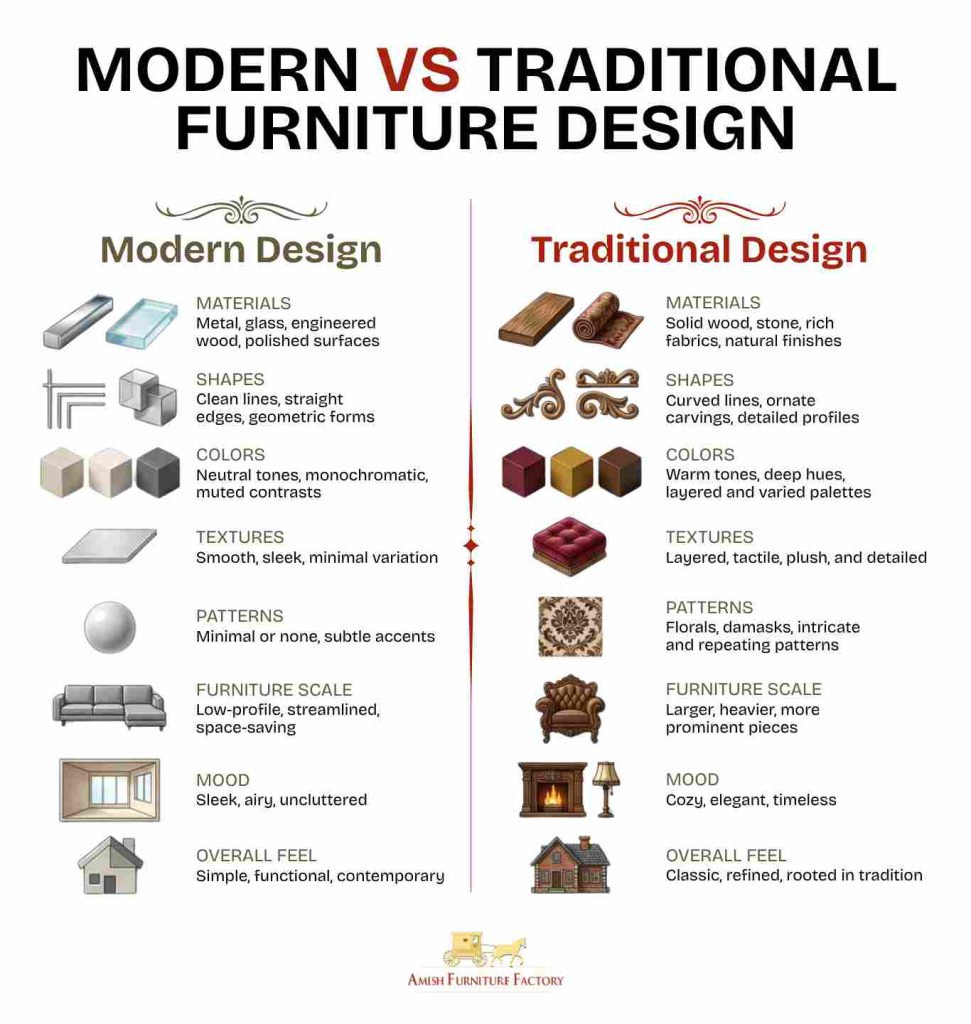
Modern and traditional furniture may work beautifully together, but they are built on very different design principles. Modern furniture focuses on simplicity, clean lines, and functionality, which is why it often features smooth surfaces, minimal ornamentation, and neutral color palettes. Traditional furniture takes almost the opposite approach, emphasizing warmth, craftsmanship, and decorative detail through rich wood tones, curved silhouettes, layered textures, and classic styling.
These differences are exactly what make the combination so visually appealing when done well. In many of our Amish furniture collections, we embrace traditional craftsmanship and timeless materials while designing pieces that still feel adaptable in modern homes. A solid wood dining table, for example, can bring warmth and character to a minimalist space, while modern accents can keep traditional furniture from feeling overly formal or heavy.
To better understand how these two styles differ at a glance, here’s a side by side comparison:
How To Mix Modern and Traditional Furniture Without Clashing
In many of our Amish furniture projects, we’ve found that the most successful spaces follow a few core design principles while layering styles gradually instead of forcing the mix all at once.
1. Start With One Dominant Style
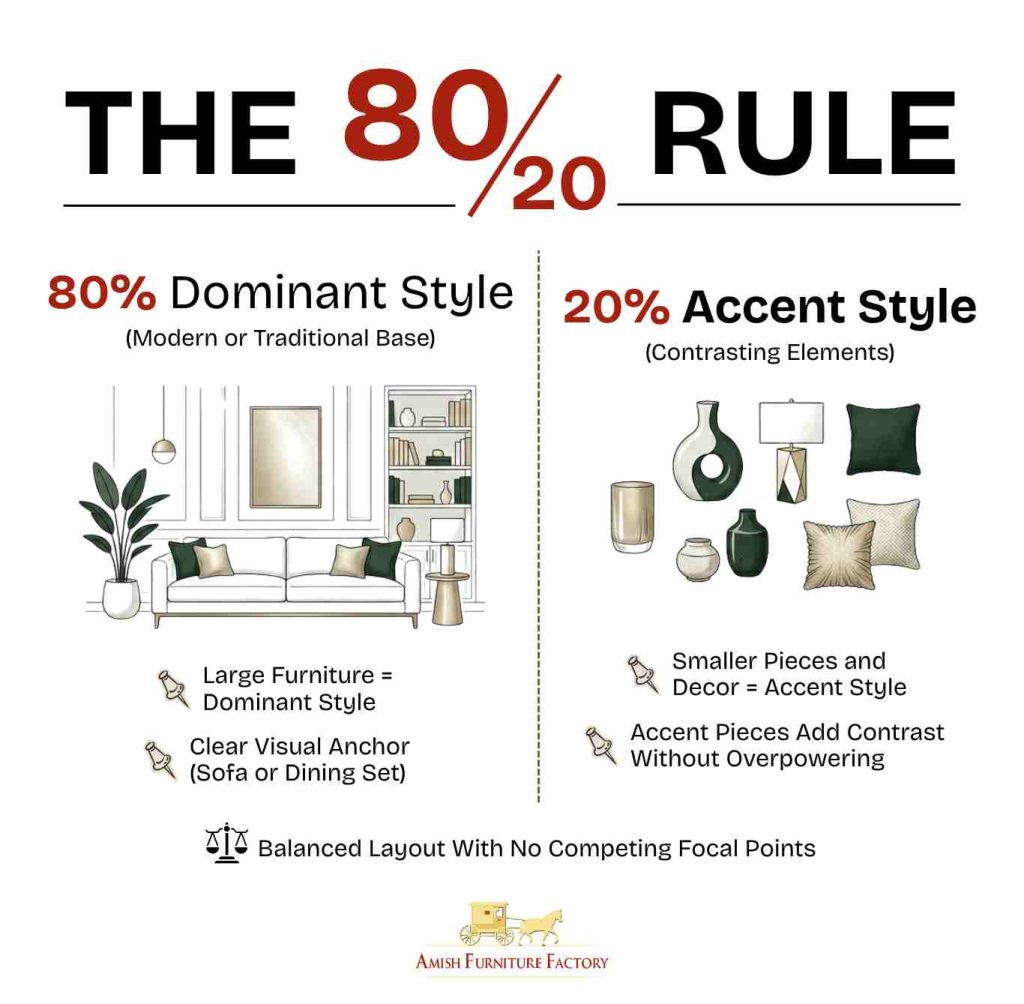
One of the biggest mistakes people make when blending styles is giving equal visual weight to both. Instead, choose one style to lead the room and let the other act as an accent.
A helpful guideline is the 80/20 rule. Keep roughly 80 percent of the room centered around either modern or traditional design, then use the remaining 20 percent to introduce contrast and personality. For example, a mostly modern room may include a traditional wood dining table, while a traditional space might feel refreshed with streamlined lighting or minimalist seating.
2. Use Color and Repetition to Create Visual Harmony
One of the easiest ways to connect different styles is through repetition. Repeating key elements throughout the room helps everything feel related, even when the furniture itself comes from different design traditions.
This repetition can come through:
- Shared colors
- Similar furniture finishes
- Repeated shapes or silhouettes
- Matching metal accents
- Consistent fabrics or textures
For example, a traditional carved wood console and a modern coffee table may feel connected if they share a similar walnut finish.
3. Mix Materials With Intention
Blending materials adds depth and character, but it works best when done thoughtfully. Modern interiors often feature glass, metal, and smooth surfaces, while traditional spaces lean toward warm woods, layered textiles, and decorative detailing. A sleek metal floor lamp beside a traditional upholstered chair, or a rustic wood table paired with modern dining chairs, can create a balanced and layered look.
4. Add Transitional Pieces to Bridge the Styles
Transitional style furniture helps soften the contrast between modern and traditional design. These pieces typically combine cleaner lines with classic materials or subtle detailing, making them easier to pair with both aesthetics.
In many homes, transitional pieces quietly become the elements that tie everything together. A simple wood dining table with understated craftsmanship, for example, can work comfortably alongside both modern lighting and traditional seating.
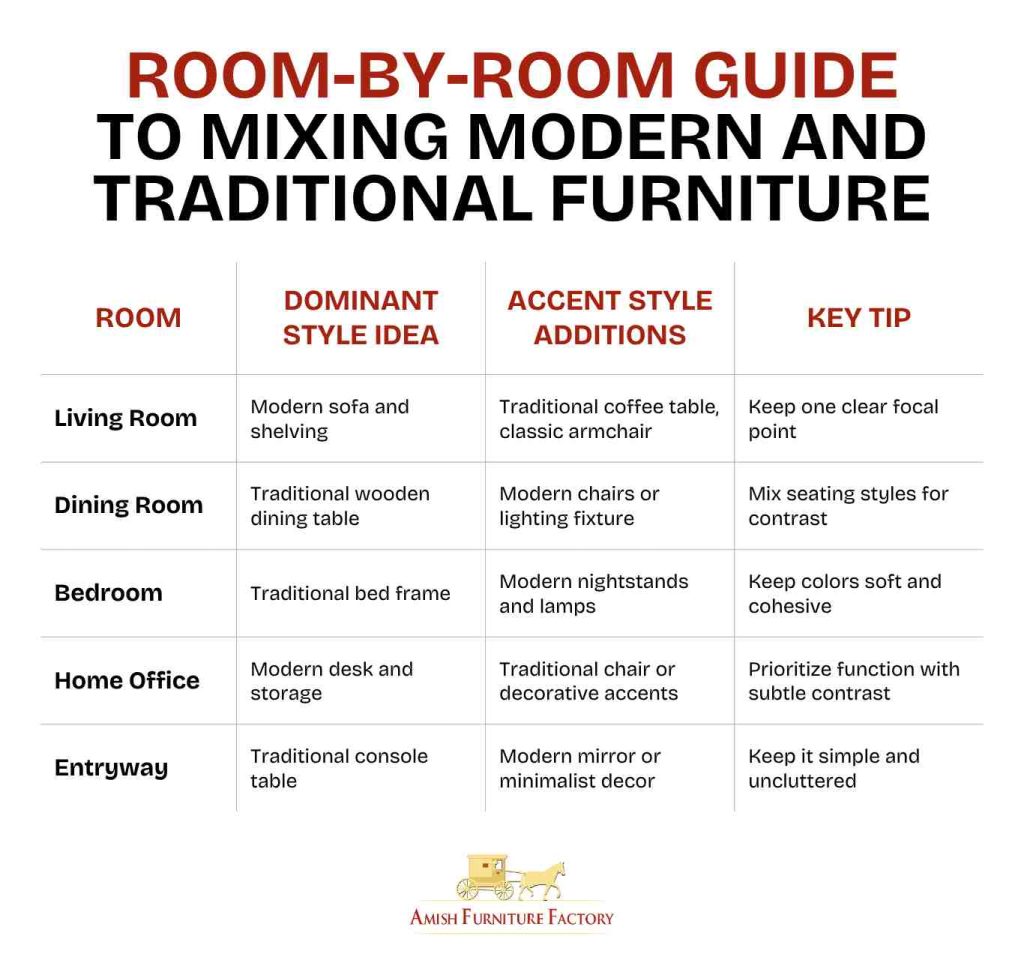
5. Apply the Blend Differently in Each Room
Every room benefits from a slightly different balance depending on how the space is used. Living rooms and dining areas often support a more noticeable mix because they are social spaces where style has greater visual impact. Bedrooms and home offices, on the other hand, usually feel better with a softer blend that prioritizes comfort and function.
We often recommend starting each room with one anchor piece, then layering complementary styles around it. Here’s a detailed room-by-room mixing guide:
Create a timeless, layered space with modern design and handcrafted Amish living room furniture. Explore our collection today.
Final Takeaway: Creating a Balanced Modern–Traditional Home
Mixing modern and traditional furniture works so well because contrast naturally creates visual interest. Clean lines and minimal shapes bring simplicity and structure, while traditional pieces introduce warmth, texture, and character through detailed craftsmanship and timeless design. Together, they create a balanced space that feels layered instead of flat or overly coordinated.
Ultimately, creating a balanced modern–traditional home comes down to intentional contrast. The most successful spaces usually lean slightly toward one dominant style while using elements from the other as accents to add depth and personality. When color palettes, scale, and repeating materials are thoughtfully coordinated, both styles can coexist without competing for attention.
Frequently Asked Questions
Can I mix modern and traditional furniture?
Yes. When done with balance and consistency, mixing these styles creates a more personalized and visually interesting space.
What is the easiest way to start blending two different furniture styles?
Start with a neutral base and introduce one or two contrasting pieces gradually. This helps you test combinations without overwhelming the space.
How do you choose a dominant style when mixing modern and traditional decor?
Look at your largest and most expensive pieces first. The style of those items usually becomes the foundation for the rest of the room.