
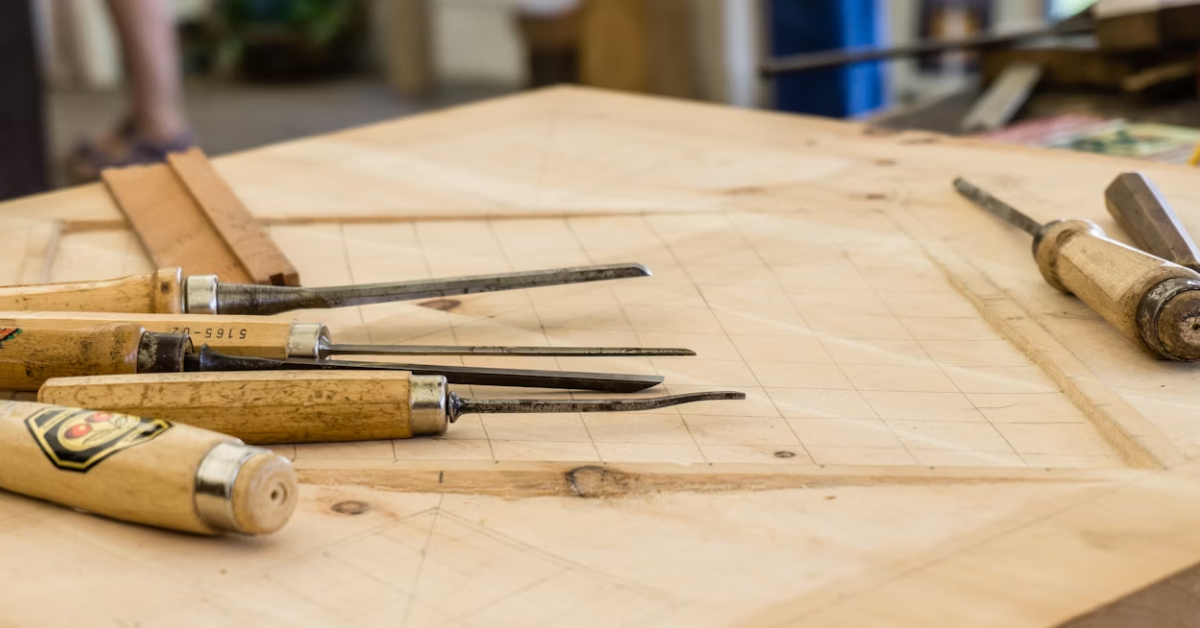
Amish furniture, renowned for its craftsmanship and durability, owes much of its charm and resilience to the choice of wood. Each type of wood, with its unique properties and beauty, plays a pivotal role in creating pieces that are not only functional but also rich in heritage and style.
Key Takeaways:
- Amish furniture uses different types of wood such as oak, cherry, maple, walnut, and hickory, each with distinct characteristics.
- Different wood types bring unique colors, grain patterns, and aging characteristics, allowing buyers to match the perfect wood to their style and needs.
- Understanding how each wood behaves over time helps ensure your Amish furniture investment remains beautiful, stable, and heirloom-worthy for generations.
In this article, we’ll take a closer look at the different types of wood commonly used in Amish furniture and how each one influences durability, appearance, and overall character.
Why Wood Selection Matters in Amish Furniture
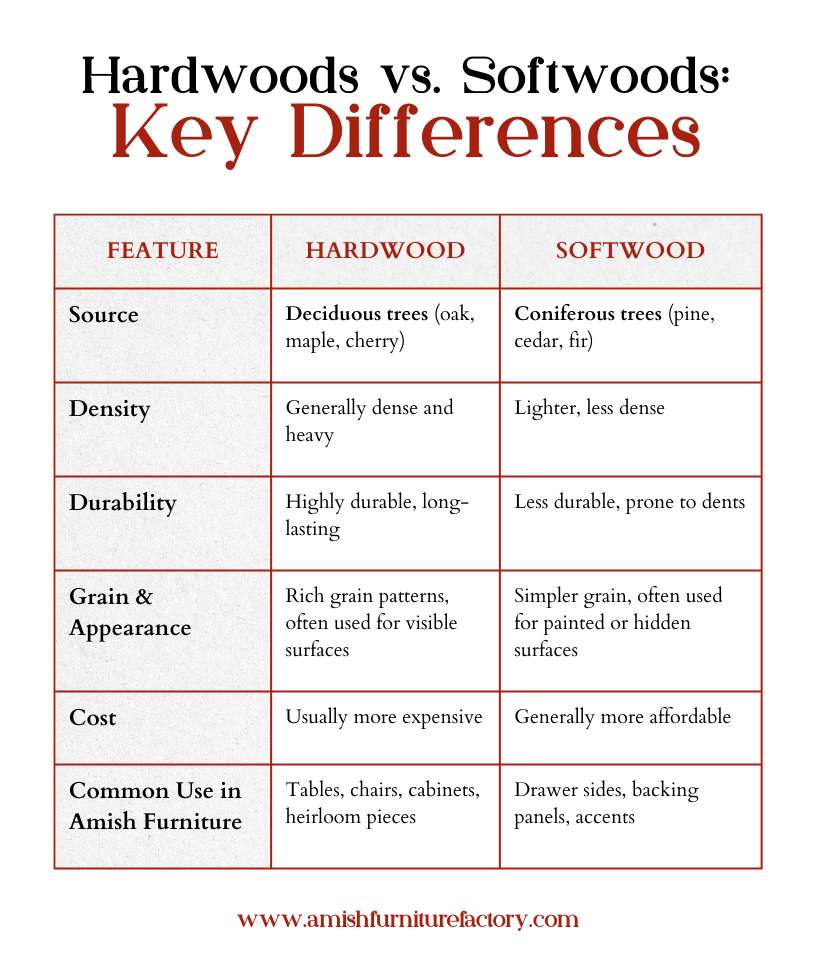
Choosing the right wood is a cornerstone of Amish furniture craftsmanship. The type of wood directly affects durability, appearance, and the overall lifespan of a piece. Amish furniture is renowned for its ability to last generations, and this longevity is largely due to careful selection of high-quality hardwoods and, in some cases, softwoods for specific applications.
Beyond durability, wood selection also impacts the furniture’s maintenance and aging process. Certain hardwoods develop a rich patina over time, enhancing the furniture’s character, while softer woods may be more prone to dents and scratches but can offer lighter, more versatile options. Understanding these differences helps buyers appreciate not only the craftsmanship but also the long-term investment they are making in Amish furniture.
Types of Wood Used in Amish Furniture
In Amish furniture making, selecting and identifying wood is crucial, emphasizing high-quality materials to ensure style and functionality.
Oak Wood
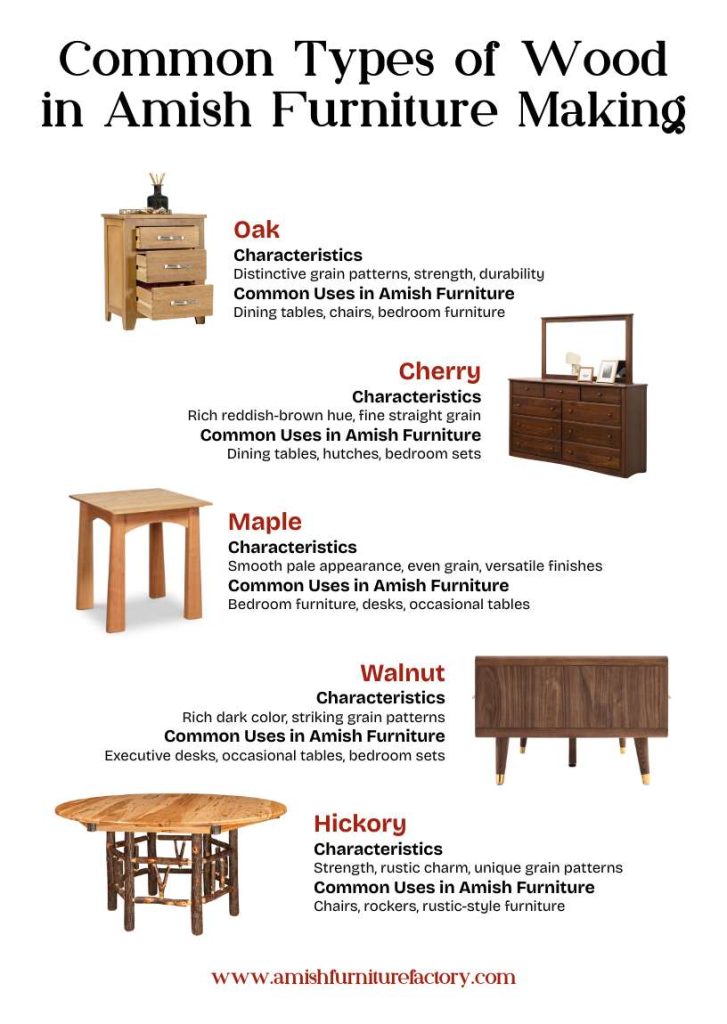
Oak wood is a staple in Amish furniture production. Its distinctive grain patterns, strength, and durability make it an excellent choice for crafting sturdy and long-lasting furniture pieces. Amish artisans appreciate oak’s versatility, as it can be stained to achieve various finishes, from light to dark. Oak’s prominent presence in Amish furniture is evident in classic pieces such as oak dining tables, chairs, and bedroom furniture sets.
Cherry Wood
Cherry wood (Prunus serotina) is prized for its warm, reddish-brown tones, fine straight grain, and its ability to darken beautifully over time, making it a favorite in Amish furniture. When exploring the different types of cherry wood, it’s important to know that cherry is not a single, uniform material. Variations arise based on growing region, tree section, and natural characteristics.
Common options include Black Cherry, known for its classic rich color; Pennsylvania Cherry, valued for its smooth, consistent grain; Rustic Cherry, which highlights knots and mineral streaks for a more natural look; and Sap Cherry, recognized for its striking contrast between light sapwood and darker heartwood. Some furniture also uses cherry veneer for a more affordable way to achieve the elegant appearance of solid cherry.
Maple Wood
Maple wood is favored for its smooth, pale appearance and fine, even grain. It is known for its ability to take on various finishes, including natural, honey, or dark stains, allowing Amish furniture makers to achieve a wide range of styles. Maple wood’s durability and resistance to wear make it suitable for crafting bedroom furniture, desks, and occasional tables.
Walnut Wood
Walnut wood is prizeless for its rich, dark color and striking grain patterns. Amish furniture made from walnut showcases a luxurious and opulent feel. The wood’s natural beauty and elegance make it a popular choice for crafting executive desks, occasional tables, and handcrafted bedroom sets that become heirloom pieces in many households.
Hickory Wood
Hickory wood is celebrated for its strength and rustic charm. Its unique grain patterns and natural variations in color create a distinctive appearance that appeals to those seeking a more rugged or rustic aesthetic. Amish artisans often use hickory for crafting chairs, rockers, and rustic-style furniture that adds character to any room.
Comparing Hardwood Durability and Hardness
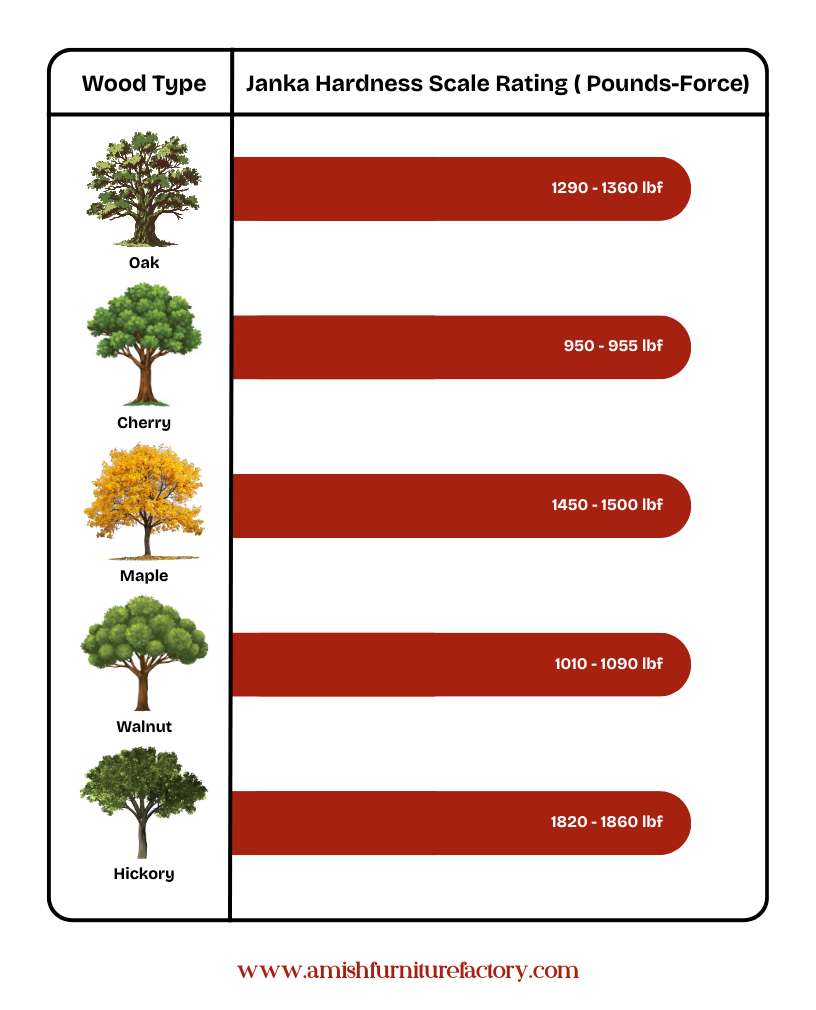
Different woods used in Amish furniture have varied Janka scale. These ratings reflect the wood’s ability to resist wear and denting and indicate how well it can handle the rigors of daily use and the demands of different furniture types.
From the WoodWorkers Guild of America, George Vondriska provides insight into the Janka hardness scale:
“The Janka hardness scale is based on a test that measures the amount of force needed to make a specific-sized impression in wood. The test has been performed on thousands of wood species, and serves as a great reference for woodworkers… It gives you an objective frame of reference to compare a new species to ones that you are familiar with.”
Harvesting Processes of Woods for Amish Furniture
When it comes to sourcing wood for Amish furniture, the harvesting process is about sustainable forest management, careful selection, and proper milling. Typically, wood destined for high‑quality furniture is harvested from well-managed hardwood forests using selective logging or silvicultural systems rather than indiscriminate clearcutting.Skilled foresters mark only mature trees for removal, preserving younger trees and maintaining ecological balance.
After selecting the trees, the process involves felling, delimiting, bucking (cutting into logs), and then transporting them to sawmills for further processing.After milling, lumber often undergoes drying to reduce moisture content and prevent issues such as warping or cracking.Proper harvesting and drying techniques help ensure that hardwoods maintain their strength, stability, and quality from forest to final product.
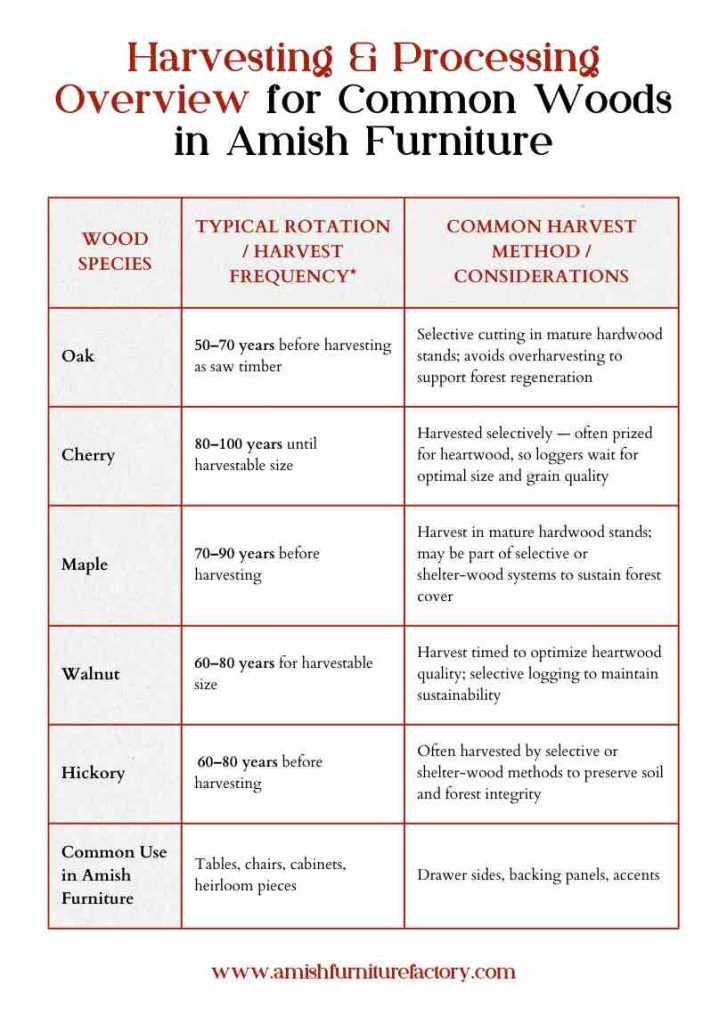
* “Rotation / Harvest Frequency” refers to the typical age (or waiting period) before hardwood trees are mature enough for high‑quality lumber, according to forestry data.
Appearance and Grain Differences
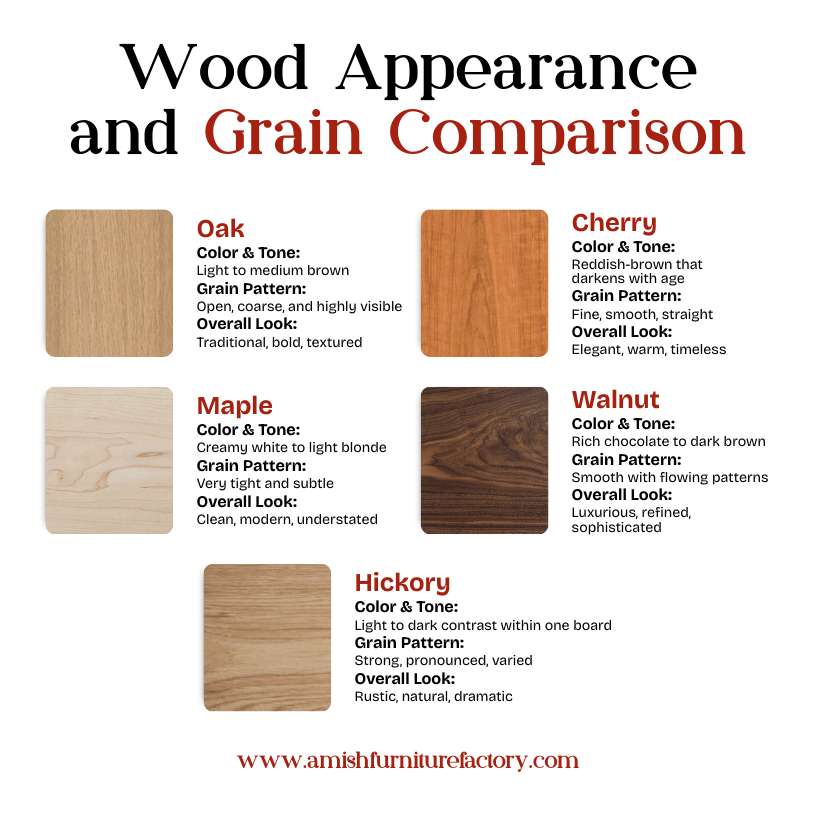
The appearance and grain of wood play a major role in the look and character of Amish furniture, with each wood type offering distinct visual qualities. Oak has prominent, open grain and visible texture, giving furniture a bold, traditional appearance. Cherry features a fine, smooth grain with warm reddish tones that darken into a rich patina over time. Maple has a very tight, subtle grain and a lighter, creamy color, resulting in a clean and modern look. Walnut stands out with its deep brown hues and flowing grain patterns that add sophistication and visual depth. Hickory, by contrast, has dramatic color variation and a strong, rustic grain, creating furniture with a rugged, eye-catching appeal.
Cost Differences Between Amish Furniture Woods
Various factors such as availability, harvesting methods, and wood characteristics influence the cost of wood used in Amish furniture. Understanding these price dynamics is crucial for consumers and Amish furniture industry makers.
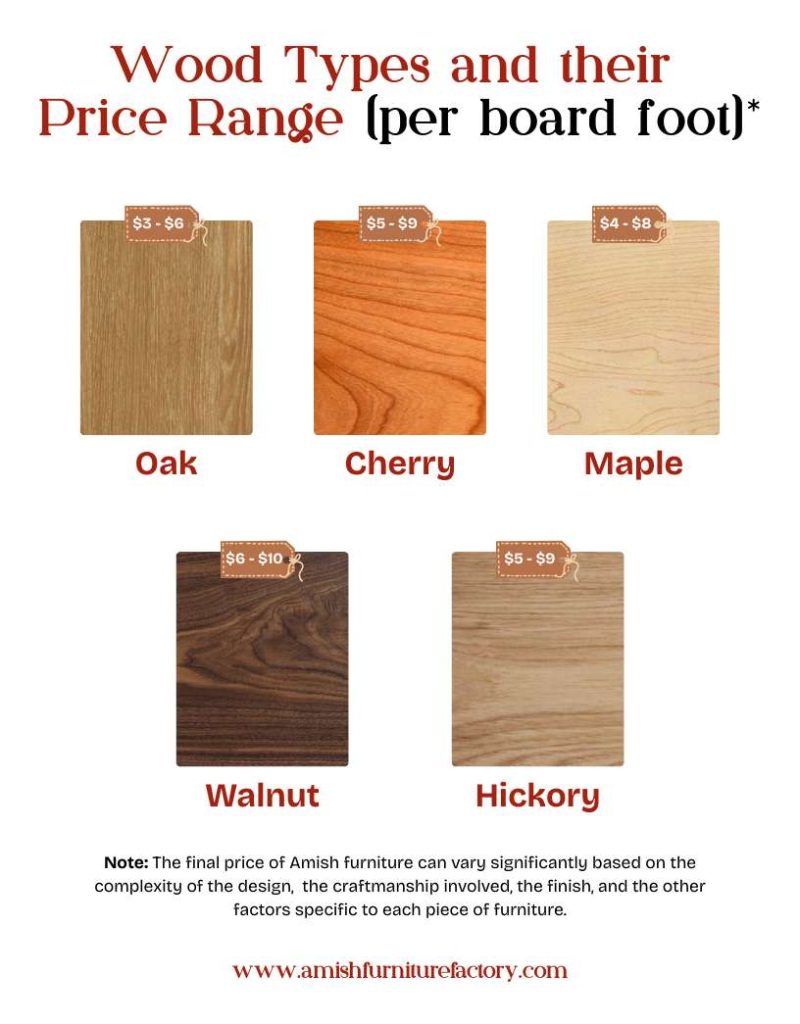
Note: The final price of Amish furniture can vary significantly based on the complexity of the design, the craftsmanship involved, the finish, and other factors specific to each piece of furniture.
Care and Maintenance for Different Wood Types
Proper care and maintenance are essential to preserve the beauty and longevity of Amish furniture, regardless of the wood type. Each species reacts differently to environmental factors like humidity, sunlight, and temperature changes. Hardwoods like oak and maple are naturally dense and resistant to dents and scratches, but they still benefit from regular dusting and occasional polishing with a high-quality wax or oil to maintain their luster. Softer hardwoods like cherry, while stunning in appearance, can darken over time and may require extra protection from prolonged exposure to direct sunlight.
Routine cleaning and preventative measures help prevent warping, cracking, or fading. Avoid placing furniture near heat sources or in areas with extreme moisture fluctuations. By understanding the specific needs of each wood type, owners can ensure their Amish furniture remains a functional and aesthetic centerpiece for generations.
Other Specialty Woods Occasionally Used in Amish Furniture
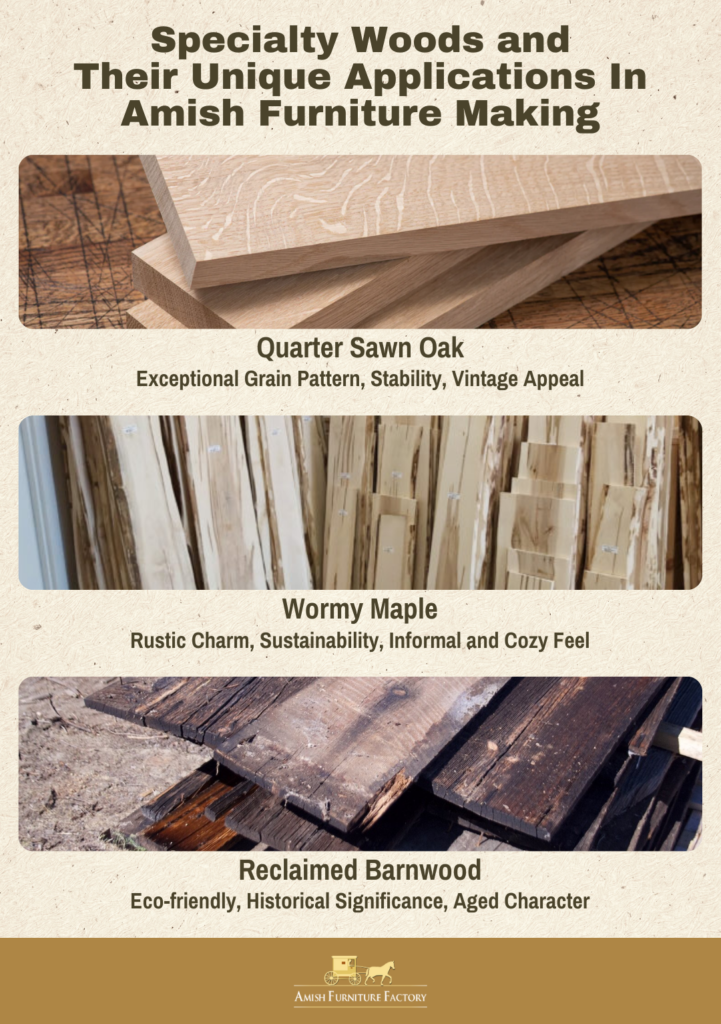
While common wood types like oak, cherry, maple, walnut, and hickory are the foundation of Amish furniture, specialty woods bring a unique touch to the craft, offering a spectrum of aesthetics and characteristics that cater to specific design preferences and individual tastes. These specialty woods allow Amish artisans to create exceptional and one-of-a-kind furniture pieces that resonate with discerning customers.
Quarter Sawn Oak
Quarter sawn oak, sometimes referred to as “tiger oak,” stands out for its exceptional grain pattern. Unlike plain sawn wood, quarter sawn oak is cut in a way that exposes stunning ray or fleck patterns, creating a visual masterpiece. This unique grain pattern features straight lines and consistent grain patterns, making it highly sought after, particularly in traditional and mission-style Amish furniture.
Wormy Maple
Wormy maple, also affectionately known as ambrosia maple, boasts unique dark streaks and small holes, a result of the presence of ambrosia beetles during the wood’s growth. These natural markings create a rustic and distinctive appearance that appeals to those seeking a more informal or rustic style in their Amish furniture.
Reclaimed Barnwood
Reclaimed barnwood tells a unique story through its aged appearance. Sourced from weathered barns and structures, it boasts nail holes, knots, and a captivating patina that speaks of its previous life. Each piece of reclaimed barnwood carries with it a sense of history, making it more than just furniture; it’s a piece of heritage.
Ready to explore the timeless beauty of Amish craftsmanship? Shop Amish furniture by type now to discover pieces made from the finest woods like oak, cherry, and maple.
Understanding the Craft: Wood Choices in Amish Furniture
In Amish furniture, choosing wood is more than a mere practical decision; it’s a testament to a rich heritage of craftsmanship. Each type of wood, from the robust Oak to the resilient Hickory, carries its own story, reflected in its unique characteristics and care requirements.
This exploration through different woods and their nuances underscores the deep connection between the material and the artistry of Amish furniture making. As we appreciate the beauty and durability these woods bring into our homes, we also embrace a legacy of skill, sustainability, and timeless design.
Frequently Asked Questions
What is the most durable wood used in Amish furniture?
Hickory is often the most durable due to its exceptional hardness and resistance to impact, followed closely by oak and hard maple.
How does cherry wood change color over time?
Cherry wood’s color change naturally happens under the light, gradually shifting from a light pinkish tone to a deep, reddish-brown patina that enhances its character.
Are certain types of wood better for heirloom-quality Amish furniture?
Yes. Dense hardwoods like oak, maple, cherry, and walnut are ideal for heirloom pieces because they offer long-term stability, strength, and timeless visual appeal.
How do I choose the right wood for my specific furniture needs?
Consider your desired look, durability requirements, environment (humidity, sunlight), and budget. For example, cherry lumber is excellent for warmth and elegance, oak for durability, and walnut for deep, rich tones.