


The bed is the largest piece in most bedrooms, which makes it the one purchase where construction quality shows the fastest. A hardwood bedframe brings natural warmth, lasting strength, and clean lines to a minimalist bedroom without making the space feel bare or cold. Its simple silhouette lets the beauty of solid wood take center stage while leaving room for softer bedding, textured fabrics, and carefully chosen accents. With the right design, a minimalist hardwood bedframe can make your bedroom feel calmer, more balanced, and built to last.
Key Takeaways:
- Hardwood bedframes offer excellent strength, durability, and natural character when built with quality materials and construction.
- Platform, low-profile, and floating designs each suit different ceiling heights, room sizes, and mattress types.
- Construction details such as joinery, center support, slat spacing, and hardware can be just as important as the wood species.
What is a Hardwood Minimalist Bedframe?

Minimalist and plain are not the same thing. When there is no carving, no applied molding, and no upholstery to hide behind, everything rests on proportion and joinery. The thickness of a rail, the taper of a post, and the fit of a joint become the only details in the room, which is why minimalist frames expose poor construction faster than ornate ones do. These bedframes are typically made from high-quality, solid wood like oak, walnut, or maple. The sturdy construction ensures that you’ll have a durable and lasting foundation for years to come. Minimalism in design means focusing on straightforward, sleek lines without extra embellishments, creating a sense of calm and serenity in your bedroom.
Types of Minimalist Hardwood Bedframes
When choosing a minimalist wood bed frame, there are several designs to consider, each offering a unique look and feel while maintaining the simplicity that defines minimalist style. Here are some popular types of minimalist hardwood bedframes:

Platform Bedframe
Platform solid wood bed frames are a popular choice in minimalist design because they eliminate the need for a box spring, offering a sleek and streamlined appearance. They typically sit low to the ground and feature a solid wooden base with simple, clean lines. Without a box spring, the frame’s own proportions carry the room, which is why the wood species and rail thickness matter more on a platform bed than on any other style.
Floating Bedframe
A floating bedframe gives the illusion of the bed hovering above the ground. This design uses hidden supports, creating a light and airy feel in the room. Floating bedframes are ideal for adding a contemporary, almost ethereal touch to the bedroom, making the space feel open and spacious.
Low-Profile Bedframe
Low-profile bedframes are designed to sit closer to the ground, enhancing the sense of openness and space in a room. These bedframes are great for creating a grounded, relaxed atmosphere that complements minimalist décor. The subtle design promotes a clean and serene look without overwhelming the room.
Upholstered Platform Bedframe
While still adhering to minimalist principles, an upholstered platform bedframe adds a layer of softness and comfort with fabric or leather upholstery. The base remains low to the ground, providing the clean, modern look typical of platform beds, but the added fabric or leather softens the overall aesthetic, making it feel cozier. Upholstered bedframes are ideal for those who want to incorporate a little texture and luxury into their minimalist bedroom without overwhelming the space.
Why Choose a Hardwood Minimalist Bedframe for Your Bedroom?
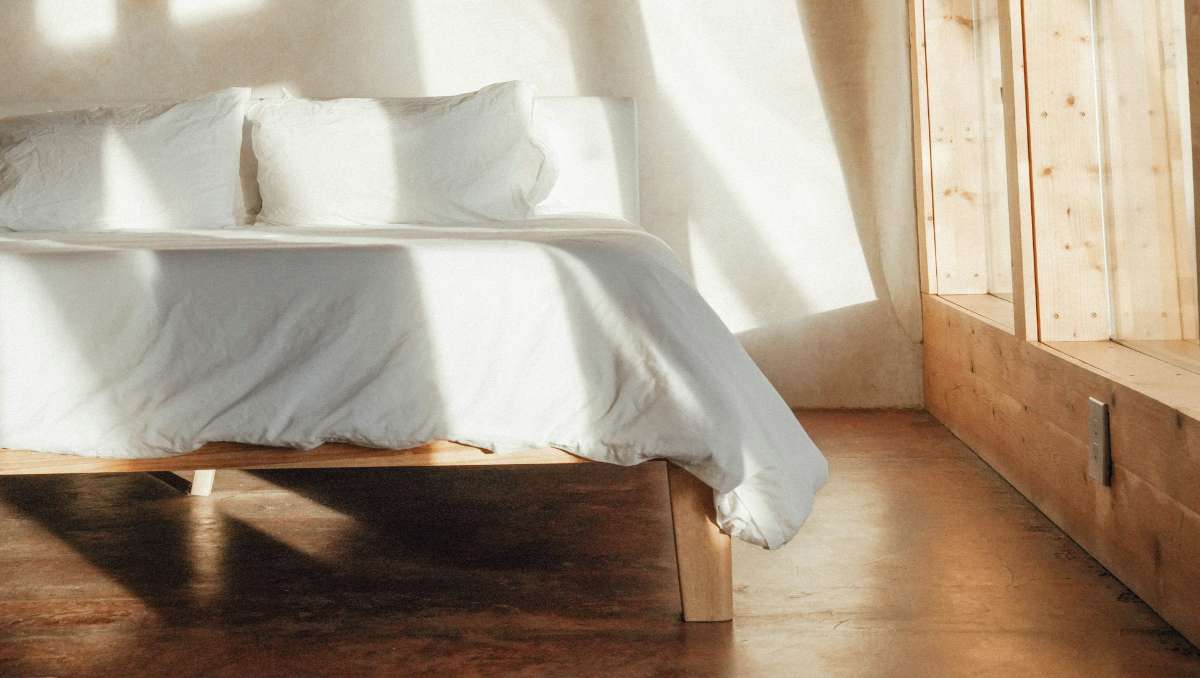
A hardwood minimalist bedframe combines style and durability, seamlessly fitting with various interior design aesthetics such as Scandinavian, Japandi, and midcentury modern styles. Its sleek, refined design ensures it remains timeless and versatile in any space. Solid hardwood holds fasteners and joints better than particle board or MDF, which is why it resists the sagging and creaking that show up in composite frames after a few years of use. As the wood ages, it only becomes more beautiful, developing character and charm. The environmental case for solid wood rests mostly on lifespan. A frame that can be repaired, refinished, and passed on does not enter the replacement cycle that composite furniture depends on.
How to Choose the Right Hardwood Bedframe
When choosing a hardwood bedframe, there are several factors to consider to ensure it meets both your functional needs and aesthetic preferences.
1. Choose the Wood Species
Wood species affect the appearance, feel, durability, and character of a hardwood bedframe. Oak is known for its prominent grain and strength, while walnut is prized for its rich color and distinctive appearance. Maple generally has a lighter, more uniform look, and cherry is known for its warm color that can deepen over time.
There is no single “best” hardwood for every bedframe. The right choice depends on the appearance you prefer, the construction of the bed, and your budget.
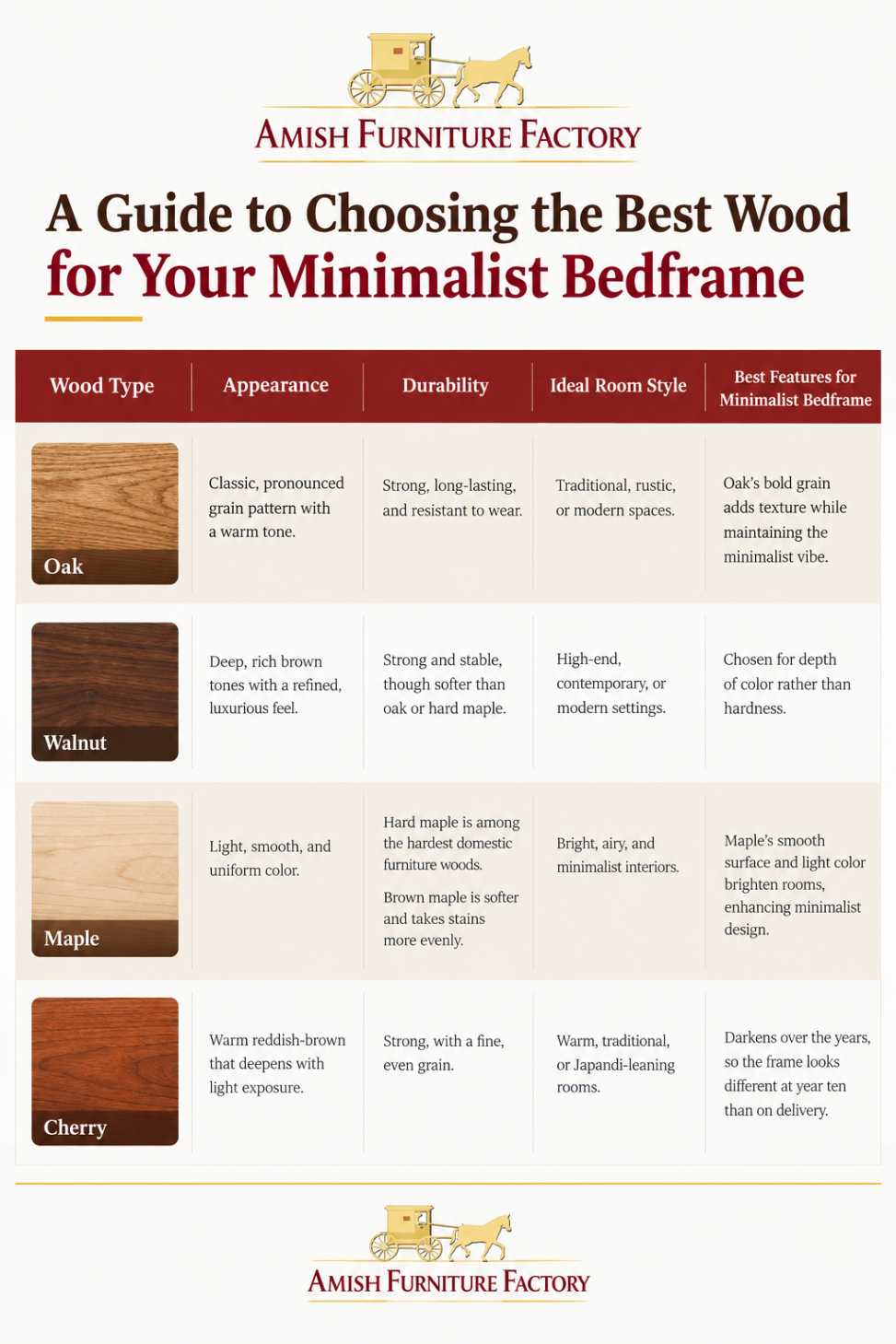
Not sure which species suits your room? Order free wood samples and compare oak, cherry, and walnut against your own flooring and light before you choose.
2. Examine the Joinery and Construction
Pay attention to how the bedframe is constructed. Mortise-and-tenon joinery in the headboard and footboard is the mark of a frame built to stay square. The rails are different. Because a bed has to come apart to move, the rails attach with steel hook-in brackets or bed bolts, and that hardware is a sign of a well-made frame rather than a shortcut. What to avoid is a rail that fastens with nothing but wood screws driven into end grain.
3. Check Mattress Support and Slat Spacing
A bedframe must provide the support required by your mattress. Platform beds commonly use wood slats, while other frames may be designed to hold a separate foundation. Check the spacing and strength of the slats, the presence of center support where required, and the mattress manufacturer’s specifications.
4. Consider Bed Height and Under-Bed Clearance
Bed height affects both appearance and everyday usability. A low-profile hardwood bedframe can create a relaxed, contemporary look and may make a room feel more open, while a taller frame can provide additional under-bed clearance and may be easier for some people to get in and out of. Add the mattress height to the frame height before you decide. A thick mattress on a low platform can swallow most of a headboard, leaving only a few inches of the panel or posts visible above the bedding.
5. Select the Finish and Color
The wood finish can make a big difference in the overall aesthetic of your bedroom. Lighter finishes such as natural maple or white oak keep a small room feeling open, while darker stains give a large room more weight. Sheen matters just as much on a minimalist frame. A satin or matte finish shows grain and shadow, while a high gloss reflects the room and flattens the detail the frame depends on.
How to Style a Bedroom Around a Hardwood Bedframe

A hardwood bed frame anchors the room, so everything else should relate back to its grain and tone. The simplest approach is to keep the case pieces in the same species and let bedding and textiles carry the contrast.
For a minimalist or Scandinavian look, pair a simple hardwood bedframe with neutral bedding, natural fabrics, and restrained accessories. For a traditional room, incorporate layered bedding, substantial nightstands, and classic lighting. Japandi-inspired bedrooms can combine a low-profile wood frame with linen, wool, ceramics, and other natural textures.
Regardless of style, allow the hardwood bedframe to remain one of the room’s primary visual elements rather than surrounding it with too many competing pieces.
Looking to complete your bedroom’s look? Check out our Top 10 headboard styles for every bedroom aesthetic and find the perfect match for your space!
How to Care for a Hardwood Bedframe
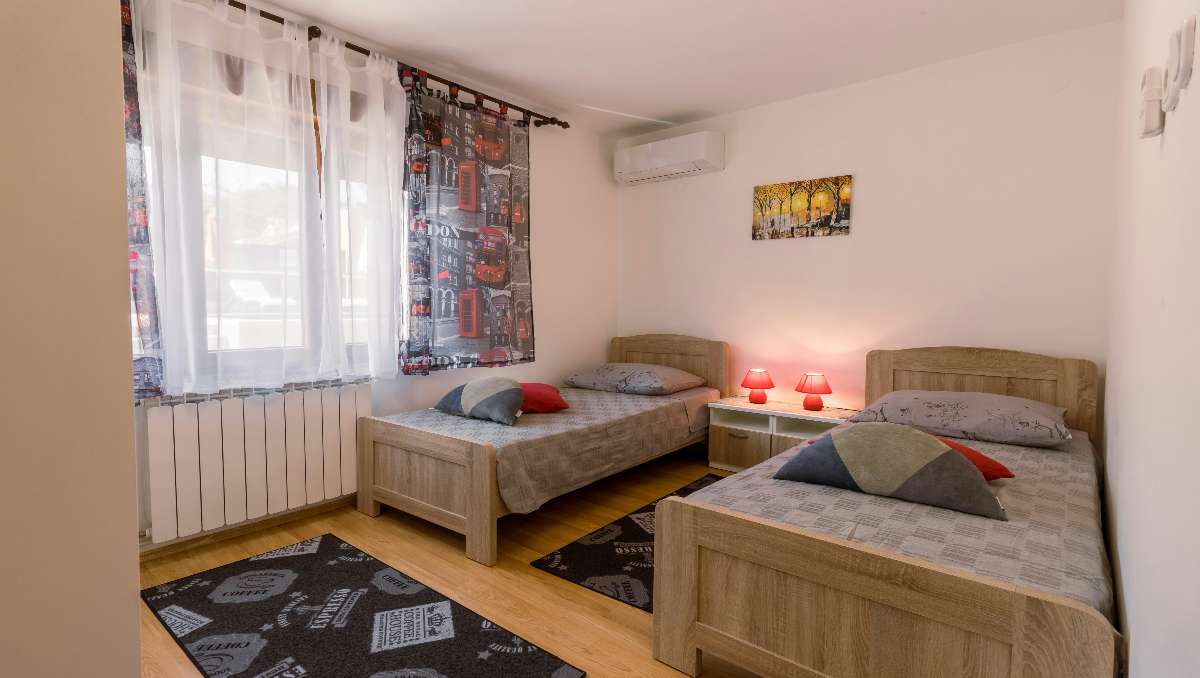
Regular care can help preserve the appearance and condition of a hardwood bedframe for many years. Dust the frame with a soft, dry or slightly damp cloth and clean spills promptly to prevent moisture from remaining on the surface.
Skip household cleaners with ammonia or bleach, which can dull a catalyzed finish. Resist the urge to oil a finished frame, since oils and conditioners are meant for raw or oil-finished wood and will sit on the surface of a sealed one. A dry cloth handles most of the job. Periodically check the frame’s hardware, slats, center supports, and joints, particularly after moving or reassembling the bed. If hardware has loosened through normal use, tighten it according to the manufacturer’s instructions.
Keep the room’s humidity reasonably stable through the year. Solid wood moves with the seasons, and a frame that goes from a humid summer to a dry heated winter will loosen at the joints faster than one in steady conditions.
Ready to elevate your bedroom with a timeless minimalist design? Discover the craftsmanship and beauty of the Amish Trimble Bed today and bring lasting quality to your space!
Choosing a Hardwood Bed Frame Built to Last
A hardwood bedframe offers a balance of natural beauty, dependable construction, and design versatility. As you compare options, look beyond appearance alone. Wood species, joinery techniques, mattress support, custom dimensions, finish, and construction quality can all influence how a bedframe performs and ages over time. Choosing a well-made hardwood bedframe that suits your mattress, space, and personal style can give you a piece of furniture designed to remain useful and beautiful for years to come.
If you’re ready to find a hardwood bedframe built with quality materials and traditional craftsmanship, explore our handcrafted beds available from Amish Furniture Factory. Order free wood samples first. Comparing oak, cherry, and walnut in your own bedroom light tells you more in five minutes than any photograph will.
Frequently Asked Questions
Is a hardwood minimalist bedframe difficult to assemble?
Solid wood beds usually arrive with the headboard and footboard already built, leaving the rails and slats to attach. Two people and about half an hour is typical.
Can I use a hardwood minimalist bedframe in a small bedroom?
Yes, hardwood minimalist bedframes are perfect for smaller bedrooms as their clean lines and simple design help create a sense of space. Opt for lighter wood tones to enhance the airy feel and make the room appear larger.
How long does a hardwood bedframe last?
There is no fixed lifespan for every hardwood bedframe. Longevity depends on the wood species, construction, joinery, hardware, mattress support system, frequency of moving or disassembly, environmental conditions, and everyday use. A solid hardwood frame built with mortise-and-tenon joinery and steel rail hardware is built to be passed down rather than replaced, and it can be tightened, repaired, or refinished along the way.
Do solid wood bed frames creak?
Creaking almost always comes from the joints and the rail hardware rather than the wood itself. Frames with mortise-and-tenon joinery and steel hook-in rails stay quiet, and a frame that starts to creak after a move usually just needs its hardware retightened.
What is the best hardwood for a bedframe?
There is no single best hardwood for every bedframe. Oak is popular for its strength and prominent grain, walnut for its rich color and distinctive appearance, maple for its lighter and more uniform look, and cherry for its warm tones and smooth grain. Construction quality is just as important as wood species when evaluating a bedframe.
Does a hardwood bedframe need a box spring?
Not necessarily. Many hardwood platform beds support a mattress directly with slats and do not require a box spring. Other bedframe designs may be intended for use with a foundation.