
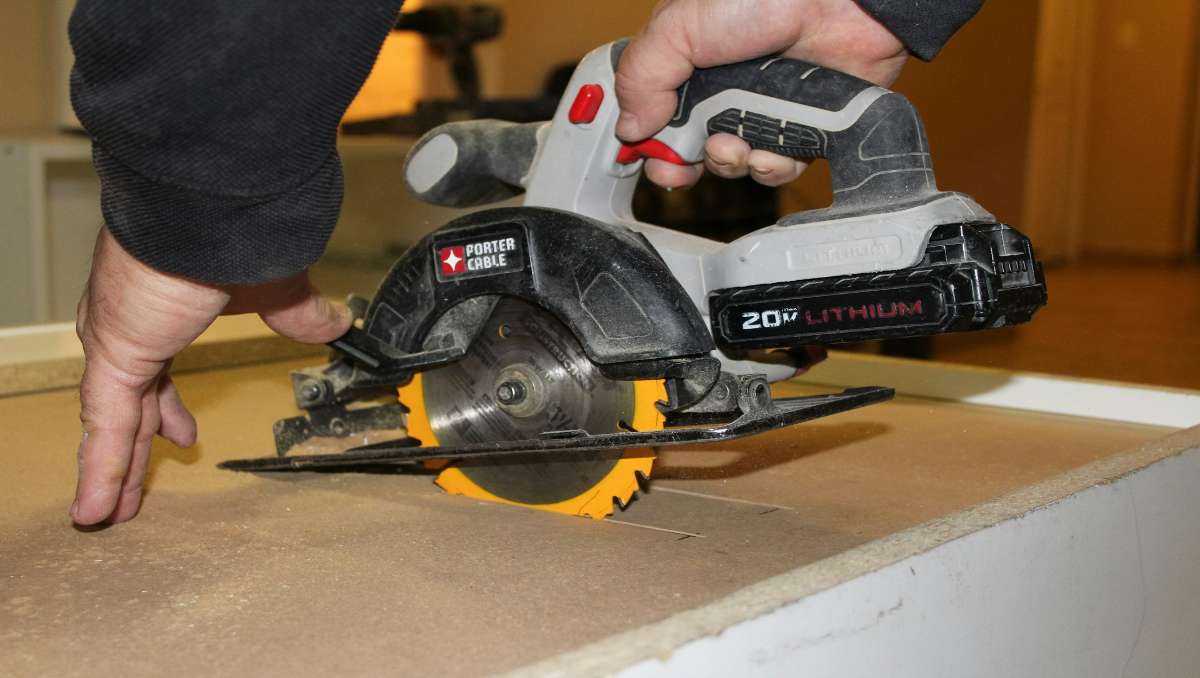

Getting started with woodworking can feel a little intimidating. Rows of tools, unfamiliar terms, and the fear of messing up a perfectly good piece of wood can stop many people before they even begin. The truth is, everyone starts somewhere, and you do not need a fully stocked workshop or years of experience to create something you are proud of. With a few basic tools, simple materials, and a willingness to learn as you go, woodworking can become a truly rewarding hobby.
Key Takeaways:
- Easy woodworking projects focus on basic cuts and straightforward assembly, making them ideal for beginners learning to work with common tools and materials.
- Items like small shelves, picture frames, trays, stools, and simple organizers offer both functional and decorative results while keeping complexity low.
- Measuring, cutting, sanding, and joining wood are reinforced through repetition, helping beginners improve with each project.
In this article, we will explore 7 easy woodworking projects for beginners that are practical, enjoyable, and designed to help you build confidence from your very first cut.
The Benefits of Starting with Simple Wood Project Ideas
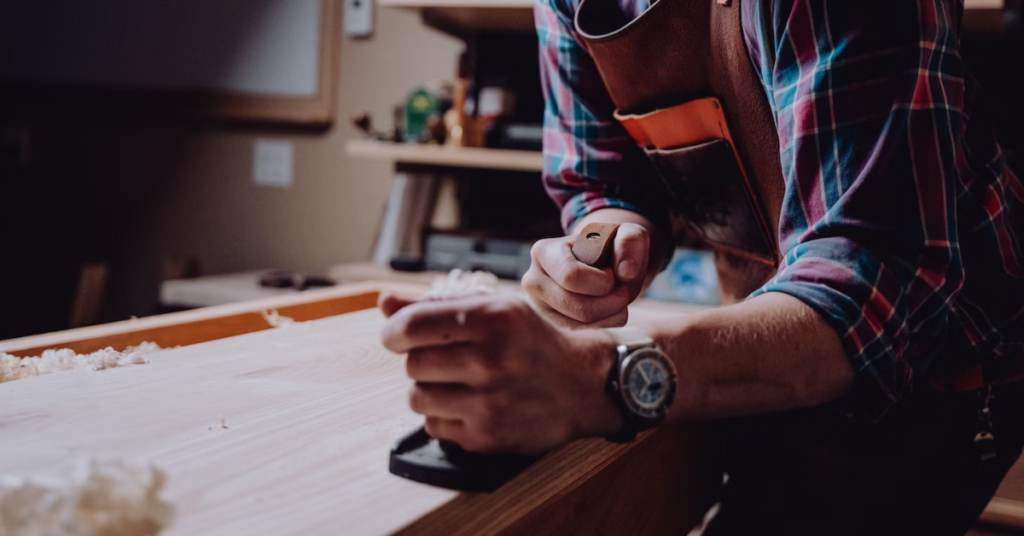
Starting with easy woodwork projects gives beginners the space to learn woodworking without the pressure of perfection. Simple builds let you focus on the fundamentals without juggling too many steps at once. When a project feels manageable, mistakes become lessons instead of frustrations, and finishing something tangible boosts confidence in a way tutorials alone never can.
These beginner-friendly projects also introduce essential woodworking techniques in a practical, repeatable way. You’ll naturally pick up skills like drilling straight holes, sanding for a smooth finish, and fastening joints properly, skills that carry over into more advanced builds later on. Instead of rushing into complex plans, starting small helps you develop good habits early, creating a solid foundation that makes future woodworking projects easier.
Top 7 Easy Woodwork Projects for Beginners
If you’re a beginner in woodworking, there are several easy projects that can help you get started.
1. Simple Wooden Box
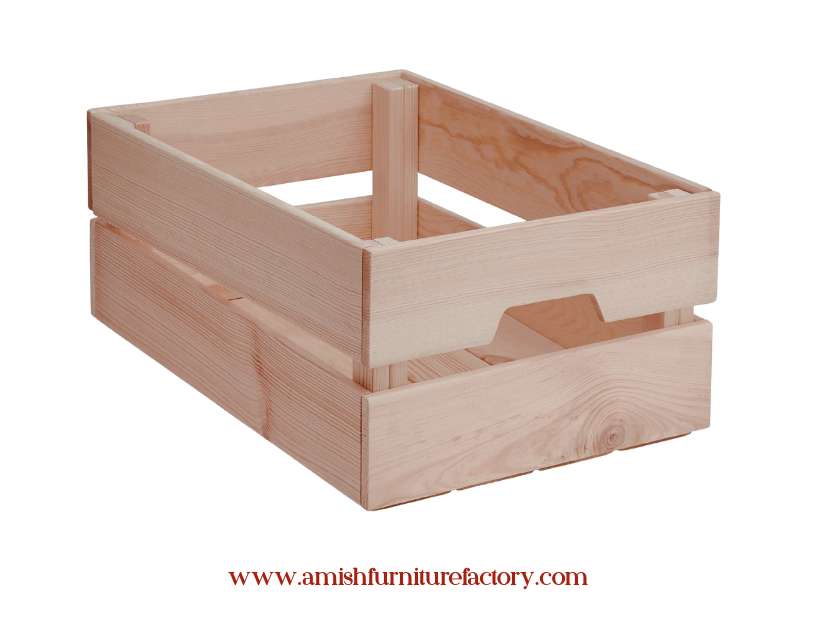
With just a few basic tools and materials, you can make beautiful wooden jewelry boxes, rustic decor pieces, or personalized wedding gifts that will impress your friends and family.
Materials required:
- Planks of wood (pine wood or cedar are great starter choices)
- Nails or screws
- Sandpaper (80 grit and 220 grit)
- Wood glue
- Optional: wood stain or paint for finishing
Instructions:
Measure and cut your wood into six pieces: a base, two sides, two ends, and a lid. Sand each piece thoroughly, starting with 80-grit sandpaper to remove rough areas and finishing with 220-grit for a smooth surface. Assemble the box by gluing the sides to the base and reinforcing with nails or screws, then attach the end pieces. For the lid, you can either use hinges or create a snug-fitting top.
Once assembled, paint or stain the box to protect and enhance the wood. Add a personal touch by lining the interior with felt, attaching a small latch, or carving simple designs into the lid.
2. DIY Coasters
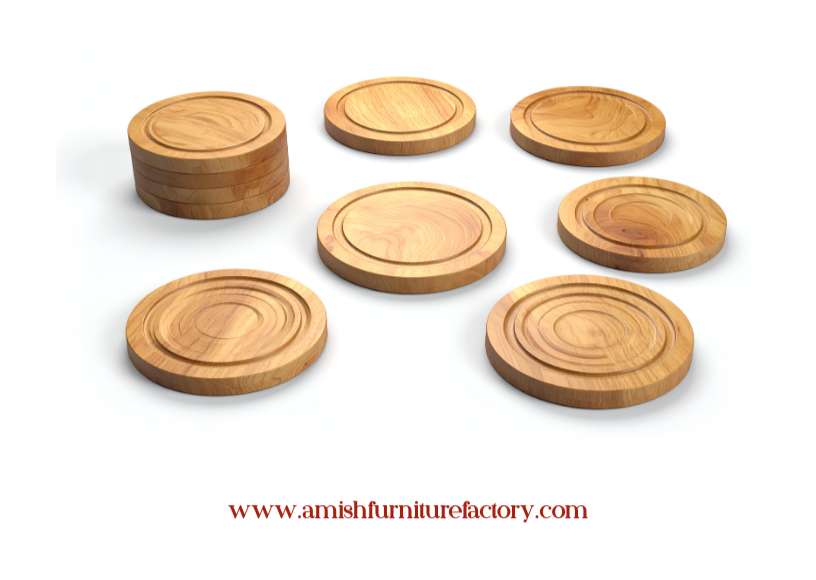
To create a set of unique and practical coasters, you’ll need to gather some materials and let your imagination run wild. Popular choices include birch plywood or hardwood like oak or walnut.
Materials required:
- Thin wood slices (4-inch diameter recommended)
- Sandpaper
- Clear sealant or wood finish
Instructions:
Sand each wood slice until it feels smooth, paying extra attention to the edges for a clean, finished look. If you’d like to decorate, paint or stencil your designs at this stage and allow them to dry completely before moving on.
Once the surface is ready, apply a clear sealant or wood finish to protect the coasters from moisture and wear. For added personality, consider using wood burning, colored stains, or decoupage techniques to create truly unique designs.
3. Wall-Mounted Key Holder
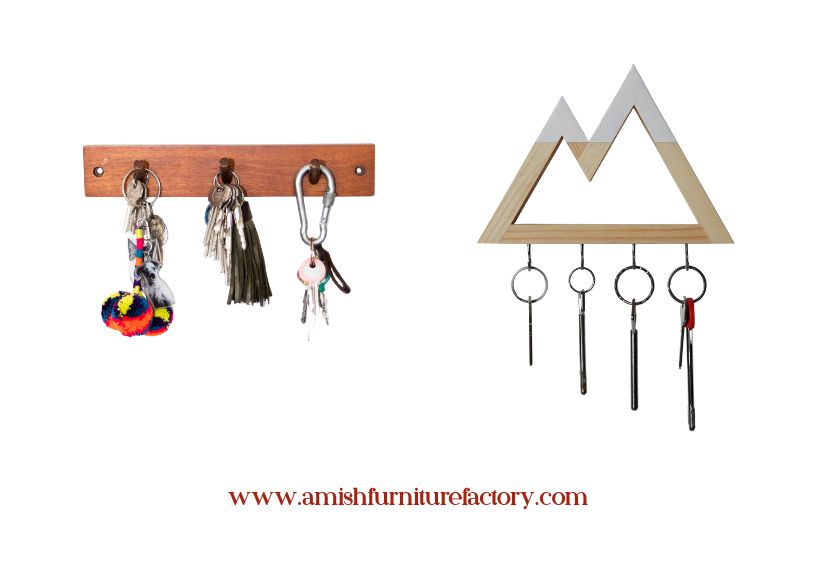
Get organized and add a touch of style to your entryway with a wall-mounted key holder. The personalized key rack lets you easily hang and store your keys in one convenient place.
Materials required:
- Small wooden board (12 inches by 5 inches recommended)
- Hooks
- Paint or stain (optional)
- Wall mounting hardware
Instructions:
Sand the wooden board until smooth, then paint or stain it if desired and allow it to dry completely. Once dry, mark evenly spaced positions for the hooks and screw them securely into place. Attach the wall-mounting hardware to the back of the board, then personalize your key holder by adding labels above each hook or choosing decorative hooks in different shapes and sizes.
4. Wooden Picture Frame
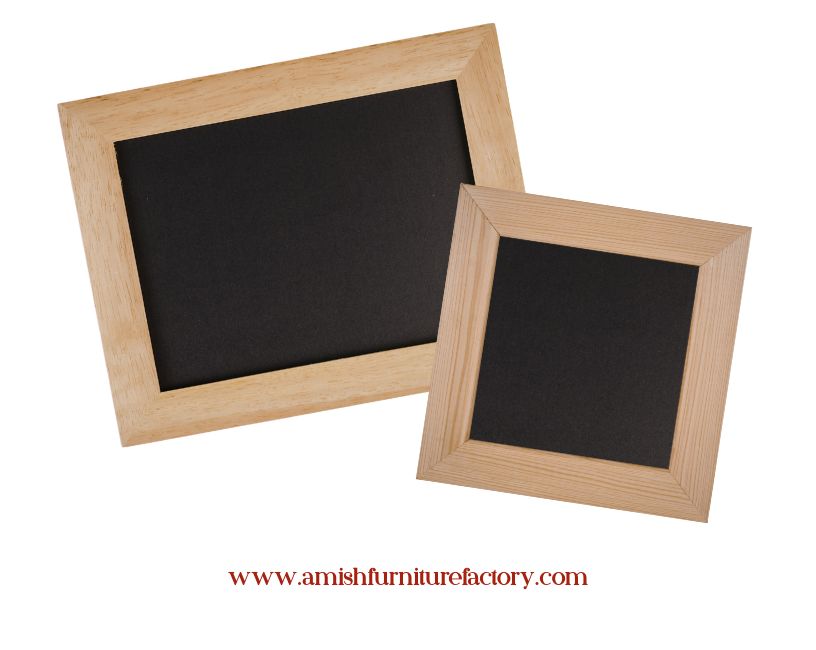
Wooden picture frames provide a timeless and elegant way to display your favorite photographs or artwork. There are countless wooden picture frame ideas that can suit any style or decor.
Materials required:
- Four wooden strips
- Nails or screws
- Wood glue
- Sandpaper
- Clear acrylic sheet or glass
- Photo mounting hardware or clips
Instructions:
Measure the strips to fit your desired photo size, then sand the edges and surfaces until smooth. Join the strips at right angles to form a rectangle, securing the corners with wood glue and reinforcing them with nails or screws for added strength.
Attach the acrylic sheet or glass to the back of the frame, followed by photo clips or mounting hardware. Finish by staining or painting the frame, and personalize it further with embellishments such as ribbons, beads, or carved details.
5. Handmade Wooden Shelf
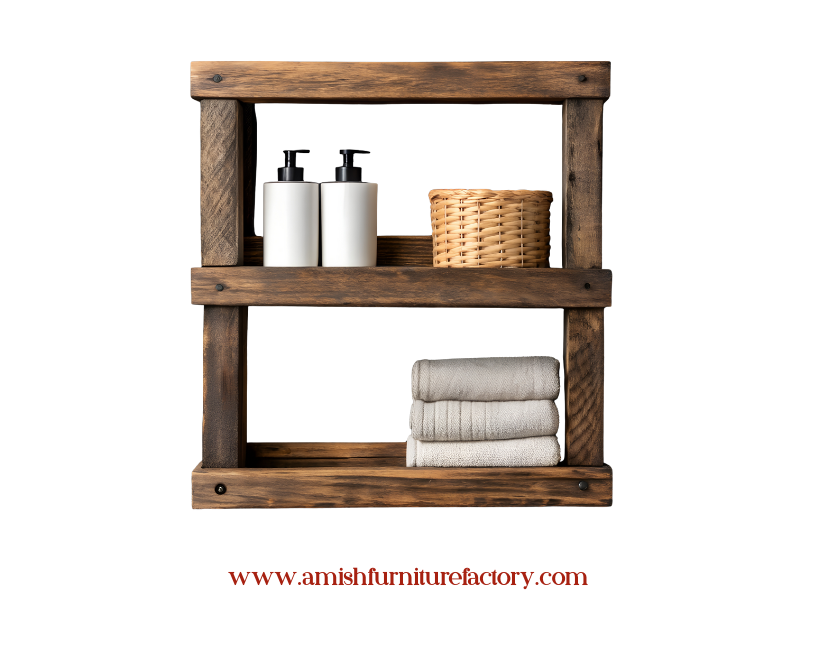
Crafting a handmade wooden shelf provides a unique and personal touch to your home decor. It allows you to showcase your woodworking skills while creating a functional piece of furniture.
Materials required:
- Wooden plank (Length as per requirement, width of 6-8 inches recommended)
- L-shaped brackets (2 or more based on length)
- Screws and wall anchors
Instructions:
Sand the wooden plank thoroughly until smooth, then mark the positions on the wall where you want to install the shelf. Make sure the marks align with wall studs for stronger support, or use wall anchors if studs aren’t available.
Attach the L-shaped brackets securely to the wall, place the plank on top, and screw it into position. For a more stylish finish, consider using decorative brackets or adding paint patterns to the plank to complement your interior décor.
Ready to elevate your next woodworking project with authentic, handcrafted quality? Browse our collection of Amish shelves and mantles to find the perfect centerpiece for your home.
6. Rustic Wooden Serving Tray
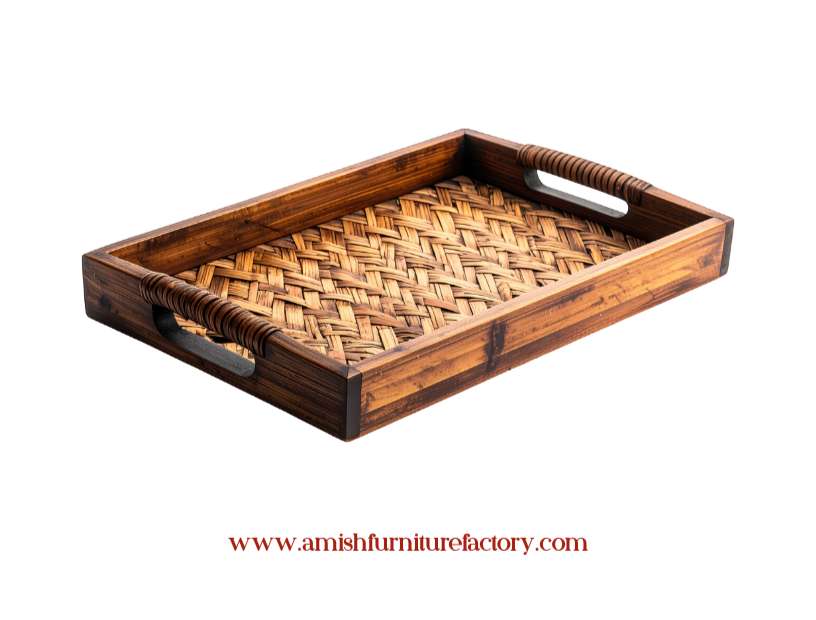
A rustic wooden serving tray is a great beginner project that balances function and style while helping you practice basic woodworking skills.
Materials required:
- Wooden board (¾-inch thick recommended)
- Two small wooden handles or cutout handle templates
- Wood screws or water-resistant wood glue
- Sandpaper (medium and fine grit)
- Wood stain or paint (optional)
- Clear protective finish (polyurethane or food-safe oil)
Instructions:
Cut the wooden board to your desired tray size, ensuring the edges are straight and even. Sand the surface thoroughly, starting with medium-grit sandpaper and finishing with fine grit for a smooth, polished feel. Attach the handles to each short side using screws or wood glue, making sure they are aligned and secure.
If desired, apply wood stain or paint to achieve a rustic or modern look and allow it to dry completely. Finish by sealing the tray with a clear protective coat to guard against moisture and everyday wear.
7. Wooden Stool or Small Bench
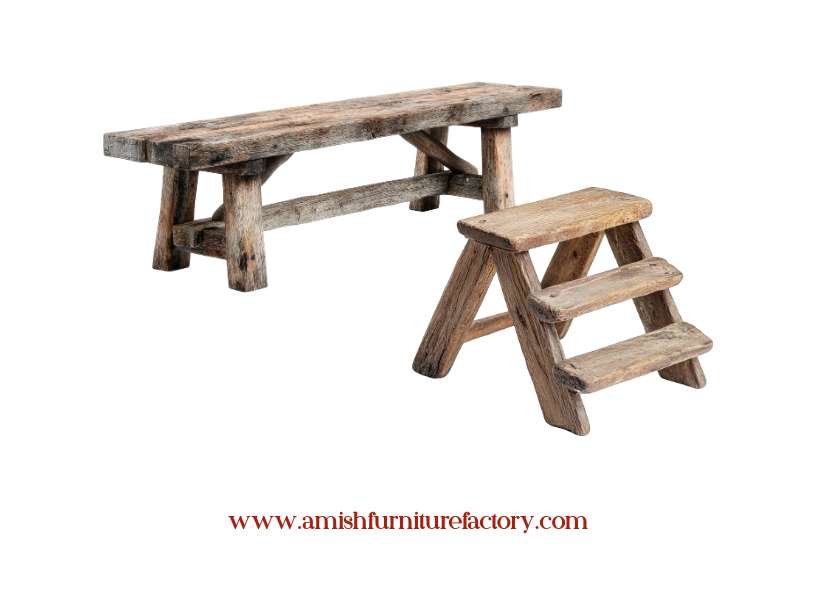
A wooden stool or small bench introduces basic structural concepts like weight support and stability without requiring advanced joinery.
Materials required:
- Wooden boards (2x4s or 1x12s work well)
- Wood screws
- Wood glue
- Sandpaper (medium and fine grit)
- Wood stain or paint (optional)
- Clear protective finish
Instructions:
Cut the wood into pieces for the seat and legs based on your desired stool or bench size, then sand each piece thoroughly, especially around the edges and corners. Assemble the legs first using wood glue and screws for strength, then attach the seat, making sure the structure is level and stable.
If desired, apply stain or paint after assembly and allow it to dry completely. For added durability, finish with a clear protective coat to help protect the piece over time.
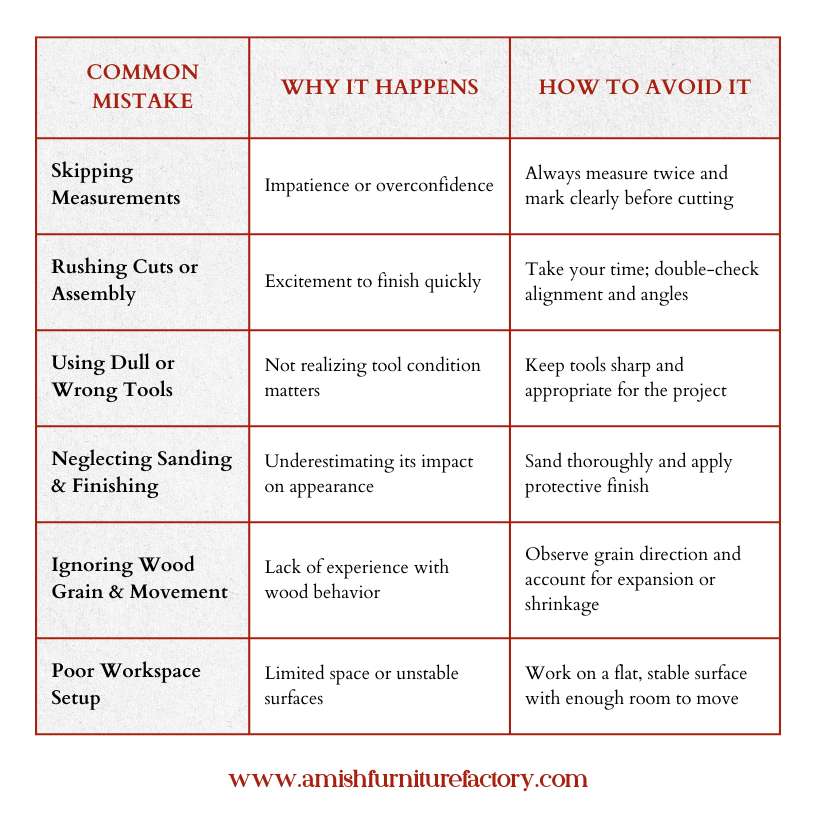
Common Beginner Woodworking Mistakes (and How to Avoid Them)
Starting out in woodworking is exciting, but beginners often stumble over predictable pitfalls that can slow progress or lead to frustration. Many mistakes come from rushing through steps, using improper tools, or overlooking basic prep like sanding and measuring. The good news is that most of these errors are easy to prevent with awareness, patience, and a few simple strategies. Understanding the common mistakes can save time, materials, and headaches, while helping you develop good habits early on.
Final Thoughts on Beginning Your Woodworking Journey
Starting your woodworking journey doesn’t require a fully stocked workshop or years of experience; just a willingness to try, learn, and improve with each project. By beginning with simple, approachable builds, you give yourself the freedom to experiment, make mistakes, and understand the basics without unnecessary pressure.
As you gain confidence, those early projects become milestones that show how far you’ve come. Keep your expectations realistic, enjoy the hands-on process, and let each project guide you toward the next challenge.
Frequently Asked Questions
What’s the best wood for beginner projects?
Softwoods like pine, cedar, and fir are ideal for beginners because they’re affordable, widely available, and easy to cut and sand. Plywood is also a great option for early projects since it’s stable and less prone to warping.
What is simple wood work?
Simple woodwork focuses on basic projects that use straight cuts, minimal joinery, and common tools. These projects prioritize function and learning over complexity.
What is an easy woodworking project without power tools?
Projects like wooden coasters, small floating shelves, picture frames, or simple boxes can be completed using only hand tools. A circular saw, hand drill, hammer, screwdriver, and sandpaper are often enough to get started.
Can beginners use power tools safely without experience?
Yes, beginners can safely use power tools as long as they start with basic tools and follow safety guidelines. Reading the tool manual, wearing protective gear and practicing on scrap wood helps reduce risk.
What are the most common mistakes beginners make when starting their first wood project?
Common mistakes include rushing measurements, skipping sanding, and not accounting for wood movement. Beginners also tend to underestimate the importance of planning and finishing. Taking time to prep, measure carefully, and work step by step can prevent most early frustrations.