

Wood furniture has a timeless quality that instantly makes a bedroom feel warmer and more inviting. Whether you have light oak nightstands, a walnut bed frame, or dark espresso dressers, wood introduces natural texture and depth that never really goes out of style. But once the furniture is in place, many homeowners run into the same question: what color bedding actually works best with wood furniture?
Key Takeaways:
- Bedding should balance wood furniture’s natural warmth and visual weight instead of matching it exactly.
- Neutral colors like white, beige, and gray are the most versatile because they work with all wood tones and styles.
- Adding contrast through color and texture (like green, blue, or linen layers) keeps the bedroom visually cohesive and not flat.
Why Bedding Color Matters in a Wood-Furnished Bedroom

Bedding is usually the largest visual element in a bedroom. Because the bed naturally becomes the focal point of the space, the color you choose has a major impact on the room’s overall atmosphere.
Wood furniture already carries visual weight because of its texture, grain, and natural richness. Bedding either balances that weight or competes with it. When the colors work together, the room feels layered and intentional. When they clash, the space can feel disconnected or visually overwhelming.
A balanced bedroom design doesn’t mean everything has to match perfectly. In fact, the most inviting bedrooms usually combine complementary tones, subtle contrast, and varied textures rather than exact color matching.
What Color Bedding Goes with Wood Furniture in Modern Bedrooms?
The color of your bedding plays a major role in how wood furniture appears within a bedroom. The right combination can highlight the wood’s natural warmth, create contrast, or bring a softer, more cohesive look to the space.

White Bedding Creates Timeless Contrast
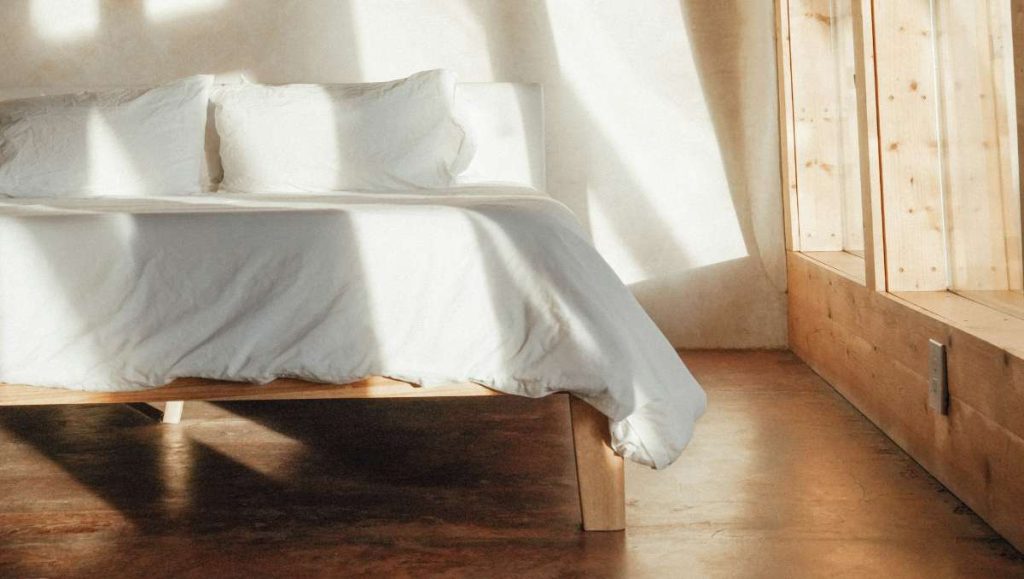
White bedding remains one of the most reliable choices for wood furniture because it works with nearly every wood tone. Against dark wood furniture, white bedding creates a crisp contrast that instantly brightens the room. Paired with light wood furniture, it creates an airy and relaxed atmosphere that feels clean and modern.
If pure white feels too stark, softer shades like cream, ivory, or warm off-white can create a more inviting appearance. These tones pair especially well with oak, walnut, and cherry wood furniture because they complement the natural warmth of the wood.
Neutral Tones Keep the Room Balanced
Neutral tones are one of the easiest ways to create a cohesive bedroom design around wood furniture. Shades like beige, taupe, sand, greige, and soft gray blend naturally with wood while creating a calm, layered look.
These bedding colors work especially well if your bedroom contains multiple wood finishes, such as wood bed frames paired with matching dressers or even a nearby dining table visible from an open-concept layout. Neutral bedding helps unify the different tones without overwhelming the room.
Beige and sand-colored bedding tend to emphasize warmth, making them ideal for medium and dark brown furniture. Soft gray bedding, on the other hand, introduces a slightly more modern feel and pairs particularly well with cooler wood tones.
Green Bedding Complements Wood Naturally
Green bedding aligns with the growing popularity of biophilic design, which emphasizes nature-inspired colors and materials in the home. The green tones are often used to create calming, restorative bedroom environments and pair naturally with wood furniture.
Sage green is one of the most versatile choices for bedrooms with solid wood furniture because it introduces color without overpowering the space. It works beautifully with light wood finishes, walnut, and medium oak furniture.
Olive green, on the other hand, creates a richer, moodier atmosphere and tends to pair exceptionally well with dark wood bed frames and dark brown furniture. Meanwhile, softer eucalyptus tones help create a lighter, spa-inspired feel.
Blue Bedding Adds Soft Contrast

Blue bedding is another excellent choice for balancing wood furniture because it cools down the natural warmth of wood tones without feeling harsh.
Dusty blue bedding creates a relaxed, inviting atmosphere that works especially well with cherry wood furniture and medium oak finishes. Navy blue introduces more drama and sophistication, particularly when paired with dark wood furniture.
However, balance is important. If both the bedding and furniture are extremely dark, the room can start to feel visually heavy. Incorporating lighter accent pillows, textured throws, or brighter wall color choices can help soften the overall look.
Earth Tones Create Warmth and Depth
Earth tones naturally complement wood furniture because they reflect colors commonly found in nature. Shades like terracotta, rust, clay, camel, and warm brown create a grounded and inviting atmosphere. These bedding colors work particularly well in rustic, farmhouse, or bohemian-style bedrooms where warmth and texture play an important role in the design.
Terracotta bedding paired with dark wood furniture can create a rich, cozy environment, while lighter earth tones work beautifully with light wood furniture for a softer, more organic look. The key to using earth tones successfully is balance. Too many deep warm shades can make a room feel overly heavy, especially if the bedroom lacks natural light.
Matching Bedding with Different Wood Tones
Different wood finishes pair best with certain bedding approaches, mainly based on how much contrast or harmony you want in the space. Lighter wood tends to feel most natural with soft, understated bedding that keeps the room feeling open and airy, while medium wood offers more flexibility since it works well with both warm and cool tones. Dark wood, on the other hand, usually benefits from lighter bedding choices that create contrast and prevent the room from feeling too heavy or enclosed.

How Wall Color and Texture Influence Bedding Choices
Wall color and texture both play an important role in how bedding and wood furniture work together in a bedroom. Wall color sets the overall foundation of the space, where bright walls can support deeper or richer bedding tones, while darker walls usually call for lighter bedding to keep the room feeling balanced and open. It also helps to align undertones, with warm wall colors generally pairing best with warm wood finishes, and cooler walls complementing gray-toned or modern wood styles.
Texture adds another essential layer of depth that color alone cannot provide. Since wood furniture already brings natural grain and visual weight into the room, bedding should soften that effect through materials like linen, cotton, knits, and woven fabrics. These textures help break up solid surfaces and keep even simple neutral bedding from feeling plain, resulting in a more layered and inviting bedroom design.
Avoid Overmatching Your Bedroom

One of the biggest mistakes people make is trying to match bedding exactly to the wood furniture. Matching every brown tone can make the room feel flat and outdated. Instead, focus on complementary color combinations that create balance and contrast. Light bedding softens dark furniture, while deeper tones can add richness to lighter wood finishes.
The best-designed bedrooms usually combine a mix of tones, textures, and subtle contrast rather than relying on perfect matching. This principle also applies to other areas of the home. Just as you wouldn’t perfectly match a living room sofa to a dining table, bedroom design feels more natural when there’s thoughtful variation.
Conclusion
If you’ve been wondering what color bedding goes with wood furniture, the answer ultimately comes down to balance, undertones, and personal style. Wood furniture naturally adds warmth and character to a room, and the right bedding helps enhance those qualities instead of competing with them.
Neutral tones like white, beige, and soft gray remain timeless choices, while greens, blues, and earth tones introduce personality and depth. Paying attention to natural light, wall color, texture, and wood tone helps create a bedroom that feels cohesive, relaxing, and visually balanced.
Frequently Asked Questions
Should bedding match the wood furniture exactly?
No. Matching too closely can make the room look flat. It’s better to aim for contrast or complementary tones instead of exact color matching.
What is the safest bedding color for wood furniture?
White, cream, and beige are the safest options because they work with every wood tone and never clash with natural finishes.
Can I use dark bedding with dark wood furniture?
Yes, but it’s tricky. If you go with dark bedding and dark furniture, make sure to add contrast through lighter pillows, throws, or wall colors so the room doesn’t feel too heavy.