


A wooden desk can be a beautiful and functional centerpiece in any home or office. However, the daily grind can leave its mark, from dust and spills to sticky fingerprints. The good news is that keeping your wooden desk clean doesn’t have to be a daunting task. But before you reach for just any cleaning product, it’s crucial to understand that the wrong approach can actually damage the delicate finish. With the right techniques on how to clean a wooden desk, you can maintain its luster for years to come.
Key Takeaways:
- Identify your desk’s finish to choose the right cleaning products and prevent damage.
- Use soft cloths, mild soap, and water; avoid harsh chemicals and abrasive materials.
- Dust daily, clean weekly, and polish monthly, while addressing spills immediately to maintain your desk.
In this article, we’ll walk you through simple, effective tips to keep your desk looking its best—free of dust, smudges, and water rings—without risking damage to the finish that gives it charm and longevity.
Why Your Desk’s Finish Matters
Not all wood finishes are the same, and using the wrong cleaner can do more harm than good. Think of it like skincare—what works for one surface might damage another. For example, harsh chemicals can strip delicate oil or wax finishes, leaving the wood dry and unprotected. That’s why it’s important to know what kind of finish your desk has before you start cleaning.
Here’s how to figure it out: Try the water drop test: place a small drop of water on a hidden spot. If it beads up, your desk likely has a sealed finish like polyurethane or lacquer. If it soaks in and darkens the wood, it’s probably an oil, wax, or even an unfinished surface. And if you still have the product info or manual, that’s the easiest way to know for sure.
Another clue lies in the appearance. Here’s a table summarizing common wood finishes and how they appear:
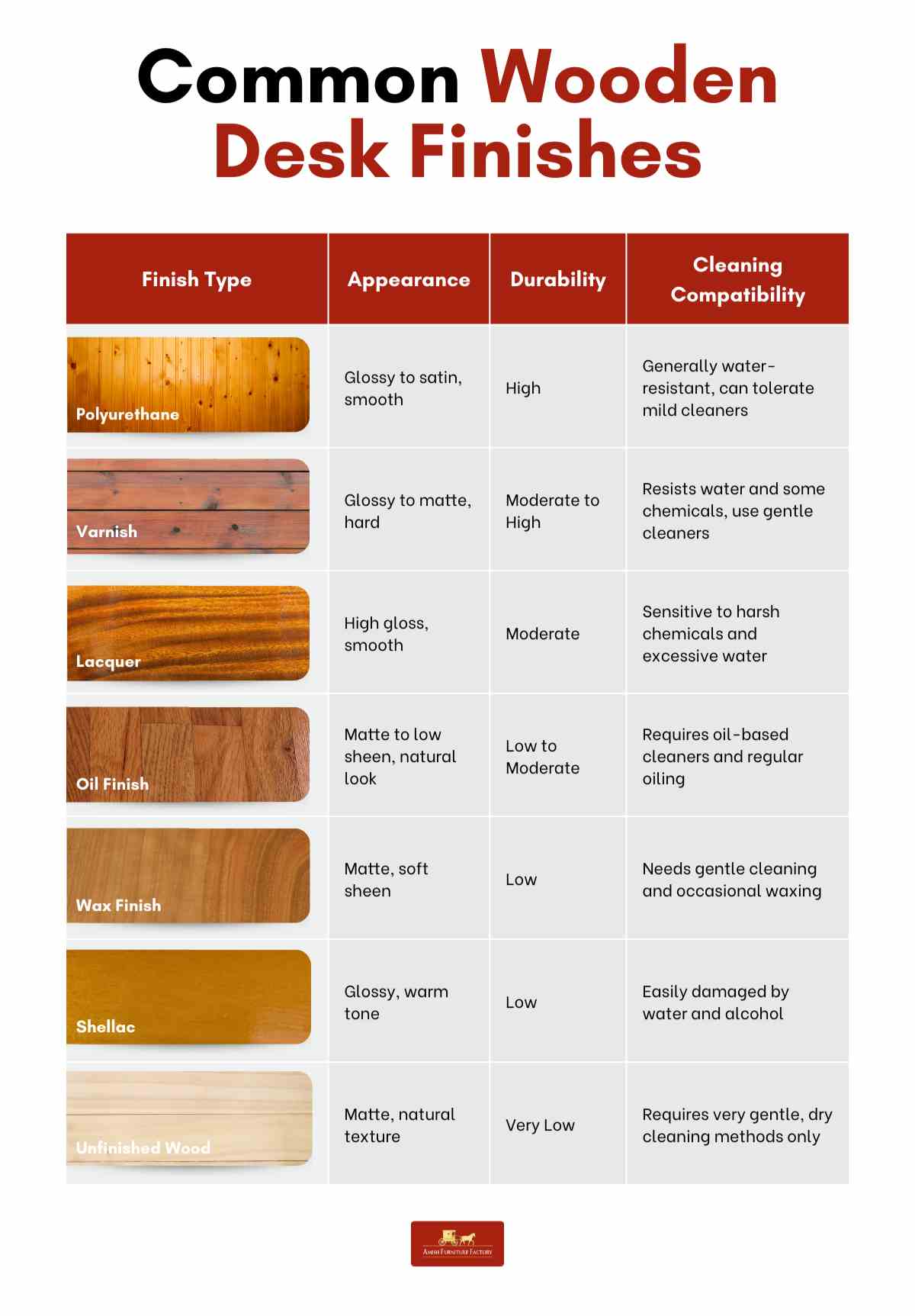
Wondering what the best finish is for Amish furniture? Learn how the right finish can enhance the beauty and durability of your pieces.
Essential Tools and Supplies for Gentle Cleaning
To effectively and safely clean your wooden desk, gather these gentle tools and supplies:
- Soft Microfiber Cloths: These are essential for dusting and wiping without scratching the finish. Have several on hand so you always have a clean one.
- Soft Brush: A soft-bristled brush, like a paintbrush or a dusting brush with natural fibers, is great for getting into corners and crevices.
- Mild Dish Soap: For most sealed finishes, a tiny amount of mild dish soap diluted in water can help tackle sticky spots.
- Distilled Water: Using distilled water minimizes the risk of mineral deposits that can dull the finish.
- Wood-Specific Cleaner (if needed): If you choose to use a commercial wood cleaner, ensure it is specifically designed for your desk’s finish. Always test in an inconspicuous area first.
- Oil or Wax Polish (for oiled or waxed finishes): If your desk has an oil or wax finish, have a good quality oil or wax polish recommended for that type of finish.
- Blotting Paper or Soft Absorbent Cloths: For quickly soaking up spills.

To keep your wooden desk looking its best, avoid anything too harsh or too wet. Skip abrasive cleaners like scouring powders, steel wool, and rough sponges—they can scratch or strip the finish. Be careful with water, too: a slightly damp cloth is fine for sealed surfaces, but too much moisture can cause warping or swelling. Steer clear of ammonia-based cleaners, as they can dull or damage the finish, and make sure any furniture polish you use is made for your desk’s specific finish to avoid sticky buildup or discoloration.
Learn more about the benefits of having custom built computer desk.
How to Clean a Wooden Desk Without Damaging the Finish
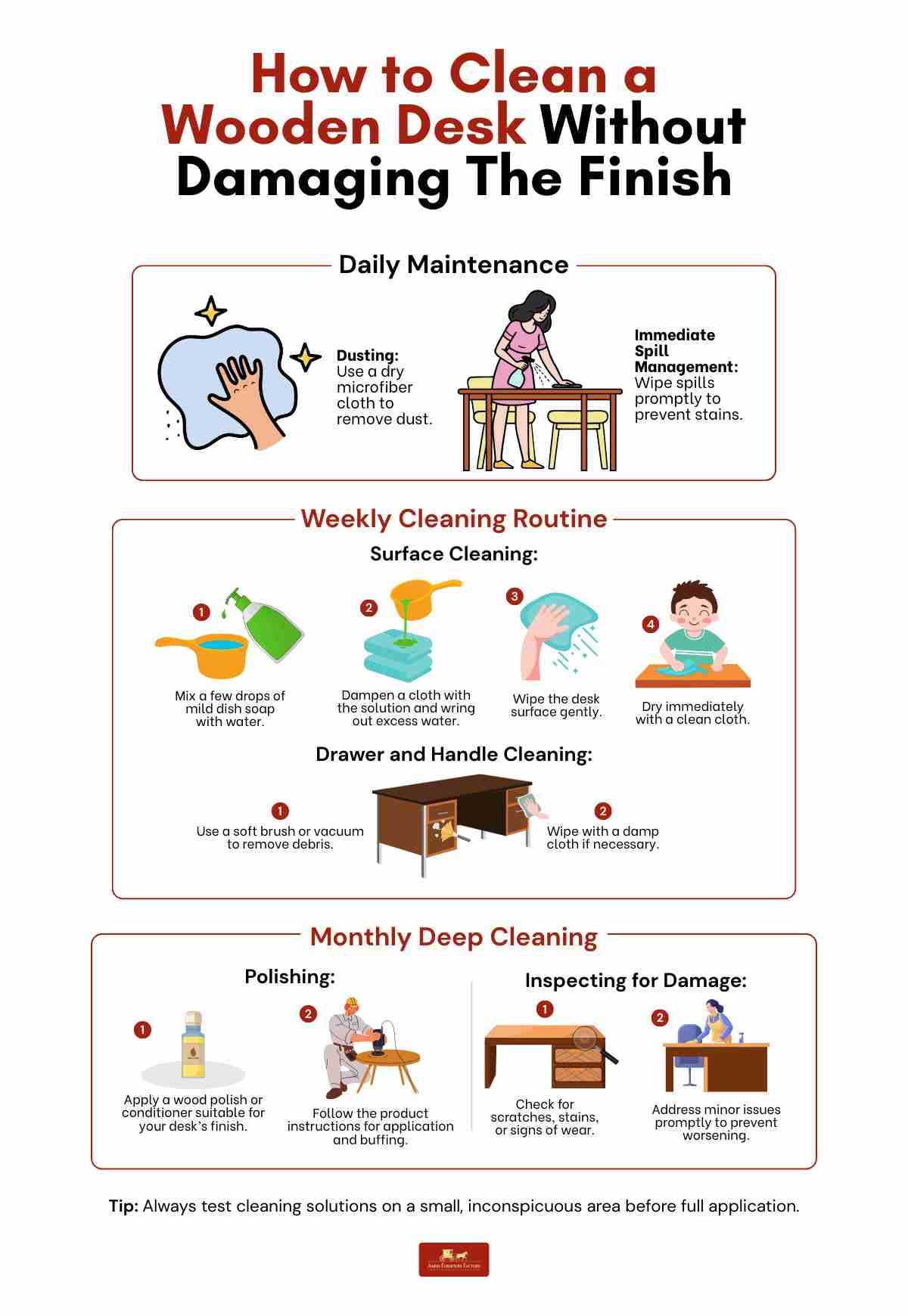
Keeping your wooden desk clean and well-maintained doesn’t have to be a chore. Here’s a step-by-step guide to cleaning your wooden desk effectively and gently:
Daily Maintenance
Dust your desk regularly with a dry microfiber cloth to prevent dust buildup that can scratch the finish over time. If a spill happens, clean it up right away using a clean, absorbent cloth or blotting paper to avoid staining or damage.

Weekly Cleaning Routine
For routine surface cleaning, start by mixing a few drops of mild dish soap with water—distilled water is best to avoid mineral buildup. Then follow these simple steps:
- Dampen a soft microfiber cloth with the solution and wring out any excess water (the cloth should be damp, not wet).
- Wipe the desk gently in the direction of the wood grain, avoiding any harsh scrubbing.
- Immediately dry the surface with a separate clean, dry microfiber cloth to prevent water spots or finish damage.
For drawers and handles:
- Use a soft brush or vacuum with a brush attachment to remove dust from inside drawers and around knobs.
- If needed, lightly dampen a cloth with plain water or a mild soapy solution (only for sealed finishes) to clean the handles and drawer fronts.
- Finish by drying everything thoroughly with a clean cloth to protect the wood.
Monthly Deep Cleaning
Polishing your desk helps maintain its shine and condition—just be sure to use a product that matches your desk’s specific finish. Apply a small amount of polish according to the instructions, usually working it into the wood along the grain. Then, buff the surface with a clean, dry cloth to enhance the shine and remove any excess.
While you’re at it, take a moment to inspect the desk for any signs of damage. Here are some of the things to watch out for:
- Scratches: Note any new or worsening scratches. Minor scratches on some finishes can sometimes be touched up with appropriate products.
- Stains: Check for any new stains that might require specific cleaning techniques depending on the finish and the type of stain.
- Signs of Wear: Look for dull areas or changes in the finish that might indicate a need for more intensive care or professional refinishing in the long run.
Note: Always test any cleaning solutions or polishes on a small, inconspicuous area of your desk before applying them to the entire surface.
Additional Tips to Prevent Excessive Cleaning
While regular cleaning is essential, taking proactive steps can significantly reduce the need for frequent deep cleaning. Here are some additional tips to safeguard your desk’s finish:
- Using Desk Mats and Coasters: Opt for desk mats with a smooth, non-slip backing to prevent them from sliding. Also, always use coasters under beverages.
- Avoiding Direct Sunlight and Extreme Temperatures: Prolonged exposure to direct sunlight can cause the wood finish to fade, crack, or even change color over time.
- Proper Placement of Items: Develop a habit of lifting objects when moving them across your desk surface instead of dragging them.
- Regular Polishing and Conditioning (if applicable): For desks with oil or wax finishes, regular polishing and conditioning are vital for maintaining their protective layer.
Ready to elevate your workspace? Discover our top-rated executive drawer desk today!
Addressing Common Cleaning Issues
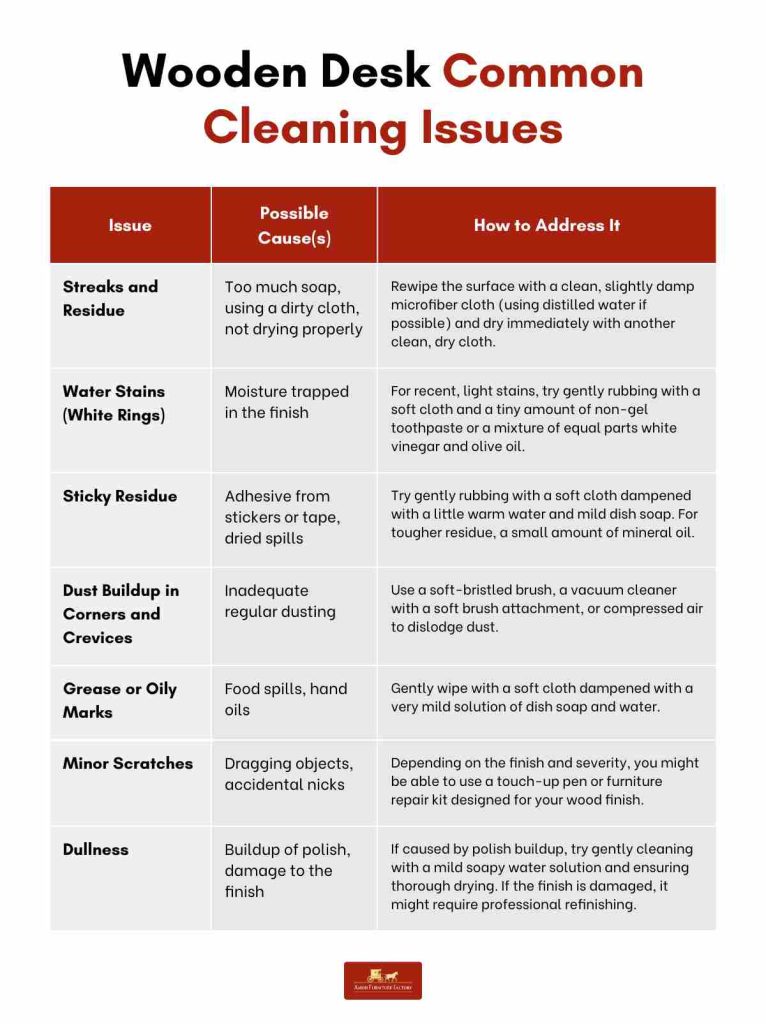
Even with the best preventative measures, you might occasionally encounter specific cleaning challenges on your wooden desk. Addressing these issues promptly and correctly is key to maintaining the finish’s integrity. Whether it’s stubborn streaks, unsightly water rings, or sticky residue, understanding the cause and the appropriate remedy will help you restore your desk’s beauty without causing further damage. Here’s a guide to tackling some common cleaning issues you might face.
Here’s a table outlining common cleaning issues and how to address them:
Wrapping Up: Gentle Care for Lasting Beauty
How to clean a wooden desk without damaging the finish doesn’t need to be complicated. By understanding its finish, using the right tools and techniques, and adopting preventative measures, you can keep it looking its best for years to come. Remember, gentle and consistent care is the key to preserving the natural beauty and integrity of your wooden furniture.
FAQs
Can I use regular household cleaning sprays on my wooden desk?
Generally, it’s best to avoid using regular household cleaning sprays on your wooden desk. Many of these products contain harsh chemicals that can damage or dull the finish. Stick to gentle methods like a dry or slightly damp microfiber cloth and mild dish soap.
What’s the best way to remove dust from a wooden desk without scratching it?
The best way to remove dust without scratching is to use a soft, dry microfiber cloth. The fine fibers of a microfiber cloth trap dust effectively without abrading the surface.
Can I use vinegar to clean my wooden desk?
While diluted white vinegar can be a natural cleaning agent, it’s not recommended for all wood finishes. Vinegar is acidic and can potentially damage or dull certain finishes, especially oil, wax, and shellac.
How can I restore the shine to a dull wooden desk?
Restoring shine depends on the cause of the dullness. If it’s due to a buildup of old polish or residue, gently cleaning the surface might help. If the finish itself has become dull or damaged, you might need to use a wood polish specifically designed for your finish type.