
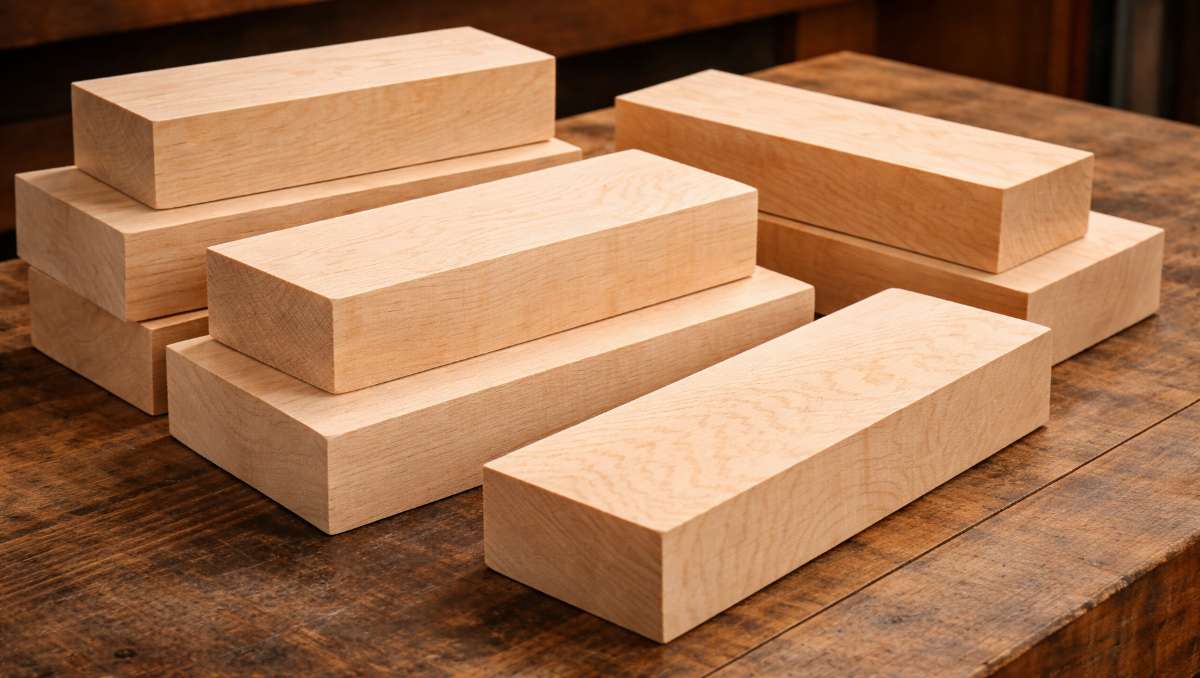
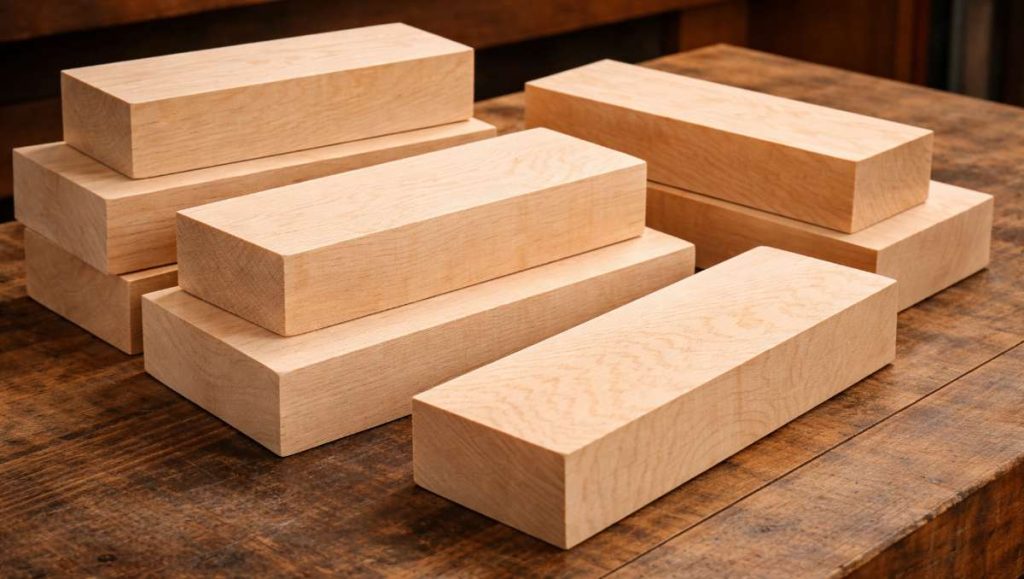
Maple has a quiet reputation in the furniture world. It doesn’t scream luxury the way mahogany does or carry the rustic charm of oak at first glance, yet it keeps showing up in heirloom pieces that survive decades of daily use. Builders and woodworkers return to maple for one simple reason: it holds up beautifully over time. If you’ve ever wondered how hard is maple wood and why it’s trusted for dining tables, dressers, and cabinets, the answer lives at the intersection of strength, stability, and subtle elegance.
Key Takeaways
- Hard maple is extremely dense and durable, with a Janka hardness of 1,450 lbf.
- Soft maple is easier to work with and more affordable, but it has a lower hardness rating of 700-950 lbf.
- Maple is well-suited for heirloom pieces thanks to its subtle grain, durability, and long-term structural stability.
In this article, we’ll break down exactly how hard maple wood is and what that hardness means in real-world furniture use.
Maple Wood Overview and Hardness

Maple is a hardwood native primarily to North America and is widely used in furniture, flooring, and cabinetry. Known for its fine, even texture and subtle grain, maple offers a consistent, clean look that suits timeless, heirloom-quality designs. It falls into two main categories: hard maple and soft maple.
Hard maple, often called sugar maple, has a Janka hardness rating of 1,450 lbf, making it one of the harder domestic hardwoods. In practical terms, this means it holds up well to daily contact, heavy weight, and repeated use, making it a strong choice for desktops, flooring, and high-use furniture. The Janka hardness test measures how much force it takes to press a steel ball halfway into a piece of wood. Higher numbers indicate greater resistance to dents, scratches, and everyday wear. Maple resists dents and wear and is ideal for high-use surfaces such as tabletops, flooring, and workbenches. Soft maple varieties, including red and silver maple, typically range from 700 to 950 lbf. They are easier to machine and remain durable, but are better suited for furniture components that experience less daily impact.
Hard Maple vs Soft Maple: What’s the Real Difference?
While both hard and soft maple share the classic smooth texture and pale color that make maple so versatile, their differences affect everything from appearance to how well the wood stands up to daily use. Let’s break down the distinctions:
Hardness and Grain Pattern
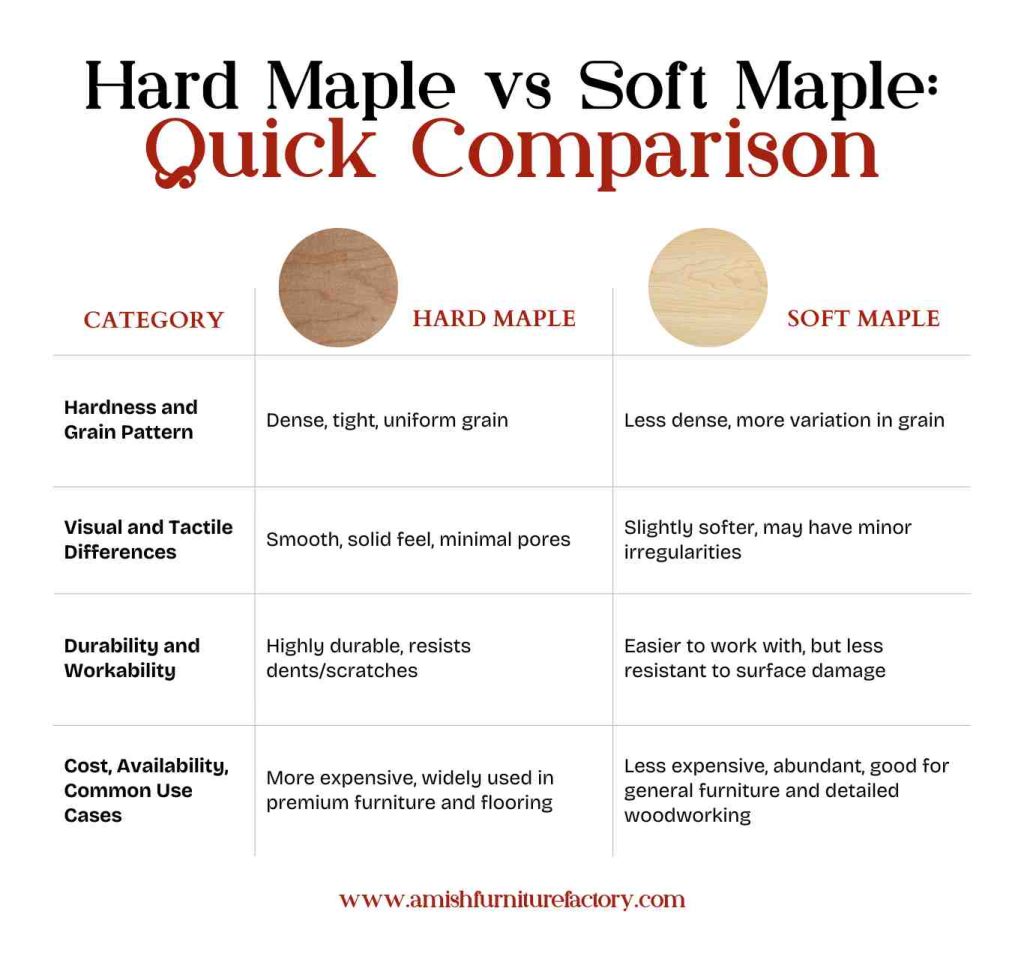
Hard maple, often called sugar maple, is noticeably denser and has a tighter, more uniform grain. Soft maple, including red or silver maple, is less dense and can show slightly more variation in the grain, sometimes with subtle streaks or softer lines.
Visual and Tactile Differences
Hard maple feels smooth and solid to the touch, with minimal pores and an even surface that takes stain and finishes beautifully. Soft maple can feel a bit softer under pressure and may have minor irregularities, giving it a slightly more casual, natural look.
Durability and Workability
Hard maple resists dents, scratches, and wears better, making it ideal for high-traffic furniture pieces like dining tables and desks. Soft maple is easier to cut, carve, and shape, which can be helpful for detailed work, but it’s slightly more prone to surface damage over time.
Cost, Availability, and Common Use Cases
Hard maple is generally more expensive due to its density and slower growth, but it’s widely available and favored for premium furniture and flooring. Soft maple is less costly and more abundant, making it a practical choice for larger projects where extreme hardness isn’t essential.
Why Maple Is Trusted for Heirloom Furniture
Hard maple has long been favored for heirloom furniture because it combines exceptional durability, structural stability, and refined aesthetics. These are qualities that allow furniture to age gracefully over decades of use.
Built for Daily Use and Long-Term Stability
Hard maple resists dents, scratches, and surface wear, making it well-suited for high-use pieces like dining tables, desks, and cabinets. Its dense structure also helps limit warping and splitting over time, which is critical for furniture expected to last for generations.
Strength Without Sacrificing Craftsmanship
Despite its hardness, maple machines cleanly and accepts precise joinery. This balance allows craftspeople to create furniture that is both structurally strong and finely detailed, from tight drawer joints to crisp edges and moldings.
Timeless, Adaptable Appearance
Maple’s subtle, even grain provides a clean visual foundation that works across traditional, modern, and transitional styles. It takes stains and clear finishes well and develops a soft patina with age rather than dramatic darkening, helping heirloom pieces remain visually relevant over time.
Experience the unmatched durability of maple firsthand by browsing our collection of handcrafted Amish chairs, where timeless design meets heirloom quality.
What are the Disadvantages of Maple Wood?
While maple is prized for its strength and durability, it does come with a few limitations to consider. Hard maple is dense and heavy, which can make large furniture pieces more difficult to move. Its stiffness also reduces flexibility, making it less suitable for designs that require significant bending or intricate curves. Additionally, maple’s subtle grain and light tone, though valued for a clean, modern look, may appear less dramatic than woods like walnut or cherry, sometimes requiring staining or specialized finishes to achieve a richer visual effect.
Cost can also be a consideration. Hard maple typically commands a higher price than soft maple or many other domestic hardwoods. However, for heirloom-quality furniture, this investment often translates into exceptional durability, longevity, and lasting value, making maple a dependable choice despite these minor drawbacks.
Maple vs Other Popular Heirloom Woods
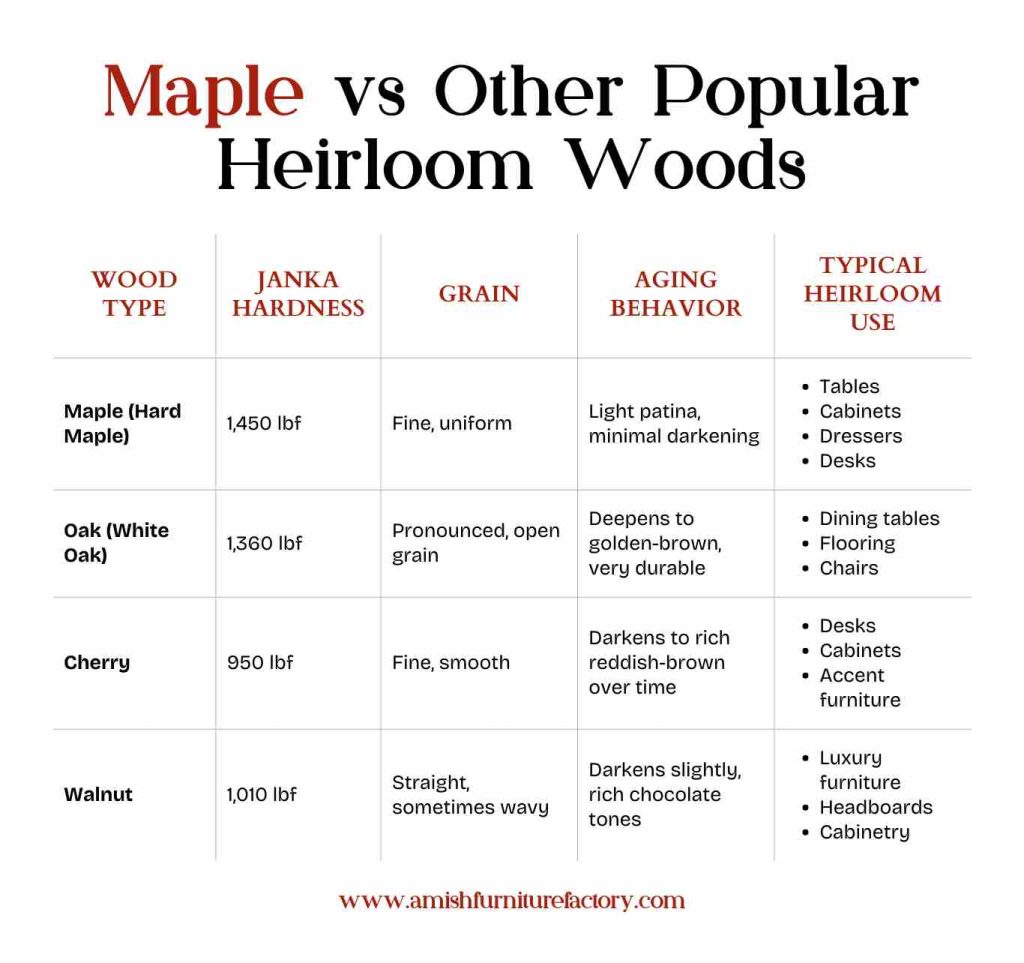
Maple holds its own among the classic hardwoods often chosen for heirloom furniture. But it has a distinct profile compared to cherry, oak, and walnut. While maple’s strength and fine, even grain make it incredibly versatile, other woods bring their own unique qualities. Oak, for example, has a more pronounced grain and natural durability. Cherry develops a rich, reddish patina over time. Walnut offers deep, chocolate tones with a luxurious appearance. Each wood appeals to different tastes.
In practical terms, maple’s hardness gives it excellent resistance to everyday wear, positioning it between oak and softer cherry in terms of scratch resistance. Its light color and consistent grain make it a neutral canvas for both modern and traditional finishes. Other hardwoods like walnut and cherry are prized for their natural color evolution and bold visual character.
Final Thoughts on Maple Wood for Heirloom Furniture
Maple earns its reputation as an heirloom wood because it delivers long-term structural strength, consistent performance, and timeless visual restraint. Its dense composition resists dents and wear, its fine, uniform grain supports precise craftsmanship. Its ability to hold a smooth, lasting finish allows pieces to age gracefully rather than go out of style.
While maple is heavier and more subtle in appearance than some hardwoods, those traits are part of what makes it dependable for furniture designed to last generations. For heirloom pieces where strength, stability, and enduring design matter more than decorative grain, maple remains one of the most trusted and proven choices available.
Frequently Asked Questions
Does maple crack easily?
Not typically. Maple is dense and stable, which helps prevent cracking and splitting under normal use. However, like all wood, improper drying or exposure to extreme humidity changes can cause some movement or minor cracks.
Is maple harder than oak?
Hard maple is slightly harder than white oak, with a Janka hardness of 1,450 lbf compared to oak’s 1,360 lbf. This means maple is a bit more resistant to dents and surface wear. Though oak has a more pronounced grain that some people prefer for visual texture.
Is maple good for dining tables?
Yes. Maple is an excellent choice for dining tables because it is hard, dense, and resistant to dents and surface wear. Hard maple, in particular, holds up well to daily use, chair impacts, and frequent cleaning.
Why is maple used for butcher blocks?
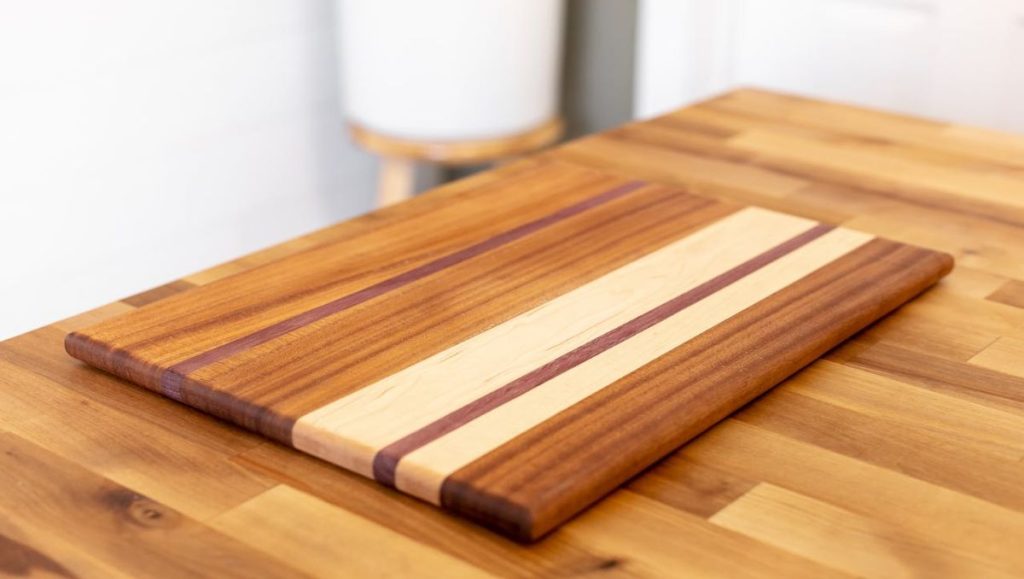
Maple is widely used for butcher blocks because it is hard enough to resist deep knife damage, yet tight-grained enough to be food-safe. Its closed grain structure limits moisture absorption and bacterial penetration. Its durability allows the surface to withstand repeated cutting and resurfacing.