

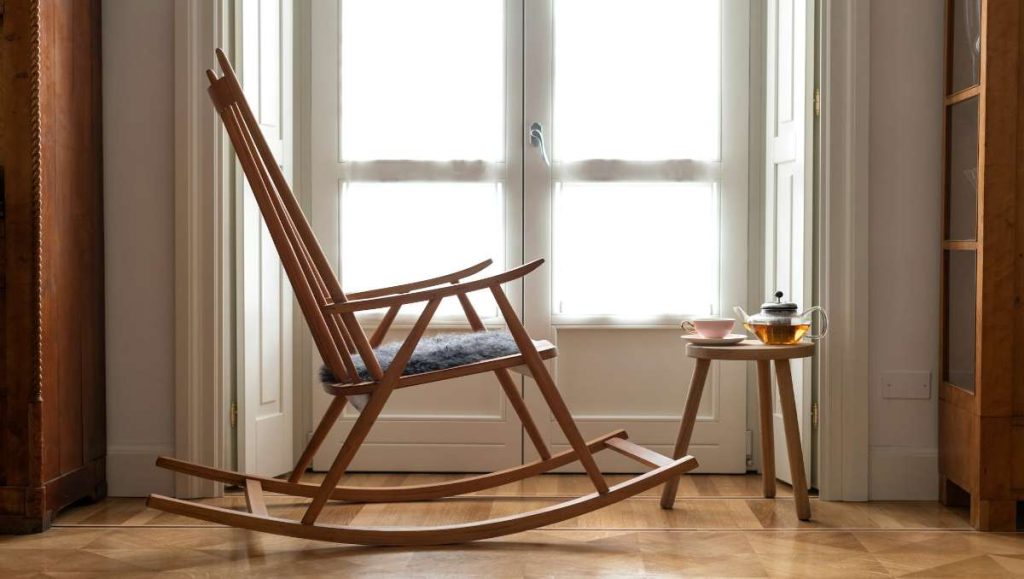
Are rocking chairs good for you? It’s a question that seems simple—almost old-fashioned—but the answer goes deeper than comfort or tradition. We tend to think of rocking chairs as something our grandparents cherished on quiet afternoons. But beyond the nostalgia, there’s something enduringly smart about this simple piece of furniture. It’s more than a place to sit; it moves with you, soothes your body, and does things that most modern furniture doesn’t even try to do.
Key Takeaways:
- Rocking chairs can be good for you. They promote relaxation, reduce stress, and may even improve circulation through their gentle, rhythmic motion.
- Amish rocking chairs stand out for their handcrafted quality, ergonomic design, and long-lasting durability.
- Choosing the right Amish rocker means considering wood type, comfort, and how you plan to use it.
In this article, we’ll explore why rocking chairs remain a surprisingly smart choice for wellness and relaxation. From their calming motion to potential health benefits, you’ll learn how this classic seat can support both your body and mind in ways that go far beyond comfort or tradition.
What Is a Rocking Chair? A Brief History and Purpose
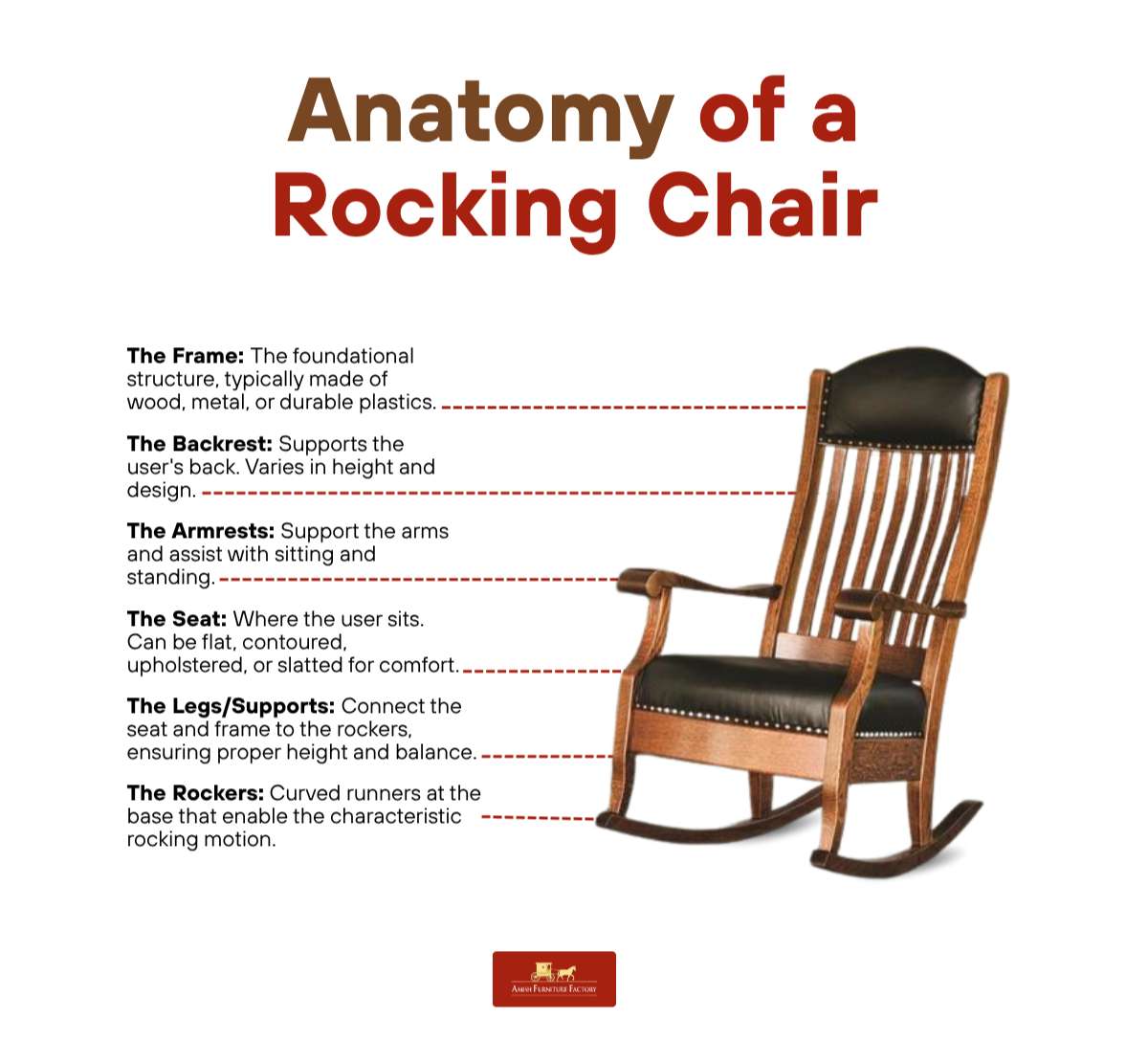
The rocking chair is defined by its curved legs that allow a gentle forward-and-backward motion. It has been around for centuries, though its exact origin is a bit murky. Contrary to popular belief, it wasn’t invented by Benjamin Franklin, but likely emerged in early 18th-century Europe and colonial America as a natural evolution of ordinary chairs fitted with wooden rockers.
Originally used outdoors in gardens, they quickly found a place indoors for relaxation, childcare, and even healing. Over time, the rocking chair became more than just functional; it became cultural, woven into family rituals, quiet moments, and handcrafted heritage. Today, it offers a rare combination of movement, comfort, and emotional familiarity that’s hard to replicate in mass-produced furniture.
5 Science-Backed Health Benefits of Rocking Chairs
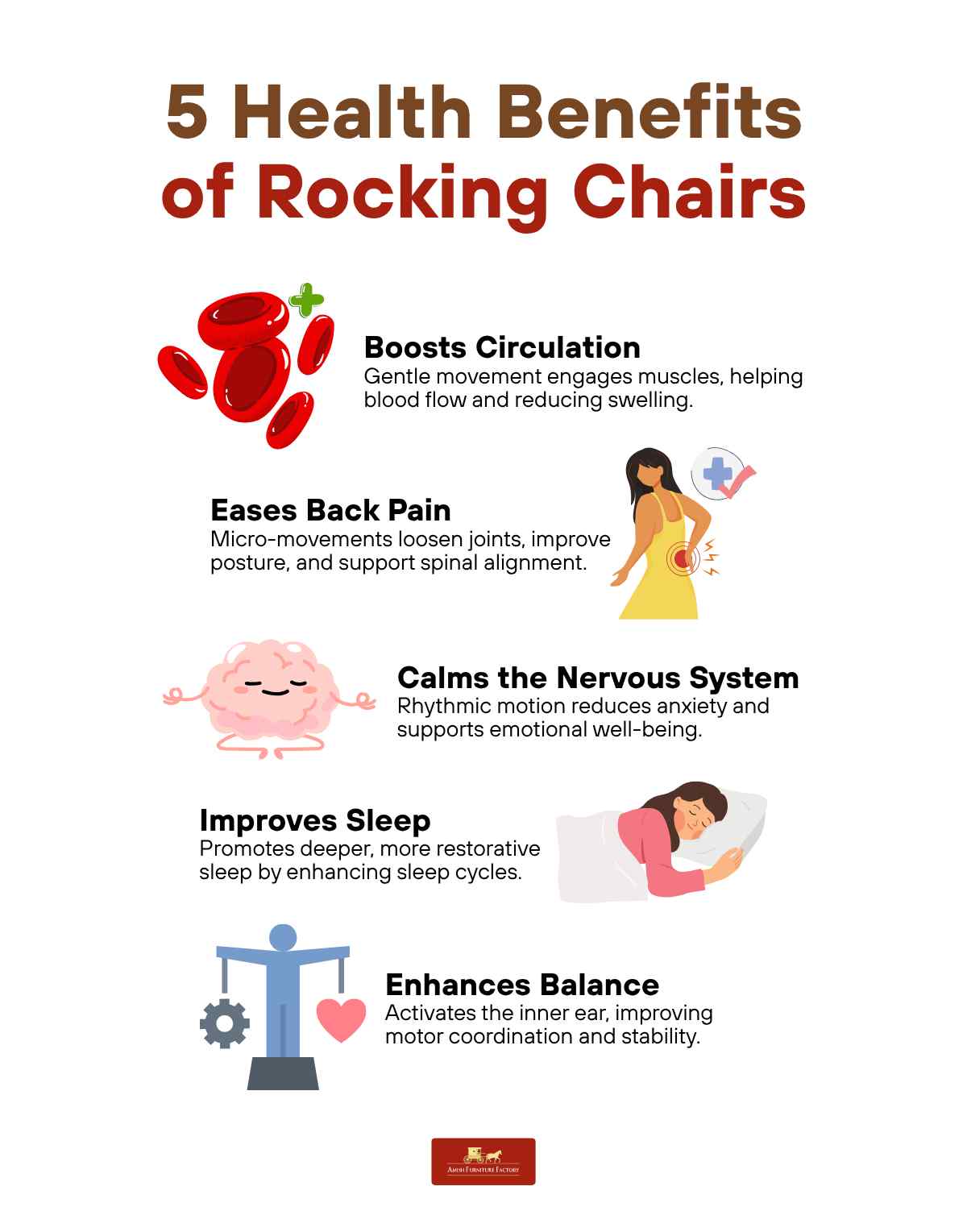
Rocking chairs do more than just soothe; they offer real physical and mental health benefits for people of all ages. Whether you’re managing chronic pain, anxiety, or sleep issues, the gentle, rhythmic motion of rocking can serve as a simple, effective form of passive therapy. Just keep in mind, they may not be ideal for individuals with certain balance-related conditions.
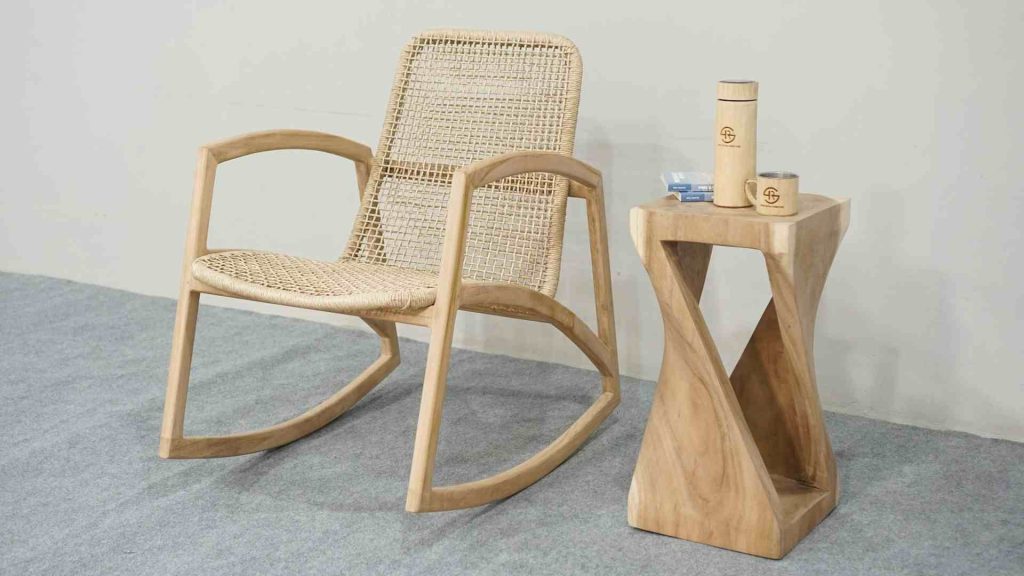
Here’s a closer look at what the science says.
Boosts Blood Circulation and Reduces Swelling in the Legs
Rocking subtly engages your leg and core muscles, stimulating blood flow and reducing swelling. One clinical study found that regular rocking improved circulation and balance in people with limited mobility. The movement supports healthy venous return from the legs, which can lower the risk of blood clots.
Eases Chronic Back Pain and Promotes Spinal Alignment
The natural motion of rocking encourages joint mobility and muscle relaxation—especially in the back, hips, and knees. This helps reduce stiffness and can improve posture by promoting spinal fluid circulation. It’s a gentle way to manage chronic pain and maintain flexibility.
Soothes the Nervous System and Reduces Anxiety and Depression
Rocking stimulates the vestibular system, helping regulate the nervous system and reduce stress. Studies on Alzheimer’s patients found that 1–2 hours of rocking daily lowered symptoms of depression and anxiety. As therapist Abass Sahrawi explains, “Rhythm is deeply soothing—it grounds us, lowers cortisol, and mirrors techniques used in trauma therapy.”
Improves Sleep Quality and Induces Deeper Relaxation
The soothing motion of a rocking chair can help you fall asleep faster and stay asleep longer. Research shows it increases time spent in N2 sleep—the restorative, non-dreaming phase—and triggers brainwave activity tied to deep sleep and memory. It’s especially helpful for those dealing with insomnia or restless nights.
According to Sonali Dharve, from Hip Xpert:
“The calming motion may even be able to sedate one into a relaxed state, thereby making it simpler to sleep and get more quality, restful sleep. It’s especially effective for those who have problems with insomnia or insomnia-ridden nights.”
Stimulates Balance and Motor Coordination
Rocking may seem passive, but it actively stimulates your inner ear and balance systems. This encourages the body to make subtle adjustments that build motor coordination over time. For seniors, it can even help strengthen core muscles and reduce fall risk.
Despite their many benefits, rocking chairs aren’t a perfect fit for everyone. So, what are the disadvantages of rocking chairs? People with balance disorders or vertigo may find the motion disorienting or even risky, especially when getting in or out of the chair. Without proper flooring or padding, rocking chairs can also slide or tip on slick surfaces, increasing fall risk. And while some models are ergonomically designed, cheaper or poorly constructed rockers can lack the support needed for long-term use, potentially leading to more discomfort than relief.
The Amish Rocking Chairs Difference: Why Craftsmanship Matters
There’s something unmistakably different about an Amish-made rocking chair the moment you sit in one. It’s more than just the feel of solid oak, cherry, or hickory—it’s the handcrafted detail, balance, and care shaped by generations of skill. Unlike mass-produced versions, these chairs are often customized with your choice of wood, finish, and upholstery, blending function, beauty, and lasting quality. As Abass Sahrawi elaborates:
“As for authentic Amish craftsmanship, there’s a psychological comfort in using something built by human hands. The organic wood, the weight, the precision – all contribute to a sense of safety and grounding. In our overstimulated world, that kind of tactile calm is rare. Mass-produced alternatives often lack this integrity, and users can feel the difference — even if they can’t articulate it.”
Ready to invest in your psychological well-being? Explore our collection of Amish gliders and rockers today and discover the perfect addition to your home.
Who Are Rocking Chairs Good For?
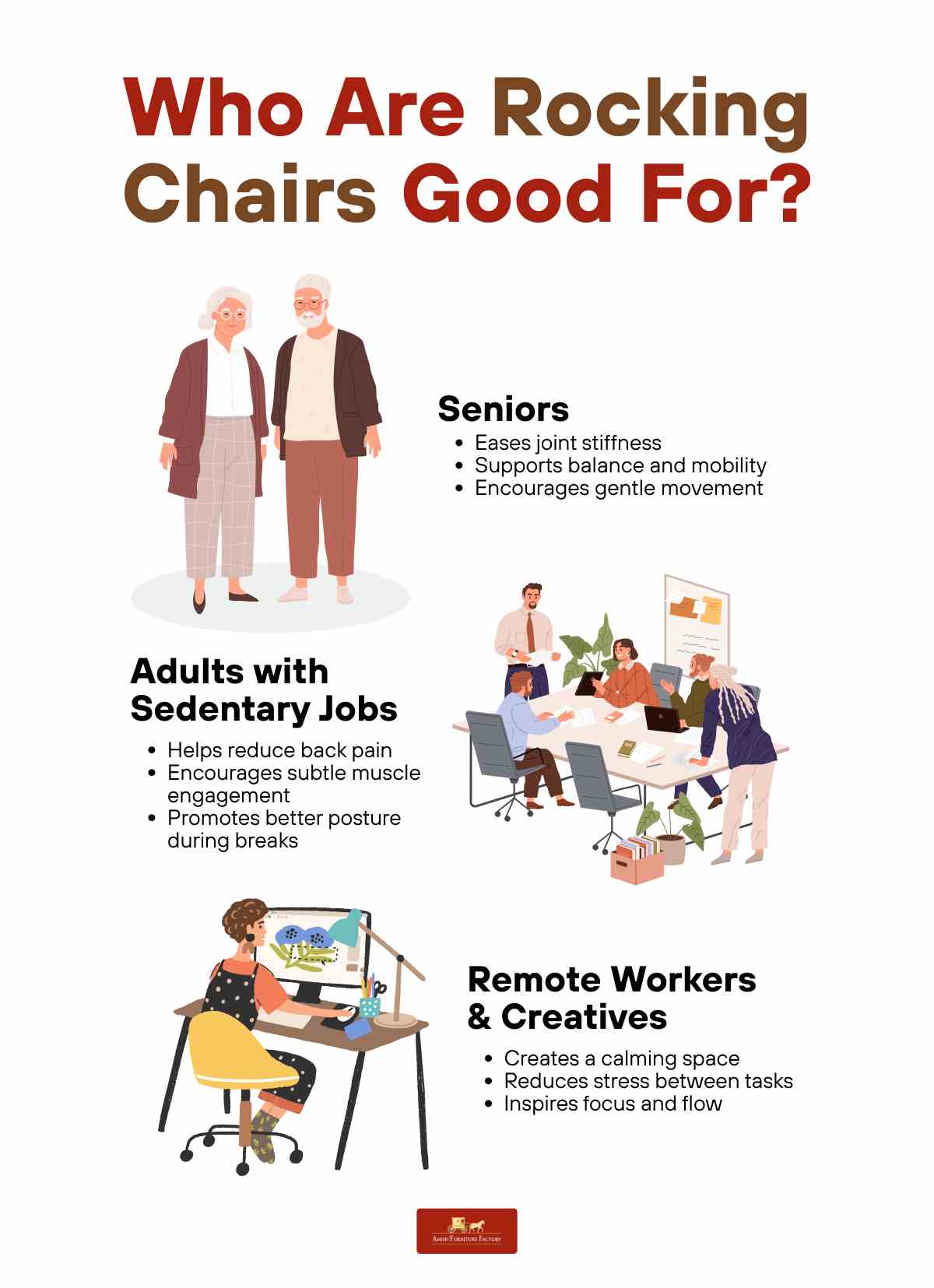
Rocking chairs meet a wide variety of needs, no matter your age or lifestyle. For seniors, they offer gentle movement that can ease joint stiffness and support balance. Adults with back pain or desk jobs often find them to be a comfortable way to stay active without strain, while remote workers enjoy the calming rhythm during breaks or creative thinking.
One common question is: Is it good to have a rocking chair for a baby? Sonali adds that rocking provides stimulation for infants and children. The wave-like movement simulates the womb, which is comforting and beneficial to the vestibular system development in infants.
How to Choose the Best Amish Rocking Chair
Choosing the right Amish rocking chair is all about comfort, fit, and thoughtful craftsmanship. First, think about where it will live, whether it’s for a nursery, front porch, or cozy reading corner. Then consider the details that matter most to you, like wood type, seat height, back support, and whether you want a cushion or solid wood seat. Many Amish rockers can be customized, with options like wider arms for nursing or taller backs for added support, so don’t hesitate to ask before you buy.
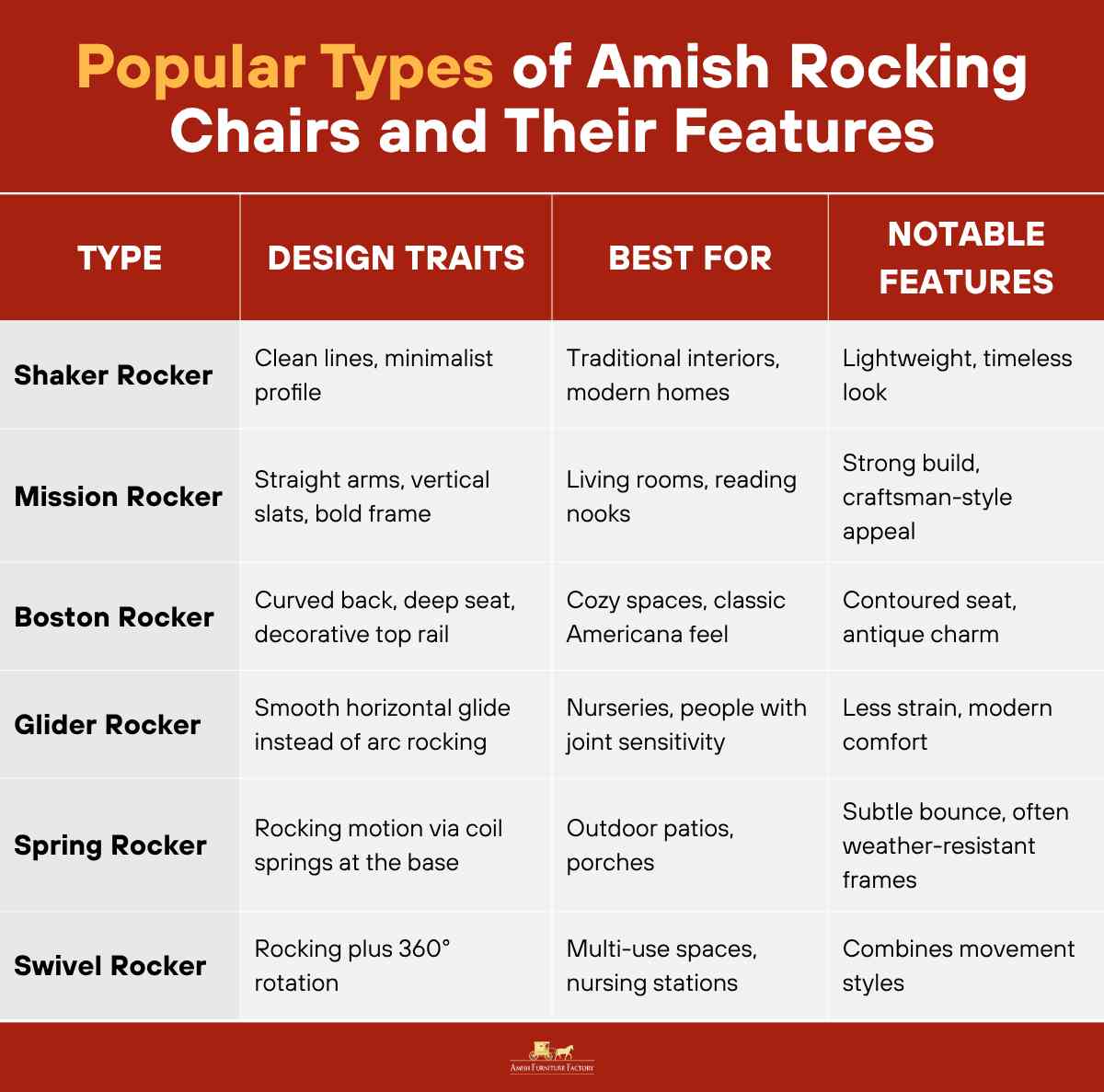
Also, don’t overlook how the chair is built. Look for solid hardwood construction, hand-cut joints, and a smooth gliding motion with just the right amount of resistance. Trusted Amish retailers typically offer transparency about where and how the chair was made, including which Amish community it came from—Ohio, Indiana, and Pennsylvania being the most reputable regions.
How to Care for Your Rocking Chair
A well-crafted Amish rocking chair is built to last, but it still benefits from regular care to preserve its beauty and function. Start by keeping the wood clean. Dust furniture with a soft cloth weekly and use a gentle wood cleaner or natural oil polish every few months to maintain its luster and prevent drying or cracking. If your rocker has cushions or upholstery, vacuum them regularly and spot-clean stains promptly with fabric-safe cleaners.
Also pay attention to the moving parts. Over time, even handcrafted joints or glider mechanisms can loosen or squeak. A periodic check and a small dab of wood-safe lubricant can go a long way in preserving that smooth, satisfying rock. Avoid placing your rocker directly on uneven flooring or near heating vents, which can lead to long-term stress on the wood.
Learn the difference between a glider vs rocking chair for seniors.
Conclusion: Why the Amish Rocker Is More Than Just a Seat
Are rocking chairs good for you? A rocking chair can be many things—comfort, therapy, tradition—but an Amish-made rocking chair takes it a step further. It’s a piece rooted in purpose, crafted slowly and intentionally, not just to look beautiful, but to serve you for years to come. In a world that moves quickly and favors the disposable, the Amish rocker offers something different: stillness, quality, and a quiet kind of luxury. And once you’ve experienced the difference, it’s hard to settle for anything less.
Frequently Asked Questions
Are Amish rocking chairs really better than factory-made ones?
Yes. Many people find Amish rocking chairs to be noticeably better in terms of comfort, build quality, and longevity. Unlike factory-made versions, they’re built by hand from solid hardwood and designed for daily use over generations.
How do I know if a rocking chair is truly Amish-made?
Look for details like solid wood construction (not veneers or composites), traditional joinery (like mortise and tenon), and information about where it was made. Authentic Amish rockers are typically crafted in Ohio, Pennsylvania, or Indiana, and often come through trusted Amish retailers or direct from small workshops.
How long do Amish rocking chairs typically last, and what materials are they usually made from?
With proper care, an Amish rocking chair can easily last 20–30 years or longer. They’re usually made from durable hardwoods like oak, cherry, maple, or hickory, all chosen for their strength and aging qualities. Many are also customizable in terms of stain, finish, and upholstery.