
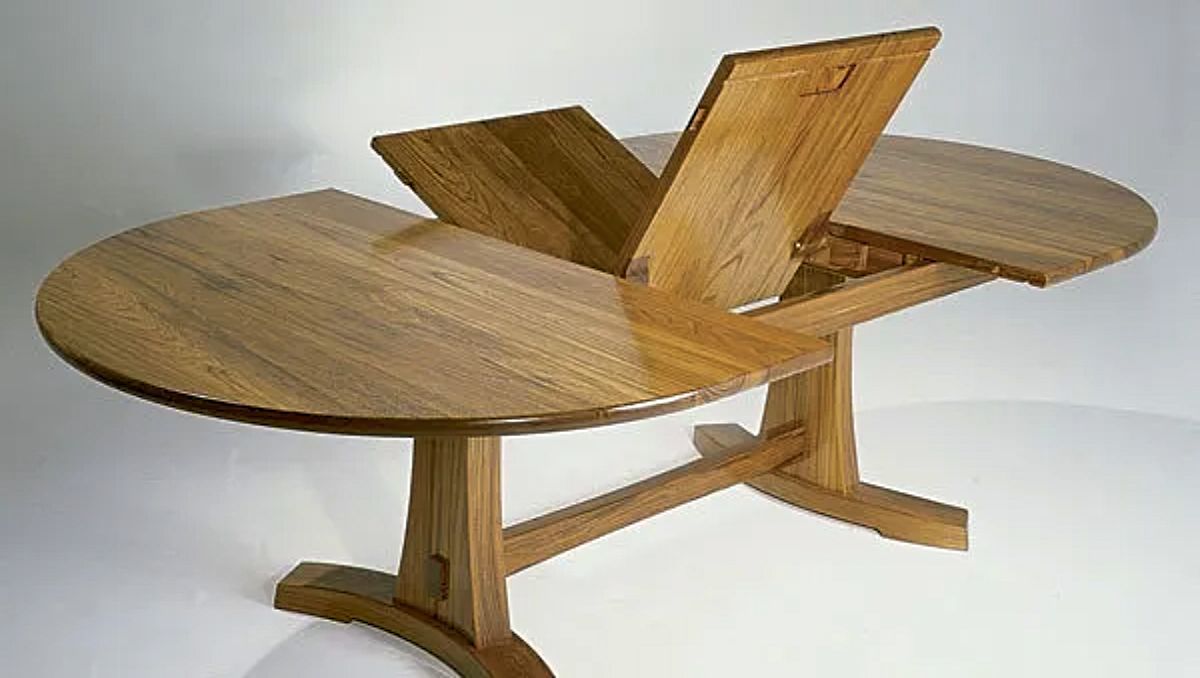
Have you ever hosted a dinner and suddenly realized your table isn’t quite long enough for everyone? That’s when a dining table leaf becomes your lifesaver. It’s a simple yet clever piece that lets you extend your table when you need more space. In an era where homes are shrinking, dining tables with extension leaves strike a rare balance between practicality and design. Whether you’re furnishing a compact apartment or redesigning a dining room, understanding how extension leaves work can help you choose a table that adapts as your life does.
Key Takeaways:
- A dining table leaf is a removable or built-in panel that extends your table to accommodate more guests or create extra space.
- There are several types of extension leaves including butterfly, drop-leaf, draw-leaf, and drop-in, each offering different advantages for space, style, and convenience.
- Choosing the right table depends on your space, lifestyle, and the mechanism that suits your needs best (removable vs. self-storing).
Let’s take a closer look at what makes a dining table leaf so useful, the different styles available, and why they’ve become a modern essential for any home that loves to host.
What Is a Dining Table Leaf?
The dining table leaf dates back to the 16th and 17th centuries, when space-saving furniture became popular in Europe, especially in England and France. Early versions—like drop-leaf and gateleg tables—featured hinged sections that could be folded down when not in use. This clever design lets households adjust their tables for both everyday dining and large gatherings in smaller homes.
Over time, the concept evolved into removable or extendable leaves that could be slotted into the table’s center or ends. Today, dining table leaves serve the same practical purpose: offering flexibility and convenience for modern living while maintaining a clean, stylish look.
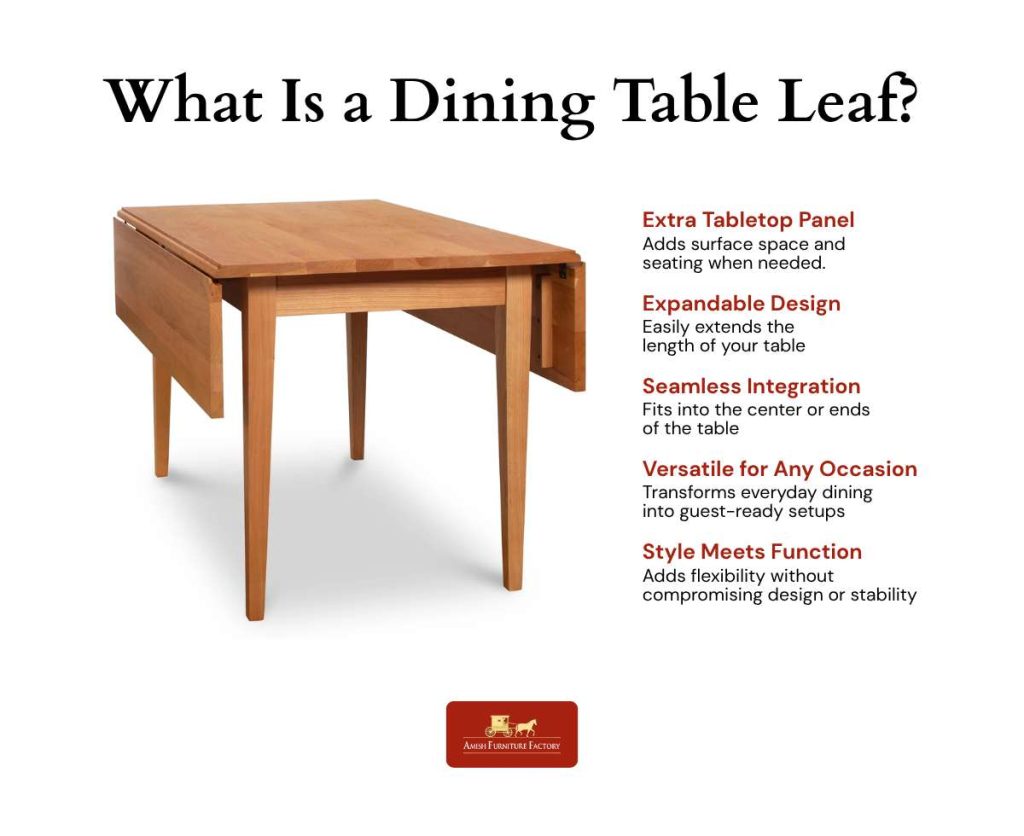
The Main Types of Extension Leaves
Different types of dining table leaves use unique mechanisms and designs to fit a range of homes.
Butterfly Leaf
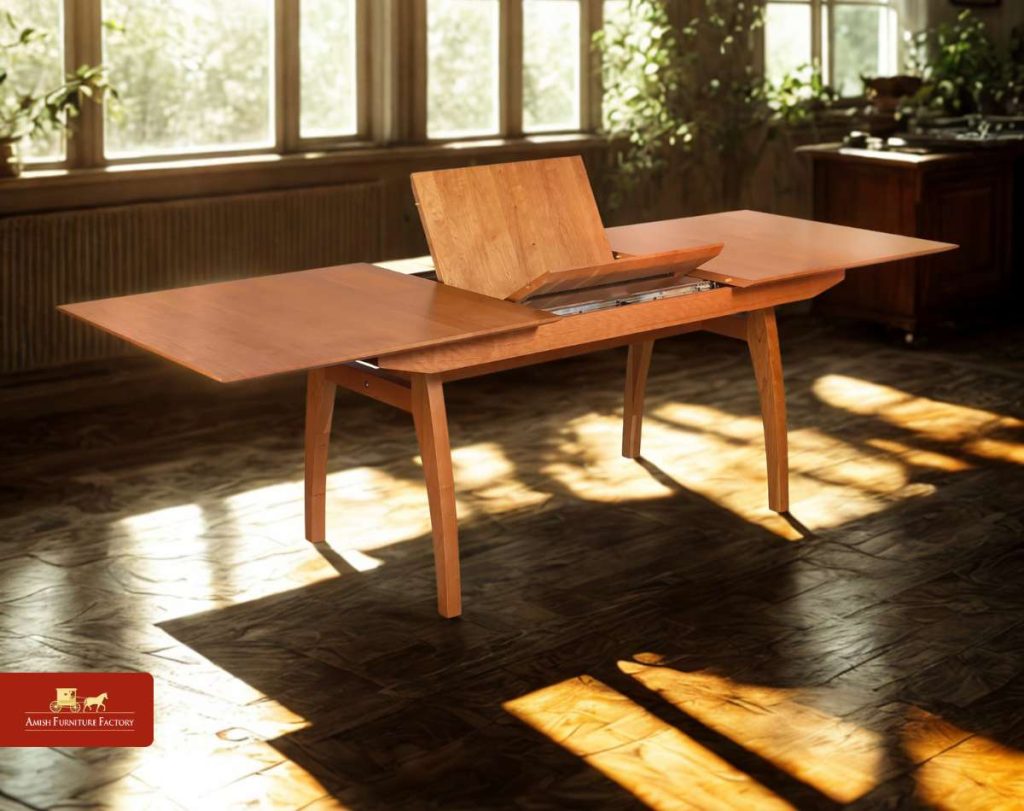
A butterfly leaf dining table is one of the most popular modern solutions — named for the way it folds in half like butterfly wings before tucking neatly inside the table. When you need extra space, you simply pull the table apart, lift the folded leaf from its hidden compartment, and unfold it into position. There’s no need for separate storage, and setup takes just a minute or two.
Drop-Leaf
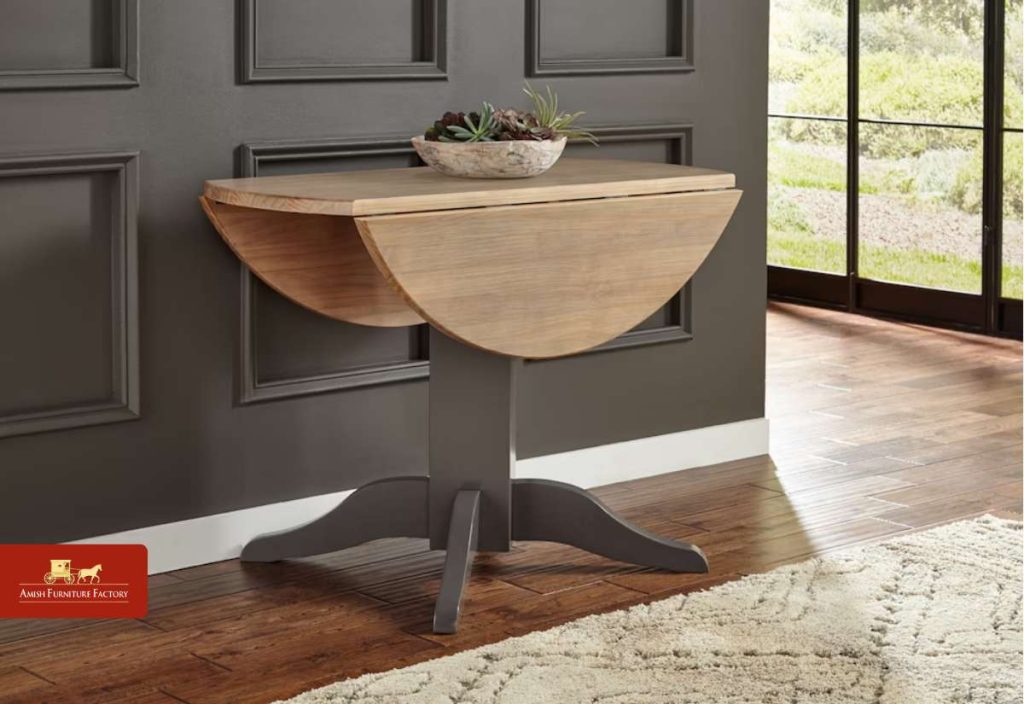
A drop-leaf table has hinged sections on either side that can be raised or lowered depending on your needs. When the leaves are down, the table takes up minimal space, making it ideal for studio apartments, breakfast nooks, or multipurpose rooms. When company arrives, you simply lift the sides and lock them into place to expand the surface area.
Draw-Leaf (Refectory)
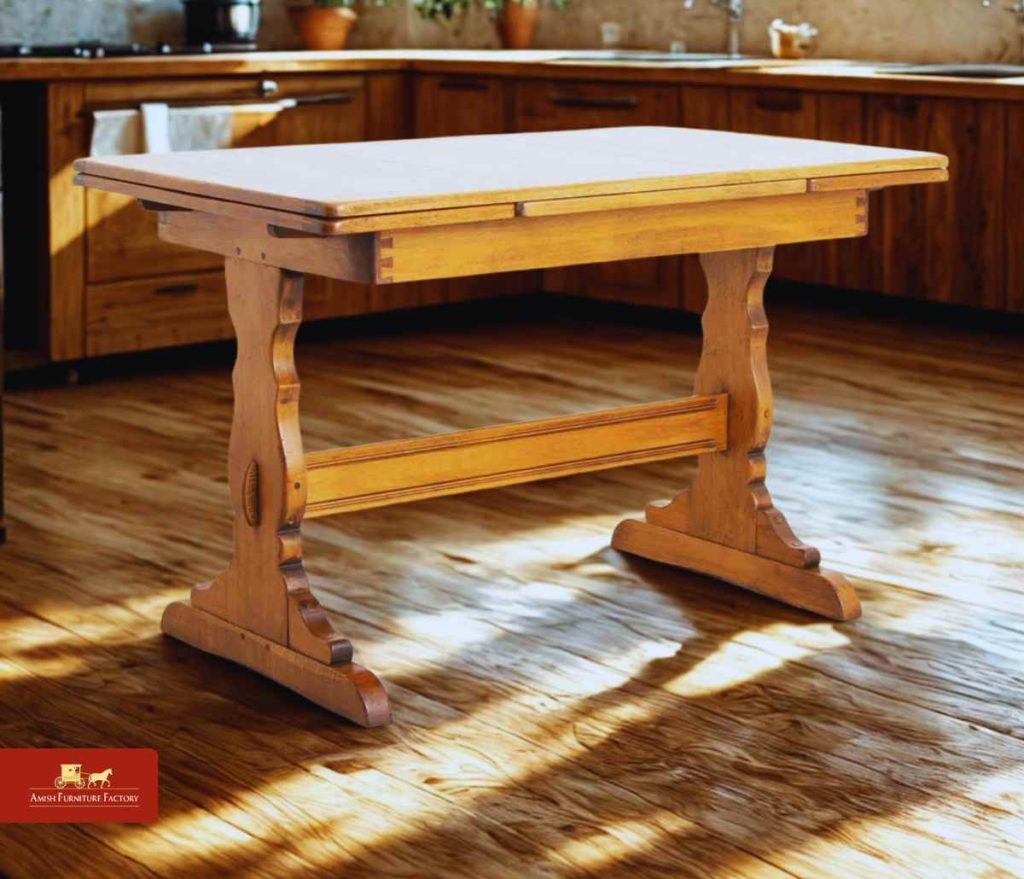
The draw-leaf, sometimes called a refectory table, offers a smooth, sliding mechanism that makes expansion almost effortless. Instead of inserting a separate panel, you pull out the hidden leaves from beneath the tabletop; they glide into place on tracks and align perfectly with the main surface. This design is both elegant and sturdy, often found in high-quality solid wood tables.
Drop-In Leaf (Removable)
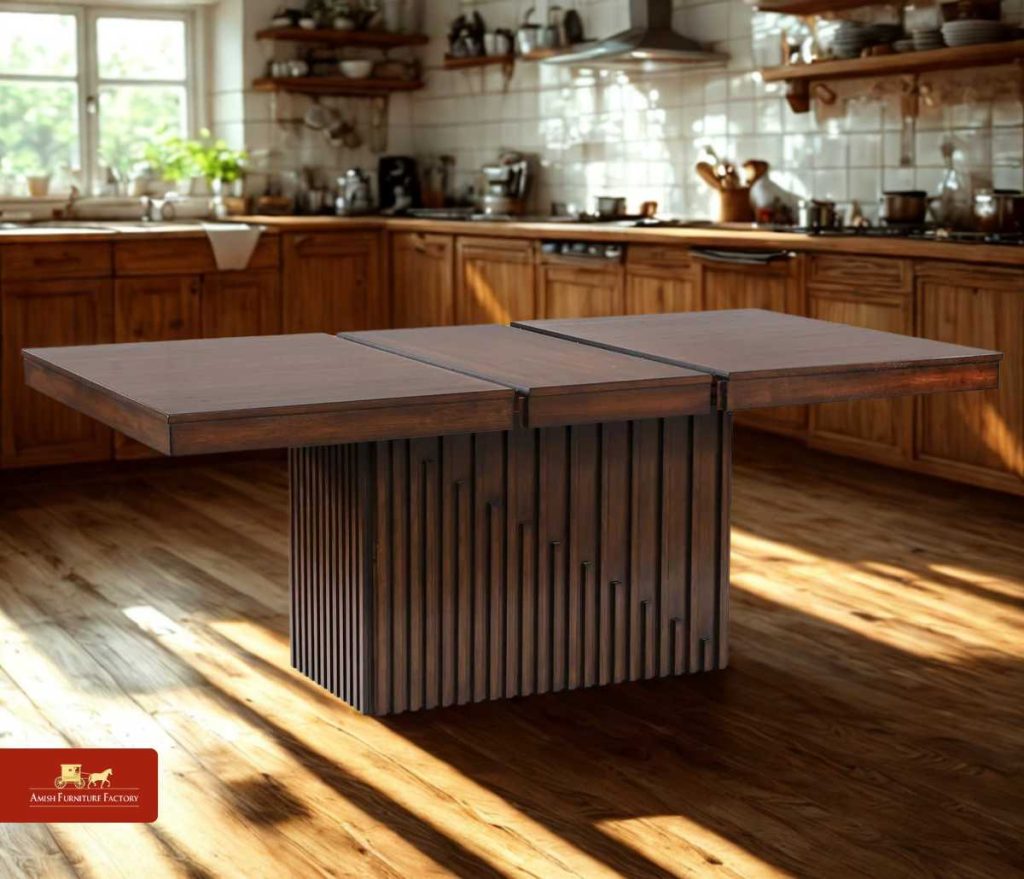
The drop-in leaf, also known as a removable leaf, is the most classic and widely recognized style. The table splits down the middle (or occasionally at the ends), and you manually insert one or more leaves to extend it. Once locked in place, the surface looks continuous and solid, maintaining the table’s aesthetic integrity. While it requires separate storage when not in use, many homeowners prefer this type for its stability and timeless design.
How Do Extension Leaves Actually Work?
Extension leaves work through a simple yet ingenious mechanism that allows sections of the tabletop to separate, creating space for the leaf to fit in. In most designs, the table slides open on smooth tracks or rails, revealing a gap where the leaf panel is inserted. Once it’s aligned and locked into place, the table becomes one solid surface again.
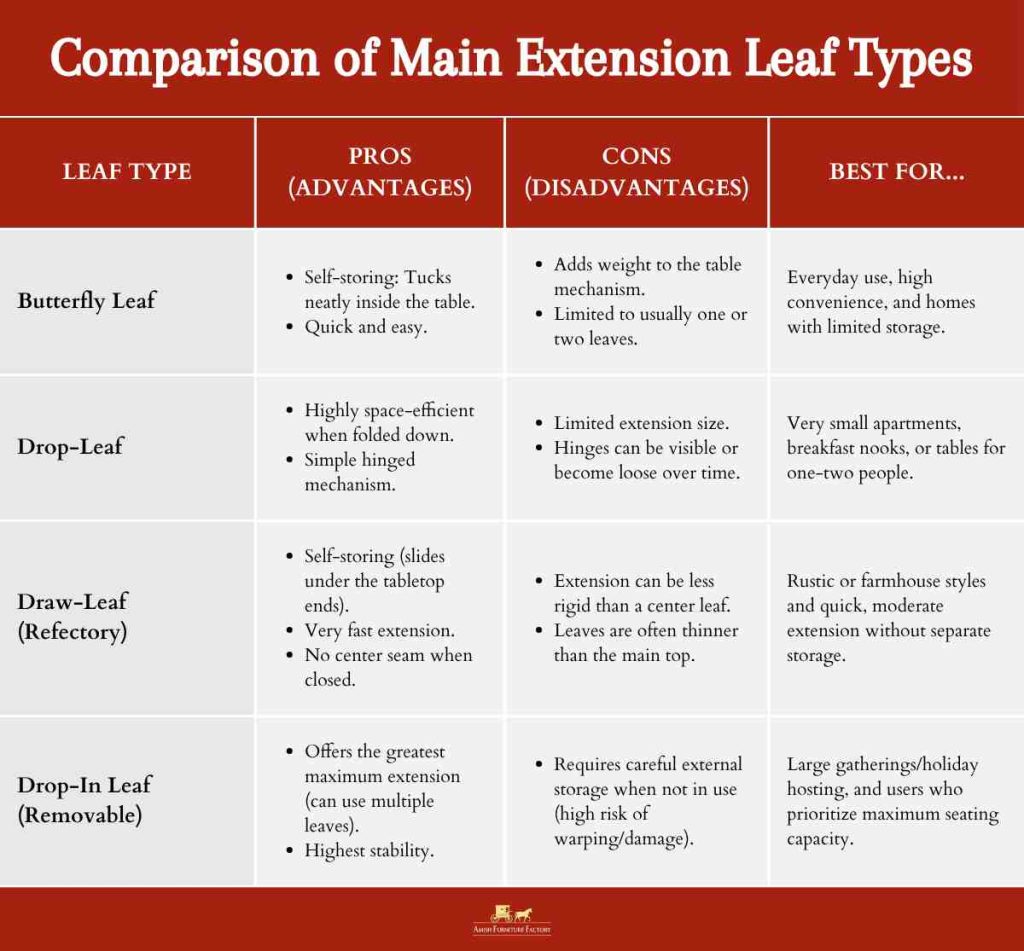
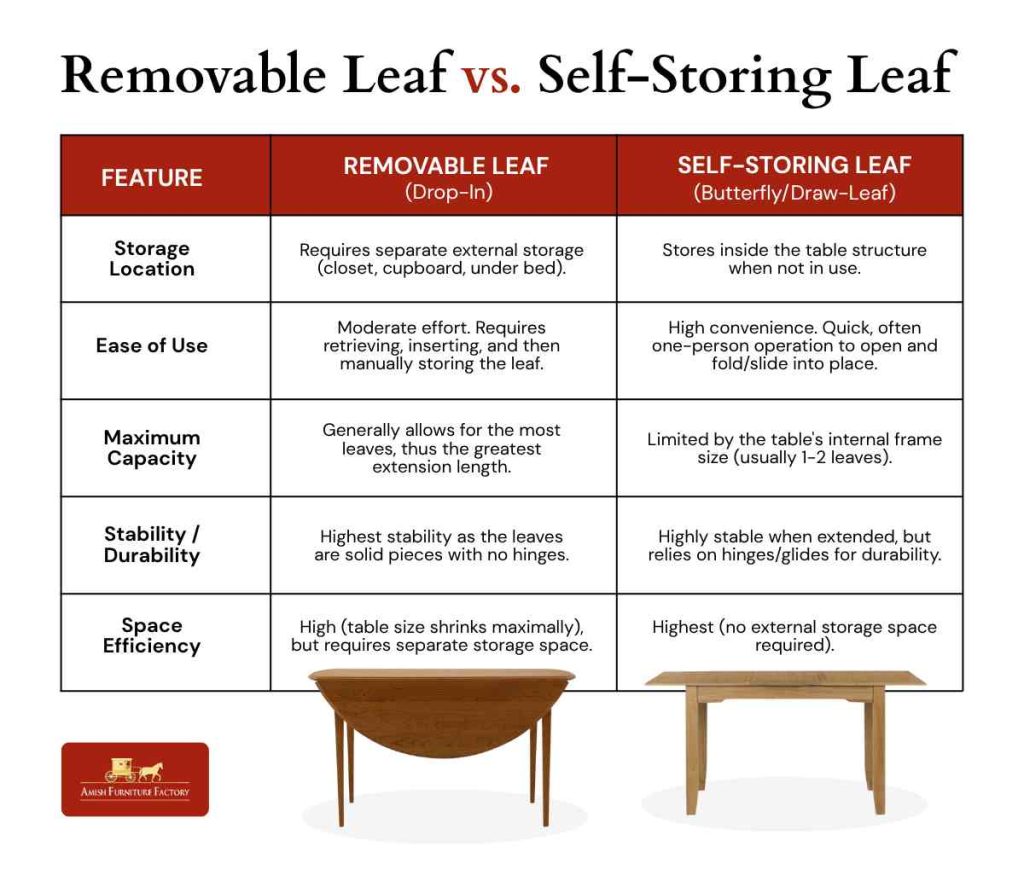
Some modern tables use self-storing mechanisms, like butterfly or drawleaf systems, where the leaf folds and hides within the table itself. Others rely on removable leaves that you keep separately and attach only when needed. Each system has its charm: removable leaves offer a seamless surface and lighter construction, while self-storing leaves make expansion effortless and mess-free.
Here’s a comparison between removable leaf vs. self-storing leaf.
Benefits of Dining Table Extension Leaves
Beyond simple functionality, dining table extension leaves bring a mix of practicality and design versatility that few other furniture features can match.
Maximize Seating When You Need It
With extension leaves, you can quickly expand your table to host additional guests comfortably. This eliminates the need for awkward folding chairs or extra side tables, making gatherings smoother and more enjoyable.
Save Space When You Don’t Need It
When not in use, the table shrinks back to its original size, which is ideal for smaller rooms or apartments where every inch counts. This compactness helps maintain an open, uncluttered living space.
A Smart Investment for the Long Term
Investing in a table with extension leaves means you don’t have to buy multiple tables for different occasions. Quality construction and durable materials ensure that the table—and its extension mechanism—will stand up to years of regular use, offering excellent value over time.
Maintain a Stylish, Cohesive Look
Extension leaves allow you to keep a clean, consistent design without the bulk of a permanently large table. Many modern systems cleverly hide seams and hardware, so your table looks seamless whether it’s extended or compact.
Upgrade your dining experience and solve your storage woes: Shop Amish dining room leaf storage cabinets to keep your table leaves safe and your space clutter-free.
How to Take Care of Your Table Leaves
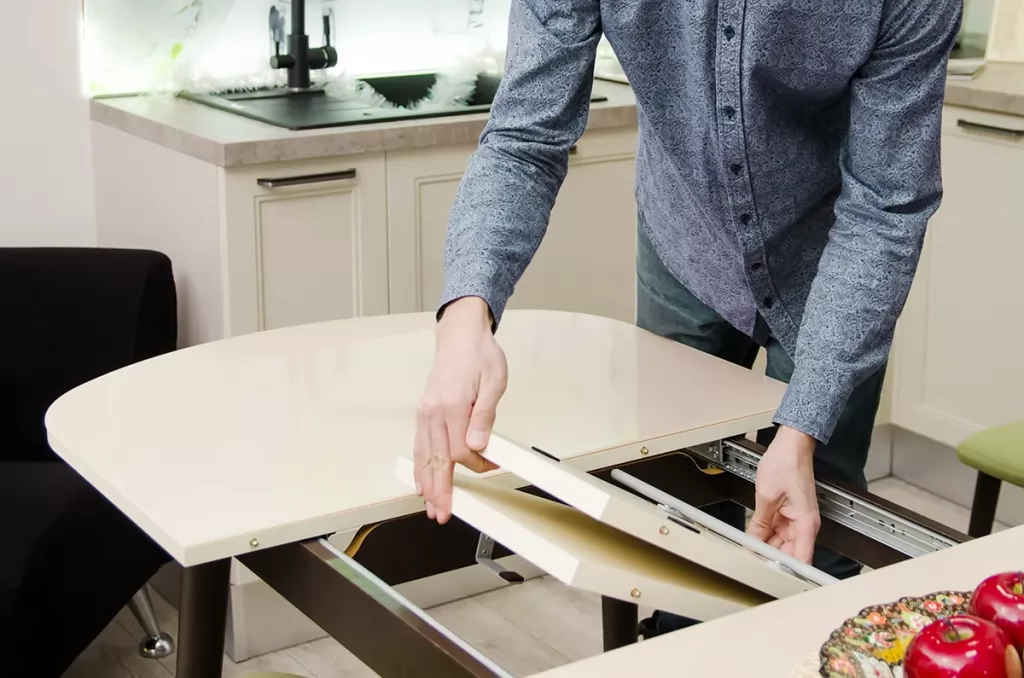
Proper care can dramatically extend the life and beauty of your dining table leaves. Always store removable leaves flat (never upright) to prevent warping, and keep them in a dry, temperature-stable environment. Regularly wipe the leaf surface with a soft, damp cloth and avoid harsh cleaners that can damage the finish or protective coating.
If your table is made of solid wood, apply furniture polish or wax seasonally to protect it from humidity changes and maintain its natural luster. For self-storing mechanisms, check the slides and hinges once or twice a year, adding a touch of lubricant if movement starts to feel stiff. Be cautious with weight when the table is extended — uneven loads can strain the joints or mechanism over time.
You might be interested to explore the different shapes of dining table for open-concept spaces.
Conclusion
In a world where dining furniture trends come and go, the dining table leaf has quietly remained one of the most practical and enduring design innovations. It’s the rare feature that combines engineering, craftsmanship, and emotional value, giving homeowners the flexibility to host, celebrate, and connect without compromise.
Modern extension systems have evolved beyond the clunky mechanisms of the past. Today’s designs glide smoothly, blend seamlessly, and often hide their complexity behind minimalist craftsmanship. Yet the purpose remains timeless: to bring people together comfortably, no matter the occasion.
Frequently Asked Questions
What is the average size of a dining table extension leaf?
Most dining table extension leaves range between 12 to 18 inches wide, depending on the table’s style and shape. Some larger tables may use multiple leaves to extend even further, allowing for more flexible seating arrangements.
Can I add an extension leaf to an existing table that didn’t come with one?
In most cases, yes. But it depends on the table’s construction. A skilled carpenter or furniture maker can retrofit certain tables with custom slides and matching leaves. However, not every design supports modification, so it’s best to consult the manufacturer before making changes.
How much weight can a fully extended table safely hold?
A well-built extension table can typically support 150 to 250 pounds evenly distributed across its surface. However, the exact capacity depends on the materials, leg structure, and type of extension mechanism used.
Are extension tables less stable than regular dining tables?
Not necessarily. Modern extension systems—especially those with geared or metal slides—offer excellent stability and weight distribution. As long as the leaves are properly installed and locked, a quality extension table can be just as sturdy as a fixed one.
When ordering a 72″ table with 2 12″ leaves, ( Butterfly if it makes a difference) will the table be 72″ plus the leaves when open or will it be 72″ open and compress to 48″ when the leaves are stored?
I really enjoyed this breakdown because it explains dining table extension leaves in a way that’s both practical and easy to visualize. I like how the history connects older designs with modern living, especially for smaller homes where flexibility matters so much. Butterfly and draw-leaf tables have always impressed me for how effortlessly they adapt when guests arrive. To me, furniture like this is about creating space for connection, the same way I value thoughtful, adaptable experiences in other parts of life, even online spaces like https://lovescape.com/crush-on-ai/ Anything that quietly adjusts to your needs while keeping things comfortable and stylish feels like a smart, lasting choice.
I assembled a similar table myself. It’s actually very easy; all the parts are designed to fit together. Only the table legs are screwed together, otherwise there’s no difficulty.