
A wobbly table can quickly turn an otherwise sturdy piece of furniture into a daily annoyance. If you’ve been searching for how to fix wobbly table problems effectively, you’ll find that there are several repair methods available. While common fixes can provide temporary relief, traditional Amish joinery techniques offer a more durable solution by addressing the underlying structural issues rather than simply masking the symptoms.
Key Takeaways:
- To fix a wobbly table, first identify whether the problem stems from loose joints, uneven legs, or damaged structural components.
- Traditional Amish joinery techniques, such as mortise and tenon restoration, drawboring, and dovetail repairs provide stronger results.
- Regular maintenance, humidity control, and routine joint inspections help prevent future instability.
Why Do Tables Wobble?
Most tables become unstable because one or more structural components have shifted, loosened, or deteriorated over time. Changes in humidity can cause wood to expand and contract, which gradually weakens joints that were once secure. Daily use also places repeated stress on connection points, particularly around the legs, aprons, and stretchers that support the table’s weight.
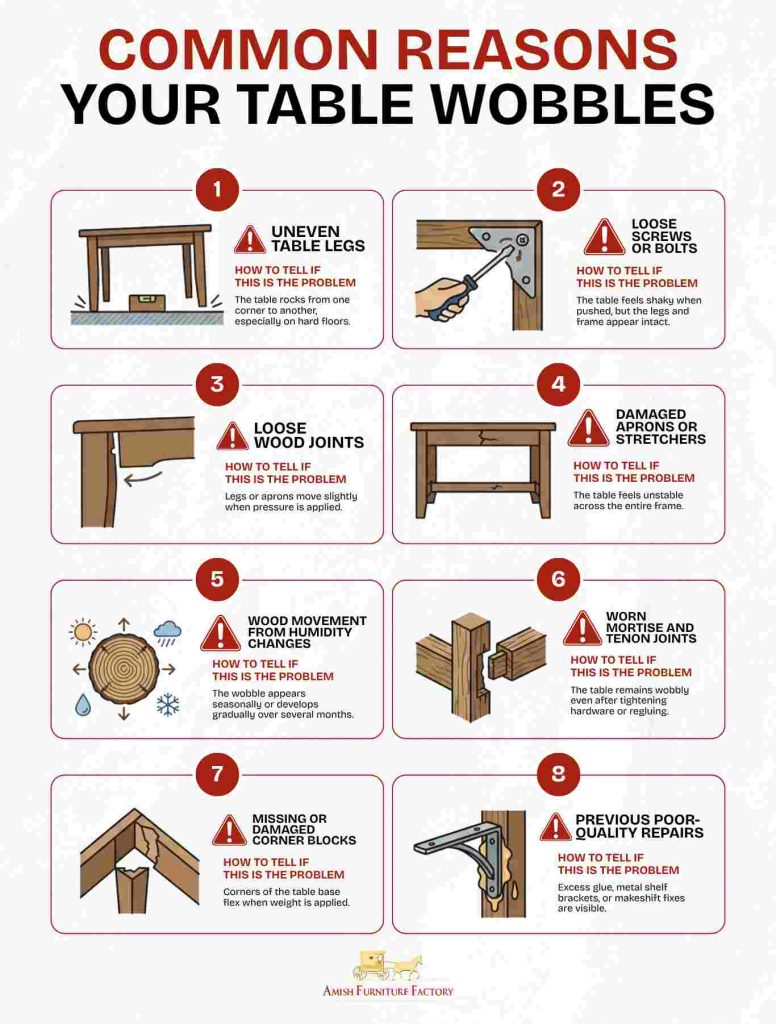
Before attempting any repair, it’s important to identify the exact source of the wobble. Place the table on a flat surface and gently apply pressure from different directions. If the movement occurs at a joint, loose joinery may be the culprit. If one leg fails to make full contact with the floor, uneven legs or floor irregularities could be responsible.
Understanding the root cause is the first step toward selecting the right fix. The table below outlines the most common reasons tables become unstable:
Why Traditional Amish Joinery Offers a Longer-Lasting Solution
The durability of solid wood furniture depends on more than the quality of the lumber; it also depends on how the pieces are joined together. While many modern furniture manufacturers rely on metal fasteners and mechanical connectors to speed production, traditional Amish craftsmen continue to use time-tested wood joinery methods that create exceptionally strong, long-lasting furniture.
Traditional Amish furniture makers have long relied on proven woodworking techniques that emphasize structural integrity over convenience. Rather than depending heavily on screws, brackets, or mass-produced connectors, Amish craftsmen build furniture using carefully fitted joints designed to remain strong for generations.
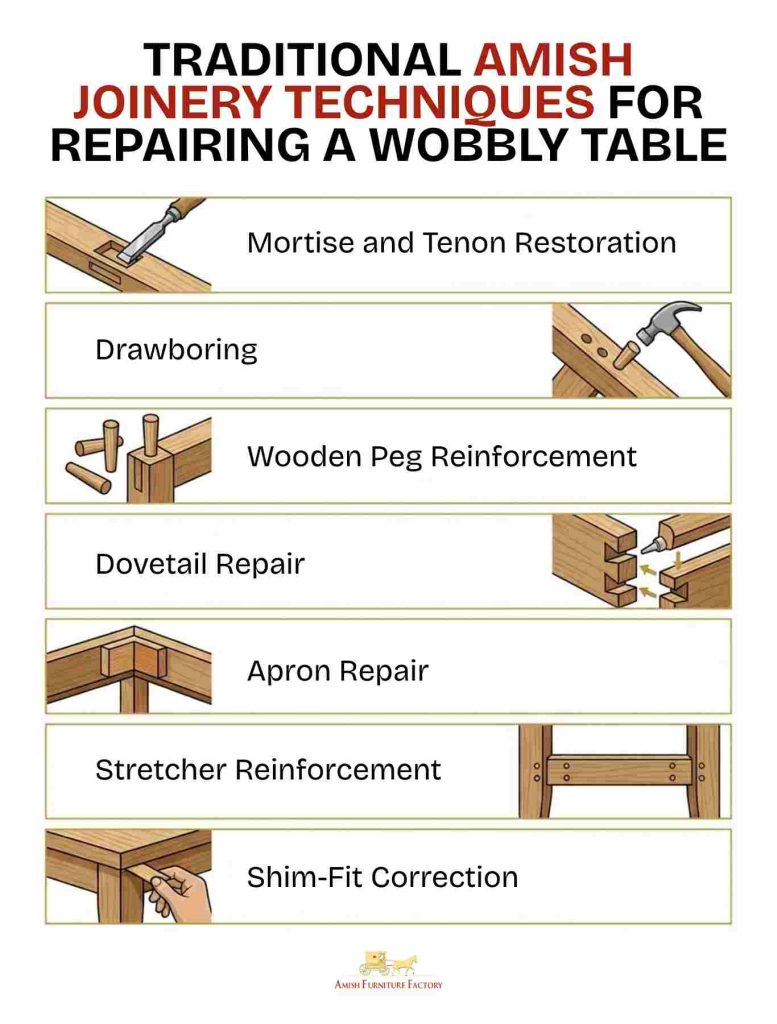
Understanding traditional joinery methods such as mortise and tenon joints, drawbore construction, wooden pegs, and dovetail connections allows repairs to become part of the furniture’s structure rather than an added patch.
How to Fix A Wobbly Table Using Amish Joinery Techniques
Traditional Amish repairs focus on restoring the table’s original structural strength. While these methods require more skill and time than basic fixes, they often produce results that last significantly longer.
Drawbore Joinery Reinforcement
Drawboring is a traditional technique that uses offset holes and a wooden peg to pull a joint tightly together. The peg creates constant mechanical pressure, helping the joint remain secure even if glue weakens over time.
- Fit the mortise and tenon joint together.
- Drill a hole through the mortise.
- Mark and slightly offset the corresponding hole in the tenon.
- Drill the tenon hole.
- Apply glue if desired.
- Drive a hardwood peg through both holes.
- Trim and finish the exposed peg.
When to Use It: Choose drawboring when a mortise and tenon joint repeatedly loosens or when repairing heavily used dining tables, farm tables, and other pieces subjected to frequent stress.
Mortise and Tenon Joint Restoration
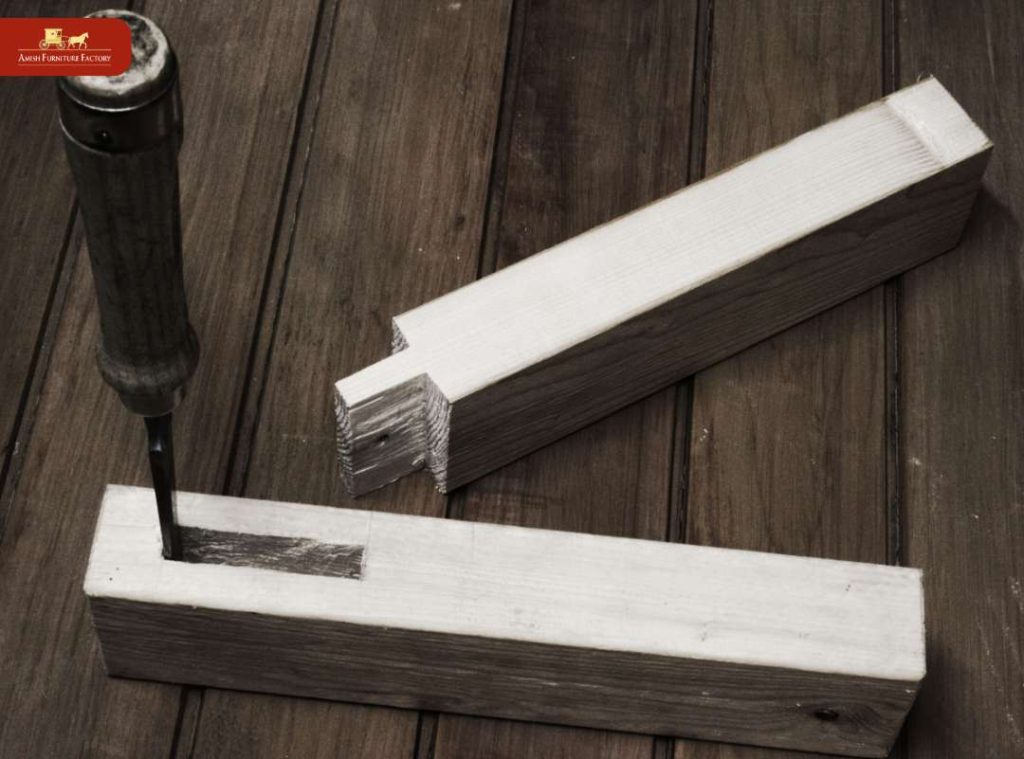
Mortise and tenon joints are among the strongest woodworking connections and are commonly found in quality furniture.
- Disassemble the loose joint carefully.
- Remove old glue and debris from both mortise and tenon surfaces.
- Inspect for wear or shrinkage.
- Add matching wood shims if needed to restore a tight fit.
- Apply quality wood glue.
- Reassemble and clamp securely.
- Allow the joint to cure fully before use.
When to Use It: Use this technique when table legs, aprons, or stretchers have loosened at their original joints but the wood itself remains largely intact. It’s ideal for heirloom tables and solid wood furniture with traditional joinery.
Apron Repair
The apron is the horizontal framework located directly beneath the tabletop that connects and stabilizes the legs. Damage or looseness in this area is a common cause of table wobble.
- Inspect the apron for cracks, loose joints, or separated glue lines.
- Remove old glue and debris from any failed joints.
- Reglue and clamp loose connections.
- Replace damaged sections if cracks are severe.
- Reinforce weak areas with traditional joinery or hardwood blocks.
When to Use It: Perform apron repairs when the tabletop feels stable but the legs shift or rack side to side. Loose or damaged aprons are frequently responsible for wobbling.
Wooden Peg Reinforcement
Wooden peg reinforcement adds hardwood dowels or pegs through an existing joint to provide additional mechanical strength while maintaining a traditional handcrafted appearance.
- Identify the loose joint.
- Clamp the joint tightly into position.
- Drill through the joint at the reinforcement point.
- Insert a hardwood peg coated lightly with glue.
- Drive the peg fully into place.
- Trim flush with the surrounding wood.
- Sand and refinish as needed.
When to Use It: This method works best for slightly loose joints that still fit together well but need extra reinforcement. It is especially useful on older Amish tables where preserving the original appearance is important.
Dovetail-Based Structural Repairs
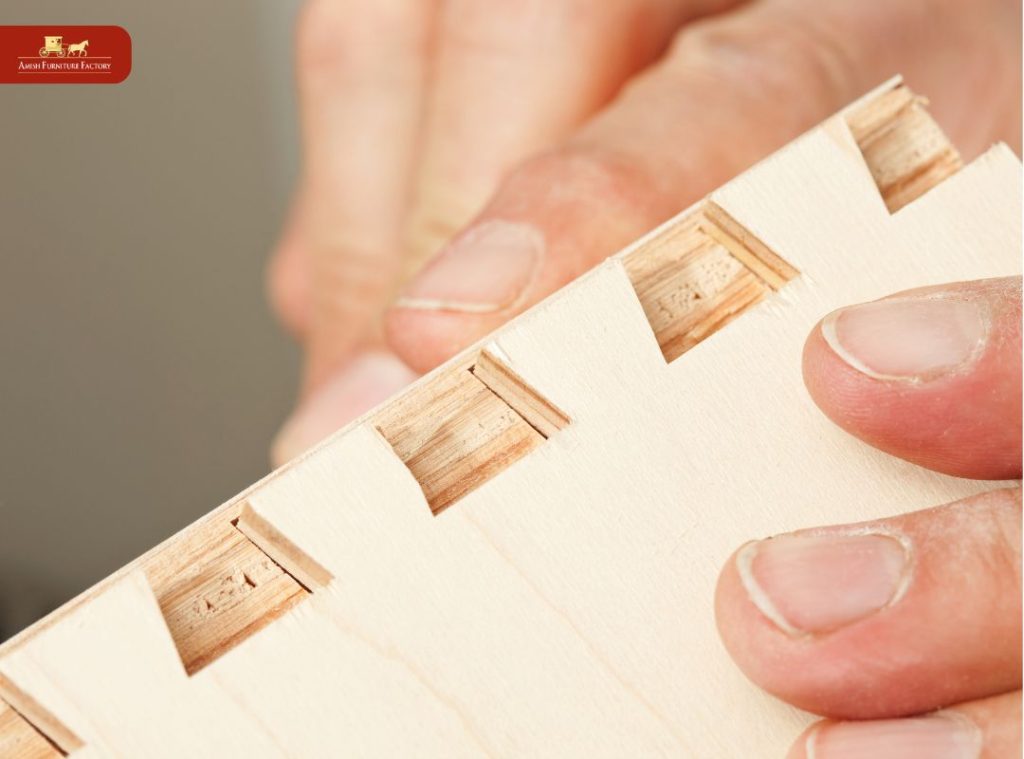
Dovetail joinery uses interlocking wedge-shaped components that resist pulling and twisting forces, making it one of the strongest woodworking joints available.
- Evaluate the damaged section.
- Cut matching dovetail components.
- Remove compromised material.
- Fit the new dovetail connection precisely.
- Apply glue and assemble.
- Clamp until cured.
- Sand and blend the repair into the surrounding surface.
When to Use It: Use dovetail repairs when corners, drawer components, or structural sections have split or pulled apart and require substantial rebuilding rather than simple tightening.
Stretcher Reinforcement
Stretchers are horizontal supports positioned between table legs to increase rigidity and prevent racking or side-to-side movement.
- Examine stretchers for loose joints, cracks, or missing fasteners.
- Tighten or reglue loose connections.
- Replace damaged stretchers if necessary.
- Reinforce joints using wooden pegs or drawbore techniques.
- Clamp until all repairs have fully cured.
When to Use It: Use stretcher reinforcement when the table sways laterally or rocks despite tight leg joints. This technique is particularly effective for trestle tables and long dining tables.
Shim-Fit Joint Repair
Shim-fit repair restores worn joints by inserting thin pieces of matching wood into enlarged mortises or other loosened joinery to recreate a tight, precise fit.
- Disassemble the loose joint.
- Clean away old glue and debris.
- Measure gaps caused by wood shrinkage or wear.
- Create thin hardwood shims that match the original species.
- Glue the shims into place and trim for a precise fit.
- Reassemble and clamp the joint securely.
- Sand and refinish if necessary.
When to Use It: Choose a shim-fit repair when joints have become loose due to decades of seasonal wood movement, shrinkage, or wear but are otherwise structurally sound. This technique preserves original components while restoring long-term stability.
Common Mistakes to Avoid When Repairing a Wobbly Table
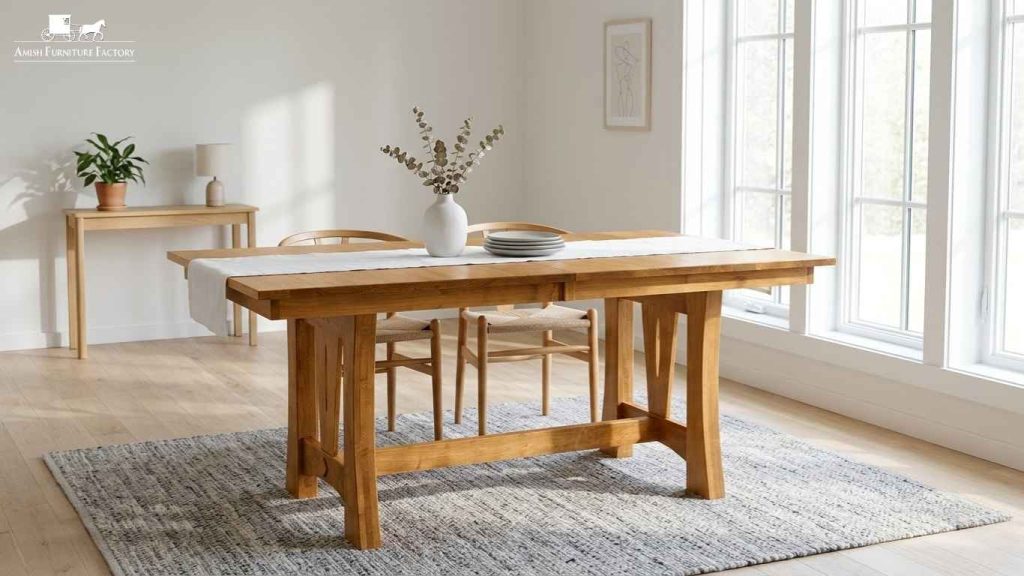
Avoiding these common errors will help ensure your repair lasts and preserves the table’s structural integrity.
Relying Solely on Screws or Brackets
In many cases, wobble originates from failed joinery, worn mortise and tenon joints, or wood movement rather than missing hardware. Adding screws without restoring the original joint can place stress on surrounding wood, potentially leading to cracks or permanent damage. For solid wood and heirloom-quality furniture, repairing or rebuilding the existing joinery typically produces a stronger, longer-lasting result.
Using Excess Glue
Applying excessive amounts of adhesive can prevent joints from fitting together properly, create messy squeeze-out, and weaken the bond if old glue residue is not removed first. Before gluing any joint:
- Remove all old glue and debris completely.
- Ensure mating surfaces fit tightly.
- Apply a thin, even coat of quality wood glue.
Ignoring Humidity-Related Wood Movement
Wood naturally expands and contracts as humidity levels change throughout the year. Ignoring this movement can result in recurring looseness, split joints, warped components, or failed repairs. Maintaining indoor humidity levels between 35% and 55% can help minimize excessive wood movement and prolong the life of both the furniture and the repair.
Skipping Proper Clamping Time
Always follow the glue manufacturer’s recommended clamping and curing times. As a general rule:
- Keep joints clamped for at least the minimum specified time.
- Avoid heavy use for 24 hours or longer if recommended.
- Allow repairs to cure fully before moving or placing weight on the table.
When a DIY Repair Isn’t Enough
While many wobbly tables can be repaired at home, some situations require professional attention. Extensive structural damage, severely worn joinery, broken or missing components, major wood splitting, or valuable antique and heirloom pieces often benefit from the expertise of a skilled furniture restorer. Professional craftsmen can recreate traditional joinery, match wood species and finishes, and preserve the table’s historical and monetary value while ensuring the repair remains structurally sound for years to come.
Preventing a Table from Becoming Wobbly Again
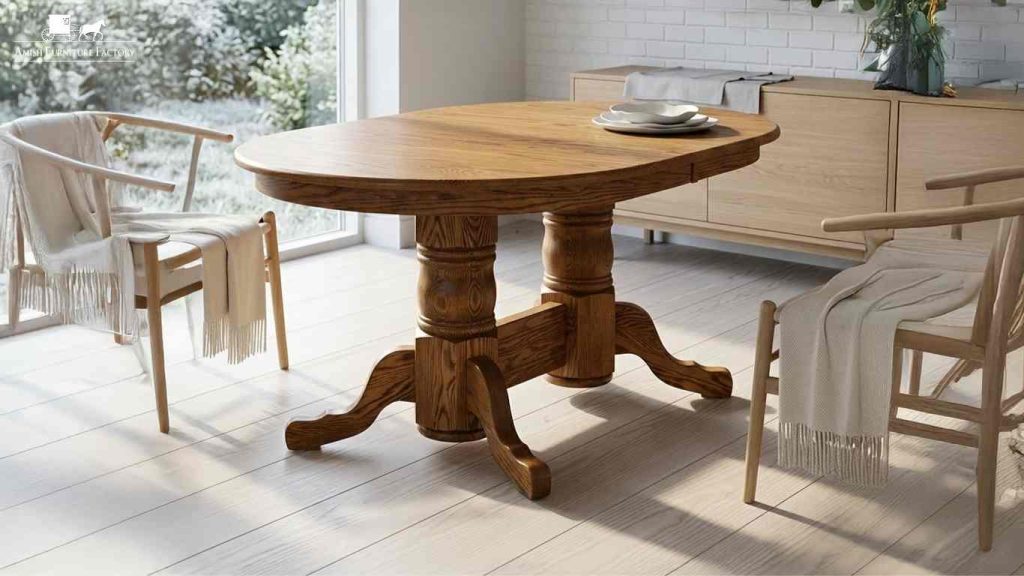
Wood is a living material that responds to changes in its environment. Controlling indoor humidity levels between 40% and 55% can significantly reduce seasonal expansion and contraction that gradually weakens joints over time. It is also important to avoid excessive drying and prolonged moisture exposure. Performing regular joint inspections allows small issues to be addressed before they develop into major repairs. Seasonal maintenance practices, such as checking for movement after significant weather changes, can catch problems early.
For cleaning, use pH-neutral wood cleaners or mild soap solutions made for finished furniture. Avoid harsh chemicals, ammonia-based cleaners, and excessive water, since they can weaken joints and damage finishes over time.
If your current table is beyond a quick fix, you might want to upgrade to our solid-wood Amish dining tables, built to ensure a lifetime of wobble-free gatherings.
Conclusion: Building Table Stability That Lasts
Many common table repairs can temporarily eliminate wobble by tightening hardware, adjusting leg height, regluing joints, or adding reinforcements. These approaches often work well for minor issues and can extend the life of the furniture when applied correctly.
However, traditional Amish joinery repairs go a step further by restoring the table’s structural foundation. Techniques such as mortise and tenon restoration, drawbore reinforcement, wooden peg strengthening, and dovetail repairs create durable connections designed to withstand years of daily use. For homeowners seeking a long-term solution, joinery-based repairs often provide superior longevity and a more authentic restoration of the furniture’s original craftsmanship.
Frequently Asked Questions
How do you stabilize a wobbly table?
Start by identifying the source of the wobble. Tightening hardware, adjusting uneven legs, gluing loose joints, or reinforcing weak areas can often restore stability. For long-term durability, repairing the underlying joinery is typically the most effective solution.
How to fix a jiggly table?
A jiggly table usually indicates loose joints or weakened structural connections. Inspect the legs, aprons, and stretchers, then repair or reinforce the affected joints using appropriate woodworking techniques.
Can traditional Amish joinery techniques be used on modern tables?
Yes. Many modern tables can benefit from Amish joinery methods, particularly when loose connections or structural weaknesses are present. The specific technique used will depend on the wood design and construction.
What is the most common cause of recurring table wobble after a repair?
The most common cause is failing to address the underlying joint failure. Temporary fixes may reduce movement initially, but worn or weakened joinery often continues to deteriorate, causing the wobble to return.