
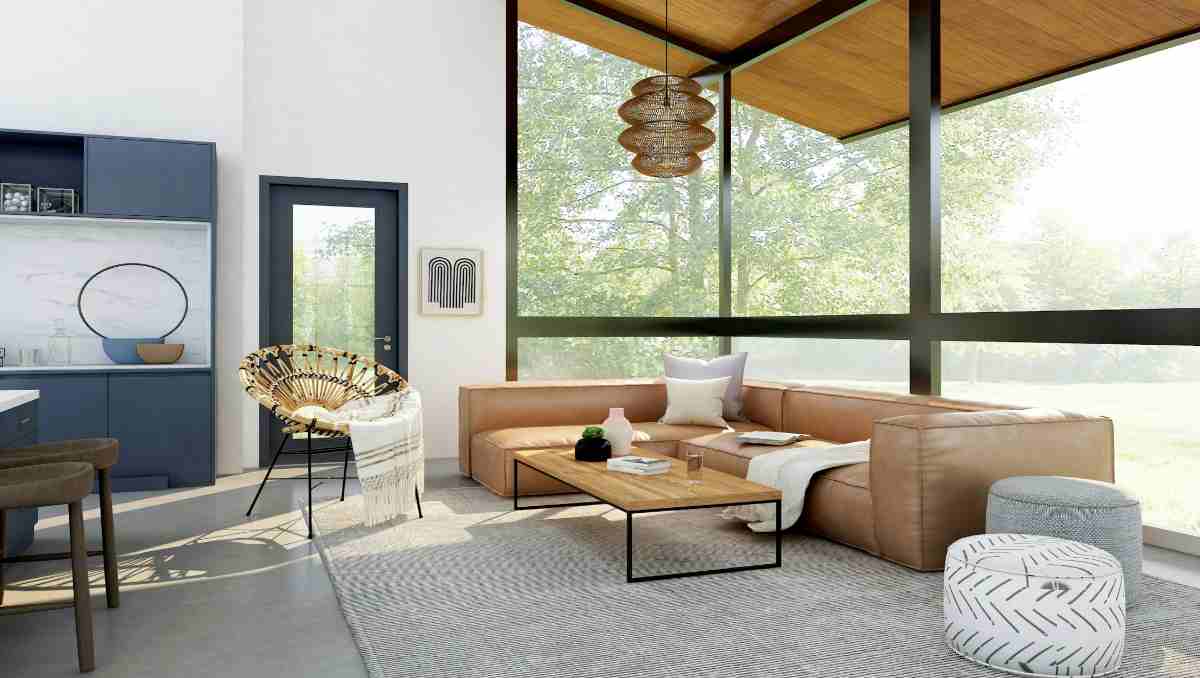
Transitional interior design is all about balance, blending the warmth of traditional décor with the clean simplicity of modern living. The challenge, however, is finding furniture that feels timeless without looking overly ornate or too minimal. Amish furniture naturally fills that gap. With its solid hardwood construction, understated craftsmanship, and clean lines, it brings warmth, texture, and authenticity to transitional spaces while maintaining the refined simplicity that defines the style.
Key Takeaways:
- Transitional style furniture blends the warmth of traditional design with the simplicity of modern interiors.
- Amish furniture enhances transitional spaces through solid wood craftsmanship, natural textures, and timeless design.
- To incorporate Amish furniture into transitional homes, focus on clean silhouettes, neutral finishes, and balanced pieces that add warmth without visual heaviness.
Understanding Transitional Style: Key Principles and Characteristics
Transitional style furniture design blends the warmth of traditional style with the simplicity of modern design. Instead of leaning heavily in one direction, it creates a middle ground where clean lines, soft textures, and timeless details work together naturally. The overall look feels polished but still comfortable, which is why so many homeowners are drawn to it today.
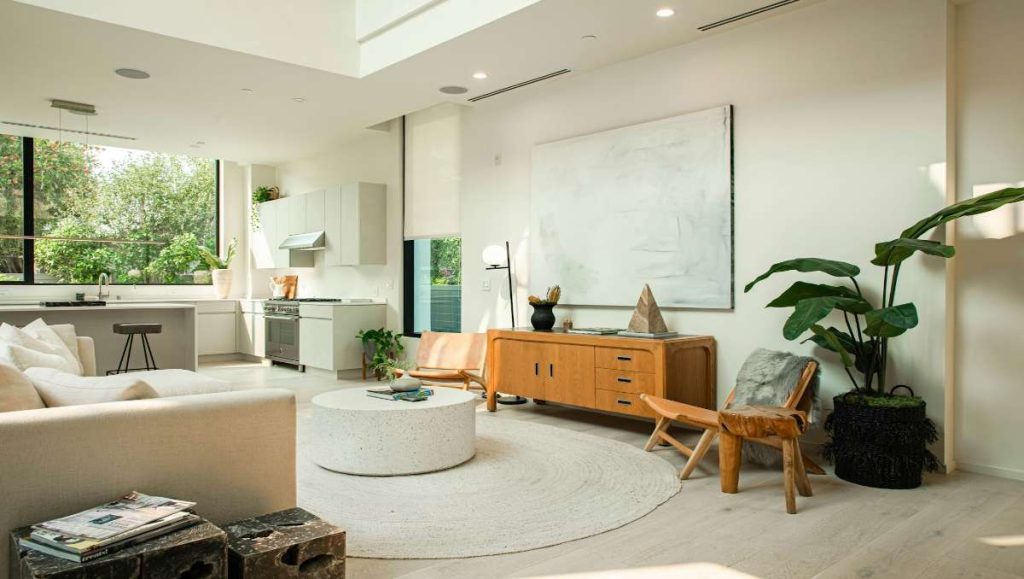
At first glance, transitional interiors may seem simple, but there is a lot of intention behind the design choices. Here are its core principles:
Minimal Ornamentation Paired With Gentle Curves
One of the defining features of transitional design is restraint. Furniture often skips excessive carvings or dramatic decorative details in favor of cleaner silhouettes. At the same time, the style avoids looking too rigid by incorporating soft edges, subtle curves, and rounded shapes.
Neutral Color Palettes Relying on Texture for Visual Interest
Transitional interiors usually lean on neutral colors like beige, cream, taupe, gray, and warm whites. Linen fabrics, natural wood grain, brushed metals, and woven accents all help keep the space visually interesting.
A Focus on Comfort, Scale, and Functional Elegance
Transitional design is meant to be lived in. Furniture should look refined, but it also needs to feel comfortable and practical for everyday use. Oversized seating, balanced proportions, and thoughtful spacing all help create a relaxed environment that still feels sophisticated.
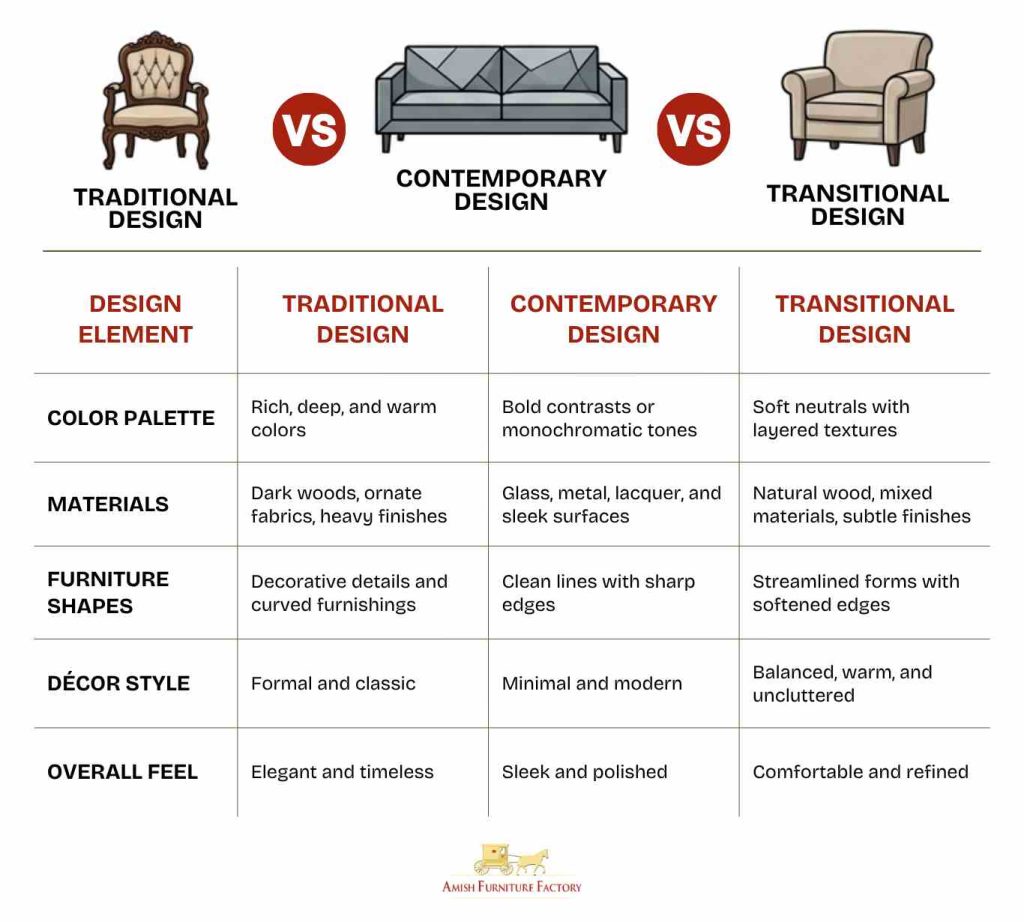
To better understand how transitional design sits between traditional and contemporary styles, let’s compare the key elements side by side.
Why Amish Furniture Fits Transitional Interiors
Amish furniture brings something rare to interior design, especially when paired with transitional style furniture. It sits comfortably between old-world craftsmanship and modern simplicity, which makes it an easy fit for spaces that aim to feel both current and timeless. The clean lines and natural materials help it blend into modern layouts, while the handcrafted detailing adds warmth that prevents a room from feeling too sterile or flat.
What really sets it apart is the intention behind every piece. Authentic Amish furniture is typically built on durability, proportion, and honest materials rather than fast production or passing trends. That approach naturally supports transitional interiors, where balance and subtle character matter more than bold statements.
How Amish Furniture Enhances Transitional Spaces
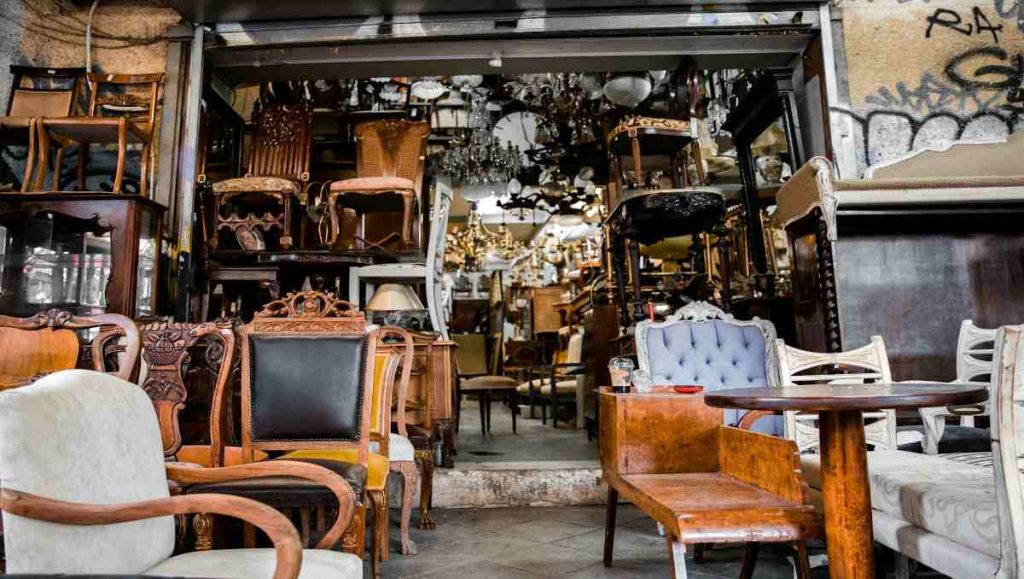
Amish furniture fits naturally into transitional interiors because it combines handcrafted warmth with clean, adaptable design. Here’s how:
Introduces Organic Warmth to Clean Visual Lines
Transitional interiors often feature straight lines, neutral palettes, and uncluttered layouts, which can sometimes feel too polished or visually cold. Amish furniture helps counterbalance that effect through natural hardwood textures and visible wood grain.
For example, a solid oak dining table paired with upholstered contemporary chairs adds warmth without disrupting the room’s modern simplicity. Instead of relying on excessive décor, the furniture itself adds visual depth and character.
Creates Better Balance Through Proportion and Scale
One of the biggest challenges in transitional design is finding furniture that feels substantial without appearing oversized or heavy. Amish-made pieces are known for their solid construction, but their clean silhouettes keep them visually balanced.
A streamlined Amish sideboard, for instance, can anchor a dining room without the bulky ornamentation often found in traditional furniture. These balanced proportions help transitional spaces feel grounded rather than sparse.
Natural Finishes Blend Easily With Transitional Color Palettes
Transitional homes typically rely on soft neutrals such as warm whites, taupe, beige, gray, and muted earth tones. Amish furniture complements these palettes naturally because the finishes highlight the wood itself instead of masking it with glossy or artificial coatings.
Light white oak finishes pair beautifully with modern cream interiors, while medium brown cherry wood adds richness to gray-toned spaces without overpowering them. Matte and satin finishes also reflect light more softly, helping rooms feel warmer and more relaxed.
Supports the Timeless Nature of Transitional Design
Transitional style is designed to outlast short-term trends, and Amish furniture reinforces that philosophy through durability and craftsmanship. Unlike mass-produced furniture that may warp or fall out of style within a few years, Amish-made pieces are built for decades of everyday use.
For example, a handcrafted maple dining table can evolve alongside changing décor styles, whether paired with modern lighting, contemporary textiles, or more classic accents over time. This long-term versatility makes Amish furniture especially valuable in transitional homes.
Best Amish Furniture for Transitional Homes (By Room)
Choosing the right pieces is where transitional design really comes to life. The key is matching each room with pieces that support balance rather than overwhelm the space.
Amish Dining Tables as Transitional Anchors
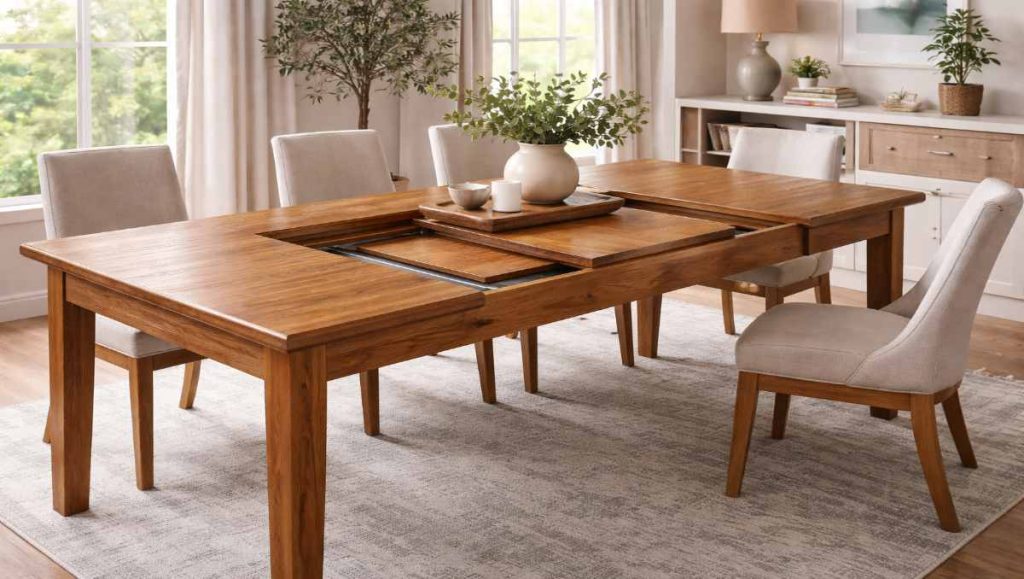
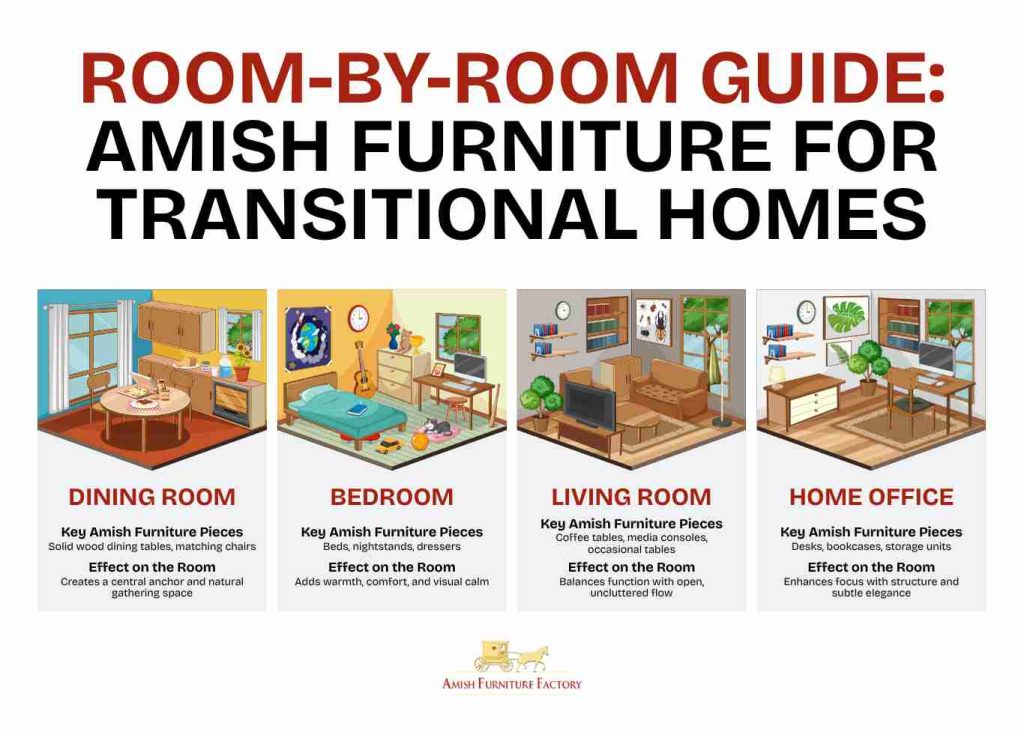
The dining table is often the centerpiece of a transitional home, and Amish craftsmanship makes it feel even more grounded. A solid wood dining table introduces natural texture and presence without disrupting the clean flow of the room. Its simplicity allows it to blend with both accent chairs and more traditional seating styles.
Bedroom Furniture That Adds Warmth
In transitional bedrooms, the goal is comfort with a sense of calm structure. Amish-made beds, dressers, and nightstands bring warmth through natural wood tones while maintaining clean silhouettes. This balance helps the room feel restful without becoming plain.
Living Room Pieces That Create Balance
The living room is where transitional design often shows its versatility, and Amish furniture plays a key role in keeping everything cohesive. Coffee tables become natural focal points, offering solid structure without visual clutter. Media consoles introduce order and functionality while maintaining a clean, curated look. Occasional tables add flexibility, giving the space extra surface area without disrupting flow.
Office Furniture for Transitional Workspaces
Solid wood desks from Amish craftsmen provide a strong foundation that supports focus and productivity. Their simple lines help keep the workspace uncluttered and visually calm. Bookcases with modern styling add storage without feeling heavy or outdated. When metallic accents are introduced subtly into reclaimed wood designs, they create a light contrast that fits perfectly within transitional aesthetics.
Explore our curated collection of Amish contemporary furniture to seamlessly blend timeless, handcrafted durability with the sleek, clean lines of transitional style.
Final Thoughts: Why Amish Furniture Fits Transitional Living
Transitional style design works because it finds a comfortable middle ground, but that balance only holds when the furniture has real substance behind it. Without texture, visual weight, and craftsmanship, these spaces can start to feel flat or overly commercial. That is where contemporary Amish furniture from Amish Furniture Factory naturally steps in, adding the structural “soul” that keeps a transitional home feeling warm, grounded, and visually complete.
At its core, this pairing is not about nostalgia. It is about intention. Investing in Amish-built contemporary pieces is a commitment to a more timeless way of living. These are pieces designed to age gracefully with the home, supporting a style that values harmony, comfort, and long-term quality over trends that come and go.
Frequently Asked Questions
What does transition mean in furniture?
In furniture design, “transitional” refers to a blend of traditional and modern styles. It combines the comfort and detail of classic design with the clean lines and simplicity of contemporary aesthetics.
What is the difference between traditional and transitional style?
Traditional style furniture is often more ornate, with detailed carvings, rich finishes, and heavier visual elements. Transitional style, on the other hand, simplifies those details and blends them with modern shapes and neutral tones.
Is transitional decor still in style?
Yes, transitional decor remains one of the most popular interior design styles. Its appeal comes from its flexibility and timeless feel. Because it is not tied to strong trends, it continues to work well in modern homes that value comfort, simplicity, and long-term design balance.
What wood species and finishes work best for a transitional design aesthetic?
Popular wood species for transitional interiors include oak, maple, and cherry because of their natural grain and versatility. Finishes tend to stay neutral and understated, such as medium browns, light stains, and matte or satin coatings. These choices help highlight the natural beauty of the wood while blending smoothly with neutral color palettes.