
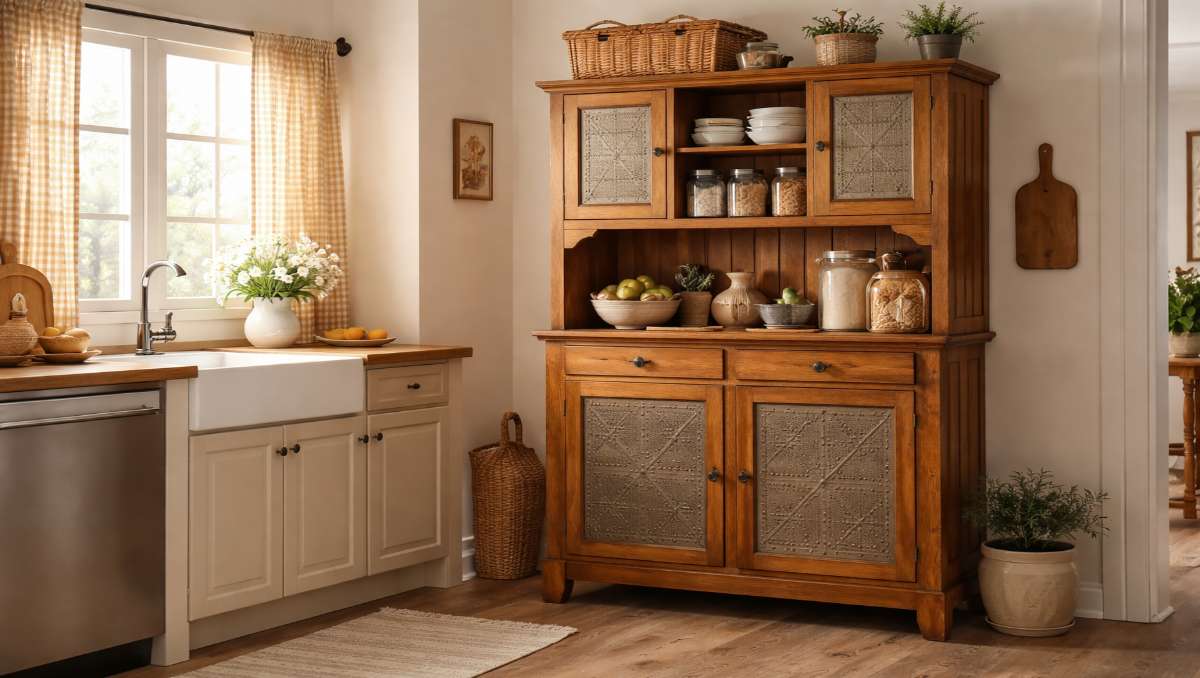
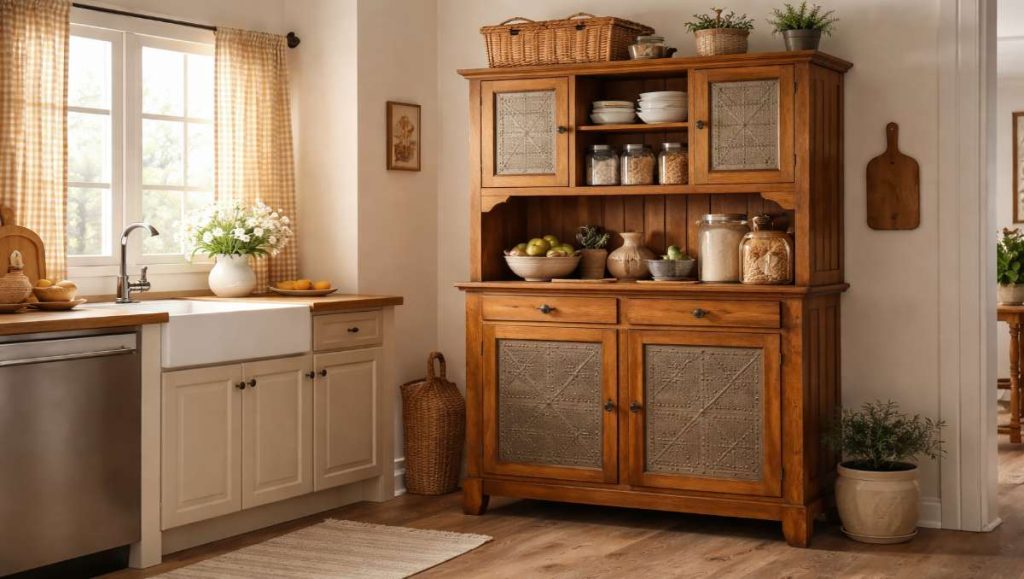
Long before modern refrigeration, a pie safe hutch was designed to protect baked goods while allowing air to circulate through beautifully punched tin panels. This panel is a practical solution that has since become a defining design feature. Today, Amish craftsmen continue this tradition, building solid wood pie safe hutches that blend old-world function with timeless beauty.
Key Takeaways:
- A pie safe hutch is a vintage wooden cabinet featuring distinctive ventilated doors designed to protect pies and fresh-baked goods from pests.
- Solid wood pie safe hutches handcrafted by Amish artisans offer a combination of durability, timeless design, and meticulous craftsmanship.
- Customization, wood selection, and careful maintenance allow these hutches to remain both beautiful and functional for decades.
In this article, we’re taking a closer look at the enduring appeal of the pie safe hutch and why solid wood versions built by Amish craftsmen continue to stand out in today’s homes.
What Is a Pie Safe Hutch?
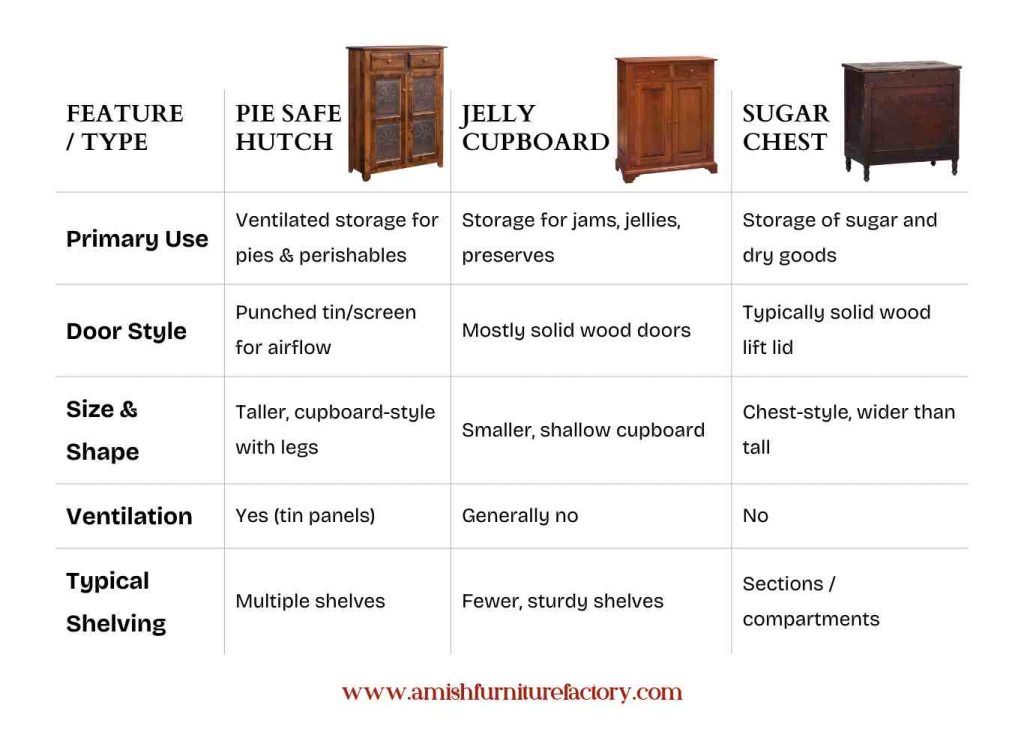
A pie safe hutch is a traditional furniture piece that dates back to a time before modern refrigeration, when homes needed a safe way to store baked goods and other perishables. Typically made of solid wood, these hutches feature ventilated doors, often with punched tin panels, to promote airflow while keeping insects out. They were a staple in American kitchens from the 1700s through the 1800s and were commonly used to store pies, bread, and other homemade foods.
Today, the cost of a solid wood Amish pie safe hutch varies based on size, wood species, and craftsmanship. Smaller three-shelf models often begin around $900 to $1,200, while larger five-shelf or double-door hutches can exceed $3,000. Prices tend to increase when best woods like cherry, walnut, or hickory are used, as well as when custom features such as drawers, decorative tin panels, or custom dimensions are added.
Pie Safe Hutch Sizes and Layout Styles
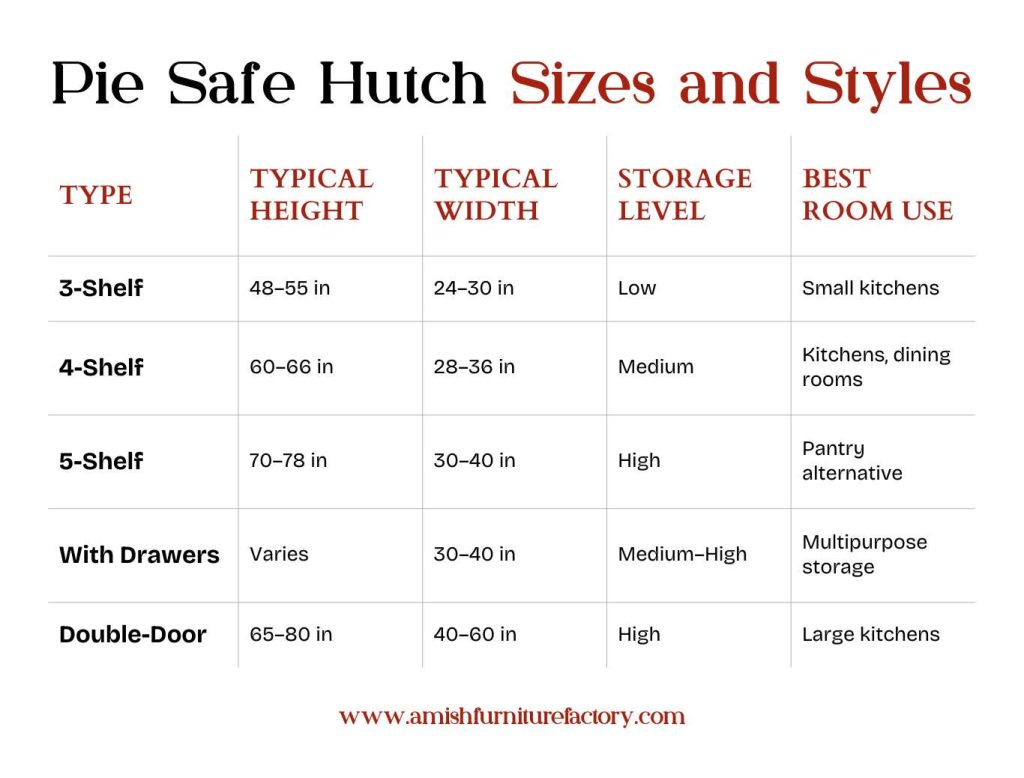
Pie safe hutches come in a variety of sizes and configurations, making it easier to find a piece that fits both your space and your storage needs.
Three-Shelf Pie Safes (Most Traditional)
This is the classic pie safe hutch design most people recognize, offering a balanced mix of charm and usability. With three evenly spaced shelves, it provides enough room for pies, tin plates, and small serving dishes without feeling bulky.
Four-Shelf Pie Safes
Four-shelf models add a bit more vertical storage while keeping the proportions visually appealing. They’re ideal for households that want extra space for bakeware, linens, or display pieces without moving into oversized furniture.
Five-Shelf and Tall Pie Safes
These taller pie safe hutches are designed for maximum storage and stronger visual presence in a room. They work especially well in larger kitchens or dining areas where extra height doesn’t feel overwhelming.
Pie Safe Hutches with Drawers
Drawers add a practical layer of storage for utensils, linens, or small kitchen essentials. This style blends traditional pie safe design with everyday convenience, making the piece more versatile.
Double-Door Pie Safes
Double-door pie safe hutches offer wider access to the interior, which is helpful for storing larger platters or arranging items for display. They also create a more symmetrical, statement-making look in the space.
The table below shows common pie safe hutch sizes and styles, helping you compare overall dimensions and best room use to find the option that best fits your needs.
Add a touch of timeless charm to your kitchen by exploring our collection of handcrafted hutches, the perfect way to bring a classic style pie safe into your home.
What Makes Solid Wood Amish Pie Safe Hutches Different
At first glance, many pie safe hutches may look similar, but the differences become clear once you look closer at how they’re built.
1. Quality Construction and Amish Craftsmanship
Amish craftsmen rely on traditional woodworking techniques that emphasize precision and strength, not shortcuts. Joinery methods like mortise-and-tenon and dovetail joints create structure that stays tight and stable for decades. Each pie safe hutch is built with careful attention to detail, from the way the doors hang to how smoothly the shelves fit.
2. Solid Wood Construction and Premium Hardwood Materials
Unlike many mass-produced hutches that use veneers or engineered wood, Amish pie safe hutches are built from solid hardwood species throughout. Common choices include oak, cherry, maple, hickory, and walnut, each offering its own grain character and tone.
3. Tin Punch Panels: Functional Heritage Design
The punched tin panels found in traditional pie safes aren’t just decorative. They serve a real purpose. The tiny perforations allow air to circulate while helping protect stored items from insects. Amish builders often use classic punch patterns that echo historic designs, preserving the authenticity of the piece.
4. Wide Customization Options Available
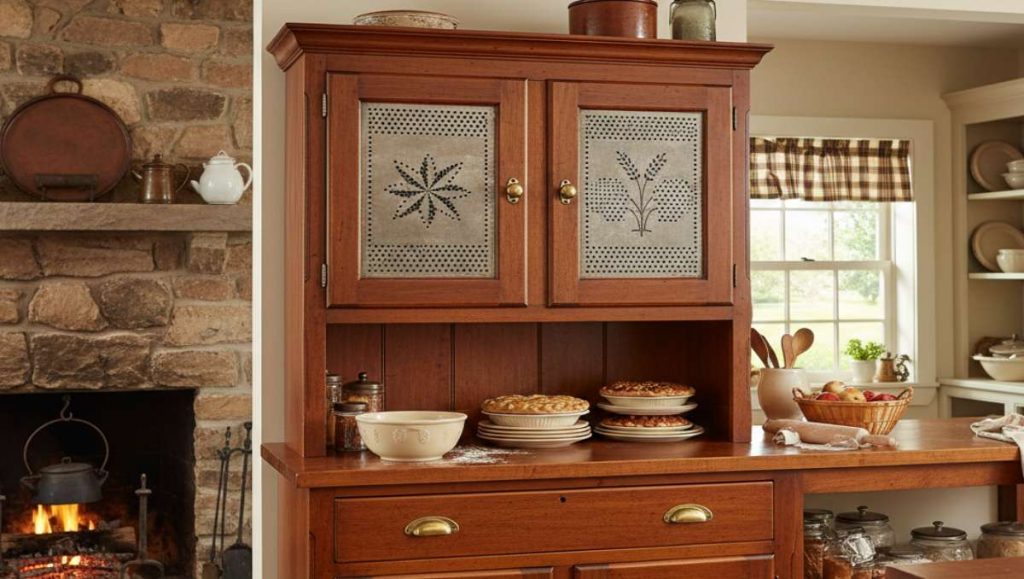
One of the biggest advantages of choosing an Amish-built piece is the ability to customize it to your needs. Buyers can often select the wood species, stain color, hardware style, shelf spacing, and even overall dimensions. This flexibility means your pie safe hutch can be tailored to fit a specific room instead of forcing you to work around standard factory sizing.
5. Classic Design Styles and Overall Aesthetic Options
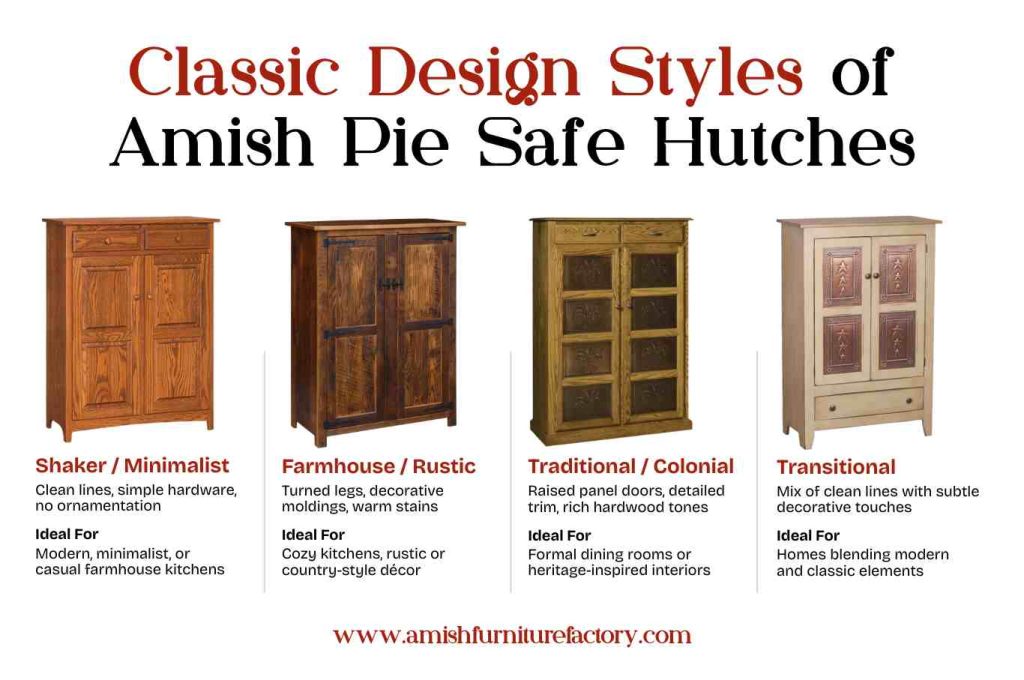
Amish pie safe hutches are available in a range of styles, from simple Shaker-inspired designs to more detailed farmhouse and traditional looks. Some feature clean lines and minimal ornamentation, while others include decorative moldings, turned legs, or raised panel doors. No matter the style, the emphasis stays on timeless design rather than short-lived trends.
How to Style a Pie Safe Hutch in Your Home
A pie safe hutch can serve as both a functional storage piece and a decorative focal point in your home. In a kitchen, it can hold baked goods, dishware, or linens while adding a warm, rustic touch. In dining rooms or living areas, it doubles as a display piece for collectibles, glassware, or seasonal Amish furniture décor. Pairing it with vintage accent, woven baskets, or ceramic pitchers can enhance its classic farmhouse charm.
To keep the look balanced, consider the scale and color of the hutch relative to the room. Lighter woods and open tin panels create an airy feel, while darker hardwoods add richness and grounding. Layering texture can also make the hutch feel integrated rather than just a standalone piece.
Care and Maintenance for Solid Wood Pie Safes
Keeping a solid wood pie safe looking its best is simpler than it might seem, but regular care is key to preserving its beauty and longevity. Avoid placing it in direct sunlight or near heat sources, as this can cause the wood to warp or fade over time. Dust the hutch regularly with a soft, dry cloth, and use a slightly damp cloth for more thorough cleaning. For tin panels, a gentle wipe with a damp cloth will keep them bright without damaging the punched patterns.
Occasional polishing with a quality furniture wax or oil can help maintain the wood’s luster and protect it from drying out. Inspect the joinery and hardware periodically to ensure everything remains tight and functional. By investing a little time in routine maintenance, your Amish-built pie safe hutch will continue to provide functional storage and timeless charm for decades.
Final Thoughts: Investing in Craftsmanship That Lasts
A solid wood Amish pie safe hutch is an investment in craftsmanship, heritage, and enduring style. Built with high-quality hardwoods, traditional joinery, and thoughtful design, these hutches combine practicality with visual appeal in a way that mass-produced pieces rarely achieve. Whether used to store baked goods, display cherished items, or simply add warmth to a room, a well-made pie safe hutch brings both function and character into your home. Choosing such a piece means choosing durability, timeless design, and the satisfaction of owning an amish furniture crafted with skill, patience, and care.
Frequently Asked Questions
What is another name for a pie safe?
Pie safes are sometimes called “cupboard safes” or “cake safes,” reflecting their original function as secure, ventilated storage for baked items.
How do I know if a pie safe is truly Amish-made?
Authentic Amish pie safe hutches are hand-built using traditional joinery methods like mortise-and-tenon or dovetail joints, with no reliance on mass-produced parts. Look for solid hardwood construction, carefully finished edges, and consistent craftsmanship.
Can pie safes be customized to fit small kitchens?
Yes, many Amish craftsmen offer custom sizing, shelf spacing, and hardware options to ensure the hutch fits smaller spaces without compromising functionality or style.
Why is ventilation still important for a pie safe hutch if I’m not storing actual pies in it?
Ventilation prevents moisture buildup, which helps protect wood and brass panels from warping or rusting. It also keeps stored items like linens, dishware, or decorative pieces fresher over time.