
When it comes to handcrafted maple cabinets, few craftsmen are as respected as Amish builders. Known for their eye for detail and commitment to natural materials, they don’t just choose any finish; they carefully select the best stain for maple cabinets to highlight the wood’s unique character. Maple is a dense hardwood with a naturally smooth grain, which means the wrong stain can look blotchy or muted. Amish builders have learned, through generations of woodworking, which stains bring out maple’s warmth, depth, and durability.
Key Takeaways:
- Amish builders choose the best stain for maple cabinets by selecting a finish that enhances the wood’s natural grain, complements the room’s style, and ensures durability.
- Darker stains give a more uniform appearance by muting the grain, while lighter stains highlight maple’s subtle character.
- The best hard maple stain for cabinets depends on the desired look. Gel stains are the most reliable for even results, while oil- or water-based stains work well with proper conditioning.
This article explores how Amish craftsmen decide on the right stain, the traditional methods they rely on, and practical tips you can use when choosing a finish for your own maple cabinetry.
Why Maple Cabinets Require Special Staining
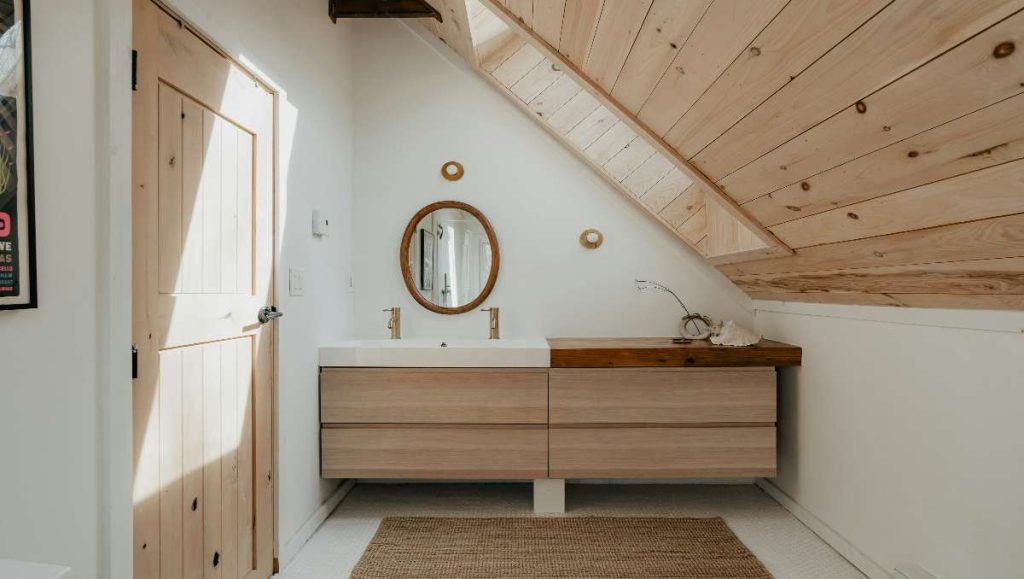
Maple wood is known for its smooth, tight grain and fine texture. Unlike some other hardwoods, maple has a subtle, almost creamy look that can sometimes appear a bit plain without the right stain. Maple’s uniform grain makes it perfect for cabinets, but it also means the stain needs to bring out the natural beauty without overpowering it.
Because maple has such a dense and tight grain, it doesn’t absorb stain as easily as softer woods like pine or oak. That means if you’re not careful, your stain can look blotchy or uneven. This is why choosing the right type of stain and applying it properly is key to getting a smooth, beautiful finish that really highlights the wood’s natural character.
How Do Amish Builders Choose the Best Stain for Maple Cabinets
When Amish builders choose a stain for maple cabinets, they focus on more than just color; they carefully consider how the stain will enhance the wood’s natural beauty and stand up to daily use. Their goal is to find a finish that balances durability, appearance, and compatibility with maple’s unique characteristics.
Here are the key criteria Amish builders use when selecting stains for maple cabinets:
Enhances Natural Grain and Color
Amish builders want the stain to complement and showcase maple’s natural grain, not hide it. They look for stains that deepen the wood’s color subtly, making the grain pop while keeping that classic, warm feel.
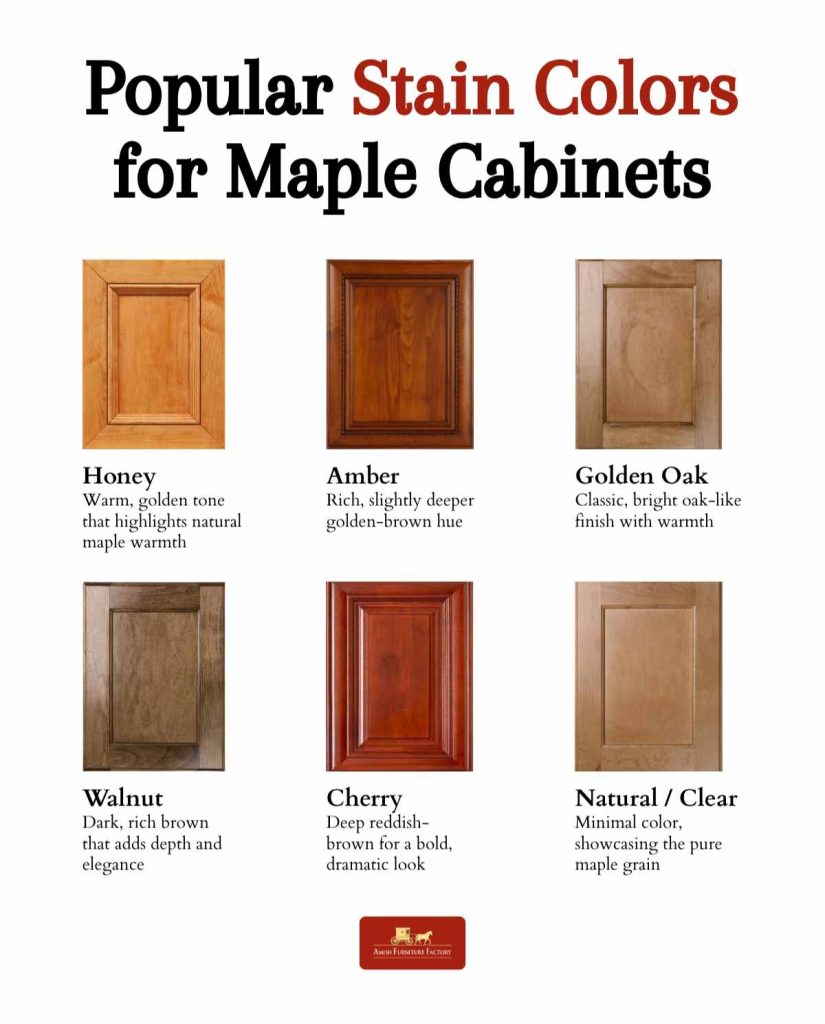
Here are the most popular stain colors for maple cabinets:
Durability and Longevity of the Finish
Cabinets get a lot of wear and tear, so Amish craftsmen pick stains and finishes that can stand up to daily use. A good stain should resist fading, chipping, and water damage, so the cabinets look great for years.
Compatibility with the Wood’s Density and Hardness
Since maple is a hard, dense wood, the stain has to penetrate well without sitting on top or creating a blotchy surface. Amish builders carefully choose stains that work with maple’s unique structure, ensuring an even, smooth finish.
Types of Stains Preferred by Amish Builders
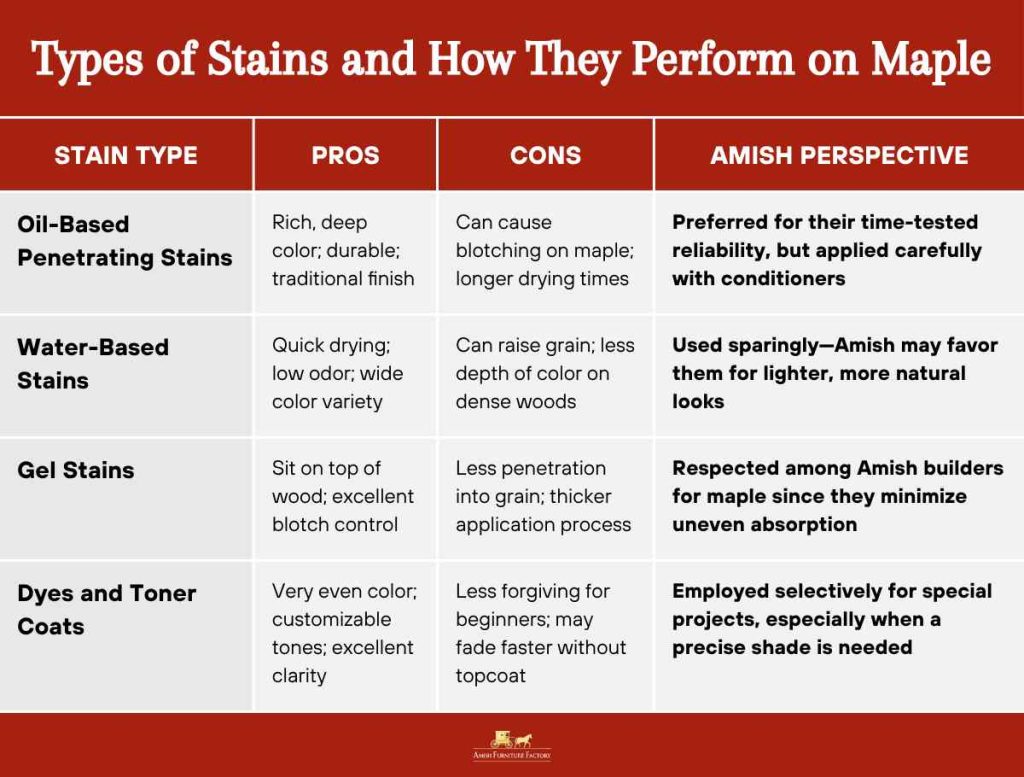
When staining maple cabinets, Amish builders typically prefer oil-based stains because they penetrate deeply into the dense wood, enhancing its natural beauty with rich color and providing excellent durability that lasts for years. That said, water-based stains are gaining traction as a more eco-friendly option that dries faster and cleans up easily, making them a practical choice without sacrificing too much in terms of finish quality. Ultimately, Amish craftsmen choose the stain type that best balances appearance, protection, and the specific demands of maple wood.
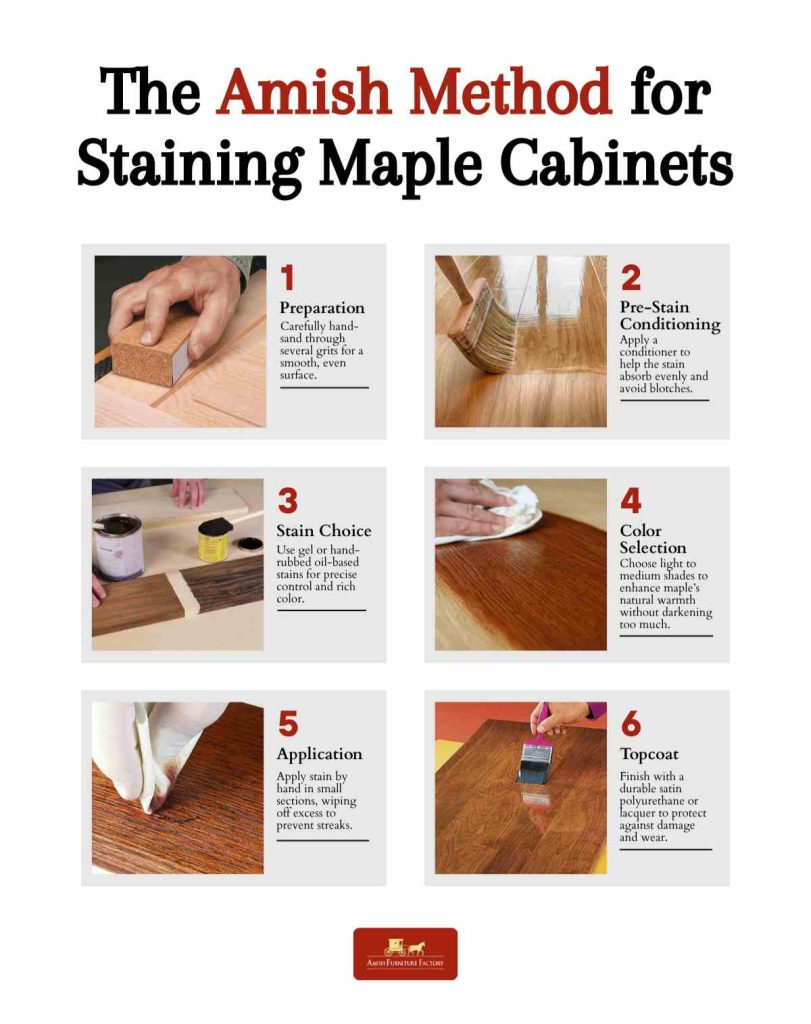
How Amish Builders Stain Maple Cabinets: Step-by-Step Workflow
Before staining, Amish builders meticulously prepare the maple surface. They hand-sand through multiple grits to achieve a smooth finish, knowing that maple’s tight grain will highlight even the smallest flaws. Every detail is inspected—often in natural light—to ensure a flawless foundation.
As Laura Waterson of Koehn Painting explains:
“Maple is beautiful; however, it will hold it against you if you treat it like oak. Amish builders understand this. They sand to 180–220 grit and then stop. If you over-sand, you’ll seal the pores, causing the stain to set unevenly. After sanding, they wipe it clean and may even raise the grain a bit before wiping again.”
Here’s the overview of their process:
1. They always start with a test patch.
Before staining anything visible, Amish builders test the full finish—stain, conditioner (if used), and topcoat—on a scrap piece of the same maple or on an unseen section of the cabinet. This helps them fine-tune the color and finish before moving forward.
2. They use a pre-stain conditioner when needed.
Because maple can stain unevenly, a pre-stain conditioner or alcohol-based leveling agent is often applied to reduce blotchiness and ensure even absorption.
3. Stain is applied carefully, by hand.
Instead of spraying large areas quickly, Amish craftsmen typically apply the stain using lint-free cloths, foam pads, or natural-bristle brushes. They work with the grain, one small section at a time, for maximum control.
4. Excess stain is wiped off right away and consistently.
They wipe off any excess in the same direction as the application, using clean, fresh rags with each pass. This keeps the color even and prevents streaks or lap marks.
5. They allow full drying before evaluating.
Once the stain is dry, which can vary depending on conditions, they inspect the finish under good lighting. If the color isn’t quite deep enough, they’ll apply another light coat instead of rushing with a heavy one.
For Amish builders, the true protection and longevity of maple cabinets come from the final topcoat. This finish acts as a shield against moisture, deep scratches, kitchen grease, and daily wear, while also deepening the color and enhancing the wood’s natural luster.
Laura shares a proven method for a professional-grade result:
“For great results, we’ve had success using a Transtint water-based dye as a base tone, followed by Old Masters Wiping Stain or Mohawk glaze, applied by hand. This will give you a furniture-grade finish with a rich, clean color.”
Enhance your home with the timeless elegance of Amish-made cabinets. Click here to discover our handcrafted maple cabinets today!
Common Mistakes to Avoid When Staining Maple Cabinets
Even with careful preparation and application, staining maple can be unpredictable. Amish builders, however, have refined methods to troubleshoot issues that commonly arise.
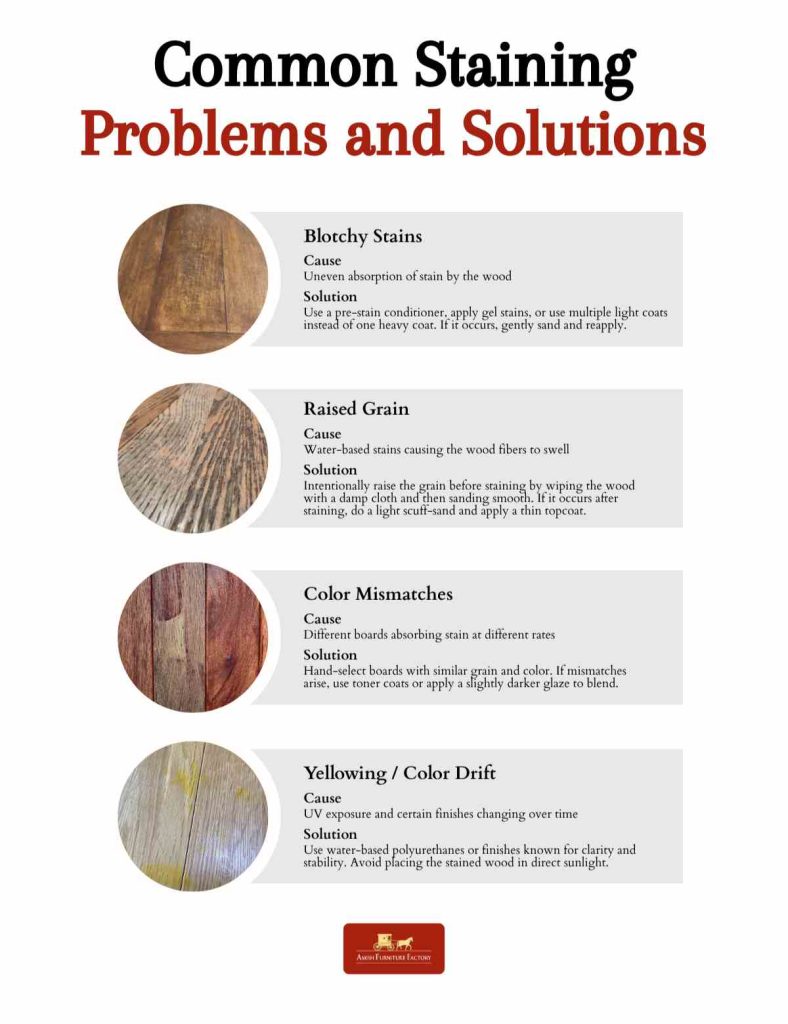
Blotchy Stains
Blotching is one of the most common frustrations when working with maple. The wood absorbs stain unevenly, leaving darker patches that distract from the grain. Amish craftsmen counter this by applying a pre-stain conditioner, using gel stains that sit more on the surface, or carefully layering light coats instead of one heavy application. If blotching appears, gentle sanding and reapplication can often even out the finish. Laura underscores this step:
“[Pre-stain conditioner] prevents the stain from sinking too deep in some parts while skipping others, especially with soft maple… That’s how you achieve depth without blotches.”
Raised Grain After Water-Based Stains
Water-based stains, while environmentally friendly and fast-drying, can cause maple’s grain to swell and feel rough. To fix this, builders typically raise the grain intentionally by wiping the wood with a damp cloth before staining, then sanding it smooth once dry. If raised grain occurs after staining, a very light scuff-sand followed by another thin topcoat helps restore the silky surface.
Color Mismatches
Because maple absorbs stain differently across boards or panels, mismatched tones can sometimes appear after application. Amish woodworkers often prevent this by hand-selecting boards with similar grain and color before construction. If mismatches do arise, they may blend them with toner coats or carefully apply a slightly darker glaze to bring the overall color into harmony.
Yellowing and Color Drift
Over the years, some finishes can yellow or shift in tone, altering the cabinet’s original look. To avoid this, Amish builders often choose water-based polyurethanes or finishes known for clarity and stability. They also recommend avoiding direct sunlight where possible, as UV exposure can fade or darken stains.
Conclusion: Choosing the Right Stain for Long-Lasting Maple Cabinets
Choosing the perfect stain for maple cabinets starts with understanding maple’s unique character and how it interacts with different finishes. Amish builders have mastered the process by combining careful preparation, patience, and deep respect for the wood. From thorough sanding and testing stains to selecting the ideal type and sealing with a protective topcoat, every step is crucial in creating a finish that’s both stunning and long-lasting. When done right, the stain enhances maple’s subtle grain, prevents blotchiness, and allows the cabinets to age gracefully over many years of use.
Frequently Asked Questions
Is gel stain better than oil or water-based stain for maple kitchen cabinets?
Gel stains are often considered the most forgiving option for maple because they sit on the surface rather than soaking deeply into the tight grain. However, oil stains still appeal to those who want rich, deep tones, while water-based stains offer quicker drying and less odor.
What topcoat do Amish cabinet makers prefer for long-lasting maple cabinets?
Amish builders typically favor oil-based varnishes or oil-modified polyurethanes for their durability and rich appearance. For projects requiring a clear, non-yellowing finish, water-based polyurethane is also used. Satin finishes are common because they balance beauty with practicality.
What is the difference between wood dye and pigment stain for maple cabinets?
Wood dyes penetrate the fibers and create a very even, vibrant color, making them excellent for avoiding blotchiness on maple. Pigment stains, on the other hand, tend to sit in the grain and pores of the wood, which can be tricky with maple since its grain is tight and subtle.
How does the final topcoat affect the color of the stain over time?
The topcoat not only protects the wood but also influences how the stain looks. Oil-based finishes can add warmth and cabinet depth but may be amber or yellow with age. Water-based finishes preserve the original stain color more faithfully, staying clear longer.
I have new maple cabinets which are not stained because I love the look. I need to seal the wood to keep it clean and new. I just want a clear, flat finish with no color. Also water base so it doesn’t yellow. What should use please?