
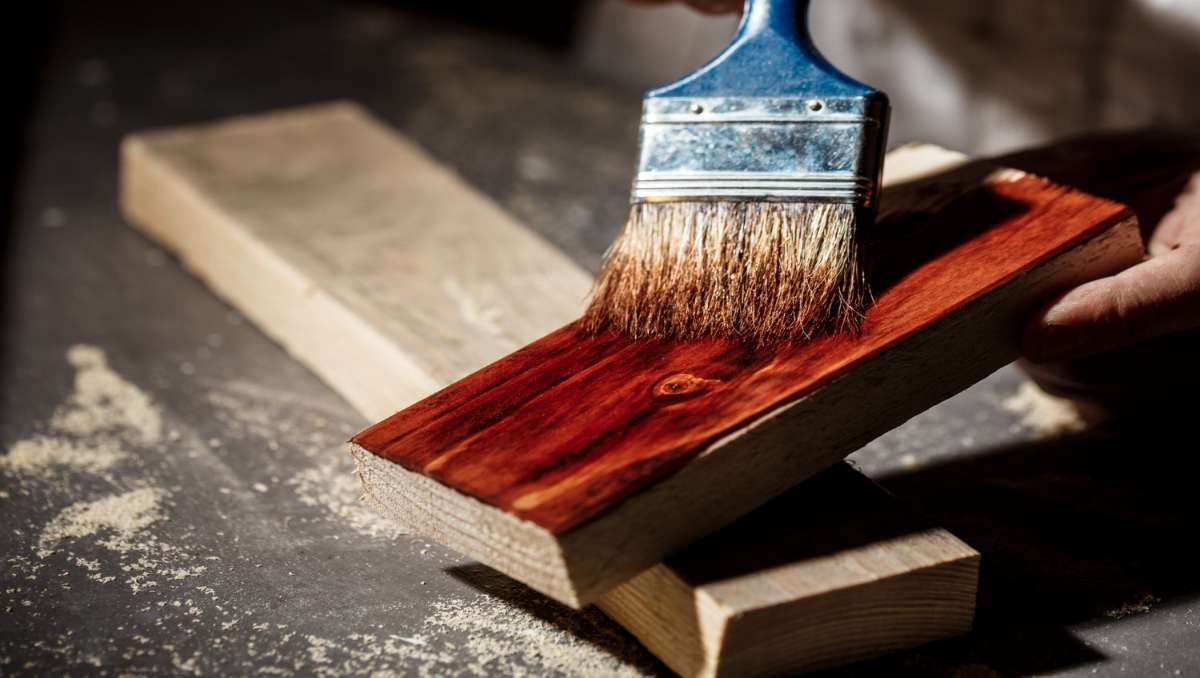
When it comes to preserving the timeless character of Amish furniture, few finishes compare to the lasting beauty of tung oil on wood. Unlike modern synthetic coatings that simply sit on the surface, tung oil penetrates deep into the grain, enhancing the natural warmth and durability of every piece. For generations, woodworkers have trusted this traditional oil finish not only for its rich, hand-rubbed look but also for the protection it offers against everyday wear.
Key Takeaways:
- Tung oil offers a range of advantages, including creating a durable, water-resistant, and food-safe finish.
- It also enhances the wood’s natural beauty by adding a rich, warm tone.
- Tung oil is food-safe once cured, eco-friendly, and easy to maintain with simple touch-ups.
In this article, we explore why tung oil is the preferred finish for preserving the timeless character of Amish furniture, highlighting how it penetrates deeply to enhance natural warmth and durability while providing lasting protection against everyday wear.
What is Tung Oil?
Tung oil is a natural drying oil extracted from the seeds of the tung tree (Aleurites fordii), traditionally grown in China and other parts of Asia. It has been prized for centuries as a wood finish because of its ability to harden upon exposure to air, creating a protective yet flexible surface.
The properties that make tung oil so valuable in modern varnish manufacture are its unique drying speed, excellent water resistance, and its notable resistance to alkali and chemicals. Scientific research further reported that tung-oil-treated spruce and beech woods show improved resistance against fungi, while also taking up significantly less water during both laboratory and outdoor testing. This makes tung oil not only a beautiful furniture finish but also a protective one that prolongs the lifespan of wood.
In addition, tung oil is food-safe once cured, which is why it remains a popular choice not just for Amish furniture, but also for cutting boards, countertops, and heirloom-quality woodworking projects where natural beauty and long-term resilience are a priority.
The Core Benefits of Tung Oil for Amish Furniture
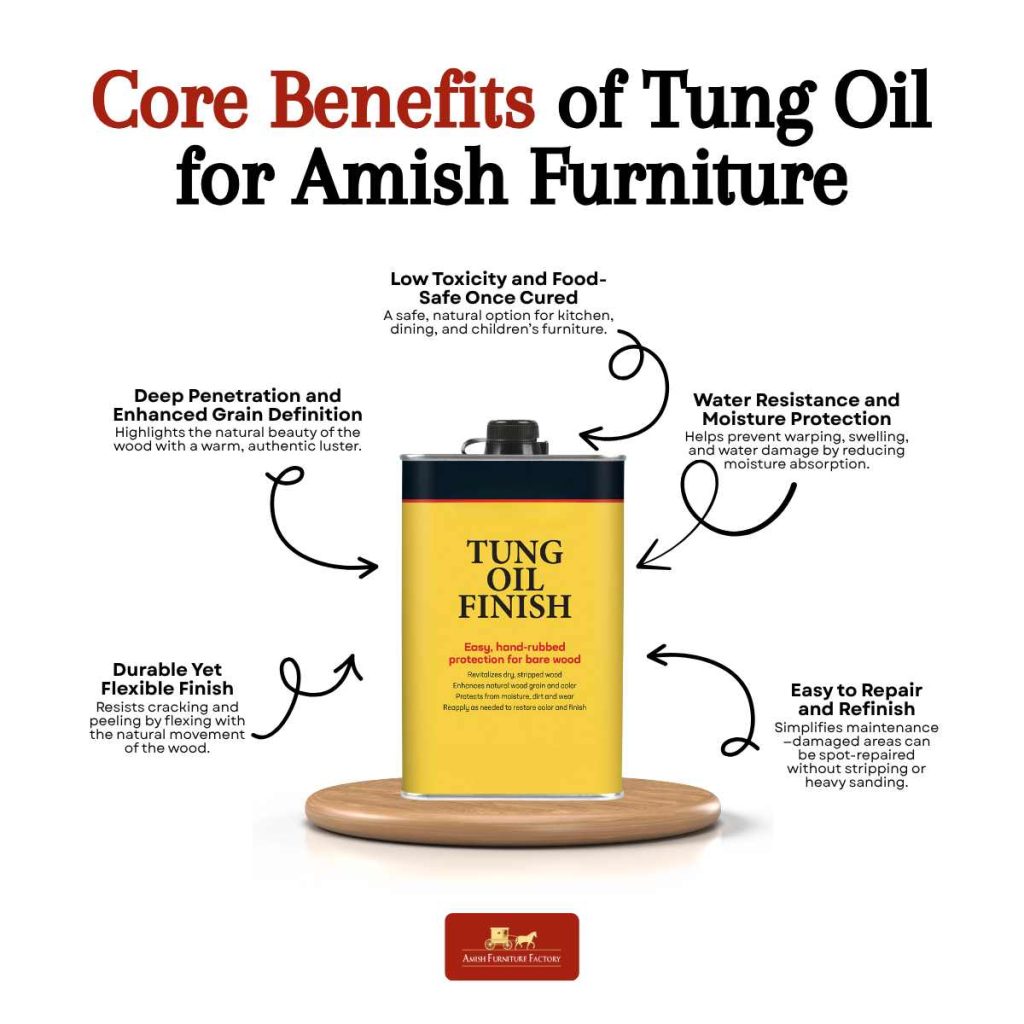
Amish furniture is built to last for generations, and the choice of finish plays a big role in how well it stands the test of time. Using tung oil on wood enhances not only the look but also the resilience of each piece. Below are the key benefits that make tung oil a trusted finish:
Deep Penetration and Enhanced Grain Beauty
Unlike surface-level finishes that create a glossy coat, tung oil penetrates deep into the wood fibers. This allows the grain to come alive with a warm, natural luster that only improves with age. The finish highlights the wood’s unique patterns, giving each Amish piece a character and richness that feels authentic rather than manufactured.
Water Resistance and Reduced Water Uptake
Tung oil naturally repels water, making it ideal for furniture that may face spills or humidity. A 2013 study found that tung oil “performed best against wood-decay fungi and significantly reduced water uptake compared to linseed oil.” This means Amish dining tables or chests finished with tung oil are less likely to warp, swell, or suffer long-term damage from moisture exposure.
Durability and Flexibility (Resists Cracking or Peeling)
Because tung oil cures within the wood rather than forming a rigid film, it moves with the wood’s natural expansion and contraction. This flexibility prevents cracking, peeling, or blistering, which are common issues with varnish or polyurethane. Over time, this makes Amish furniture finished with tung oil better suited to withstand seasonal changes in temperature and humidity.
Eryk Piatkowski, Owner at K&B Direct, has seen this firsthand:
“After installing thousands of interior doors and working with various wood finishes at K&B Direct since 2011, I’ve seen tung oil create stunning results on our custom oak doors and mouldings. What sets it apart is durability under daily use—our barn doors with tung oil finishes still look incredible after 5+ years of sliding back and forth.”
Low Toxicity and Food-Safe Once Cured
Pure tung oil contains no harmful additives, making it safe once fully cured. It’s a popular finish for cutting boards, salad bowls, and kitchen furniture because it doesn’t leach chemicals into food. For Amish households that value simplicity and health, this natural safety feature aligns with their lifestyle and offers peace of mind for modern homes, too.
Ease of Repair and Refinishing
One of tung oil’s underrated strengths is how simple it is to refresh. Unlike varnishes that require sanding down layers, tung oil finishes can be renewed with a light cleaning and a fresh coat. This allows Amish furniture to age gracefully, gaining character without losing its protective qualities, ensuring it stays beautiful for decades. As Piatkowski explains:
“The real advantage shows up years later when clients need touch-ups. Unlike our polyurethane finishes that require full refinishing, tung oil lets us spot-repair worn areas on door frames and mouldings without color matching issues.”
Preserve the beauty of your Amish dining room furniture for generations to come. Explore our collection to find the perfect centerpiece for your home.
What Are the Disadvantages of Tung Oil on Wood?
While tung oil offers many benefits, it is not a perfect finish for every project. One of the most common drawbacks is its longer curing time. Pure tung oil can take several days—or even weeks in humid environments—to fully cure, making it less convenient than faster-drying alternatives. As Eryk Piatkowski explains:
“The biggest issue I’ve encountered is drying time inconsistency. We had a project where humidity spiked during application on custom oak trim, and some sections stayed tacky for weeks while others cured normally. Always test a hidden area first and plan for 24–48 hours between coats.”
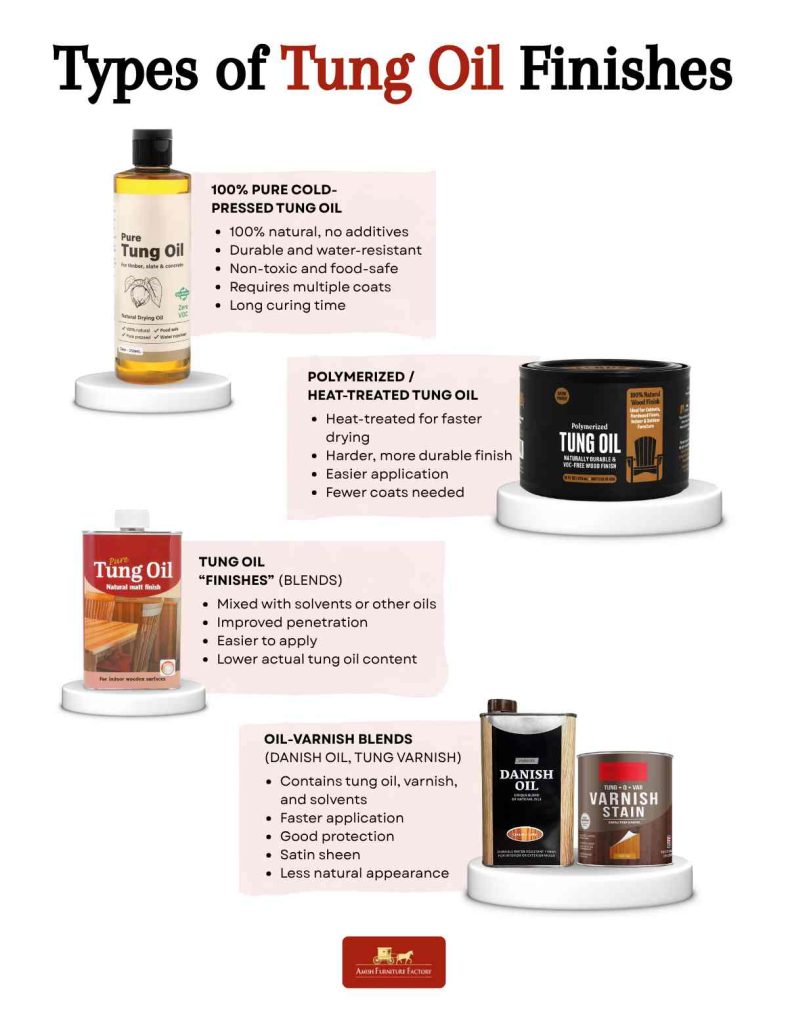
Another limitation is the need for multiple applications. Achieving the desired depth and protection often requires three to five thin coats, which can be time-consuming when working on larger furniture pieces. Cost can also be a factor; 100% pure tung oil is typically more expensive than linseed or blended oils, making it a pricier choice for big projects. Finally, buyers should be cautious about product labeling. Many finishes marketed as “tung oil” are actually blends containing solvents and resins rather than pure tung oil.
How to Apply Tung Oil to Amish Furniture
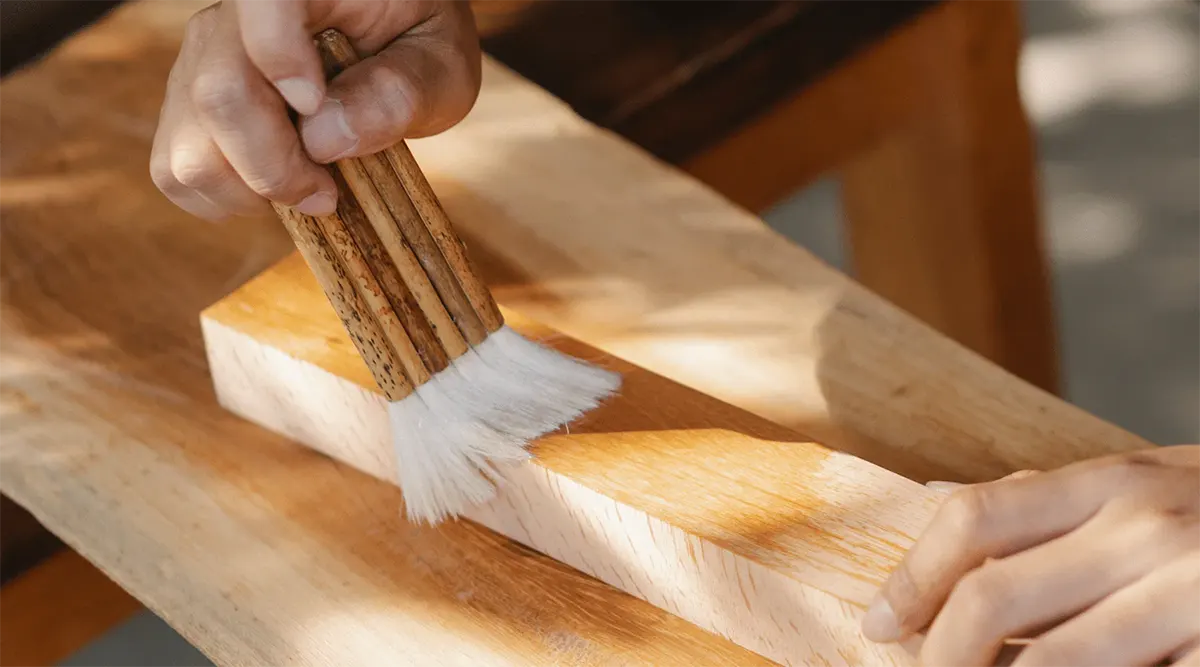
Applying tung oil on wood is a careful process that rewards patience. When done properly, it produces a rich, hand-rubbed finish that protects and highlights the natural grain of Amish furniture. Here’s a step-by-step guide:
- Prepare the Surface: Sand the wood smoothly with fine-grit sandpaper (220 grit recommended), always following the grain. Remove dust with a clean, lint-free cloth.
- Thin the First Coat (Optional): Mix tung oil with a natural citrus solvent or mineral spirits (1:1 ratio) to improve penetration, especially on dense hardwoods.
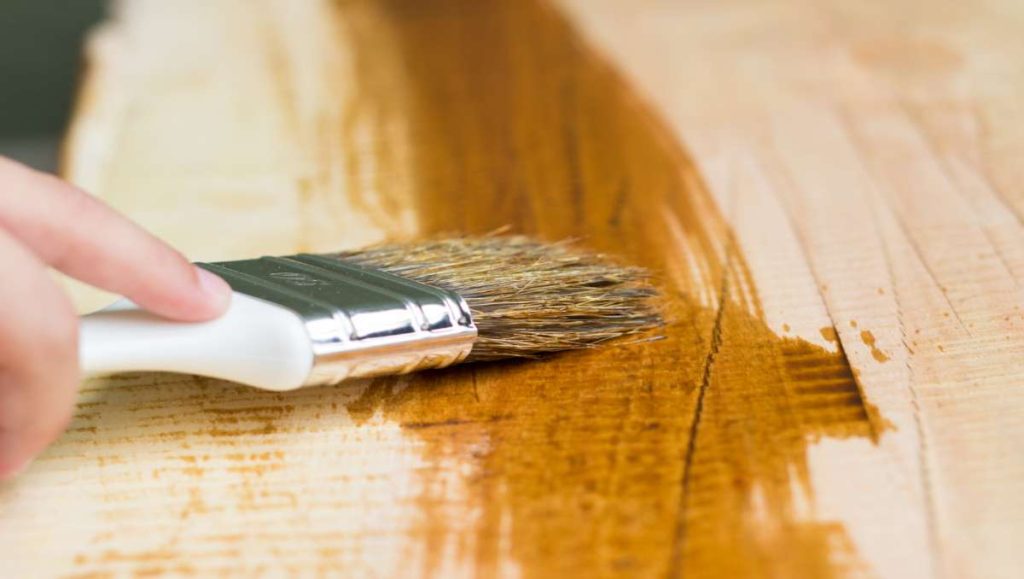
- Apply the First Coat: Use a soft cloth, brush, or pad to spread a thin, even layer of oil across the surface. Allow the wood to absorb it for 15–30 minutes, then wipe off excess.
- Allow Time to Cure: Let the coat dry in a dust-free, well-ventilated area for 24 hours or more. Pure tung oil takes longer to cure than blended finishes.
- Repeat Coats: Apply 3–5 coats, following the same process. Each coat should be thin and fully absorbed before adding the next. More coats create richer depth and better protection.
- Final Buffing: After the last coat has fully cured (typically 7–10 days for pure tung oil), buff lightly with a soft cloth for a natural, satin sheen.
Piatkowski notes a small but impactful adjustment: “My application method differs from most—I thin the first coat 50/50 with mineral spirits for better penetration, especially on dense woods like the oak doors we frequently install. This creates a base that subsequent coats bond to perfectly.”
Tung Oil vs Other Natural Oils: Direct Comparison
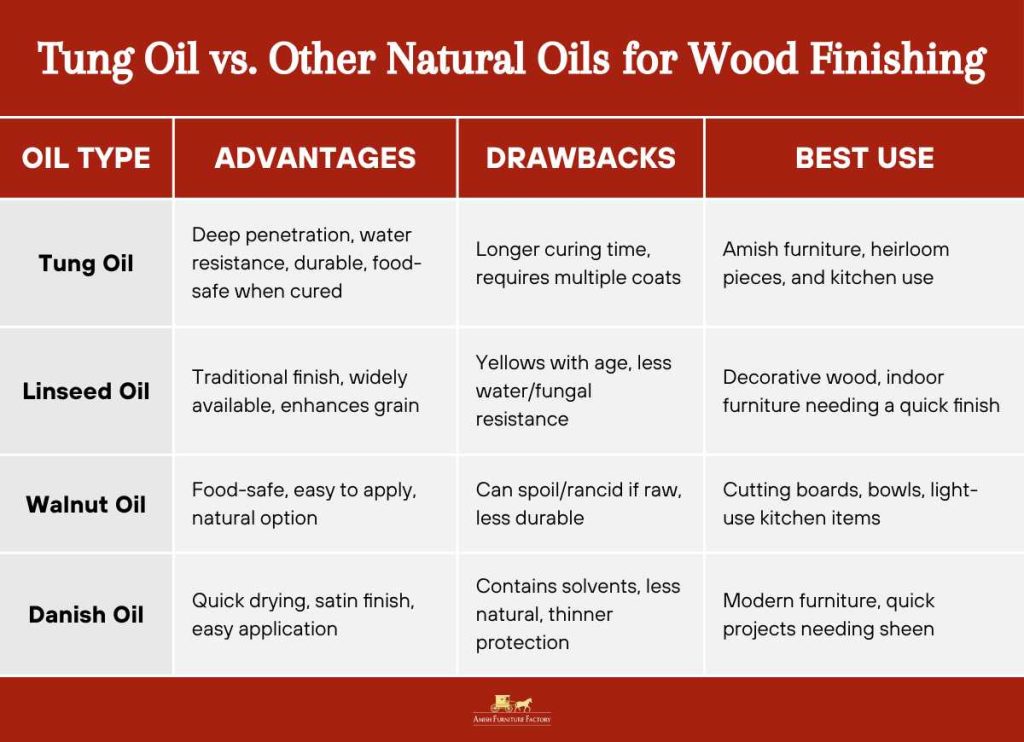
When comparing tung oil to other natural oil like linseed oil, the difference in performance is clear. Linseed oil, while also traditional and widely available, tends to yellow over time and offers less water resistance. In contrast, tung oil cures to a harder, more durable finish that resists moisture, cracking, and fungal decay—making it better suited for Amish furniture that’s expected to last for generations.
Walnut oil and Danish oil provide alternative natural finishes but with trade-offs. Walnut oil is food-safe and easy to apply, yet it lacks the same depth of protection and can go rancid if not refined. For heirloom-quality pieces, tung oil strikes the best balance of authenticity, protection, and beauty.
Maintaining Amish Furniture Finished with Tung Oil
One of the strengths of using tung oil on wood is how well the finish ages with time. Unlike surface coatings that eventually crack or peel, tung oil gradually wears in a way that can be refreshed easily. Amish furniture finished with tung oil often needs only a light cleaning and the occasional touch-up coat to maintain its beauty. Because the oil penetrates deep into the fibers, the protection remains effective for years, even as the surface naturally develops character. Reapplying a thin coat every few years keeps the grain nourished and the finish resilient against moisture. With this simple care routine, Amish furniture can stay functional and heirloom-worthy for generations.
Conclusion: Why Tung Oil Remains the Timeless Choice for Amish Furniture
Amish furniture is designed to last for generations, and the finish applied to it plays a vital role in preserving that legacy. Tung oil stands out because it enhances the natural beauty of wood while offering durability, flexibility, and safe, long-term protection. Unlike synthetic coatings, it ages gracefully and can be easily renewed, making it a fitting companion for heirloom-quality craftsmanship. For anyone seeking a finish that balances tradition, performance, and authenticity, tung oil remains one of the best choices.
Frequently Asked Questions
Does tung oil make wood waterproof?
Tung oil makes wood highly water-resistant but not completely waterproof. It creates a protective barrier that helps repel moisture and prevent warping or swelling.
Can I apply varnish over tung oil?
Yes, you can apply varnish over tung oil, but only after the oil has fully cured—typically 7 to 10 days or longer. Make sure the surface is clean, dry, and lightly scuffed to ensure proper adhesion.
Can you sand after applying tung oil?
Yes, light sanding between coats is often recommended to smooth the surface and improve adhesion. Always allow the previous coat to dry thoroughly before sanding.
How long do you leave tung oil on before wiping it off?
Tung oil should typically be left on the wood for 15 to 30 minutes before wiping off the excess. Leaving it too long can lead to a sticky or uneven finish.