
Blending wood tones in a space can feel like a delicate balancing act. Too much contrast, and things feel chaotic; too little, and it all starts to blend together. Whether you’re designing a room from scratch or updating pieces in an existing space, knowing how to match (or intentionally contrast) wood tones that go together for furniture and floors can dramatically elevate the look and feel of your home.
Key Takeaways:
- Understanding wood undertones is the key to creating combinations that feel natural and well-designed.
- To identify wood tones that go together, match their undertones (warm, cool, or neutral), and ensure the grain patterns complement each other for a cohesive look.
- A balanced mix of 2–3 wood tones adds depth and character—without the space feeling chaotic or overly matched.
This guide will walk you through practical, approachable tips for creating a cohesive, stylish interior by understanding how different wood tones work together—no interior design degree required.
How Do You Determine Wood Tone?
Let’s talk wood tones—because they’re one of the most important (and often overlooked) parts of mixing wood furniture and flooring. It’s not just about light or dark shades; the real game-changer is the undertone.
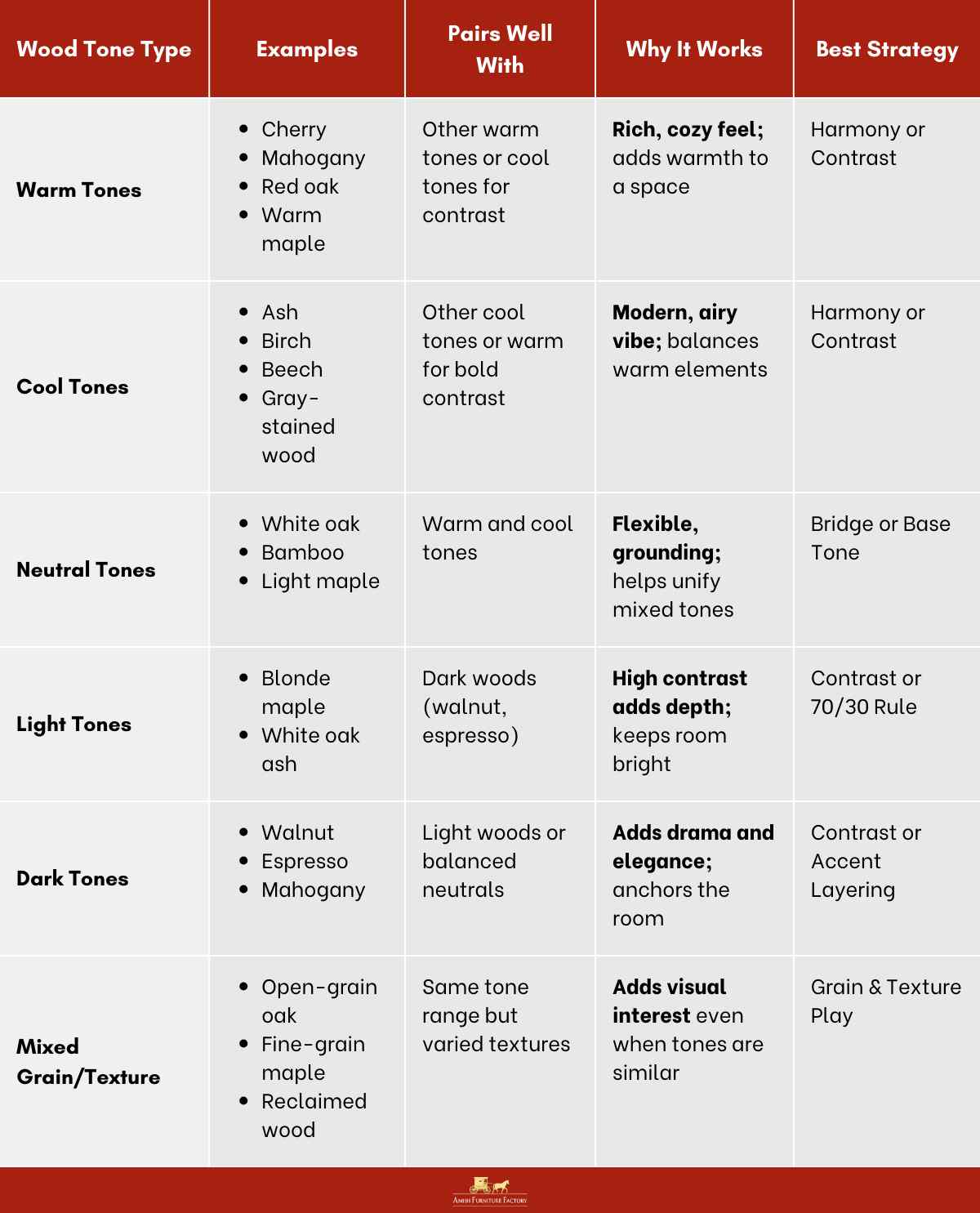
In general, wood tones fall into three categories: warm, cool, and neutral. Warm woods like cherry, mahogany, and certain maples bring a rich, inviting feel to a space. I’ve frequently used these to create depth and comfort in more traditional or cozy settings. Cool woods—such as ash, birch, and some pines—offer a cleaner, more modern aesthetic. They’re ideal when you want a fresh, streamlined look. Neutral woods, including many oaks and soft maples, are highly versatile and blend well with a wide range of styles and finishes. In my projects, these neutral tones are invaluable for mixing different wood pieces seamlessly.
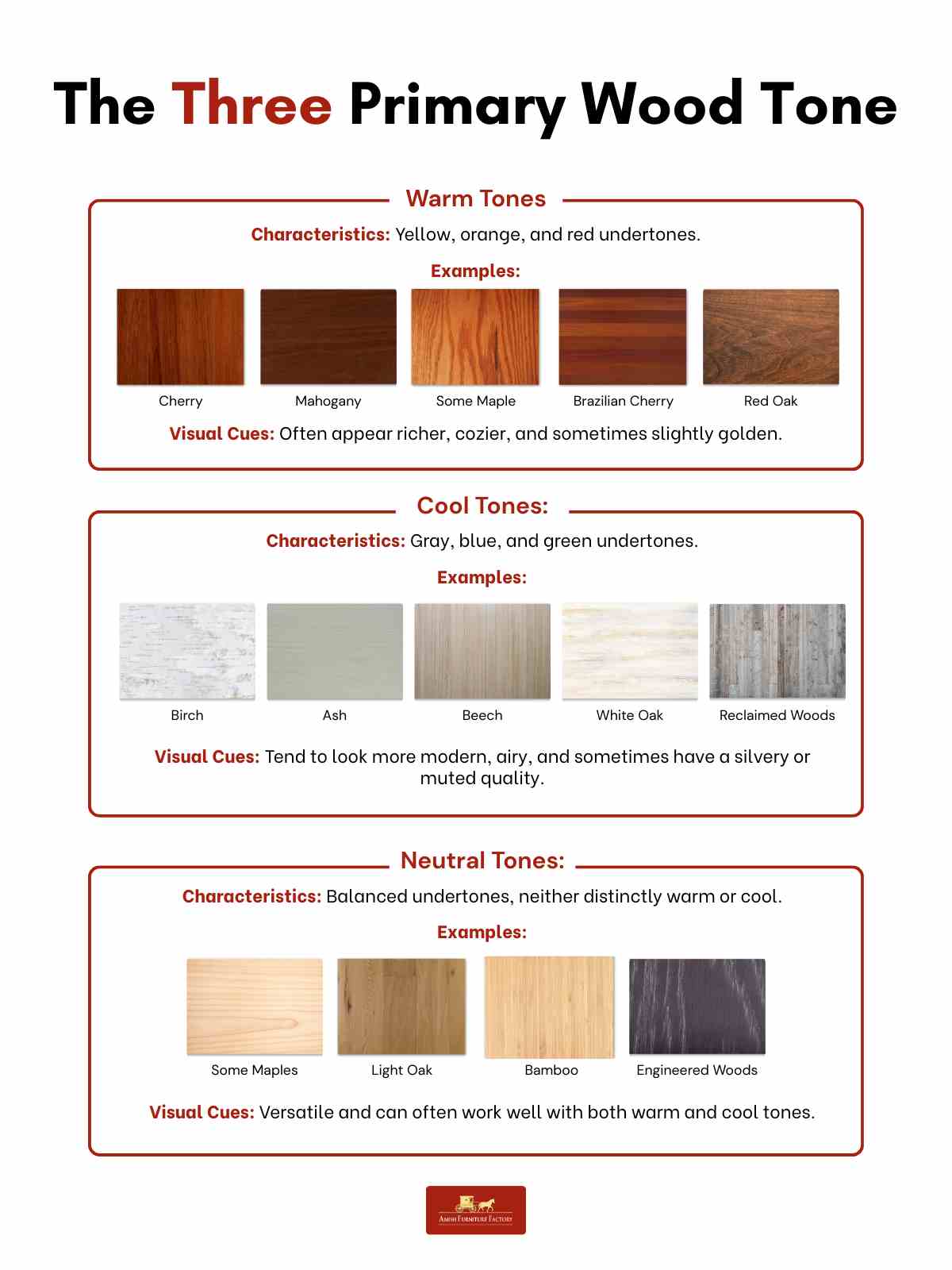
So, how do you spot wood undertones? The easiest way is to look at the wood in natural daylight—indoor lighting can mess with the color. Place the piece against something pure white to help the undertones stand out. If it looks golden, reddish, or honey-toned, it’s warm. If it leans gray or silvery, it’s cool. It is likely neutral if it’s hard to tell. Still unsure? Line up a few wood samples next to each other. Comparing them side-by-side makes the differences much easier to see.
💡 Pro Tip
When mixing wood tones, lighting plays a crucial role in how colors appear. Always view wood tones in natural light before making your final decision, as indoor lighting can alter the perception of the wood’s undertones.
Strategies for Combining Wood Tones That Go Together
Now that you can identify the undertones, here are practical strategies for bringing different wood tones together in your home.
The Contrast Approach
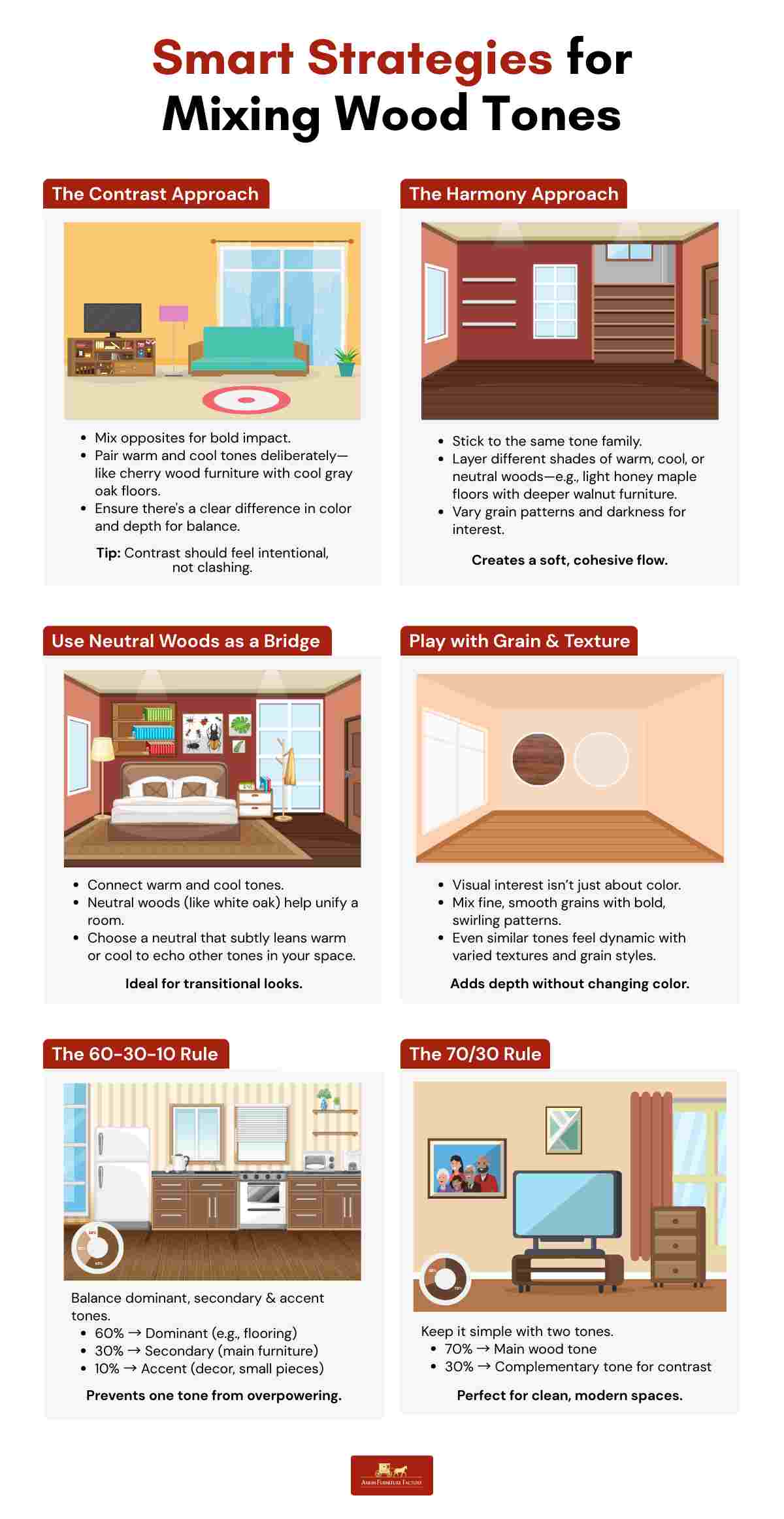
Embrace the beauty of juxtaposition by intentionally pairing distinctly warm and cool wood tones. For instance, the rich, reddish hues of warm cherry furniture can create a striking contrast against the serene, grayish undertones of cool gray oak floors, adding depth and interest to the room. To ensure this contrast feels intentional rather than jarring, aim for a clear visual difference in both the undertone and the overall depth of the wood.
Mark Sanchez, founder of Gator Rated who spent years helping buyers evaluate Florida homes, shares this:
“The key to pairing wood tones is to intentionally contrast or complement undertones rather than match everything perfectly. For example, in my own projects, pairing a walnut-stained floor (with warm undertones) with a cooler-toned ash or birch dining table creates visual depth—but I always repeat one or two undertones elsewhere (in picture frames or cabinetry) to keep the room cohesive.”
The Harmony Approach (Analogous Tones)
For a cohesive look, layer different shades of warm browns, cool grays, or muted neutrals within the same tonal family. Using varying shades of wood like warm maple and walnut creates a smooth flow and understated elegance, with the key being variation in lightness, darkness, and grain patterns.
3D Interior Designer Giovanni Scippo notes this about the importance of harmony and balance:
“Mixing wood tones adds depth and character to a space, but balance is key. First, identify the dominant wood tone in your room (often the flooring) and treat that as your anchor. From there, choose one or two complementary tones with a similar undertone—cool with cool, warm with warm.”
Introducing Neutral Woods as a Bridge
Neutral wood tones connect warm and cool elements seamlessly in a room. For example, light oak floors can link warm mahogany furniture with cooler ash accents, and choosing a neutral wood that matches the undertones of your other woods enhances cohesion.
Considering Wood Grain, Finish, and Texture
Wood’s grain and texture are just as important as its color in creating harmony. Mixing different grains and textures can add depth and visual interest, even when the wood tones are similar.

The 60-30-10 Rule
The 60-30-10 rule suggests using one dominant wood tone (60%) for the flooring, a secondary tone (30%) for larger furniture, and accent woods (10%) for smaller decor. This keeps the space balanced, ensuring no single tone overwhelms the room.
The 70/30 Rule
The 70/30 rule advocates for one dominant wood tone (70%) in a room, with the remaining 30% in complementary secondary tones. For example, using 70% light maple for the dark wood floor and bed frame, then adding 30% darker walnut in furniture creates depth without disrupting the light, airy feel.
Room-by-Room Application
Let’s explore how these concepts can be applied in different living spaces.
Living Room
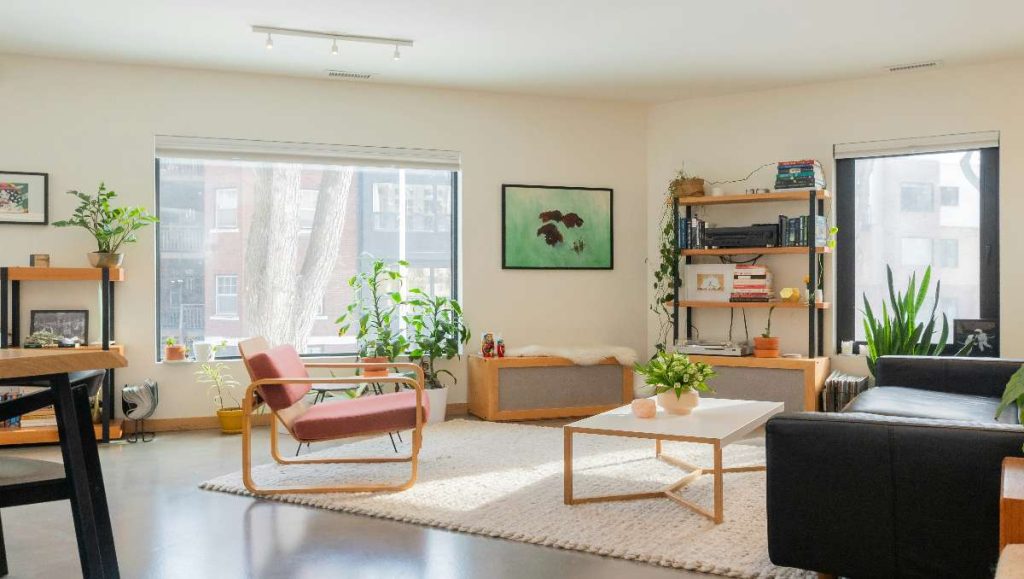
The living room, being a high-traffic and focal area, benefits from a thoughtful approach to wood tone coordination. A modern space can feature cool gray floors and warm walnut furniture for a dynamic look, while traditional settings use medium to dark warm wood tones for timeless elegance.
Bedroom
The bedroom should promote a relaxing and cohesive atmosphere, which can be achieved by using harmonious wood tones. Pairing light maple flooring with warm oak furniture creates a serene vibe in wooden bed, while cool-toned woods like ash offer a calming, airy feel.
Dining Room
In the dining room, balance formality and warmth by coordinating the wood tones of the table, chairs, and flooring. A rich wood dining table can be paired with chairs in a slightly lighter or darker tone, setting the mood whether cozy or formal.
Kitchen
The kitchen requires both durability and style when choosing wood elements. Opt for resilient woods like maple or oak for cabinets and consider engineered wood or wood-look alternatives for flooring, ensuring a visual flow between cabinets, floors, and countertops.
Home Office
In a home office, the right wood tones can influence both productivity and comfort. Light oak or birch provides a calm, neutral backdrop that enhances focus, especially when paired with natural light to create an inviting, functional workspace.
Explore a wide array of furniture options to perfectly complement your chosen wood tones and create a space that reflects your unique style.
How to Mix Wood Tones and Furniture Like a Pro
Mixing wood tones is all about creating balance and harmony in your space. Here are the steps to elevate your design skills and avoid common pitfalls.
Step 1: Start with the Floor
Your flooring sets the tone for the rest of the room. Use it as the foundation when selecting your wood tones for furniture and décor.
Step 2: Match Undertones
Make sure the undertones of your wood pieces are consistent—either warm or cool. Mixing woods with different undertones can create disharmony, so aim for a uniform feel throughout.
Step 3: Use Transition Pieces
Incorporate furniture or décor items that can bridge different wood tones. These transitional pieces help blend the varying shades together seamlessly.
Step 4: Limit the Number of Tones
Keep it simple by using no more than 2–3 wood tones in a space. Overloading a room with too many woods can overwhelm the eye and make the design feel cluttered.
Step 5: Avoid Perfect Matching
Perfectly matching all your wood pieces can make the space feel flat and uninspired. Instead, opt for a mix of tones to add personality and depth to your design.
Step 6: Don’t Overdo It with Different Tones
Stick to your 2-3 wood tones limit. Mixing too many different woods without a plan can create a chaotic, mismatched look.
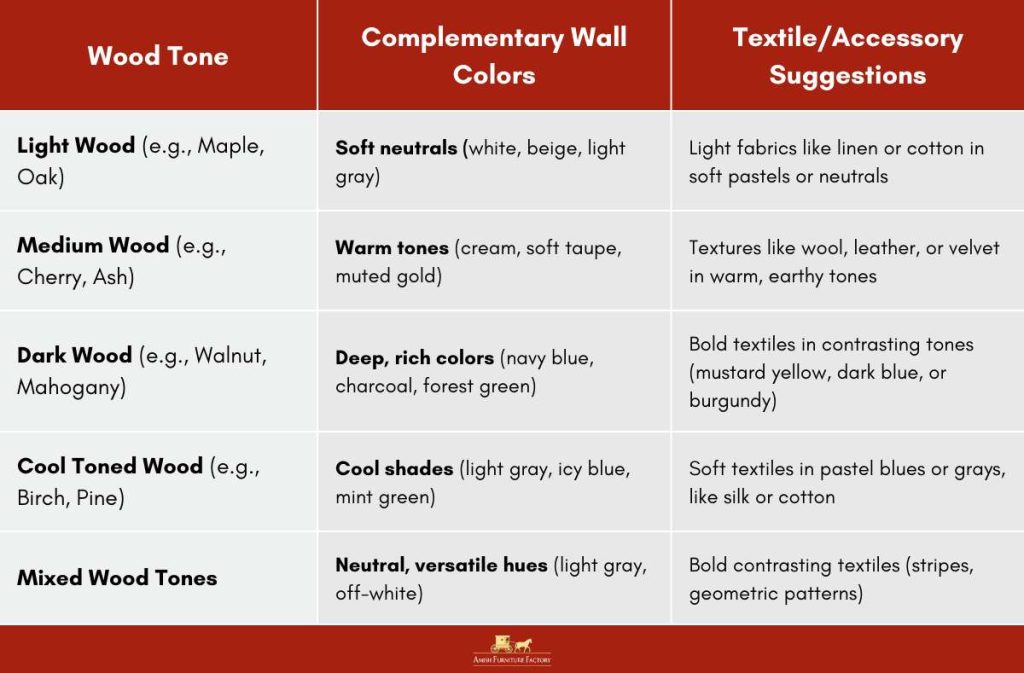
Step 7: Consider the Overall Color Palette
Look at how the wood tones interact with the rest of your space—walls, textiles, and other décor should complement the wood, not compete with it.
Step 8: Choose Timeless Over Trendy
While it’s tempting to follow trends, choose wood tones that will last. Timeless selections will keep your space looking fresh long after trends have passed.
Step 9: Use Contrast Wisely
Pairing light and dark wood tones creates visual interest. Just be mindful of the balance—you want contrast, not clashing.
Mark Sanchez left this advice when pairing wood:
“When in doubt, I recommend clients bring wood samples together in the intended lighting, since natural and artificial light can shift how tones are perceived throughout the day. Staying within two or three undertones per room and grounding the design with a “dominant wood”—like floors or cabinets—creates a harmonious and lived-in look people love.”
Achieving Wood Tone Harmony: The Final Touches
Mastering the art of combining wood tones that go together for furniture and flooring blends understanding fundamental principles with developing your own discerning eye. It’s important to recognize undertones, using strategic approaches, and thoughtfully consider the supporting elements in your space. Embrace the natural beauty and inherent warmth of wood, and allow these guidelines to empower you in crafting spaces that exude harmony and style.
FAQs
Can I mix different types of wood in the same room?
Absolutely! Mixing different types of wood is not only acceptable but often encouraged to create depth, visual interest, and a more layered and sophisticated look. The key is to pay attention to the undertones.
What wood compliments mahogany?
Mahogany’s warm, reddish-brown color and distinct grain make it a timeless wood tone, often paired with woods like cherry or walnut that have similar warm undertones, or contrasting tones like maple or oak for a balanced look.
What wood tone is timeless?
White oak is a timeless wood tone, with colors ranging from brown to beige, making it versatile for both traditional and modern interiors, as well as rustic, coastal, and farmhouse styles.
Can I mix wood tones in a minimalist or modern interior design style?
Yes, mixing wood tones can absolutely work in minimalist and modern interiors. In these styles, the focus is often on clean lines and natural materials, and the subtle interplay of different wood tones can add warmth and visual texture without disrupting the streamlined aesthetic.