
A 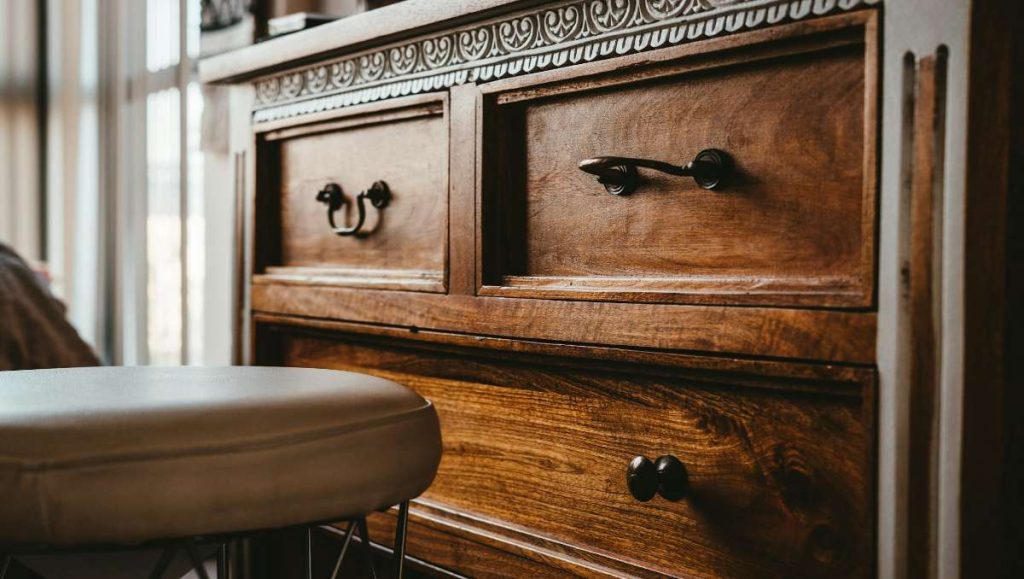
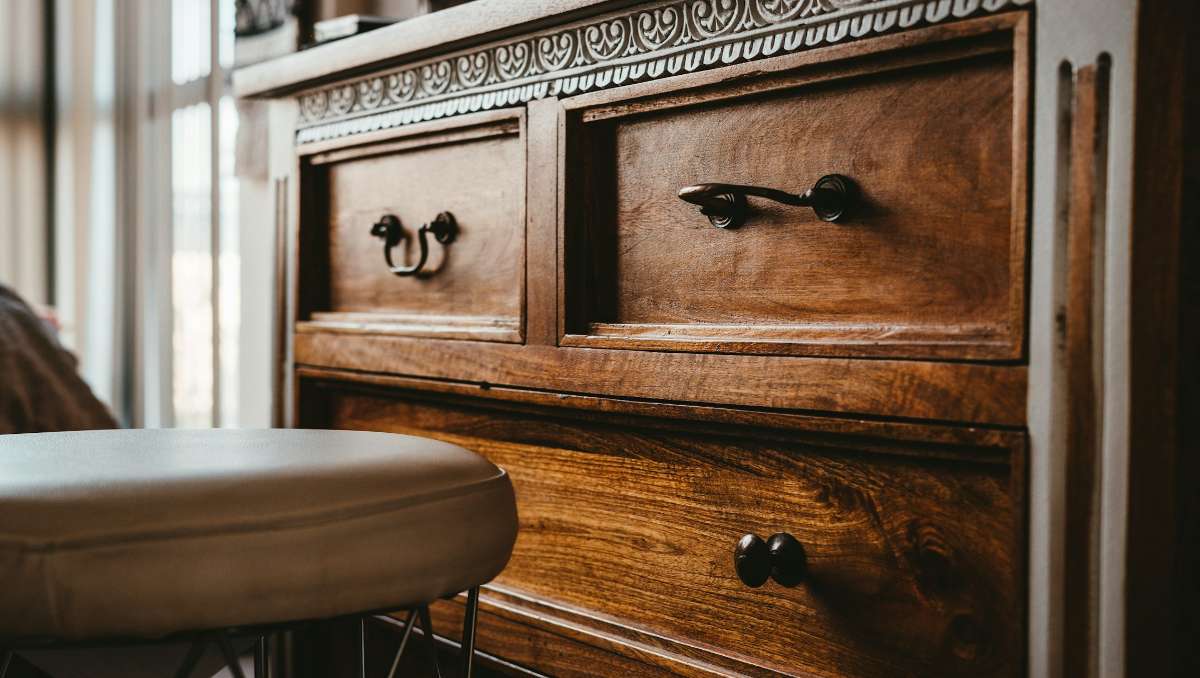
Some furniture pieces feel like they belong to a story rather than a showroom. They carry a sense of history, simplicity, and quiet craftsmanship that immediately changes how a space feels. That is often the appeal behind primitive furniture. This same mindset is also deeply familiar in Amish craftsmanship, where furniture is built with intention, patience, and a focus on long-term use.
Key Takeaways:
- Primitive furniture is a simple, rustic style focused on function, solid wood, and handmade character.
- Key characteristics include natural materials, minimal design, and an aged appearance.
- Amish furniture reflects similar values through craftsmanship, durability, and respect for natural materials.
What Is Primitive Furniture?
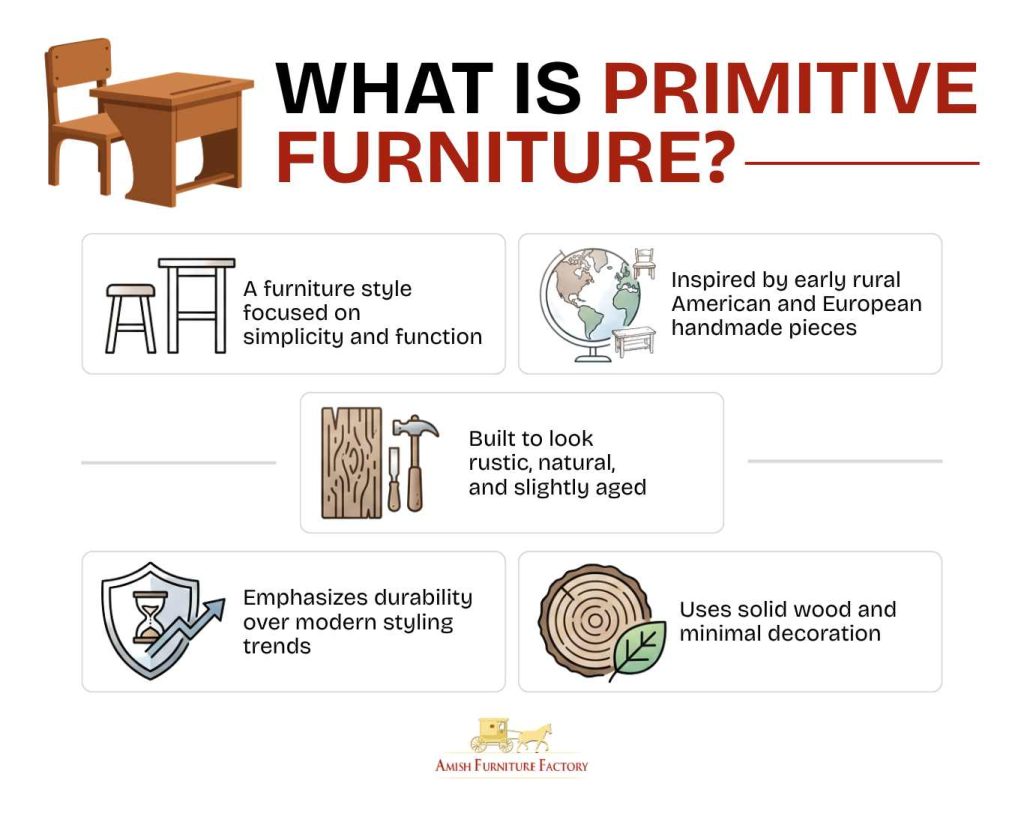
Primitive furniture is a style that focuses on keeping things simple, practical, and naturally beautiful. It usually features solid wood, basic shapes, and a handmade feel that doesn’t try to look perfect or overly polished. Instead of fancy details or modern finishes, the charm comes from its raw, slightly rustic look that feels warm and lived-in.
This style goes way back to the early Medieval period, where furniture was built by hand using whatever materials were available. That “function first” mindset is what shaped primitive furniture into what we recognize today.
Key Characteristics of Primitive Furniture
Authentic primitive furniture is usually easy to recognize once you know what to look for. To help ensure authenticity, here are the key characteristics you should look into:
Simple and Functional Design
Primitive furniture is designed for everyday use rather than decoration. Its shapes are straightforward, with clean lines and minimal ornamentation, making the pieces practical, comfortable, and easy to blend into different home styles. The focus is always on function, durability, and honest craftsmanship.
Solid Wood Construction and Rustic Finishes
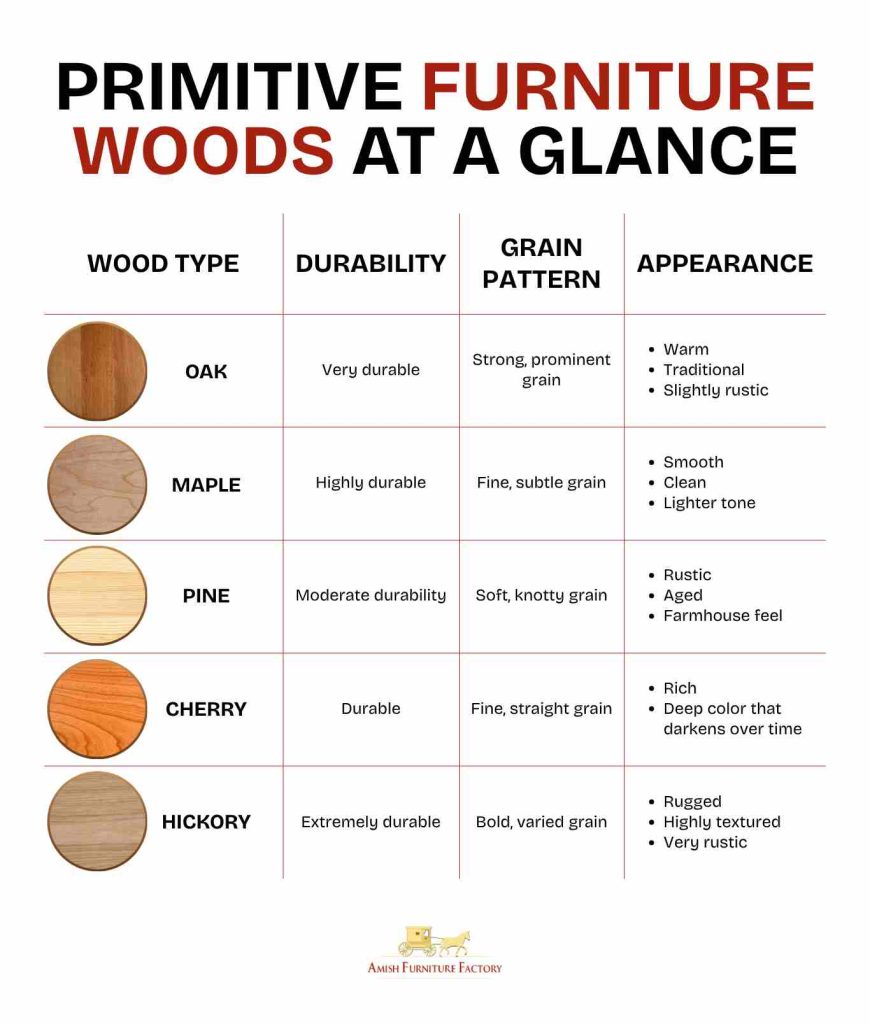
One of the most defining traits of primitive furniture is its use of solid wood and natural-looking finishes. Authentic pieces are commonly made from hardwoods like oak, maple, cherry, pine, or hickory instead of veneers or particleboard. Matte, distressed, or hand-rubbed finishes highlight the wood’s natural grain, knots, and texture, giving each piece a warm, aged appearance.
Here are the common woods used in primitive furniture:
Handcrafted Appearance
Primitive furniture often shows visible signs of handwork, which is part of its charm. Slight imperfections, uneven textures, softened edges, and subtle tool marks reflect traditional craftsmanship rather than flaws. These details help distinguish authentic primitive furniture from mass-produced pieces and give each item a unique, handmade character.
Signs of Age (Patina)
Patina is one of the defining features of primitive furniture. Over time, everyday use creates softened edges, faded finishes, and natural color variations that add warmth and history to a piece. Many newer primitive pieces are also lightly distressed to recreate this lived-in, timeworn appearance.
Typical Primitive Furniture Pieces
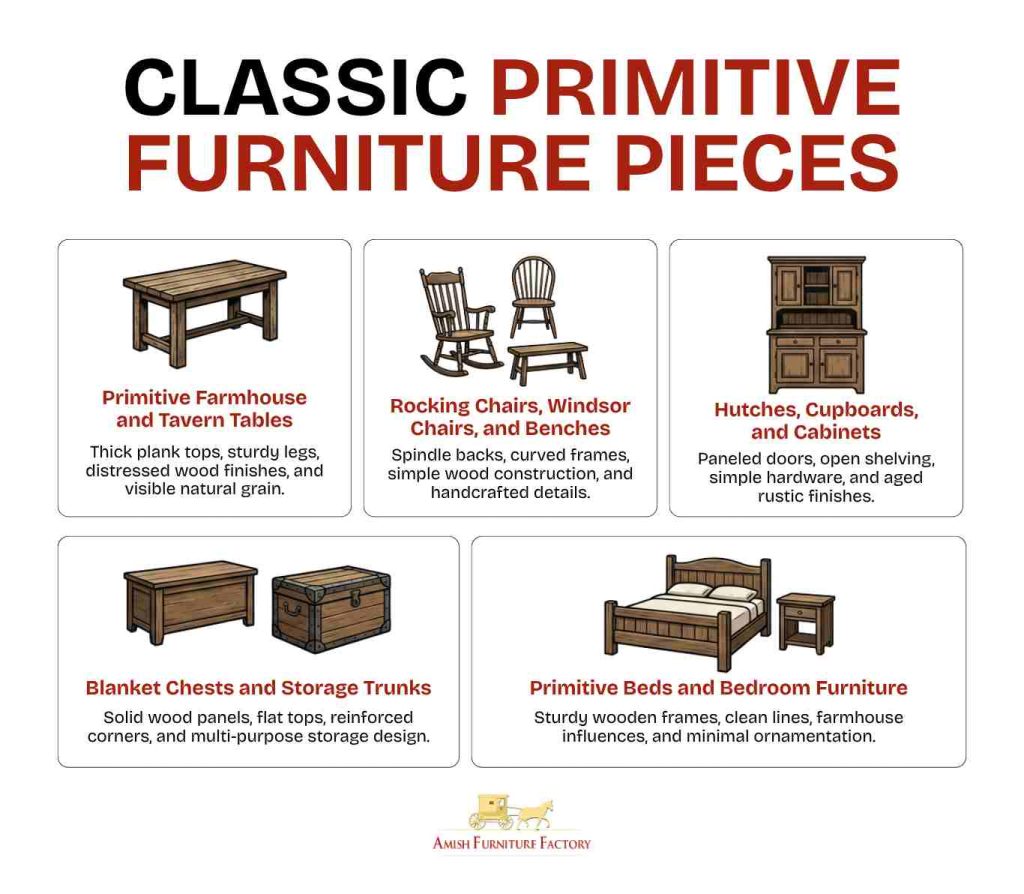
Primitive furniture pieces reflect a simple, functional design approach rooted in early woodworking techniques. Here are the most common examples.
Primitive Beds and Bedroom Furniture
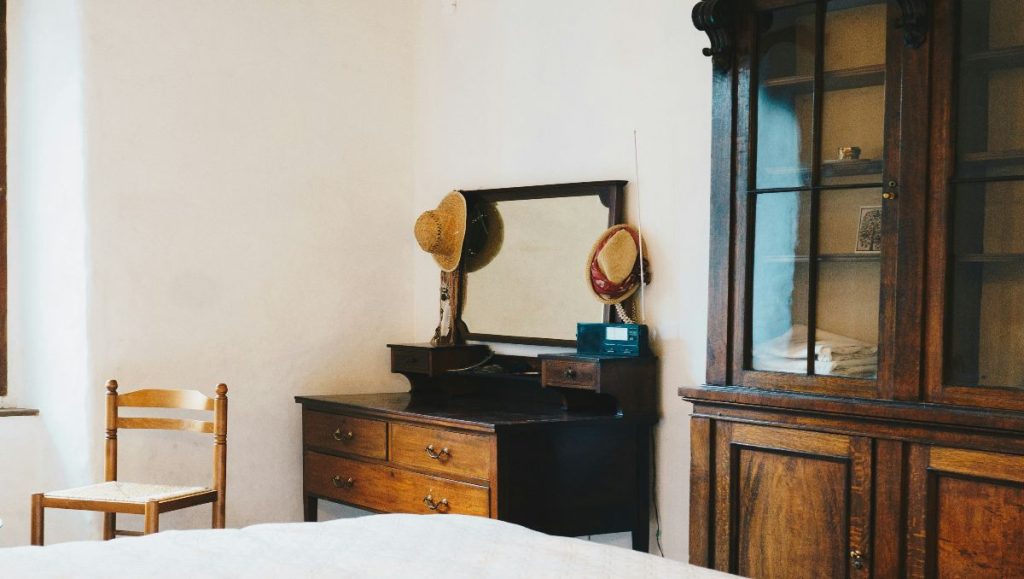
A primitive bedroom furniture typically features simple wooden frames, four-poster influences, and strong, straightforward construction. Primitive dressers and nightstands favor clean lines, practical storage, and natural finishes over ornamentation. These pieces continue to appeal for their warm, handcrafted look and enduring durability.
Farmhouse and Tavern Tables
Primitive farmhouse and tavern tables are known for thick wood tops, sturdy legs, and durable construction. Their minimal detailing highlights the natural wood grain, worn textures, and aged finishes that give primitive furniture its character. Today, they are commonly used as rustic dining tables, kitchen tables, or statement gathering pieces.
Rocking Chairs, Windsor Chairs, and Benches
Primitive seating emphasizes comfort, function, and timeless craftsmanship. Windsor chairs feature spindle backs and gently curved frames, while rocking chairs add warmth and a relaxed, lived-in feel. Simple wooden benches were versatile household staples and are now often used in entryways, dining spaces, or at the foot of a bed.
Hutches, Cupboards, and Cabinets
Storage furniture such as hutches, cupboards, and cabinets combine practicality with understated design. Common features include paneled doors, simple hardware, and natural or distressed wood finishes. In modern homes, these pieces are often used to display dishes, store linens, or add rustic character to kitchens and living spaces.
Blanket Chests and Storage Trunks
Blanket chests and storage trunks served as multi-purpose storage for textiles, clothing, and valuables. Their clean, sturdy construction allowed them to double as seating or accent tables. Today, they are frequently used as coffee tables, end-of-bed storage, or decorative statement pieces in rustic interiors.
Primitive vs Antique vs Reproduction Furniture
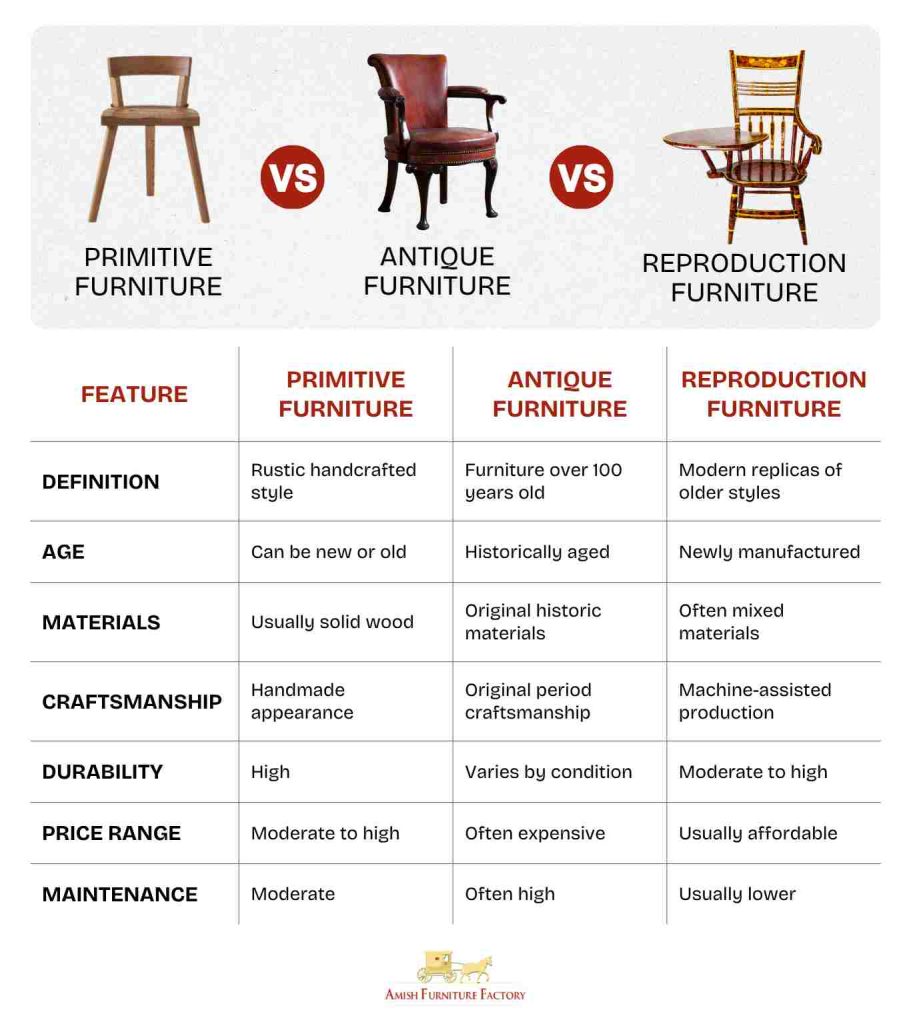
Primitive, antique, and reproduction furniture are often mixed up, but they each come from very different intentions and time periods. A primitive furniture is more of a style inspired by early handmade pieces, focusing on simplicity, solid wood, and a rustic look. Antique furniture, on the other hand, refers to original pieces that are typically over 100 years old and carry historical value because of their age and authenticity. Reproduction furniture is newly made but designed to imitate the look of antique or traditional styles, often using modern tools and techniques to replicate older designs.
The key difference usually comes down to age, purpose, and craftsmanship. Antiques are valued for their originality and history, while reproductions focus on visual imitation without the same age or patina. Primitive furniture sits in between in terms of inspiration, since it is newly made but intentionally designed to look simple, aged, and handcrafted rather than polished or mass-produced.
Here’s a side-by-side comparison:
Add an authentic touch of early American history to your home with a handcrafted Antique Shaker Leaner, the perfect statement piece for any primitive-inspired space.
Amish Furniture and How It Reflects Similar Values as Primitive Furniture
Primitive and Amish furniture share many of the same values, including simplicity, craftsmanship, durability, and functionality. While the styles differ slightly, both focus on clean, practical design and solid wood construction rather than excessive decoration or mass production. Both styles also highlight the natural beauty of wood, embracing visible grain, knots, and texture to create a warm, authentic feel.
Because of their timeless design and natural materials, primitive and Amish furniture blend easily into modern homes. A farmhouse table or solid wood cabinet can add warmth and character while balancing contemporary elements like metal, glass, and clean lines. When combined thoughtfully, these styles create spaces that feel comfortable, authentic, and timeless.
Final Thoughts on Primitive Furniture and Amish Craftsmanship
Primitive furniture is all about keeping things simple, functional, and rooted in natural materials and handmade character. It reflects a time when furniture was built to serve everyday needs first, with beauty coming from the wood, the form, and the craftsmanship rather than decoration. That same mindset is why Amish furniture feels so closely aligned with primitive values, even when the styles are not identical.
Both primitive and Amish furniture share a respect for durability, honesty in materials, and a slower, more thoughtful approach to building things. It is this shared philosophy that keeps both styles relevant in homes that value comfort, authenticity, and long-lasting quality.
Frequently Asked Questions
What’s the difference between vintage and primitive?
Vintage furniture simply refers to items that are at least a few decades old, while primitive furniture is a style inspired by early handmade designs. Vintage is about age, while primitive is about look and craftsmanship.
Is primitive furniture considered farmhouse style?
Primitive furniture is closely related to farmhouse style, but not exactly the same. Farmhouse is more of a broad interior design trend, while primitive is a more specific rustic and handmade-inspired furniture style.
How can you tell if furniture is truly primitive or just distressed?
True primitive furniture is usually solid wood, simply constructed, and naturally aged or traditionally finished. Distressed furniture is often made new but treated to look old using artificial aging techniques.
Can primitive furniture fit into modern interior design styles?
Yes, primitive furniture works well in modern spaces because it adds warmth and texture. It blends especially well with minimalist or contemporary interiors that need a natural contrast.