
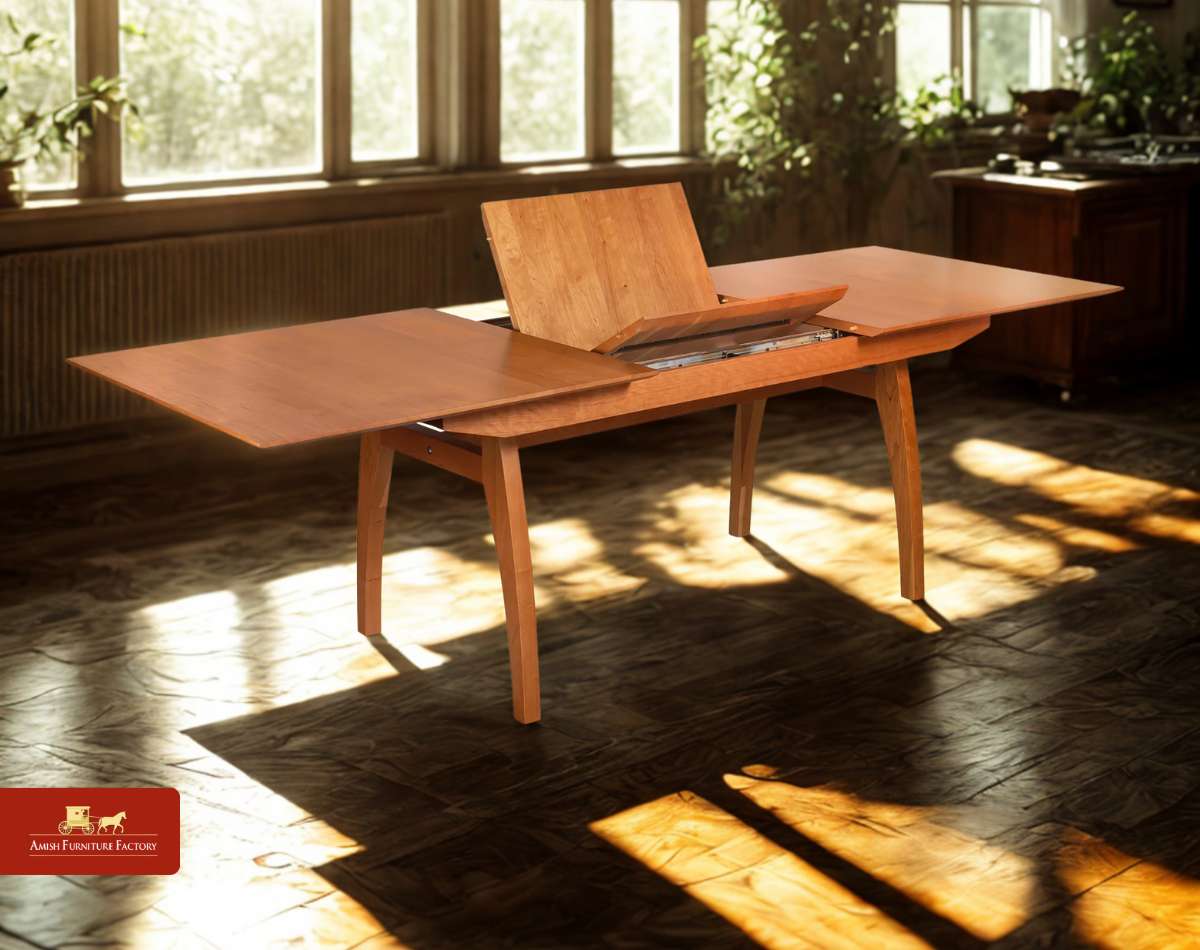
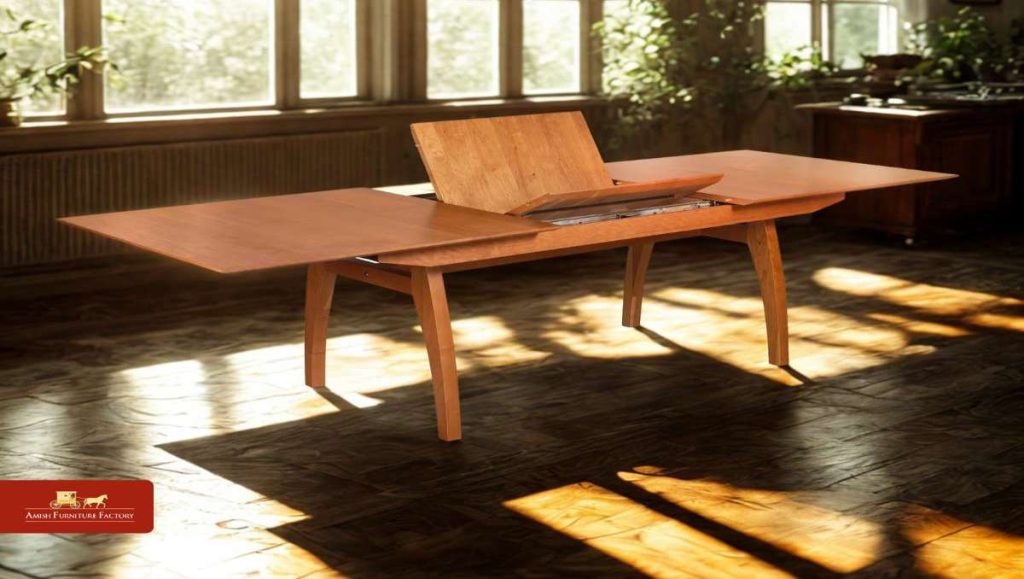
A dining table is often the heart of the home, a place where meals are shared, conversations flow, and memories are made. Beyond its surface beauty and practicality, certain design details enhance both function and style. One such feature is the dining table leaf skirt, a subtle yet important element that helps maintain a seamless look when the table is extended. Though it may seem like a small detail, the leaf skirt plays a key role in preserving the table’s elegance and craftsmanship, ensuring that it remains cohesive and well-finished even when expanded.
Key Takeaways:
- Leaf skirts help the table look polished and balanced while hiding the extension hardware and giving extra support to the tabletop.
- In modern self-storing designs, tables can have a fixed skirt attached to the main table, a matching removable skirt on the leaf, or no skirt at all.
- Keep skirts aligned, tighten any loose hardware, clean regularly, and store removable leaves flat to prevent damage and ensure the table lasts longer..
This article will guide you through what a leaf skirt is, how it defines a high-quality table, and the mechanics behind its seamless function.
What Exactly Are Dining Table Leaf Skirts?
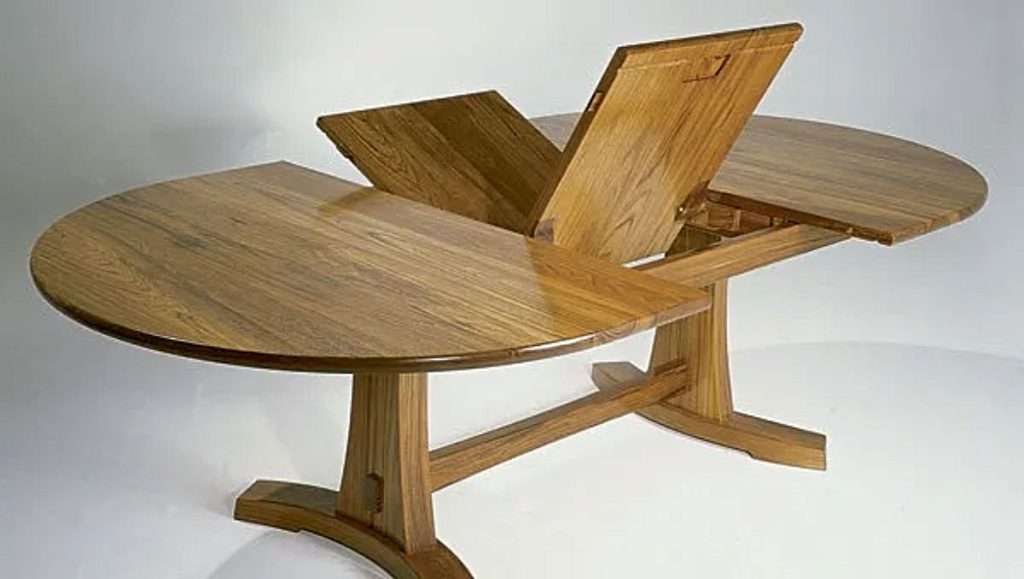
The use of table skirts in expandable dining tables began to take shape in the 17th century, when European furniture makers started adding aprons to hide extension hardware and strengthen the table frame. As leaf-based extension systems evolved, craftsmen adapted these skirts so the kitchen table would retain a balanced, finished appearance whether contracted or fully extended.
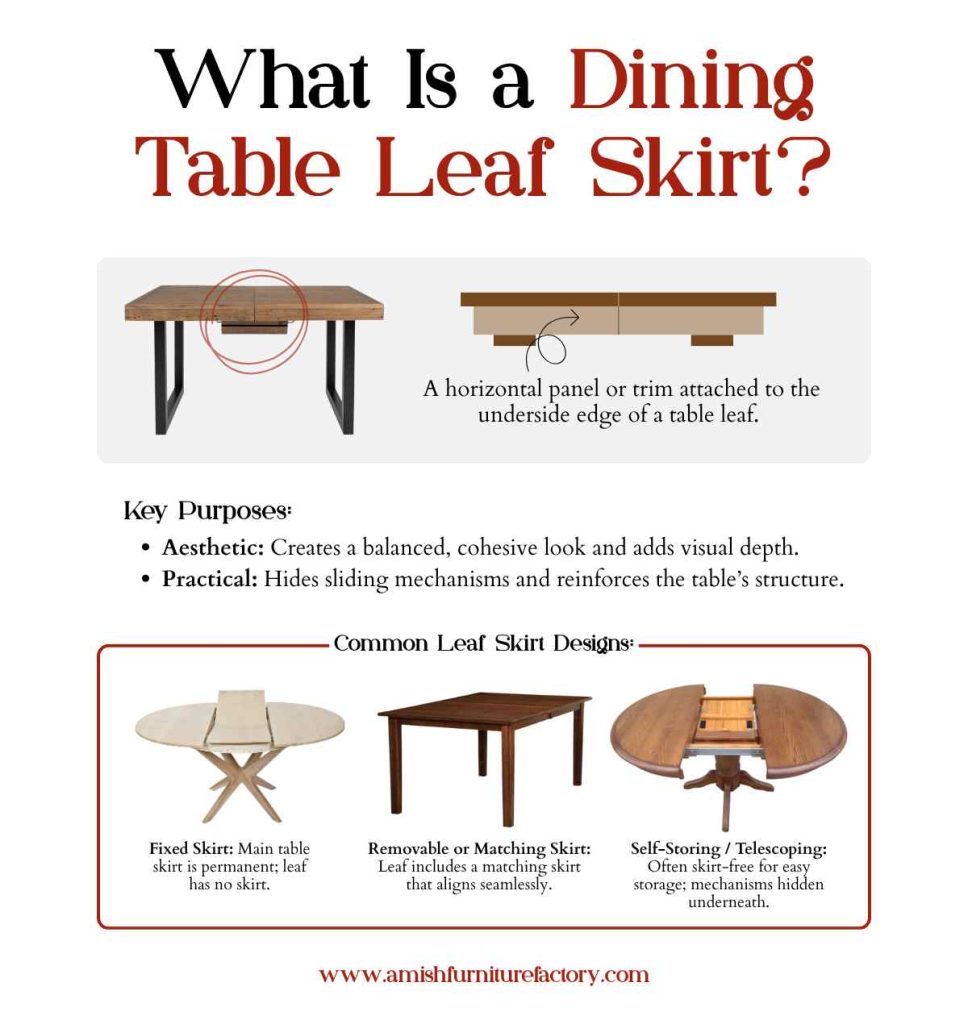
A dining table leaf skirt is the horizontal panel or trim that runs along the underside edge of a tabletop. When a table includes an extension leaf, the leaf may also have its own skirt (or none at all), depending on how the table is built. This piece of wood (or veneer) serves both a decorative and a practical purpose: it hides the table’s sliding mechanism, reinforces the structure, and maintains a balanced, cohesive look when the table is expanded. In simple terms, the skirt gives a dining table its visual “depth.”
Here are the common types of leaf skirt mechanisms:
1. Fixed Skirt Design
In a fixed-skirt table, the skirt is attached permanently to the tabletop. When you extend the table, the two main halves pull apart to make space for the leaf, which may have no skirt at all. This is common in traditional tables, where the goal is to keep the original silhouette intact.
2. Removable or Matching Leaf Skirt
Some high-quality tables feature leaves with removable or matching skirts, designed to align perfectly with the table’s original edge. When inserted, the leaf’s skirt connects with the main skirt using clips, pins, or discreet hardware.
3. Self-Storing or Telescoping Mechanisms
Modern tables with butterfly or telescoping extension systems often skip skirts altogether. The mechanism is integrated beneath the tabletop, allowing the table leaf to slide or fold out without the added bulk of a skirt. These designs prioritize convenience and a sleek, minimal profile.
Difference Between a Table Leaf and a Leaf Skirt
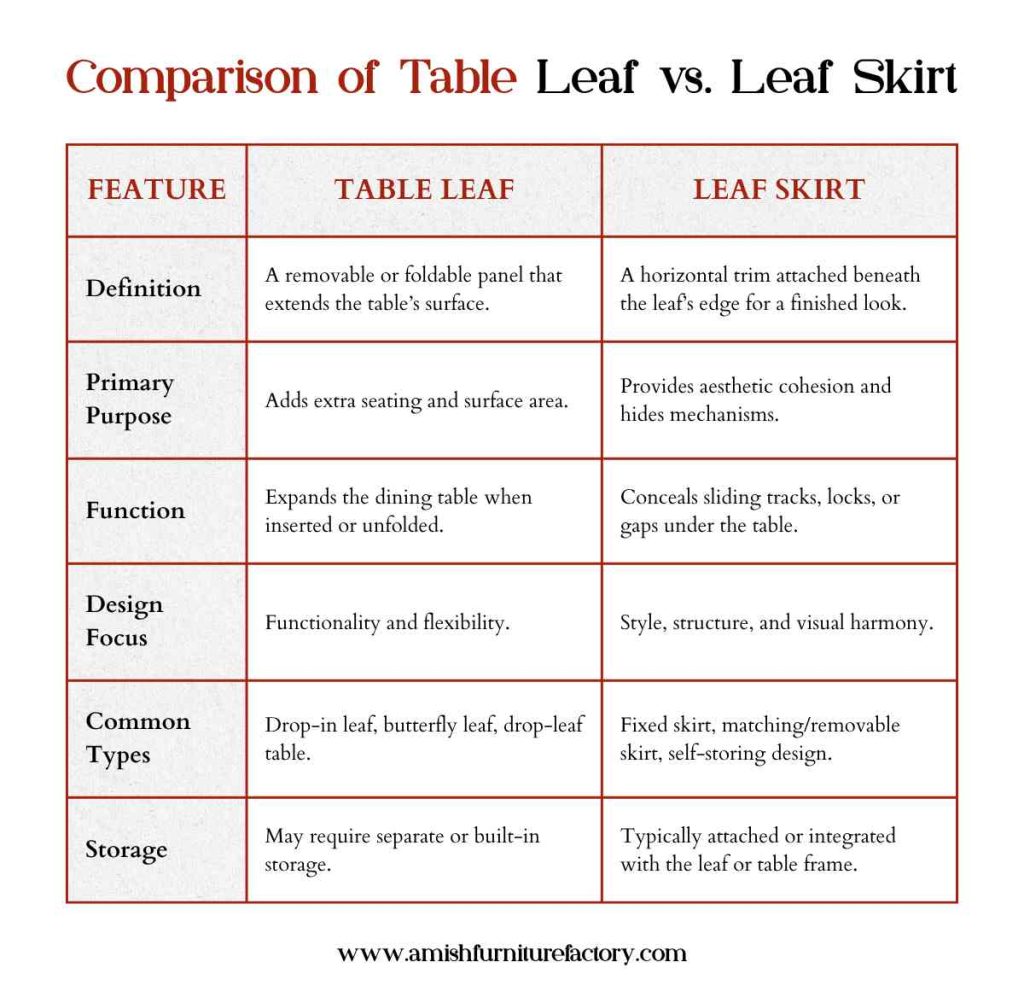
When exploring what is a leaf on a table, it’s important to understand that a leaf and a leaf skirt serve very different purposes, even though they work together to create a seamless dining experience. A table leaf is the functional component that extends your dining table’s surface, providing extra space for guests or serving. It can be removable, foldable, or self-storing, depending on the table’s design. In contrast, a leaf skirt is the decorative and supportive trim attached to the underside of the table or leaf. Its role is to conceal the extension mechanism and maintain the table’s cohesive appearance when extended.
While the leaf adds functionality by increasing table size, the leaf skirt enhances aesthetics and structure, ensuring the extended table still looks elegant and balanced.
Why Use Table Skirts?
While table leaf skirts often go unnoticed, they bring a surprising number of benefits. Here’s why they matter:
- Creates a finished, cohesive look – The skirt helps the tabletop look thicker and more balanced, hiding the mechanics underneath and giving the table a polished, well-crafted appearance.
- Covers extension hardware – Skirts conceal the table slides, rails, or hinges used for table extensions, keeping the underside of the table neat and clean.
- Adds structural support – The skirt strengthens the outer edge of the tabletop and minimizes flexing when the table is fully extended.
- Improves aesthetic continuity – When the leaf includes a matching skirt, the entire table maintains its original design proportions even when expanded.
- Enhances perceived quality – A table with well-aligned skirts signals craftsmanship and attention to detail, something furniture enthusiasts and homeowners alike appreciate.
How Leaf Skirts Work and Attach
While dining table leaf skirts might look like a purely decorative feature, there’s actually a bit of clever craftsmanship behind how they attach and align with the rest of the table. Here’s a step-by-step look at how the process typically works:
1. Separate the Tabletop
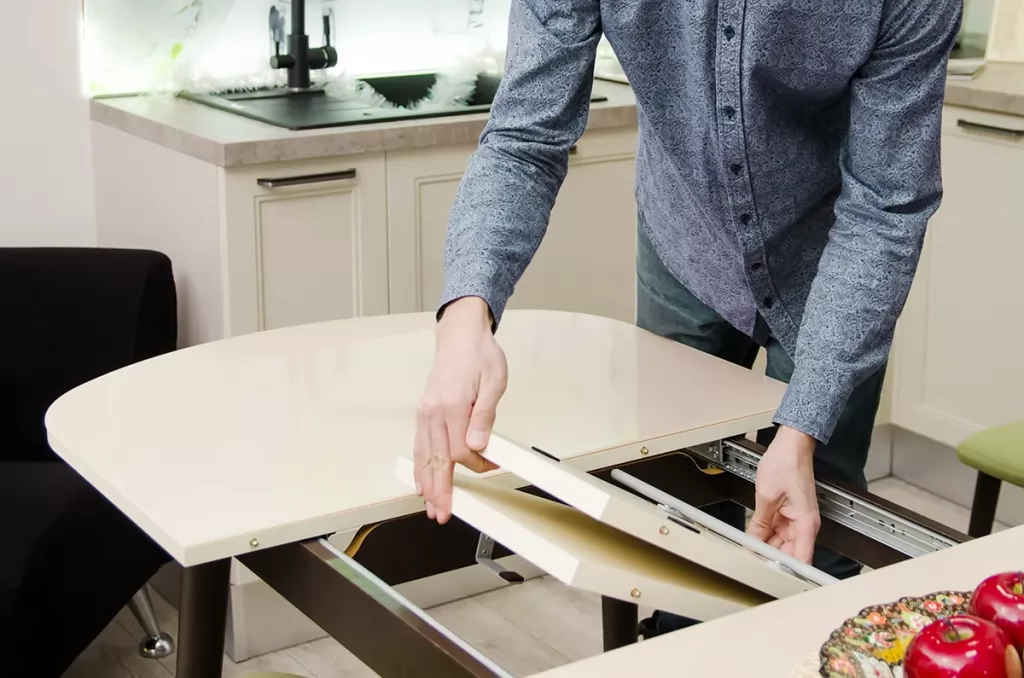
The process starts when you pull the two halves of the dining table apart. Most extension tables are built with sliding rails or metal tracks underneath that guide the movement smoothly. This creates a space in the center where the leaf will be inserted.
2. Position the Leaf Panel
Next, the leaf panel — the additional section that extends the tabletop — is placed into the gap. Depending on the design, this panel might be a drop-in leaf (stored separately) or a butterfly leaf (folded within the table). At this stage, you’ll notice whether the leaf has a matching skirt attached to it or not.
3. Align the Skirt Edges
If the leaf includes a skirt, the next step is to align its skirt with the existing table skirts. Precision is key here.
4. Lock the Mechanism
Once aligned, the tabletop halves are pushed back together, securing the leaf in place. Some tables include locking clips or latches underneath to keep everything tight and stable. The skirt sections should now meet cleanly, hiding any mechanical gaps or seams.
5. Final Adjustment and Leveling
Lastly, a quick check ensures the tabletop is level and the seams are even. In well-built tables, the skirt edges are nearly invisible once locked in, giving the appearance of a single, solid tabletop.
Here’s a video tutorial for visual reference:
You might want to learn about popular Amish table edge profiles.
Maintaining Leaf Skirts and Extending Table Lifespan
Like any well-crafted piece of furniture, a dining table with leaf skirts benefits from regular care and attention. Over time, small issues such as loosening joints, misaligned skirts, or surface wear can develop. This is especially true if the table is frequently extended or moved. Simple upkeep, combined with careful handling, can go a long way in keeping your table looking polished and functioning smoothly for years.
Below is a quick reference guide to some of the most common leaf skirt issues and how to fix them:
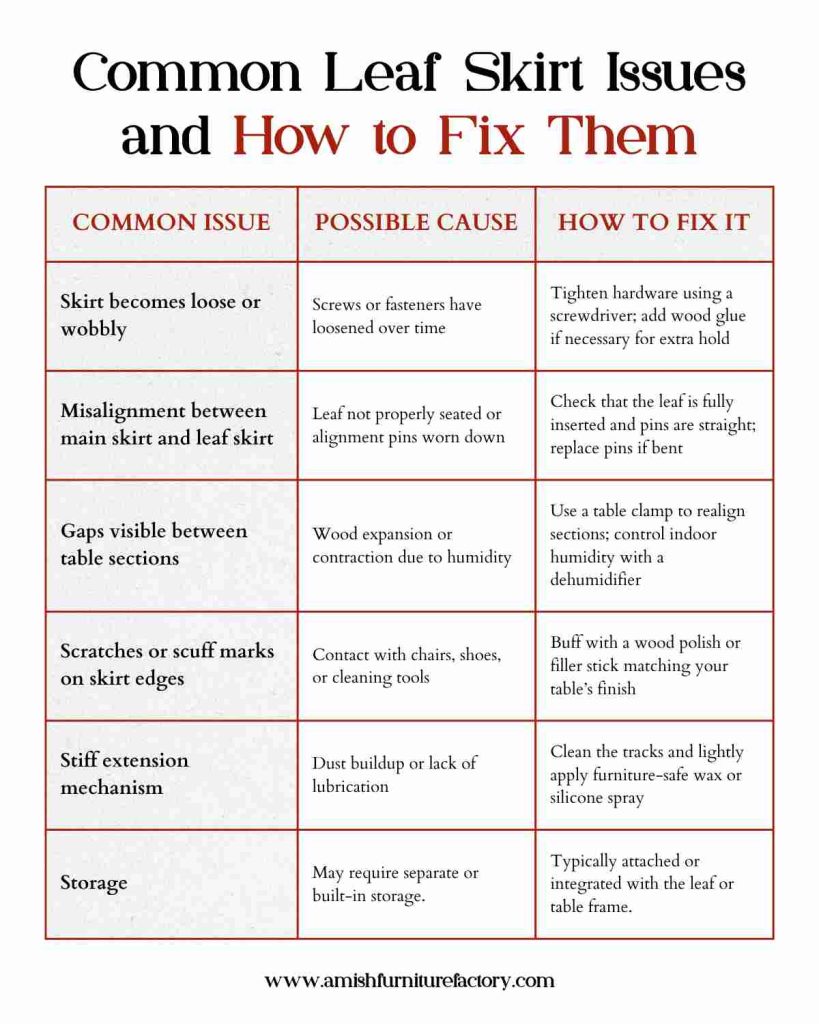
When your table isn’t in use, it’s best to store removable leaves horizontally in a cool, dry place, ideally flat and covered to prevent warping. Avoid leaning them upright against walls, as this can cause subtle bending over time. Wipe down skirts and edges regularly with a soft, damp cloth to remove dust. Reapply wood polish a few times a year to maintain the finish. If your table uses a mechanical or butterfly extension system, open and close it occasionally to keep the moving parts from sticking.
Ready to find the perfect blend of style and function for your kitchen? Browse our collection of dining tables and discover the right fit, whether you need hidden leaf storage or a permanent skirt design!
Achieving Seamless Extension: The Final Word on Leaf Skirts
Dining table leaf skirts might not be the first thing people notice when they gather around the table; yet they quietly define how the table looks, feels, and functions. These understated panels do far more than add decoration. They help maintain balance, conceal the mechanics underneath, and uphold the sense of craftsmanship that distinguishes a well-made table from a mass-produced one.
Over time, the design of leaf skirts has evolved alongside furniture trends. Traditional tables often showcase pronounced, carved skirts that highlight solid construction. Modern designs lean toward minimalism, choosing to hide or eliminate the skirt entirely for a cleaner silhouette. But whether ornate or subtle, leaf skirts serve as a reminder that even the smallest design details can elevate the beauty and longevity of a piece.
Frequently Asked Questions
Can I add a leaf skirt to an existing table?
In some cases, yes. But it depends on the table’s construction. A professional woodworker or furniture restorer can often custom-fit a skirt to match your existing design. However, not all tables can accommodate one without affecting how the leaf fits or functions.
Do leaf skirts affect the table’s stability or storage options?
Yes, slightly. While skirts can enhance stability by reinforcing the edges, they can also add weight and limit under-table storage or legroom. Tables without skirts are usually lighter and easier to maneuver.
Why is my leaf skirt not lining up with the main table apron?
This usually happens because the alignment pins or connectors are misaligned, or because the wood has slightly expanded or contracted due to humidity. Try adjusting the pins or gently realigning the leaf—and if the issue persists, a quick professional tune-up can fix it.
I have gaps on each side of my table leaf skirt and the table skirt when the leaf is in place, is there a piece of oak wood you can by to fill those gaps as I’m planning on leaving the table leaf in