
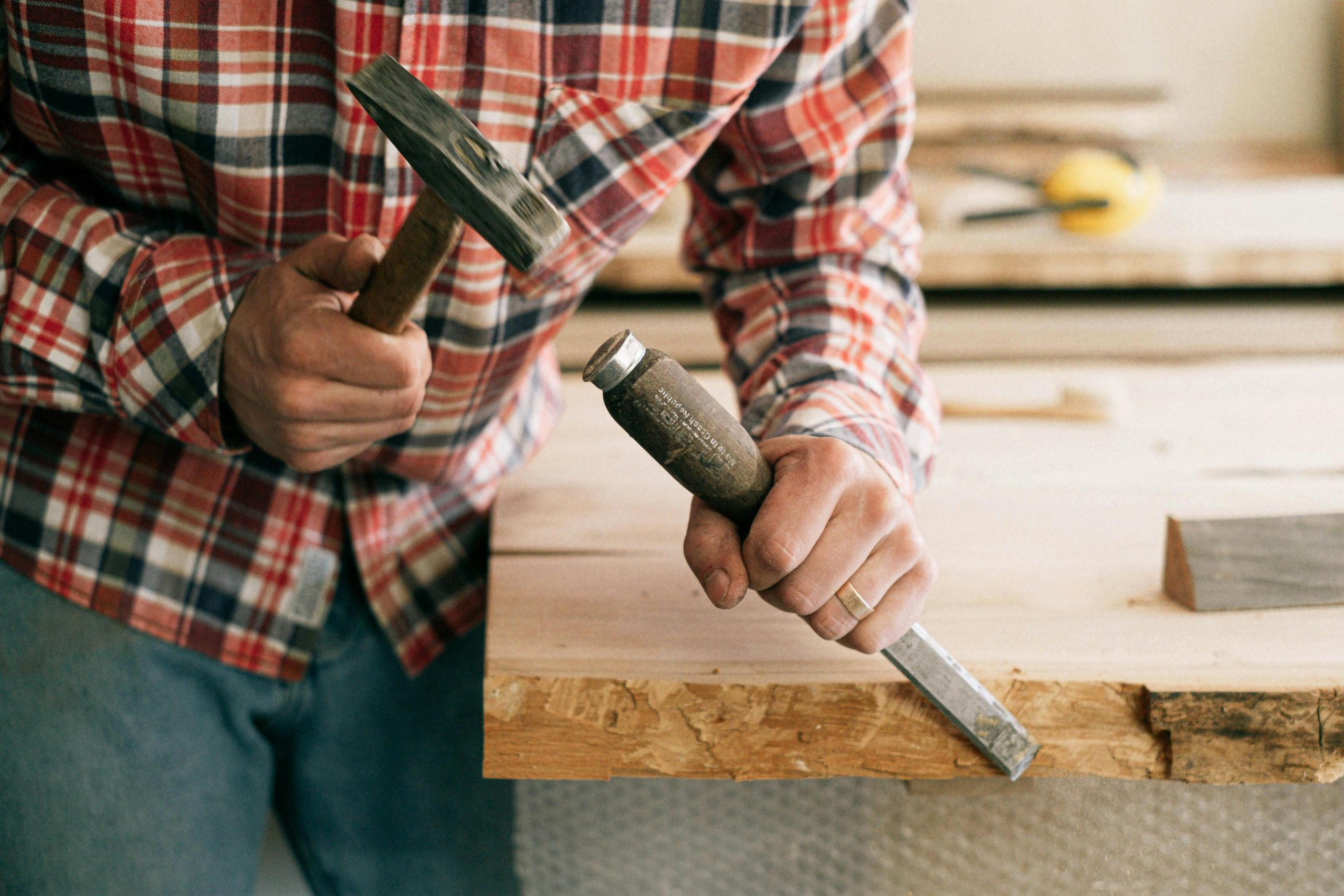
Amish furniture has a reputation for surviving far longer than the homes it was originally built for. Each piece is crafted from some of the strongest wood species in North America, selected not just for beauty, but for density, stability, and the ability to handle decades of daily use. The Amish don’t chase trends or fast-furniture shortcuts; they choose lumber the same way past generations did: by asking whether it will still hold strong for the next family who inherits it.
Key Takeaways:
- The strongest woods commonly used in Amish furniture are oak, hard maple, walnut, cherry, and hickory.
- Amish drying, joinery, and finishing techniques are designed to preserve natural strength and prevent long-term issues like warping, cracking, and separation.
- Choosing the right wood based on function, style, and daily use ensures your Amish furniture investment lasts for generations.
In this article, we’ll dig into the woods Amish craftsmen trust most, why these species naturally outlast the typical lifespan of modern furniture, and what makes them uniquely suited for heirloom-level durability.
The Amish Wood Philosophy: Choosing Strength Over Speed
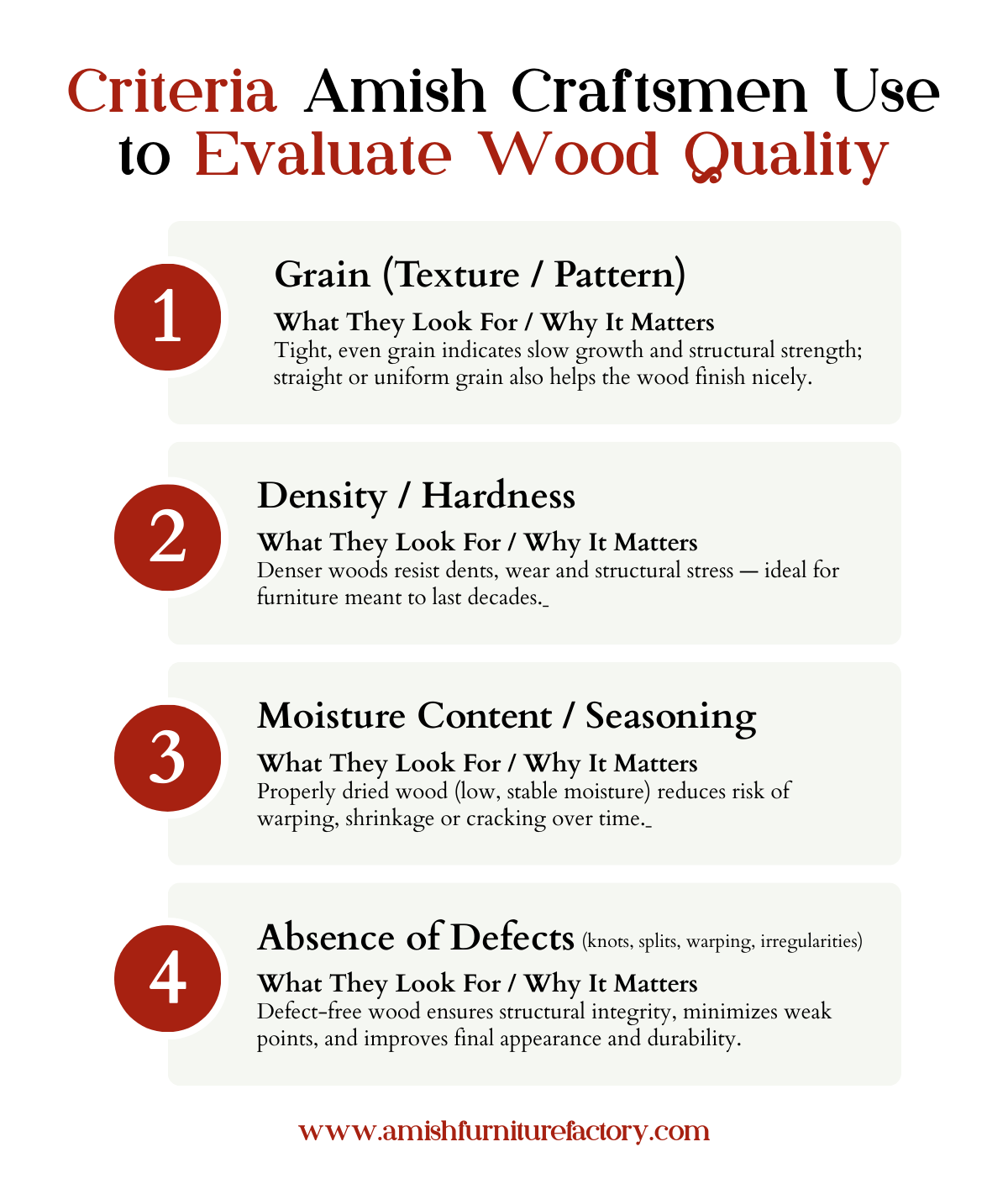
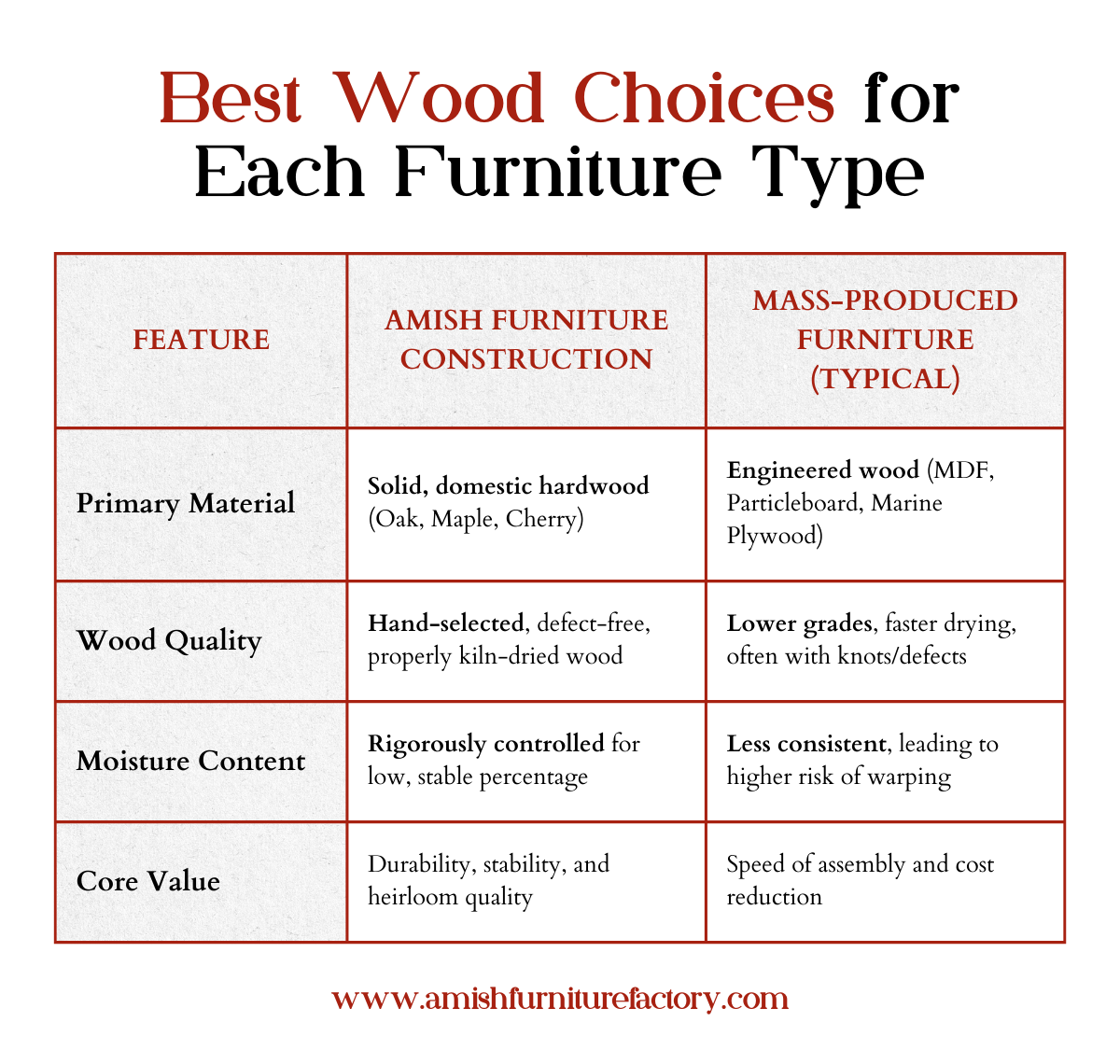
The craftsmen behind Amish furniture follow a philosophy rooted in patience, respect for the material, and a commitment to durability over quick production. Rather than resorting to particleboard or veneers, they intentionally select the best solid wood; lumber with tight grain, rich density, and natural resilience. This preference is about creating furniture that will bear daily use, resist dents, warping, and wear, and still look beautiful decades later. Before any cutting or shaping begins, the wood is carefully seasoned and dried to prevent future warping, shrinking, or cracking. This meticulous preparation means Amish furniture avoids the common pitfalls of rushed, mass-produced pieces. In essence: speed is sacrificed so strength endures.
The Strongest Woods Used in Amish Furniture
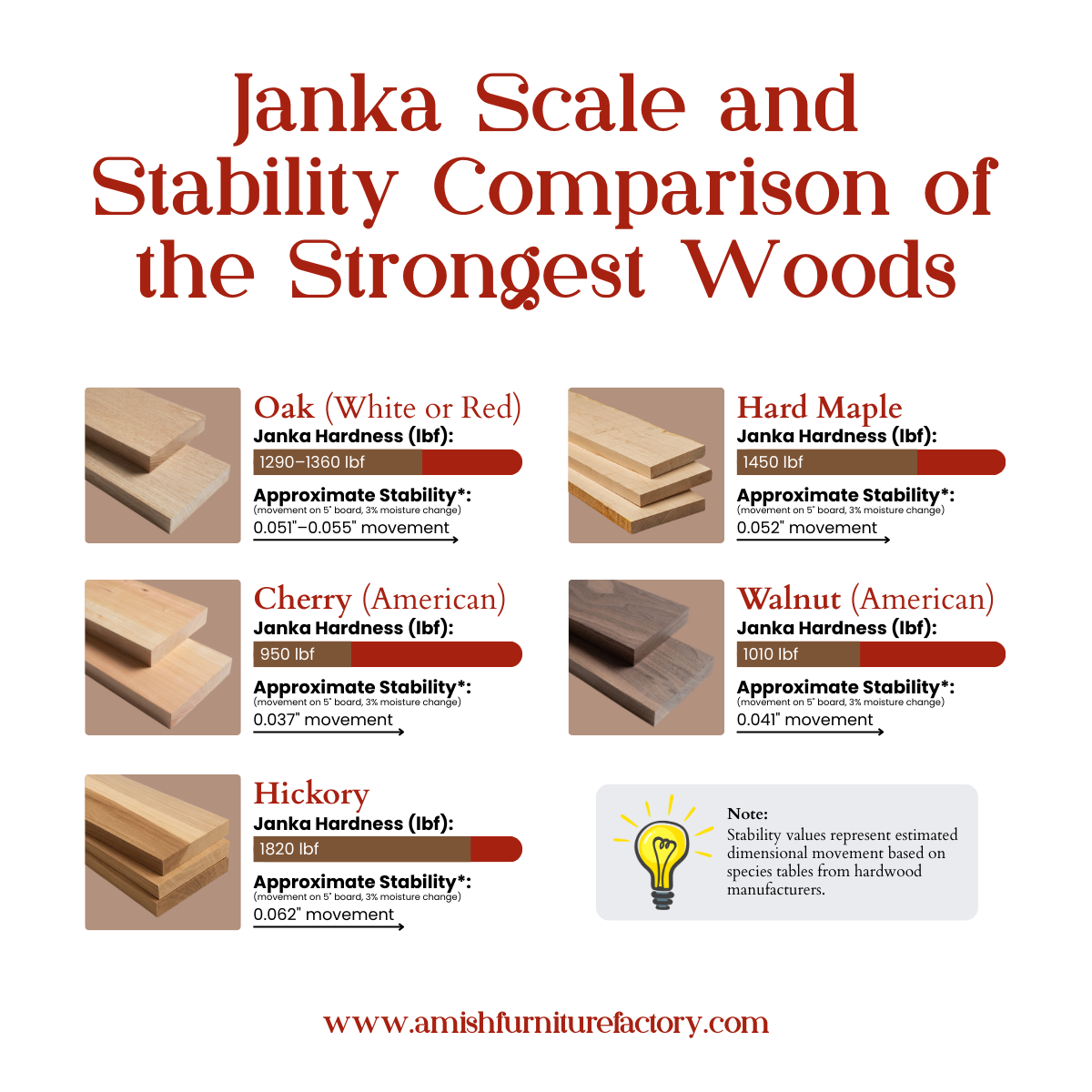
Below are the core woods that form the backbone of heirloom-quality furniture, each with its own character and set of strengths.
1. Oak
Oak is the workhorse of Amish furniture, prized for its incredible hardness and unmistakable grain. Antique furniture designer Nick Smith from Smithers adds further weight to oak’s reputation:
“In my experience, the strongest and most reliable hardwood for Amish-style furniture is white oak. It’s dense, incredibly durable, and has tight grain structure, which means it naturally resists moisture, rot, and movement over time.”
2. Hard Maple
Hard maple earns its place in Amish workshops because of its impressive density and fine, consistent grain. It’s tough enough to withstand constant abrasion. The Amish value it for furniture that takes daily wear, such as dressers, cabinetry, and children’s furniture.
According to Sam Sutherland, furniture expert at Flitch:
“Hard maple is the quiet heavyweight in Amish workshops. Its fibres are so densely packed that the timber behaves almost like stone, which is why drawers glide smoothly decades after everyone involved has retired.”
3. Cherry
Cherry wood combines quiet strength with a warm, evolving beauty that deepens over time. While not as hard as red oak or maple, cherry is incredibly stable, meaning it resists warping and cracking when exposed to changes in temperature or humidity.
Amelia Woods, Interior Designer at Residence Supply, highlights cherry’s appeal:
“Cherry is not only strong but also has a rich, deep color that intensifies as it ages, giving it a timeless quality that’s highly sought after for heirloom pieces.”
4. Walnut
Walnut is often reserved for premium Amish furniture because of its luxurious color and exceptional shock resistance. Its lumber strength allows it to absorb daily impact without losing shape or stability, making it ideal for intricate headboards, desks, and high-end cabinetry. Walnut’s dark, chocolate-toned grain gives each piece a refined, sophisticated presence.
5. Hickory
Hickory stands out as one of the toughest woods available in North America, and the Amish make full use of it. With unmatched hardness and tensile strength, hickory is nearly impossible to break, making it perfect for chairs, rockers, and rustic pieces that need to endure decades of heavy, everyday use. Its dramatic grain patterns give furniture a bold, organic character.
How Amish Wood Preparation Techniques Extend Lifespan
Even the hardest wood can fail if it’s processed the wrong way, which is why the Amish invest as much care in preparation as they do in craftsmanship.
Air-Drying vs. Kiln-Drying
Amish builders often use a combination of air-drying and kiln-drying to bring moisture resistance to a stable level without stressing the wood. Air-drying lets lumber adjust slowly to ambient conditions, while kiln-drying finishes the job by removing excess moisture precisely and evenly.
Hand-Selected Boards: Avoiding Weak Points and Knots
Unlike factory production, where boards are processed in bulk, Amish craftsmen examine each piece of lumber individually. They look for straight grain, consistent color, and the absence of defects like knots or mineral streaks that can create weak points.
Traditional Joinery That Works With the Wood, Not Against It
Instead of relying on screws, staples, or chemical adhesives, Amish furniture is held together using joinery techniques that allow the wood to expand and contract naturally. Dovetails and dowels create strong mechanical bonds without restricting seasonal movement.
Natural Oil Finishes That Protect Without Trapping Moisture
Rather than thick synthetic coatings, the Amish often use natural oils and hand-rubbed finishes that sink into the wood instead of sealing it airtight. These finishes enhance the grain, protect the surface, and allow the lumber to breathe. Nick emphasizes how finishing contributes to longevity:
“Proper finishing plays a big role. Natural oils and high-quality lacquers allow the wood to breathe and flex with seasonal changes, helping prevent cracking and warping — one of the biggest threats to longevity.”
Discover our handcrafted solid wood Amish beds, built with the world’s strongest woods to last for generations.
Amish vs. Mass-Produced Wood Selection
The contrast between Amish and mass-produced furniture is especially clear in wood selection. Large manufacturers often rely on particle board, MDF, and thin veneers to reduce costs—materials that are lighter, weaker, and more vulnerable to sagging, cracking, and moisture damage over time.
Amish-made furniture follows a different philosophy rooted in cultural tradition and heritage. Crafted by skilled artisans from the Amish community, each piece reflects generations of woodworking knowledge and values. Solid hardwoods are carefully selected board by board, with an emphasis on durability, repairability, and long-term use. The natural strength and longevity of real hardwood allow these pieces to last for decades, often becoming heirlooms rather than disposable furniture. Amelia explains a key part of Amish wood preparation:
“Amish craftsmen take great care in selecting and seasoning wood to reduce warping or splitting over time. They often use hand-planing and hand-scraping techniques to give the wood a smooth and consistent finish, which helps to protect the grain and enhance its longevity.”
How to Choose the Right Wood for Your Amish Furniture
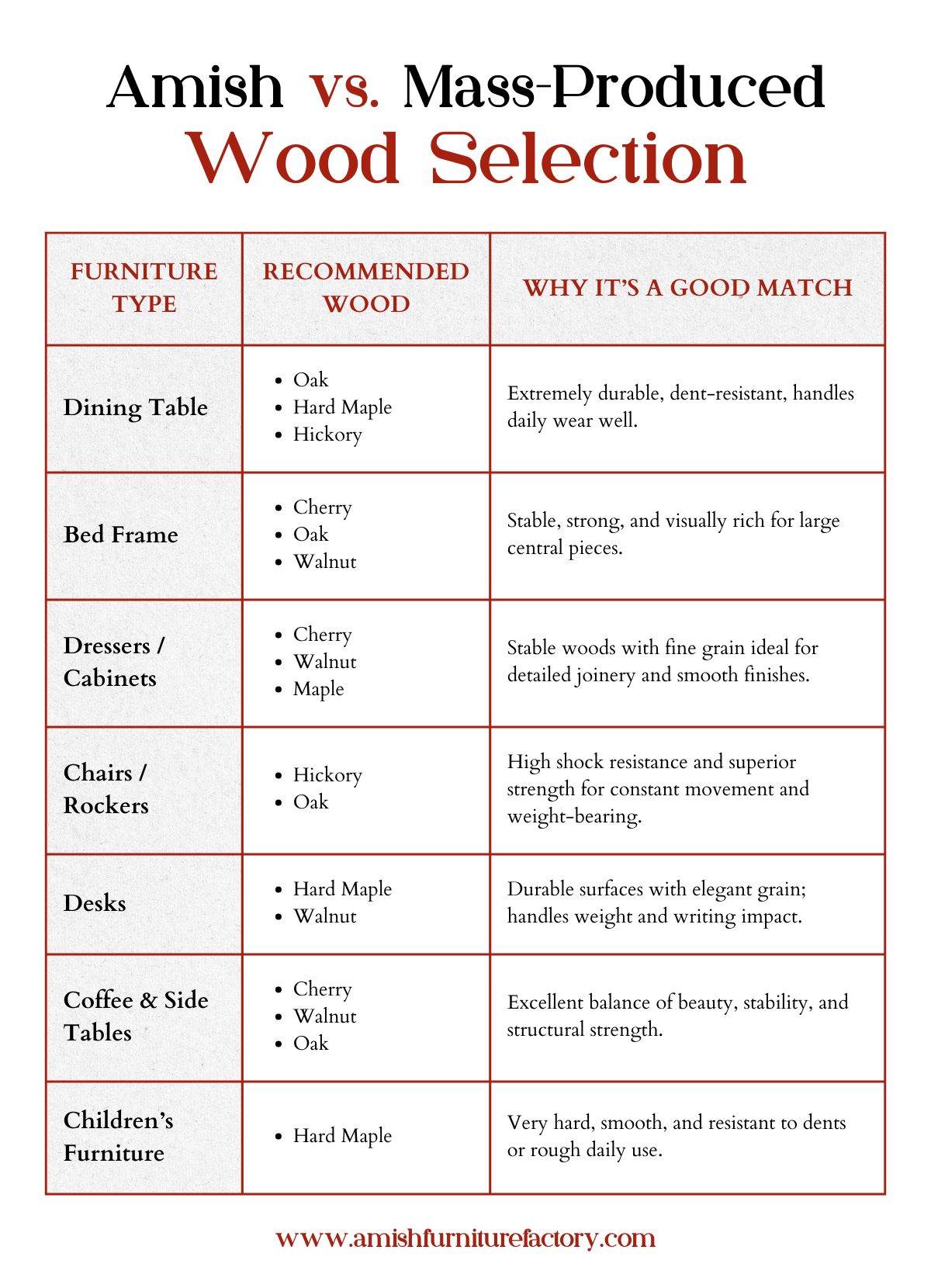
Below are the key considerations that can help you choose the best wood for your needs.
1. Consider the Furniture’s Daily Wear and Tear
High-traffic or high-impact pieces, like dining tables or office desks, benefit from harder woods such as oak, maple, or hickory. These species resist dents, scratches, and constant contact better, making them ideal for busy homes or shared spaces.
2. Prioritize Stability for Large or Wide Surfaces
Some woods, like cherry and walnut, are prized for their low natural movement, which helps prevent warping or cupping. This makes them excellent choices for wide panels, cabinet doors, or bedroom furniture where stability is crucial.
3. Match the Wood to Your Interior Style
If you want warm, classic tones that deepen with age, cherry is unmatched. For modern or minimalist interiors, hard maple and oak offer cleaner, lighter finishes with subtle grain patterns that blend easily into contemporary spaces.
4. Think About Long-Term Aging and Color Change
Cherry and walnut develop richer tones over time, which many homeowners love, but if you prefer a wood that stays relatively consistent, maple and oak maintain their color more predictably. Knowing how your furniture will age helps avoid surprises years down the road.
5. Balance Budget With Durability and Beauty
Walnut and cherry tend to be premium-priced due to their beauty and demand, while oak and hard maple often offer the best balance of cost, strength, and visual appeal. Choosing based on what matters most ensures you get the right investment for your home.
Conclusion: The Legacy of Hardwood and Craftsmanship
Amish furniture endures not because of shortcuts or trends. They last because every step, from wood selection to drying, shaping, and finishing, is rooted in generations of knowledge. When the strongest wood meets intentional craftsmanship, the result is furniture that doesn’t just fill a room; it outlives the people who first bought it. These pieces age with dignity, grow richer in character, and become part of a family’s story. That legacy is what truly sets Amish furniture apart: strength in material, integrity in construction, and a lifespan built on patience rather than speed.
Frequently Asked Questions
What wood is used for high-end furniture?
High-end furniture is typically made from solid hardwoods like oak, walnut, cherry, maple, and mahogany. These woods are valued for their strength, rich grain patterns, and ability to age beautifully over time.
What is the cheapest but strongest wood?
Pine is often the most affordable option while still offering decent strength for furniture. Although softer than hardwoods, it performs well when properly dried and constructed.
Which wood is long-lasting for furniture?
Woods like oak, maple, and cherry are especially long-lasting due to their density and resistance to wear. With proper care, furniture made from these hardwoods can last for decades or even generations.