
When you run your hand along a well-made piece of wooden furniture, there’s an unmistakable warmth to it, something no synthetic material can replicate. The type of wood used determines the strength, longevity, and even the story the piece tells over time. For Amish craftsmen, who have built their reputation on heirloom-quality furniture, the choice of wood is never an afterthought. It’s an artful decision rooted in tradition, sustainability, and an eye for beauty that lasts for generations.
Key Takeaways:
- The best natural woods for furniture include oak, cherry, hard maple, walnut, hickory, and mahogany, each offering distinct durability and aesthetic qualities.
- Amish craftsmen prefer solid American hardwoods because they combine strength, longevity, and beauty with the ability to age gracefully.
- Buying Amish-built furniture means investing in sustainability, craftsmanship, and tradition, not just a product.
In this guide, we’ll explore the best types of natural wood for furniture and uncover why Amish artisans consistently turn to these materials.
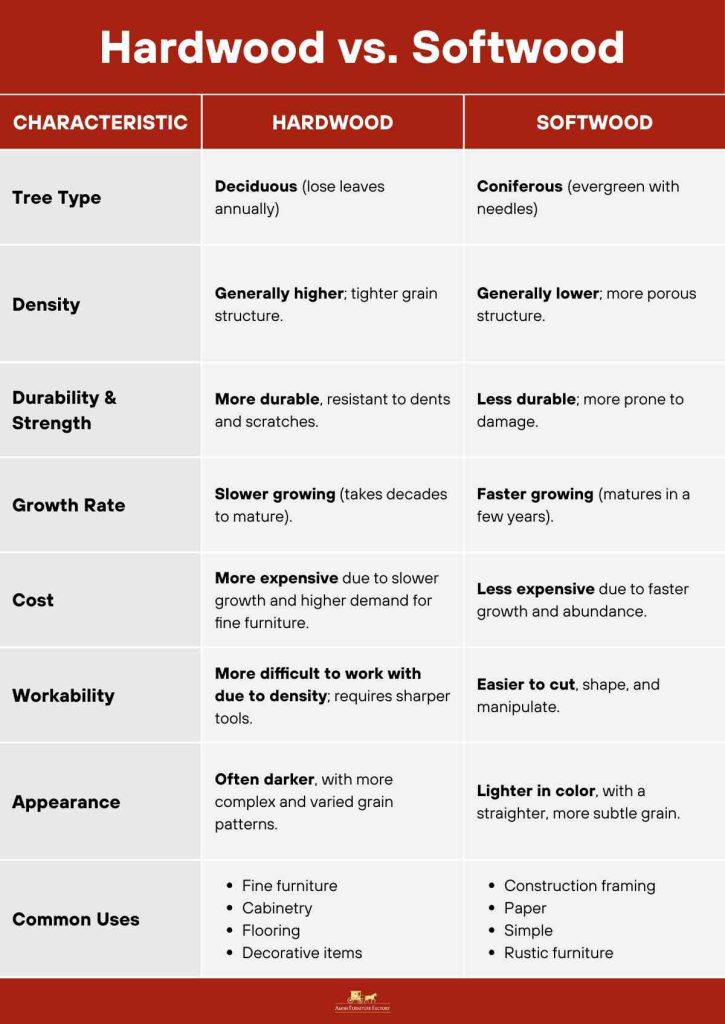
Hardwood vs. Softwood: What’s the Difference?
Before diving into specific wood types, it helps to understand the basic categories: hardwoods and softwoods.
Hardwoods come from deciduous trees; those that shed their leaves each year, like oak, maple, and cherry. These woods tend to be denser, more durable, and are often chosen for fine furniture that’s built to last.
Softwoods, on the other hand, are harvested from evergreen trees like pine, cedar, or spruce. They generally grow faster, making them more abundant and often less expensive. Softwoods are lighter in weight and easier to work with. For the Amish, who value resilience and timelessness, hardwoods are usually the go-to choice.
Why Buy Amish-Built Furniture?
With Amish-built furniture, every piece is handcrafted without shortcuts, built to withstand decades of use, and designed to age gracefully rather than wear out. Where mass-produced furniture often relies on veneers or particleboard, Amish furniture is made from solid hardwoods, ensuring both strength and repairability.
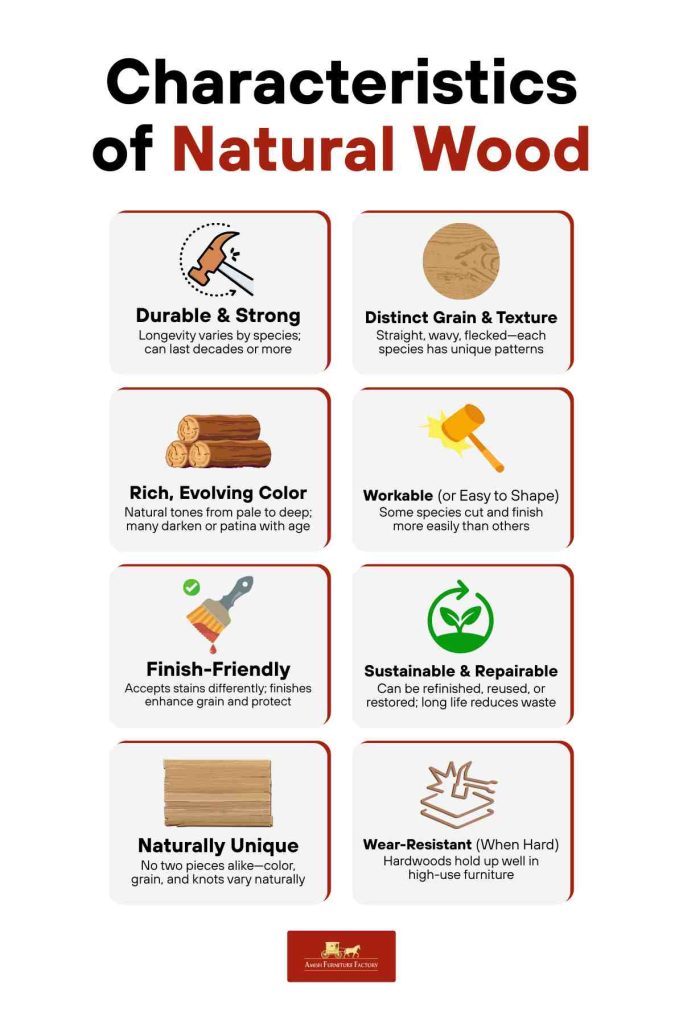
Beyond durability, Amish-built furniture reflects values that resonate with many modern buyers: sustainability, authenticity, and timeless design. Most Amish craftsmen source their wood from responsibly managed American forests, supporting eco-friendly practices while reducing waste. Buyers also appreciate the custom options, making each piece unique to the family who owns it.
Best Types of Natural Wood for Furniture Preferred by the Amish
The best types of natural wood for furniture are hardwoods like oak, cherry, walnut, maple, and mahogany, which are excellent for long-lasting, high-use indoor pieces. Amish craftsmen prefer these high-quality hardwoods because they offer exceptional strength, durability, natural beauty, and the ability to age gracefully over time.
Oak (Red and White)
Oak is one of the most popular choices for Amish furniture, prized for its remarkable strength and distinctive grain patterns. White oak, in particular, is highly resistant to moisture, making it ideal for dining tables, chairs, and storage pieces that see heavy daily use. Red oak is slightly more porous but offers a warm, reddish hue that adds character to any room.
Cherry
Cherry wood is known for its smooth grain and rich, reddish-brown color that deepens beautifully with age. Amish craftsmen often choose cherry for fine furniture like bedroom sets and cabinets, where its elegance can truly shine. Its medium density makes it strong yet workable, allowing for detailed craftsmanship without sacrificing durability.
Hard Maple
Hard maple is a dense, durable hardwood that resists dents and scratches, making it an excellent choice for high-traffic furniture such as kitchen tables, desks, and dressers. Its pale, creamy color offers a clean, modern look that fits both traditional and contemporary interiors. Amish woodworkers value its strength and versatility.
Hickory
Hickory is one of the hardest and strongest American hardwoods, making it perfect for furniture that demands rugged durability. It has a striking appearance, with contrasting light and dark streaks that give each piece a rustic, one-of-a-kind look. Amish craftsmen often use hickory in rocking chairs, benches, and rustic-style furniture that highlights its bold character.
Walnut
Walnut is a favorite among Amish artisans for its rich, dark color and fine, straight grain that exudes sophistication. It’s slightly softer than maple or oak but still durable enough for long-lasting furniture. Walnut is often reserved for high-end pieces such as dining tables, office desks, and headboards, where its luxurious appearance can be showcased.
Mahogany
Mahogany wood remains a classic choice for its deep reddish-brown color and exceptional stability. It resists warping and swelling, making it ideal for intricate designs and fine furniture. Its smooth texture and natural luster give mahogany pieces a refined, almost regal quality. When used, Amish craftsmen often select it for statement furniture that highlights its elegance and durability.
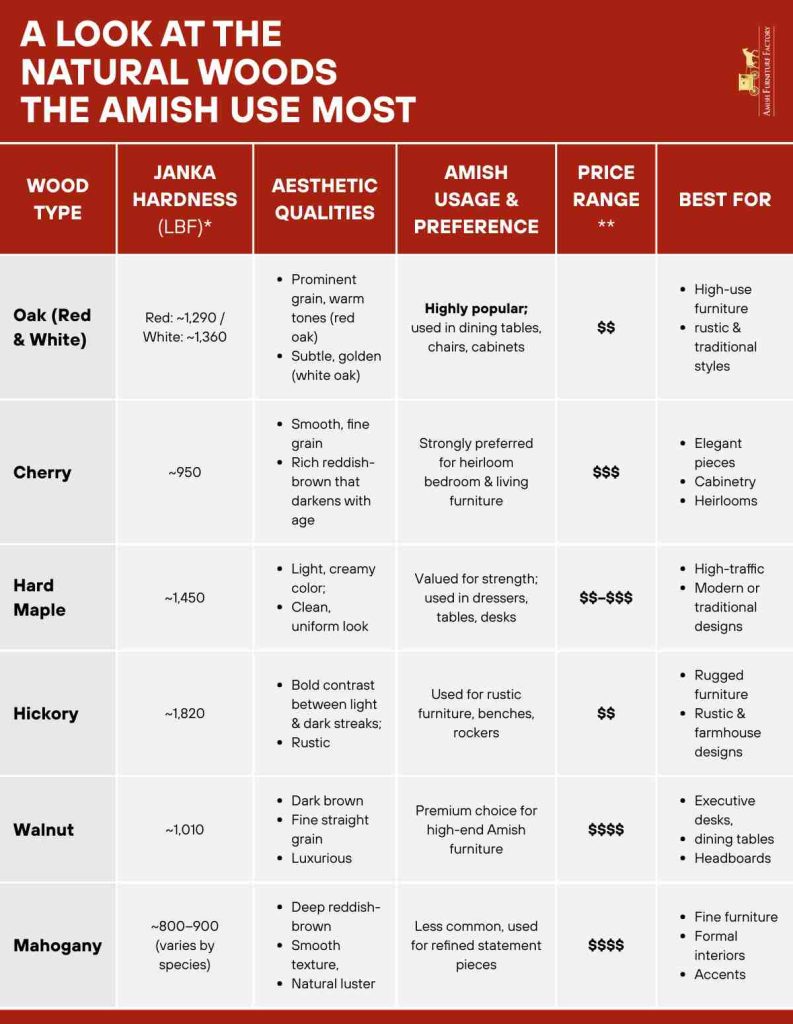
* Janka hardness measures resistance to denting and wear.
** Price ranges vary regionally: $ = lower, $$$$ = premium.
Why Grain, Cut, and Finish Compatibility Matter
The beauty and longevity of wooden furniture depend on more than just the species of wood; it’s also about how the wood is cut, how its grain is highlighted, and how well it responds to different finishes. The grain pattern influences not only the furniture’s appearance but also its strength. For example, quartersawn oak reveals striking ray flecks while offering more stability against warping, making it a favorite for Amish craftsmen.
Finish compatibility is equally important. Maple can be tricky to stain evenly without careful preparation, while others, like cherry or walnut, naturally accept finishes that enhance their depth and warmth. Amish furniture makers take the time to match the right cut and finish with the chosen wood, ensuring the final piece has both durability and aesthetic harmony.
Want to furnish your home with durable, authentic pieces? Explore our collection of Amish mission furniture, handcrafted from the finest natural woods to bring timeless beauty to your living space.
The Verdict: Why Natural Wood is a Timeless Investment
In an age where fast furniture often ends up on the curb after just a few years, natural wood pieces crafted by Amish hands stand apart as enduring investments. Hardwood furniture offers strength, repairability, and beauty that only improve with time.
For Amish craftsmen, wood is a medium for artistry, patience, and tradition. Their reliance on natural wood isn’t just about durability; it’s about creating furniture that remains relevant and reliable for generations. Choosing the best types of natural wood for furniture means embracing authenticity, sustainability, and timeless design.
Frequently Asked Questions
What is the best type of natural wood for a dining table?
Oak and walnut are two of the most popular choices for dining tables. Oak is durable and versatile, perfect for daily family use, while walnut offers a more refined, high-end look that adds warmth and sophistication to formal dining spaces.
How do you properly care for natural wood furniture to make it last a lifetime?
Keep wood furniture away from direct sunlight and humidity extremes, use coasters or mats to protect surfaces, and clean with a soft, damp cloth instead of harsh chemicals. Periodic polishing or oiling, depending on the finish, helps preserve its luster.
Is furniture made from natural wood a sustainable choice?
Yes, when sourced from responsibly managed forests, natural wood is one of the most sustainable furniture materials available. Unlike particleboard or synthetic alternatives, solid wood furniture can be refinished, repaired, and reused for decades, reducing waste.
Is quarter-sawn white oak really more stable than plain-sawn?
Yes. Quarter-sawn white oak is cut at an angle that minimizes expansion and contraction, making it less likely to warp or cup. It also reveals unique ray flecks in the grain, giving the furniture both stability and distinctive visual appeal.
Different types of gambling include sports betting, lotteries, poker, and slot machines, each offering distinct experiences and strategies. Enthusiasts explore global gaming trends, while others prefer sustainable leisure activities; Besøk Grønn Jenter promotes awareness of mindful entertainment and responsible recreation choices.