
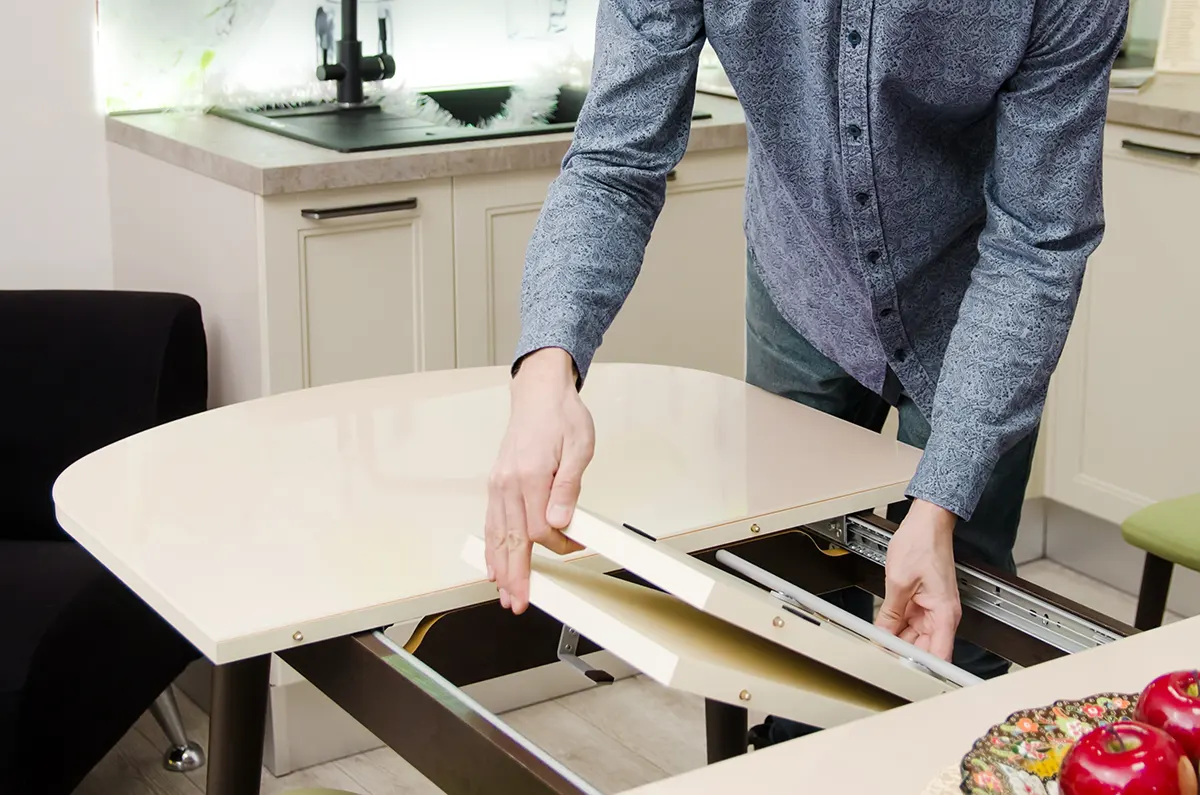
A dining table with removable leaves gives you the flexibility to seat extra guests when needed, then tuck away to save space when the crowd is gone. The challenge comes in figuring out how to store table leaves so they don’t warp, scratch, or end up forgotten in the garage. The truth is, these pieces of wood are just as important as the table itself, and a little care in how you handle and store them can make the difference between a flawless fit years later or a wobbly, uneven surface.
Key Takeaways:
- Store a dining table leaf flat on its largest surface to prevent warping and wrap it in a breathable fabric like a bedsheet, avoiding plastic.
- Keep table leaves in a dry, shaded, and well-ventilated space away from direct sunlight, moisture, and plastic coverings.
- Using specially designed storage bags can offer extra protection and prolong the lifespan of your dining table leaves.
In this guide, we’ll walk you through the essential steps and clever solutions to keep your table leaves safe, sound, and ready for your next big gathering.
What is a Table Dining Leaf?
A table dining leaf is an extra section added to a dining table to make it bigger when needed. Before the 1800s, homes usually didn’t have a dedicated dining room, so tables were small and often taken apart after meals to save space. In the 15th century, hinged table leaves were introduced, allowing tables to expand easily, though they had limits on how far they could extend before becoming unstable. By the 1800s, when dining tables started staying in the center of rooms permanently, more modern and stable ways to add table leaves were developed—long before the folding and extending tables you see in videos today.
Types of Dining Table Leaves
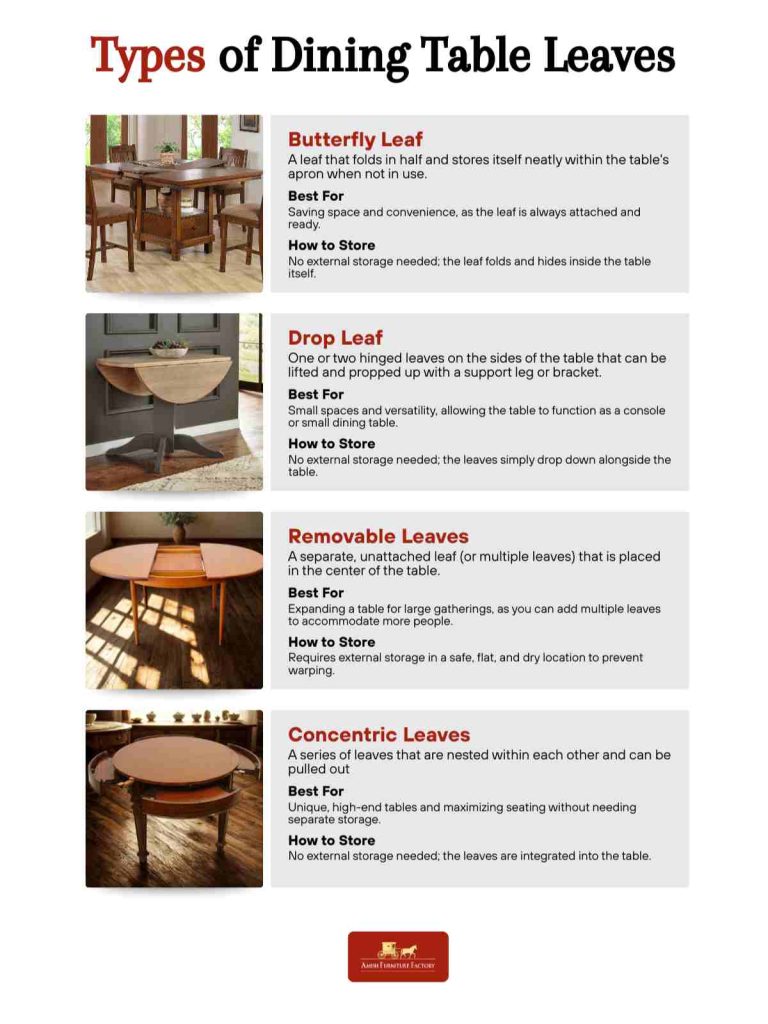
When shopping for the most suitable dining table leaf, it’s essential to know the most common types to help you determine and plan your space and storage ahead of time.
Butterfly Leaf
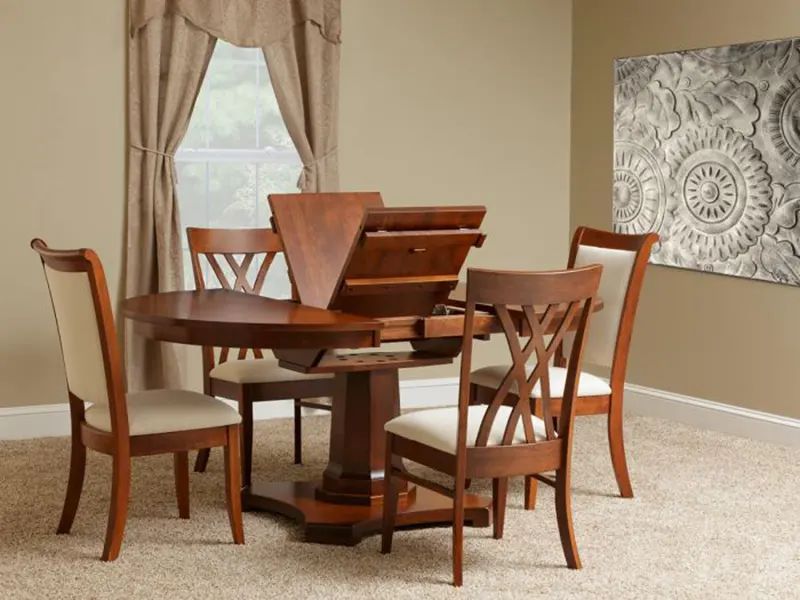
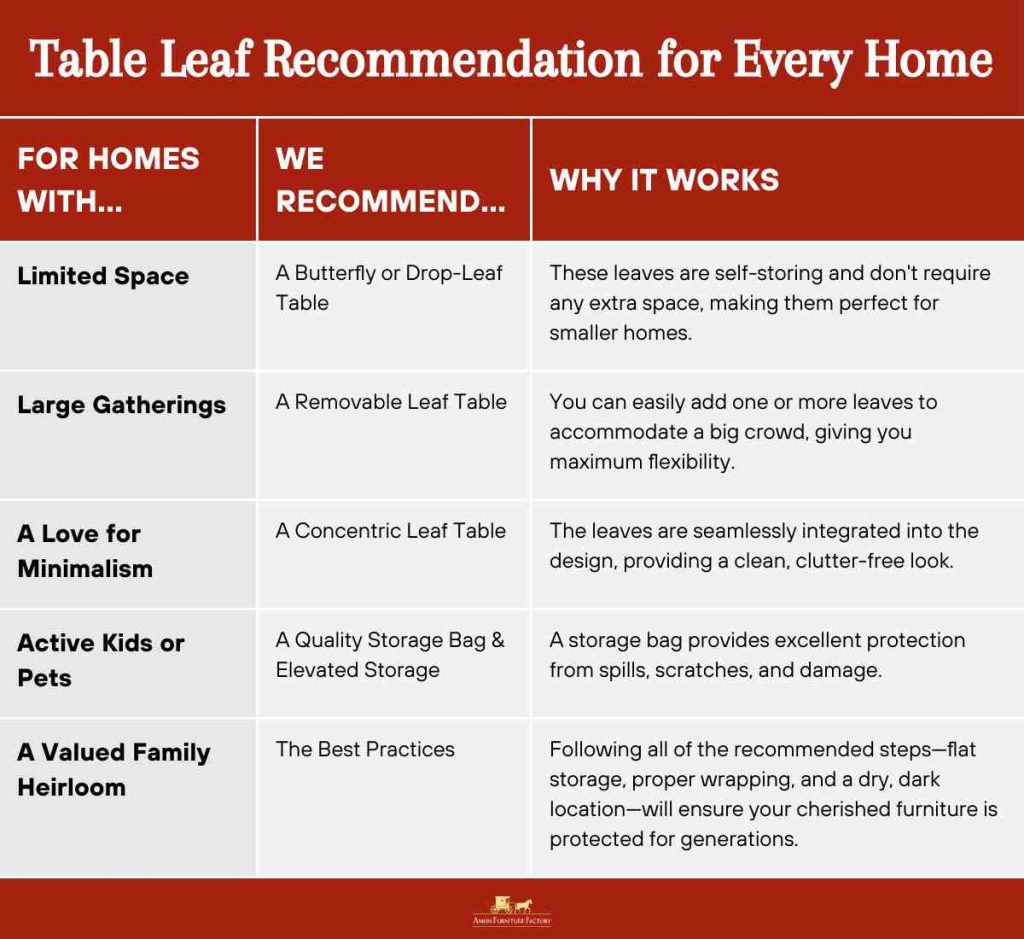
If you don’t have extra space to store a table leaf, a butterfly leaf dining table is perfect for you. This table can self store its leaf under it, that’s why this is the most common choice for growing families. A butterfly leaf has hinges in the middle and usually is around 18 inches wide. When pulling the ends of the table top out, the round table becomes oval, and the square one becomes rectangular.
Drop Leaf
Drop leaf dining tables are the most suitable choice for people with smaller spaces. It comes in different shapes – circle, square, or rectangular. It has hinged leaves on both sides that extend. There is also no storing issue for this one. Some drop leaf dining tables have four leaves that would transform a round top into a rectangular one. You have the option to drop a single leaf or two.
Removable Leaves
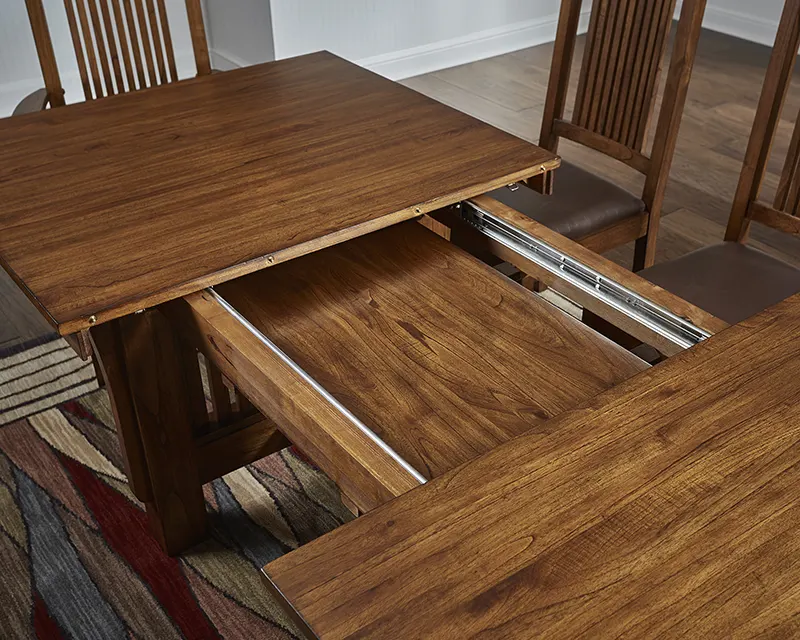
The removable leaf is a type that requires you to find an appropriate place to store it. Another drawback is that this type demands more strength to install than a butterfly leaf. You must first lift the whole leaf and pull both ends to create a space in the center for the leaf. However, if your family is big or if you regularly entertain different amounts of people, a removable leaf is the perfect choice for you since these extensions are larger and can easily be removed afterward.
Concentric Leaves
Concentric leaves may be the best option if you’re a fan of round tables since you can extend them while maintaining their shape instead of turning them into oval tables. To store these, keep them flat in a protective cloth or felt cover so the edges don’t chip, and avoid leaning them against walls, which can cause warping over time. If possible, store them near the dining table in a dry, climate-controlled space so they remain properly aligned when reattached.
How to Install Table Leaves: A Step-by-Step Guide
Installing table extension leaves can seem daunting, but with the right guidance, it’s a straightforward process. Below are the steps to seamlessly add or remove table leaves, ensuring a secure and stable extension for your dining table.
Step 1: Prepare the Table
Start by clearing the tabletop and ensuring it’s clean and dry. Extend the table by pulling apart the two halves from either end until you see the slots for the leaves.
Step 2: Position the Leaf
Carefully lift the leaf, ensuring it’s right side up, and gently slide it into the open gap. Make sure the pegs or brackets align with the holes or slots on the table.
Step 3: Secure the Leaf
Once in place, push the table halves toward the center to tighten the seams. Some tables have locks underneath to secure the leaf firmly.
Step 4: Check Alignment
After securing, check that the surface is flush and the leaf is perfectly aligned with the table. Adjust as necessary to ensure stability.
Proper Ways on How To Store Table Leaves
Let’s talk about how to store your dining table leaves appropriately.
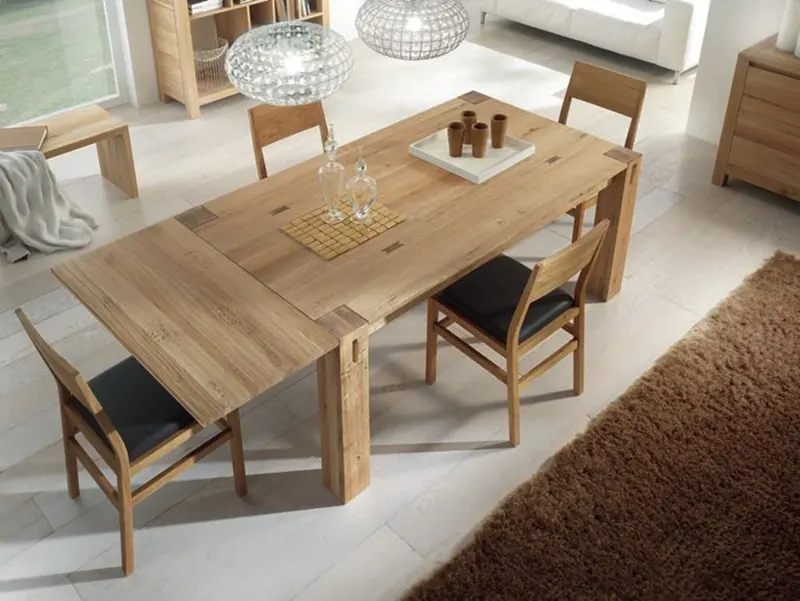
Keep It In A Shaded or Dark Leaf Storage
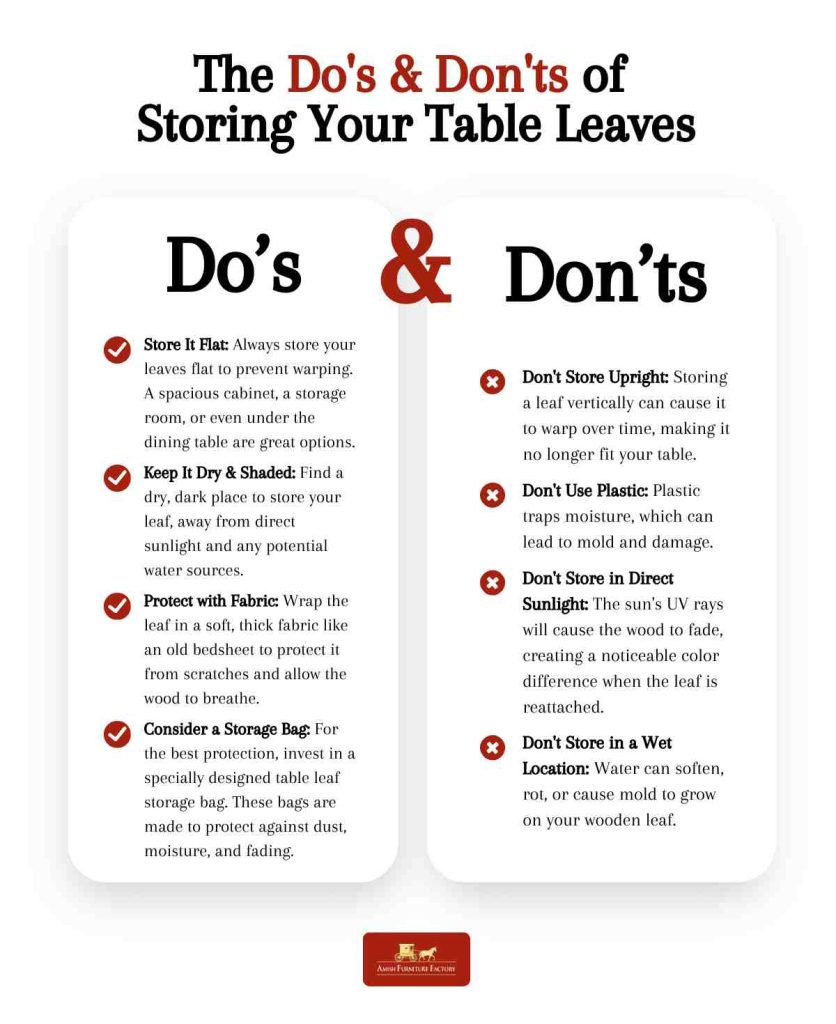
Avoid storing your dining table leaf outside or under direct sunlight. Although direct sunlight won’t probably cause severe damage, the color exposed to the harmful ultraviolet rays will gradually fade. You will notice the significant difference between the two colors the next time you install the table leaf on your dining table. With that in mind, always keep your wooden leaves in a dark storage room or inside a spacious cabinet.
Always Keep the Table Leaf Flat
As much as possible, avoid storing your leaf vertically. Although many people rest their wooden leaves in an upright position because it takes less space and some may think that it’s safer, this will eventually damage the overall shape and appearance of the wood. As a result, your precious table leaf will no longer fit your table the next time you try to install it. Always store your wooden leaves flat in such a way that the largest flat surface or the table top is at the bottom to prevent warping.
Right Table Leaf Protection
Always wrap your dining room table leaf, or at least the tabletop, in an old bed sheet or a soft thick fabric to protect it against scratches, scuffs, and other damage before putting it inside your storage. These materials allow the wood to breathe air and quickly adjust to changing temperatures. Never use plastic materials, as these retain moisture and humidity that will eventually cause the plastic to stick, develop molds, and cause unpleasant damage.
Always Keep Your Storage Dry
While this is already a piece of common knowledge, water and wood are never the best of friends. Since wood is a porous material, it will soften and rot when water penetrates its membranes. Too much exposure to water will also invite molds to grow, leading to expensive restoration efforts. Ensure that your leaf storage space is always dry to prevent all of these from happening. Remember, water marks can ruin a furniture’s appearance.
Modern Leaf Storage Bags
Table leaf storage bags in the market are designed to protect any wooden table leaf from dust, scratches, chips, fading, direct sunlight, moisture, mildew, and more. While purchasing a good quality storage bag may cost you money, it may also prolong its lifespan and save you from buying new ones over time.
You might want to learn about popular Amish table edge profiles.
Common Problems and Solutions
One frequent issue with table leaves is misalignment, where the leaf does not sit flush with the main table. This can occur due to uneven wear of hinges or settling of the house itself, which shifts the alignment of the table.
To correct this, first check the hinges and brackets for any loose screws or damage, and tighten or replace as needed. If the table continues to misalign, it might be necessary to adjust the base of the table or legs to ensure a level surface.
Another common problem is difficulty in inserting or removing the leaves. This often happens when the tracks or table slides become clogged with dust or debris. Regular cleaning and light lubrication of these parts can help maintain smooth operation.
Additionally, wood can swell or shrink based on humidity levels, so maintaining a stable environment can prevent these issues from occurring in the first place.
Key Considerations When Buying Tables with Leaves
When shopping for a table with leaves, it’s essential to think about more than just the size and style. Here’s what you should consider to make a wise purchase:
- Size and Fit: Measure your dining area to ensure the table fits comfortably with leaves both in and out. Consider the maximum number of guests you plan to host.
- Mechanism and Ease of Use: Look for one that is easy to operate and does not require excessive force or assistance. A smooth mechanism will provide a better experience.
- Material and Durability: Choose materials that will stand up to the test of time. Solid woods like oak, maple, and cherry are durable and can handle the wear and tear.
- Style and Aesthetics: The table should complement the style of your dining room. Whether you prefer modern, traditional, or rustic, etc.
Check out our top-rated round table with leaves and other space-saving furniture solutions today.
Conclusion: Maximizing Your Space with Table Leaves
Table leaves are a versatile and practical addition to any home, offering the flexibility to adjust your table size based on your needs. By learning how to store table leaves properly, you can make an informed choice that enhances both the functionality and aesthetics of your dining space. Investing in a table with leaves is not just about accommodating more guests; it’s about creating a dynamic and adaptable living environment that suits your everyday needs and special occasions alike.
Frequently Asked Questions
How do I properly maintain and care for my wooden table leaves?
To maintain your wooden table leaves, regularly clean them with a soft, damp cloth followed by a dry cloth to prevent moisture damage. Avoid harsh chemicals and place coasters under hot or cold items to prevent rings and heat damage. Periodically check and tighten any hardware to ensure the leaves remain secure and operate smoothly.
Can I customize a table to include leaves even if it didn’t originally have them?
Yes, it’s often possible to customize a table to include leaves, although this depends on the table’s design and construction. It’s best to consult with a professional furniture maker who can assess whether your table can be modified safely and effectively to include leaves, ensuring stability and aesthetic integrity.
Can I store my dining table leaf upright?
It’s not recommended to store table leaves upright or leaning against a wall, since gravity can cause them to bow or warp over time. Instead, always store them flat and supported, ideally in a protective cover to prevent scratches.
Where is the best place to store dining table leaves?
The best place is in a dry, climate-controlled area close to the table itself—such as under a bed, in a closet, or in dedicated storage under the dining table. Avoid basements, attics, or garages where temperature and humidity can fluctuate and damage the wood.