
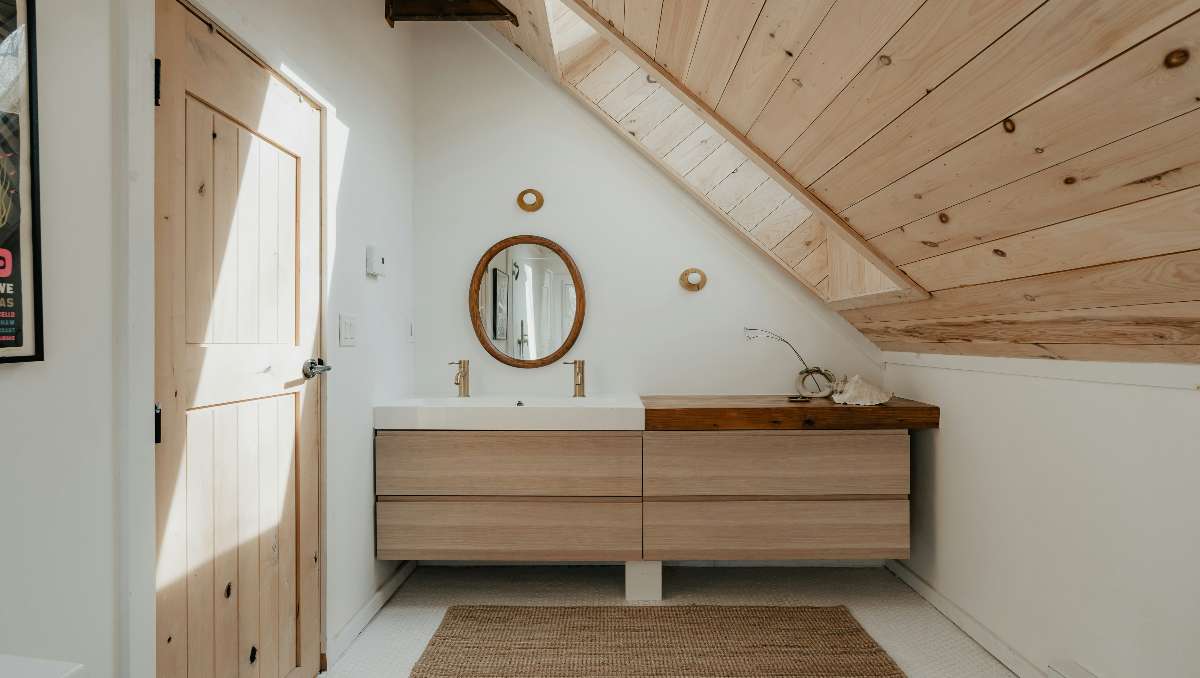
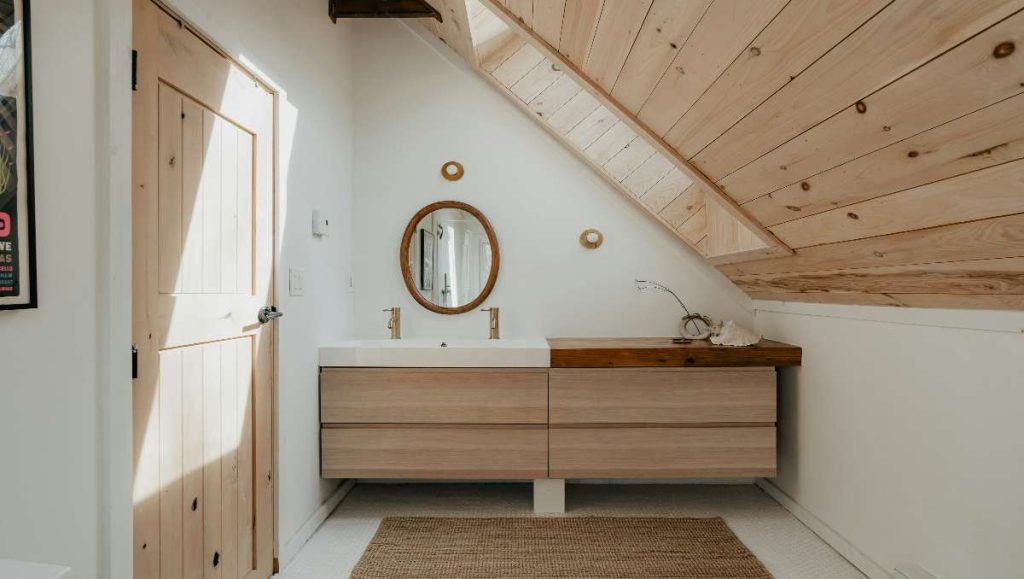
When it comes to creating a bathroom that feels both functional and inviting, storage often plays a bigger role than we give it credit for. Whether you’re working with a cozy powder room or a spacious master bath, the right cabinetry can make all the difference. Enter Amish-made bathroom cabinets and vanities—an ideal blend of craftsmanship, durability, and timeless style. Handcrafted by skilled artisans using techniques passed down through generations, these cabinets are more than just storage solutions—they’re pieces of art.
Key Takeaways:
- Amish-made bathroom cabinets offer exceptional durability and timeless style, crafted from solid wood with meticulous attention to detail.
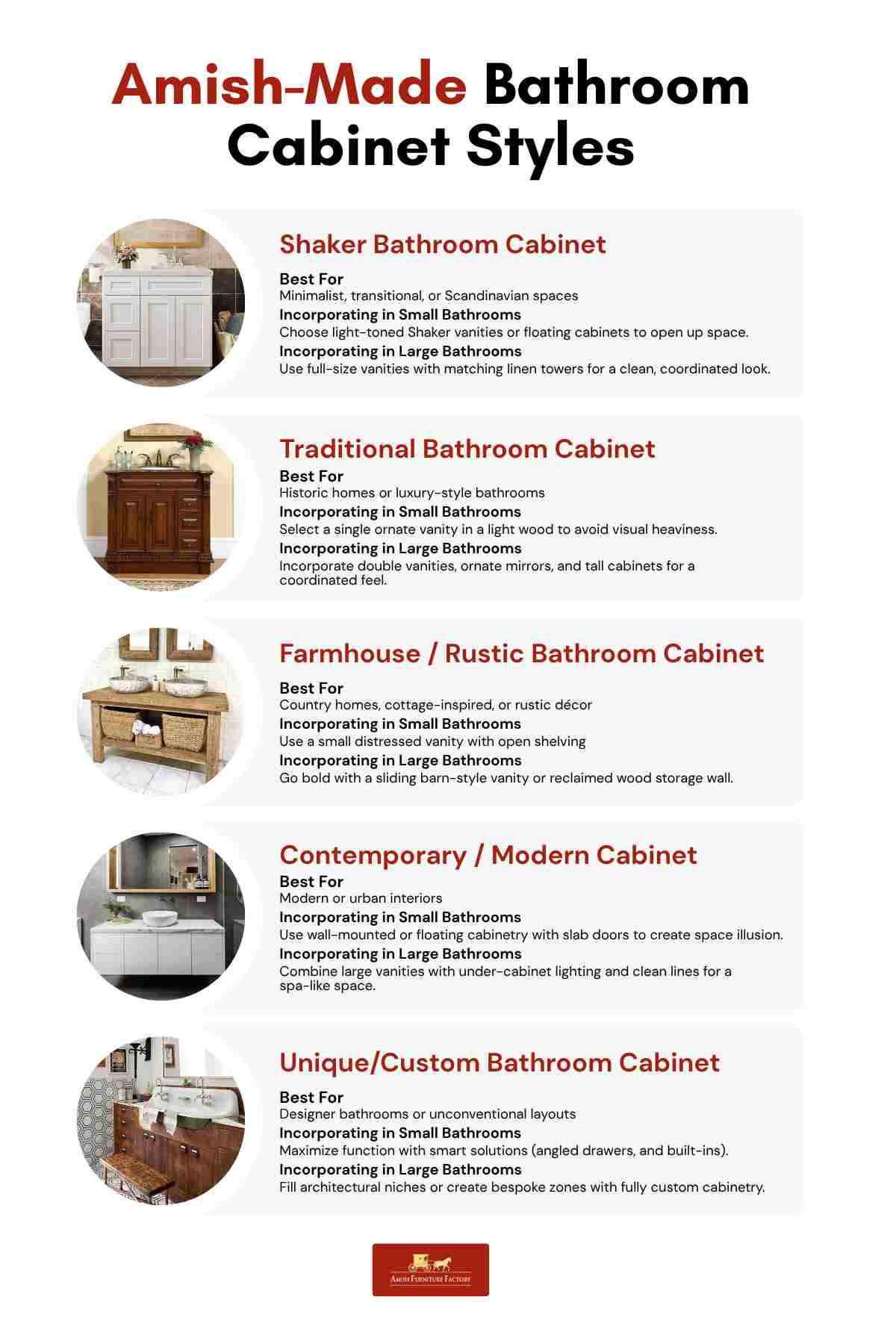
- The best Amish made cabinet styles include Shaker, Traditional, Farmhouse/Rustic, Contemporary/Modern, and custom styles.
- Their versatility extends to both small and large bathrooms, with customization options ensuring a perfect fit and personalized aesthetic.
In this guide, we’ll explore the best Amish-made bathroom cabinets suited for both small and large bathrooms, helping you find the perfect balance of elegance and practicality for your space.
Is Your Bathroom Small or Large?
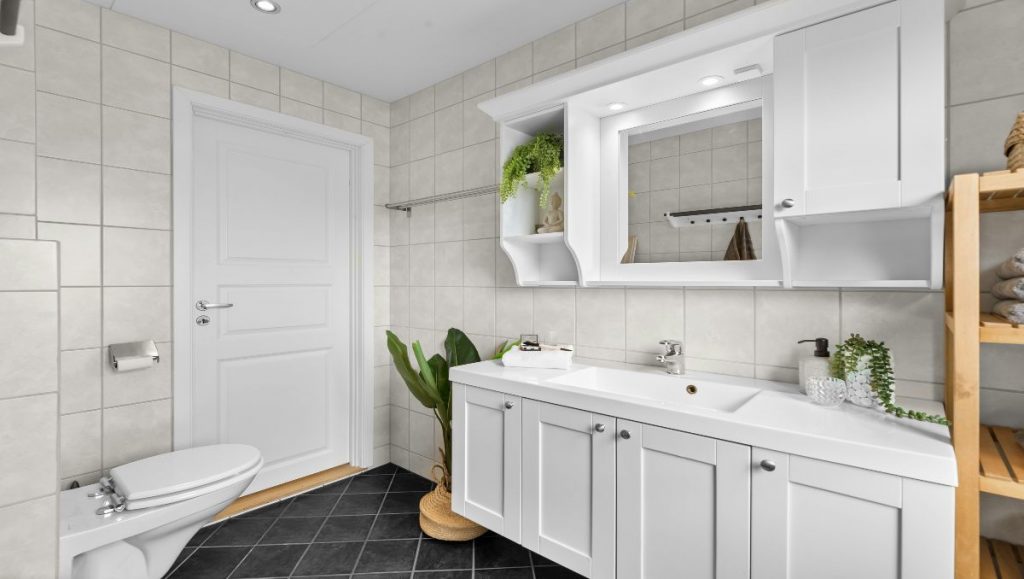
The distinction between a small and large bathroom typically depends on the size and layout of the space, but here are general guidelines:
- Small Bathroom: Often referred to as a half-bath or powder room, a small bathroom usually has limited square footage, typically ranging from 30 to 50 square feet. It may only include a toilet, sink, and perhaps a small shower or tub. The space tends to feel more compact and may require efficient use of storage and layout.
- Large Bathroom: A large bathroom is often around 100 square feet or more, and may include multiple features like a double vanity, a separate shower and tub, additional storage, and extra floor space. These bathrooms have the room to allow for a more spacious and luxurious layout, often feeling more open and airy.
What to Consider When Choosing Amish Bathroom Cabinets
Selecting the ideal Amish bathroom cabinets requires careful consideration of several key factors.
Bathroom Size and Layout
The dimensions and configuration of your bathroom are paramount. For smaller spaces, prioritizing space-saving solutions such as wall-mounted cabinets, corner units, and narrow vanities is crucial to maximize floor area and prevent a cramped feeling. In larger layouts, considering the flow of movement and ensuring a balanced distribution of cabinetry is key to achieving a cohesive and well-designed space.
Style and Design Preferences
What type of cabinets are good for a bathroom? This involves aligning your personal taste with the overall aesthetic. The key is to select a style that not only appeals to your aesthetic sensibilities but also complements existing fixtures, flooring, and wall treatments, creating a unified and visually pleasing environment.
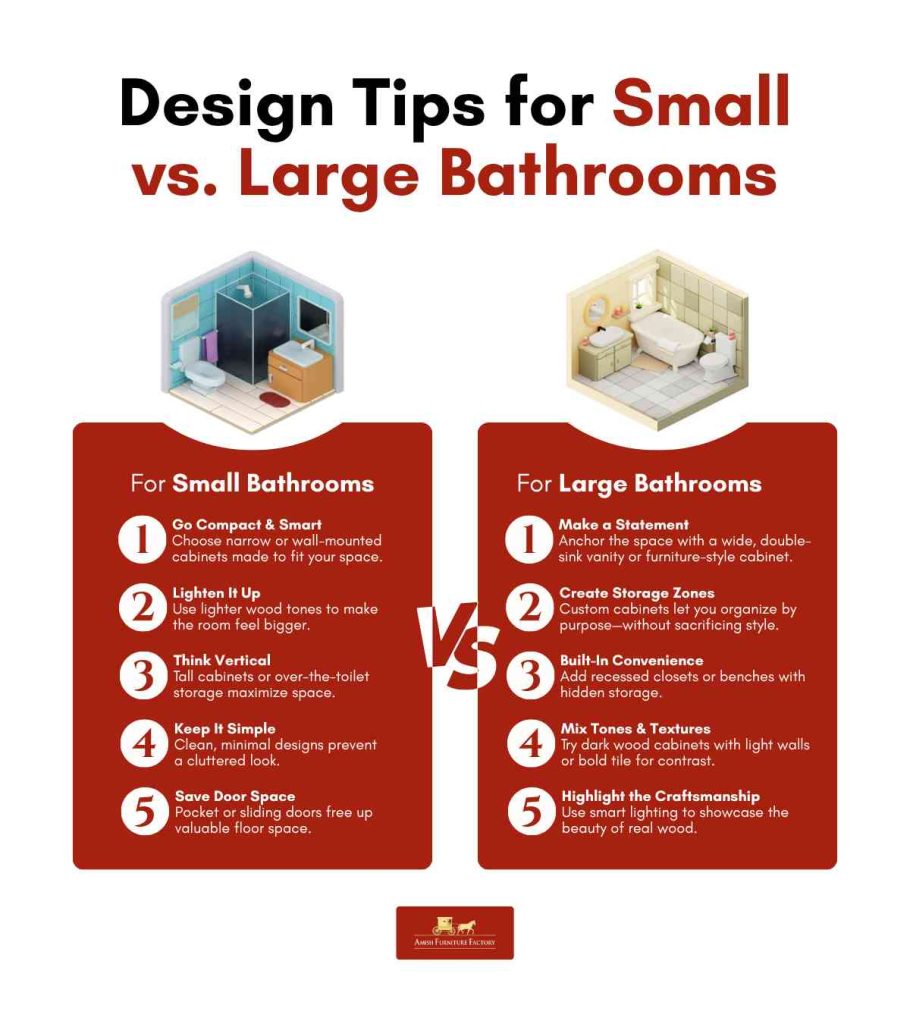
Here are practical design tips for optimizing both small and large bathroom spaces.
Wood Type and Finish
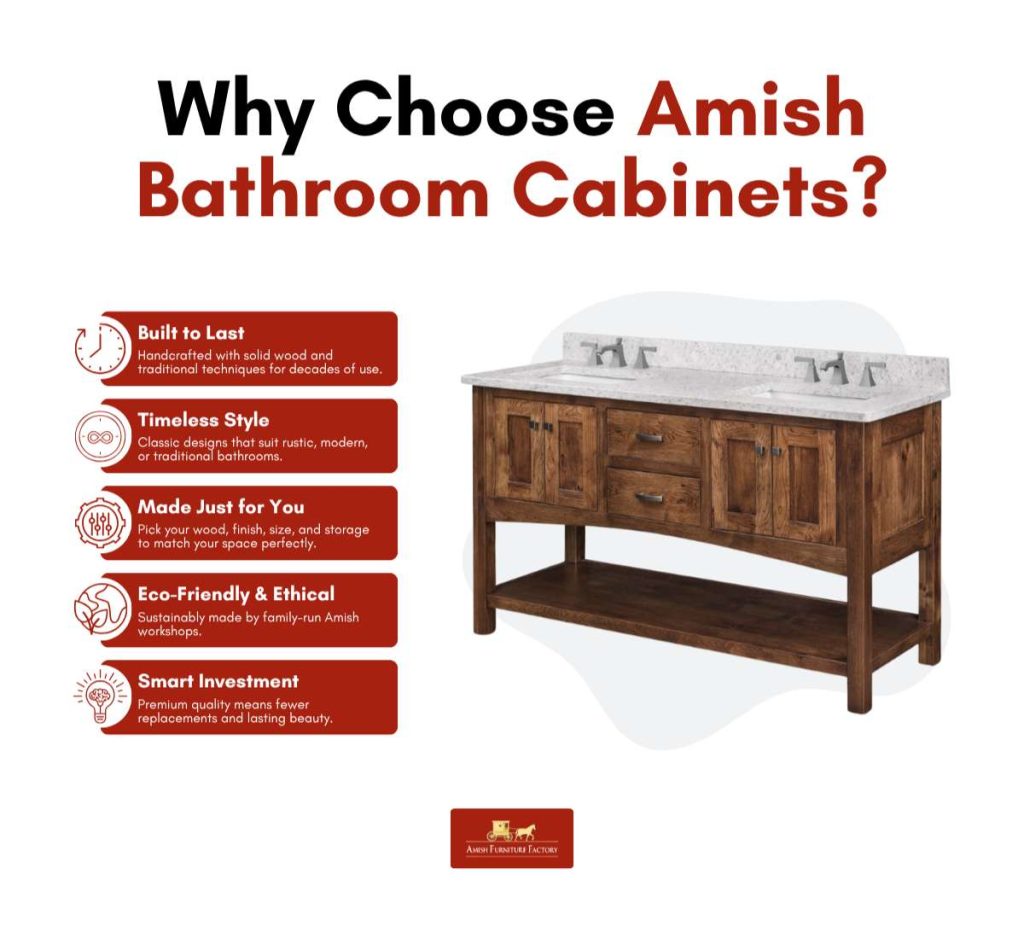
Amish bathroom cabinets are made from solid hardwoods like oak, maple, cherry, or hickory—each with its own look, strength, and character. Your choice of wood and finish not only affects the style but also how well the cabinet holds up to bathroom moisture.
Storage Needs and Functionality
Think about what you need to store—whether it’s everyday toiletries or extra towels—and plan your cabinet layout accordingly. Features like deep cabinet drawers, adjustable shelves, and organizers can make a big difference in keeping things neat and easy to reach.
Budget
Amish-made cabinets might cost more upfront, but you’re paying for real quality that lasts for decades. It’s a smart long-term investment that adds value to your home and saves you from replacing cheap cabinets down the line.
What Are the Best Amish-Made Bathroom Cabinet Styles?
The best Amish made bathroom cabinets are renowned for their robust solid wood construction, enduring durability, and the advantage of customizable features. Often created using traditional woodworking techniques, these cabinets offer a diverse array of styles, spanning from the timeless elegance of Mission and Shaker designs to interpretations that embrace more contemporary aesthetics.
Shaker Style
The Shaker style is characterized by its clean lines, simplicity, and emphasis on functionality. These cabinets typically feature flat recessed panel doors, minimal ornamentation, and sturdy, unadorned hardware. The Shaker style’s inherent lack of fussiness makes it a versatile choice for small or large bathrooms.
Traditional Style
These cabinets often evoke a sense of classic elegance and warmth. These designs frequently incorporate raised panel doors, more detailed moldings, and richer wood finishes. While potentially more ornate than Shaker styles, traditional Amish cabinets still retain the hallmark of solid wood construction and meticulous craftsmanship.
Farmhouse/Rustic Style
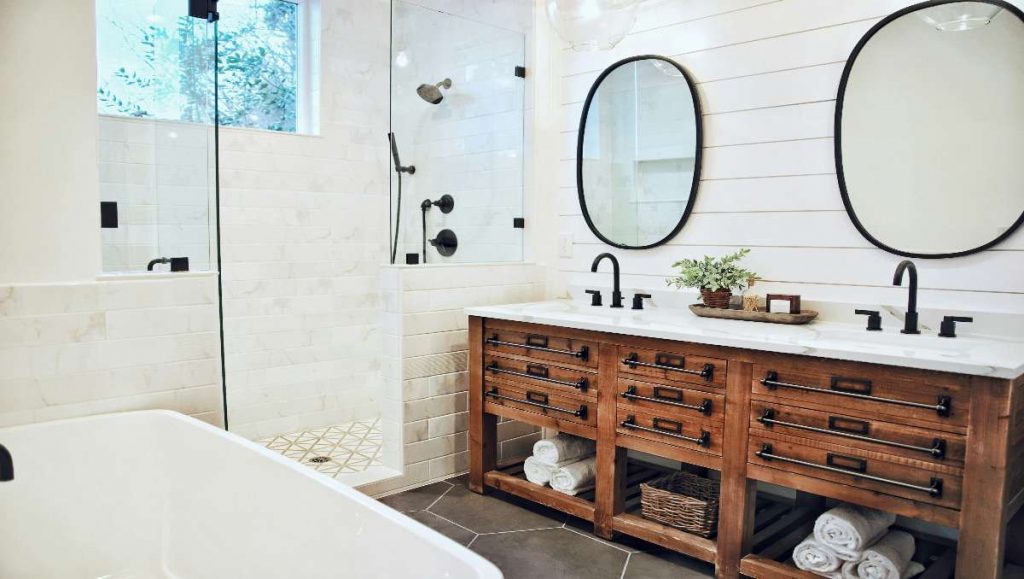
Farmhouse or rustic cabinets embrace natural textures, warm wood tones, and often feature distressed finishes or reclaimed wood elements, exuding a sense of cozy, unpretentious charm. Details like beadboard panels, open shelving, and simple, often dark metal hardware further enhance the rustic aesthetic.
Looking to bring the timeless charm and exceptional craftsmanship of Amish rustic cabinets into your bathroom? Explore our selection today!
Contemporary/Modern Style
These designs often feature clean, flat panel doors, sleek hardware, and a minimalist aesthetic. The aesthetic beauty of utilizing solid wood in contemporary designs lies in the inherent warmth and quality that natural materials bring to even the most streamlined spaces.
Unique and Custom Designs
Homeowners have the opportunity to commission one-of-a-kind pieces tailored to their exact specifications, whether it’s adapting existing styles to fit unusual bathroom layouts or creating entirely new designs. This level of customization allows for specific storage solutions, unique design elements, and personalized touches.
Caring for Your Amish-Made Bathroom Cabinets
Maintaining the beauty and longevity of your Amish-made bathroom cabinets requires consistent yet straightforward care. Regular cleaning is essential to remove dust, spills, and everyday grime. A soft, damp cloth is typically sufficient for most surfaces. Ensuring adequate ventilation in your bathroom by using exhaust fans during and after showers or baths will also help minimize humidity and protect the integrity of the wood over time.
For ongoing maintenance, consider using a high-quality furniture polish specifically designed for wood finishes, following the manufacturer’s instructions. This can help to nourish the wood and maintain its luster. Avoid placing excessively hot items directly on the cabinet surfaces, and be mindful of potential scratches from sharp objects. By implementing these simple care practices, you can preserve the exquisite craftsmanship and natural beauty of your Amish bathroom cabinets for generations to come.
Elevate Your Bathroom with The Right Amish-Made Bathroom Cabinets
Choosing Amish-made bathroom cabinets is more than a design decision—it’s a commitment to quality, authenticity, and timeless beauty. Amish artisans build with intention: selecting responsibly sourced hardwoods, using traditional joinery methods, and finishing each piece with care. This results in bathroom cabinets that not only serve a functional purpose but elevate the entire space with their presence.
FAQs
Who makes the highest-quality bathroom vanities?
Amish craftsmen are widely regarded for producing some of the highest-quality bathroom vanities available. Their use of solid hardwoods, traditional joinery, and non-toxic finishes creates vanities that outperform factory-made options in durability and longevity.
Which material is best for a bathroom cabinet?
When it comes to Amish bathroom cabinets, solid hardwood and hardwood plywood are the gold standard. Amish craftsmen typically use close-grained, high-quality woods like oak, cherry, maple, hickory, walnut, and poplar—each carefully selected for its strength, beauty, and resistance to daily wear.
How do Amish bathroom cabinets compare in price to mass-produced options?
Amish-made cabinets generally carry a higher upfront cost than mass-produced alternatives. However, they offer greater long-term value thanks to their superior craftsmanship, solid wood construction, and customization potential.
What are the best ways to care for solid wood vanities in a humid environment?
To protect your cabinets in a humid bathroom setting, ensure proper ventilation with an exhaust fan to reduce moisture buildup. Apply a protective wood conditioner 1–2 times per year to maintain finish integrity.