
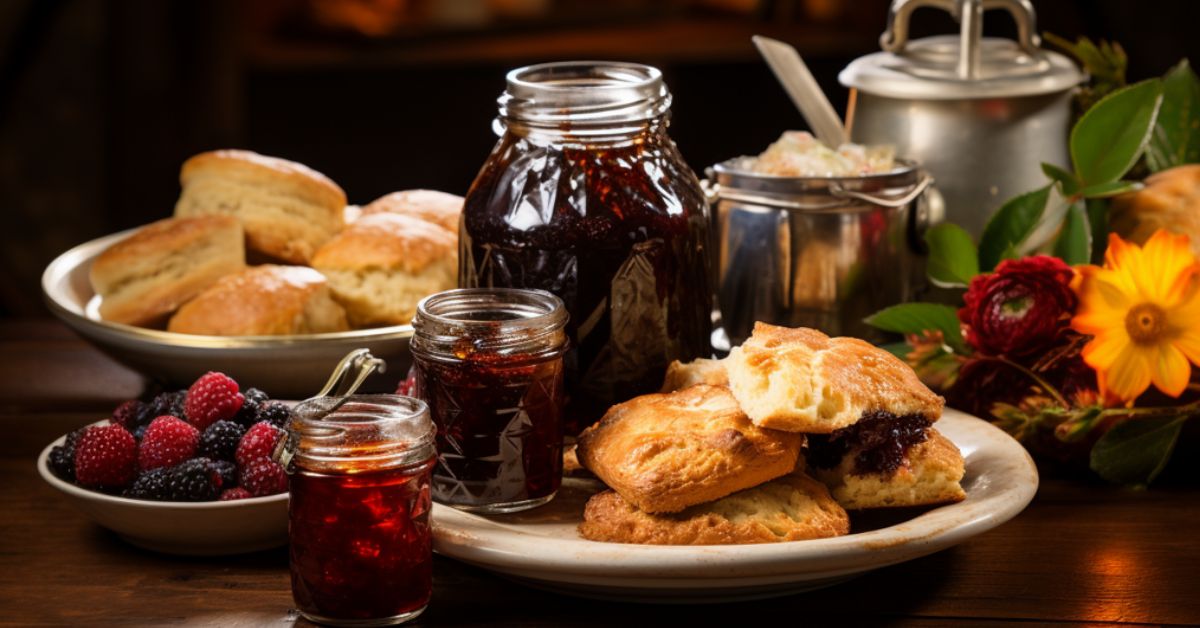
Amish kitchens offer a window into a way of life deeply rooted in tradition, community, and careful craftsmanship. Meals are prepared with patience and intention, using time-honored recipes and locally sourced ingredients that have been passed down through generations. For the Amish, cooking is more than sustenance; it is a reflection of their values, a means of bringing families together, and a way of preserving cultural heritage.
Key Takeaways:
- Amish food is simple, hearty, and made from fresh ingredients like home-grown vegetables, farm-raised meats, and dairy.
- Most meals are prepared from scratch using traditional recipes.
- The Amish diet is natural and nutrient-rich, combined with active work and sustainable farming, promoting good health, low waste, and strong community ties.
In this article, we explore Amish food and cooking, examining the methods, flavors, and traditions that define their distinctive culinary practices.
Understanding The Traditional Amish Diet
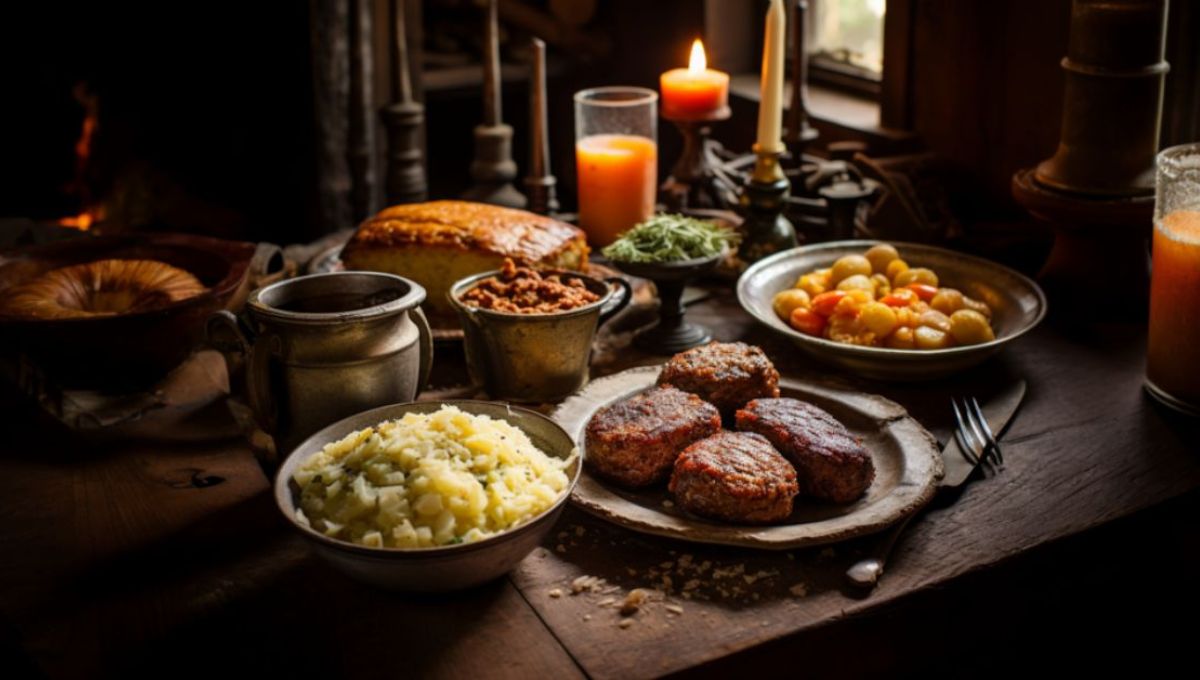
The traditional Amish diet is built on simplicity, balance, and practicality. Most Amish families grow, raise, or make much of what they eat. Their meals are hearty and filling, often centered around fresh vegetables, home-baked bread, dairy from their own cows, and meats preserved through smoking or canning.
While the diet may appear indulgent by modern standards — rich in butter, cream, and starches — it’s offset by the physically demanding lifestyle the Amish lead. Farming, carpentry, and daily chores mean calories are burned the old-fashioned way. At its core, the Amish diet is about nourishment, gratitude, and the satisfaction of creating food with one’s own hands.
The Key Factors in Amish Cooking
Behind every loaf of bread and bubbling stew in an Amish kitchen lies a philosophy that shapes how and why food is made.
Self-Sufficiency and the Agrarian Way of Life
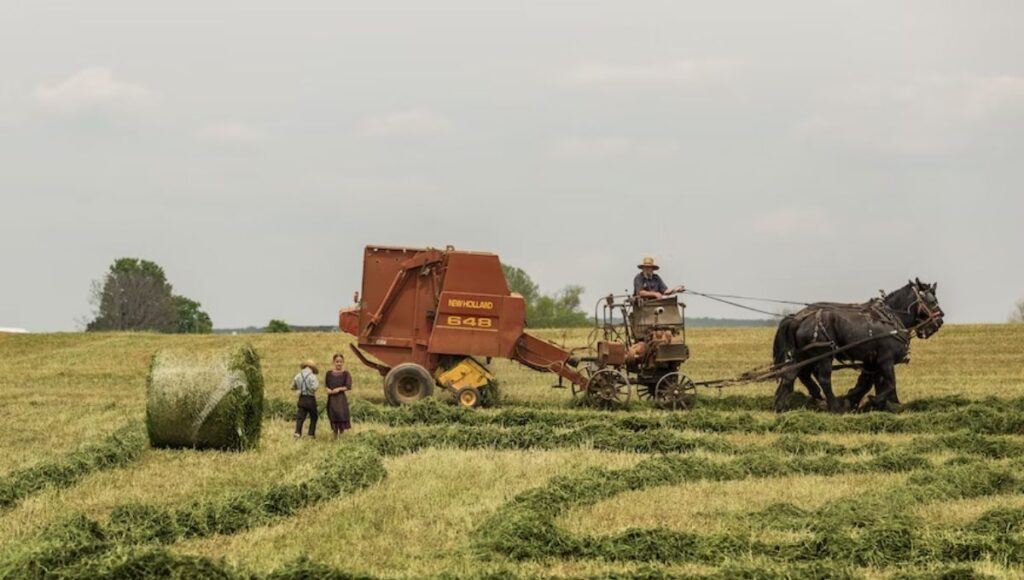
The Amish kitchen begins in the fields and gardens that surround it. Most ingredients are homegrown or locally sourced, from the vegetables they plant to the livestock they raise. This deep connection to the land teaches patience and stewardship — food isn’t something bought, but something earned through honest work.
Community, Fellowship, and Hands-On Tradition
Cooking in Amish culture is rarely a solitary act. Meals often bring together entire families or even whole communities, whether for church gatherings, weddings, or barn raisings. Food becomes a language of care and togetherness, where everyone contributes. Skills are passed down naturally, with children learning side-by-side from parents and grandparents.
Simplicity, Gelassenheit, and Honest Ingredients
At the heart of Amish cooking lies Gelassenheit — a spirit of humility and submission to God’s will. This translates into a simple, unpretentious approach to food. Recipes rely on fresh, wholesome ingredients rather than processed shortcuts, and presentation is plain but sincere.
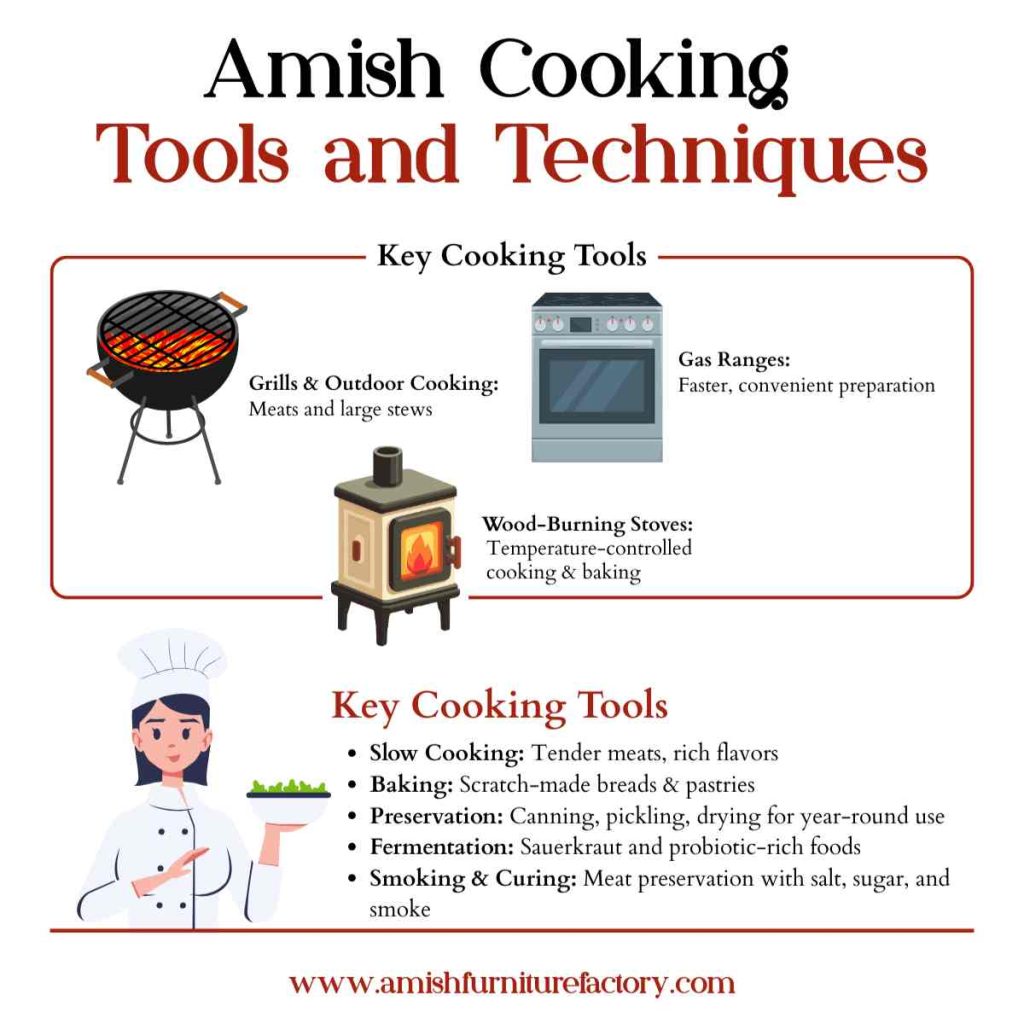
How Do Amish Cook? An Inside Look at the Tools
Without electricity, the Amish rely on traditional methods that keep their meals flavorful and their kitchens full of life. Let’s take a closer look at how they do it.
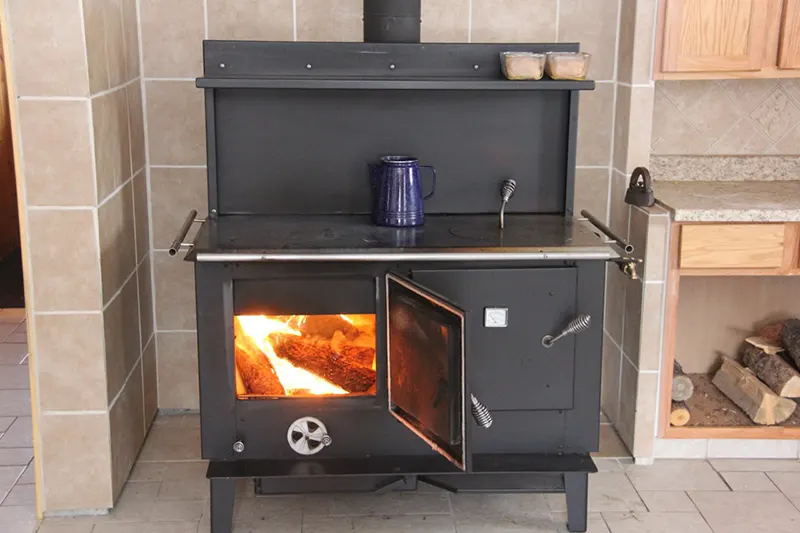
Wood-Burning Stoves
The centerpiece of many Amish kitchens is the wood-burning stove. It’s used not only for cooking but also for heating the home during colder months. Mastering this stove takes skill, controlling temperature depends on how much wood is added and how the fire is tended.
Gas Ranges
Some Amish communities, especially those more open to limited technology, use propane or natural gas ranges. These stoves offer a bit more convenience while still avoiding direct reliance on electricity. They allow for quicker meal prep, especially when cooking for large families or gatherings.
Grills and Outdoor Cooking
Outdoor cooking is another key part of Amish life, especially during warm months or community events. Simple charcoal or wood-fired grills are used to roast meats, bake bread in Dutch ovens, or cook stews in large iron kettles. These gatherings often become social occasions where neighbors lend a hand and share the meal afterward.
Browse here our collection of beautiful Amish kitchen furniture and bring the craftsmanship of the community’s kitchens into your own home!
Amish Cooking Techniques and Methods
In Amish cooking, traditional methods such as slow cooking, baking, canning, and other preservation techniques like fermentation, smoking, and curing are used to create flavorful and long-lasting dishes.
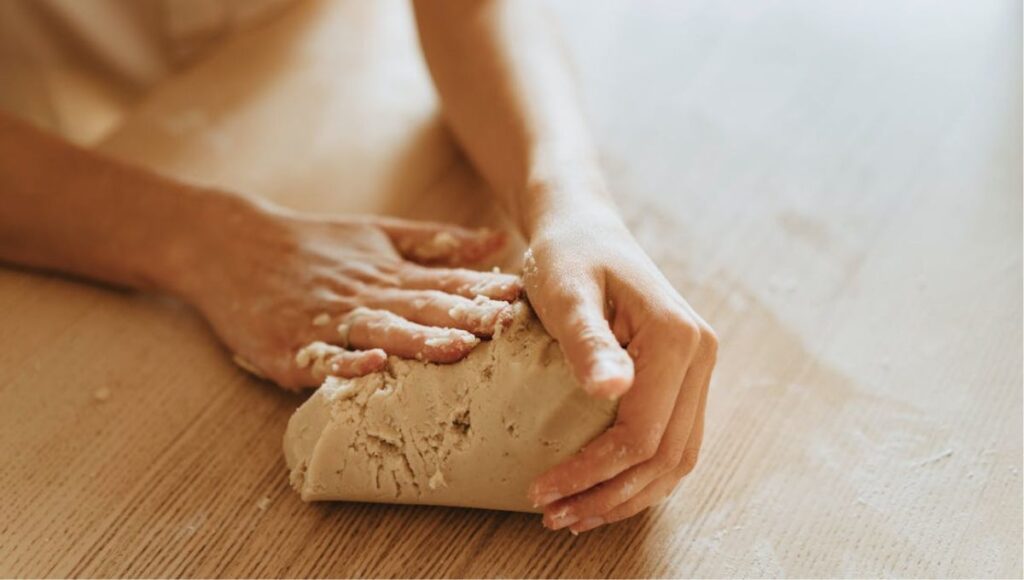
Slow Cooking
One interesting statistic about slow cooking in Amish food is that it can take up to 8 hours for the flavors to fully develop. The result? A rich and savory dish. Slow cooking involves the use of a slow cooker, also known as a crockpot. It allows food to cook slowly over a long period of time at low temperatures. This method has several benefits, such as tenderizing tough cuts of meat and enhancing the flavors of ingredients.
Baking
Baking is an integral part of Amish food culture, and their techniques have been passed down through generations. Amish breads, such as the famous Amish Friendship Bread, are known for their soft texture and rich flavor. Pastry recipes are also highly valued in Amish baking. The use of quality ingredients like butter and fresh fruits ensures a delectable experience.
Preservation (Canning, Pickling, Drying)
In Amish culture, canning and drying is a way of life that ensures the abundance of harvest lasts throughout the year. Canning techniques involve carefully packing fruits and vegetables into glass jars and sealing them with lids to create an airtight environment. Pickling methods are also popular, where vegetables like cucumbers are preserved in vinegar brines infused with spices for a tangy flavor.
Fermentation
The fermentation process involves converting sugars into alcohol or acids with the help of microorganisms like yeast or bacteria. This creates an environment where good bacteria can flourish, promoting gut health and aiding digestion. Fermented foods are not only delicious but also offer numerous health benefits.
Smoking and Curing
When it comes to smoking techniques, the Amish rely on time-honored methods such as cold smoking, hot smoking, and smoke roasting. Cold smoking involves exposing the meat to low temperatures for an extended period of time, resulting in a rich smoky flavor without thoroughly cooking the meat. Hot smoking, on the other hand, uses higher temperatures to fully cook and smoke the meat simultaneously. Curing methods like dry curing and brining preserve meats by adding salt or sugar to draw out moisture from the meat.
Traditional Amish Food and Recipes
Amish cuisine is best described as hearty, comforting, and rooted in simplicity. It draws heavily from Pennsylvania Dutch traditions, favoring homemade ingredients, slow cooking methods, and recipes passed down through generations.
Amish cooking focuses on:
- Simple, farm-fresh ingredients—eggs, milk, homemade butter, garden vegetables, hand-raised meat
- Slow-cooked comfort dishes that are filling and practical
- Traditional baking with molasses, brown sugar, and pantry staples
- Community-oriented meals meant to feed large families or gatherings
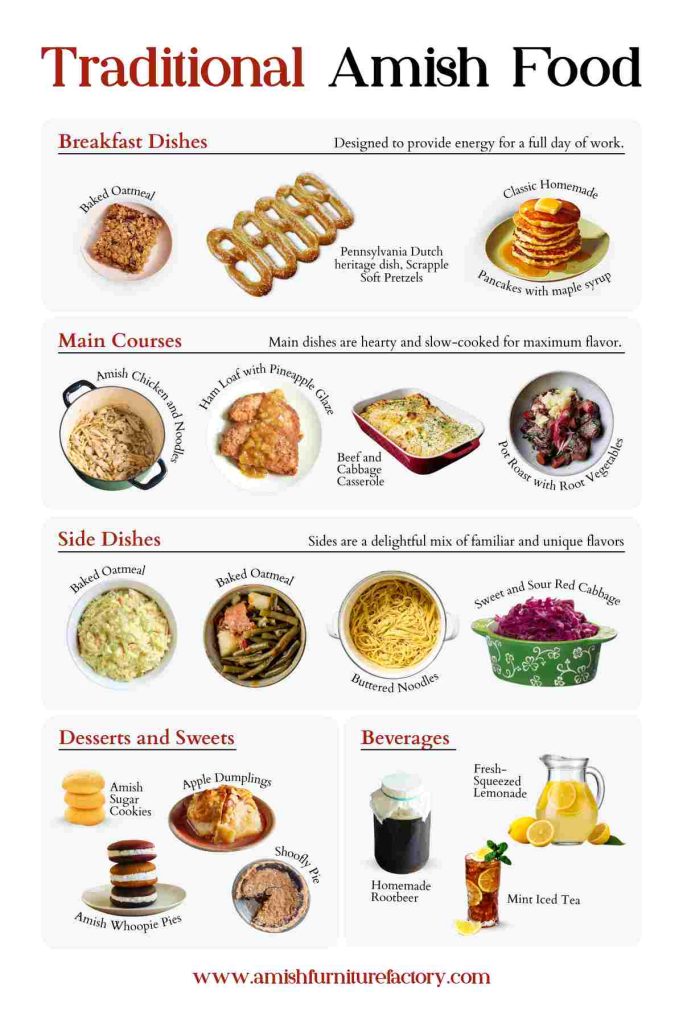
Breakfast Favorites
Amish breakfasts are meant to fuel long workdays and often include:
- Baked oatmeal – warm, lightly sweet, and customizable
- Buttermilk pancakes – simple batter cooked on a hot griddle, often topped with local maple syrup
- Scrapple – a classic Pennsylvania Dutch dish made from pork scraps and cornmeal, pan-fried until crisp
- Soft pretzels – chewy, lightly salted, and often enjoyed fresh from the oven
Hearty Main Courses
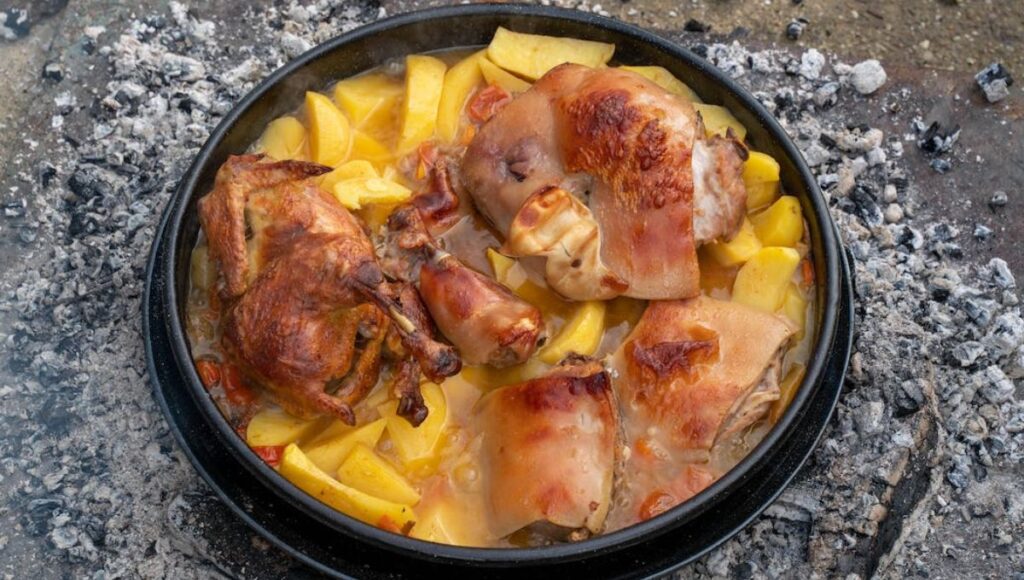
These dishes highlight slow cooking and homestyle flavors:
- Chicken and noodles – tender chicken and thick noodles simmered in broth
- Ham loaf – a sweet-and-savory Amish classic, often baked with a pineapple glaze
- Pot roast with root vegetables – slow-cooked beef with carrots, potatoes, and onions
- Beef and cabbage casseroles – simple ingredients baked together into a filling, one-pan meal
Staple Side Dishes
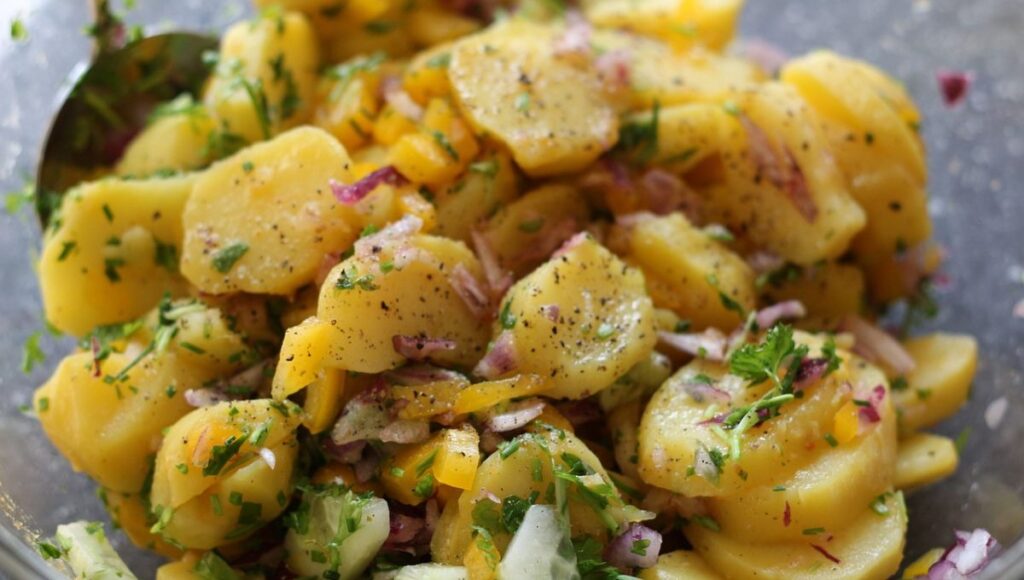
Common sides served with Amish meals include:
- Potato salad – creamy, tangy, and often made for church gatherings
- Buttered egg noodles – soft, comforting, and lightly seasoned
- Sweet-and-sour red cabbage – a balance of vinegar, sugar, and spices
- Green beans with ham – slow-cooked for rich, smoky flavor
Desserts and Sweets
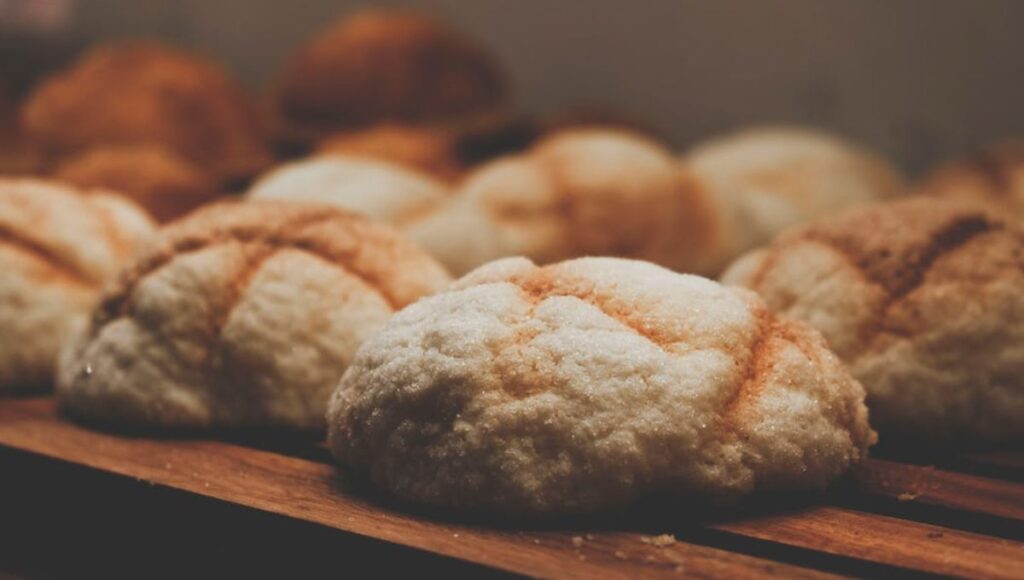
Baking is a centerpiece of Amish culinary tradition:
- Shoofly pie – sticky, molasses-based pie with a crumb topping
- Whoopie pies – soft chocolate cakes filled with sweet cream
- Apple dumplings – whole apples wrapped in pastry and baked in syrup
- Amish sugar cookies – light, soft, and made from basic pantry staples
Homemade Beverages

Amish meals often include refreshing, handcrafted drinks such as:
- Homemade root beer – brewed with natural roots and herbs
- Fresh-squeezed lemonade – a summertime classic
- Mint iced tea – black tea infused with fresh garden mint
- Cider punch – apple cider mixed with juices and spices, served at gatherings
If you’re a fan of peanut butter, you might be interested in learning how to do the Amish peanut butter spread.
Amish cooking reflects a deep connection to land, tradition, and community. Meals are designed to be nourishing, often cooked in large batches, and shared around family tables. The emphasis is always on homemade, uncomplicated, and wholesome food, making Amish cuisine both comforting and timeless.
The Connection Between Amish Food and Health
Amish food is hearty and flavorful, yet it reflects a way of eating that modern nutritionists admire: fresh, unprocessed, and home-prepared. Ingredients are often by the families themselves, free from chemicals or additives, resulting in naturally nutrient-dense meals that fuel long days of physical labor.
While their diet can be high in calories and carbohydrates, the physically active lifestyle of farming, carpentry, and household work helps maintain strong health. Meals are eaten at regular times and shared with family, supporting both physical and emotional well-being. Beyond nutrition, Amish cooking reflects mindfulness — knowing where food comes from, growing it carefully, and taking the time to enjoy it together.
Amish Food and Sustainability
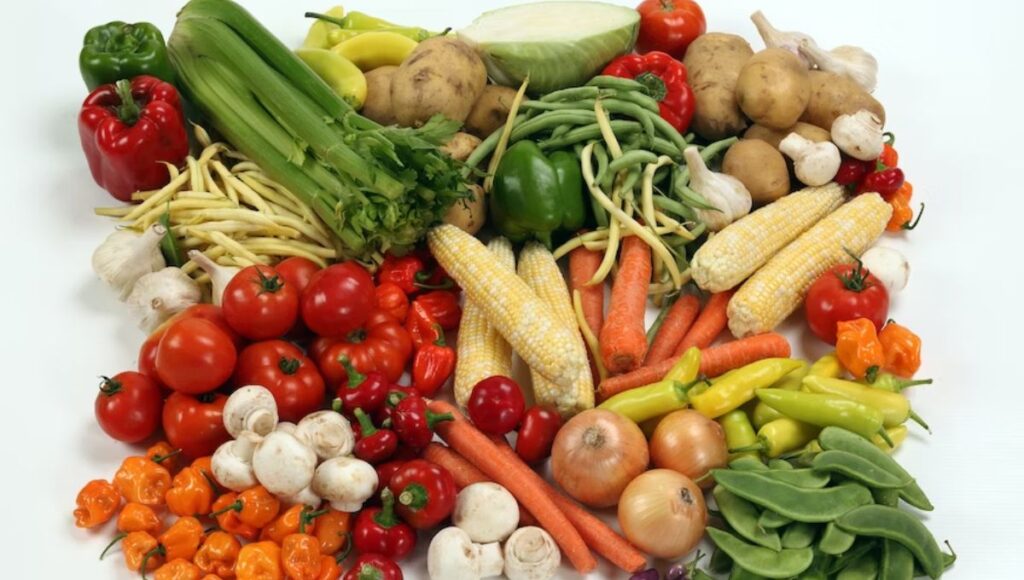
The Amish demonstrate a strong commitment to sustainability through their farming and food practices. They use traditional methods such as crop rotation and careful field planning, avoiding chemical fertilizers and pesticides in favor of natural compost and manure to maintain soil health and productivity. By rejecting synthetic chemicals and GMOs, they preserve both the land and their agricultural traditions for future generations. Amish communities also prioritize reducing food waste through composting and food donation programs, turning scraps into nutrient-rich soil and ensuring surplus food supports those in need rather than going to waste.
Conclusion: Amish Food at Its Best
So there you have it, a comprehensive look into the world of Amish food. From their traditional diet to their cooking techniques and recipes, the Amish truly have a unique culinary heritage.
One interesting statistic to note is that despite their rich and hearty cuisine, the Amish have lower rates of obesity and chronic diseases compared to the general population. This can be due to their reliance on simple, wholesome ingredients and their active lifestyle.
By embracing sustainable farming practices and preserving old-world traditions, the Amish continue to nourish both body and soul through their delicious food.
Frequently Asked Questions (FAQs)
Do Amish people use refrigerators or freezers?
Most Amish families don’t use electric refrigerators or freezers since they avoid connecting to the public power grid. Instead, many rely on propane or natural gas-powered refrigerators, ice houses, or root cellars to keep food cool. These alternatives allow them to safely store perishables while staying true to their commitment to simple living and energy independence.
What is the main difference between Amish food and Pennsylvania Dutch cooking?
The two are closely related, but not identical. Pennsylvania Dutch cuisine is a broader cultural mix that includes both Amish and non-Amish (or “English”) influences, often adapted for modern kitchens and restaurant fare. Amish food, on the other hand, stays truer to its roots — made from scratch, using homegrown ingredients, and prepared without electricity or processed shortcuts.
Are Amish recipes high in sugar and fat?
Many Amish recipes do use generous amounts of butter, cream, and sugar — think pies, custards, and hearty baked goods. However, because the Amish lead physically active lives filled with farm work and manual labor, their bodies burn through calories differently than most modern lifestyles.
Do all Amish communities cook exactly the same way?
Not exactly. While Amish cooking shares core values of simplicity and tradition, it varies slightly from one community to another depending on region, available ingredients, and local customs. For example, Amish in Pennsylvania might favor apple butter and chow-chow, while those in Indiana might lean toward fried chicken and noodles.
Do Amish women do all the cooking?
Amish women traditionally take the lead in the kitchen, but men often help with tasks like butchering, smoking meats, and outdoor cooking, especially during large gatherings or harvest seasons.