
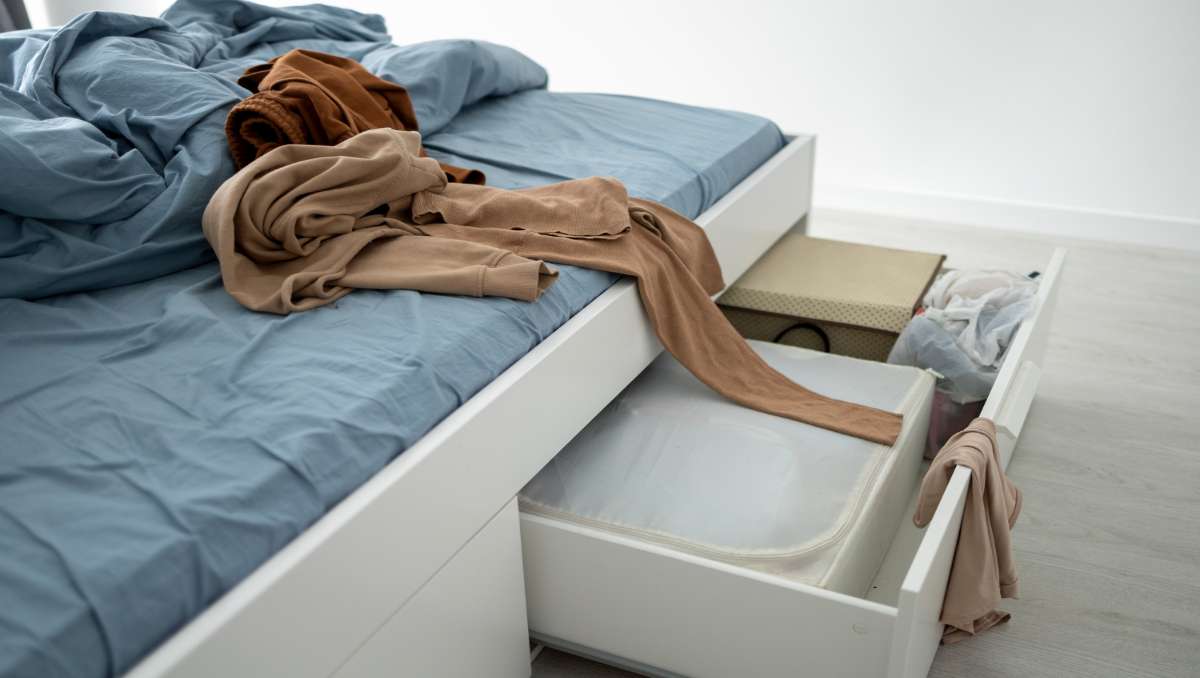
A bed is the centerpiece of any bedroom, but it can also be a major source of clutter. While Amish beds are renowned for their quality craftsmanship and timeless beauty, they sometimes lack built-in storage. This can be a challenge, especially for those in smaller homes or apartments. However, with a simple storage rail addition, you can transform your Amish bed from a beautiful piece of furniture into a functional space solution.
Key Takeaways:
- A storage rail is a practical, discreet way to add under-bed storage without cluttering your bedroom.
- Amish craftsmanship allows for full customization: wood species, stain, drawer count, and hardware.
- Proper measurements and attachment methods are key for a seamless, secure fit.
This article will guide you through the process of adding a storage rail system to your Amish bed, providing a practical and elegant way to keep your bedroom organized and clutter-free.
What Is a “Storage Rail” on an Amish Bed?
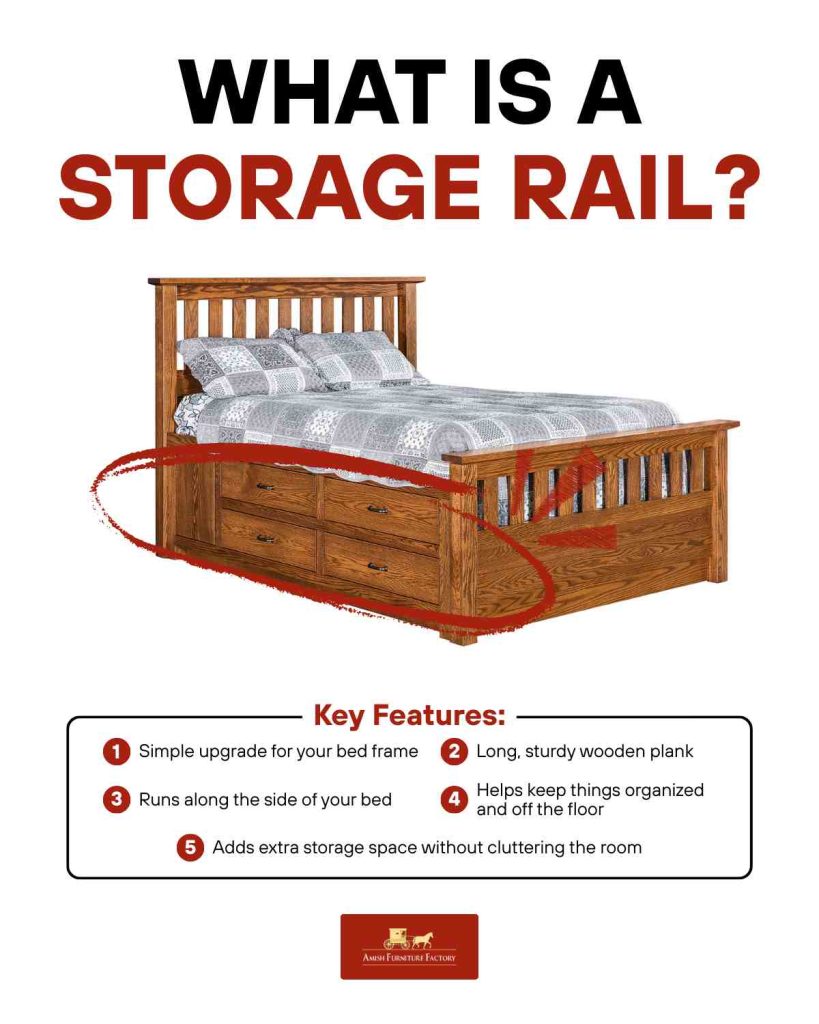
A storage rail on an Amish bed is essentially a built-in storage solution that runs along the sides of the bed frame. Often called side rail drawers or under-bed storage, it turns the empty space beneath your mattress into a discreet spot for tucking away blankets, extra bedding, or even off-season clothing.
Instead of bulky dressers or storage bins that eat up valuable floor space, adding a storage rail to the Amish bed keeps everything neatly contained and out of sight. Because Amish furniture is almost always made to order, you can often customize your storage rail to suit your exact needs.
Why Add a Storage Rail to Your Amish Bed?
An Amish bed is renowned for its sturdy build and timeless design, but adding a storage rail can enhance its functionality. The space under your bed is often overlooked, yet it’s a perfect place for extra storage. A storage rail allows you to keep things like blankets, shoes, and seasonal items neatly tucked away, without cluttering the look of your bedroom. Because Amish furniture is handcrafted with attention to detail, the rail blends seamlessly with the design. This preserves the classic, warm aesthetic while offering practical storage.
Whether a storage rail fits your bed depends on factors like the bed’s construction, clearance underneath, and how the side rails are attached. Many Amish beds use a hook-and-pin or bolt system. This makes it possible to swap the side rails for ones with built-in drawers. However, some beds may have structural features that limit storage space. Measuring the height from the floor to the bottom of the side rails is key, as you’ll need enough clearance for drawers to slide smoothly. If you’re ordering from the same craftsman, they can often create custom storage rails that fit perfectly. For existing beds, retrofitting a storage rail may require custom adjustments to ensure a secure fit.
Types of Storage Rails for Amish Beds
Wood Types Commonly Used
Amish craftsmen typically build storage rails using hardwoods like oak, cherry, or maple. These woods are not only beautiful but incredibly durable, making them ideal for furniture meant to last for generations. Choosing a rail that matches your bed’s wood type ensures a cohesive look and long-lasting quality.
Fixed vs. Removable Rails
There are two main styles of storage rails:
- Fixed rails are permanently attached to the bedframe. They’re solid, sturdy, and great if you want a dependable, unchanging setup.
- Removable rails can be taken off and reattached, offering more flexibility. This is a good option if you like to rearrange furniture or want easier access to under-bed space occasionally.
Custom vs. Standard Sizes
Standard storage rails are designed to fit most Amish beds and come in common dimensions. However, if your bed has a unique size or you want something extra—like carved details, built-in compartments, or personalized finishes—custom rails are a great solution. Amish woodworkers can tailor every detail to match your exact needs and design preferences.
Drawer Configurations for Maximum Storage
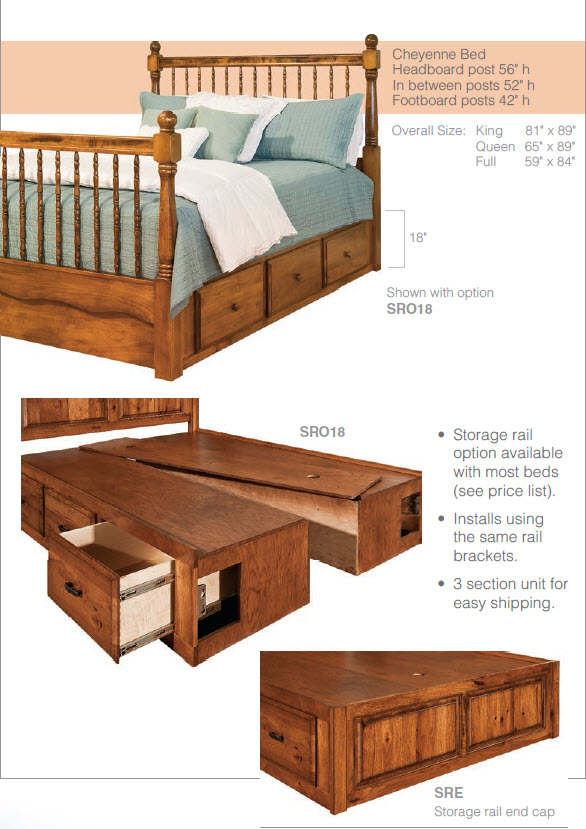
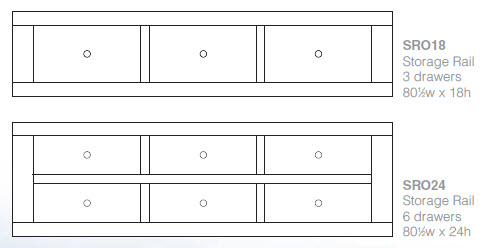
If you’re looking for more than just open space, you can opt for storage rails with built-in drawers. These are available in multiple configurations:
- Three- or six-drawer setups on each side of the bed
- Total configurations of six or twelve drawers, depending on your needs
The twelve-drawer version, known as SRO24, stands 24 inches high from the floor and offers the most drawer space. It’s a smart choice if you want to reduce reliance on a separate dresser and keep everything stored neatly beneath your bed.
How to Install a Storage Rail on Your Amish Bed
If you’re comfortable with basic woodworking, adding a storage rail to your Amish bed can be a satisfying project. Here’s a breakdown of the key steps.
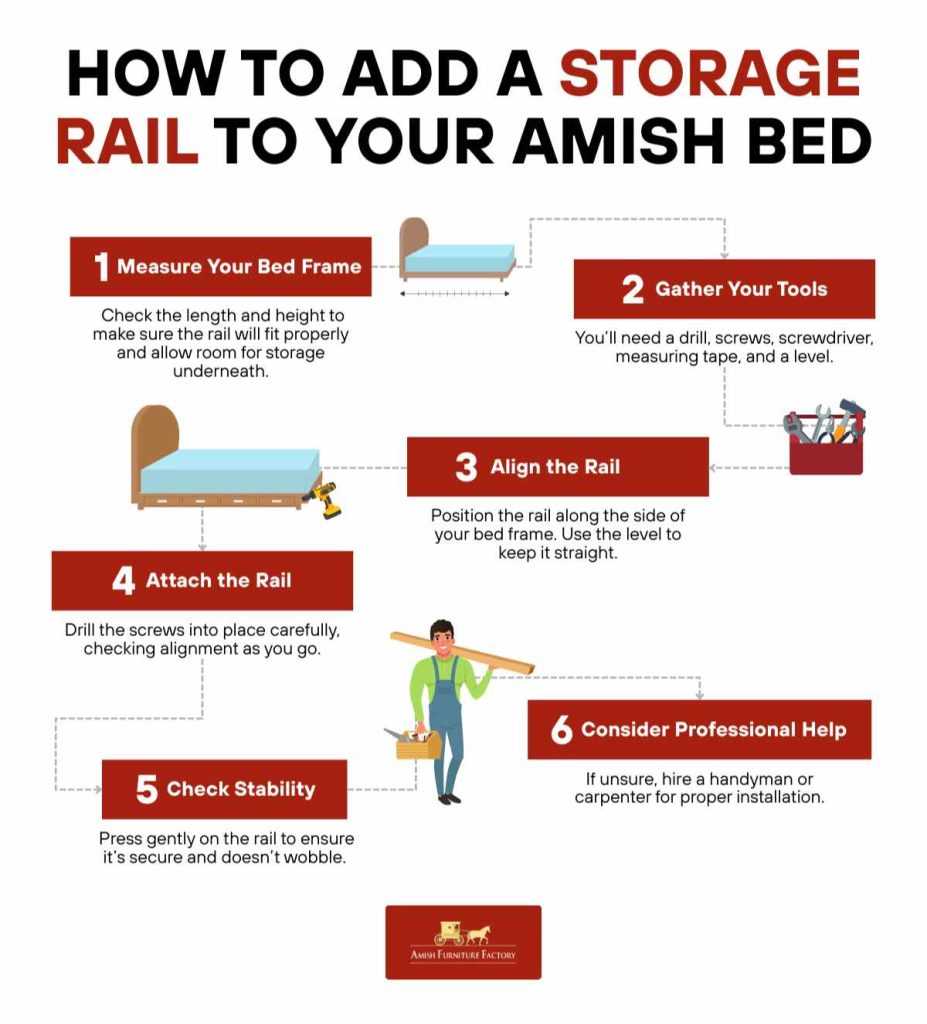
- Measure Your Bed Frame
Start by measuring the length and height or size of your bed frame. Accurate measurements ensure the storage rail fits snugly without blocking access for storage bins underneath. - Gather Your Tools
You’ll need a drill with appropriate bits, screws (these often come with the rail), a screwdriver, a measuring tape, and a level to keep the rail aligned during installation. - Position the Rail
Align the storage rail along the side of your bed frame. Make sure it’s straight and evenly placed, using the level to confirm accuracy before securing it. - Attach the Rail
Carefully drill the screws through the pre-marked spots or brackets to fasten the rail to the bed frame. Go slowly and double-check alignment as you go to avoid any mistakes. - Check Stability
Once installed, gently press or lean on the rail to test its sturdiness. It should feel secure and not move or wobble. - Consider Professional Help (Optional)
If you’re unsure or want a perfect fit without the effort, consider hiring a handyman or carpenter. A professional can ensure the rail is installed flawlessly.
Common Issues and How to Fix Them
Common issues with adding a storage rail to an Amish bed include alignment, clearance, and hardware compatibility. If the rail isn’t level or flush with the bed, the drawers may stick or look uneven, so precise measurements and a level during installation are key. Clearance can be a problem if the bed sits too low or has decorative aprons, making drawers hard to open. Additionally, custom brackets may be needed if your bed uses an older rail system. For rough or unstable drawer movement, check slide alignment and ensure screws are tight.
To care for your storage rail, dust it regularly to avoid scratches and wipe up spills immediately. Reapply finish every few years to keep the wood protected, and lubricate soft-close slides occasionally. Wood can expand or contract with humidity changes, so avoid placing the bed near heating vents. If drawers stick or feel loose, small adjustments to the slides can help maintain smooth operation year-round.
Discover the perfect solution for organized living with our Shaker Chair Rail Storage Bench, where elegant design meets an ample storage solution.
Conclusion: Smarter Storage Without Compromising Craft
Adding a storage rail to your Amish bed is one of those rare upgrades that blends practicality with tradition. You gain the convenience of a hidden storage system without sacrificing the beauty, integrity, or craftsmanship that drew you to Amish furniture in the first place. It’s proof that a smart storage system doesn’t have to mean compromising on style or heritage; it just takes the right design, materials, and care.
Frequently Asked Questions
Can I add a storage rail module to a traditional hook-and-pin Amish bed without modifying the frame?
Yes. Most hook-and-pin systems can accept replacement side rails with integrated drawers, as long as the new rails match the dimensions and connection points of the originals. A skilled Amish craftsman can build rails that fit perfectly without altering the bed’s frame.
How much weight can under-bed drawers safely hold?
It depends on the construction and hardware. Well-built Amish storage rails with solid wood drawers and quality slides can often support 50–75 pounds per drawer, but you should confirm with your builder for exact specs.
Will switching to storage rails reduce mattress ventilation or void my bed’s warranty?
Replacing side rails with storage rails may reduce airflow slightly, especially if the drawers run the full length of the bed. However, most Amish-made beds are designed to handle this without issue. As for warranties, it’s best to check with the original builder before making any changes.
What is the minimum clearance I need under my bed to add a storage rail?
You’ll generally need at least 10–12 inches of vertical space from the floor to the bottom of your side rails for functional drawers. Shallower designs are possible with reduced storage depth.
Can I add a storage rail to any type of wooden bed, or is this specific to Amish beds?
While the concept works for many wooden bed frames, Amish beds are especially well-suited because they often use traditional joinery that makes swapping rails easier. Non-Amish wooden beds may require more modification or custom carpentry.