


The best solid wood furniture made in the USA is built from real hardwood with traditional joinery like mortise-and-tenon or dovetail construction. They are typically sourced from Amish collectives, heritage manufacturers, regional studios, or contemporary makers, depending on your style and budget. Each of these approaches produces furniture built to be passed down rather than replaced. But the right choice depends on your needs, your budget, and your style.
Key Takeaways:
- Traditional joinery, solid hardwood construction, and hand-applied finishes are great indicators of heirloom-quality solid wood furniture.
- Shop Amish craft collectives for custom sizing, heritage brands, and regional studios for locally sourced lumber, or contemporary makers for a more modern look.
- Verify FTC “Made in USA” claims and choose a wood species suited to how you’ll actually use the piece before you buy.
Why Buy Solid Wood Furniture Made in the USA?
Furniture built here in the U.S. goes through different sourcing, labor, and oversight than most imported, mass-market furniture.
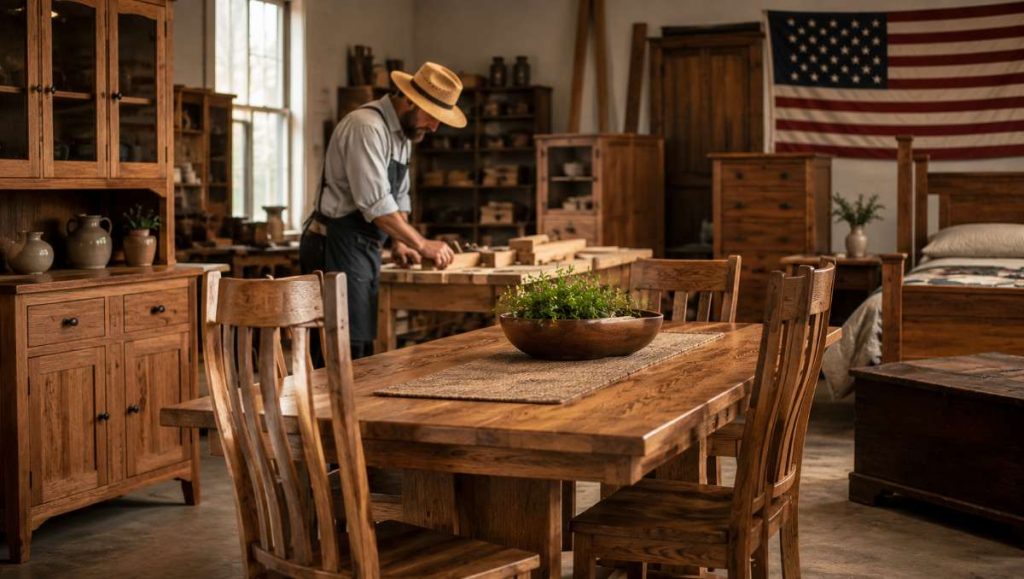
Higher Manufacturing Standards and Better Quality Control
Furniture made domestically is more likely to be tested against voluntary industry benchmarks, like the ones published by BIFMA, which cover structural strength, durability, and safety. Domestic shops also tend to run smaller batches. A weak joint or a warped panel gets caught before it ever reaches a showroom, something that’s a lot harder to guarantee across a supply chain stretched across several countries.
Sustainable and Responsibly Sourced Lumber
The USDA FIA program has tracked, for decades, that the volume of hardwood added to U.S. forests each year consistently outpaces the volume removed for lumber. This means that the domestic hardwood supply has actually grown even as it’s been harvested for furniture and construction. Many American furniture makers buy directly from regional sawmills, too, which shortens the chain of custody.
Below are popular American hardwoods commonly used in solid wood furniture:
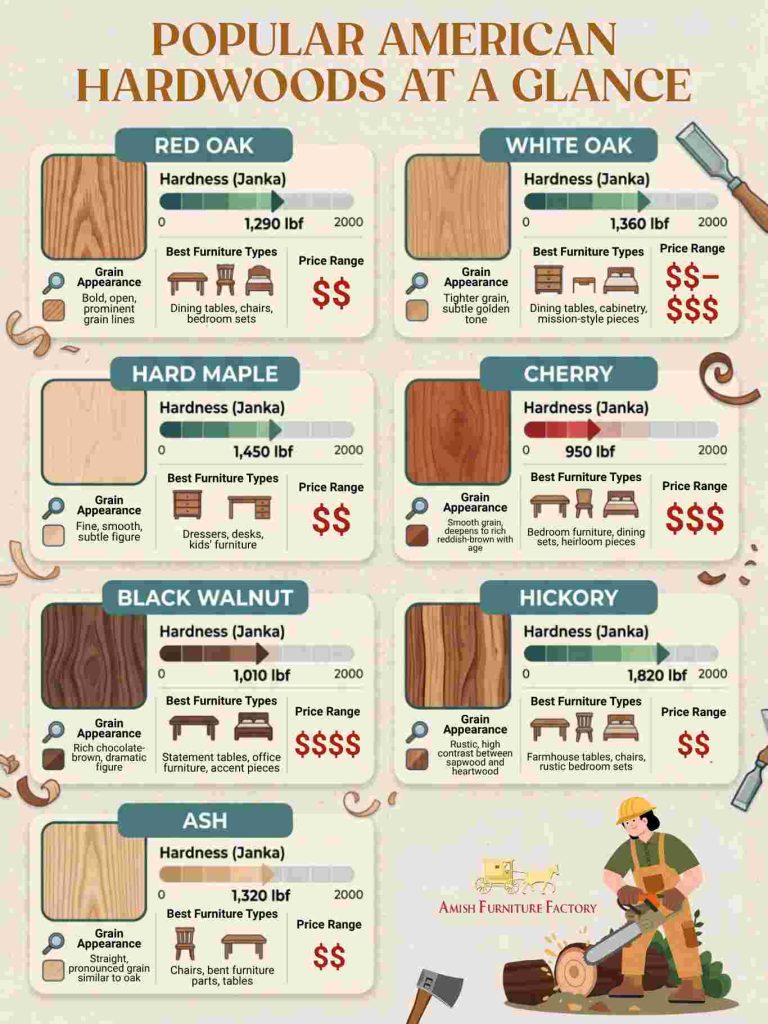
Curious how a species holds up to daily life? Our wood species guide breaks down hardness, color, and upkeep for each one we build with.
Supporting American Craftsmen and Local Economies
Buying domestic furniture keeps skilled trades working in the communities where they actually live. It also supports the small sawmills and lumberyards that supply them. A lot of these shops are family-owned and have trained apprentices for generations.
Easier Warranty and Customer Support
When your furniture maker is a phone call away, warranty claims and repairs are simply easier to arrange. Many American workshops offer multi-year or lifetime structural warranties, and they may also repair or refinish a piece years down the road.
Best Solid Wood Furniture Made in the USA Worth Investing In
Some furniture categories benefit more from solid wood than others, so it makes sense to put your budget where durability matters most. If you are looking for pieces that can become family heirlooms, focus on four qualities: solid wood construction, traditional joinery such as mortise-and-tenon and dovetail joints, hand-applied finishes, and timeless designs such as Shaker, Mission, or farmhouse styles. These features make furniture easier to repair, refinish, and live with for decades, rather than replace when trends change.
The key is to invest in the pieces you use most and expect to keep the longest. Dining tables, bedroom furniture, desks, and other hardworking pieces can benefit greatly from solid hardwood construction and traditional craftsmanship.
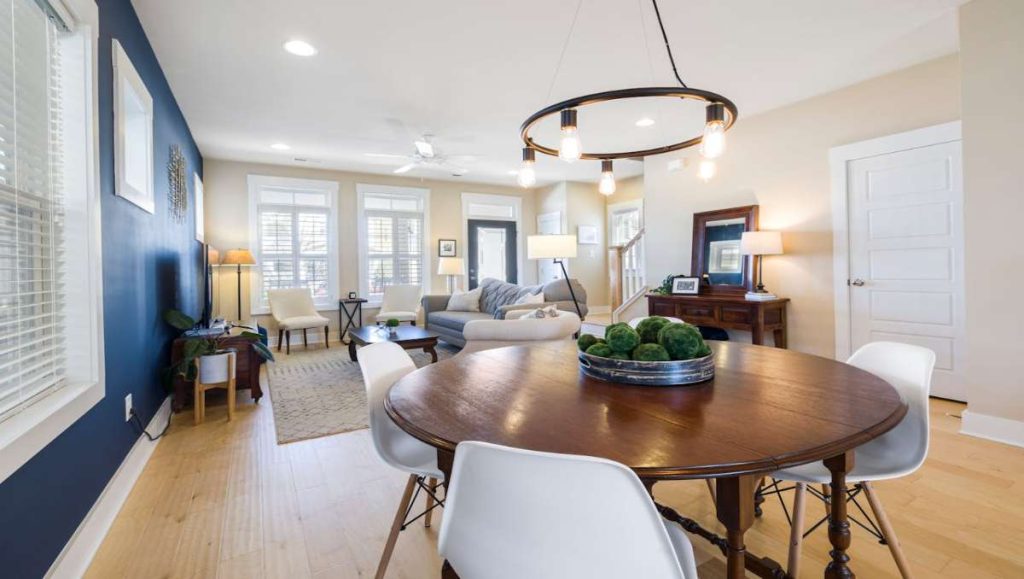
Dining Tables and Chairs
Your dining table probably absorbs more daily wear than anything else you own. A solid wood table and chair set built with real joinery can be sanded down and refinished after years of scratches and come out looking new. A veneered table just can’t do that.
Bedroom Furniture
Beds and bed frames carry real structural weight, night after night. Solid wood frames with mortise-and-tenon rail connections rarely develop the squeaks and wobbles that plague furniture built with cam-lock hardware and engineered panels.
Living Room Furniture
Bookcases and coffee tables carry weight over long spans, so solid wood construction matters here, too. Load up a particleboard shelf with books and it’ll sag eventually. Solid hardwood won’t.
Storage Furniture
Dressers and chests, sideboards, and buffets live and die by their drawer boxes, which get opened and closed thousands of times over the years. Dovetailed solid wood drawers on wood-on-wood or metal ball-bearing glides hold up to that repetition far better than stapled particleboard boxes on plastic runners ever will.
Office Furniture
Desks take daily abuse for years. The keyboards, monitors, stacks of paperwork, all adding steady weight and movement. Solid wood desks resist the sagging and edge-chipping that shows up fast on laminate and veneer office furniture.
Ready to transform your home with timeless quality? Explore our premium selection of USA handmade solid wood furniture today and invest in pieces built to last for generations.
Where to Buy Solid Wood Furniture Made in USA
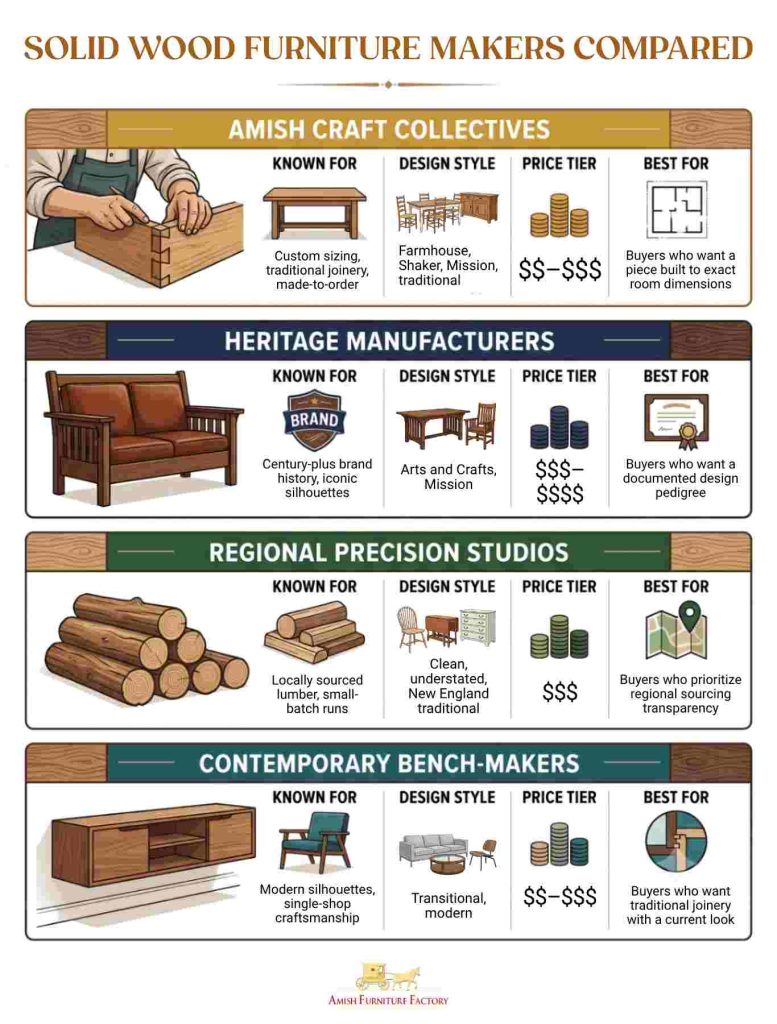
American solid wood furniture comes from a few distinct kinds of makers, each with its own specialty, price point, and level of customization.

Amish Craft Collectives and Custom Workshops
The Amish and Mennonite workshop networks across Ohio, Indiana, and Pennsylvania build furniture with traditional hand tools alongside modern woodworking equipment, and they typically offer real customization. Amish Furniture Factory connects buyers directly with these workshops and builds dining, bedroom, and storage furniture made to order. If you want a piece built to your exact space instead of picking from fixed showroom dimensions, this is where to start.
Established American Heritage Furniture Makers
Some American furniture makers have been in continuous production for generations and remain closely tied to classic design traditions such as Arts and Crafts, Mission, Shaker, or early American styles. These companies are often known for durable joinery, consistent wood quality, and the ability to provide replacement parts or refinishing support years later.
Regional Hardwood Furniture Workshops
Across New England, the Midwest, and parts of the Pacific Northwest, small regional workshops specialize in furniture made from locally sourced hardwoods such as cherry, maple, oak, and walnut. Production is typically done in smaller batches, with greater attention to grain matching, wood selection, and finish quality than mass-market furniture.
Contemporary American Furniture Makers
A newer generation of American workshops blends traditional woodworking techniques with cleaner, more modern design. These makers often focus on minimalist silhouettes, visible wood grain, and handcrafted finishes while still using solid hardwood construction.
How to Choose the Right Solid Wood Furniture Made in USA
With so many workshops and brands claiming heirloom quality, a few practical checks will tell you whether a piece actually lives up to that promise.
Verify if Furniture Is Truly Made in the USA
The Federal Trade Commission enforces the country’s “Made in USA” labeling rules. Under its rule, an unqualified “Made in USA” claim requires a product to be “all or virtually all” made in the United States, meaning all significant processing and components have to be domestic. Beyond the label, look for a manufacturer that can name the specific state or region where a piece was built.
Match Furniture to Your Lifestyle and Room Size
Measure your space before you buy, and be honest about daily use. A household with kids or pets might want a more forgiving wood species and finish than a formal dining room that only sees occasional company.
Decide Between Custom and Ready-Made
Custom orders take longer, often several weeks to a few months. But it lets you dial in dimensions, wood species, and stain to fit your space exactly. Ready-made pieces ship faster and are easier to see and evaluate in person before you buy.
Think Beyond Initial Cost
A solid wood piece that costs two or three times more than an imported equivalent, but lasts five times as long and can be refinished instead of replaced, is often the smarter financial call once you look at the whole ownership timeline instead of just the sticker price.
Caring for Heirloom-Quality Solid Wood Furniture
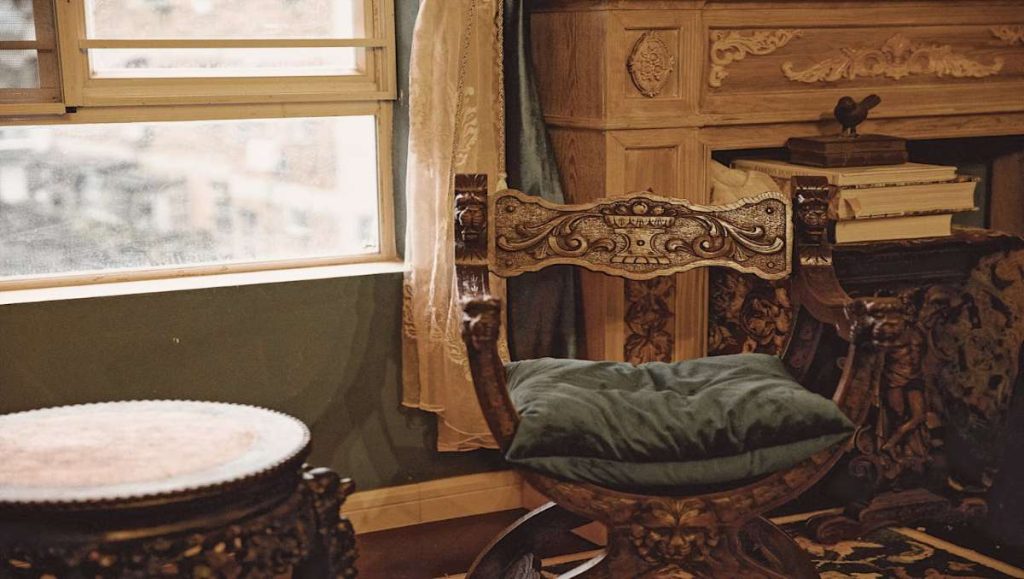
Solid wood furniture is built to last generations, but only if you take care of it. Here are the basics.
- Daily Cleaning: Dust regularly with a soft, dry microfiber cloth so grit doesn’t scratch the finish. Skip all-purpose household cleaners and silicone-based polishes.
- Protect Against Sunlight and Moisture: Keep furniture out of direct sunlight, which fades and unevenly discolors wood over months and years. Use coasters, placemats, and trivets to protect surfaces from heat and moisture rings.
- Seasonal Humidity Changes: Aim for indoor humidity between roughly 35% and 45% year-round to limit expansion and contraction.
- Minor Scratch Repair: Light surface scratches often blend right in with a matching wood touch-up marker or a dab of the original oil finish. For deeper scratches, a color-matched wax fill stick restores the look without a full refinish.
- When to Refinish: Plan on a full refinish roughly every 10 to 20 years for a heavily used piece, sooner if the finish has worn through to bare wood in high-contact spots. A professional refinish can make a decades-old piece look new again.
Is American-Made Solid Wood Furniture Worth the Higher Price?
American-made solid wood furniture will almost always cost more upfront than mass-produced imports. But that gap closes fast once you look at lifetime value instead of sticker price. A veneer or particleboard piece typically needs replacing within 5 to 10 years. A well-built solid wood piece with real joinery can be repaired and refinished repeatedly, realistically lasting 50 years or longer — often getting passed down instead of thrown out. It combines premium hardwoods, traditional joinery, and hand-finished craftsmanship into pieces built to be repaired and refinished, not replaced.
That mix of real materials, real craftsmanship, and design that doesn’t chase trends is what separates furniture you’ll hand down from furniture you’ll haul to the curb in a few years. When you’re ready to buy, prioritize quality and longevity over short-term savings. Browse Amish Furniture Factory’s solid wood collection and start with a piece built to last for years.
Frequently Asked Questions
What furniture pieces are worth investing in?
Dining tables and chairs, bed frames, dressers and chests, and desks are the best candidates. They take on the most daily structural stress and are the most expensive and disruptive to replace.
What makes American-made furniture superior?
Tighter manufacturing oversight, more traceable and sustainably sourced lumber, traditional joinery, and easier access to warranty support and repairs all add up to furniture that lasts longer.
How do I identify authentic solid wood furniture?
Check the underside and back of a piece for real wood grain (not just the front). Look for traditional joints like dovetails and mortise-and-tenon connections. Also, feel for real weight and ask the manufacturer to back up any “Made in USA” claim against FTC standards.
Which hardwood is best for heirloom-quality furniture?
There’s no single best species, it depends on how you’ll use the piece. Oak and hickory hold up well in high-traffic pieces. Cherry and walnut are prized for their looks and the rich patina they develop with age.
How does Amish-made solid wood furniture compare to historic heritage brands?
Amish workshops typically offer more customization of size, wood species, and finish, since pieces are often made to order. Heritage brands are known for specific, well-documented design lines with a long-established history. Both rely on similar solid wood construction and traditional joinery. It mostly comes down to whether you want a fully custom piece or an established, recognizable design.