
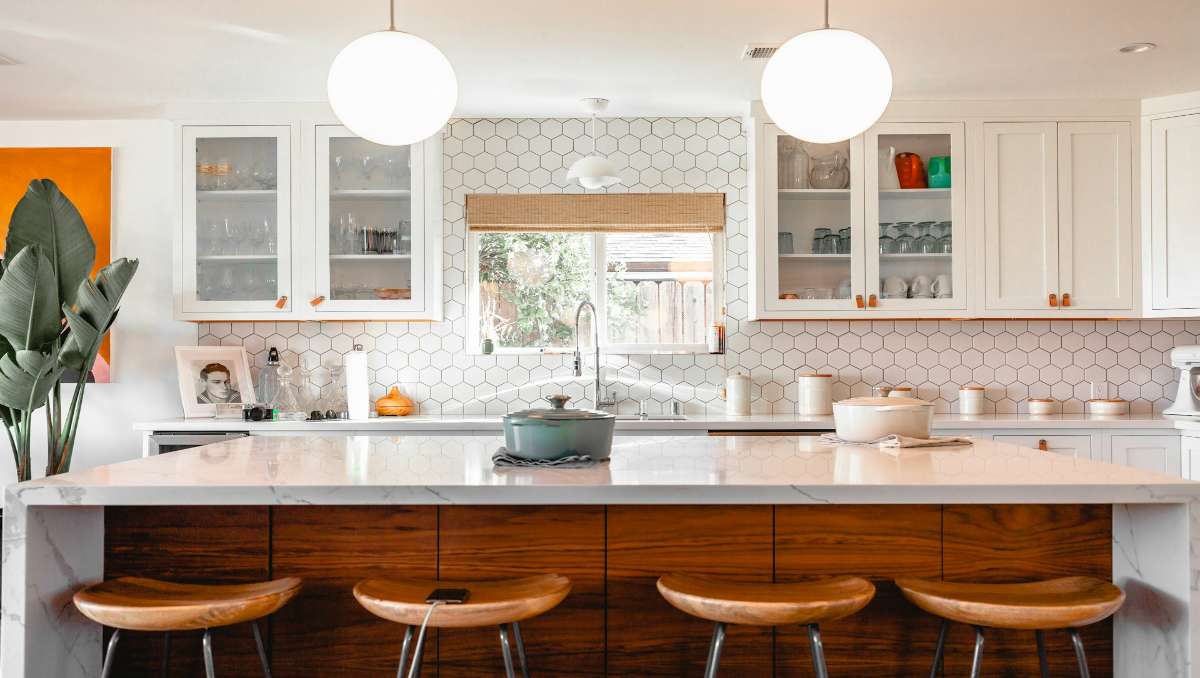
A kitchen island cabinet base is more than just a frame for your countertop. It is the structural engine that determines how your kitchen functions. While many homeowners focus on the stone surface, the cabinet base handles the heavy lifting (literally). It dictates your storage capacity, seating comfort, and the long-term stability of your kitchen’s center.
Key Takeaways:
- The kitchen island cabinet base supports countertops, appliances, storage, and seating.
- It determines structural strength and load-bearing capacity.
- Cabinet configuration affects workflow and organization.
In this article, we’ll break down how the kitchen island cabinet base influences everyday usability, storage efficiency, durability, and overall design cohesion.
What Is a Kitchen Island Cabinet Base?
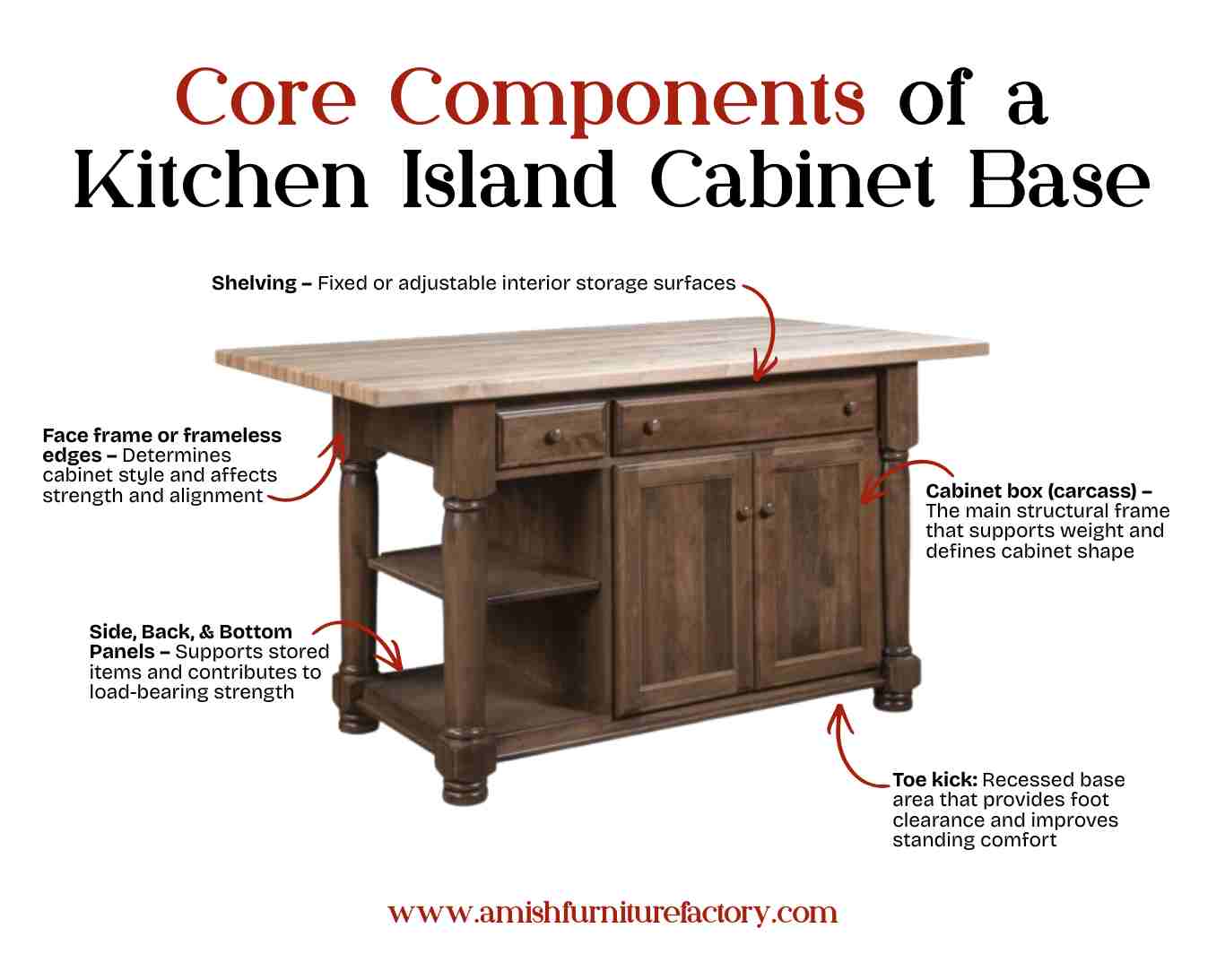
A kitchen island cabinet base is the structural cabinet framework beneath the island countertop that supports weight, houses storage, and integrates appliances. It determines the island’s durability, function, and layout efficiency. This base is what transforms a simple worktop into a practical zone for prep, storage, seating, and overall kitchen flow.
Lianne Jones from Corsol Conversions, a specialist in kitchen renovation, explains how foundational the base truly is:
“The island base makes or breaks how the island works in real life. It determines how much usable storage you actually get and how solid the whole structure feels once it’s installed.”
How the Kitchen Island Cabinet Base Impacts Functionality and Design
The kitchen island cabinet base quietly shapes storage potential, movement patterns, comfort, and even the visual balance of the room. Below is how the cabinet base influences both how your kitchen works and how it comes together visually.
1. It Maximizes Storage Capacity and Organization
The cabinet base dictates both the total amount of storage and how efficiently that storage performs. Drawer depth, shelf spacing, and cabinet orientation determine whether items remain accessible or become hard to reach. We recommend full-extension dovetail drawers for islands so you can reach heavy cast-iron pots at the very back without kneeling.
2. It Improves Kitchen Workflow and Efficiency
The placement of drawers, doors, and internal storage has a direct impact on how smoothly you move around the island. Small choices like putting prep tools near sinks or pots near cooktops can dramatically improve efficiency and reduce the number of steps in common cooking tasks. If a base is built with thin MDF or “cam-lock” connectors, the weight of stone can cause the joints to pull apart over time. Our solid wood frames are engineered to support the static load of natural stone without bowing.
3. It Supports Appliances, Plumbing, and Electrical Needs
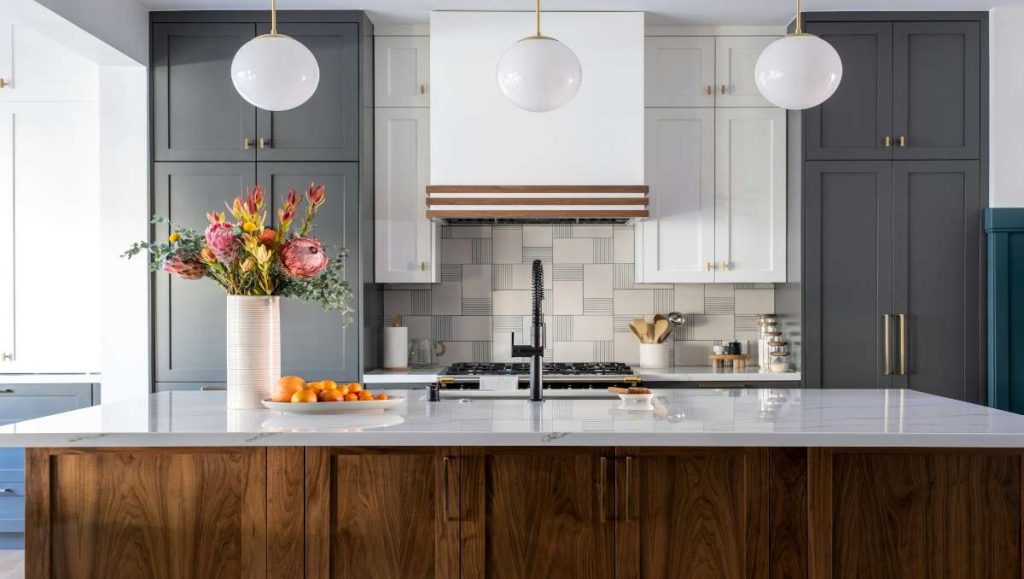
Many modern islands do more than store items. They house sinks, dishwashers, wine fridges, or outlets. The cabinet base provides the structure needed to conceal plumbing lines, electrical wiring, and ventilation without sacrificing accessibility.
4. It Enhances Seating Comfort and Accessibility
Seating comfort comes down to what’s happening beneath the countertop. The cabinet base sets the knee clearance, foot space, and overall ease of sitting. Aim for 12–15 inches of overhang, and toe kicks around 3–4 inches deep and high. Our builders often suggest hidden steel support brackets inside the cabinet frame to support deep overhangs without requiring bulky wooden legs that get in the way of your feet.
5. It Defines the Island’s Personality and Sets the Visual Tone
The cabinet base is where your kitchen island’s style truly takes shape. Its paneling, door profiles, proportions, and overall construction dictate whether the island reads as sleek and modern or more like a statement furniture piece. At the same time, the base anchors the island’s color, texture, and material choices, setting the visual balance for the entire room. Dark finishes can add depth and presence, while lighter tones keep the space open and airy.
Key Considerations for Balancing Design and Function
The kitchen island cabinet base sits right at the intersection of aesthetics and practicality, which means every decision affects both. Here are the key considerations:
Cabinet Base Types, Materials, and Build Quality
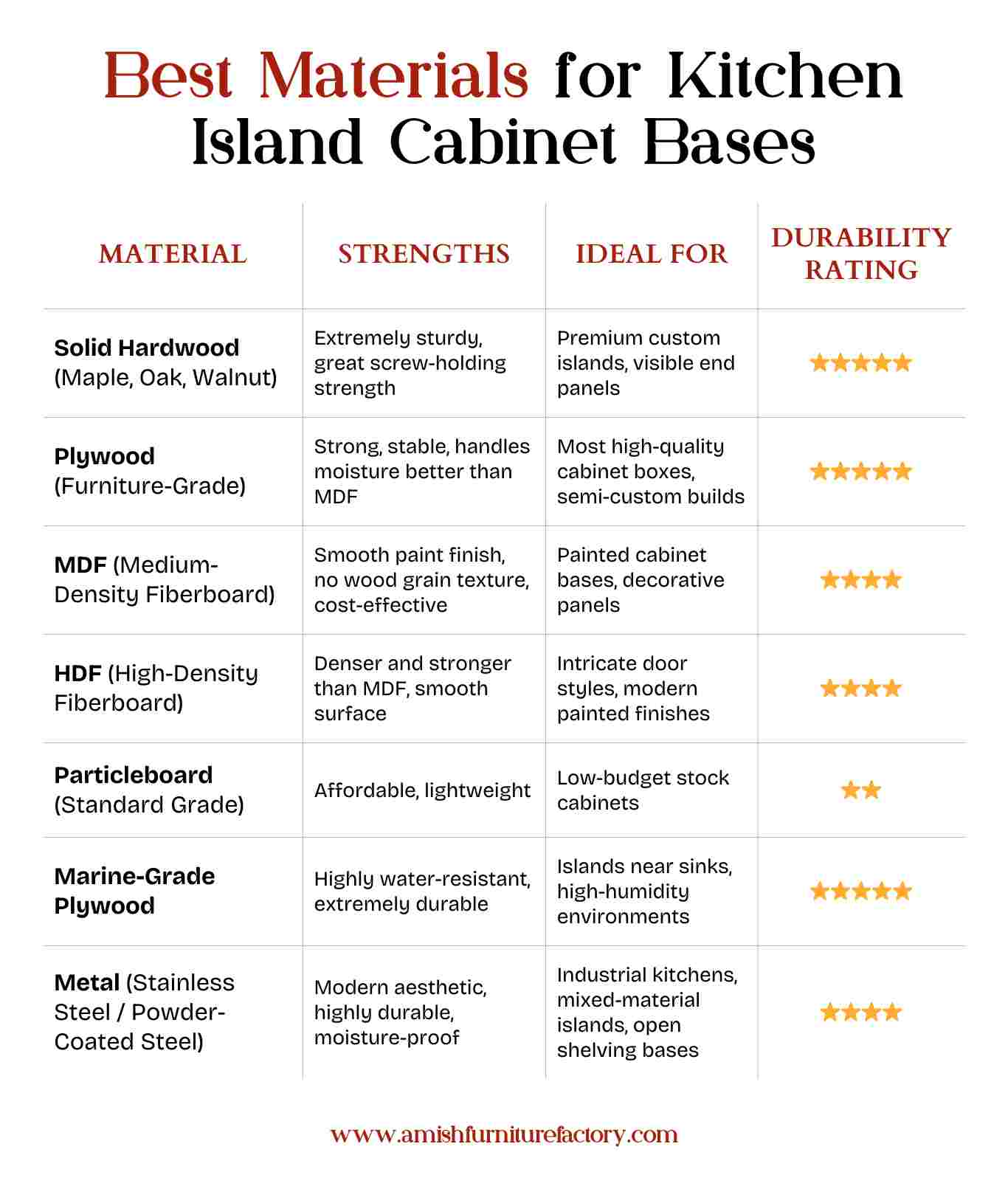
Solid wood frames, dovetail joints, and full back panels all contribute to a sturdier cabinet base. Beyond materials, the construction method defines the lifespan of the piece. Plywood box construction holds screws better than particle board, which is essential for the longevity of heavy drawer slides.
The table below outlines the best and most commonly used materials for island cabinet bases, along with their strengths and ideal use cases:
Usage, Workflow, and Practical Needs
How you plan to use the island should guide every decision about the cabinet base. The weight and kitchen countertop material should also be considered, as quartz, granite, and sintered stone may require different levels of structural support. Prep-heavy layouts need deep drawers and generous landing areas, while social islands require comfortable seating, legroom, and smooth circulation. If you are using a 3cm granite slab, we reinforce our larger island bases with internal 2×4 solid wood bracing to prevent any settling or hairline cracks.
Size, Proportion, and Scale Considerations
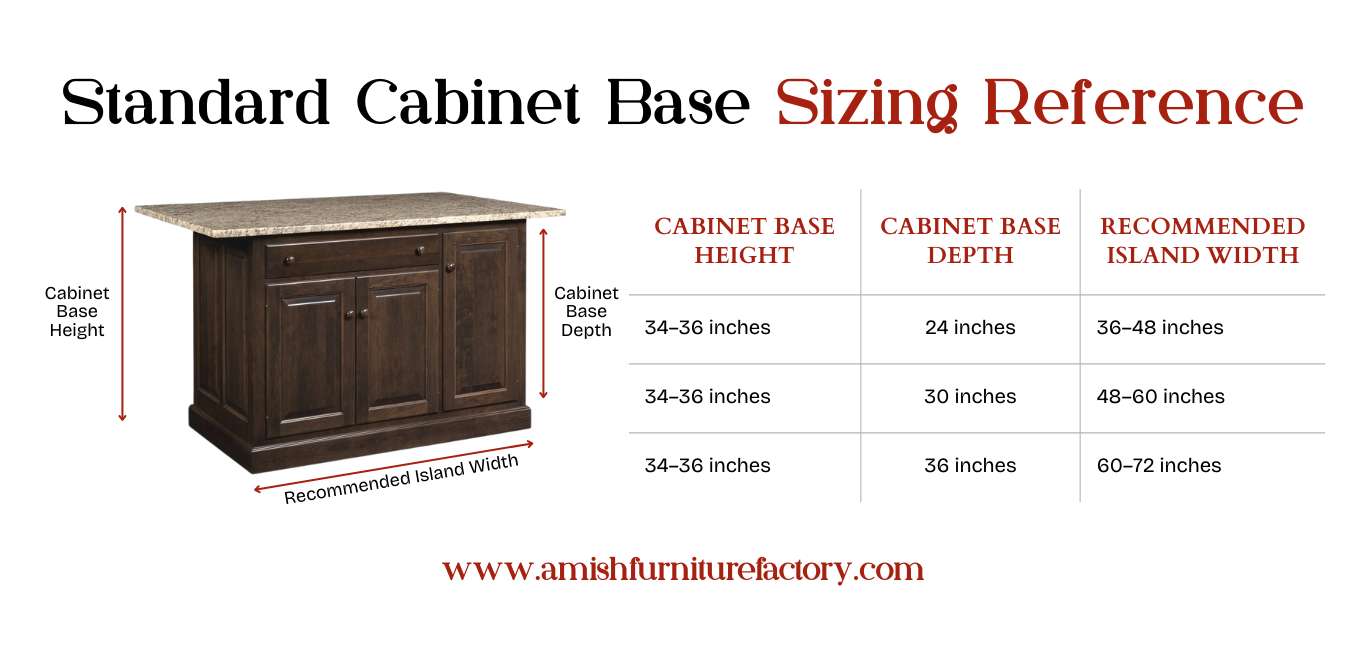
The cabinet base defines the island’s footprint, so proportion is critical. An island that’s too large blocks movement and disrupts workflow, while one that’s too small limits storage and functionality. A common mistake is forgetting that a dishwasher door needs nearly 25 inches of clearance to open fully. Aim for at least 42 inches of walkway space on all sides to avoid a cramped kitchen “choke point.”
The table below provides common cabinet base dimensions and recommended island widths to help you visualize scale and spacing.
How to Choose the Right Cabinet Base for Your Kitchen
Selecting the right kitchen island cabinet base is about making a series of smart, connected decisions. Here’s how to help you choose:
Step 1: Identify the Right Kitchen Island Type
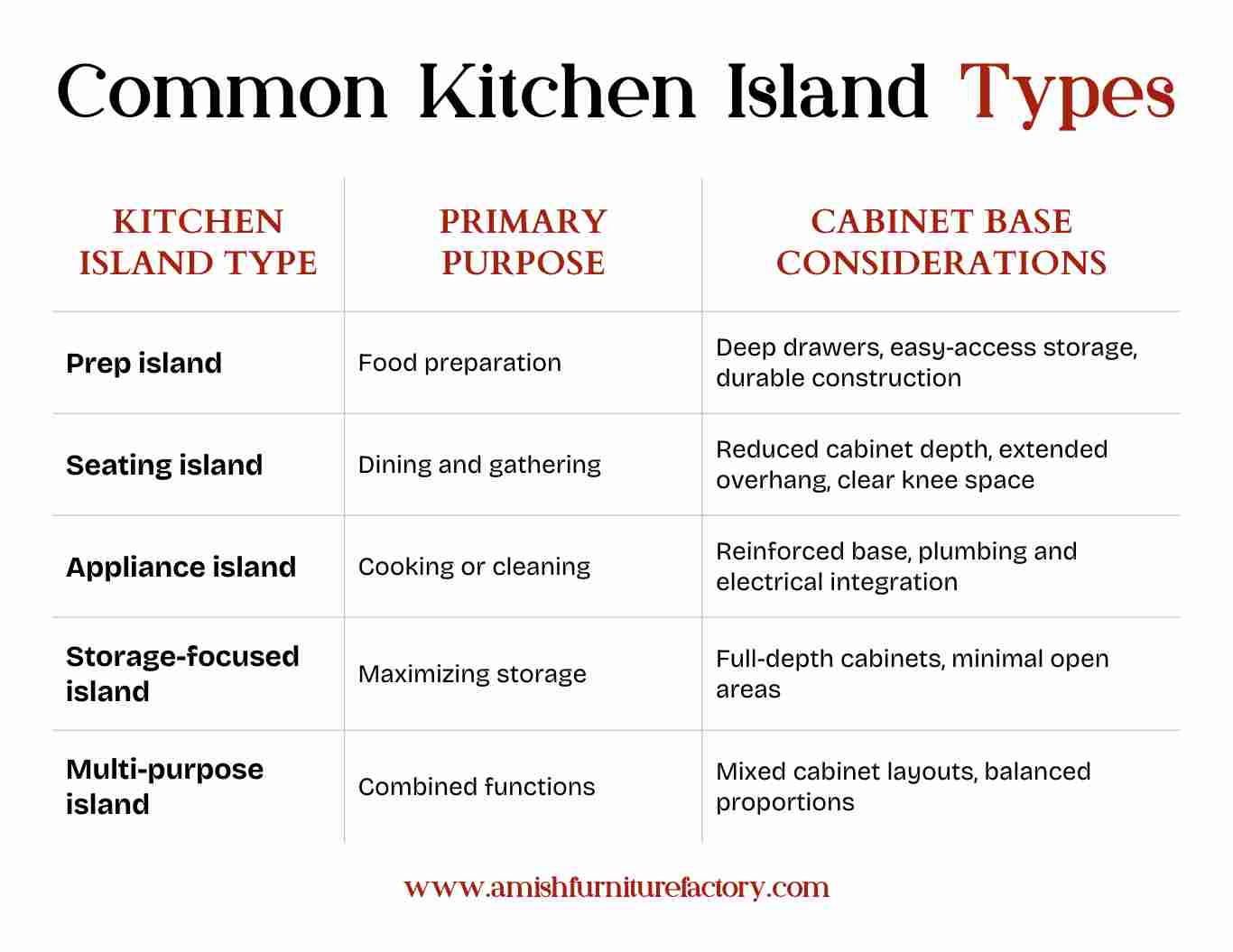
Start by defining the role your island will play, because the cabinet base must support that function. A prep-focused island needs efficient storage and durable construction, while a seating-centered island prioritizes legroom and panel placement. Multi-use islands often require a hybrid cabinet base that balances storage with open areas.
The table below outlines the most common island types and how the cabinet base typically supports each one.
Step 2: Choose a Cabinet Base Design Style That Matches Your Kitchen
Once function is clear, style comes next. The cabinet base is a major visual anchor, so its design should complement the overall kitchen aesthetic. Shaker-style bases feel timeless, slab-front bases lean modern, while furniture-style bases add character and warmth. When considering style, it’s important to balance visual simplicity with structural strength.
Step 3: Match Storage Configuration to Daily Habits
Think about what you reach for most often. Deep drawers for cookware, pull-outs for trash, or open shelving for frequently used items can dramatically improve usability. The cabinet base should reflect real routines, not idealized ones.
Step 4: Select Materials and Construction for Long-Term Use
The cabinet base must handle weight, moisture, and constant movement. Choose materials and construction methods that support your countertop choice and appliance load. Solid frames, plywood boxes, and reinforced supports pay off in stability and lifespan.
Step 5: Verify Size, Clearances, and Seating Comfort
Finally, confirm that the cabinet base dimensions work within your kitchen’s layout. Check aisle clearances, seating overhangs, toe kick depth, and cabinet height. Even a beautifully designed base can fail if it disrupts traffic flow or seating comfort.
Upgrade your kitchen island by choosing the perfect kitchen cabinets for the base to maximize both your storage space and style.
What Are Common Kitchen Island Cabinet Base Mistakes?
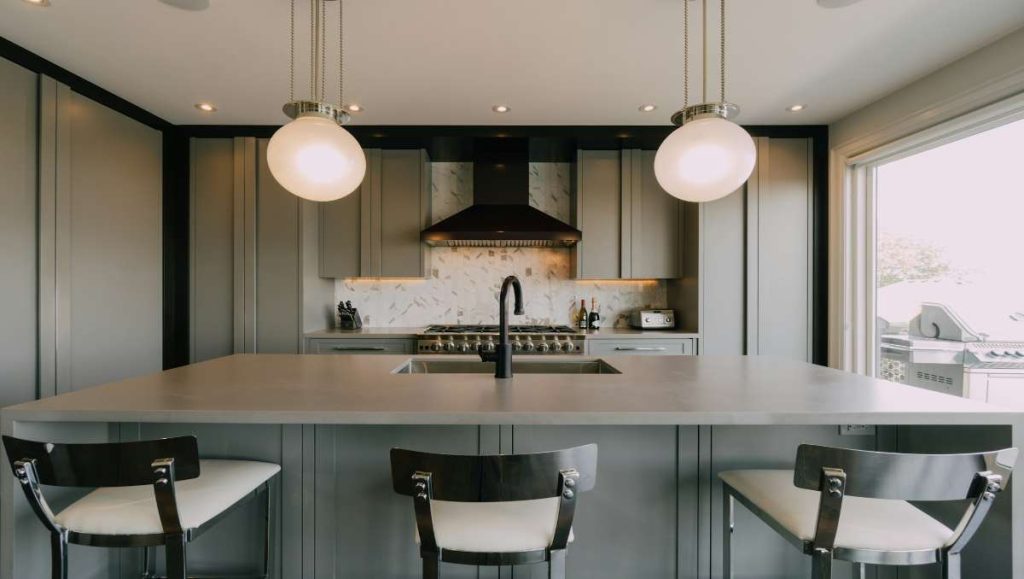
Even a beautifully designed island can fall short if the cabinet base isn’t planned correctly. These are the mistakes homeowners encounter most often and the ones you’ll want to avoid:
- Prioritizing looks over function – Choosing a stunning design that lacks proper storage, support, or day-to-day usability.
- Ignoring traffic flow and clearances – Oversized bases that block walkways, crowd appliances, or make the kitchen feel tight.
- Poor appliance planning – Forgetting to factor in plumbing, electrical, ventilation, or panel-ready appliances until it’s too late.
- Inadequate structural support – A cabinet base that can’t handle the weight of stone countertops, sinks, or built-ins like microwaves.
- Uncomfortable seating layouts – Not providing enough knee clearance, toe-kick depth, or overhang for stools, making seating feel cramped.
- Overcomplicating the design – Mixing too many cabinet styles, finishes, or features that compete visually and create a cluttered look.
Conclusion: Why the Kitchen Island Cabinet Base Truly Matters
The kitchen island may be the centerpiece of the room, but it’s the kitchen island cabinet base that determines whether it actually works. From storage efficiency and workflow to seating comfort and visual balance, the base influences every practical and design-driven decision tied to the island.
When chosen with intention, the cabinet base transforms the island into a functional anchor, one that supports daily routines, integrates seamlessly with the kitchen layout, and reinforces the overall style of the space. In the end, getting the cabinet base right isn’t a detail. It’s the foundation of a kitchen island that performs as well as it looks.
Frequently Asked Questions
What Is the Standard Height of a Kitchen Island Cabinet Base?
The standard height of a kitchen island cabinet base is typically 34½ inches, which becomes 36 inches once a standard countertop is installed. This aligns with most base cabinets and provides a comfortable working height for food prep.
Can a Kitchen Island Cabinet Base Support Heavy Stone Countertops?
A well-constructed kitchen island cabinet base made with solid framing, plywood boxes, full back panels, and internal supports can safely handle heavy materials like granite, quartz, or marble. Additional reinforcement is often required for wide spans or appliance-loaded islands.
Can you use regular base cabinets for a kitchen island?
Yes, you can use standard base cabinets, but they’ll need modifications. Islands typically require finished back panels, wider toe kicks, proper anchoring to the floor, and sometimes deeper cabinets for better proportion. Without these adjustments, the island can look unfinished or feel less stable.
Do island cabinet bases need reinforcement?
Often, yes. Islands that support heavy stone countertops, overhang seating, or built-in appliances usually need additional reinforcement. Proper reinforcement ensures the island stays solid, level, and safe over time.
Can a kitchen island be freestanding?
It can. Freestanding islands are common in smaller kitchens or in spaces where flexibility is needed. However, they offer less storage and stability than fixed islands and usually don’t include plumbing or electrical connections. They work best as prep surfaces or supplemental workstations rather than full-featured islands.