

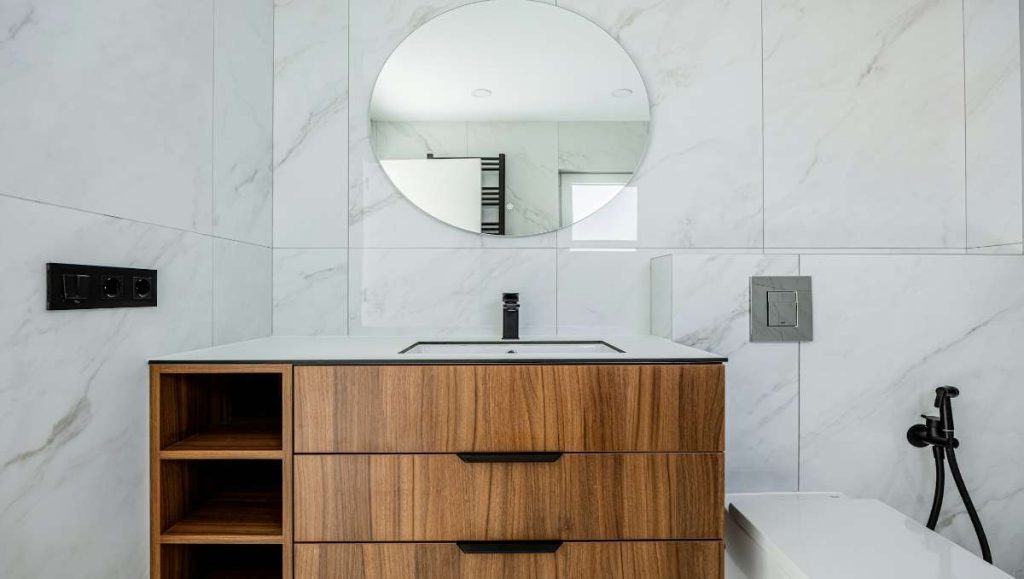
In compact bathrooms, every inch must work harder. A cabinet mounted even two inches too high or too low can make a tight space feel cramped and awkward to use. Bathroom cabinet height is a practical choice that affects your daily comfort and the room’s overall accessibility.
Key Takeaways:
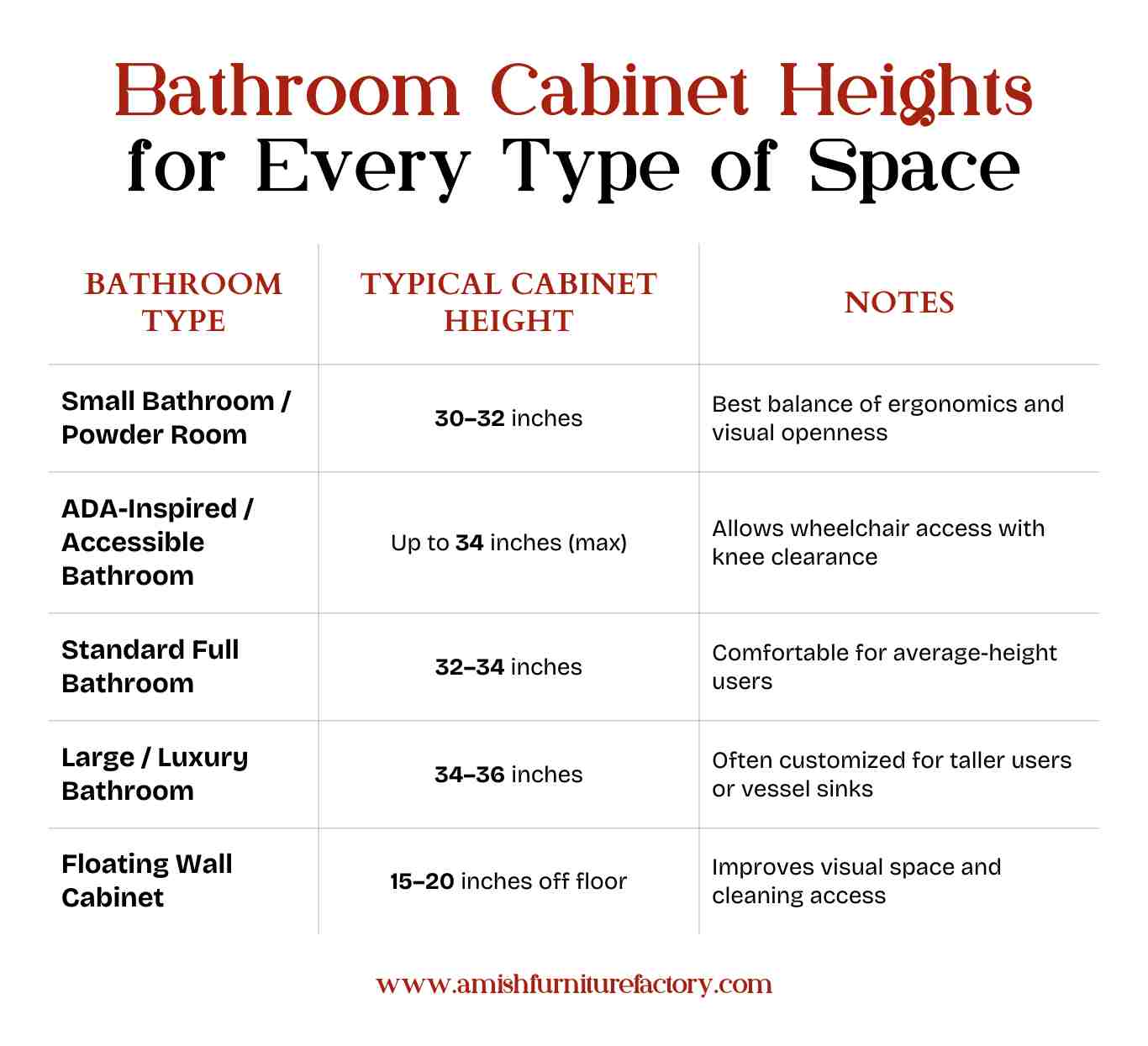
- Standard bathroom cabinet heights typically range 30–34 inches.
- For small bathrooms, 30–32 inches is ideal in most cases.
- Floating or carefully proportioned cabinets can maximize space, improve accessibility, and maintain visual balance.
In our experience building custom Amish vanities, the ideal height often shifts depending on whether you are using a traditional inset sink or a modern vessel top. This guide breaks down how to choose a height that feels intentional and tailored to your specific layout.
Why Bathroom Cabinet Height Matters
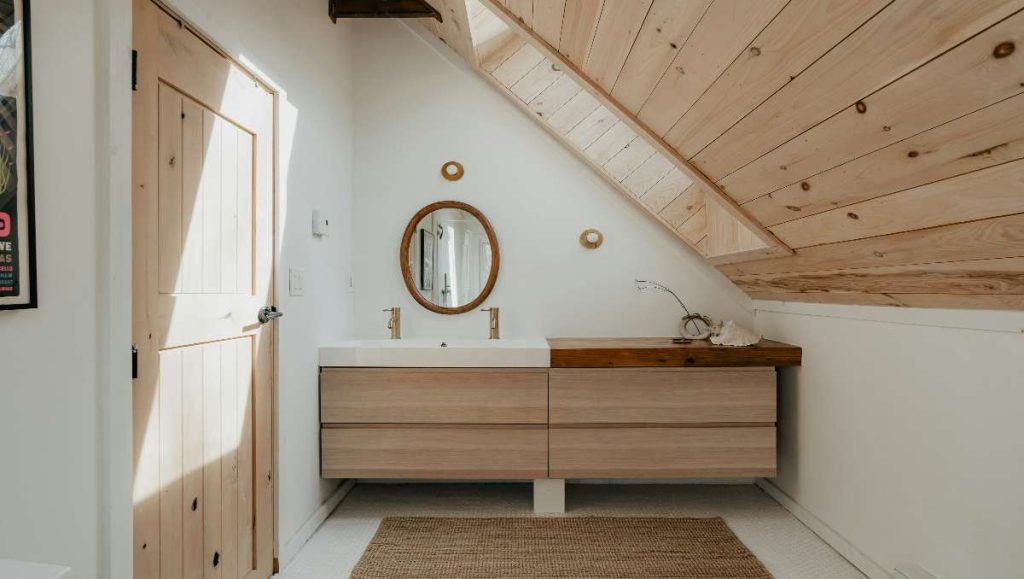
Cabinet height influences your ergonomics and the visual breathing room of your space. A cabinet that requires constant reaching can cause shoulder strain over time. Beyond comfort, height affects the structural integrity of the installation. Solid wood cabinets require precise blocking in the wall to support their weight at the correct elevation.
Traditional vanity heights usually sit between 30 and 32 inches. While this works for many, it can feel low for taller adults. ADA standards recommend a maximum surface height of 34 inches to ensure universal access. Even if you aren’t following strict ADA codes, these benchmarks help us design cabinets that balance floor clearance with usable countertop space.
The Ideal Bathroom Cabinet Height for Small Bathrooms
So, what is the ideal bathroom cabinet height for small bathroom spaces? In most cases, the ideal bathroom cabinet height for small bathrooms is 30–32 inches from the finished floor. This height keeps the vanity comfortable to use, visually lighter, and well-proportioned for compact layouts.
However, we frequently guide our customers toward floating vanities for small renovations. These are typically mounted 15 to 20 inches above the floor. By exposing the floor tile all the way to the wall, you trick the eye into perceiving a much larger room while making cleaning significantly easier.
What to Consider When Choosing Bathroom Cabinet Height
Choosing the right bathroom cabinet height is about matching the cabinet to the people using the space and the way the bathroom is laid out. These core considerations help narrow down what actually works:
User Height and Household Needs
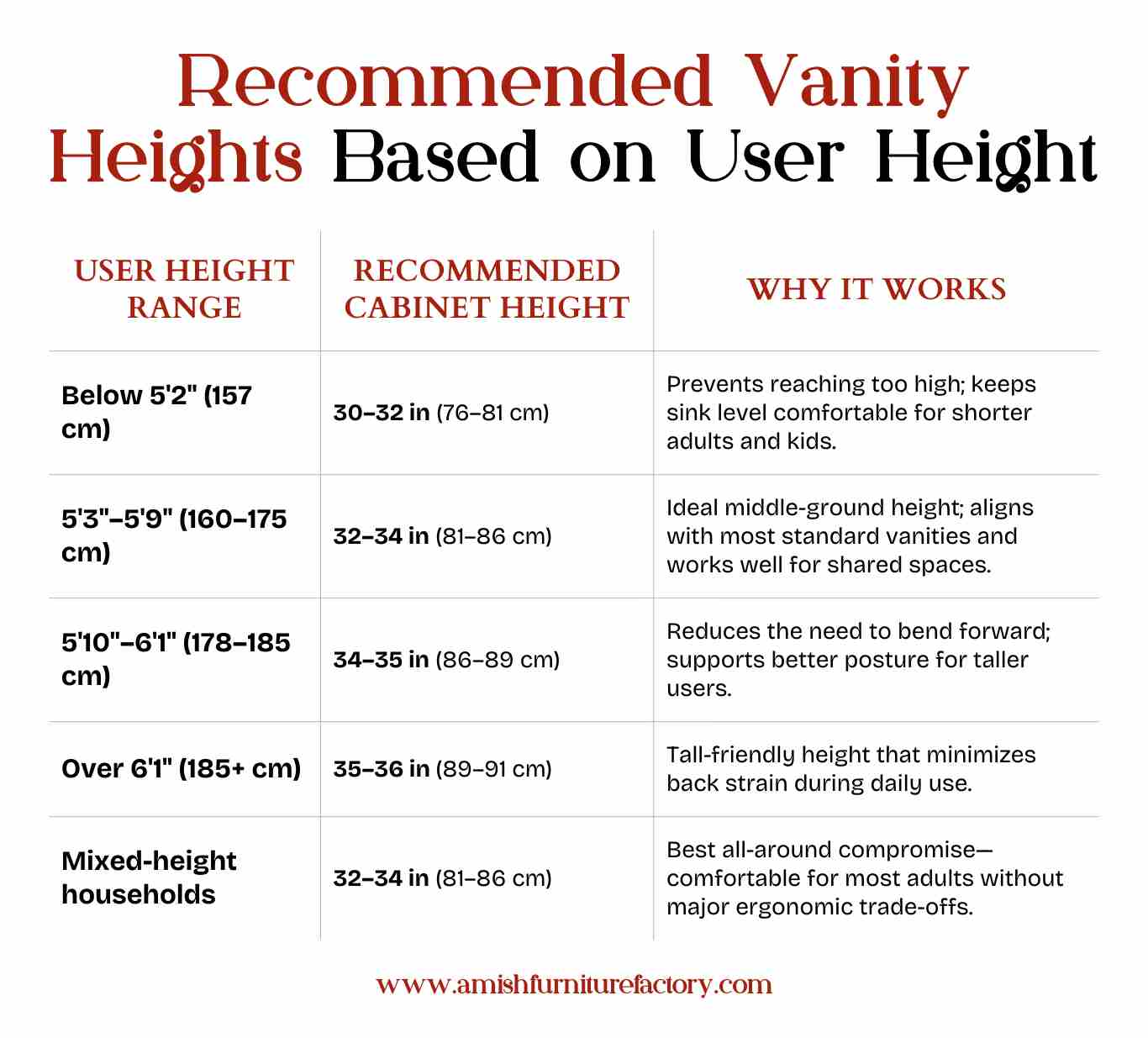
The height of the people using the bathroom should always come first. A cabinet that feels perfect for one person can be uncomfortable for another. In small bathrooms, aiming for a middle ground helps accommodate everyone without sacrificing comfort.
The table below provides a practical guide to help you choose a height that works comfortably for everyone.
Bathroom Layout and Fixture Placement
You should maintain at least 4 to 6 inches of clearance between the top of the vanity and the bottom of your mirror. If you have a wall-mounted faucet, your cabinet height must be locked in before the plumbing is roughed into the wall to avoid a costly misalignment.
Visual Weight and Proportion
In a small space, a bulky floor-mounted cabinet can feel heavy. We recommend shaker-style doors or tapered feet to reduce the visual mass of a solid wood piece.
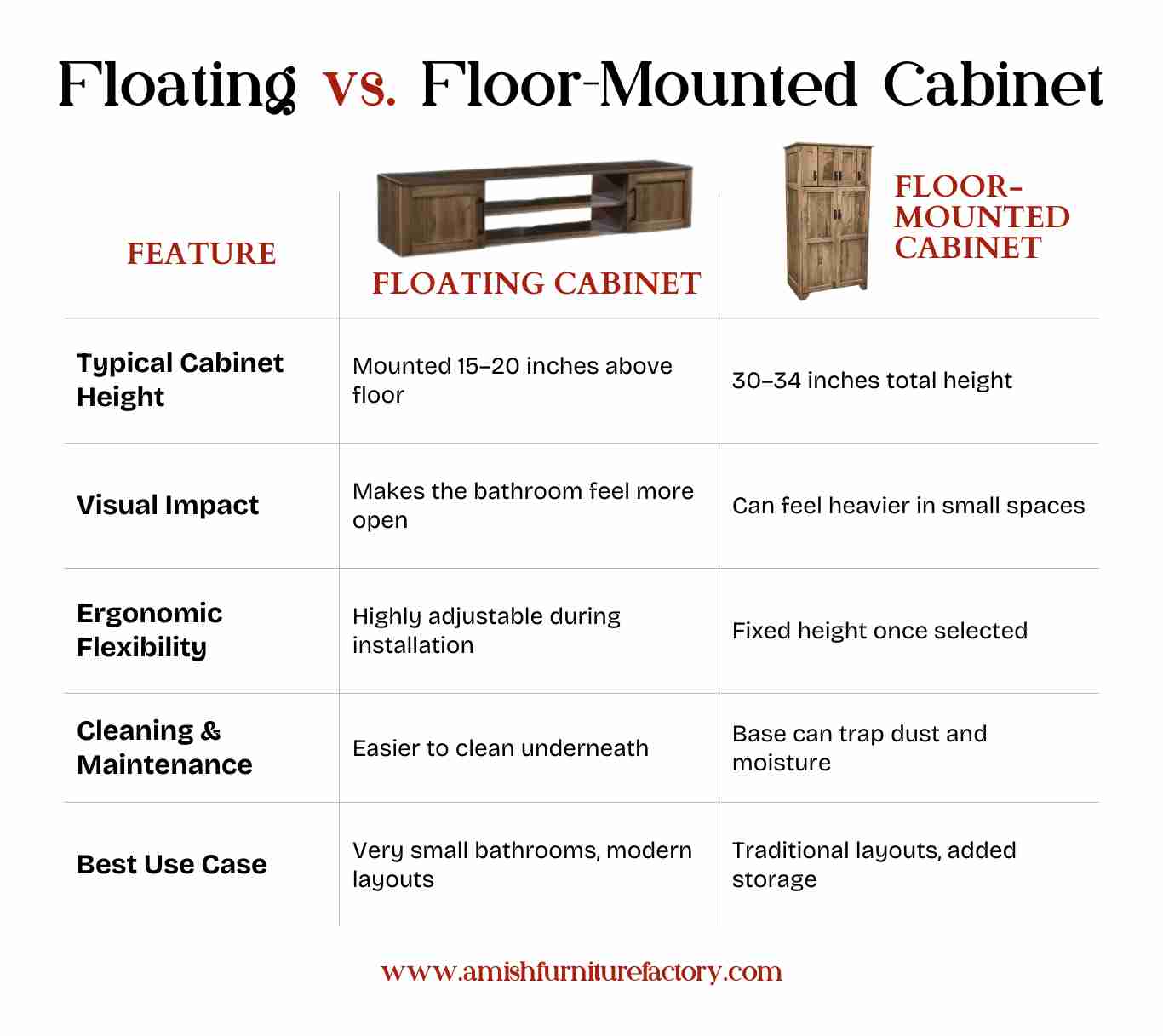
Floating vs. Floor-Mounted Cabinets
In small bathrooms, the choice between floating and floor-mounted cabinets has a noticeable impact on how open the space feels. Floating cabinets are mounted off the floor, which visually lightens the room and makes it feel larger than it actually is. Floor-mounted cabinets, on the other hand, prioritize stability and storage. They sit directly on the floor, which can make a small bathroom feel more grounded but also slightly heavier visually if the cabinet is bulky.
Here’s a side-by-side comparison:
Small Space Strategies for Bathroom Cabinet Height
When space is limited, smart height choices can make a small bathroom feel more open, functional, and less cluttered.
1. Leverage Floating Cabinets
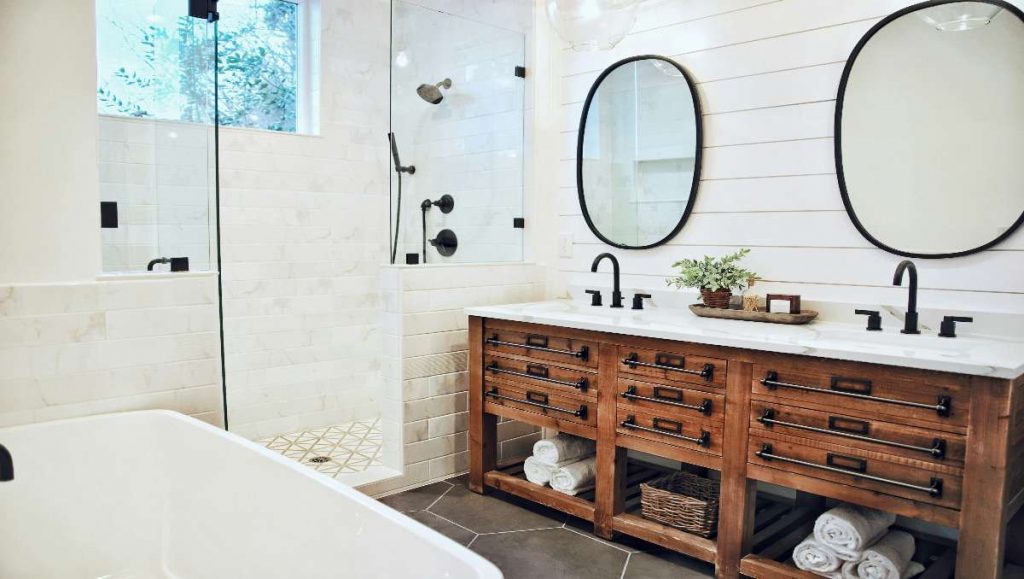
Lifting the storage off the floor instantly creates a sense of openness. Because our Amish-built floating vanities use heavy-duty French cleat systems, they provide the same stability as floor-mounted models without the bulk.
2. Use Vertical Space Without Overwhelming the Room
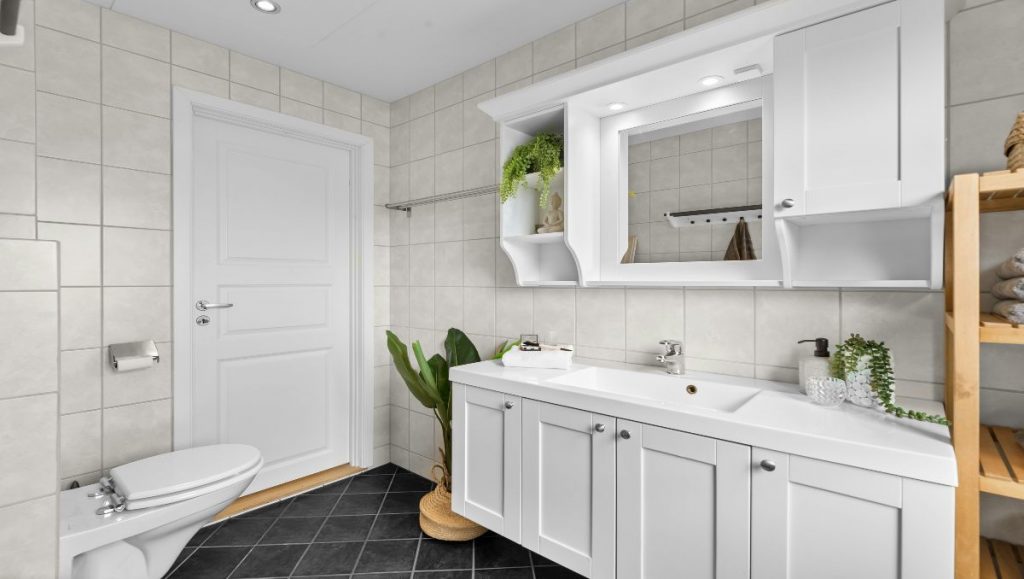
Vertical storage can be a lifesaver in small bathrooms, but it needs to be handled carefully. Tall or upper cabinets should extend upward in a way that feels intentional rather than bulky, stopping short of the ceiling or aligning cleanly with mirrors and lighting.
3. Combine Cabinets With Open Shelving
Pairing closed cabinets with open shelving creates balance in tight spaces. Lower or mid-height cabinets can hide clutter, while open shelves above or beside them keep the room feeling light and accessible. This approach allows you to reduce overall cabinet height while still meeting storage needs.
If you’re looking for a custom fit that combines timeless durability with perfect proportions, explore our handcrafted Amish cabinets to elevate your bathroom’s design.
How to Choose the Right Cabinet Height for Your Small Bathroom
This step-by-step approach helps you land on a height that fits both the space and the people using it.
Step 1: Measure the Entire Room
Start by measuring the entire bathroom, including wall height, ceiling height, door swings, and clear walking paths. In small bathrooms, nearby elements like towel bars, toilets, and mirrors can affect how tall or low a cabinet should sit.
Step 2: Account for the Sink Type
This is the most common mistake we see. An undermount sink sits level with the counter, but a vessel sink can add 4 to 6 inches to the total height. If you want a vessel sink, your base cabinet must be shorter to compensate.
Step 3: Choose Base Cabinet Height First
The base cabinet sets the foundation for the entire layout, so it should always be selected before wall cabinets or mirrors. In small bathrooms, a base height of around 30–32 inches usually offers the best mix of comfort and proportion.
Step 4: Select Wall Cabinet Height for Visual Balance
Wall cabinets should complement the base cabinet rather than compete with it. In compact spaces, aligning wall cabinets with the top of the mirror or light fixture often creates the cleanest visual flow and keeps the room feeling balanced.
Step 5: Test the Height Before Installation
Before committing, mock it up. Use painter’s tape, cardboard templates, or temporary supports to simulate cabinet height in real space. Standing in front of a mock setup helps reveal issues that measurements alone can’t show, like awkward reach or poor sightlines.
Final Recommendation: What Is the Ideal Bathroom Cabinet Height for Small Spaces?
For most small bathrooms, a 30 to 32-inch base cabinet provides the best balance of comfort and proportion. If you need the room to feel as open as possible, a floating cabinet mounted at a custom height is the superior choice. At Amish Furniture Factory, we believe thoughtful placement beats rigid standards every time.
Frequently Asked Questions
What vanity height is best for small bathrooms?
For small bathrooms, a vanity height of 30–32 inches is typically the most comfortable for everyday use. This range balances ergonomics, visual proportion, and accessibility.
What size cabinet is best for small bathrooms?
A cabinet that is narrower and shallower, generally 18–24 inches deep and sized to fit the width of your vanity area, works best. Smaller dimensions prevent the room from feeling cramped while still providing enough storage for essentials.
How high should a bathroom cabinet be?
Standard base cabinets should sit around 30–32 inches from the finished floor, while wall-mounted or floating cabinets can vary, often mounted 15–20 inches above the floor to maximize openness and cleaning access.
What is the comfort height for bathroom vanities?
Comfort height vanities typically measure 34–36 inches from the finished floor. This height is similar to kitchen counters and is designed to reduce bending, making everyday tasks like washing hands or brushing teeth easier for most adults.
Is 36 inches too high for a small bathroom vanity?
A 36-inch vanity can be too high for small bathrooms if multiple users share the space or if the room already feels tight. While 36 inches works well for tall individuals, it may feel overpowering in compact layouts and can disrupt sightlines, making the room feel more cramped.