
When you stumble upon a beautiful old chair at a flea market or inherit a heavy oak dresser from your grandparents, one question naturally comes to mind: how to tell how old furniture is. At first glance, it might seem like a guessing game. But the age of a piece isn’t just trivia; it can reveal whether you’re looking at a valuable antique, a mid-century modern classic, or a reproduction made decades later. Understanding a furniture’s age can also influence how you use it in your home.
Key Takeaways:
- To determine the age of furniture, examine construction details such as saw marks (hand-cut vs. circular), joinery types (like dovetails or mortise and tenon), and whether machine-cut components are present, which often indicate newer construction.
- Antique, vintage, and mid-century each have specific age ranges and design cues that influence both value and home design choices.
- Understanding age not only helps determine value and authenticity but also informs how furniture fits into your home design.
Knowing where your furniture sits in history helps you design interiors that feel intentional, not accidental. Let’s find out how to tell the approximate age of antique furniture.
How to Classify “Antique,” “Vintage,” or “Mid-Century”
Before you can start dating your furniture, it helps to understand the language that collectors, dealers, and designers use. Three of the most common terms you’ll come across are antique, vintage, and mid-century. But knowing these labels isn’t just about sounding knowledgeable—it actually matters.
The global second-hand furniture market was valued at over $34 billion in 2023 and is expected to reach nearly $57 billion by 2030. That growth shows a rising appreciation for craftsmanship, character, and history. Being able to tell when and where a piece was made gives you more confidence—whether you’re investing in a rare find or picking up something special at a thrift store.
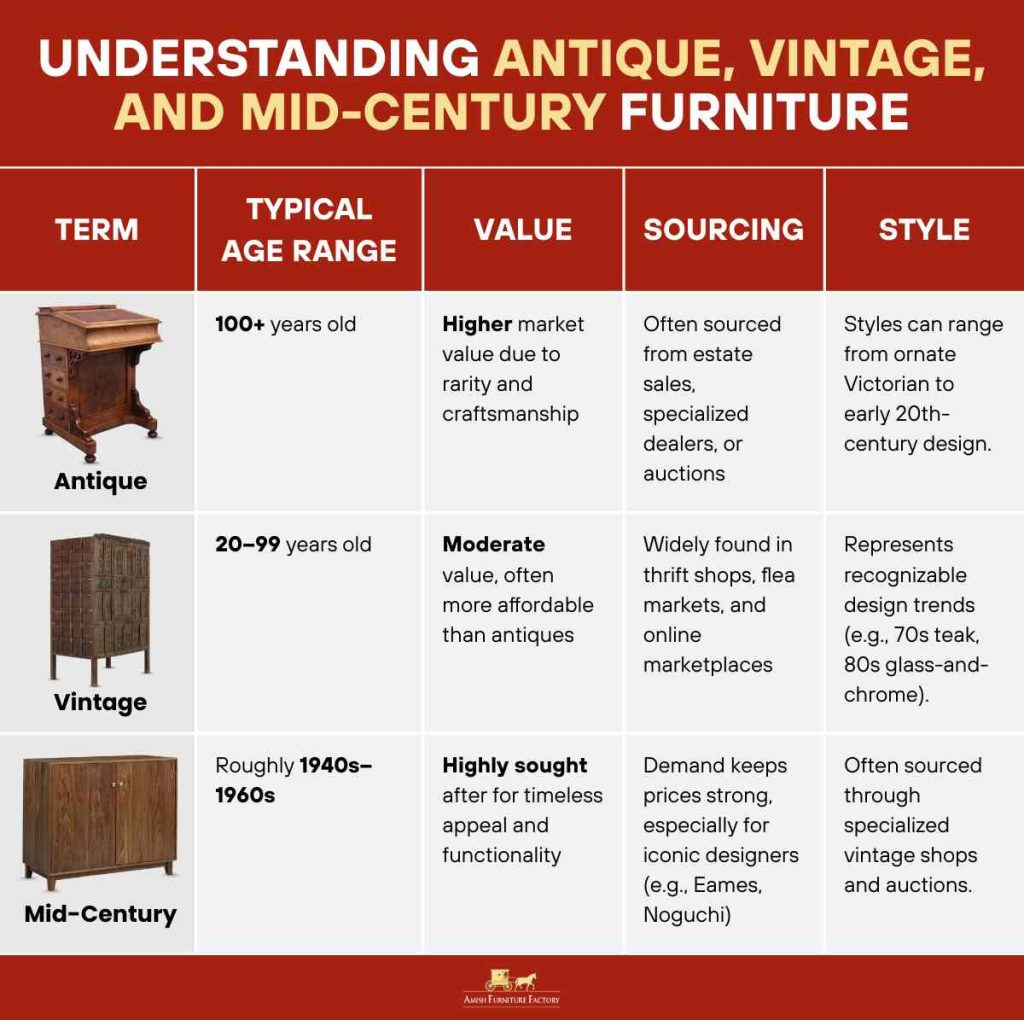
- Antique usually refers to pieces that are at least 100 years old. That means a dresser made in 1920 officially entered “antique” territory in 2020. These items often have higher value, both financially and historically, because of their age, rarity, and craftsmanship.
- Vintage tends to cover furniture that’s more than 20 years old but not yet antique. Think of furniture from the 1970s or 1980s; old enough to have its own design personality, but still accessible and often more affordable than true antiques.
- Mid-century is a more stylistic classification tied to the design movement of roughly the 1940s through the 1960s. These pieces are prized for their clean lines, organic shapes, and timeless appeal, making them a staple in modern interiors.
How to Tell How Old Furniture Is: 7 Practical Ways
To tell how old furniture is, you can look at construction techniques, joinery, hardware, finishes, and even the type of wood used. An original manufacturer’s stamp or label can also provide a clear timeline, while irregularities in craftsmanship often suggest handwork from an earlier era.
1. Examine Construction, Tool Marks, and Materials
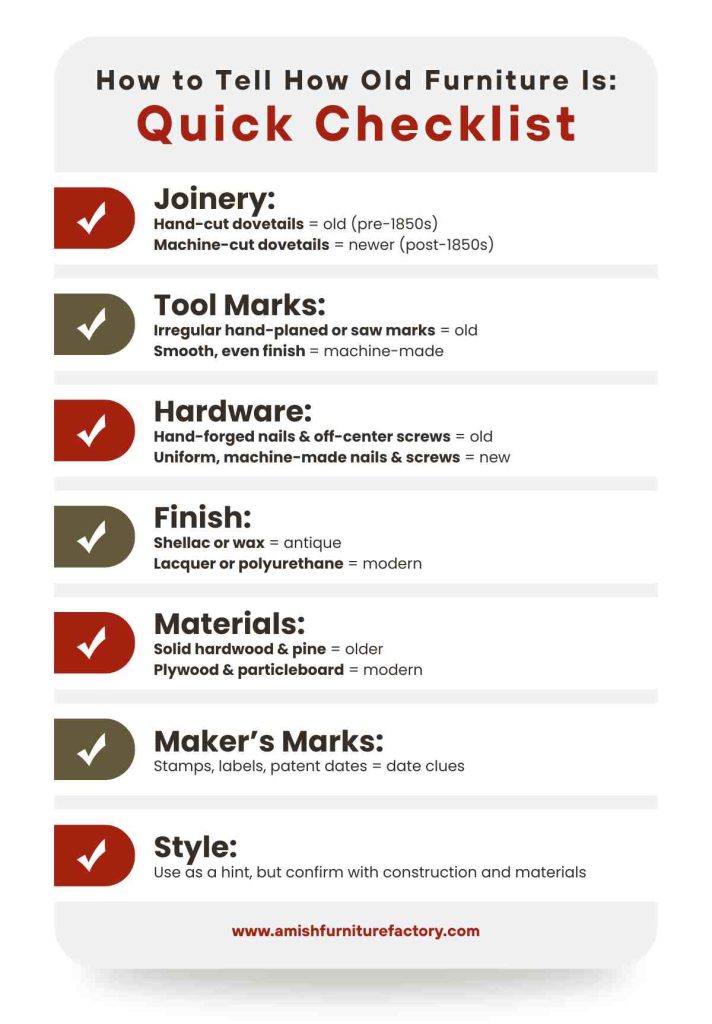
How a piece is built offers key clues about its age. Hand-cut joinery like irregular dovetails or mortise-and-tenon joints often signals pre-industrial craftsmanship. Machine-cut joinery became common in the mid-1800s, bringing more uniformity. You might also spot hand-planing marks, uneven saw cuts, or handmade fasteners on older furniture. Look underneath or inside drawers to find these telltale signs.
To dig deeper, basic tools like a magnifying glass, blacklight, or UV flashlight can help spot hidden labels, finish differences, or glue marks. Moisture meters and wood ID guides are helpful for distinguishing between solid wood and newer materials like plywood. For high-value pieces or more precise dating, scientific methods such as carbon dating or dendrochronology (tree ring analysis) can reveal the wood’s age. And when in doubt, consulting an experienced appraiser or antique dealer is often your best move.
Victor Fiore, Co-Founder of Magnolia Home Remodeling Group, explains:
“Construction techniques are the best indication of age for furniture. For instance, hand-planing of surfaces, irregular saw cuts, and handmade fasteners are all signs of early production methods. They are indicative of craftsmanship and technology at a particular time and are, therefore, very revealing.”
2. Check Hardware and Surface Finishes
Hardware details—hinges, drawer pulls, nails, and screws—can reveal a lot. Hand-forged nails, uneven hinges, or slotted screws with off-center heads are signs of earlier craftsmanship. By the mid-1800s, machine-made hardware became standard, and styles shifted with fashion trends.
Interior designer Ja’Nae Murray from Western Passion shares:
“Drawer pulls, hinges, and nails don’t lie. A hand-forged iron hinge that’s a little uneven or a brass pull that’s worn smooth feels so different from the machine-perfect pieces you see today. Even the screws give it away…”
Similarly, the finish helps date furniture. Older pieces used shellac, oil, or wax, creating a warm, uneven sheen. Lacquer appeared in the 1920s, followed by polyurethane in the mid-1900s. Authentic aged finishes often show natural wear or fading that reproductions struggle to replicate.
3. Look for Labels, Stamps, and Style Clues
A maker’s mark, stamp, or label can quickly narrow down a date. Many manufacturers branded their work—sometimes including patent dates or locations. Even a worn or partially visible label adds authenticity.
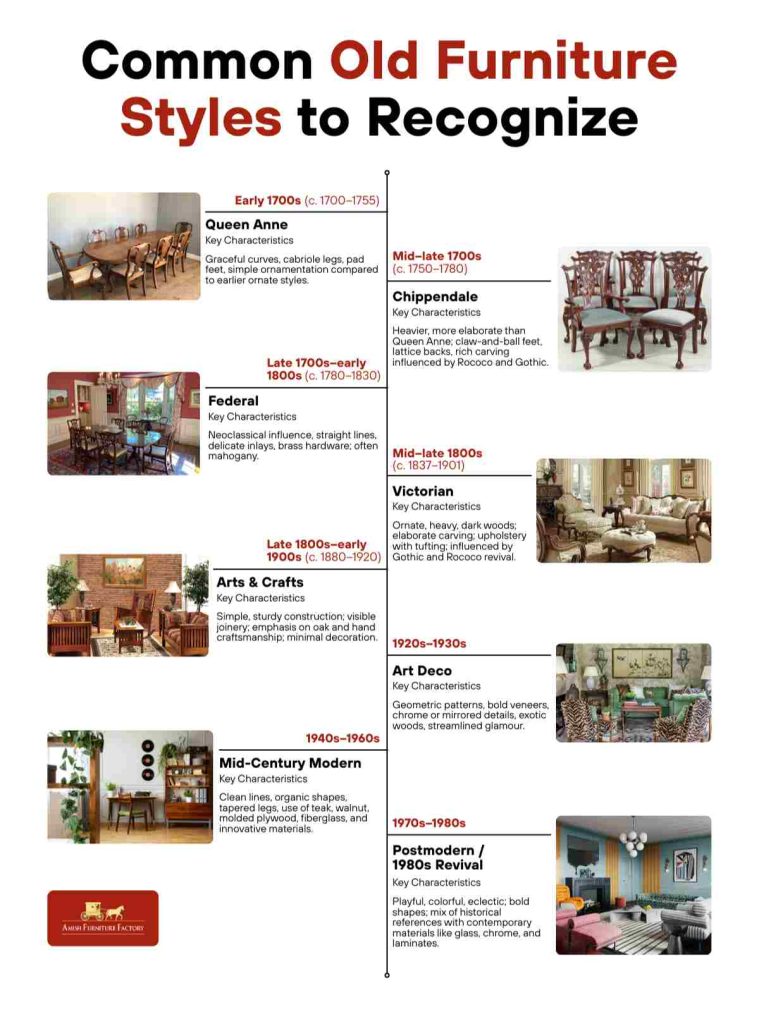
Style can offer hints too—but be cautious. Reproductions often mimic older designs. A chair with Queen Anne curves might date to a 1920s revival, not the 1700s. Use style clues alongside construction and materials to get a more accurate picture.
How the Age of Furniture Affects Home Design Choices
Knowing the age of your furniture doesn’t just satisfy curiosity; it can directly shape your home design choices. Antiques often serve as striking focal points that command attention, while vintage pieces add charm and personality without overpowering a space. Mid-century modern furniture, in particular, blends seamlessly into both minimalist and eclectic interiors. Victor Fiore adds:
“Understanding age dictates home design by governing visual weight and style compatibility. More detailed older furniture influences complementary décor, lighting, and color choice in turn. Designers can utilize these features to design harmonious spaces that are a compromise between tradition and modernity.”
The age of furniture also determines how much care it needs. Antiques may require gentler cleaning methods and even climate control, while more recent vintage finds are typically durable enough for everyday use.
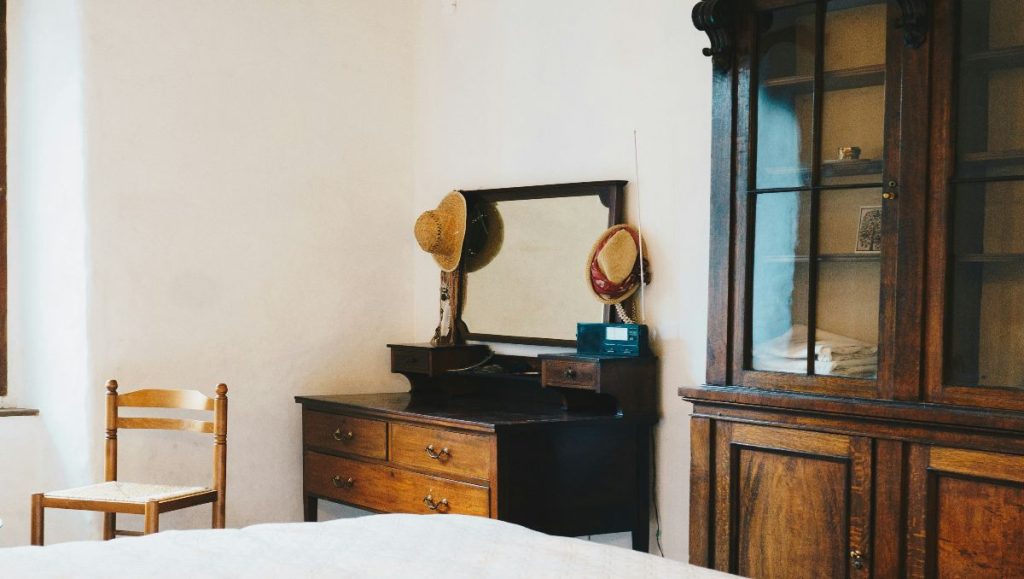
Bring the roaring ’20s into your home. Explore our 1920s furniture collection today and find a timeless piece that speaks to you.
Knowing How to Tell How Old Furniture Matters for Your Home
Learning how to tell how old furniture is isn’t just a niche skill for collectors; it’s a way of connecting design, history, and value. From joinery and tool marks to finishes and style, every detail helps piece together the story of when and how furniture was made. And once you know its age, you can make smarter choices about how to use, display, or even preserve it in your home. Whether you’re buying, selling, or simply styling, the age of furniture can transform it from “just a chair” into a meaningful piece of your home’s design narrative.
Frequently Asked Questions
How to tell if old furniture is valuable?
Value depends on factors like age, condition, rarity, and demand. Authentic antiques (100+ years old) in good shape often hold higher market value, while iconic designer pieces from the mid-20th century can also fetch strong prices.
Should you upcycle vintage furniture?
Upcycling can be a great way to give new life to vintage furniture, especially if it’s not particularly rare or valuable. However, altering an antique or a designer piece can significantly reduce its worth.
How do you maintain and care for old furniture to preserve its value?
Proper furniture maintenance and care often means gentler cleaning and avoiding modern harsh chemicals. Use soft cloths, mild soap, and natural waxes for upkeep. Keep antiques away from direct sunlight, humidity swings, and heat sources, as these can warp wood or damage finishes.
What is “brown furniture”?
“Brown furniture” means classic wooden pieces—like mahogany, walnut, or oak—popular in the 18th and 19th centuries. Though less trendy recently due to lighter styles, its demand is rising again thanks to a focus on sustainability and timeless design, especially in modern interiors.