
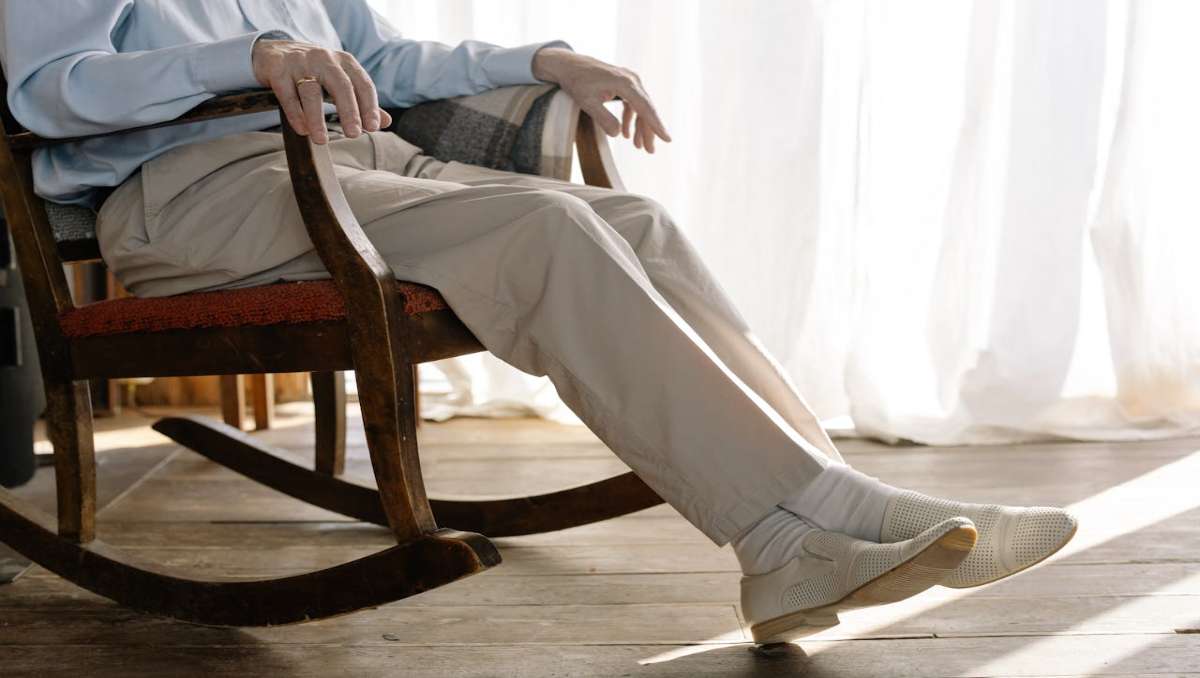
As we age, the little things matter more, especially comfort. A good chair can mean the difference between a relaxing afternoon and a sore back. For many older adults, the choice between a glider vs rocking chair isn’t just about aesthetics; it’s about ease of use, safety, and long-term support. Both options offer that gentle motion we associate with calm and rest, but they come with their own sets of pros and cons. So which one truly offers the better experience for seniors?
Key Takeaways:
- A glider moves smoothly back and forth on a stationary base with a straight, quiet motion, while a rocking chair moves in an arc shape using curved legs.
- Gliders are safer and more stable for seniors because they stay steady and move smoothly, making it easier to sit down and stand up without tipping over.
- Rocking chairs have a classic rocking motion that some seniors like, but they need more balance and can be harder to use if you have joint pain or trouble moving.
This article will explore the unique characteristics of gliders and rocking chairs, comparing their safety features, comfort levels, and overall suitability for seniors.
What Is a Rocking Chair?
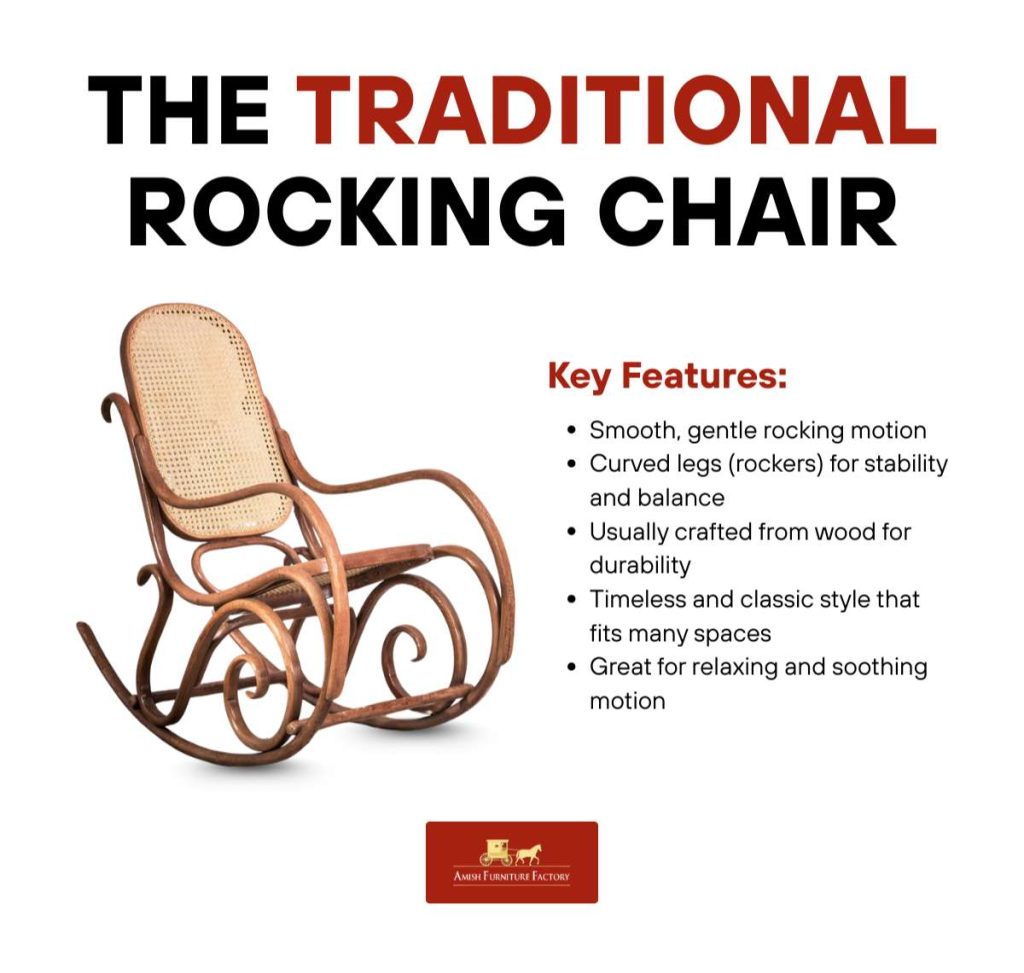
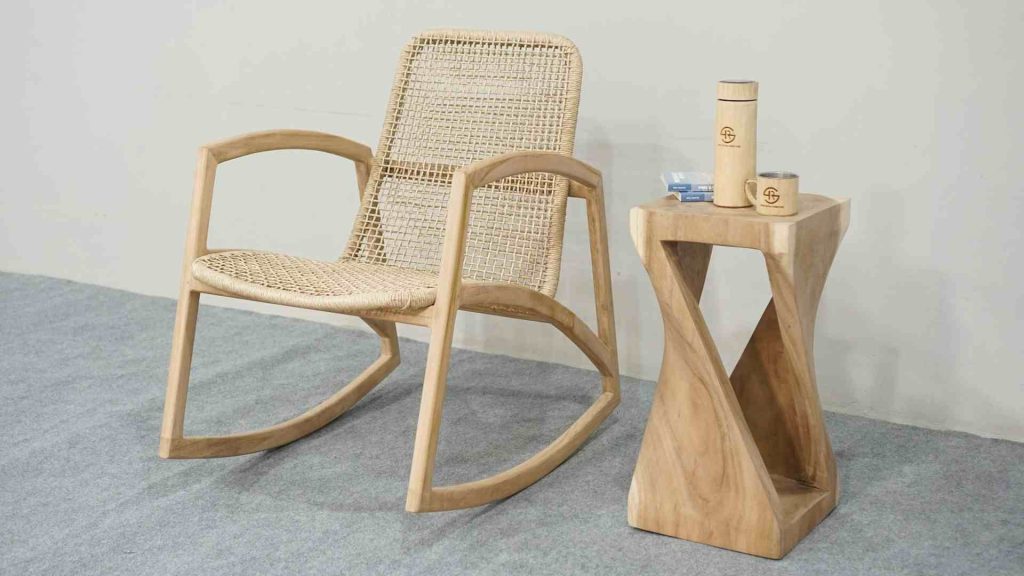
A rocking chair is a time-honored piece of furniture known for its curved legs that allow it to move back and forth in a smooth, arching motion. Most people associate it with porches, cozy corners, or even nursing rooms; places meant for rest and quiet. The gentle rocking movement has a soothing effect for many, helping with relaxation or even calming anxiety.
Because the motion is controlled solely by the user’s momentum, it may require a bit more physical effort and balance. For seniors, especially those with limited leg strength or mobility challenges, getting in and out of a rocking chair can sometimes feel a bit tricky.
What Is a Glider Chair?
A glider chair offers a more modern take on motion seating, using a mechanism that allows it to move back and forth in a linear, horizontal path rather than the arc of a traditional rocker. Instead of resting on curved legs, the chair is mounted on a stable base that supports a gliding frame, making the movement smoother and often quieter.
Because the motion is more controlled and the chair sits flat on the ground, gliders often feel more stable during use. Getting in and out of one usually involves less coordination, which is a subtle but important benefit for those with joint pain or balance concerns.
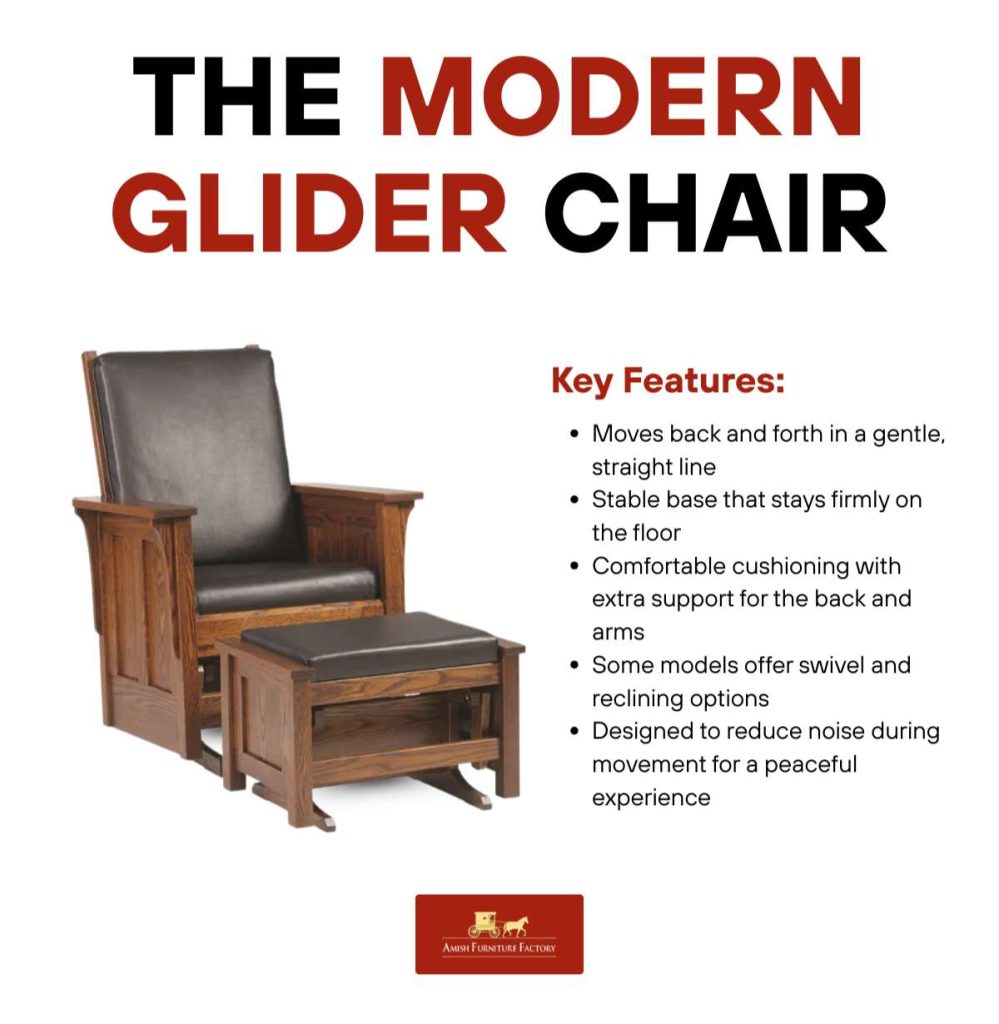
If you’re seeking a piece of furniture that combines traditional craftsmanship with a superior, tranquil gliding motion, an Amish glide rocker is the perfect addition to your home.
Safety and Comfort Comparison: Glider vs. Rocking Chair for Seniors
For seniors, both gliders and rocking chairs offer that gentle, rhythmic motion known to soothe nerves, ease anxiety, and even provide therapeutic benefits. But when it comes to choosing the better option in terms of safety and comfort, the details matter. Gliders are known for their smooth, controlled back-and-forth motion thanks to their stable base, while traditional rocking chairs rely on a curved bottom that requires user balance and coordination. As Christian Bullas, Owner of Senior Home Care by Angels Corporate notes:
“When comparing gliders and rocking chairs for seniors, the key difference lies in how the movement is generated and controlled.”
Let’s break it down further by looking at the key differences that really matter.
Stability and Ease of Use
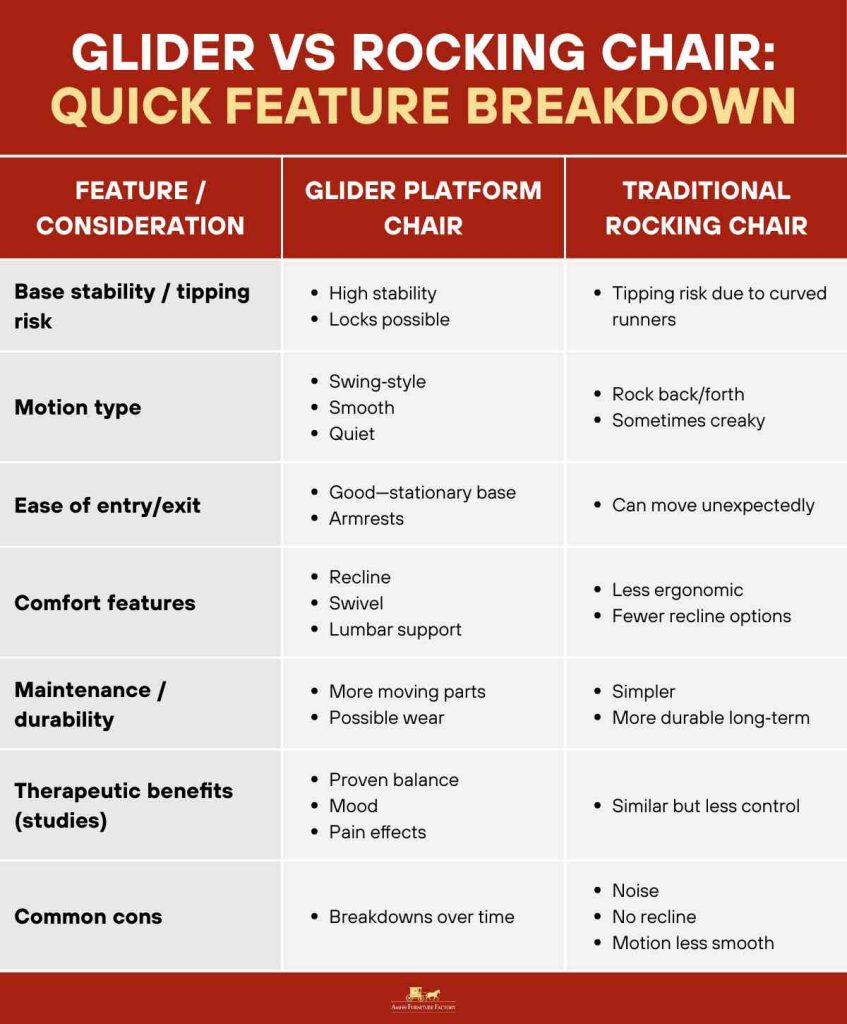
Stability is a major concern for seniors, and gliders usually have the advantage here. Because gliders have a flat, stationary base with a smooth sliding motion, they stay firmly in place as you move. This makes them safer for those with balance, strength, or coordination issues. Rocking chairs have curved legs and can tip slightly forward or backward depending on how you shift your weight, which might be risky for some seniors. Plus, rocking chairs can move unexpectedly when sitting down or standing up, requiring more effort and balance. This can be challenging for people with arthritis or mobility issues. As Christian says:
“From a safety standpoint, gliders generally offer more stability for older adults, particularly those with balance issues, weaker leg strength, or limited coordination. They also tend to have wider armrests and steady platforms that make it easier to push up to a standing position.”
Comfort and Motion
Both gliders and rocking chairs offer soothing rhythmic motion that many find relaxing. Gliders provide a smooth, steady glide that is gentle on aging joints. Rocking chairs have a more dynamic rocking motion that some find invigorating. In terms of comfort, gliders usually have better ergonomic features like high backs, lumbar support, and cushioned armrests. Traditional rocking chairs often lack adequate spinal support unless you add cushions or modifications. Christian explains:
“A traditional rocking chair moves in an arc, pivoting on curved legs. This motion can feel soothing, but it also means the chair shifts its center of gravity with each rock, which can make balance trickier, especially when sitting down or standing up.”
Key Features to Look for in a Senior-Friendly Chair
When choosing a chair for seniors, comfort is about support, accessibility, and safety. Look for:
- Comfortable and Supportive Seating: Firm seat with enough height to ease sitting down and standing up; prevents strain on knees and hips.
- Sturdy Armrests: Padded and strong enough to support weight when getting up or sitting down, enhancing stability and safety.
- High Backrest with Lumbar Support: Provides full back and neck support for comfort during long periods of sitting, especially important for those with back issues.
- Motion Chair Benefits: Smooth gliding movement, quiet operation, and optional locking features to prevent accidental movement and improve ease of use.
- Easy Assembly: Pre-assembled or tool-free design to simplify setup for seniors or caregivers, minimizing hassle.
Maintenance-Friendly Covers: Removable and washable fabric covers to keep the chair clean and fresh with minimal effort. - Personalization: Consider individual needs such as joint pain or recovery status, as these affect which chair features will be most beneficial.
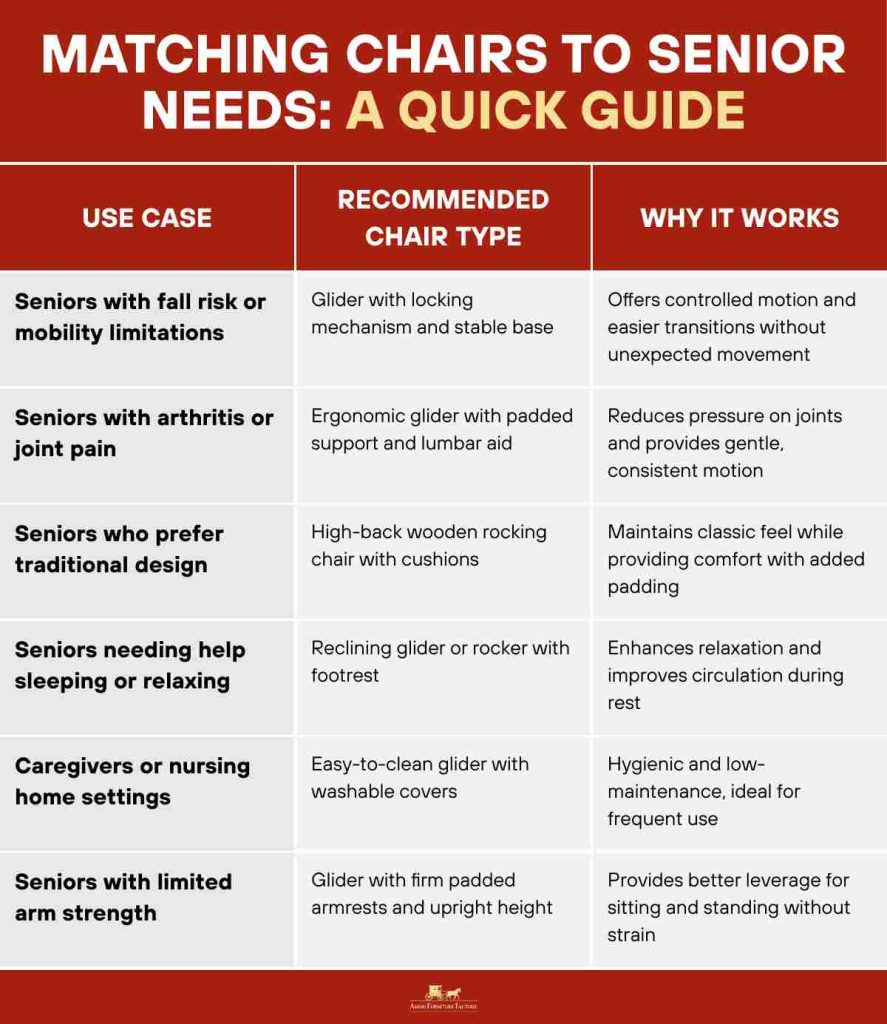
Not every senior has the same needs, which is why the best chair for one person may not work for another. Whether someone is dealing with joint pain, recovering from surgery, or simply wants a cozy place to read, the right chair can make a big difference. Christian summarizes:
“For seniors who want gentle movement without compromising stability, a glider with a lock feature is often the safest choice. Rocking chairs can still be comfortable for those with good mobility, but they require a bit more caution when getting in and out.”
Here’s a quick guide to help match the chair type with specific senior use cases:
Glider vs Rocking Chair: Which Is Better for Seniors?
If we’re talking strictly safety, support, and ease of use, gliders generally come out ahead for most seniors. Their smooth, stable movement and fixed base offer more predictability, making them easier to get in and out of, especially for those with balance or mobility issues. That said, rocking chairs still have their place, especially for those who enjoy the nostalgic motion and don’t face major mobility limitations.
For some seniors, the act of rocking brings emotional comfort that outweighs the practical concerns. In the end, the “better” option depends on the person, how mobile they are, what level of support they need, and what kind of motion they find most relaxing.
Frequently Asked Questions
Is rocking in a rocking chair exercise for seniors?
Yes, rocking in a chair is exercise in a gentle way. The rocking motion can help engage core muscles, improve circulation, and even boost balance over time. It’s not a substitute for walking or physical therapy, but it’s a low-impact movement that can offer small physical and mental benefits.
Can a rocking chair help with back pain in seniors?
It depends. Some seniors find relief from the gentle motion, which can ease tension in the lower back. However, traditional rocking chairs often lack proper lumbar support. For chronic pain, a cushioned glider or a rocker with ergonomic support is usually the better choice.
Do gliders or rocking chairs take up more space?
Gliders typically take up a bit more space due to their wider base and sliding mechanism. However, the difference isn’t dramatic. Rocking chairs may be slightly more compact, but both require clearance for motion, so placement matters more than size alone.
What specific safety features should I look for when buying a glider chair for an elderly person?
Look for a locking mechanism, non-slip base, sturdy armrests, and firm seat height to allow for easier standing. Padded coverings and lumbar support are also helpful. If possible, choose a model with washable covers for convenience and hygiene.
Hazard przybiera różne formy, od gier stołowych po zakłady sportowe i automaty. Coraz więcej osób szuka bezpiecznych platform, dlatego popularność zyskuje legalne kasyno online niemcy, które oferuje uczciwe i regulowane doświadczenia dla graczy.