
There’s something special about a bookcase that goes beyond simple storage. It tells a story, holds memories, and brings warmth to a room. When crafted by Amish furniture makers, that story becomes even richer, rooted in generations of tradition, care, and craftsmanship. Amish bookcases are thoughtfully shaped from solid wood with attention to detail that honors both function and beauty.
Key Takeaways:
- Amish bookcases are handcrafted from solid wood using time-tested techniques.
- Common types of bookcases include standard bookcases, barrister bookcases with glass doors, large library bookcases, corner bookcases, and room divider styles.
- Some Amish makers also offer modern options like ladder designs, cube shelves, and floating bookcases, often as custom pieces.
In this article, we’ll explore the timeless types of bookcases made by Amish artisans, each with its own character, purpose, and charm, and why these enduring designs continue to find a place in homes that value quality and heritage.
What Makes Amish Bookcases Unique?
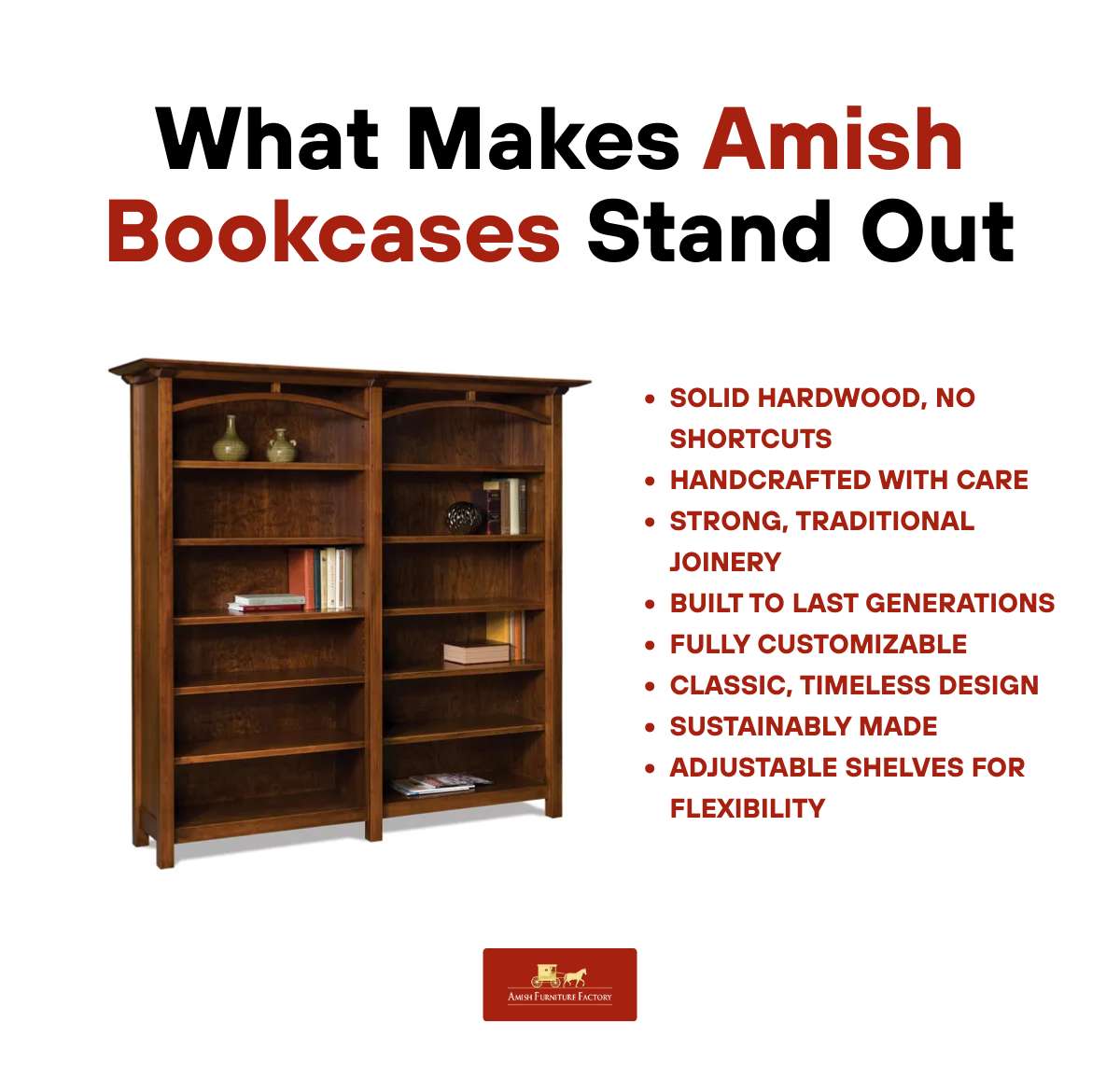
At the heart of every Amish bookcase is a commitment to handcraftsmanship. These pieces aren’t cranked out on assembly lines or made to survive a single move. They’re built slowly, using time-honored joinery techniques and solid hardwoods like oak, cherry, maple, or walnut. As Ja’Nae Murray, Director of Marketing at Western Passion, a company dedicated to sourcing quality western merchandise including furniture, states:
“What makes Amish bookcases distinct is their use of solid hardwood, understated design, and classic joinery techniques. I’ve always admired how they focus on structural strength, longevity, and balanced form rather than unnecessary decoration.”
Beyond materials and methods, Amish bookcases reflect a quiet design philosophy. There’s a balance of form and function that feels intentional. Nothing is overly ornate, but nothing is accidental either. Every product is a reflection of the builder’s eye, not just a design trend.
Timeless Types of Amish Bookcases
Types of Amish bookcases include traditional styles like barrister and library cases, as well as more contemporary designs, all crafted with solid wood and expert workmanship. These bookcases come in configurations to suit nearly any need, offering features like open or closed shelving, glass-front doors, drawers, and adjustable compartments.
Here’s a more detailed look for each type:
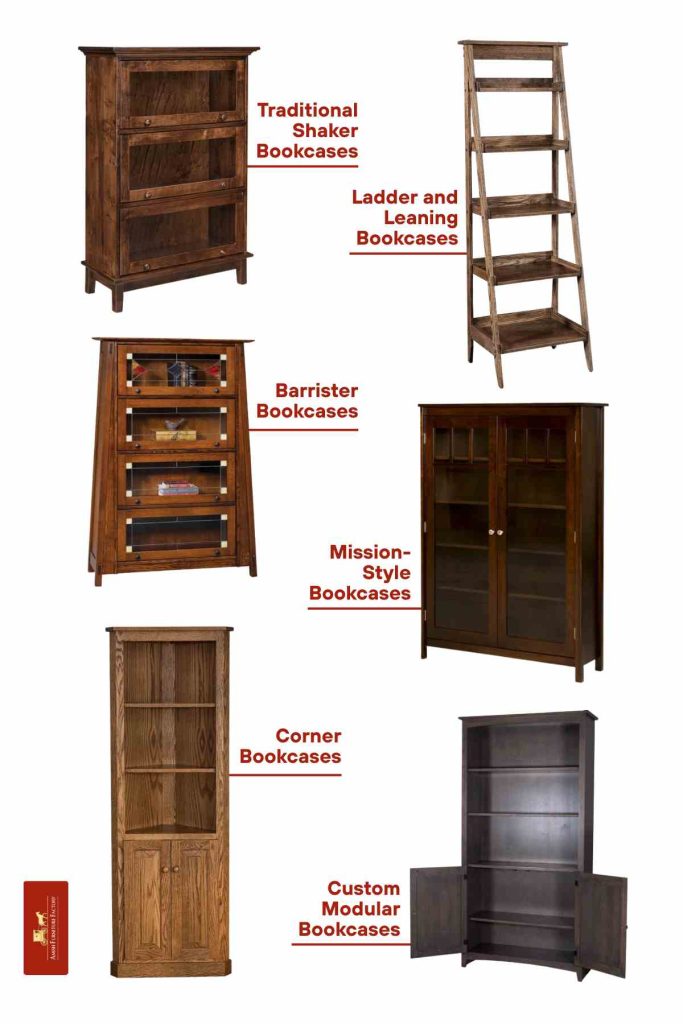
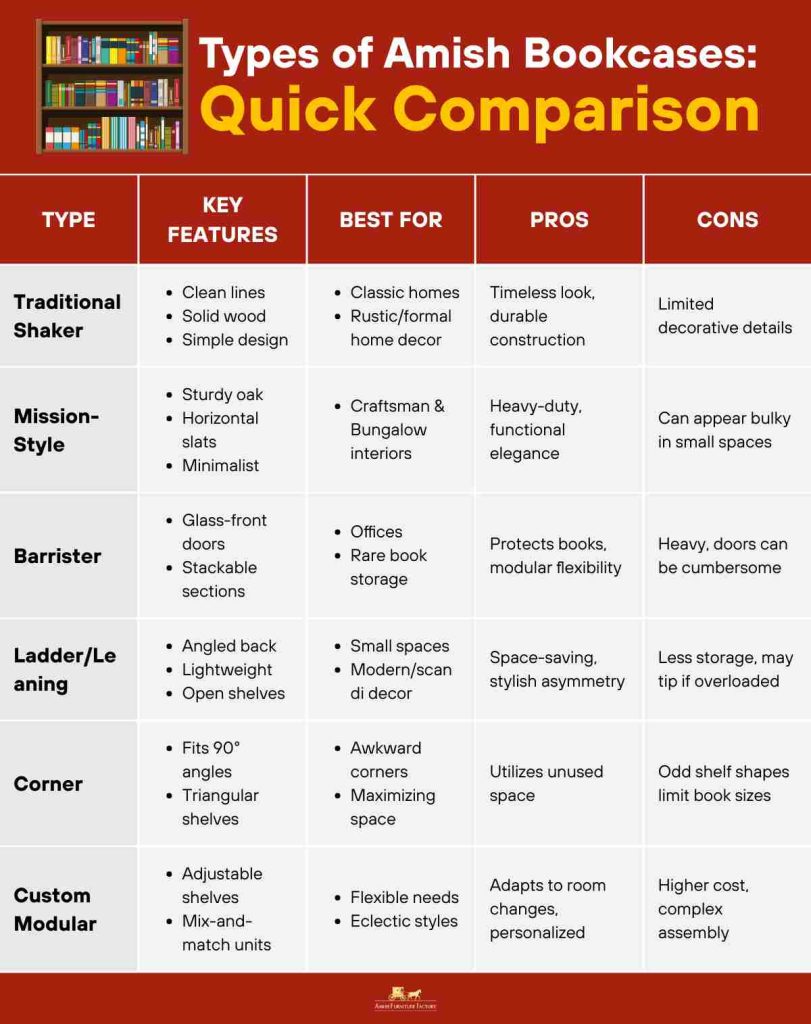
Traditional Shaker Bookcases
Traditional bookcases Shaker style are known for their clean lines, subtle curves, and understated elegance. Amish woodworkers embrace this philosophy wholeheartedly, creating pieces that highlight the natural beauty of the wood without unnecessary embellishment. Shaker bookcases often feature adjustable shelves and minimal hardware. Ja’Nae Murray further elaborates on this, stating:
“Traditional bookcases usually have soft curves or molding but remain earthy in its utilitarian design. The distinguishing factor among them is the quality of construction and the thought behind each cut and joint. They are not simply pieces of furniture. They are permanent installations designed to function and endure.”
Mission-Style Bookcases
Rooted in the Arts and Crafts movement, Mission-style bookcases are defined by their straight lines, sturdy frames, and prominent grain patterns. Amish versions of these pieces tend to include subtle decorative elements like vertical slats or exposed joinery, adding a handcrafted richness without veering into ornamentation.
Barrister Bookcases
Barrister bookcases bring a touch of refinement and tradition, originally designed to protect legal volumes behind glass-front doors that lift and slide back into place. Amish-made barristers retain this smart, stackable functionality while updating the look with high-quality hardwood and dovetail construction.
Ladder and Leaning Bookcases
For a more relaxed or contemporary feel, Amish artisans also build ladder and leaning-style bookcases that combine modern form with time-tested construction. These pieces angle gracefully against the wall, with descending shelf depths from top to bottom. While more casual in design, they’re still made from solid wood and built with the same care as traditional pieces.
Corner Bookcases
Corner bookcases are a clever solution for maximizing storage in tight or awkward spaces. Amish woodworkers create these units with precise angles and thoughtful proportions to make them feel integrated rather than improvised. Whether open-shelved or enclosed, they offer an efficient way to add warmth and function to overlooked corners in a room.
Custom Modular Bookcases
For those with specific storage needs or evolving spaces, Amish custom modular bookcases offer flexibility without compromising on craftsmanship. These units can be built as standalone pieces or combined into larger systems, allowing homeowners to design layouts that grow with their collections.
Explore our collection of handcrafted Amish bookcases and discover the perfect addition to your home.
Choosing the Right Amish Bookcase for Your Space
Selecting the right Amish bookcase starts with understanding both the function of your space and the style you want to maintain or enhance. Amish craftsmanship stands out for its quality, customization, and timeless aesthetic, but it’s also highly adaptable. Whether your home leans traditional, modern, rustic, or somewhere in between, the right bookcase can serve both practical needs and visual harmony. The key is to approach the decision with intention, from placement to materials to styling.
Here’s how to make an Amish bookcase work perfectly with your current setup:
1. Assess the Dimensions of Your Space
Consider the room’s layout and how the bookcase will function within it. A tall, narrow bookcase works well in tight areas like hallways or corners, while a wider, lower unit can anchor a living room, act as a console under a TV, or serve as a subtle room divider in open-plan layouts.
2. Define Your Storage and Display Needs
Think about what you’ll store or showcase. Oversized art books, framed photos, keepsakes, or everyday reads all require different shelving configurations. Also, decide if you need adjustable shelves, closed cabinets, or a mix of both for flexibility and tidiness.
3. Choose Between Open and Closed Shelving
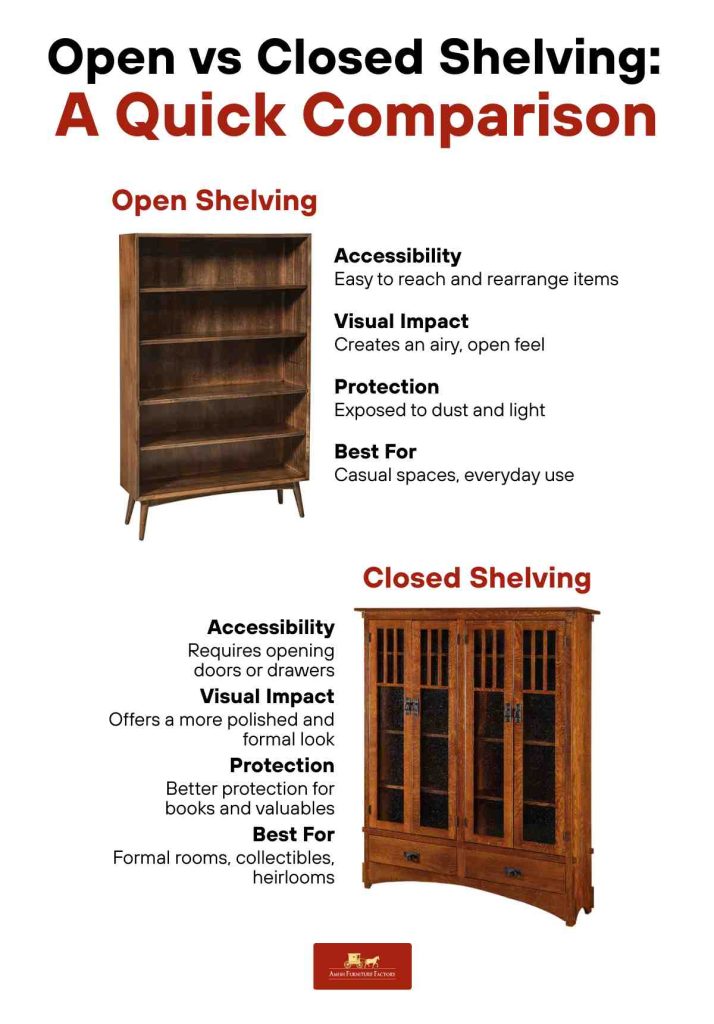
Open shelves offer accessibility and create an airy, casual feel. They are great for items you use regularly or want to display. Closed shelving helps keep dust out and hides clutter, which is ideal for more formal spaces or storing less-attractive essentials.
4. Select a Wood Type and Finish That Complements Your Decor
This is where the Amish aesthetic meets your personal style. For modern interiors, lighter woods like maple or cherry with smooth finishes and clean lines tend to work best. Traditional or farmhouse settings pair well with darker woods like oak or walnut, often with richer stains and classic details. Medium-toned finishes offer versatility in transitional spaces.
5. Match Visual Details for Cohesion
To ensure the bookcase integrates naturally, look at existing wood tones, flooring, cabinetry, or hardware in the room. Choose a finish or accent that complements those elements. Matching metal pulls or coordinating stains can make the new piece feel like it’s always belonged.
6. Add Thoughtful Styling Elements
Even the best bookcase benefits from styling. Use woven baskets for storage, layer books both vertically and horizontally, and incorporate decorative objects like ceramics, framed photos, or greenery. This helps soften the look of the solid wood and gives the bookcase a lived-in, curated presence.
7. Customize When Possible
Take advantage of the fact that many Amish furniture makers allow customization. Adjusting height, width, number of shelves, door styles, or even choosing a custom stain ensures your bookcase fits your space precisely, functionally and visually.

Long-Term Value and Care Tips
One of the greatest advantages of investing in an Amish bookcase is its long-term value. These are not throwaway pieces, but meant to be passed down. Crafted from solid hardwoods with traditional joinery, Amish bookcases resist warping, sagging, and the general wear that plagues mass-produced furniture.
Caring for an Amish bookcase is refreshingly simple. Dust furniture regularly with a soft, dry cloth, and use a slightly damp cloth for deeper cleaning when needed. Avoid harsh chemical cleaners. A bit of mild soap and water is enough, followed by drying with a clean cloth. Keep the piece away from direct heat or sunlight to prevent fading or drying out the wood. With just a bit of basic maintenance, your bookcase can look as beautiful in twenty years as it did the day it arrived.
Conclusion: Why an Amish Bookcase is a Worthwhile Investment
An Amish bookcase is a statement about what you value: craftsmanship over convenience, longevity over trends, and authenticity over mass production. Whether you choose a classic Shaker design or a modular custom piece, you’re getting something that’s made to last and made with care. It will age gracefully, serve reliably, and quietly anchor the spaces where life unfolds.
Frequently Asked Questions
What types of wood are most commonly used in Amish bookcases?
Amish bookcases are typically made from solid hardwoods such as oak, cherry, maple, and walnut. Each wood has its own distinct grain pattern, color, and durability, allowing you to choose based on both aesthetics and performance.
Can I customize the size and style of an Amish bookcase?
Yes, most Amish furniture makers offer customization options. You can usually adjust dimensions, choose your wood type, select a finish, and even modify the configuration — from open shelving to added doors or drawers.
How long does it take to receive a custom Amish bookcase?
Custom Amish furniture is made to order, so lead times typically range from 6 to 12 weeks. Timelines can vary based on the complexity of the piece, availability of materials, and the builder’s current workload.
Are Amish bookcases more expensive than mass-produced furniture?
Generally, yes. But with good reason. Amish bookcases are handcrafted using solid wood and traditional techniques. While the upfront cost is higher, the durability, beauty, and lifespan of these pieces often make them more cost-effective in the long run.