
If you’ve ever shopped for furniture or tried your hand at building it, you’ve probably come across the terms hardwood vs softwood lumber. At first glance, it sounds like one is tough and the other isn’t — but it’s not quite that simple. These labels don’t refer to how hard or soft the wood is, but rather the type of tree it comes from. Still, the differences between them matter a lot when it comes to making furniture.
Key Takeaways:
- “Hard” and “soft” primarily classify trees by seed type (flowering vs. cones), not always by actual density or hardness.
- Choose hardwoods (oak, maple, walnut) for furniture that needs to be exceptionally strong, long-lasting, resistant to dents, and visually rich with diverse grain patterns.
- Opt for softwoods (pine, spruce, fir) for budget-friendly projects, lighter-use items, rustic styles, or furniture that will be painted. They are easier to work with.
- The best wood depends entirely on your specific furniture project’s needs, budget, desired look, and intended use.
In this article, we’ll break down what sets them apart and help you figure out which one makes the most sense for your woodworking project.
What Is Hardwood?
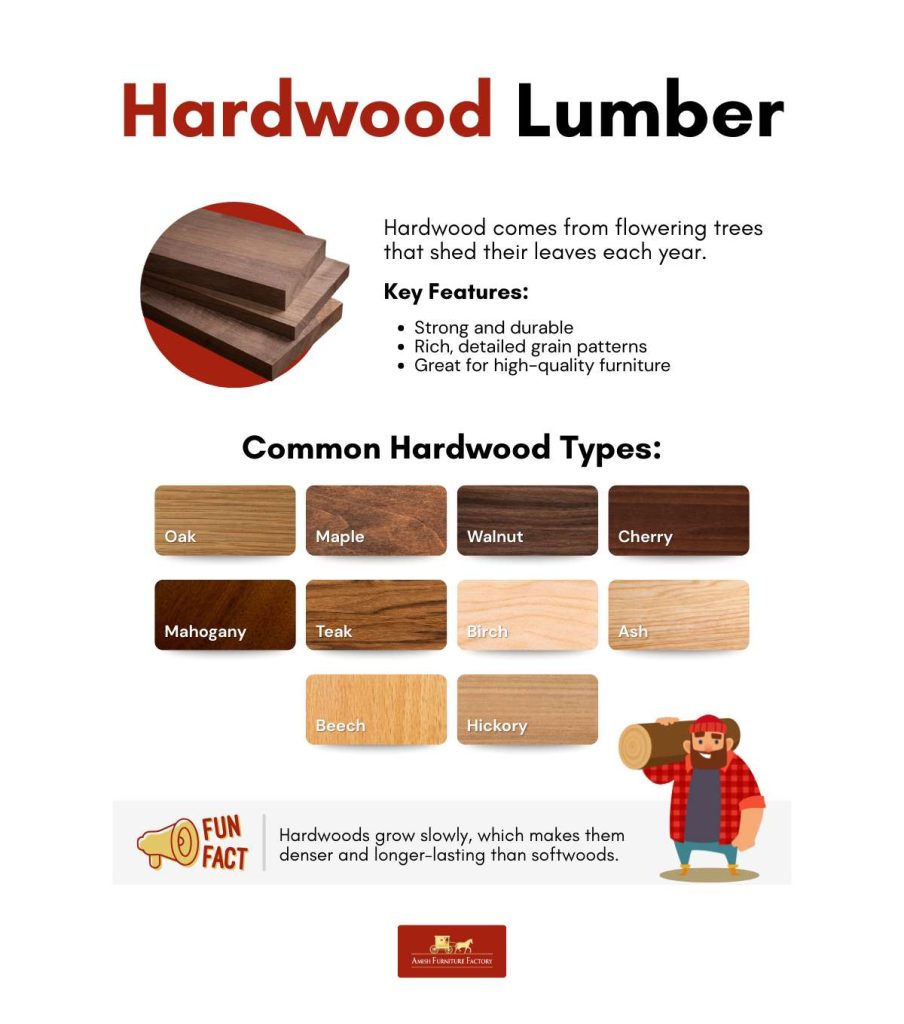
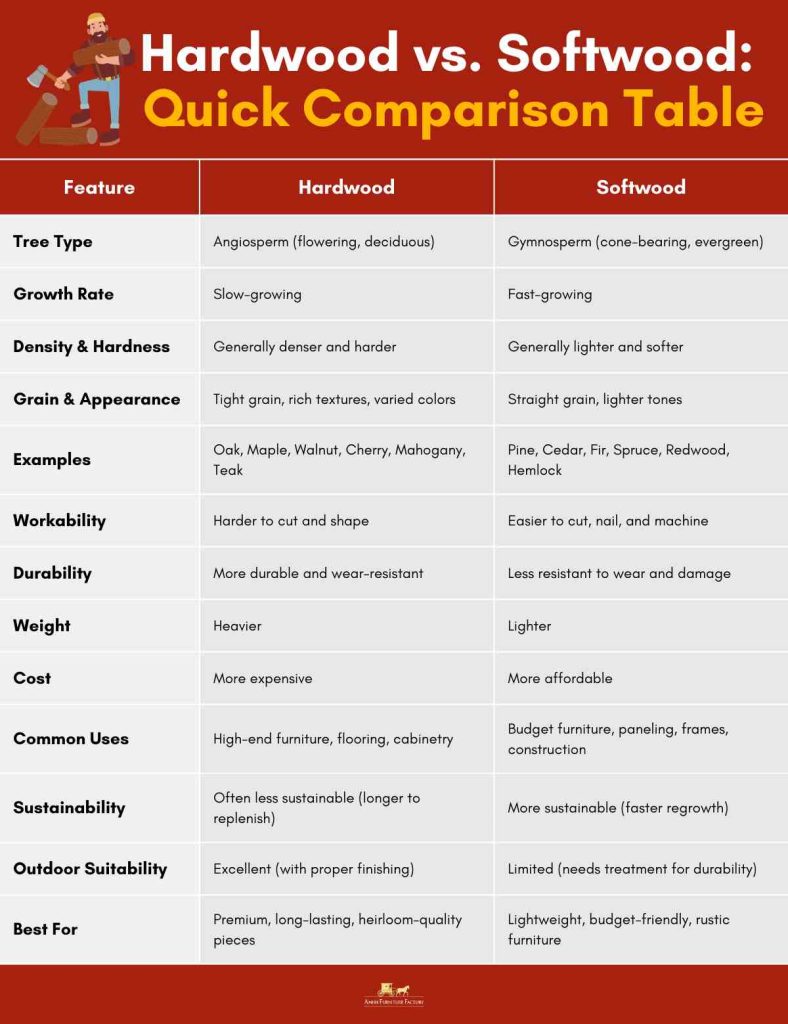
Hardwood is the go-to choice when you want furniture that’s built to last — the kind of solid, dependable pieces that can become family heirlooms. It comes from angiosperm trees, which are flowering trees like oak, maple, walnut, and cherry. These trees drop their leaves each year (they’re deciduous) and grow slowly, which results in wood that’s naturally dense, tough, and full of character. That slow growth also gives hardwood its tight grain patterns and rich, complex colors — details that make each piece of furniture unique.
Because of its strength and durability, hardwood can handle daily wear and tear much better than softwood. It’s resistant to dents, scratches, and even rot, which is why it’s so popular for high-quality furniture. In fact, hardwood dominates the timber market, making up about 60% of global wood use in 2024.
Ready to transform your home with the timeless beauty of interior hardwood? Explore our wide selection and find the perfect flooring solution for your space today!
What Is Softwood?
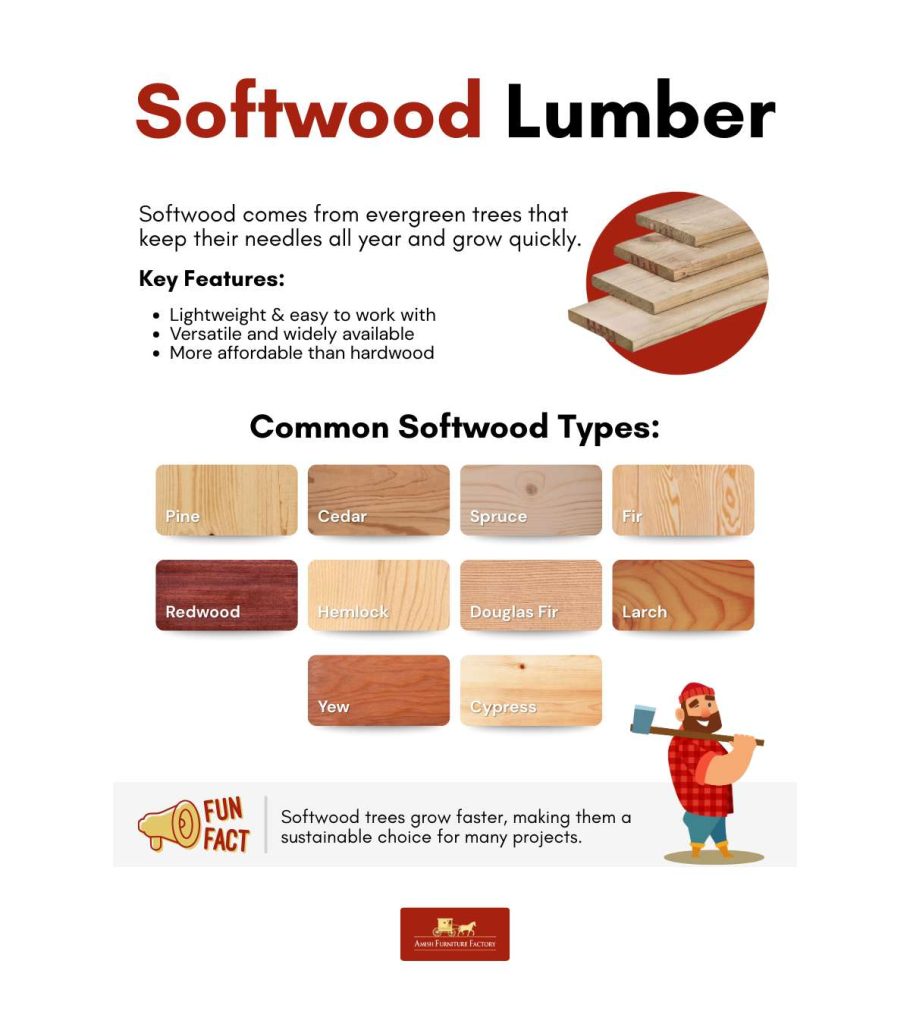
Softwood comes from fast-growing coniferous trees like pine, spruce, and fir. It has a simpler cellular structure than hardwood, resulting in a lighter weight, open grain, and softer texture—making it more prone to dents and scratches. Softwoods are typically light in color with visible growth rings, and despite the name, many have a strong strength-to-weight ratio and hold nails and screws well.
Claire Tamburro, Principal of Tamburro Interiors, elaborates on the characteristics and uses of softwood:
“Soft woods such as pine are soft and are easily dented and scratched. For example, I can write my name in softwood pine by just using my thumbnail. Pine wood has a distinctive wood grain and often has knots in it that are prone to cracking, making it less attractive for furniture because it is not as structurally stable.”
Hardwood vs Softwood Lumber: Which is Better for Furniture?
When it comes to furniture, hardwood is generally the better choice. Its higher density, strength, and durability make it ideal for pieces that need to last, like dining tables, minimalist bedframes, or cabinets. Hardwood also resists moisture, scratches, and insect damage better than softwood, and its rich grain patterns add a level of beauty and craftsmanship that softwood often can’t match. While softwood can work for budget-friendly or lightweight furniture, hardwood offers greater longevity and a more premium look and feel.
Here’s a closer look at the factors that determined that answer:
Durability, Longevity, and Workability
When it comes to sheer toughness and how long a piece of furniture will realistically last, hardwoods generally have the upper hand. Their durability directly translates to longevity, with hardwood furniture often outliving generations. However, this robustness comes at a cost in terms of workability; hardwoods are tougher on tools and require more effort to cut, shape, and join.
Shaun Green, Senior Interior Designer at The Furniture Shack notes:
“Hardwoods like oak, walnut and maple boast tight grains and natural density that resist dents and scratches which is ideal for durable furniture, such as dining tables or office desks.”
Finishing, Maintenance, and Aesthetics
Hardwoods offer a breathtaking array of rich colors, intricate grain patterns, and unique figures, allowing for truly sophisticated and diverse designs that often deepen in beauty with age. Softwoods, while charming in their own right, typically present a more uniform, lighter aesthetic, often with prominent knots that suit rustic or casual styles.
For maintenance and overall longevity, Mike Fretto, Creative Director at Neighbor, shares:
“Hardwood is far more resistant to wear and tear, largely because it is a lot more dense. Hardwood is also a lot more water-resistant. That’s why I would especially recommend it over softwood for outdoor furniture. My company primarily works with teak for our outdoor furniture, which is a type of harwood, and that water-resistance is part of the reason why we like it so much.”
Cost and Budget
For many furniture makers and consumers, the budget is a primary driver, and here, softwoods generally win hands down. Their faster growth rates and more abundant supply translate directly into lower material costs, making them ideal for large-scale production, starter projects, or furniture intended for less rigorous use.
Environmental Impact and Sustainability
Softwoods, due to their rapid growth cycle, are often seen as a more quickly renewable resource, making them a very sustainable choice when sourced from responsibly managed plantations. The key for either is always to look for certifications like FSC (Forest Stewardship Council) to ensure responsible harvesting practices.
How to Choose the Right Wood for Specific Furniture Projects
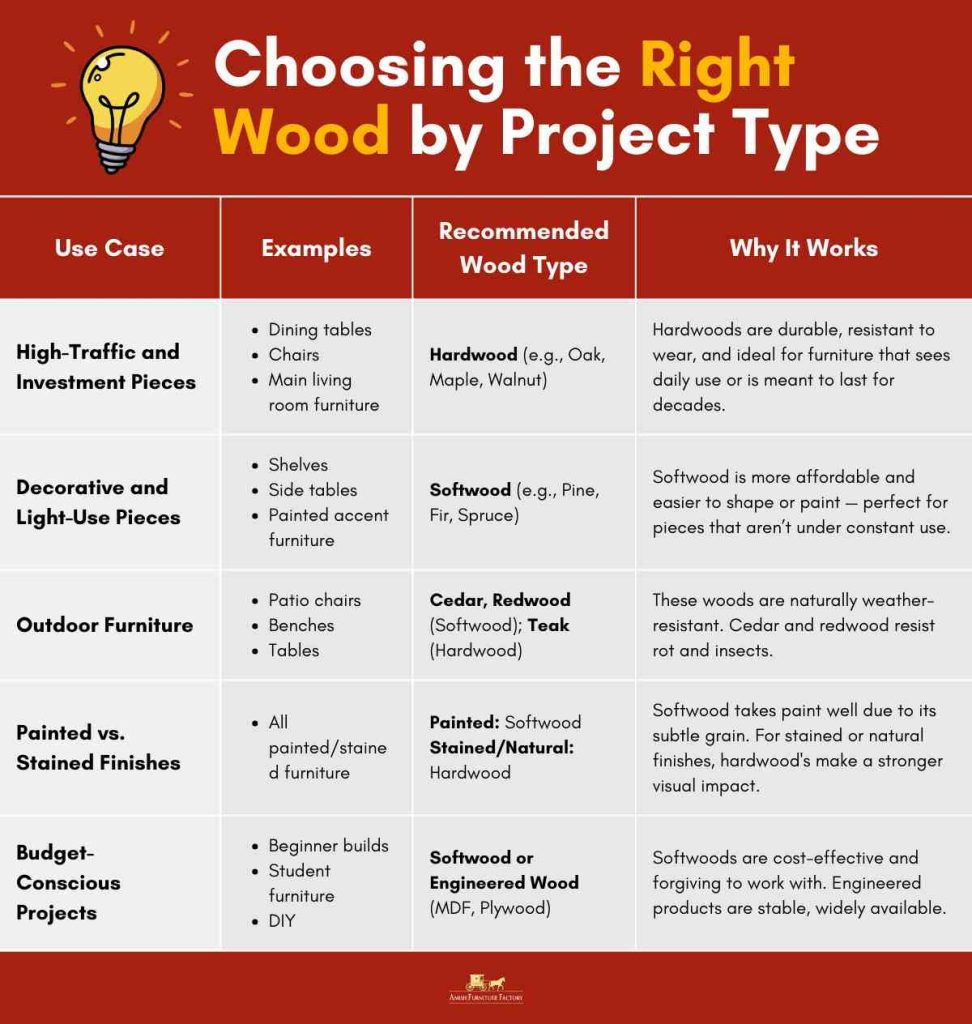
Picking the right wood really comes down to what your furniture will face every day. From my own experience, if you want something tough that lasts—like a dining table or bed frame—hardwoods like oak or maple are your best bet because they can take a beating without losing their charm. I’ve found that if you’re going for that rich, classy vibe, walnut or cherry add amazing color and grain, but fair warning: they can be a bit trickier to work with if you’re just starting out.
For outdoor pieces, I always recommend cedar or redwood since they naturally resist moisture and bugs—trust me, nothing’s worse than your hard work rotting away after one rainy season. If you’re a beginner or want something lighter and easier to handle, softwoods like pine are your friends—they’re affordable and cut down on frustration. Ultimately, I always weigh durability, how easy the wood is to work with, how it looks, and what fits my budget and environment before deciding. It’s all about matching the wood to what the furniture really needs to do.
Here’s a guide to help you select wisely for different furniture applications:
Hardwood vs Softwood Lumber: The Final Choice
Ultimately, there’s no single “best” wood that reigns supreme across all projects; rather, it’s about understanding the inherent character of each and aligning it with your specific vision. The truly skilled craftsperson recognizes that the ideal wood is the one that perfectly marries function, form, and feasibility, bringing your furniture dreams to life with integrity and lasting appeal.
FAQs
What type of wood makes the highest quality furniture?
Hardwoods like oak, walnut, and maple are considered the highest quality for furniture due to their strength, durability, and attractive grain. Softwoods like pine are easier to work with and cheaper, but generally not as long-lasting.
Is softwood or hardwood ply better for furniture?
Hardwood plywood is typically better for furniture because it has stronger, more attractive hardwood veneers on the surface. It also holds screws and fasteners better, making it more durable overall.
What’s the best way to tell the difference between hardwood vs softwood lumber at a glance?
Look at the grain and texture—hardwoods usually have tighter, more complex patterns and may show pores, while softwoods often have straighter grain with more visible knots. Weight can also be a clue, as hardwoods are generally heavier.
Can I mix hardwood and softwood in the same furniture piece?
Yes, mixing both is common and often cost-effective. Use softwood for hidden or structural parts and reserve hardwood for visible, high-wear areas to balance strength, appearance, and budget.
I think this breakdown gets to the heart of a debate that’s often oversimplified. From my experience, the real decision isn’t “hardwood vs. softwood,” but how the piece will be used and what you expect from it over time—much like Buckshot Roulette, where the outcome depends on strategy rather than labels. Hardwoods like oak or walnut clearly earn their reputation when longevity, strength, and visual depth matter—especially for tables, chairs, or heirloom furniture that sees daily use.