
In a world dominated by clocks, calendars, and constant notifications, the Amish way of life offers a striking contrast. Time is experienced rather than tracked. Their daily routines are shaped by natural light, communal responsibilities, and deeply rooted traditions, which often leads people to wonder about the practical details of Amish life, including what time do Amish go to bed. This curiosity reflects a broader interest in how a community can function smoothly without the urgency and rigidity of modern timekeeping.
Key Takeaways:
- The Amish concept of time is closely tied to their religious beliefs and traditional way of life, emphasizing the importance of living in the present moment.
- Amish people typically go to bed early (around 8:00–9:30 PM) and wake before sunrise to match their labor-intensive lifestyle.
- They use traditional timepieces like pendulum clocks, reject Daylight Saving Time (often called “fast time”), and use community signals like bells to mark the day.
In this article, we explore the Amish concept of time and how it influences daily life, work, rest, and family rhythms.
Understanding The Amish Concept of Time
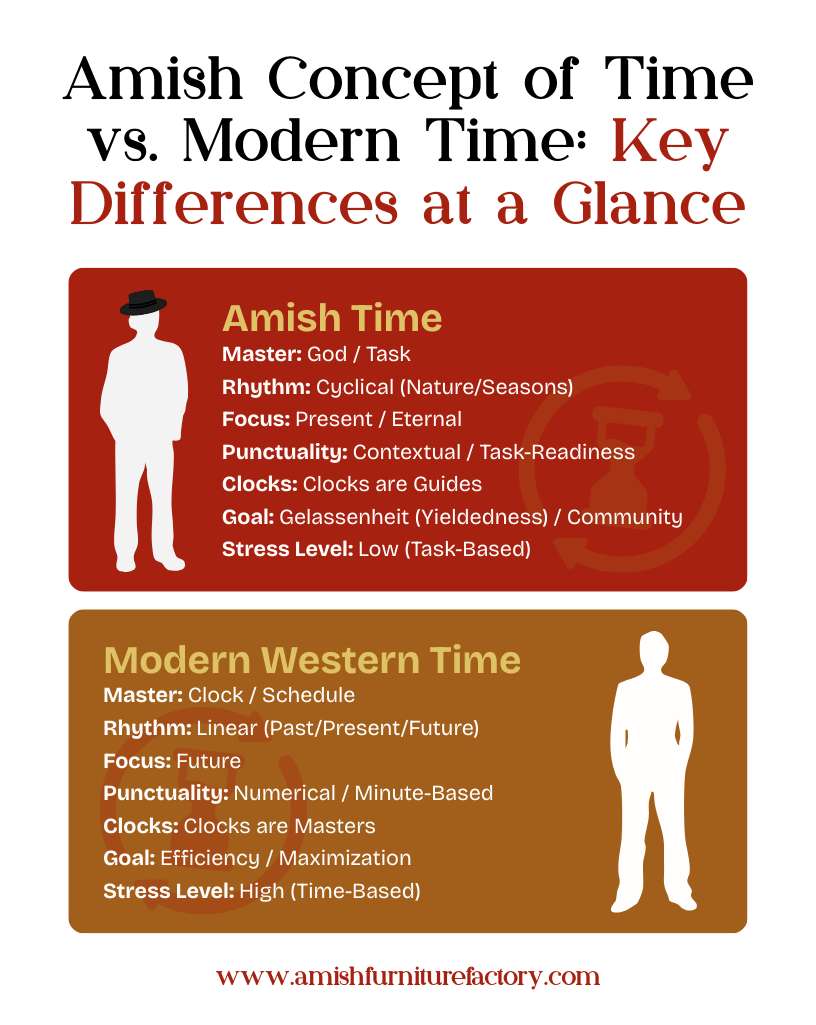
The traditional Amish people view time as cyclical rather than linear. One example of cyclical time is the changing of the seasons, which happens in a predictable cycle each year. Similarly, day and night cycles, the moon’s phases, and the planets’ movements all demonstrate natural cyclical patterns.
The Amish see the repetition of the seasons and the cycles of nature as evidence of God’s plan and order for the world. They believe in the idea of “steadfastness.” In practical terms, “steadfastness” for the Amish culture means being committed to their religious beliefs and practices. This includes regular church attendance, praying, and following the rules of their church community. The Amish religious beliefs dictate that focusing on the present moment rather than the future or past and living in harmony with nature is essential to leading a fulfilling life.
Amish Timekeeping Tools and Daily Rhythms
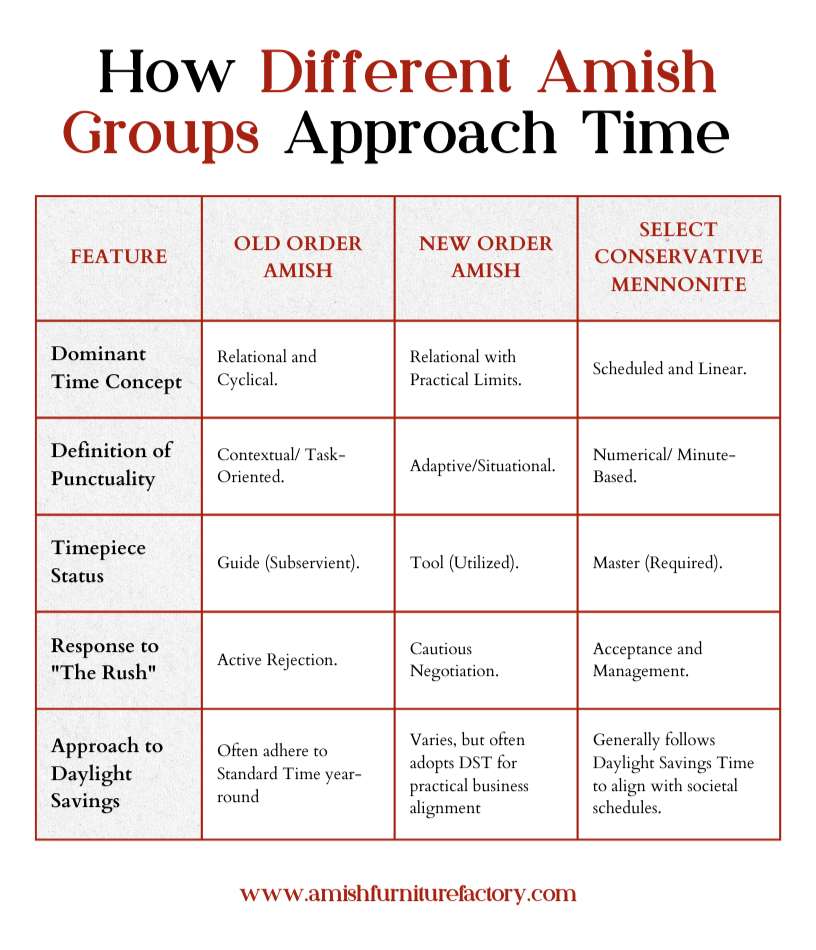
The Amish have never fully embraced the modern obsession with exact minutes and seconds. For them, time is a guide rather than a boss, shaped by purpose and routine instead of precision. Most Amish families rely on nature as their primary clock, with daily activities aligning closely with daylight hours. As sociologist Donald B. Kraybill notes in The Amish, “Amish life flows with the rhythms of nature,” a pattern deeply connected to farming, seasons, and natural cycles that signal when to wake, work, and wind down.
Although the Amish do use clocks and occasionally pocket watches, these tools are simple, functional, and not the focus of daily attention. Clocks are used to coordinate chores, church services, school, and community gatherings. But they are rarely checked obsessively or placed in every room. In addition, shared activities and community events act as informal time markers. Days structured around phrases like after morning chores or before supper rather than exact hours, reinforcing a collective rhythm that values harmony over precision.
How Different Amish Groups View Time
Not all Amish communities follow time in the same way. More conservative groups, such as the Swartzentruber Amish, rely almost entirely on natural cues and may keep very few clocks in the home. More progressive groups, like some Old Order districts, accept basic battery-powered clocks and allow pocket watches for work. These differences reflect broader cultural variations among Amish affiliations.
Amish Customs: “Fast Time” vs. “Slow Time”
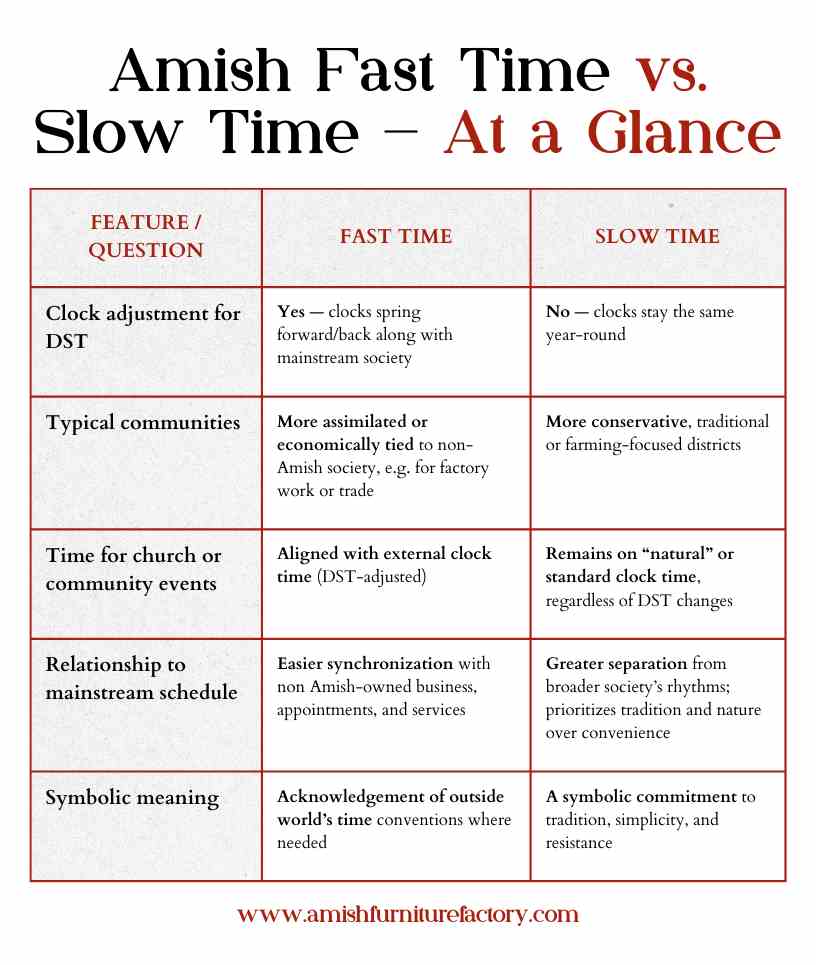
Among the Amish, the terms “Fast Time” and “Slow Time” refer to how different communities respond to the wider society’s use of Daylight Saving Time (DST). “Fast Time” describes those Amish who change their clocks along with mainstream society. “Slow Time,” on the other hand, refers to those who refuse the clock changes, preferring instead to stay aligned with what they consider the more natural and stable rhythm of “real” time. In some areas, this results in neighboring communities being on different clock times simply because of religious or cultural choices.
For many Amish, rejecting “Fast Time” is a way of consciously resisting what some call “the rat race.” Observing “Slow Time” reinforces separation from mainstream culture and protects a slower, more deliberate pace of life rooted in Amish religious traditions, nature, and community values.
What Time Do Amish Go to Bed?
Amish families generally keep early bedtimes, not because of rigid scheduling, but because their days begin long before sunrise. Most households wind down between 8:00 PM and 9:30 PM, depending on chores, seasons, and community rhythms. As science writer Linda Geddes notes in her field observations, Amish adults average 8 hours and 12 minutes of sleep in summer and 7 hours and 30 minutes in winter. This reflects a natural, season-driven sleep pattern rather than a clock-driven one.
Early rest isn’t just practical; it’s cultural. With a lifestyle centered on physical labor, farming, and household work, the Amish rely on consistent rest to sustain energy and health. Turning in early also creates space for quiet family time, evening devotions, and community-centered living.
Sunrise to Sundown: How Amish Daily Life Is Structured
From the first glow of sunrise to the calm quiet after sundown, each part of the day has its own purpose.
Seasonal Time Over Mechanical Time
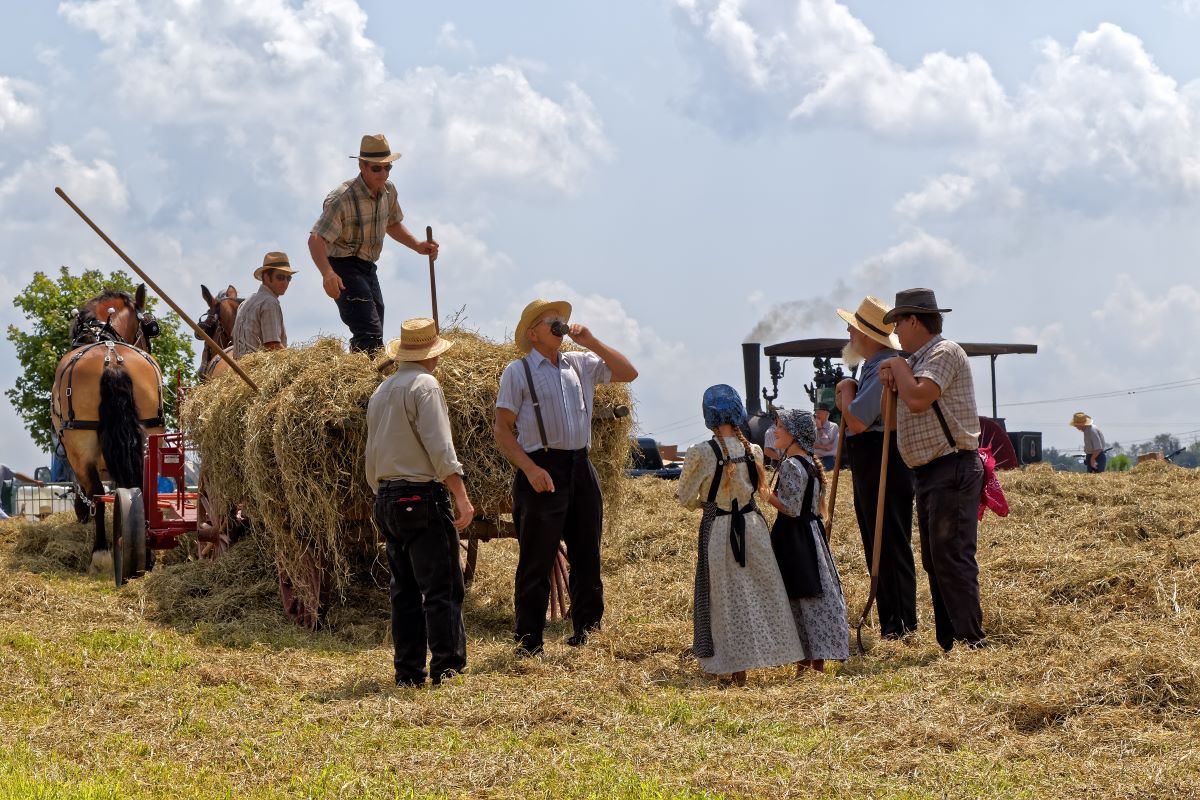
For the Amish, seasons are a far more powerful guide than the numbers on a mechanical clock. Planting, harvesting, food preservation, quilting, and even social gatherings naturally shift with the changing landscape. Summer invites long days in the fields, while winter encourages indoor work, family time, and slower rhythms.
Work Rhythms in Farming, Crafting, and Homemaking
Whether tending crops, building furniture, or maintaining a household, Amish work unfolds in fluid blocks of time shaped by necessity rather than strict schedules. Farmers may rise well before dawn to milk cows or hitch horses. Craftsmen adjust their days around orders, daylight, and community needs.
Time in Amish Worship, Community, and Social Life
Religious and community life also has its own rhythm that blends predictability with simplicity. Church services follow a biweekly rotation, lasting several hours and held in rotating homes or barns. Social events like barn raisings, Sunday visits, youth singings, and community meals flow around communal readiness rather than precise scheduling.
Follow the Amish Furniture Factory Facebook page to get a glimpse into the Amish way of life.
Conclusion
The Amish concept of time is grounded in their religious beliefs and values, their close relationship with nature, and the natural world’s rhythms.
The Amish believe that time is a gift from God and should be used wisely to serve God and the community. They believe in the importance of living in the current moment and making the most of each day rather than being preoccupied with the past or future.
Frequently Asked Questions
Do the Amish observe Daylight Saving Time?
While some Amish communities may choose to observe Daylight Saving Time for practical reasons, such as to avoid conflicts with the schedules of non-Amish neighbors, many Amish communities opt out of the time change altogether.
How do the Amish wake up on time?
The Amish generally wake up early in the morning, often before sunrise. Their waking time is often dictated by the natural rhythms of the seasons and the demands of their farm work. However, in cases where they need to wake up at a specific time, they may use an alarm clock or rely on other Amish community members to wake them up.
How many hours a day do the Amish work?
The amount of time the Amish work each day can vary depending on the season. During the spring and summer, the Amish may work up to 12 hours a day or more. When the weather is colder and the days are shorter during the fall and winter, the Amish may work fewer hours daily but still engage in various activities such as woodworking, quilting, and other crafts.
What is the Amish 3-Day Rule?
The “3-Day Rule” among the Amish is an informal guideline suggesting that visitors or newcomers should wait three days before making significant requests or expecting major help from community members. This period allows hosts to prepare, pace themselves, and ensure that their assistance fits naturally into daily routines.
Do Amish people take naps?
Yes, Amish people do sometimes take naps, though it depends on the season, workload, and age. Short rest periods are practical, especially during busy farming seasons or after early mornings. They help maintain energy for physically demanding chores.