
Furniture shopping can feel surprisingly overwhelming. Two pieces might look nearly identical, but their quality and price can vary wildly depending on what they’re made of. One of the biggest distinctions is whether a piece is solid wood or simply covered in wood veneer. It’s a detail that isn’t always obvious at first glance, but it makes a big difference in how a piece wears over time, how much it’s worth, and how it fits into your space. Whether you’re buying new or secondhand, knowing how to tell the difference helps you shop smarter and choose pieces that truly suit your needs.
Key Takeaways:
- Solid wood is made from real wood all the way through, while veneer has a thin wood layer over a core material.
- Solid wood feels heavier and shows natural grain, while veneer often looks smoother with visible seams.
- Choose solid wood for long-term use, or veneer if you want something budget-friendly and lightweight.
In this article, we’ll break down what sets solid wood and wood veneer apart, how to identify each one, and why the distinction matters more than you might think.
What is Wood Veneer Furniture?
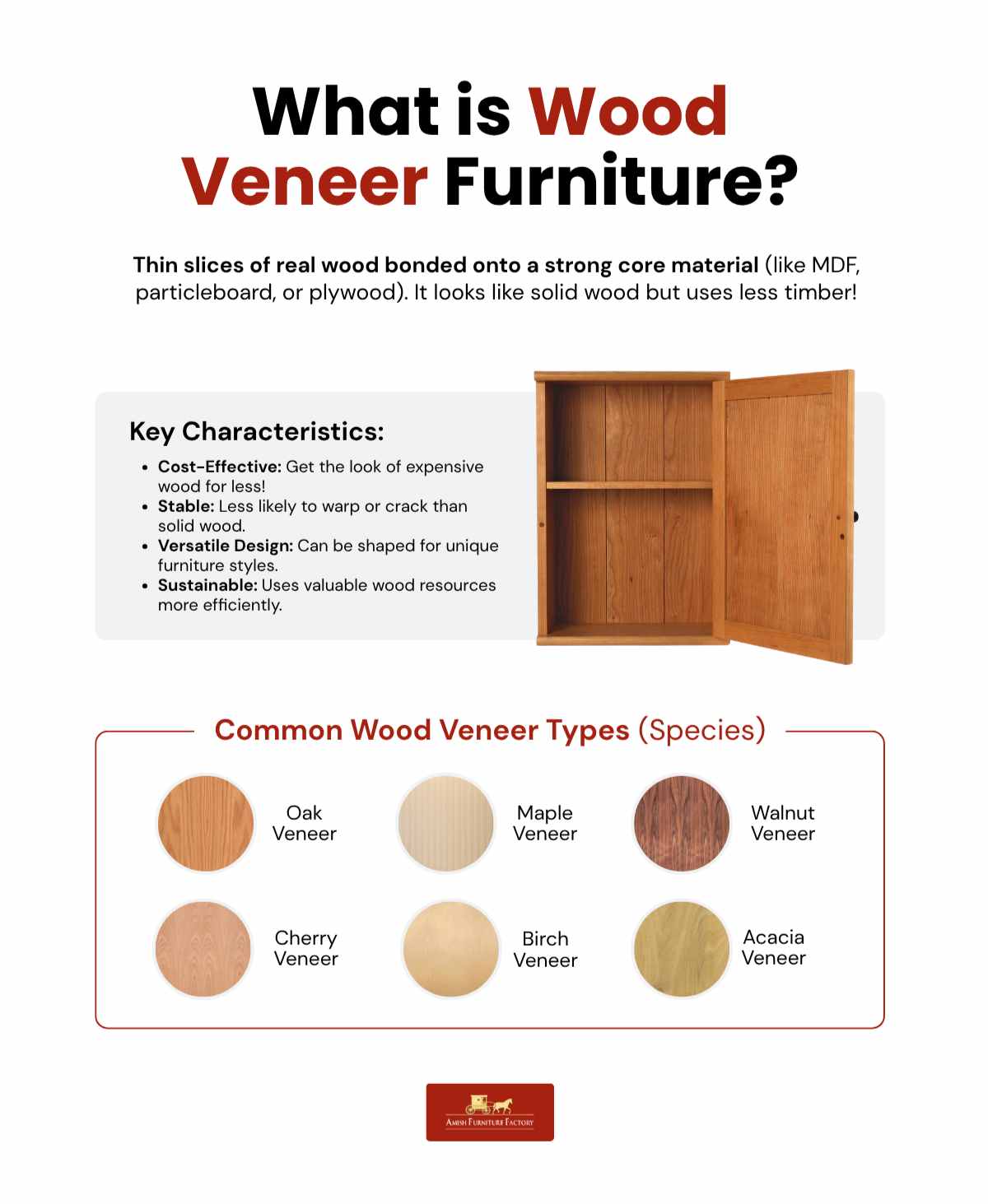
Wood veneer furniture is made by applying a thin slice of real wood, often less than 1/8 of an inch thick, over a core material like plywood, MDF (medium-density fiberboard), or particleboard. At first glance, it looks like solid wood because the surface is real wood. But underneath, it’s a composite base that provides structure and support. This technique is a centuries-old woodworking method used in everything from antique heirlooms to modern design pieces. Veneer allows manufacturers to use beautiful or rare wood species more efficiently, often resulting in a sleek, consistent finish that’s difficult to achieve with solid wood alone.
What is Solid Wood Furniture?
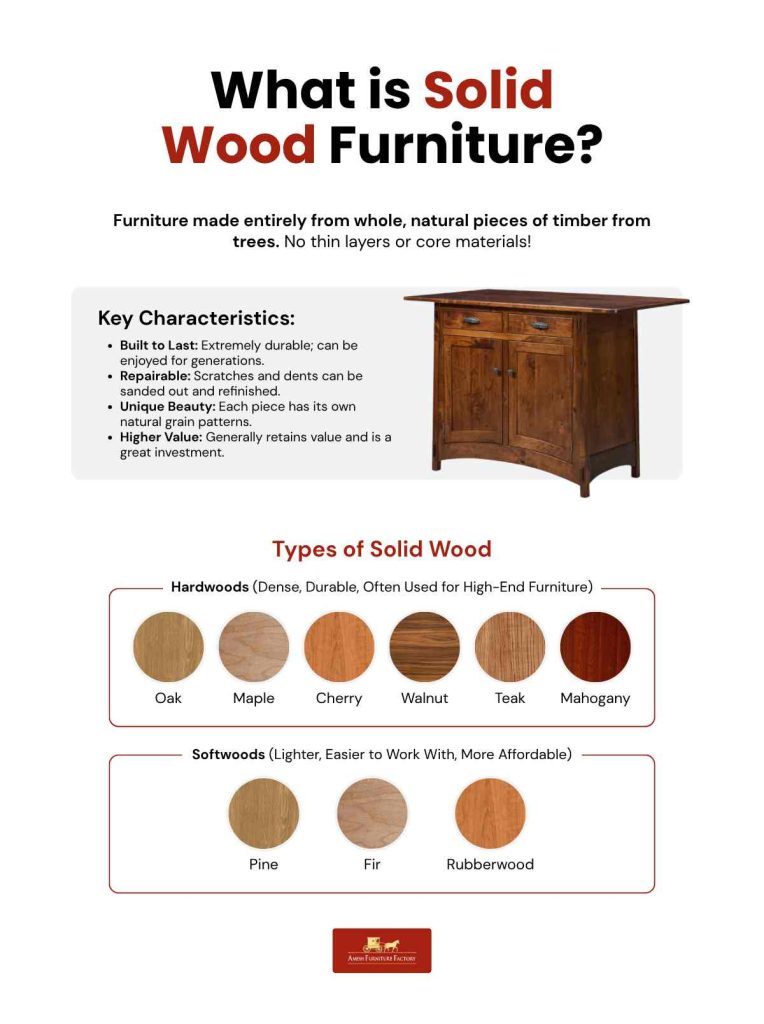
Solid wood furniture is exactly what it sounds like: pieces made entirely from planks of natural wood, with no engineered core or surface layer. Each component is crafted from whole cuts of timber, giving the furniture a certain weight, warmth, and individuality that many people associate with traditional craftsmanship. Because it’s made from real, unprocessed wood, no two solid wood pieces are exactly alike. The grain patterns, knots, and slight imperfections become part of the appeal, lending each piece a sense of character and authenticity.
Don’t settle for less – choose the durability and elegance of solid wood. Browse our premium collection of solid wood office furniture sets and find your perfect office solution.
Key Differences Between Wood Veneer vs Solid Wood Furniture
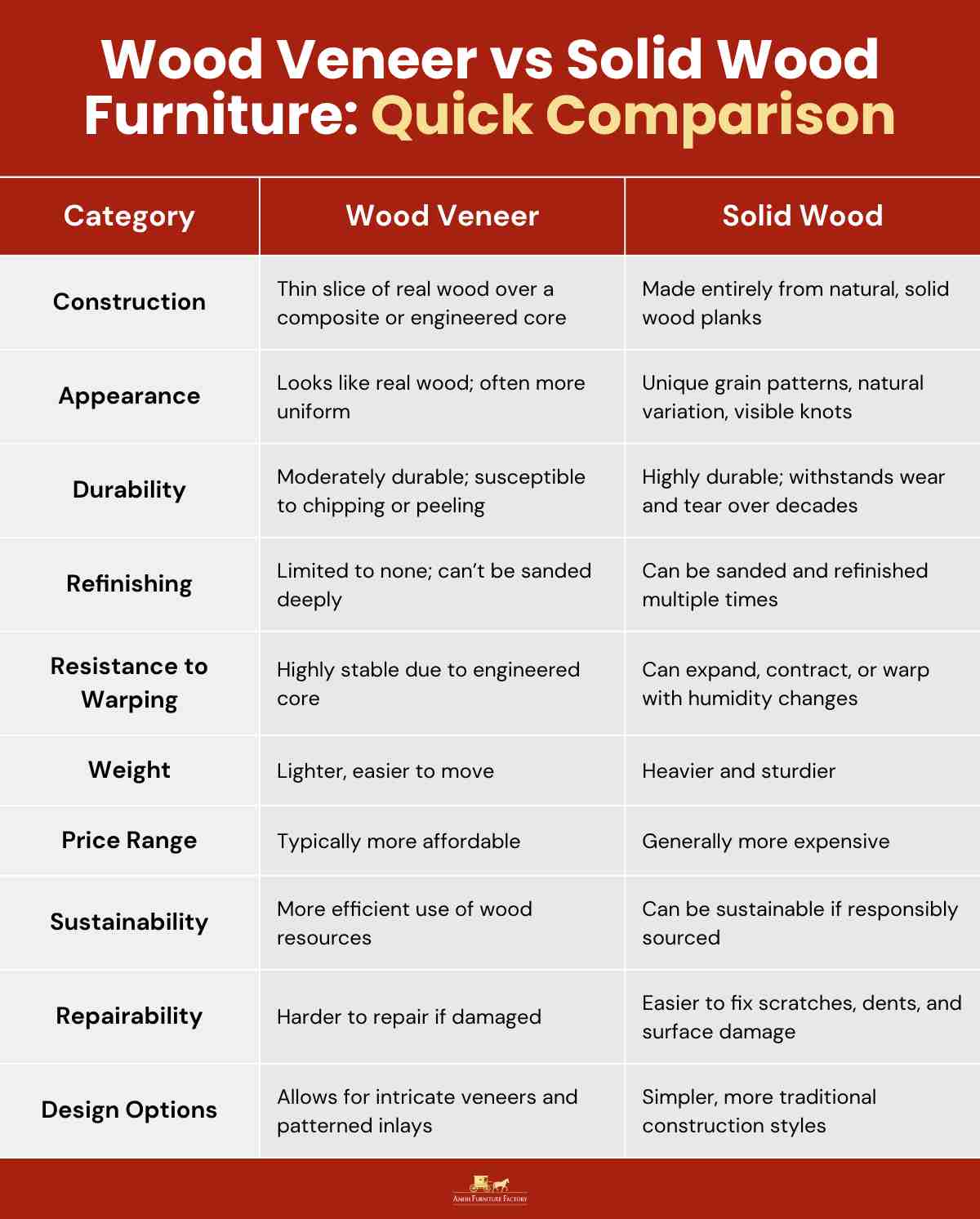
While wood veneer and solid wood can look nearly identical at first glance, the differences run more than surface deep. From how they’re constructed to how they age and wear over time, each material brings its own strengths and compromises. Understanding these key distinctions can help you make a more informed choice, whether you’re investing in a statement piece or furnishing on a budget.
Below is a side-by-side comparison to help clarify how they stack up across essential categories.
How to Tell If Something is Solid Wood or Wood Veneer?
Wood veneer and solid wood are both made from real wood, but they differ in how they’re built. Solid wood is crafted from a single, solid piece of wood throughout, while wood veneer is a thin slice of real wood glued onto a core material like plywood or MDF. This difference in construction affects everything from price and durability to appearance and maintenance.
Below is a deeper comparison between the two:
Visual Inspection
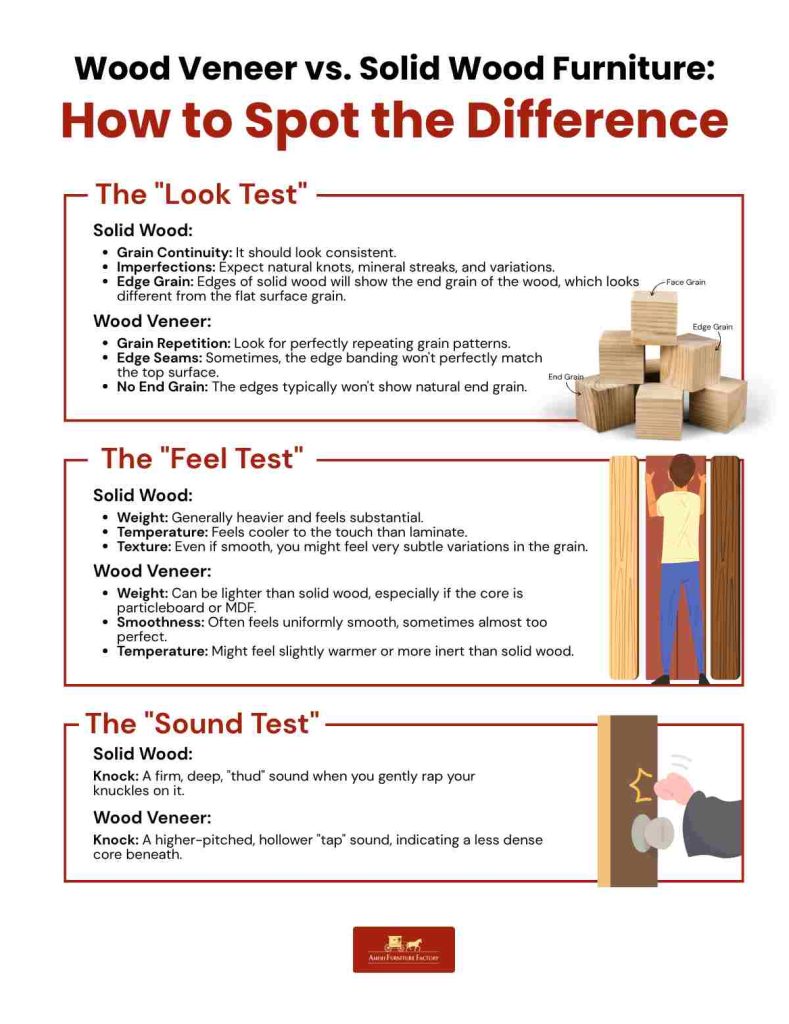
Start with the grain. In solid wood, the grain will continue seamlessly across the top and sides, even wrapping around corners in some cases. You’ll also notice natural irregularities, such as knots, color variations, or asymmetrical lines. Veneer, however, may show a repeating grain pattern, especially on large surfaces, which can look almost too perfect. Pay close attention to the edges and corners; veneer often reveals a thin line or seam where the layer ends. Shaun Green, Founder of The Furniture Shack, notes:
“On a solid wood piece, the grain runs continuously around a corner or along an edge. With veneer you’ll often spot a thin seam or a sudden change in pattern where the thin top layer meets the substrate.”
Physical Inspection
Solid wood furniture has a weight and density you can feel. Shaun Green shares a simple tip:
“Lift or tap the furniture. Solid wood feels heavier and sounds a bit dull when you knock on it. Veneered pieces tend to be lighter and give a hollow click, especially if they’re built over plywood or MDF.”
Additionally, run your hand across the surface. Solid wood may feel slightly warmer and more organic, while veneer can be cooler and more uniform to the touch.
Labeling and Pricing
When you’re trying to figure out if a piece of furniture is solid wood or veneer, the label can tell you a lot. Look for words like “Solid Wood,” “Hardwood,” or “All Wood”—these usually mean the whole thing is made from real timber. But if you see terms like “Wood Veneer,” “Engineered Wood,” “Manufactured Wood,” or “Wood Composite,” you’re looking at a piece with a veneer over something else.
Price is another big clue. Solid wood furniture tends to be more expensive because of the materials and craftsmanship involved. Think around $800 to $2,500 (or even more) for things like dressers, dining tables, or bed frames. Veneer pieces, on the other hand, are usually easier on the wallet—often in the $200 to $900 range for similar sizes.
How to Choose Between Wood Veneer and Solid Wood Furniture
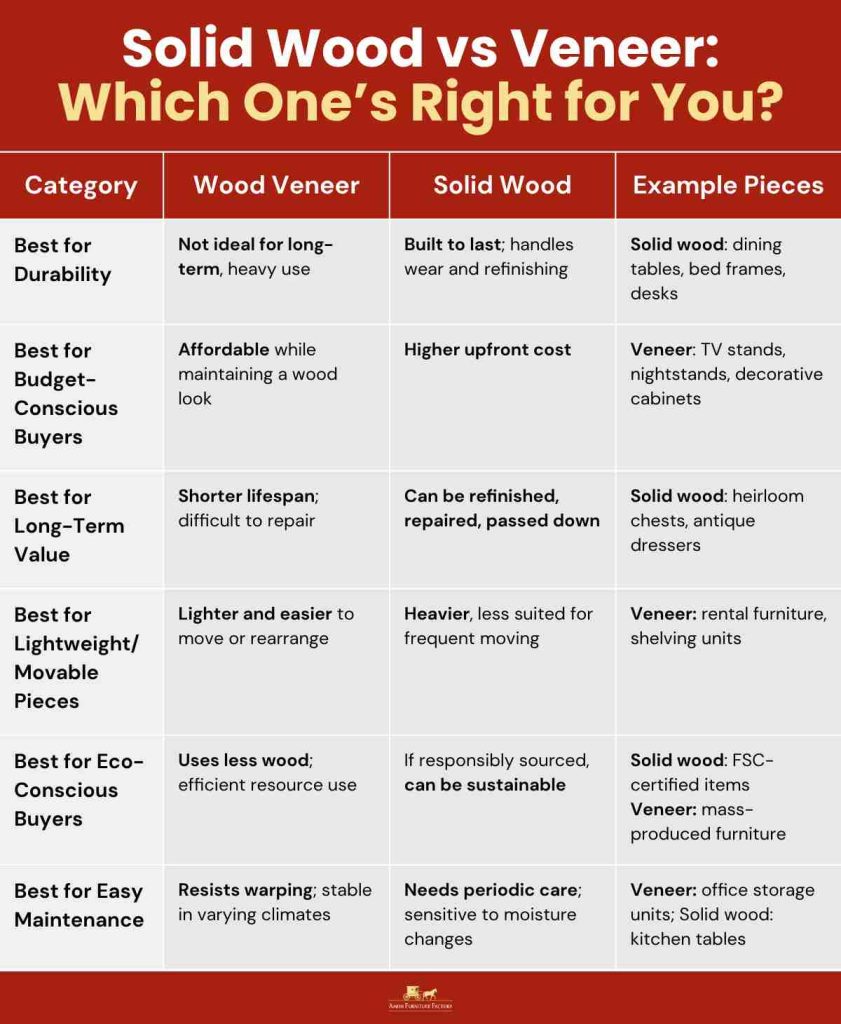
Choosing between wood veneer and solid wood furniture ultimately comes down to how you balance budget, durability, and aesthetics. Bart Caldwell, owner of Cardwell Painting, shares:
“Solid wood offers great durability and the ability to be sanded and refinished, but it’s costly and susceptible to warping or cracking. Veneer provides a cost-effective way to achieve a real wood aesthetic, resists moisture due to the stable core, and is lighter, yet it’s prone to peeling or chipping over time and can’t be refinished deeply, limiting its longevity. So there are advantages and disadvantages to both.”
Here’s a table to help you decide between the two:
Maintenance and Care Tips for Wood Furniture
Caring for solid wood furniture starts with regular, mindful upkeep. Dust frequently using a soft, dry cloth to prevent buildup, and occasionally clean with a wood-safe solution to maintain the finish. Because solid wood is sensitive to changes in temperature and humidity, it’s best to keep it out of direct sunlight and away from heat sources. Using coasters, placemats, or tablecloths can help protect surfaces from scratches, moisture rings, and dents. For long-term maintenance, consider a light sanding and refinishing every few years, especially if the surface has dulled or shows signs of wear. This helps restore its natural beauty and prolong its life without compromising the integrity of the wood.
Veneer furniture, while often just as attractive, needs a slightly more delicate touch. Since it’s from a thin layer of real wood over a core material, it’s important to clean it with a slightly damp cloth — never soaking wet — and to avoid any harsh chemicals or abrasive sponges that could scratch or strip the veneer. Pay special attention to the edges and corners, as these areas are most likely to chip or peel with regular use. To prevent damage, always use coasters and placemats, and avoid placing heavy or wet items directly on the surface. Unlike solid wood, you can’t sand or refinish veneer without risking permanent damage, so gentle, preventative care is your best approach to keeping it looking great over time.
Final Verdict: Veneer or Solid Wood?
At a glance, veneer and solid wood may seem interchangeable, but once you look beneath the surface, their differences start to matter. If you’re investing in timeless furniture that you want to pass down or refinish over time, solid wood is the clear winner. It’s durable, repairable, and only gets better with age. On the other hand, wood veneer offers a smart, stylish alternative that fits modern needs and budgets. Understanding the construction, use case, and care requirements of each will help you make informed decisions—so you’re not just buying furniture that looks good, but that fits your life.
Frequently Asked Questions
Is wood veneer real wood?
Yes, the surface layer is real wood, but it’s applied over an engineered core like MDF or particleboard. The structure underneath is not solid timber.
Can you refinish or repair wood veneer furniture like solid wood?
Only to a limited extent. Veneer is too thin for sanding and full refinishing. Minor touch-ups are possible, but deep damage usually is difficult to restore without replacing the veneer.
Which is more eco‑friendly: veneer or solid wood?
Both can be eco-friendly, depending on sourcing. Veneer uses less wood overall and can make rare species go further, while solid wood is more sustainable if harvested responsibly.
Is veneer furniture less durable in humid climates?
Veneer can actually be more stable in humidity because of its engineered core. However, if water seeps into edges or seams, it can cause warping or separation. Solid wood, while durable, is more prone to swelling or cracking with moisture changes.
Many visitors explore these venues for fine dining, exhibitions, or concerts, enjoying them as part of a broader travel experience. In Norway, the casino landscape is more limited, yet curiosity about European destinations remains strong among travelers. While some articles reference Best online casinos Norway in connection seriøse.casino with leisure, the main focus usually highlights hospitality, culture, and the way such establishments enrich tourism across Europe.