
Accent tables have a way of quietly transforming a space, and in Amish furniture design, they do it with unmatched craftsmanship and character. These small, often overlooked pieces carry the hallmarks of Amish woodworking: solid wood, precise joinery, and a subtle elegance that elevates any room. More than just a place to set a lamp or display a vase, an Amish accent table brings warmth, texture, and a handcrafted story into your home.
Key Takeaways
- An accent table is a small, versatile table designed to complement main furniture pieces while adding both function and style to a room.
- Amish accent tables showcase craftsmanship, premium materials, traditional joinery, and timeless design.
- The accent table also serves as a surface for lamps, décor, or everyday items.
In this article, we’ll discuss what an accent table is, why it matters, and how choosing the right piece can enhance both the function and style of your living space.
What Is an Accent Table?
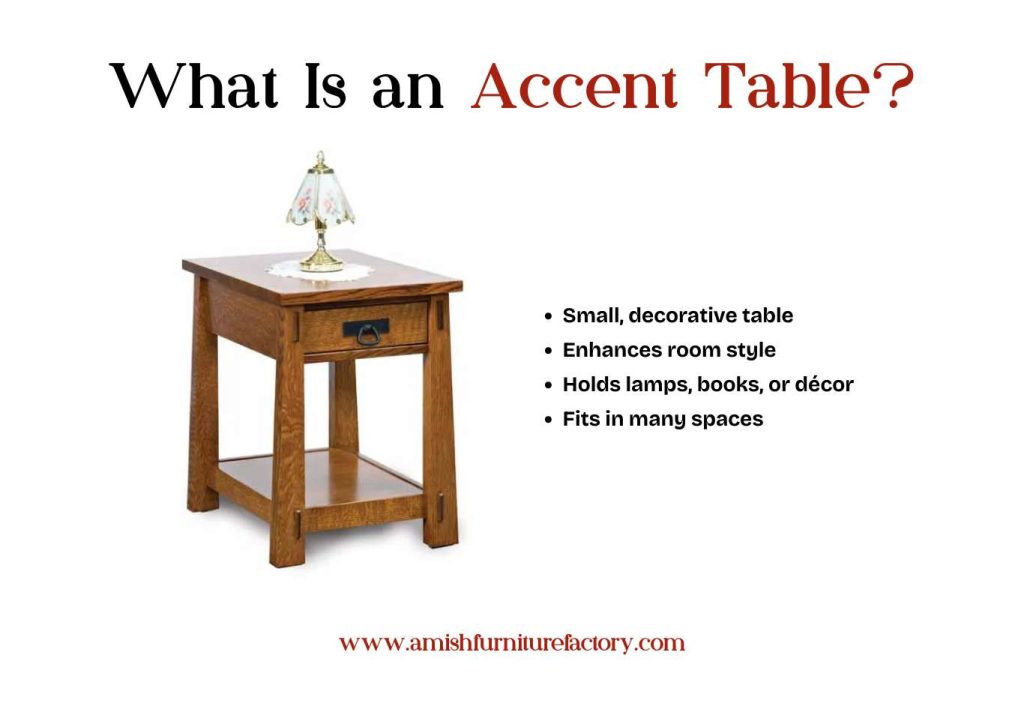
An accent table is a small, decorative table that adds style to a room and provides a surface for items like drinks, books, or décor. It can serve both functional and decorative purposes while also adding texture, color variation, and visual interest to a space. In Amish furniture, accent tables often showcase handcrafted details and high-quality wood. These tables are often called the “supporting characters” of furniture design because they enhance a room without overpowering it. Their versatility allows them to fit in corners, beside chairs or sofas, or even in hallways and entryways.
Common Types of Accent Tables
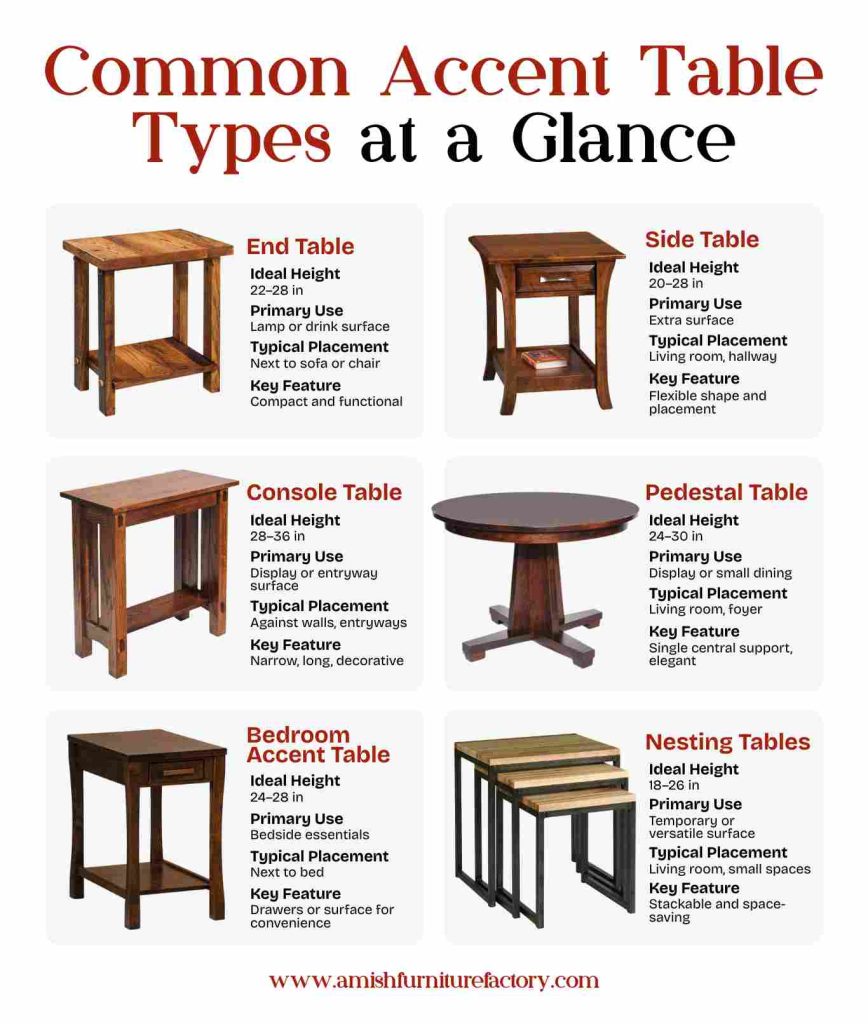
Accent tables come in a variety of shapes and styles, each serving a slightly different purpose in your home. While their size is generally smaller than main furniture pieces, their impact on a room’s functionality and aesthetics is significant. Below, we explore the most common types of accent tables and where they work best.
End Tables
End tables are most commonly placed beside sofas or armchairs in living rooms. Their primary role is to provide a convenient surface for frequently used items such as lamps, drinks, books, or remote controls. Because they sit next to seating, their height is usually designed to align with the armrest of a sofa or chair, making items easy to reach.
Side Tables
Side tables are similar to end tables but tend to be more flexible in how and where they are used. While they can sit beside a sofa or chair, they are often placed in corners, hallways, or next to accent chairs to add both style and practicality. Designers often use side tables as decorative elements that introduce unique materials, shapes, or colors into a space.
Console Tables
Console tables are long, narrow tables typically positioned against walls, behind sofas, or in entryways. Their slim profile allows them to add function without taking up too much floor space, making them ideal for narrow areas. In entryways, console tables often hold everyday essentials such as keys and mail, while in living rooms they serve as display surfaces for decorative items.
Pedestal Tables
Pedestal tables are distinguished by a single central base instead of four separate legs. This design creates a clean, elegant appearance and allows more open space around the table. Many pedestal tables are round or oval, which makes them well suited for smaller rooms or areas where a softer shape improves the overall flow of the space.
Bedroom Accent Tables
Bedroom accent tables, more commonly known as nightstands, are placed beside the bed to keep essential items within easy reach. These tables typically hold bedside lamps, books, alarm clocks, or personal belongings used at night or in the morning. Beyond their practical function, nightstands also help create balance in bedroom design.
Nesting Tables
Nesting tables are designed as a set of two or more tables that fit neatly underneath one another. This space-saving design makes them highly versatile, especially in smaller living areas. When additional surface space is needed, the tables can be separated and used individually. When not in use, they can be stacked together to keep the room feeling open.
Complete your living room’s look by pairing our stylish end tables and coffee tables for a cohesive, designer-inspired finish. Shop our full collection today!
How Amish Accent Tables Stand Out in Furniture Design
Unlike mass-produced furniture, each Amish accent table is thoughtfully designed to balance aesthetics, utility, and durability. From the wood used to the joinery and finishing touches, Amish accent tables demonstrate why handcrafted furniture continues to be highly valued in modern homes.
The Use of Premium Materials
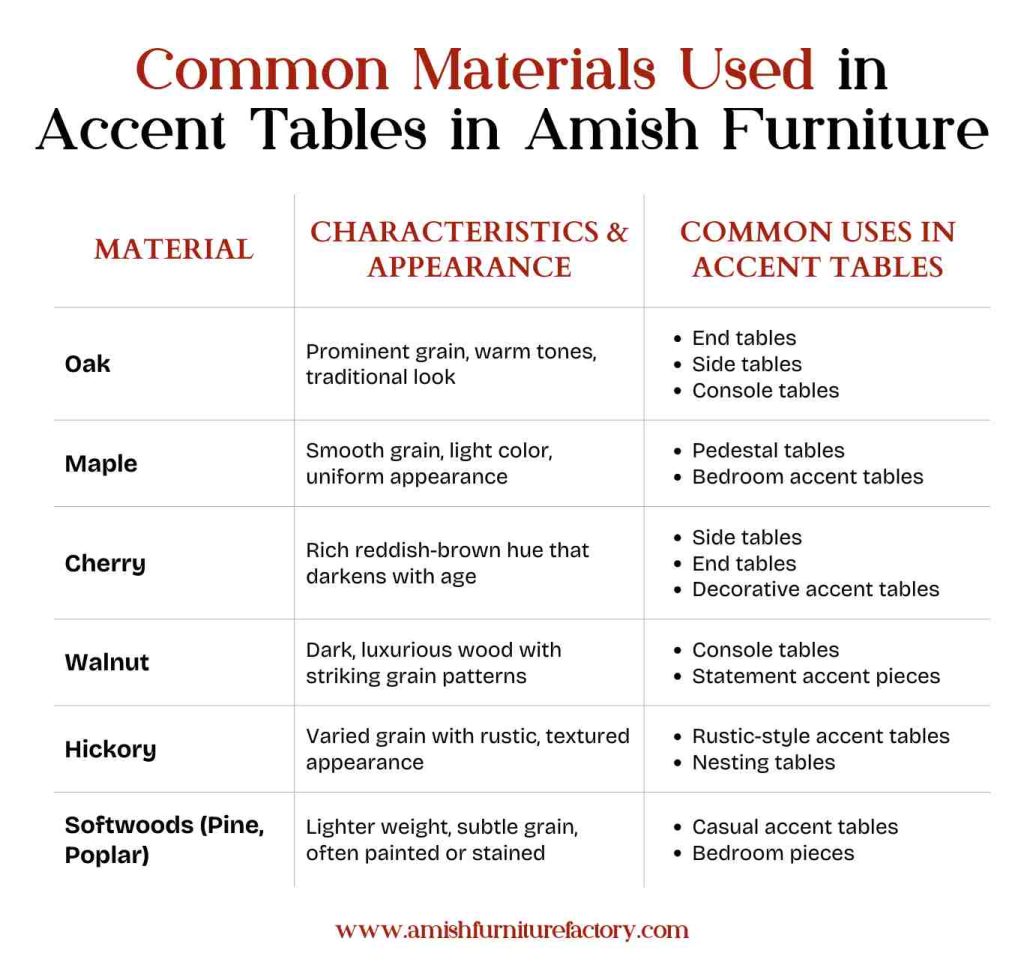
One of the defining features of Amish accent tables is the use of high-quality, solid hardwoods. Woods like oak, maple, cherry, and walnut are carefully selected for their strength, grain, and natural beauty. This attention to material choice ensures that each table not only looks stunning but can withstand daily use for decades.
Here are the common wood materials used in accent tables by Amish craftsmen:
Traditional Construction Techniques
Amish craftsmen rely on time-honored woodworking techniques rather than mass-production shortcuts. Mortise-and-tenon joints, dovetailing, and hand-sanding are standard practices, giving each table structural integrity and a refined, handcrafted look. These methods make the tables sturdy and long-lasting.
Classic Design Details and Signature Styles
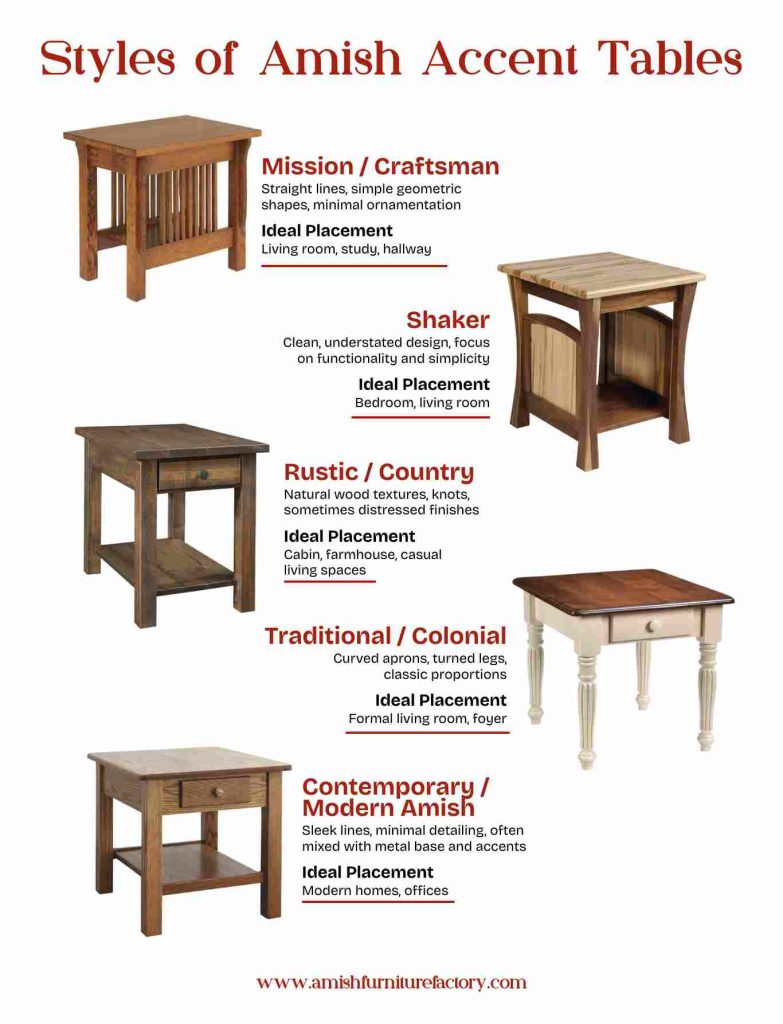
Amish accent tables often feature subtle yet distinctive design elements such as turned legs, gently curved aprons, beveled edges, or minimalist panels. These signature details strike a balance between simplicity and elegance, allowing the table to complement a variety of décor styles.
Below are the different styles of Amish accent tables:
Long-Lasting Finishes, Color Treatments, and Durability
The finishing process in Amish furniture is as meticulous as the construction itself. Natural oils, stains, or hand-applied furniture polish enhance the wood’s grain, protect against wear, and give the piece a warm, inviting look. Unlike factory furniture finishes, these treatments are designed to last, ensuring the table maintains its beauty and resilience for many years.
Choosing and Styling the Right Accent Table for Your Home
Selecting the perfect Amish accent table is more than picking a beautiful piece of wood furniture; it’s about finding a table that complements your room’s size, style, and function. Here’s what to consider when choosing an accent table for your home.
1. Size, Height, and Proportion Guidelines
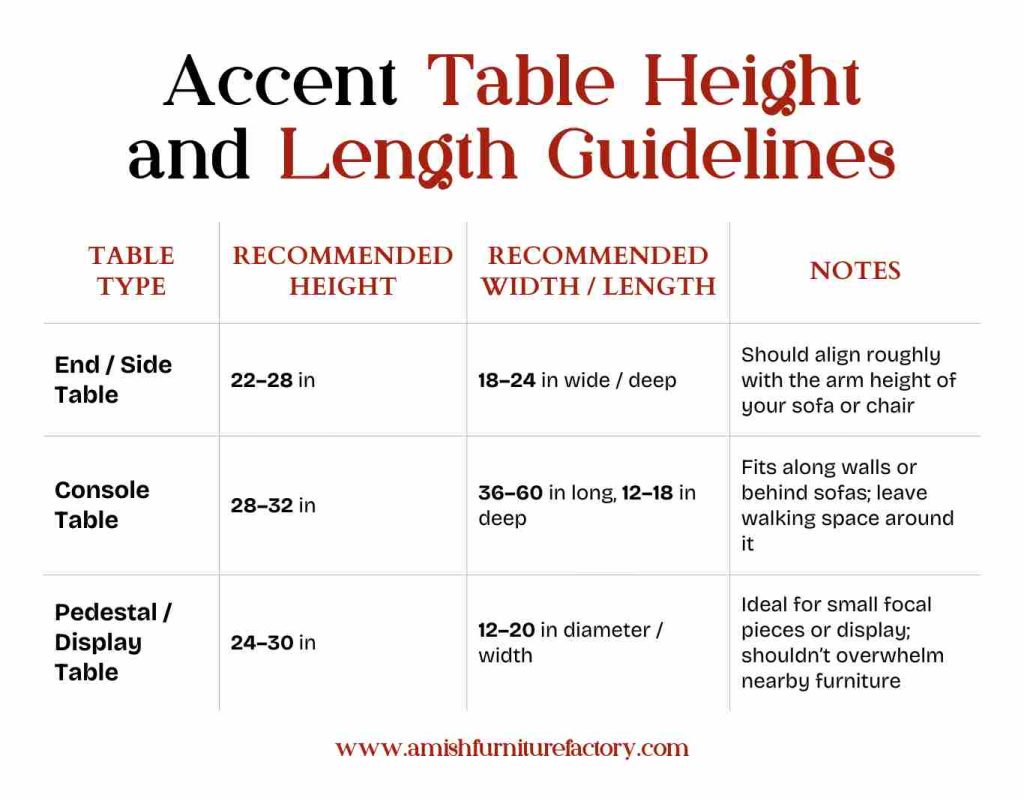
When selecting an accent table, scale matters. A table that’s too tall or too small can feel awkward or out of place. As a general rule, end or side tables should be roughly the same height as the arm of your sofa or chair, while console and pedestal tables should suit the wall or space they occupy.
The table below provides recommended dimensions to help your Amish accent table fit comfortably in your space:
2. Match Wood Tones with Existing Furniture
Amish accent tables come in a range of rich wood tones, from light maple to dark walnut. To create a cohesive look, consider how the table’s wood complements your existing furniture and flooring. Matching tones can unify a space, while contrasting woods can add visual interest.
3. Think About Traffic Flow and Placement Considerations
Placement is key for both usability and comfort. Ensure tables don’t block pathways or create cramped spaces, especially in high-traffic areas like living rooms or entryways. A well-placed table enhances function without interrupting movement.
4. Consider Storage vs Surface-Only Designs
Some accent tables include drawers, shelves, or hidden compartments, while others are purely surface tables. Think about your needs: if you want extra storage for remotes, books, or small items, choose a table with built-in functionality. If you prefer a minimalist look, a surface-only table can keep the room feeling open and uncluttered.
Final Thoughts: Why Amish Accent Tables Are More Than Decorative
When asking what an accent table is in the context of Amish furniture, it becomes clear that these pieces are more than just functional surfaces. They are quiet statements of craftsmanship, showcasing solid hardwood, traditional joinery, and subtle design details that reflect generations of woodworking expertise. Each table carries a story, adding warmth, character, and a handcrafted touch to any space.
Amish accent tables appeal to homeowners who value meaning as much as style. Beyond serving lamps, books, or decorative objects, they symbolize a commitment to quality, durability, and timeless design. Choosing an Amish accent table is a way to bring both practical function and artisanal beauty into your home.
Frequently Asked Questions (FAQs)
What is the difference between an accent table and an end table?
An accent table is a versatile, decorative piece designed to complement a room’s overall style, often used for displaying décor, lamps, or collectibles. An end table, on the other hand, is specifically placed next to sofas or chairs to hold items like drinks, remotes, or books. While all end tables can function as accent tables, not all accent tables are intended for seating areas.
How long do Amish accent tables last?
Amish accent tables are built to last decades, often 50 years or more, thanks to high-quality hardwoods, traditional joinery, and durable finishes.
Can you use an accent table as a nightstand?
Yes, many Amish accent tables work beautifully as nightstands, especially in bedrooms where space is limited or a unique design is desired. The key is choosing a table with the right height (usually 24–28 inches) and enough surface area to hold a lamp.
How tall should an accent table be?
Accent table heights vary depending on their purpose. End or side tables should be 22–28 inches (aligns with sofa or chair arms). Console tables should be 28–32 inches (suitable for walls or behind sofas). Pedestal / display tables should be 24–30 inches (for small focal points or display purposes).