
The vintage chest is more than a piece of furniture. It is a record of how things were once made, used, and valued. Whether intricately carved and centuries old or simply constructed by Amish hands using traditional joinery, these chests reflect a commitment to longevity, practicality, and skilled workmanship. Unlike many modern pieces designed for convenience and short-term use, vintage chests were built to be passed down, repaired, and repurposed. Their continued presence in homes and collections speaks to a different set of values—ones that prioritize quality over speed, and substance over trend.
Key Takeaways:
- The vintage chest teaches us that true quality comes from craftsmanship focused on longevity and functionality, using superior materials and careful design rather than mass-produced shortcuts.
- Antique and Amish chests share values but differ in context; one preserves history, the other continues tradition.
- Spotting quality in vintage chests today means knowing what to look for: solid hardwoods, dovetail joints, authentic hardware, and structural integrity.
This article explores the journey of these century-old pieces to the meticulous craftsmanship of modern-day artisans, particularly the Amish.
What is a Vintage Chest?
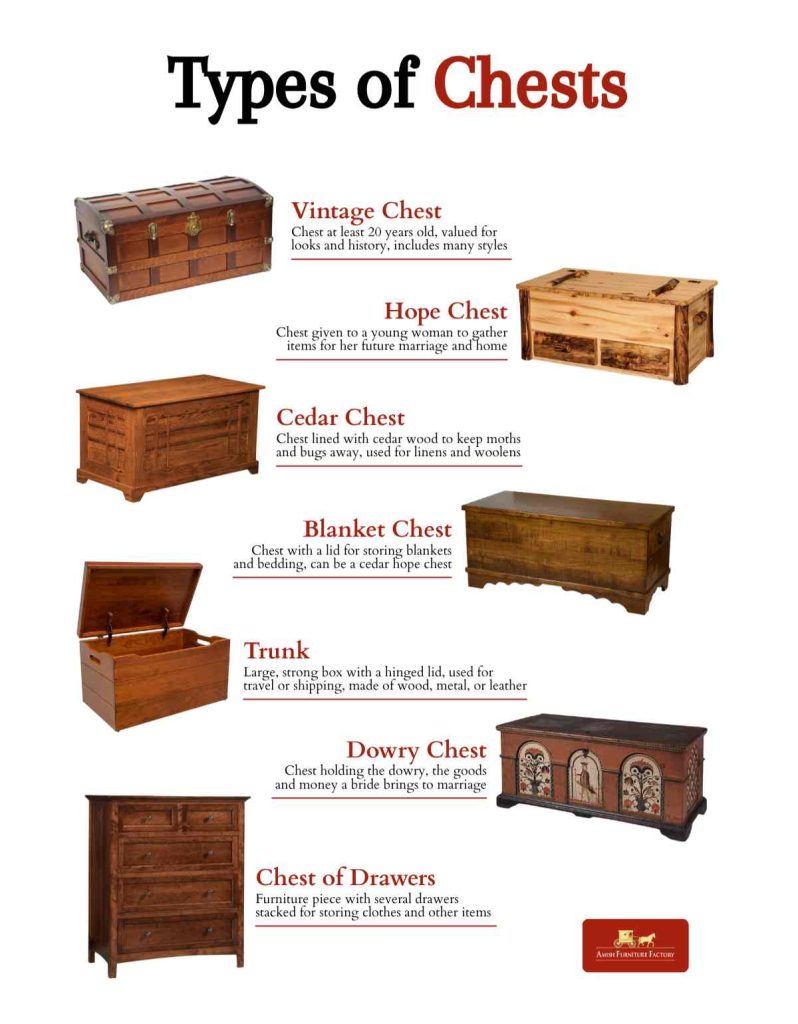
A vintage chest is more than just storage. It’s a piece of functional history, usually made from solid wood and built to last for generations. These chests were often used to store linens, valuables, or family heirlooms. The term “vintage” generally refers to items that are between 20 and 99 years old, while anything 100 years or older is considered an antique. Early European chests were often ornate, with carvings and heavy hardware, but styles changed over time. In America, especially during and after industrialization, chest designs became simpler and more practical, while still holding an important place in the home.
It’s easy to assume antique and Amish chests belong in the same category. Both are admired for durability, craftsmanship, and a connection to the past. But there is a key difference. Antique chests reflect the styles and techniques of a specific historical period. Their value lies in preservation and authenticity. Amish chests are built today using time-honored methods, focusing on function and longevity rather than decoration. One reflects where we’ve been. The other shows that quality, handcrafted furniture is still being made.
Learn to distinguish between these classic furniture pieces and appreciate the history and craftsmanship behind each one.
Explore our curated selection of genuine Amish cedar chests, each one a testament to timeless craftsmanship. Find the perfect vintage chest to store your treasured heirlooms!
What Vintage Chests Show Us About True Quality
A vintage chest is a quiet lesson in what true quality looks like. Unlike much of today’s flat-pack, mass-produced furniture, these pieces reveal the difference that skilled hands and superior materials can make. The careful joinery, solid wood panels, and intricate hardware weren’t just about utility; they reflected an ethos of durability and artistry.
Exceptional Craftsmanship
The defining feature of any vintage chest is the craftsmanship. Joinery techniques like dovetailing were done by hand, ensuring tight fits that wouldn’t loosen over time. Hinges and locks were often hand-forged by local blacksmiths, giving each piece a unique character. Unlike today’s assembly-line furniture, no two chests were identical. This dedication to detail elevated what might have been a simple household item into something meant to endure for centuries.
Built to Last
Quality starts with the raw materials. Vintage chests were typically crafted from dense, locally sourced hardwoods such as oak wood, walnut, or cedar. These materials, combined with skilled craftsmanship, made them extraordinarily durable.
It’s no surprise that demand for well-made, long-lasting pieces is rising again: the global second-hand furniture market is projected to reach $56.66 billion by 2030, fueled by consumer interest in sustainability and unique design.
Design That Goes Beyond Trends
Unlike trend-driven furniture that feels outdated in a decade, vintage chests embody designs that remain relevant across generations. Their restrained ornamentation, natural finishes, and thoughtful proportions give them a timeless quality. This enduring aesthetic is one reason many homeowners incorporate vintage or Amish pieces into contemporary interiors.
Functionality with Artistic Value
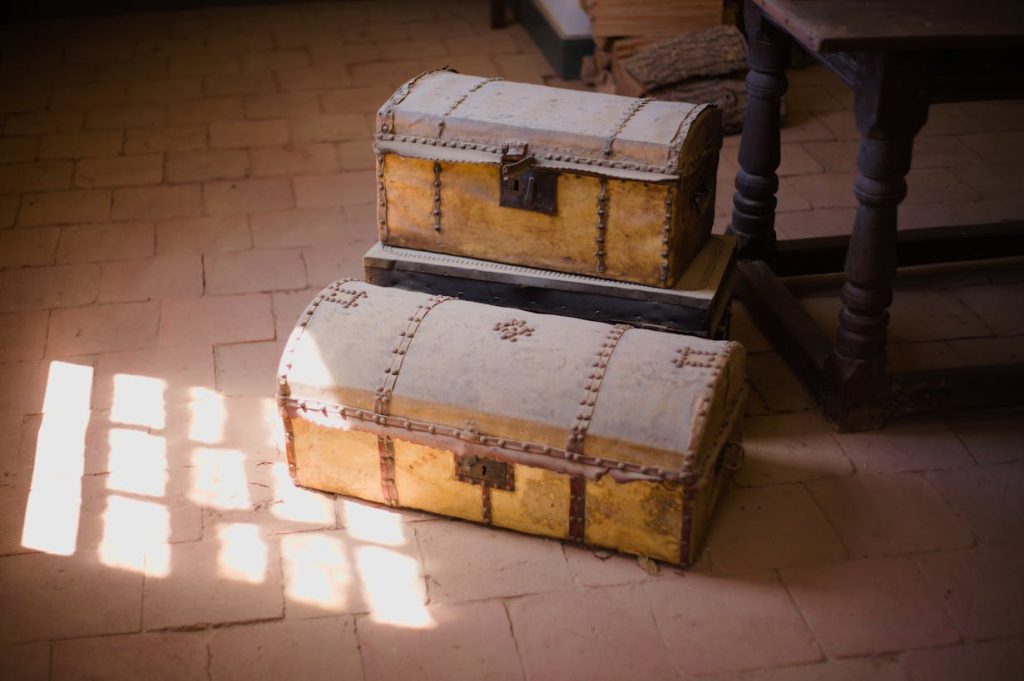
At their core, chests were utilitarian; they were meant for storing linens, clothing, or valuables. But artisans treated them as canvases. Carved motifs, inlaid patterns, or hand-forged handles turned an everyday storage chest into a statement of artistry. A chest wasn’t just a box in the corner of a room; it was a piece of furniture that enhanced the living space, balancing practical need with beauty.
Connection to History
Every vintage chest carries a story. Some were hope chests prepared for a young bride, others were vintage storage trunks that crossed oceans with immigrant families. Provenance (the documented history of ownership) adds layers of value and meaning.
Today’s consumers increasingly crave this connection: surveys and reporting show a growing appetite for American-made, story-driven pieces, where buyers aren’t just purchasing furniture but also aligning with tradition and values.
Investment Potential
Beyond sentimental and aesthetic value, vintage chests can also serve as investments. Certain antique categories have been flagged by designers and auction houses as likely to appreciate in value. A 2024 Veranda report noted rising demand for 18th-century case pieces, farmhouse-style chests, and early American storage furniture. Collectors see these not only as beautiful objects but as tangible assets that hold and often grow their worth over time.
How to Spot a Quality Vintage Chest Today
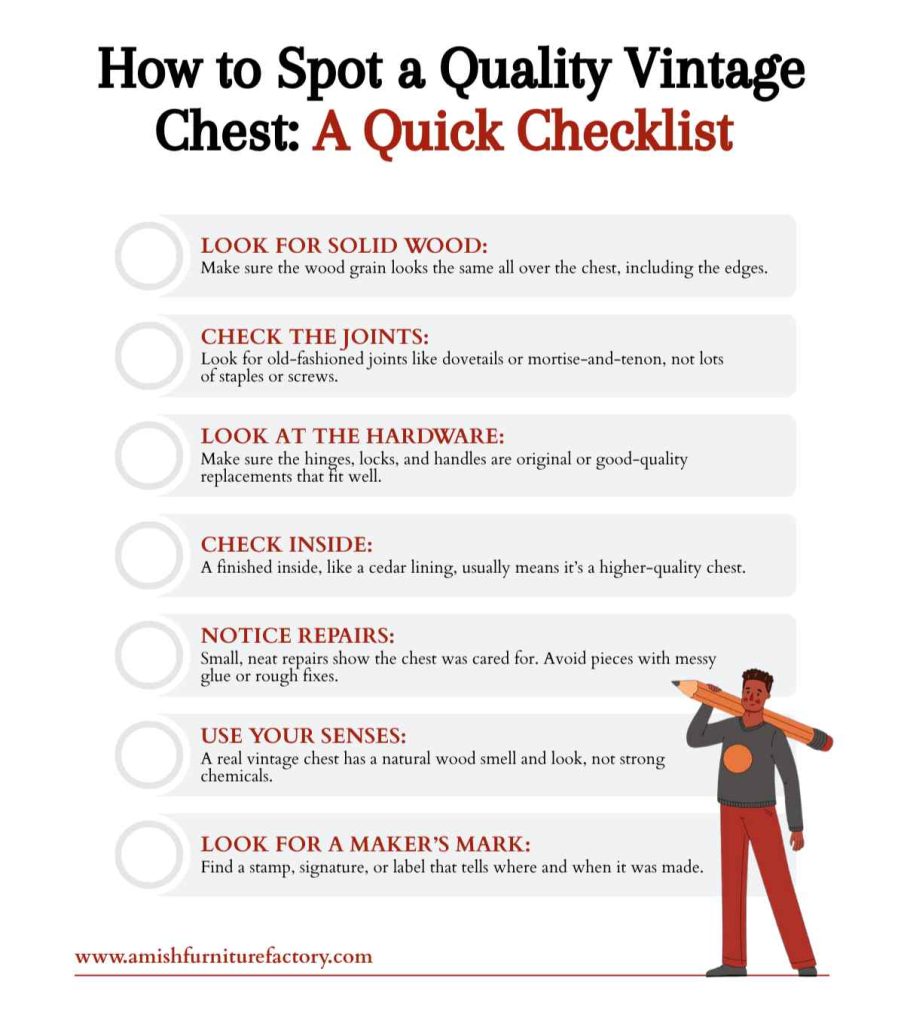
Not every old chest you find at a flea market or antique shop is a true marker of quality, so knowing what to look for matters. Start with construction: dovetail joints (especially hand-cut ones) are a strong indicator of craftsmanship, as they hold without relying on nails or glue. Check the wood type and make sure it’s solid rather than veneer. Hardware can also tell you a lot: hand-forged or brass hardware fittings suggest age and skill, while perfectly uniform screws may signal modern replacements.
Condition is another key factor. Some wear is expected and even desirable, as it tells the story of the piece, but structural integrity should be intact. Look for chests that feel sturdy when moved and whose lids close smoothly without gaps. Provenance or maker’s marks, if available, add both historical context and potential value.
How to Add a Vintage Chest to Your Home
A vintage chest is a versatile addition that blends function with charm. In living rooms, it can serve as a coffee table with hidden storage; in bedrooms, it works at the foot of a bed as both décor and a place to tuck away blankets. Even in small apartments, a chest can double as a side table or entryway bench, giving you storage without sacrificing style.
The beauty of vintage chests is their ability to bridge eras. A hand-carved oak chest adds warmth to a modern minimalist room, while a simple pine chest can complement a farmhouse or rustic décor. The key is to let the chest stand out; treat it as both a functional object and a story-rich centerpiece.
Conclusion: Carrying the Legacy of the Vintage Chest Forward
A vintage chest is a reminder of what true quality looks like. Built with patience, skill, and integrity, these chests have survived decades (sometimes centuries) not just because they were useful, but because they were made with the intention of lasting. In a time when convenience often overshadows durability, vintage and Amish pieces alike invite us to reconsider our relationship with the objects we live with.
Carrying the legacy forward means more than admiring old craftsmanship; it’s about applying those lessons today. Choosing furniture made with care, respecting sustainable materials, and valuing story and provenance over throwaway trends all help keep that tradition alive.
Frequently Asked Questions
What is the most durable type of wood for a vintage chest?
Hardwoods such as oak, walnut, cherry, and cedar are considered the most durable. These woods resist warping, pests, and wear, which is why so many vintage chests built with them have survived for generations.
Can restoring an antique chest increase its value or hurt it?
It depends on the approach. Gentle restoration that preserves original painted finishes and brass hardware can enhance both beauty and usability. Over-restoration, like sanding away patina, can actually reduce its historical and market value.
Are chests a good long-term investment compared with other antiques or collectibles?
Yes, especially well-preserved or historically significant examples. Designers and auction houses highlight certain categories like 18th-century case pieces and American farmhouse chests as likely to appreciate in value.
How do I properly care for and maintain a wooden chest to ensure its longevity?
Keep it in a stable environment away from direct sunlight, excess humidity, or extreme temperature shifts. Dust with a soft cloth, polish occasionally with a quality wood conditioner, and avoid harsh cleaners. If repairs are needed, consult a professional conservator to avoid accidental damage.