
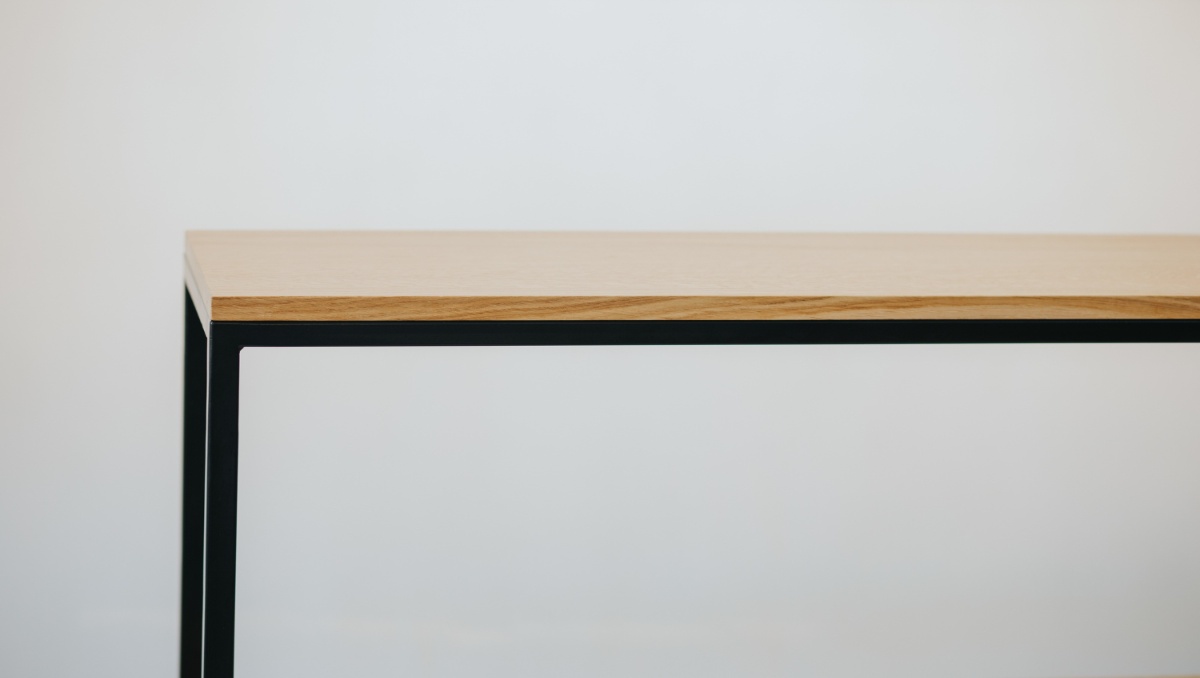
Choosing the right table edge profiles might seem like a small detail, but it’s often the finishing touch that gives an Amish-made table its character. From gently rounded edges to more defined cuts that highlight craftsmanship, the edge profile can completely shift the look and feel of a piece. Amish furniture makers have refined these styles over generations, creating edges that are not only beautiful but practical and long-lasting.
Key Takeaways:
- Popular Amish table edge profiles include Mission, Roundover, Beveled, Eased, Ogee, Waterfall, Thumbnail, and Chamfer, each offering a distinct look and feel.
- Choosing the right profile depends on your home’s style, daily use, and comfort preferences.
- Amish craftsmanship allows for significant edge profile customization, from radius adjustments to blended profiles.
In this guide, we’ll take a closer look at the most popular Amish table edge profiles, why they matter, and how each one influences everything from durability to everyday comfort.
Table Edge Profiles: The Amish Difference
Table edge profiles are the shapes or contours applied to the outer edges of a table’s top. They determine how the table looks and feels—whether the edges are sharp, rounded, decorative, modern, or traditional. The profile influences comfort when resting your arms, determines how well the edge holds up against everyday bumps, and subtly sets the style tone of the table. A softer curve can make a table feel more inviting, while a crisp, straight cut gives it a clean and contemporary presence.
What really sets Amish table edge shapes apart is how they’re made. Instead of relying heavily on automated machines, Amish craftsmen shape each edge by hand, paying close attention to the wood’s natural character. They work with the grain so every curve and contour feels like it belongs. This hands-on approach creates edges that look and feel intentional, not mass-produced. Even classic profiles often include small, thoughtful tweaks that make the table stronger and more visually appealing.
The Most Popular Amish Table Edge Profiles
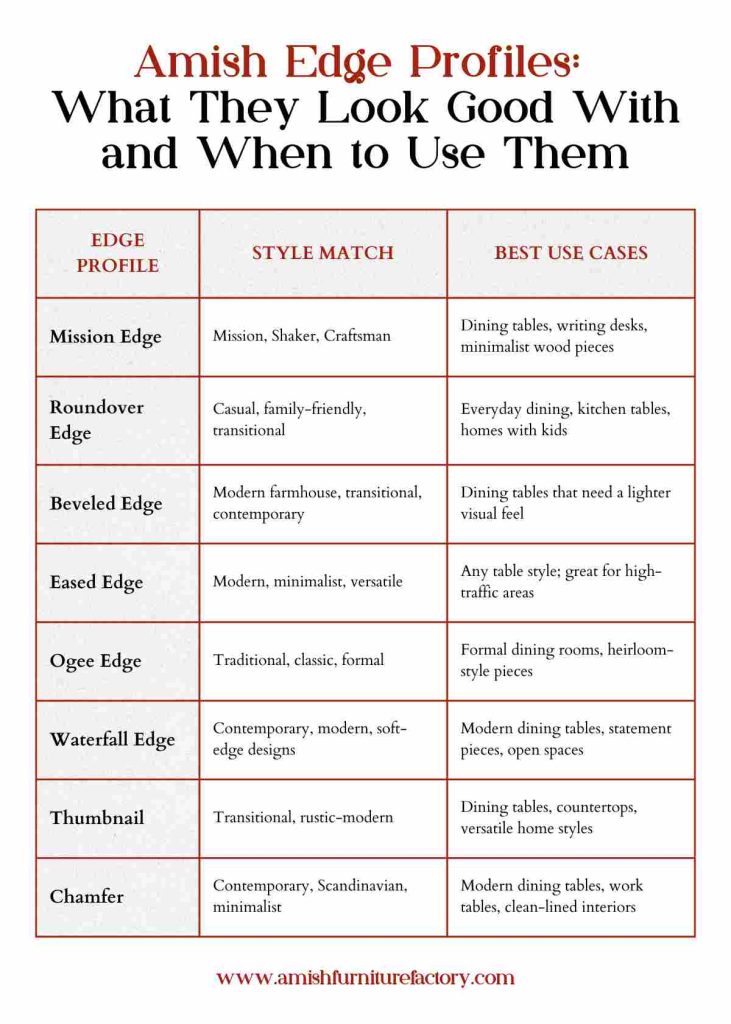
Amish furniture makers offer a wide range of table edge profiles, each shaped to highlight the beauty of hardwood while fitting different styles—from classic farmhouse to modern minimalism.
Mission Edge
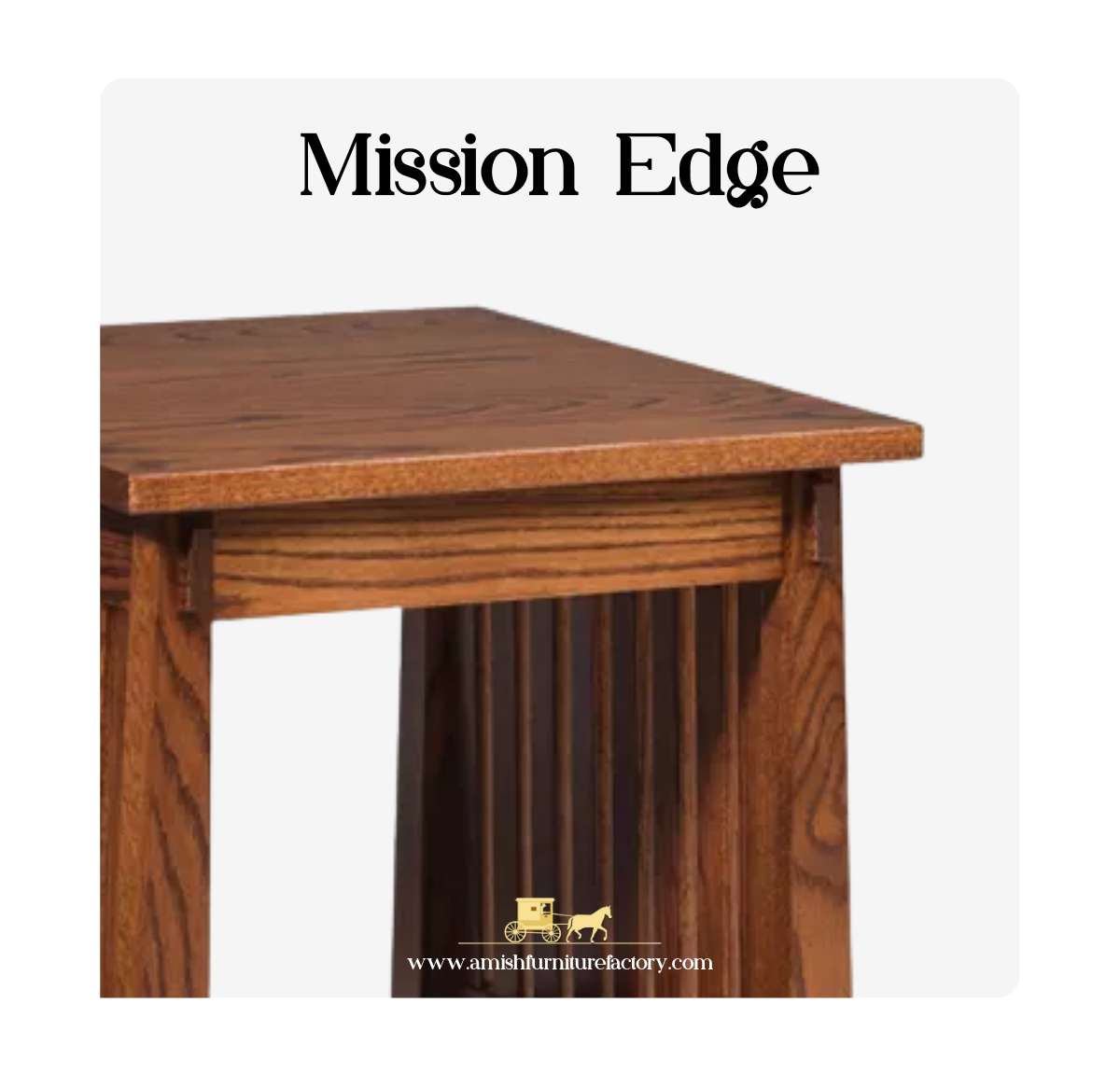
The Mission Edge is known for its straightforward, no-nonsense look that fits perfectly with Shaker and Mission styling. It typically features a slightly softened square edge, giving the table a clean, architectural feel without feeling harsh. This profile showcases the natural lines and grain of the wood, making it a favorite for those who want simplicity with a handcrafted finish.
Roundover Edge
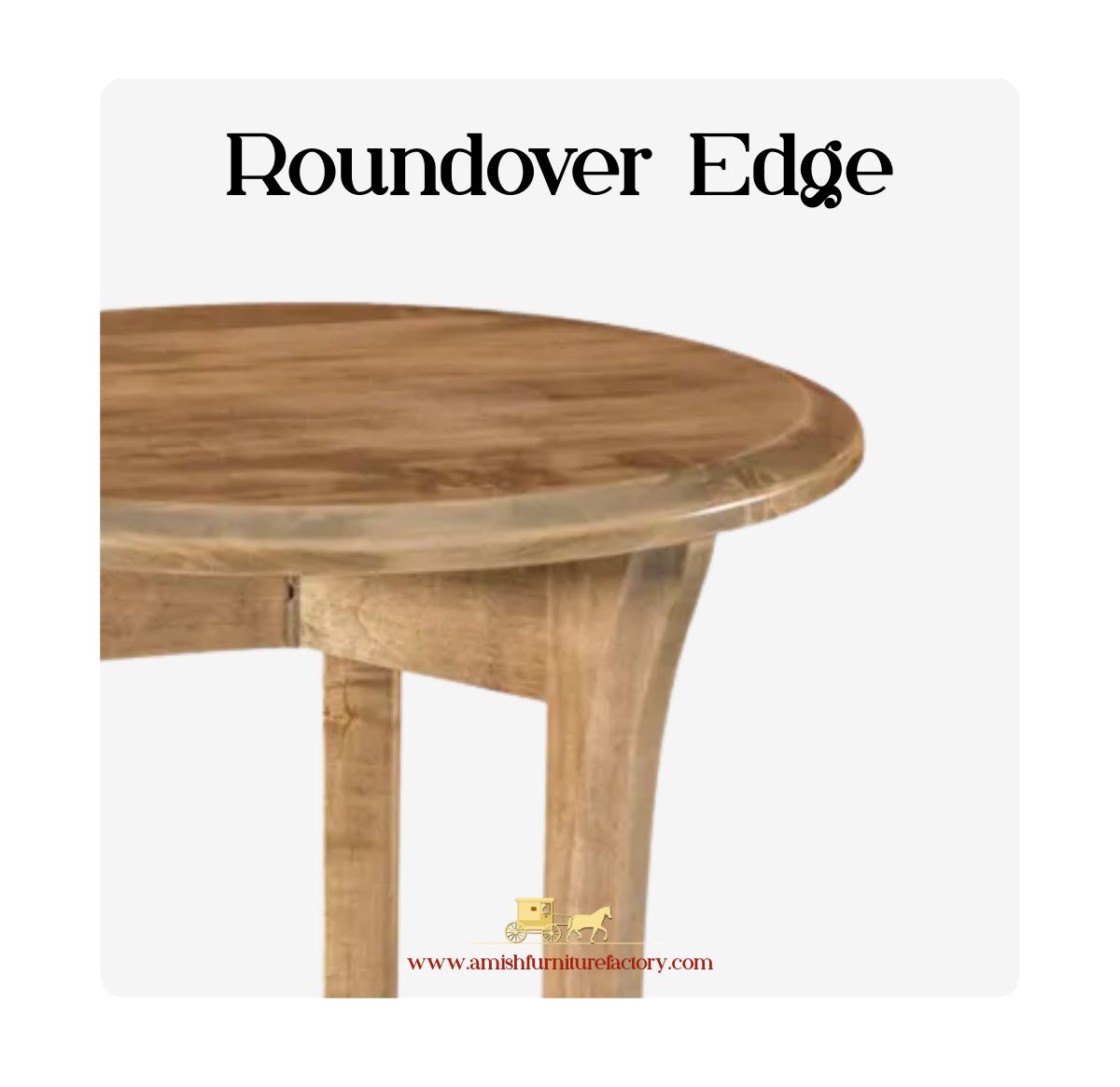
The Roundover Edge features a gentle, smooth curve that softens the entire tabletop. It’s one of the most comfortable edge profiles, ideal for families or anyone who prefers a table with no sharp transitions. Because of its rounded shape, it also holds up well to everyday wear and reduces the chance of dings or chips on the corners.
Beveled Edge
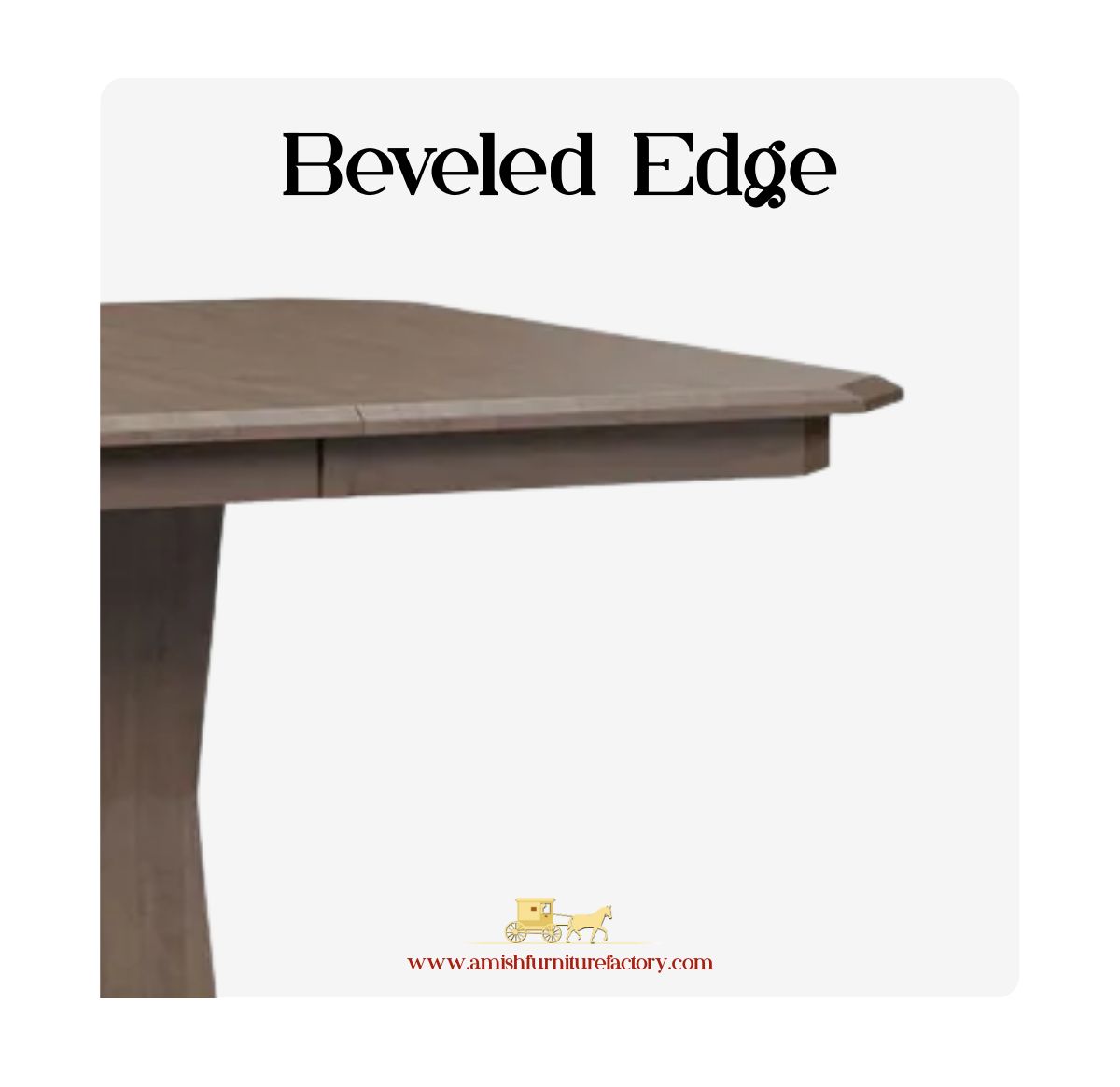
A Beveled Edge adds a subtle angle along the underside or top of the tabletop, giving the piece a lighter, more refined look. It’s popular for adding dimension without being overly decorative. The angle also helps draw attention to the thickness of the wood, making the table appear visually slimmer while still feeling solid and substantial.
Eased Edge
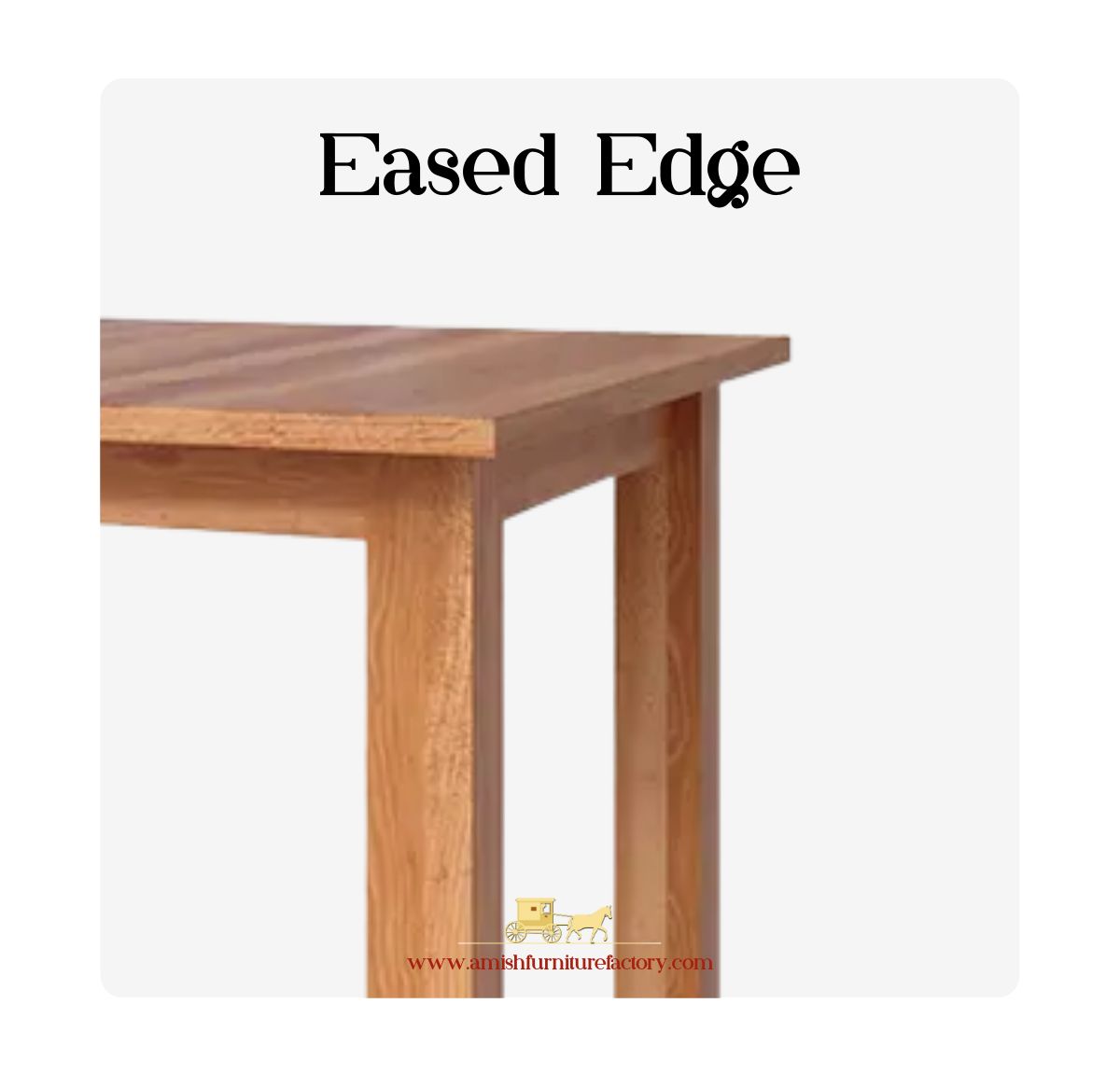
The Eased Edge keeps the clean appearance of a straight edge but softens it just enough for comfort and safety. It’s often chosen when someone wants a simple, modern look without the sharpness of a pure square cut. This profile fits well with almost any table style, making it one of the most versatile Amish options.
Ogee Edge
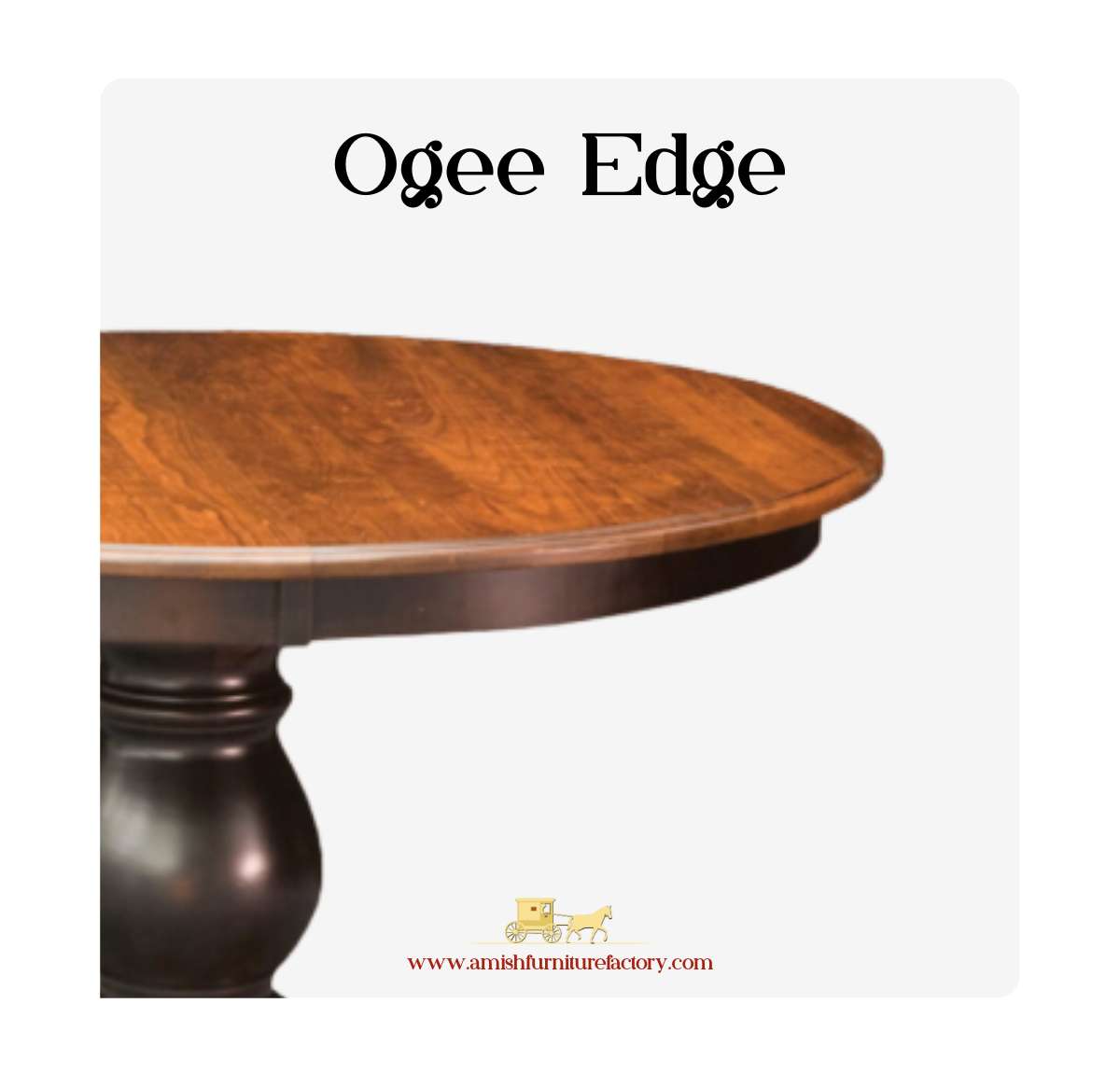
The Ogee Edge brings a touch of classic elegance with its S-shaped curve that blends formality and flow. It’s often used on more traditional or formal dining tables where extra detail adds charm and character. Amish craftsmen shape the curve carefully so it feels graceful, not overly ornate.
Waterfall Edge
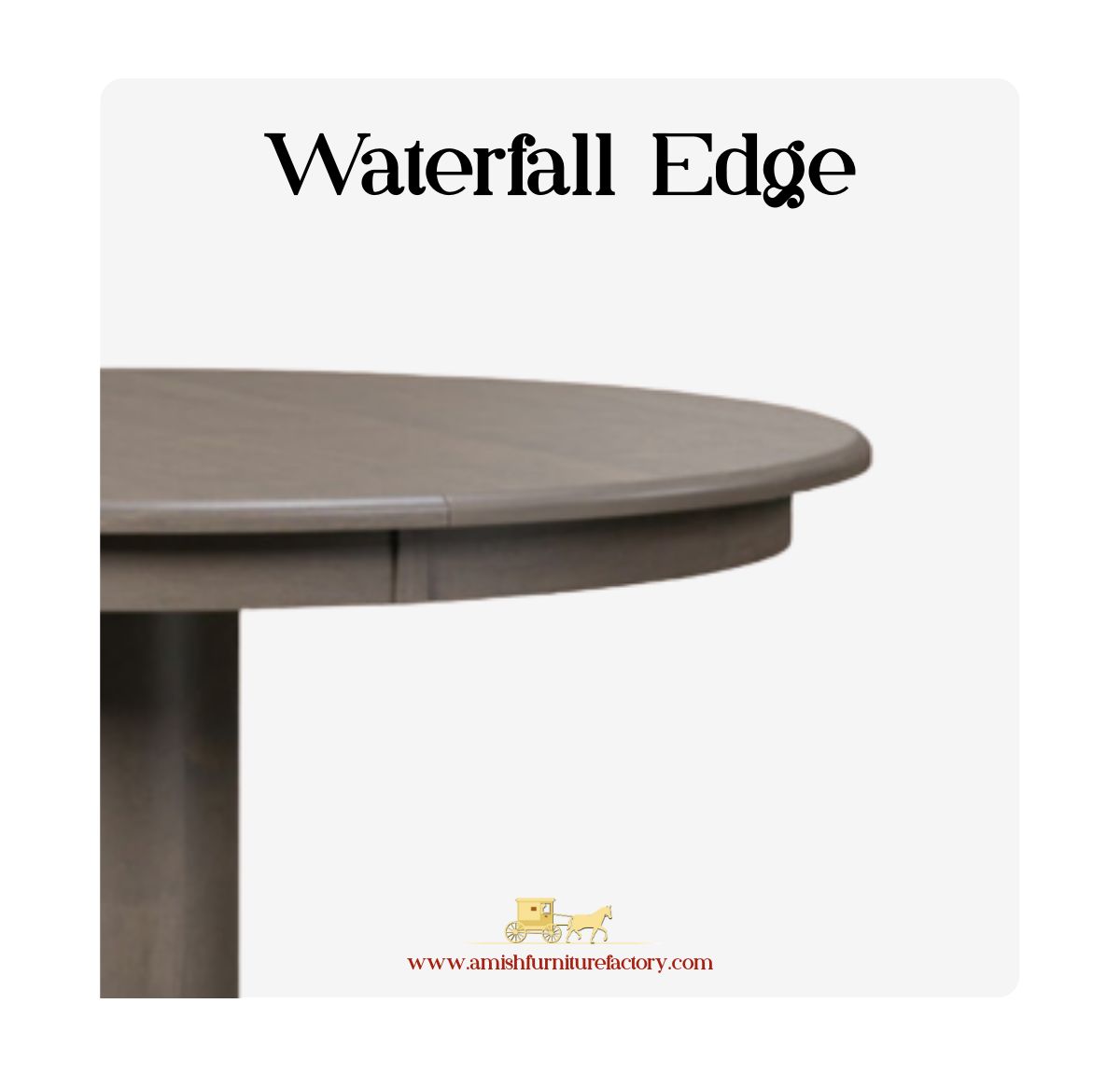
A Waterfall Edge creates a smooth, cascading slope from the top surface down to the side, giving the table a fluid, modern profile. It’s a favorite for those who want a more contemporary Amish piece that still highlights the beauty of natural wood. The rounded slope also makes it extremely comfortable to lean against and softens the table’s visual weight.
Thumbnail Edge
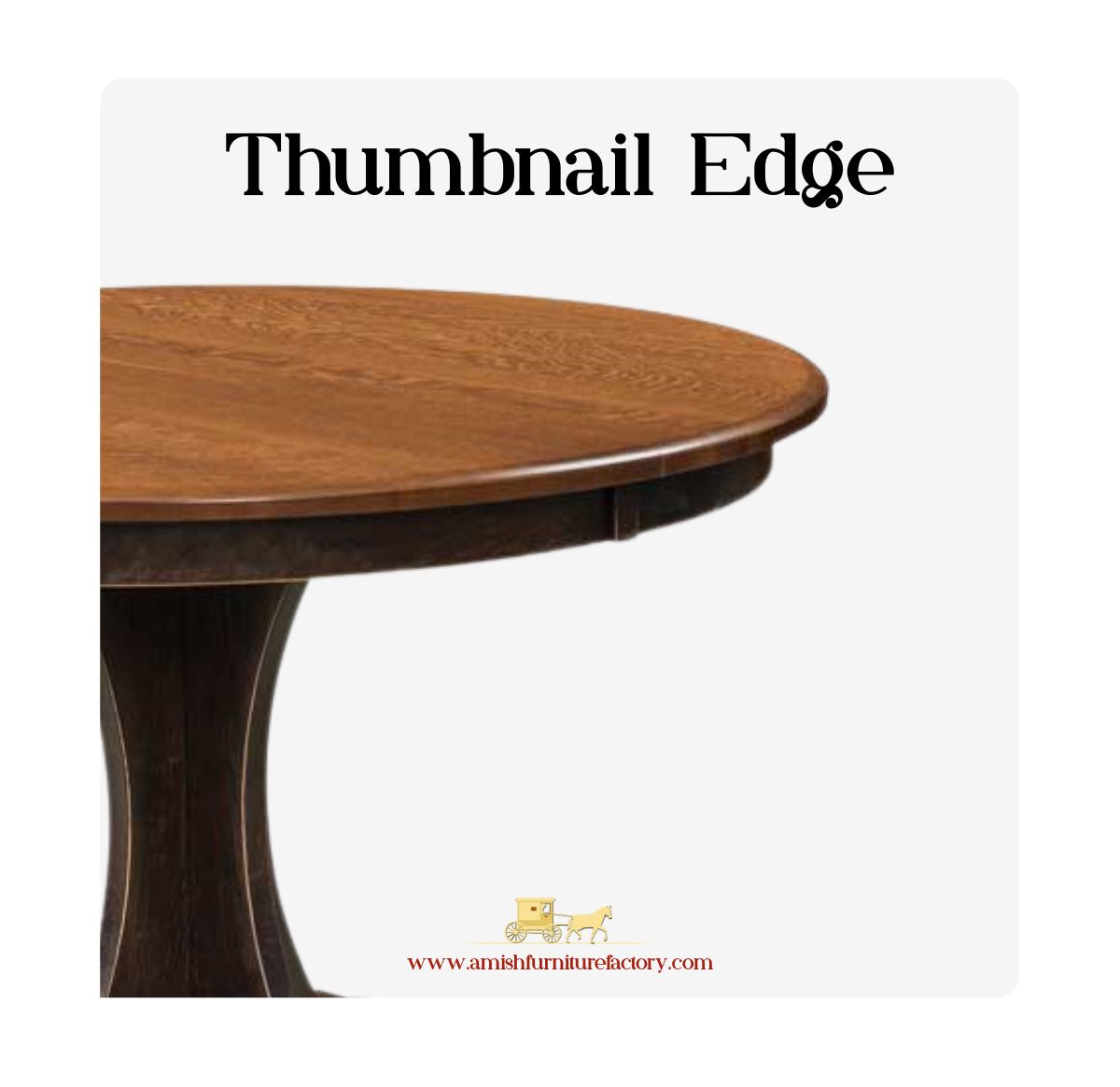
The Thumbnail Edge features a soft, convex curve near the top that transitions into a flat vertical surface. It adds subtle detail without going full traditional or ornate, making it a good middle-ground style. This profile gives the table a slightly elevated, crafted look while remaining functional and durable.
Chamfer Edge
A Chamfer Edge uses a clean, angled cut—usually 45 degrees—to create a crisp, modern line around the tabletop. It adds definition without distracting from the natural beauty of the hardwood. This profile is especially popular on contemporary or minimalist Amish tables thanks to its understated sophistication.
Ready to find the perfect centerpiece for your home? Browse our collection of Amish dining tables and choose the ideal edge profile to complement your style today!
How to Choose the Right Amish Table Edge Profile
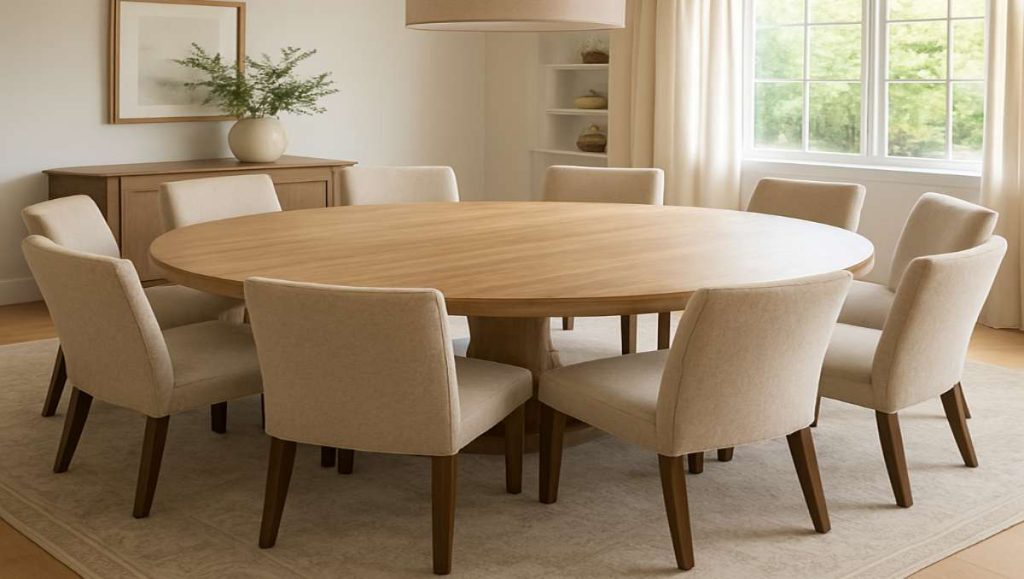
Choosing the right edge profile starts with understanding how you want your table to feel both visually and in everyday use. If you lean toward clean lines and understated design, simpler profiles like the Mission, Eased, or Chamfer edges are usually the best fit. For homes with children or high traffic, rounder options such as the Roundover or Waterfall offer more comfort and fewer sharp corners.
You’ll also want to consider the style of your space. Formal dining rooms pair well with detailed edges like the Ogee or Thumbnail, while modern and open spaces often look better with sleeker cuts. And since Amish tables are typically made from premium hardwoods, the grain, thickness, and finish all play a part in how the edge will ultimately stand out.
Customization Options: Personalizing Your Edge Profile
Amish craftsmen are known for their willingness to fine-tune even the smallest details; table edges included.
1. Choose the Exact Radius or Angle
You can request a tighter or softer curve on rounded edges, or adjust the angle of a beveled or chamfered edge. This lets you match the feel of the table to your space—sharper for modern homes, gentler for family-friendly settings.
2. Combine Two Edge Styles and Match the Edge to the Table Thickness
Amish woodworkers can blend elements from two profiles, such as a soft Roundover top with a sharper Chamfer underneath. This adds personality while keeping the table’s lines consistent with your decor. A thicker slab can support deeper curves or bolder details like an Ogee or Waterfall. Thinner tops benefit from simpler profiles that maintain balance.
3. Choose Hand-Sanded Finishing for a Custom Feel
The final sanding is done by hand, which means you can request smoother transitions, softened corners, or a more defined edge. This is where Amish craftsmanship really shines—small refinements that mass-produced furniture can’t match.
4. Coordinate With Other Furniture Pieces
If you’re pairing your table with an existing Amish buffet, bench, or safe hutch, the edge profile can be matched or subtly adjusted so the pieces feel like they truly belong together. Amish shops often keep detailed notes or drawings to keep the look consistent.
Easy Maintenance Tips for Long-Lasting Detailed Edges
- Dust regularly, especially on curved or decorative profiles like Ogee and Thumbnail, where fine dust can settle into grooves.
- Wipe spills immediately to prevent moisture from softening or staining the wood along exposed edges. Use a mild, wood-safe cleaner as needed.
- Avoid dragging objects across the edge; even smooth items like plates or laptops can create micro-scratches over time.
- Apply furniture polish or conditioner a few times a year to maintain the protective barrier and keep the grain looking rich.
- Check for loose joints or tabletop movement, especially on older tables; tightening hardware helps keep edge profiles aligned and prevents stress cracks.
- Use protective pads during heavy use, such as crafting or homework, to keep sharper profiles like Chamfer or Mission looking crisp.
Read more about how a self-store dining table leaf works.
Conclusion: Choosing an Edge Profile That Stands the Test of Time
Selecting the right Amish table edge profile is ultimately about finding the balance between beauty, comfort, and the way you live each day. Each profile brings its own personality—some subtle, some bold—but what they all share is the craftsmanship that Amish builders are known for. When you look closely at the edges, you start to see how much these small details shape the overall experience of owning a solid wood table.
Frequently Asked Questions
Which Amish table edge profile is the most durable?
Roundover, Eased, and Mission edges tend to be the most durable because they have fewer sharp corners that can chip or wear. Their smoother transitions hold up well to everyday use.
Do different wood species affect how edge profiles look over time?
Yes. Hardwoods like oak and maple maintain crisp details longer, while softer woods like cherry may soften slightly with age. The grain pattern also influences how defined or subtle the profile appears.
Does the edge profile affect the price of the dining table?
It can. More intricate profiles like Ogee or Waterfall usually require additional shaping and hand-finishing, which may increase the cost slightly. Simpler edges such as Mission or Eased are typically more budget-friendly.
Which edge profile is the most child-friendly for daily use?
The Roundover Edge is generally the safest and most family-friendly. Its smooth, rounded shape reduces sharp corners and stands up well to bumps and everyday wear.