


Choosing the right type of wood can make a big difference in how your project looks, feels, and holds up over time. If you have ever stood in a lumber aisle wondering whether to pick red oak or white oak, you are not alone. At first glance, they can seem almost identical, yet each has its own strengths, character, and best uses. Understanding the differences between red and white oak can help you make smarter choices for everything from furniture and flooring to outdoor projects.
Key Takeaways:
- Red oak has a more open grain and warmer reddish tones, while white oak offers tighter grain, better moisture resistance, and longer-lasting performance.
- Key differences between red and white oak include grain structure, water resistance, durability, appearance, and overall value.
- Red oak is typically the better budget-friendly option for indoor projects, while white oak is the superior choice for high-moisture, high-wear, or long-term applications.
In this article, we will break down the key differences between red oak and white oak so you can confidently choose the one that fits your needs.
Red Oak Overview

Quercus rubra, commonly known as red oak, belongs to the red oak group. This includes species such as black oak, pin oak, northern pin oak, shingle oak, and blackjack oak. Mature red oak trees typically reach 60–70 feet in height.
Native to North America, red oak trees are widely planted beyond forests and are often seen in parks, streetscapes, and gardens as ornamental shade trees. Their fast growth and adaptability contribute to their widespread use in both urban landscaping and commercial lumber production.
White Oak Overview
Quercus alba, or white oak, is a larger and slower-growing species, commonly reaching 60–100 feet at maturity. Trees growing in dense forests tend to develop broader trunks and more expansive canopies. Those planted in open areas are often shorter but still notably massive. White oak wood is denser than red oak.
White oak trees are native to eastern and central North America. It has a natural range extending from southern Maine and Minnesota down to northern Florida and eastern Texas. Valued for its durability and strength, white oak has long been an important species for structural and outdoor applications.
Difference Between Red and White Oak: Side-by-Side Comparison
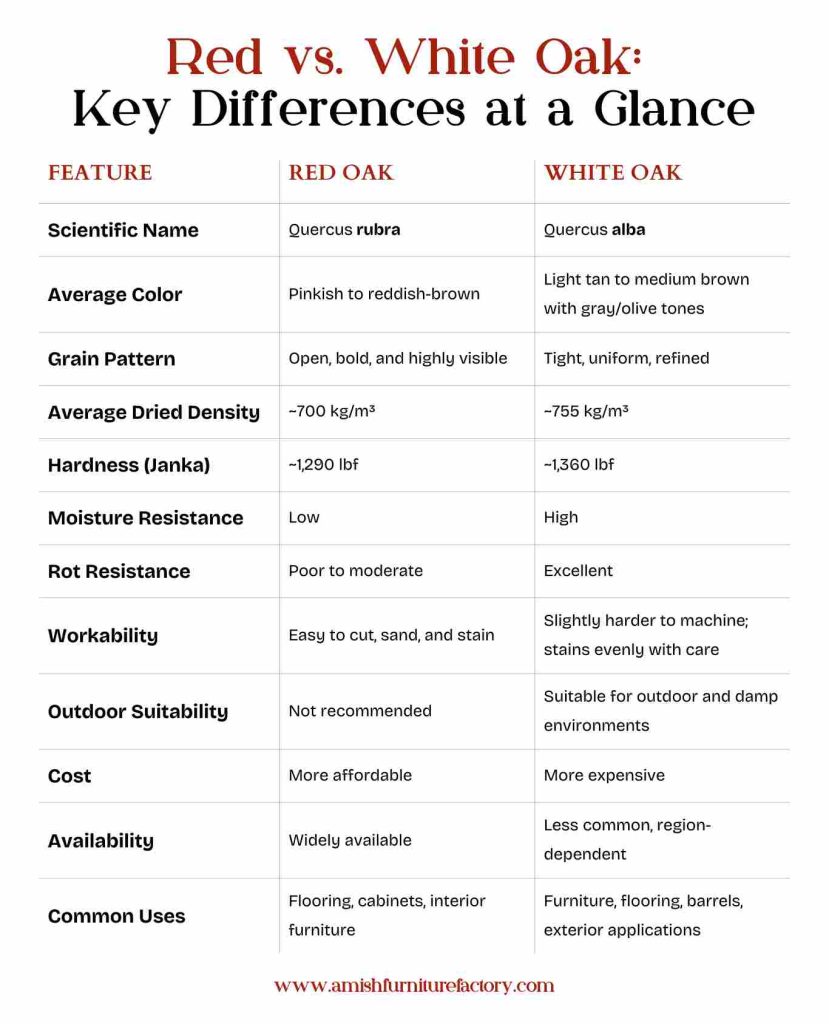
While red oak and white oak come from the same genus, their real differences become clear when you compare how they look, perform, and behave in practical use.
Appearance, Color Differences, and Grain Pattern
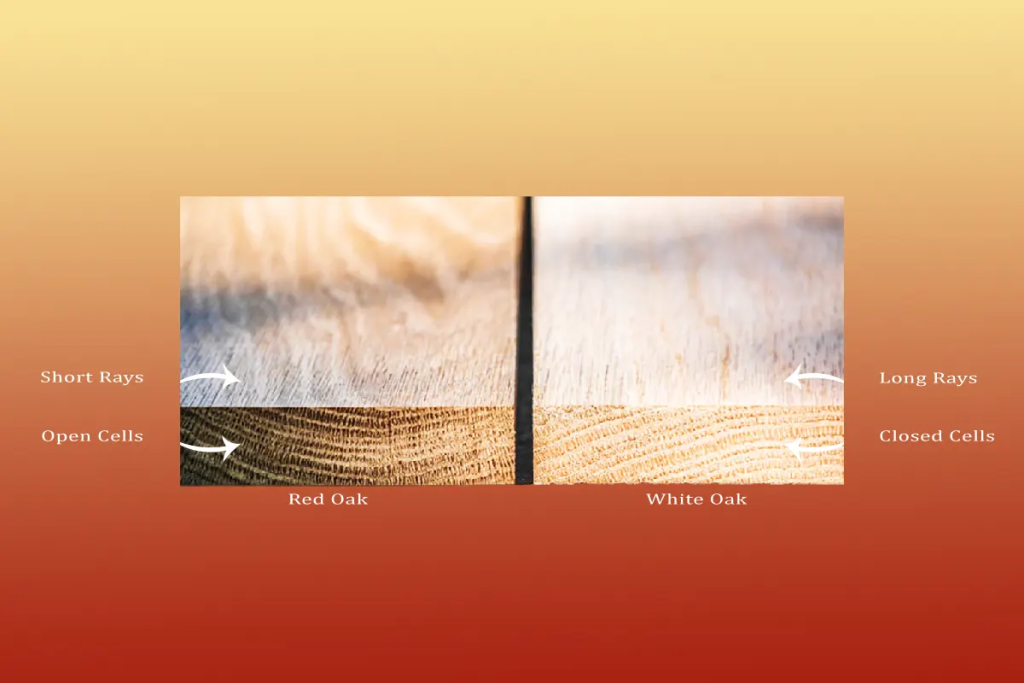
Red oak generally has a warmer, pinkish to reddish undertone with a more open and pronounced grain. Its grain pattern is bold and easy to spot, which is why it’s commonly used when a visible, expressive wood texture is desired. White oak, on the other hand, leans toward a light tan to medium brown color with subtle olive or gray hues. Its grain is tighter and more uniform.
Hardness, Strength, and Rot Resistance
Both red and white oak trees are considered strong hardwoods, but white oak has a slight edge in overall durability. It is marginally harder and denser, which helps it resist wear and impact over time. More importantly, white oak contains natural tyloses that block its pores. Red oak lacks this trait, leaving its open pores vulnerable to water absorption, which significantly reduces its rot resistance and limits its suitability for outdoor or damp environments.

Workability, Machining, and Staining
Red oak is often favored by woodworkers for its ease of use. It cuts, planes, and sands smoothly with standard tools, and its open grain absorbs stains readily, producing bold color results. White oak is slightly more challenging to machine due to its density, requiring sharper tools and a bit more patience. Staining white oak can be less predictable, but when done correctly, it delivers rich, even tones.
Cost & Availability
Red oak is generally more affordable and easier to source, thanks to its faster growth rate and widespread availability. It’s commonly stocked at lumberyards and home improvement stores. White oak tends to cost more and may be harder to find in certain regions, largely due to higher demand and slower growth.
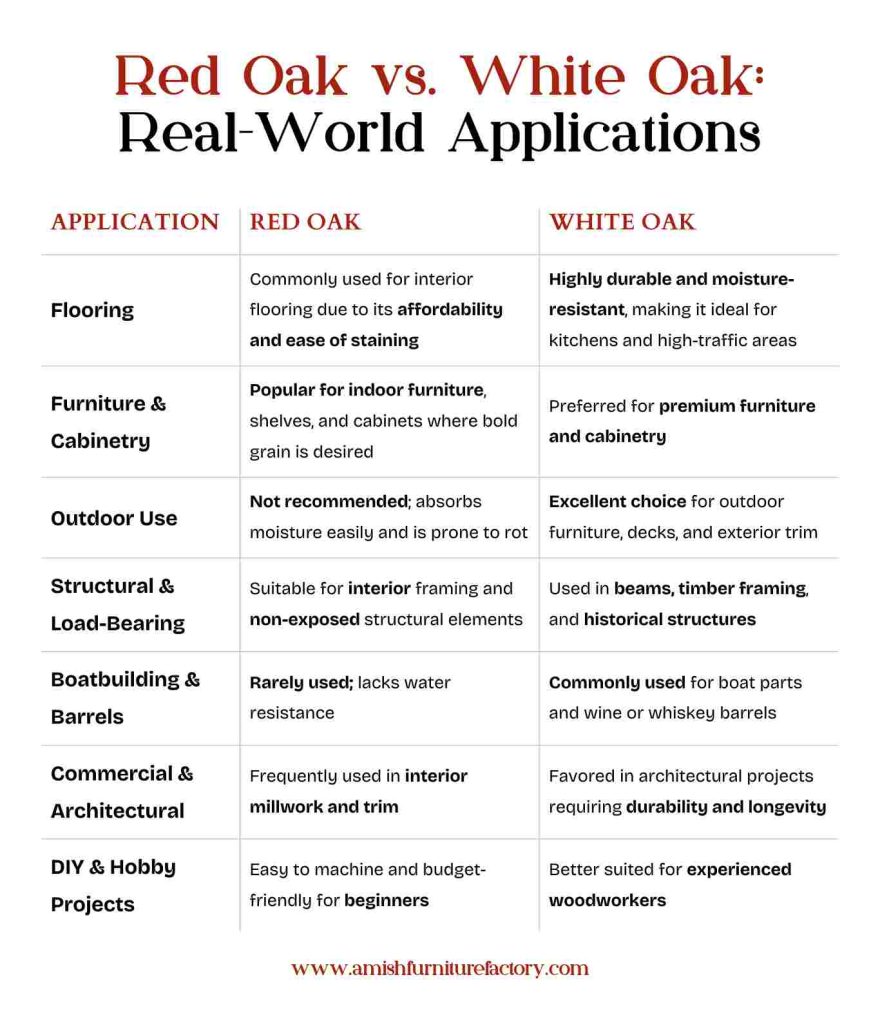
Red Oak vs White Oak: Real-World Applications
The practical differences between red oak and white oak become most obvious when you see how each is used in real woodwork projects. While both are versatile hardwoods, their performance varies greatly depending on exposure to moisture, foot traffic, and long-term wear. Choosing the right oak often comes down to matching the wood’s natural strengths to the demands of the application.
Which One Should You Choose?
Choosing between red oak and white oak ultimately depends on how and where the wood will be used. Red oak is ideal for indoor projects where moisture exposure is minimal and budget is a priority. Its warm tones, pronounced grain, and ease of workability make it a popular choice for hardwood flooring, furniture, and trim, particularly in traditional or rustic interiors.
White oak is the better option when performance and durability matter more than price. Its tighter grain structure and superior moisture resistance make it well-suited for kitchens, bathrooms and outdoor furniture. If you’re looking for a wood that can handle humidity, white oak is typically worth the higher upfront cost.
Whether you prefer the fiery undertones of red oak or the cool grain of white oak, our handcrafted Amish tables offer the perfect centerpiece to showcase these woods’ natural beauty.
Conclusion: Red Oak or White Oak?
While many may conclude that white oak furniture is always the best choice, it is worth noting that red oak furniture may also be a wise alternative. If you’re looking for furniture to place inside your home, many top-favorite options are made from red oak. Besides, these pieces have naturally warmer colors and shorter rays that are aesthetically pleasing without spending more.
Some who don’t consider prices an issue can always choose white oak for their furniture down to their flooring. Since it is proven to stand the test of time and ever-so-changing weather, this can be regarded as a good investment that even the next generations in your family would still enjoy. However, when buying a piece, whether it’s claimed to be made from red or white oak, you need to know how to distinguish and differentiate the two.
Frequently Asked Questions
Does red oak stain differently than white oak?
Yes. Red oak stains more aggressively due to its open grain and larger pores. This allows stains to penetrate deeply and emphasize grain contrast. White oak has a tighter grain structure, resulting in a more even, muted stain appearance with less dramatic contrast.
Can you stain red oak to match white oak?
You can get close, but an exact match is difficult. Red oak’s natural pink and reddish undertones often show through stains, while white oak has more neutral, earthy tones.
Is white oak or red oak more valuable?
White oak is generally more valuable. Its superior moisture resistance, durability, and suitability for premium applications drive higher demand and pricing compared to red oak.
Can you mix red oak and white oak flooring in the same house?
Yes, but it requires careful planning. Mixing the two works best when they are stained to similar tones and used in separate zones or rooms.
Why does red oak turn black when it gets wet?
Red oak absorbs water quickly due to its open pores. When moisture reacts with tannins in the wood, it can cause dark staining or black discoloration, which is far less common in white oak.