
Wood furniture looks its best when it is cared for simply and correctly. Many homeowners wonder how to clean wood furniture with vinegar and baking soda without risking cloudy marks or a dull finish. These two everyday ingredients are effective, but they require a specific approach to avoid harming the surface.
Key Takeaways:
- To clean wood furniture with vinegar and baking soda safely, use diluted vinegar for general cleaning and a gentle baking soda paste only for spot-treating.
- Always spot-test first to make sure the finish reacts well, especially on delicate pieces.
- Avoid oversaturation and finish damage by misting lightly and wiping with the grain.
In Amish Furniture Factory, we often see beautiful finishes ruined by “natural” cleaning hacks that were applied too aggressively. This guide breaks down how to use these household items safely to restore natural warmth while protecting the professional finish.
Can You Use Vinegar and Baking Soda on Wood Furniture?
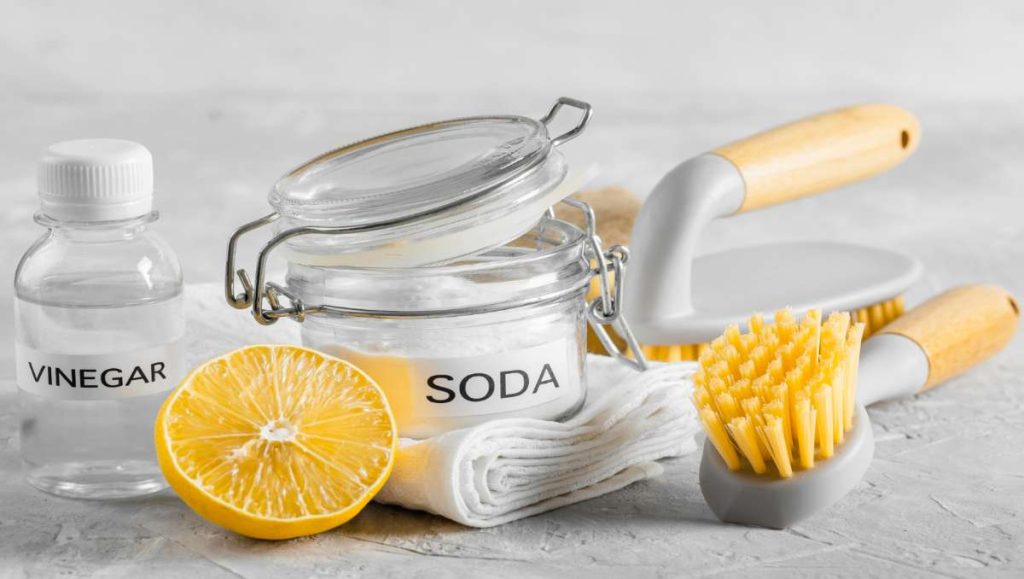
Vinegar and baking soda are affordable and accessible, but they function very differently on a cellular level. Vinegar is a mild acid that helps dissolve grease and mineral deposits. When properly diluted with water in a 1:10 ratio, it can safely lift grime from sealed surfaces. However, using undiluted vinegar is one of the fastest ways to burn a high-quality catalyzed varnish, leaving a permanent haze.
Baking soda is a mild alkaline with a slightly abrasive texture. It helps neutralize acidic stains and loosen stuck-on dirt through mechanical action. Because it is abrasive, it should never be used as a general wipe-down cleaner. Think of baking soda as a liquid sandpaper that should only be used for stubborn spots, not for routine maintenance.
General Precautions Before Using Vinegar or Baking Soda
Before reaching for the spray bottle, you must identify the finish of your piece. Never use vinegar or baking soda on delicate surfaces like shellac, lacquer, or hand-rubbed wax. Antiques and older Amish pieces often use these traditional finishes, which can soften or turn white when exposed to moisture and acid. Always spot-test any solution on a hidden area, such as the underside of a table or the back of a cabinet leg. If you notice any stickiness or discoloration, stop immediately and switch to a pH-neutral soap. Mixing vinegar and baking soda directly on the wood is also a common mistake. The resulting chemical reaction of this creates a salty water residue that can saturate the grain.
Step-by-Step Guide: The Safe Cleaning Process Using Vinegar and Baking Soda
Follow the process below to clean safely without dulling, scratching, or over-wetting the surface.
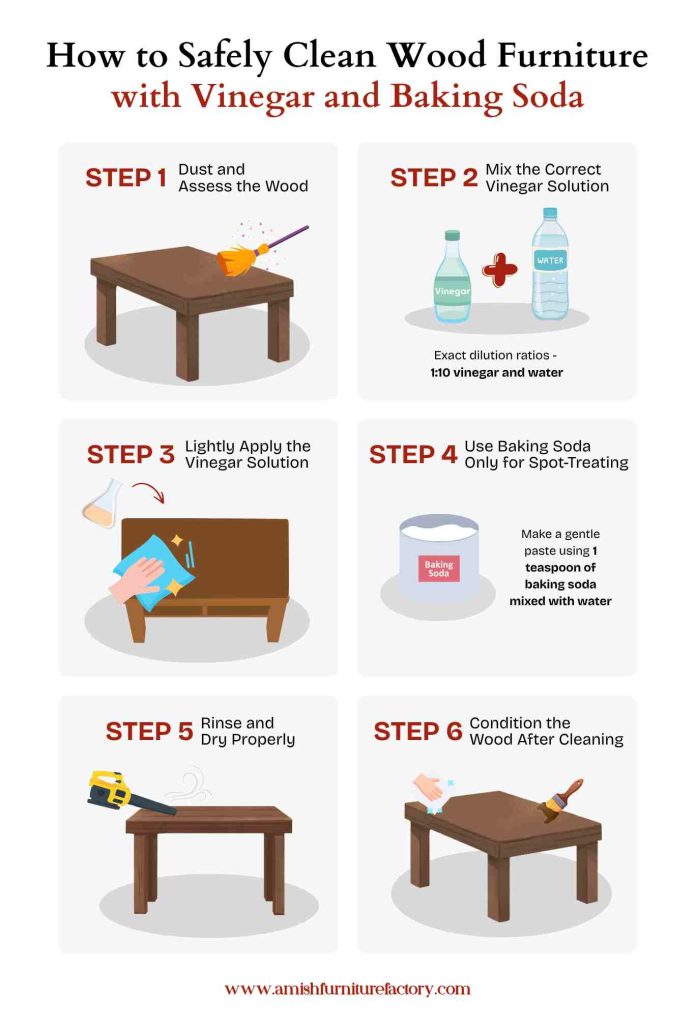
Step 1: Dust and Assess the Wood
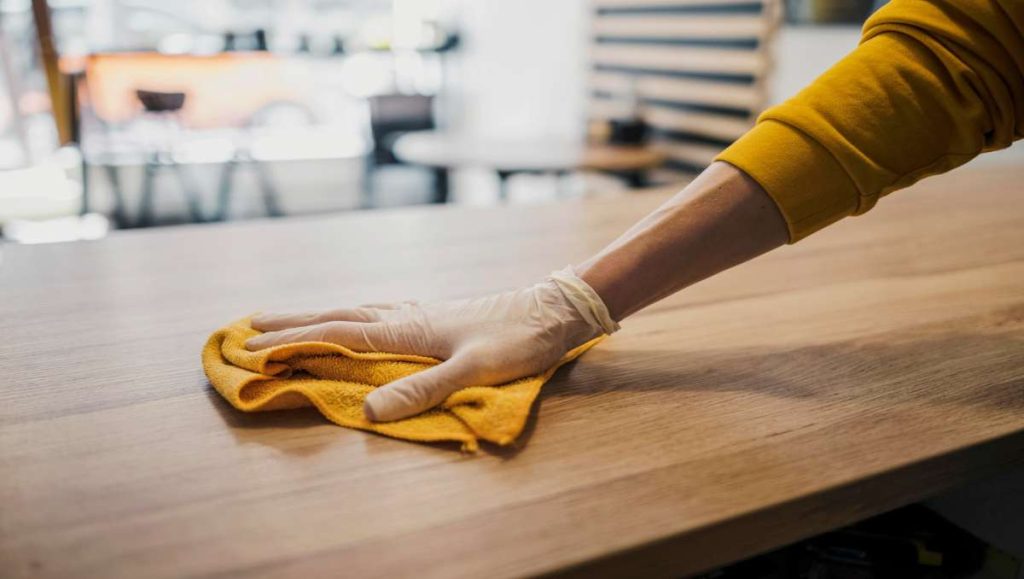
Before using any liquid, start by removing loose dust and grit. This prevents scratches that can occur when dirt gets dragged across the surface. Use a soft microfiber cloth, and take a moment to inspect the piece. Are there cloudy spots, sticky areas, or existing finish wear? Knowing the surface condition helps you clean more gently where needed.
Step 2: Mix the Correct Vinegar Solution
Use 1 part distilled white vinegar to 10 parts water. For high-end furniture, we recommend using distilled water rather than tap water to avoid leaving behind trace minerals.
Step 3: Lightly Apply the Vinegar Solution
Instead of soaking a cloth, mist the solution lightly or spray it onto the cloth rather than directly onto the wood. The goal is to clean without saturating. Then wipe along the grain, following the natural direction of the wood fibers. This helps avoid streaks and ensures grime lifts more cleanly from the surface.
Step 4: Use Baking Soda Only for Spot-Treating
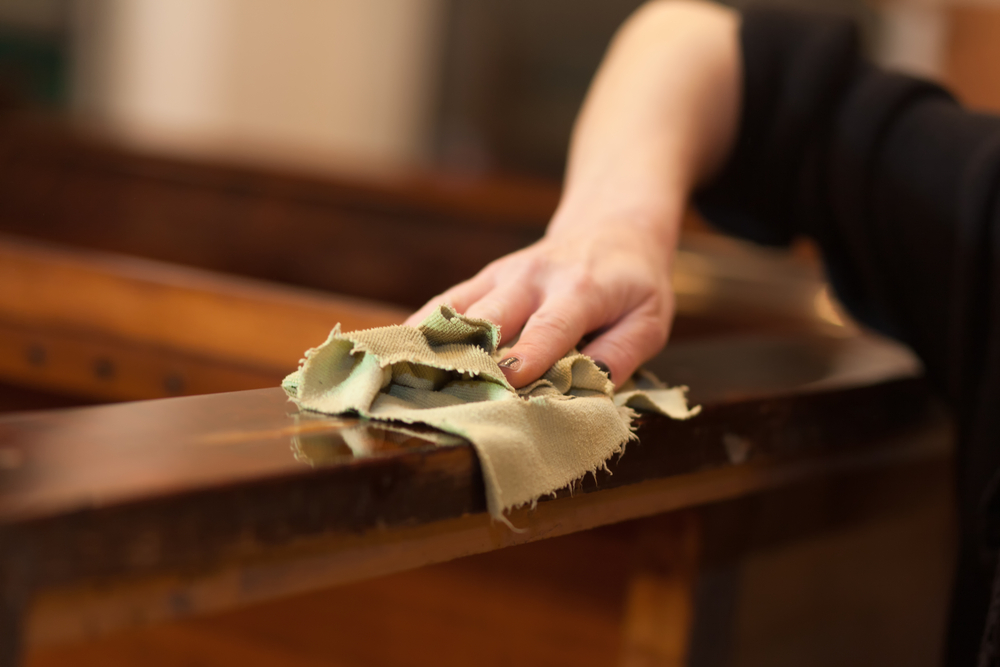
If a sticky residue remains, create a soft paste of one teaspoon of baking soda and a few drops of water. Apply this using only your fingertip in small circles. Avoid using a scrub brush or a rough sponge, as these will leave visible swirl marks in the finish.
Step 5: Rinse and Dry Properly
After cleaning, wipe the area with a clean, slightly damp cloth to remove any vinegar or baking soda residue. Leftover residue can attract dust or leave streaks. Immediately dry the surface thoroughly with a soft towel. This prevents moisture rings from forming.
Step 6: Condition the Wood After Cleaning
Once the furniture is fully dry, apply a conditioning product to nourish and protect the finish. You can use a small amount of natural oil (like mineral oil), a wax-based conditioner, or a commercial wood polish formulated for your finish type.
Mistakes to Avoid When Using Vinegar and Baking Soda on Wood Furniture
Keeping an eye on common mistakes helps you clean confidently without compromising your furniture’s finish.
1. Over-Applying Liquid
Wood doesn’t respond well to excess moisture. Using too much liquid can seep into seams or pores, leading to swelling, raised grain, or moisture rings. Always mist lightly and wipe promptly.
2. Using Undiluted Vinegar
Pure vinegar is too acidic for most wood finishes. It can dull surface sheen, soften delicate coatings, or create cloudy patches over time. Always dilute properly to keep the acidity safe and controlled.
3. Scrubbing Baking Soda Directly into the Grain
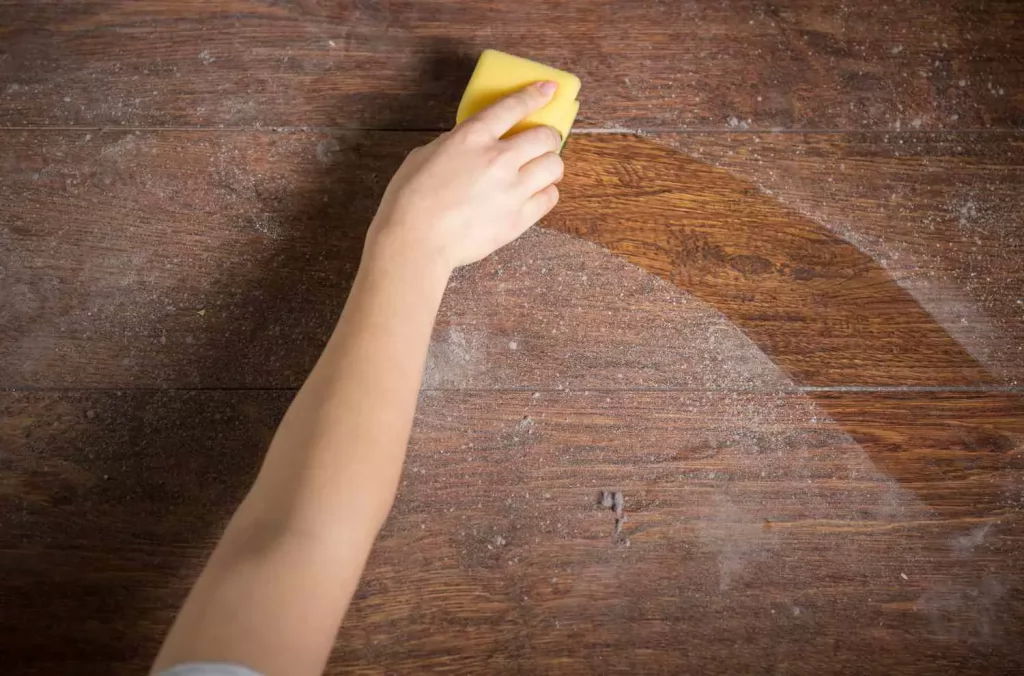
Baking soda may feel soft, but it’s still a mild abrasive. Pressing or rubbing it into the grain can leave micro-scratches that catch light and dust. Use only a gentle paste, applied with minimal pressure.
4. Mixing Them Directly on Wood
The fizzy reaction between vinegar and baking soda neutralizes both ingredients, leaving behind a water-heavy mixture that can sit too long on the surface. This can lead to moisture damage or residue. Always apply them separately.
5. Ignoring Wood Finish Type
Not all finishes are created equal. Shellac, lacquer, waxed surfaces, and antique finishes can be damaged even by mild acids or abrasives. Knowing what finish you’re working with determines whether vinegar or baking soda is safe.
Bring timeless craftsmanship into your home with our Amish Mission wood furniture pieces. Explore the collection today!
Conclusion: Safe, Smart, and Effective Wood Cleaning
Learning how to clean wood furniture, like cleaning a wooden desk, with vinegar and baking soda comes down to technique and respect for the material. These ingredients can refresh a surface and neutralize odors when used with a “less is more” philosophy. However, for heirloom-quality pieces, professional pH-balanced cleaners are always the safest long-term choice. Treating your furniture with the same care used to build it ensures it stays in the family for generations.
Frequently Asked Questions
What is the best homemade cleaner for wood furniture?
A diluted mixture of distilled white vinegar and water (1:10 ratio) is one of the most effective homemade cleaners for sealed wood surfaces. For delicate finishes, a Castile soap solution is a safer, gentler option.
Why should you stop mixing baking soda and vinegar to clean?
When mixed together, they neutralize each other, reducing their cleaning power. The reaction also creates a water-heavy mixture that can sit too long on wood, increasing the risk of moisture damage.
How to clean old wooden furniture with vinegar?
Use a very diluted vinegar solution (1:10 or weaker) and test it in an inconspicuous spot first. Older finishes especially shellac or varnish can be sensitive, so apply lightly with a dampened cloth, never saturating the surface.
Can vinegar permanently damage wood furniture if it’s not diluted correctly?
Yes. Undiluted or overly strong vinegar can dull finishes, cause cloudiness, or soften delicate coatings, leading to permanent surface damage over time.
How often should I clean wood furniture using natural solutions?
For general upkeep, a natural cleaner can be used every 2–4 weeks, depending on dust levels and daily use. Conditioning the wood every few months helps maintain shine and long-term finish quality.