


A headboard can instantly elevate the look of a bedroom, adding comfort, style, and a sense of completion to your bed. Still, many people hesitate when it comes time to attach one because they worry about scratching, cracking, or permanently damaging the wood on their bed frame. Drilling holes or using the wrong hardware can weaken the frame or leave visible marks, especially on newer or high-quality furniture. Fortunately, attaching a headboard does not have to mean harming your bed. With the right approach and a few simple techniques, you can secure a headboard firmly while keeping the wood in excellent condition.
Key Takeaways:
- To attach a headboard to bed frame, match the installation to your frame type; pre-drilled holes, no-drill brackets, or freestanding supports—to avoid unnecessary damage.
- Use universal headboard brackets or wall-mount for bed frames without holes, and drill pilot holes in wood to prevent splitting.
- Proper preparation matters: measuring carefully, using protective pads, and tightening hardware evenly can prevent wobbling and long-term wear.
In this guide, we’ll walk through the best methods to get that secure, wobble-free look while keeping your woodwork in pristine condition.
Why Add a Headboard to Your Bed Frame

A headboard is more than just a decorative element; it can transform the entire look and feel of your bedroom. It provides a focal point, adds personality, and can make your bed appear more polished and inviting. Beyond aesthetics, headboards also offer practical benefits, like support for sitting up in bed while reading or watching TV.
Additionally, a headboard can protect your wall from scratches and marks while helping to keep pillows in place. Whether you prefer a classic wooden design or a modern upholstered style, attaching a headboard is a simple way to enhance both comfort and style without major renovations.
Things to Consider Before Attaching a Headboard to Bed Frame
Before going into the installation, it’s important to evaluate a few key factors to ensure a secure and damage-free attachment.
Bed Frame Compatibility
Not all bed frames are designed to accommodate a headboard. Check whether your frame has the standard mounting slots or headboard brackets, and make sure the dimensions align with the headboard’s hardware. Compatibility is crucial to avoid unstable or unsafe setups.
Headboard Type
The material and style of your headboard will influence how it can be attached. Solid wood, metal, and upholstered headboards each have different weight tolerances and connection methods. Choosing the right attachment approach depends on the type of headboard you have.
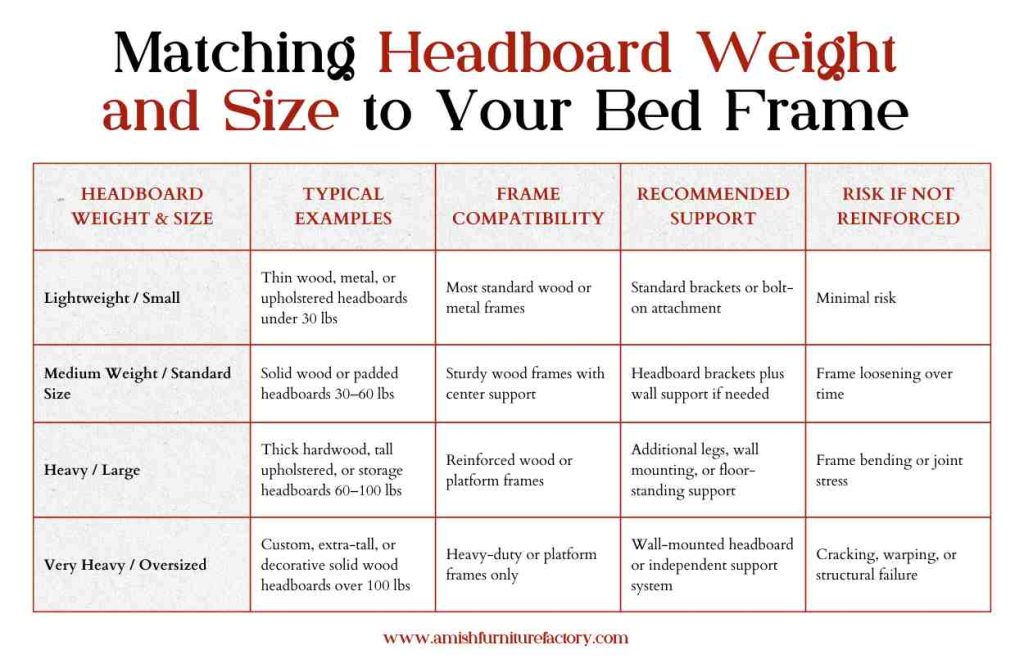
Weight and Size of Headboard Relative to Frame
A heavy or oversized headboard may require additional support or reinforcement to prevent damage to the bed frame. Ensure that your frame can handle the headboard’s weight without bending or shifting over time.
Existing Holes or Need for New Mounting Points
Some frames come with pre-drilled holes, while others do not. Frames without holes will require alternative attachment methods to avoid drilling or damaging the wood. Assessing this beforehand will help you select the most appropriate installation technique.
Gathering Tools and Prepping Your Headboard and Frame
Before you start attaching your headboard, it’s important to have all the necessary tools at hand and prepare both the headboard and bed frame for a smooth installation. Here are the tools you’ll need:
- Measuring tape or ruler
- Pencil or masking tape (for marking placement)
- Adjustable wrench or socket set
- Screwdriver (flathead or Phillips, depending on hardware)
- Level (to ensure headboard is perfectly straight)
Start by clearing the bed area and laying the headboard on a soft surface to prevent scratches. Check that all bolts, pocket hole screws, and mounting hardware are included and in good condition. Then, measure and mark where the headboard will align with the bed frame, ensuring it is centered and level before attaching.
How to Attach Headboard to Bed Frame With Pre-Drilled Holes
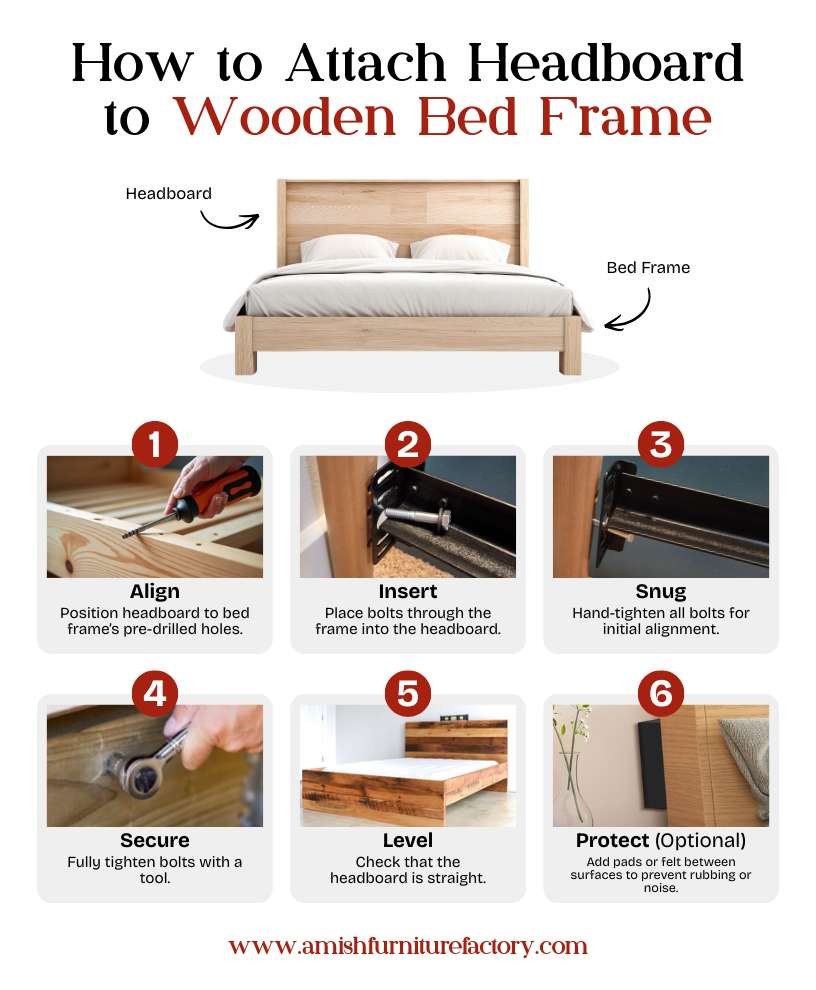
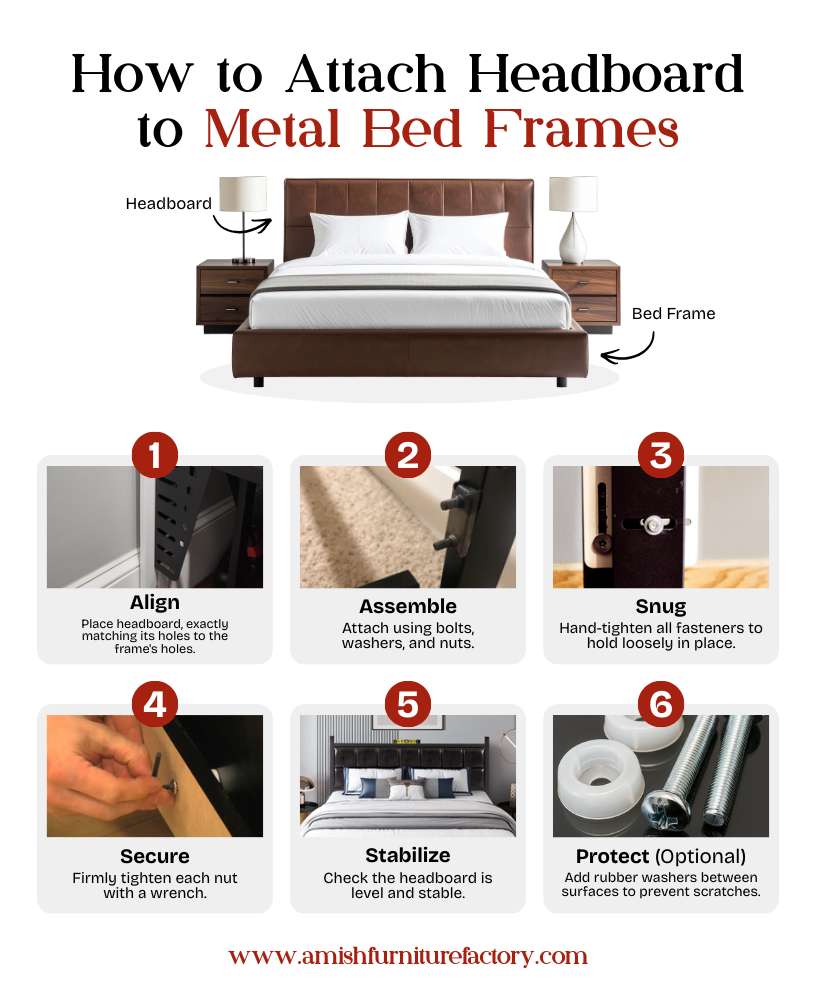
If your bed frame already has pre-drilled holes, attaching a headboard is straightforward and minimizes the risk of damage. This method works for both wooden and metal frames, with only minor differences in hardware and protective materials.
Step-by-Step Instructions (Wood and Metal Frames)
- Align the headboard and frame. Position the headboard behind the bed frame and line up the mounting holes on both pieces.
- Insert the hardware. Slide bolts or screws through the aligned holes.
- For wooden frames, this is typically just bolts or screws.
- For metal frames, you’ll usually use bolts with washers and nuts.
- Hand-tighten first. Tighten each bolt or nut by hand initially. This keeps the headboard in place while still allowing small adjustments.
- Secure with tools. Once everything is aligned and centered, use a wrench or screwdriver to fully tighten the hardware. Alternate sides as you tighten to keep pressure even.
- Check alignment and stability. Make sure the headboard is level. If needed, slightly loosen the hardware, adjust the position, and re-tighten.
- Prevent noise and damage (optional but recommended)
- For wooden frames, add felt or furniture pads between contact points to reduce rubbing or squeaking.
- For metal frames, use rubber washers to help prevent scratches and vibrations.
Attaching Headboards to Frames Without Pre-Drilled Holes
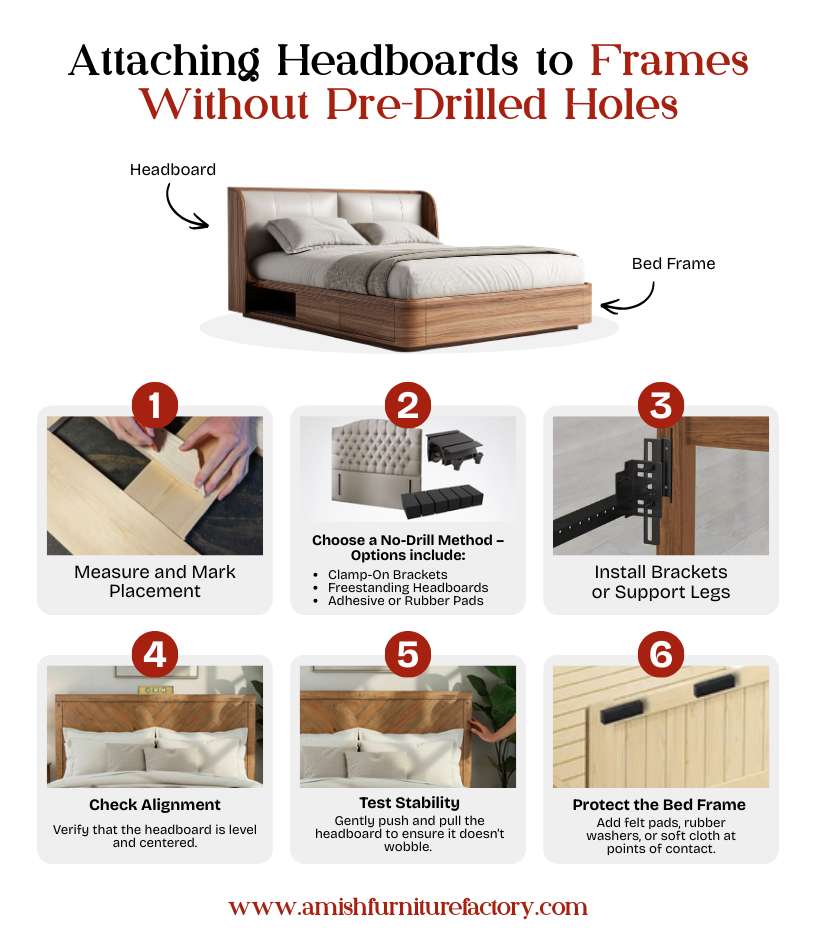
When your bed frame doesn’t have pre-drilled holes, you can still securely attach a headboard without damaging the wood. Follow these steps to safely install your headboard:
- Position the headboard behind the bed frame and mark where it should sit. Use a level to ensure it’s perfectly straight and centered.
- Choose a no-drill method. Options include:
- Clamp-On Brackets: Attach headboard brackets that grip the bed frame and hold the headboard in place.
- Freestanding Headboards: Some have headboard legs that rest on the floor behind the bed and slide under the frame.
- Adhesive or Rubber Pads: For lighter headboards, strong adhesive pads or rubber friction pads can provide temporary support.
- Follow the manufacturer’s installation instructions for clamp-on brackets or freestanding legs, ensuring all contact points are secure and stable.
- Once installed, verify that the headboard is level and centered. Adjust clamps or legs as necessary for proper positioning.
- Gently push and pull the headboard to ensure it doesn’t wobble. Add felt pads, rubber washers, or soft cloth at points of contact to prevent scratches or dents over time.
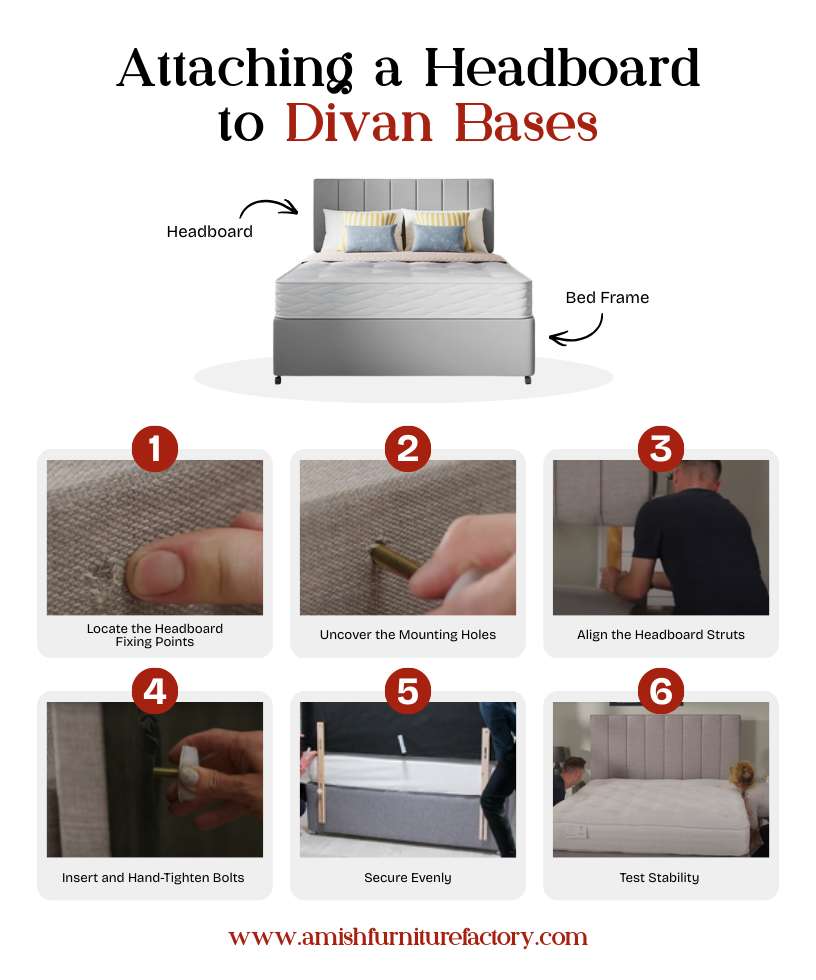
Attaching a Headboard to Divan Bases
Divan bases are a bit different from standard bed frames because they’re usually upholstered and designed to support headboards in specific ways.
- Locate the Headboard Fixing Points – Check the back of the divan base for small plastic caps or fabric-covered holes.
- Uncover the Mounting Holes – Gently pierce or open the fabric at the marked points using a screwdriver or sharp tool, being careful not to tear the upholstery.
- Align the Headboard Struts so they line up with the fixing points on the divan base.
- Feed the bolts through the headboard struts into the divan base and hand-tighten them first to ensure correct alignment.
- Use a wrench or screwdriver to tighten the bolts evenly on both sides.
- Gently apply pressure to confirm the headboard is firmly attached and doesn’t shift during normal use.
Pair your new headboard with the unmatched durability of our Amish made beds, built to provide a seamless fit and a lifetime of support. Explore our collection today!
Conclusion: Sleeping Soundly in a Damage-Free Sanctuary
Attaching a headboard doesn’t have to involve permanent modifications or costly mistakes. With the right approach, you can secure a headboard that looks great, feels solid, and preserves the condition of your bed frame. Whether you’re working with pre-drilled holes, a no-drill setup, or a divan base, thoughtful preparation and the proper method go a long way toward a clean, damage-free result.
By understanding your frame type and choosing techniques that respect the materials, you create a bedroom setup that’s both functional and long-lasting. A well-attached headboard adds comfort, personal style, and peace of mind, letting you sleep soundly in a space that feels complete and well cared for.
Frequently Asked Questions
Can you attach a headboard to any bed frame?
Most bed frames can support a headboard, but the attachment method depends on the frame’s design. Frames with pre-drilled holes are the easiest, while others may require clamp-on brackets, freestanding headboards, or divan-specific fixings.
How do you secure a freestanding headboard?
A freestanding headboard is typically secured by placing its legs on the floor and sliding them slightly under the bed frame. The mattress and bed weight help keep it in place. For extra stability, non-slip pads or wall-facing rubber grips can reduce movement.
What’s the safest way to attach an upholstered headboard without damaging the fabric?
Use existing mounting brackets or points whenever possible and avoid piercing new holes through the upholstery. Washers and soft spacers help distribute pressure and prevent fabric wrapped headboards from tearing.
How can I fix a wobbly headboard without removing it entirely?
First, check and tighten all accessible bolts and brackets evenly. Adding felt pads, rubber washers, or spacers at loose contact points can reduce movement. If the frame allows it, reinforcing with an additional clamp or bracket often stabilizes the headboard.
I’m in a rental and cannot modify my bed frame or walls. What are my best options for a temporary headboard attachment?
Freestanding headboards, clamp-on brackets, and no-drill support systems are ideal for rentals. These options provide stability without drilling into the frame or walls and can be removed easily when you move out, leaving no visible damage behind.