
When it comes to questions about the Amish, curiosity often centers around how this deeply traditional community interacts with the modern world, especially when it comes to major national issues like military service. Can Amish be drafted? Known for their pacifist beliefs, simple living, and separation from mainstream society, the Amish may seem worlds apart from the military’s structured and often combative nature. So, do the Amish ever serve in the military? The answer is rooted in both their religious convictions and the legal accommodations made for conscientious objectors.
Key Takeaways:
- Amish individuals can be drafted in the United States, but because of their pacifist religious beliefs, they are usually granted conscientious objector status, which means they are not required to serve in combat roles.
- The Amish follow Bible teachings that tell them to avoid violence, forgive others, and live peacefully. This is why they won’t join the military.
- While most Amish avoid military service, a small number have joined, usually after leaving their community.
In this article, we’ll explore the Amish community’s stance on military service, how their pacifist beliefs shape their response to national duty, and what happens when they’re subject to a military draft.
Amish Beliefs on Military Service and Non-Resistance
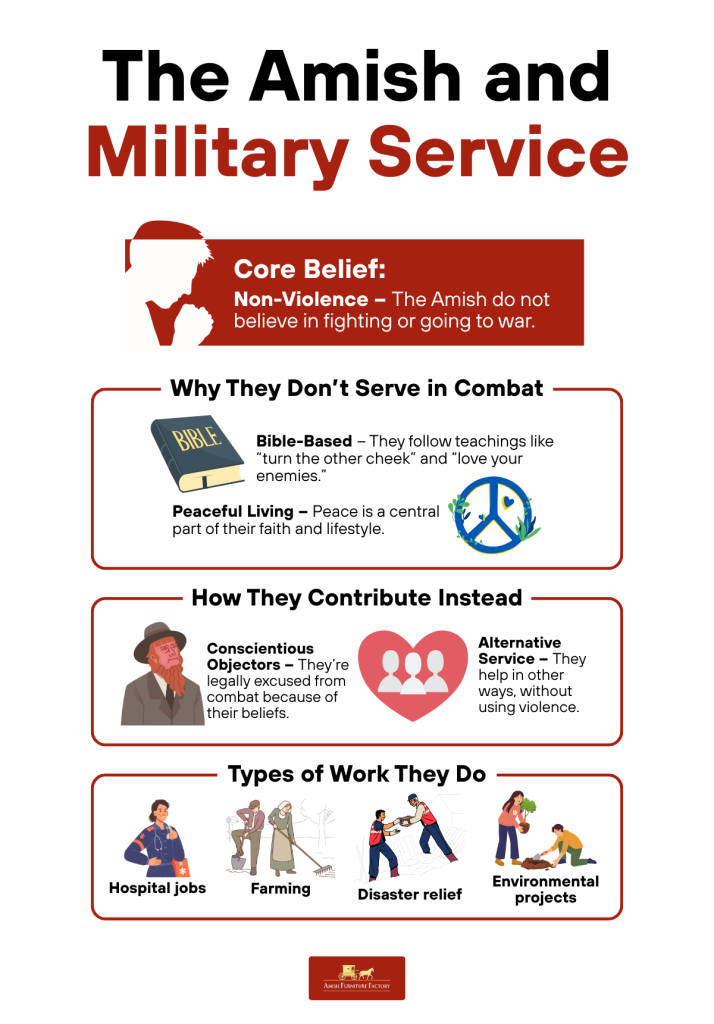
The Amish community’s rejection of military service is deeply rooted in their religious commitment to nonviolence. Guided by the teachings of Jesus and the values emphasized in the Sermon on the Mount, the Amish believe that taking up arms, even for national defense, is morally wrong. They strive to live peacefully, resolve conflicts without violence, and remain separate from institutions that promote warfare.
This belief in non-resistance is supported by several Bible passages that shape the Amish way of life. Verses like “Turn the other cheek” (Matthew 5:39) and “Love your enemies” (Matthew 5:44) reflect their dedication to peace, mercy, and forgiveness. For the Amish, war contradicts both their faith and their community-centered lifestyle, which emphasizes harmony, humility, and living at peace with everyone (Romans 12:18).
Comparing Amish Views with Other Anabaptist Groups
The Amish belong to the Anabaptist tradition, a Christian movement that began in 16th-century Europe emphasizing adult baptism, separation from worldly authority, and nonresistance. This belief in rejecting violence and military service shapes how Anabaptist groups respond to war and conscription.
Among these groups, the Amish take the strictest stance, refusing any form of military involvement. Mennonites and the Church of the Brethren have often participated in alternative service, contributing through hospital work, disaster relief, and agriculture. Hutterites, who also reject violence, went so far as to send young men to Canada during World War I to avoid U.S. military service. Despite these differences, all share a common commitment to living out Jesus’s teachings on peace and nonviolence.
Amish Draft History and Alternative Service During U.S. Wars
Although Amish men were required to register for the draft, most declared conscientious objector (CO) status due to their pacifist beliefs. Instead of serving in combat, they fulfilled their obligations through alternative service, including work in Civilian Public Service (CPS) camps, hospitals, farming, and forestry.
During World War I, many Amish received farm deferments or served in CPS roles such as hospital work, research, and firefighting. In World War II, 772 Old Order Amish men were drafted but again served as COs in non-military roles.
The Korean and Vietnam Wars continued this pattern through the I-W program, which required Amish COs to work in civilian service, often outside their communities. In 1969, however, an agreement allowed Amish men to complete their service on Amish farms, enabling them to remain within their communities while still meeting government requirements.
The Aftermath of War for Amish Communities
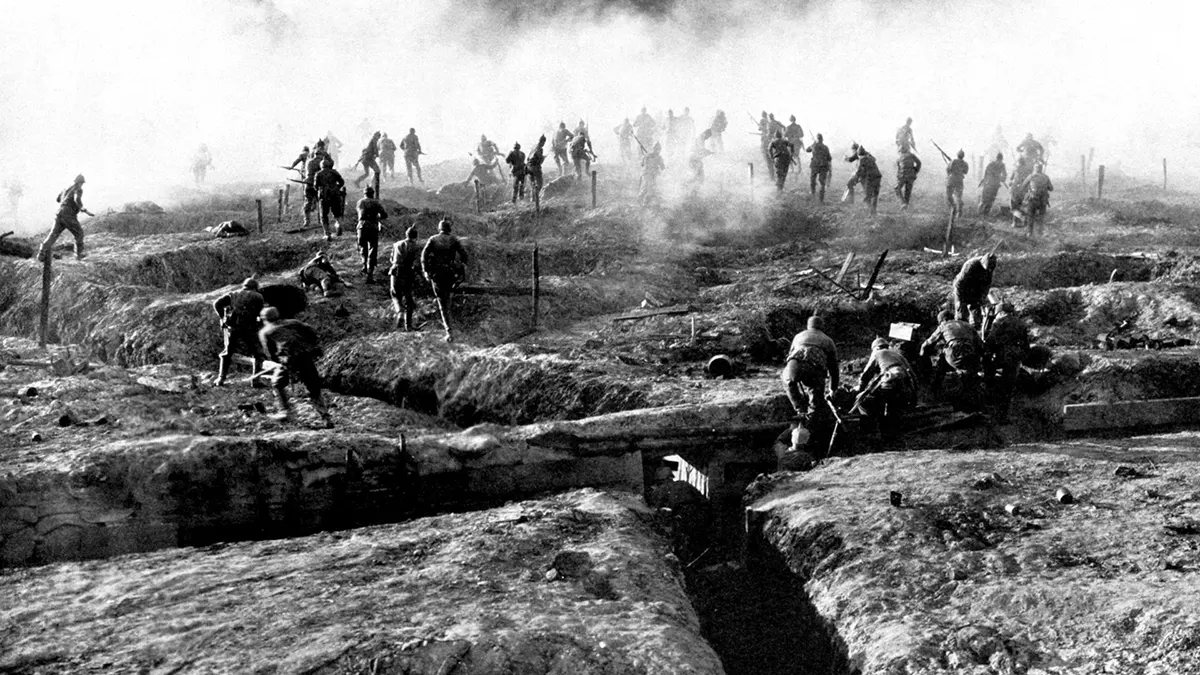
Amish families carried lasting memories of wartime hardship, often shared through stories passed down to children and grandchildren. Conscientious objectors faced harassment, discrimination, and, at times, violence for refusing combat, with some even being assaulted in training camps during World War I. In later wars, Amish individuals recalled incidents of hostility, such as vandalism, physical attacks, and threats to their way of life. Howard Plank, a member of the Amish community in Arthur, Illinois, told the Chicago Tribune his own story during the Vietnam War when someone threw a brick at his buggy, and the time when his brother was shot while visiting his girlfriend.
Beyond personal experiences, Amish communities also endured financial pressures through war taxes, substitution fees, and property loss. These struggles echoed the persecution they had fled in Europe, reinforcing their commitment to nonresistance and even prompting some early families in Pennsylvania to seek more peaceful places to settle.
Three Documented Amish People Who Joined the Military
Can Amish be drafted? While the Amish refuse to join the military service in general, like in any other collectives, there’ll always be a few people who would think differently. However, this doesn’t always mean they’re defying the rules they grew up to. For these people who were proudly raised Amish, serving their country is just as important as their Amish beliefs.
Floyd Helmuth grew up in an Amish community in Illinois and, at just 18 years old, enlisted in the U.S. Navy at the start of World War II. After boot camp in Michigan and engineer training in Florida, he was deployed in 1945 to the South Pacific, where he served as a helmsperson during major amphibious assaults, including the Battle of Okinawa.
Malinda Dennison, raised in a small Amish settlement in Spartansburg, Pennsylvania, chose a different path after her Amish schooling ended in eighth grade. Encouraged by her future husband, she joined the Army during college, graduating as a military police soldier at Fort Leonard Wood. Drawing on her Amish upbringing of discipline and hard work, she continued serving in the Army Reserves as of 2019.
Andrew K. Stoltzfus, born in 1924 in Intercourse, Pennsylvania, left his Amish family and community after his mother’s death and enlisted in the U.S. Army in the early 1940s. Initially assigned to the air force before being moved to the infantry, he was killed in action on November 23, 1944, during a battle in Hurtgen, Germany, and was laid to rest at Henri-Chapelle American Cemetery in Belgium.
To understand more about the Amish ways and their unique traditions, explore our in-depth articles.
Conclusion
The Amish community believes in non-resistance and conscientious objection to military service. While there have been exceptions to this rule, most Amish choose to serve their communities in other ways, such as through farming and other trades.
The Amish have faced harassment and persecution during the war, but remain steadfast in their convictions. The stories of Amish veterans who struggled with the conflict between their faith and their duty to serve their country serve as a testament to the challenges faced by those who follow the Amish way of life.
Frequently Asked Questions
Do Amish people pay taxes that support the military?
Yes, Amish people pay taxes, including income taxes, property taxes, and sales taxes. This means their tax dollars can indirectly support the military, like those of other U.S. citizens. However, they are exempt from paying Social Security and Medicare taxes under the Self-Employment Contributions Act if they are self-employed and part of a recognized religious group that opposes insurance benefits.
What happens if an Amish person wants to join the military?
If an Amish individual chooses to join the military, it typically means they have left the Amish church or been excommunicated. The Amish church strictly prohibits participation in war, and joining the military would be seen as a serious breach of their religious doctrine.
Is non-resistance the same as being unpatriotic?
Not necessarily. The Amish see non-resistance as a religious conviction, not a political stance. They do not pledge allegiance to a nation or take up arms because they believe their ultimate loyalty is to God’s Kingdom, not any earthly government.
Has the Amish stance on military service ever changed?
No, the Amish position on military service has remained remarkably consistent since the group’s founding in the 1600s. Rooted in Anabaptist theology and the teachings of Jesus, particularly the Sermon on the Mount, the doctrine of nonresistance has been unwavering.