


Every year, the Fourth of July brings fireworks, picnics, and a wave of patriotic energy. But if you have ever found yourself wondering do Amish celebrate 4th of July, you are not alone. The Amish are known for their simple lifestyle and their distance from many modern traditions, which can make it unclear how or if they observe national holidays.
Key Takeaways:
- The Amish do not officially celebrate Independence Day, as it is a patriotic and military holiday that doesn’t align with their beliefs in humility and nonresistance.
- Amish families may still enjoy aspects of the day such as picnics, visiting, or watching fireworks but participation varies widely across communities.
- Instead of national holidays, the Amish prioritize religious observances and community-centered traditions that reflect their core values of faith.
In this article, we take a closer look at what the Fourth of July means within Amish communities and how their approach differs from the typical American celebration.
Amish Beliefs on Patriotism and National Identity
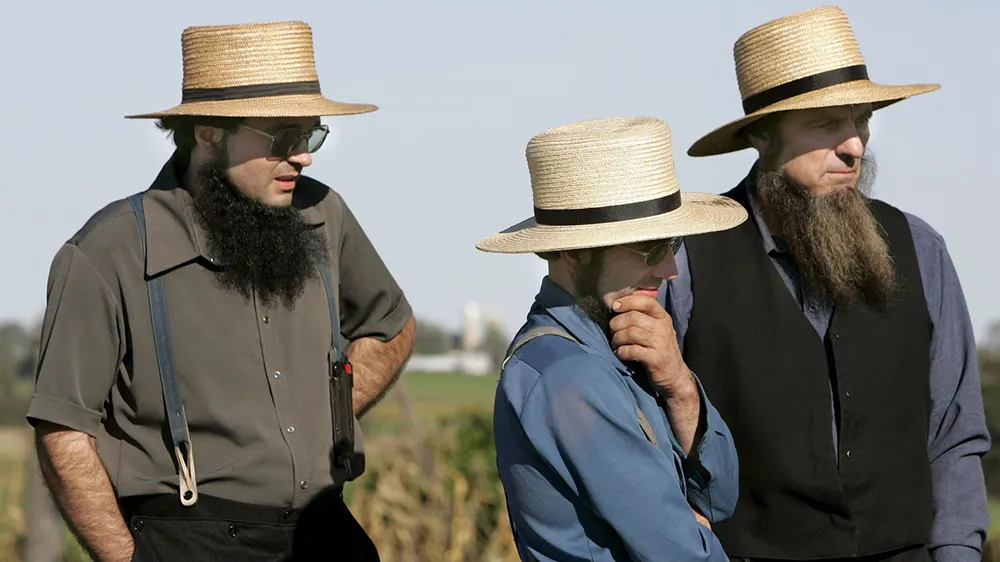
For the Amish, allegiance to their faith comes first, and this shapes how they view patriotism and national identity. Their lives are guided by principles like humility, community, and a deliberate separation from the world, sometimes referred to as the “Two Kingdoms” view. This worldview leads many Amish to avoid typical expressions of nationalism. They generally do not fly flags, recite pledges of allegiance, or display symbols of civic patriotism in their communities.
Because the Amish prioritize spiritual allegiance over worldly loyalty, they tend to refrain from participating in institutions tied to state power, such as military service or public office. That said, they do accept the civil government’s authority where necessary and live law-abiding lives. Their detachment from national identity doesn’t imply hostility, but rather reflects a conscious choice to orient their deeper identity around faith and community first.
Do the Amish Celebrate the 4th of July?
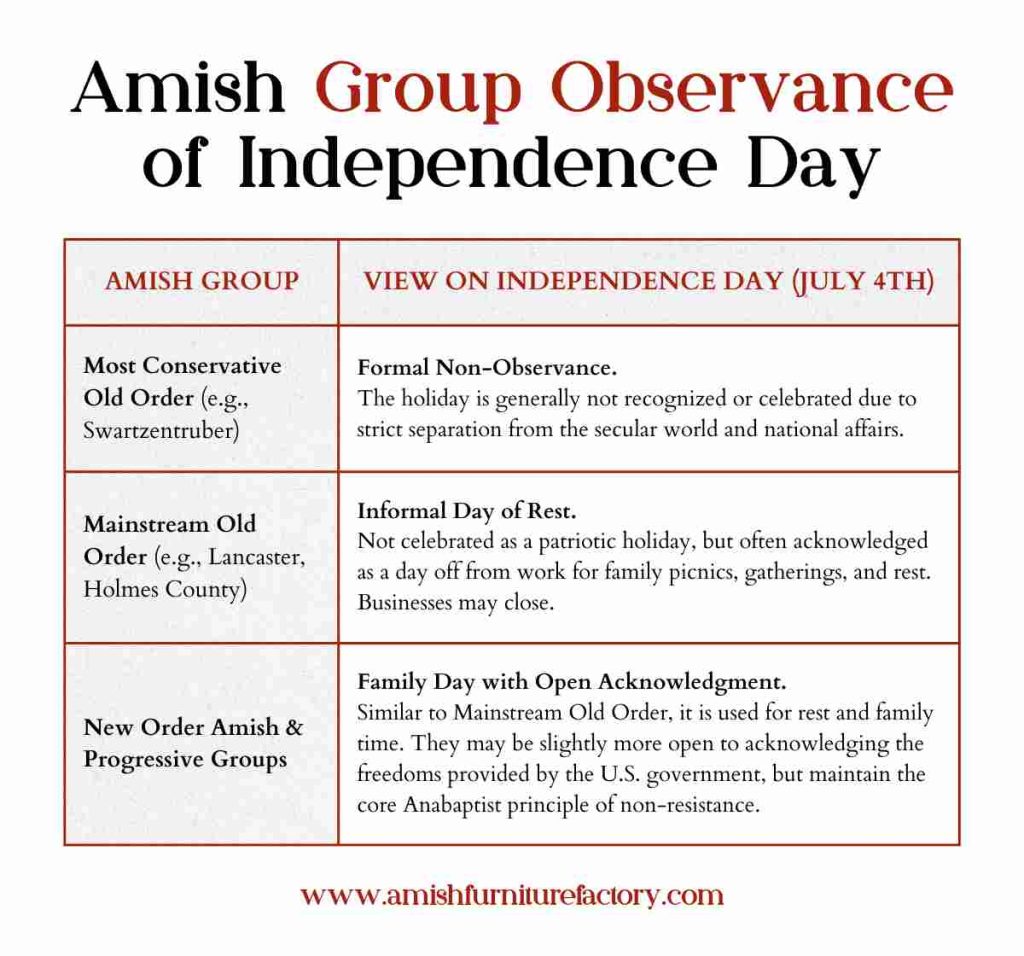
When it comes to Independence Day (July 4th), most Amish communities do not treat it as a holiday. Many Amish sources list the Fourth among the public holidays they typically don’t observe because these celebrations often revolve around national pride, patriotic displays, or historical events tied to war, which run counter to Amish beliefs in humility and nonresistance.
That said, as described by novelist Beverly Lewis:
“In general, the Amish don’t typically observe the holiday. However, it is up to the individual family as to whether or not they will participate in actually celebrating.”
In practice, this means there are Amish families, especially in communities more integrated with non-Amish society, who may choose to mark the day. Some reportedly go to parades, enjoy fireworks (or watch them from a distance), or even close their shops for a “vacation” day.But such participation is by no means universal.

Exceptions and Variations Between Amish Communities
Like many aspects of Amish life, how a community approaches July 4 can vary based on Ordnung (church rules), geography, and how closely a group interacts with the surrounding world. More progressive communities—such as some in Holmes County, Ohio or Lancaster, Pennsylvania—may be more open to attending parades, visiting non-Amish friends, or taking advantage of holiday sales and public events. These aren’t framed as patriotic observances but as practical or social opportunities.
Meanwhile, more conservative groups, such as the Swartzentruber Amish, are far less likely to acknowledge the day in any visible way. Their adherence to stricter separation from the outside world makes participation in national events unlikely. Across the spectrum, though, the key factor remains personal and family-level discretion.
Typical Amish Activities on Independence Day
Since most Amish don’t observe the Fourth of July as a patriotic holiday, the day usually unfolds much like any other summer day. Many families spend it working on the farm, tending gardens, or running their small businesses. Because Amish life follows a rhythm set more by the seasons than by national events, July 4 often feels no different from July 3 or July 5. In some communities, businesses may close early or take the day off—not specifically “for the holiday,” but because it’s a convenient time for rest, visiting relatives, or enjoying a community picnic.
However, the day isn’t devoid of enjoyment. Some Amish families may gather informally for outdoor meals, baseball games, or small-scale fellowship—activities that happen throughout the summer regardless of the calendar date. And while fireworks aren’t part of Amish tradition, it’s not uncommon for families to watch them from porches or fields if nearby towns host displays.
How the Amish Respect American Freedoms Without Celebrating July 4th
The Amish maintain a quiet balance: though they seldom celebrate national holidays like Independence Day, many still acknowledge and live under the legal freedoms and civic rights afforded by being U.S. citizens.
Legal Rights and Civic Standing
Even as they generally avoid patriotic displays or national holiday celebrations, Amish individuals remain full citizens of the United States. They have the legal right to vote and may participate in elections, especially when community-level issues (like land use or schooling) are at stake.
Taxes and Civic Contributions
Contrary to a common misconception, the Amish do pay many of the same taxes as other Americans: property, income (when applicable), sales, and real-estate taxes. These contributions support public services they may occasionally use such as roads, demonstrating a kind of civic responsibility even while they maintain a separate way of life.
Respecting Government Without Political Involvement
The Amish teach respect for governing authorities, in line with their religious beliefs but typically avoid active involvement in politics. They reject military service and public office, valuing nonresistance and humility. Yet, by obeying laws, paying taxes (except certain exemptions), and keeping a peaceful coexistence with neighbors and local institutions, they uphold a form of civic duty without compromising their religious convictions.
What Holidays Do the Amish Celebrate Instead?
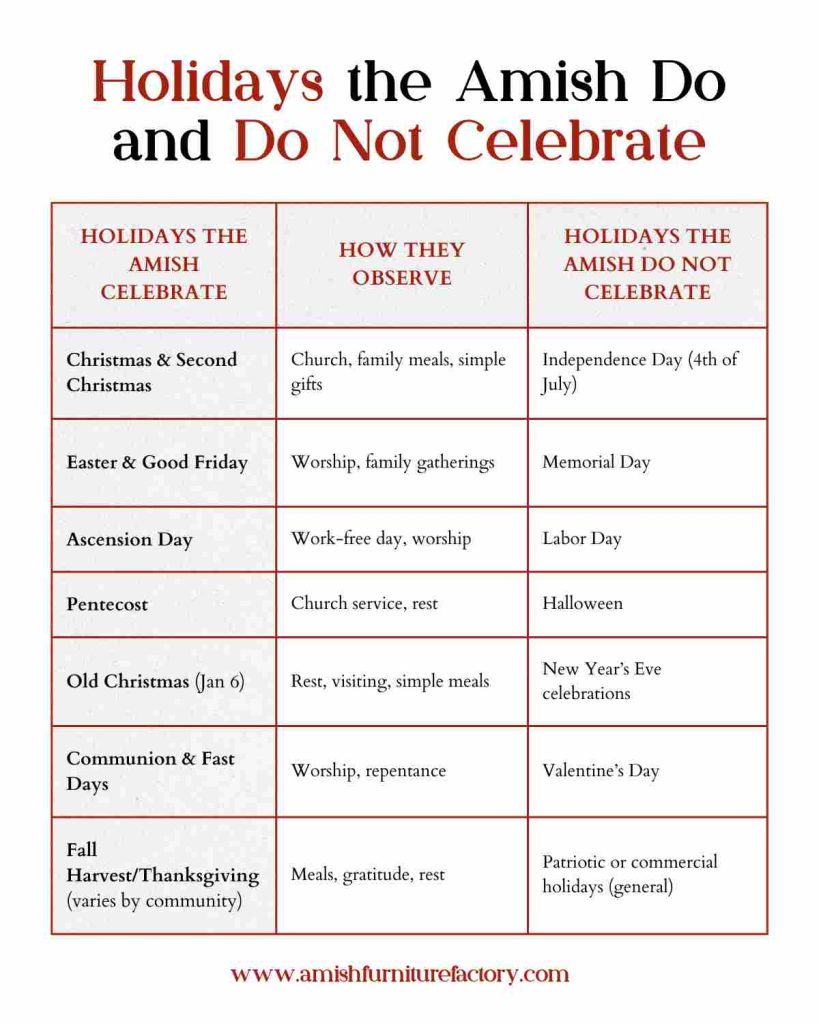
While the Amish don’t typically observe national holidays like the Fourth of July, they do celebrate a meaningful calendar of religious and community-focused days rooted in Scripture and tradition. Their holidays emphasize reflection, worship, family unity, and humility. Days such as Christmas, Thanksgiving, Easter, Ascension Day, and Pentecost are central to Amish life, each observed with church services, quiet family gatherings, and simple meals rather than commercial or extravagant celebrations.
The Amish also mark several lesser-known holidays, including Old Christmas (January 6) and Second Christmas, as well as Fast Days, Communion Sundays, and various community “off days” determined by local bishops. These observances reflect the Amish belief that holidays should deepen faith and strengthen community bonds, not celebrate national identity or political history.
Visit the Amish Furniture Factory Facebook page for more daily insights and discussions on traditional Amish ways.
Conclusion: A Holiday Marked by Simplicity, Not Patriotism
For the Amish, the Fourth of July isn’t a day of fireworks, flags, or patriotic declarations. It’s simply another summer day shaped by work, family, and faith. Their approach reflects a broader worldview: a commitment to humility, separation from worldly culture, and a focus on spiritual citizenship rather than national identity.
While some families may enjoy picnics, watch fireworks from a distance, or join local events, these activities are personal choices; not community-wide celebrations. Ultimately, Independence Day highlights the quiet balance the Amish maintain between living within the United States and remaining distinct from many of its cultural traditions.
Frequently Asked Questions
Do Amish consider themselves US citizens?
Yes. The Amish are legally American citizens and are protected by U.S. laws. They may vote, own property, operate businesses, and participate in civil society, although many choose limited political involvement due to their beliefs in humility and nonresistance.
Do the Amish celebrate Christmas?
Yes. The Amish celebrate Christmas, though in a much simpler, religiously focused way. They also observe Second Christmas (Dec. 26) and Old Christmas (Jan. 6), emphasizing worship, family, and gratitude over commercial or decorative traditions.
Do Amish children learn about the American Revolution and U.S. history in their schools?
They do—but with a practical and non-political approach. Amish school curricula include basic U.S. history, including the American Revolution, to help children understand the country they live in. Lessons focus on factual understanding rather than patriotic framing.
Do the Amish participate in local community parades on the Fourth of July?
Some may quietly watch or attend, especially in more progressive communities, but active participation is uncommon. Most Amish avoid loud, patriotic displays. Whether they attend often depends on the family, local Ordnung, and how closely the community interacts with non-Amish neighbors.
gacorx500
gacorx500
It’s fascinating to learn about the Amish celebration of Independence Day. On a similar note, if you enjoy unique experiences, I recommend gacorx500, a platform offering exciting online entertainment opportunities.
Great post! It’s so interesting how different cultures approach major celebrations. For those interested in exploring unique experiences, platforms like gacorx500 are great options, offering engaging and rewarding gameplay
I never thought about the Amish’s way of celebrating, but it’s a good reminder of the value of tradition. Speaking of tradition, gacorx500 provides a great online entertainment experience that blends excitement and tradition in the gaming world.
nice to see how the Amish celebrate such a significant day. Similarly, you can have your own special moments on platforms like gacorx500, known for its exciting offers and engaging online games
Great article! If you’re looking for some exciting online entertainment, gacorx500 is a great platform to enjoy slot games and test your luck
raja slot
Great article with valuable insights! I often share similar content with my friends at slotobet community. This reminds me of discussions we had at slot gacor malam ini forum last week. Will definitely recommend this to my gacor69 group as well. Thanks for sharing!
this is website game online Will definitely recommend this to slotobet
mahong777
jadi tempat bermain yang sangat menarik dan seru, coba sekarang juga dan dapatkan kemenangan besar disini !
ramebola88 tempat bermain aplikasi game bola tebak skor yang sangat menarik dan bagus buat dicoba bagi yang baru daftar ini adalah tempatnya.
bandar togel online terpercaya seasia
Artikel yang sangat membantu dan penjelasannya mudah dipahami. Saya juga sempat membaca pembahasan serupa di website ini yang cukup lengkap: premier4d Mungkin bisa jadi referensi tambahan untuk pembaca lainnya. Terima kasih sudah berbagi informasi yang bermanfaat.
DEWACAIR merupakan situs Game Mahjong terpercaya yang menghadirkan pengalaman bermain seru dengan peluang besar mendapatkan Scatter Hitam hari ini.