
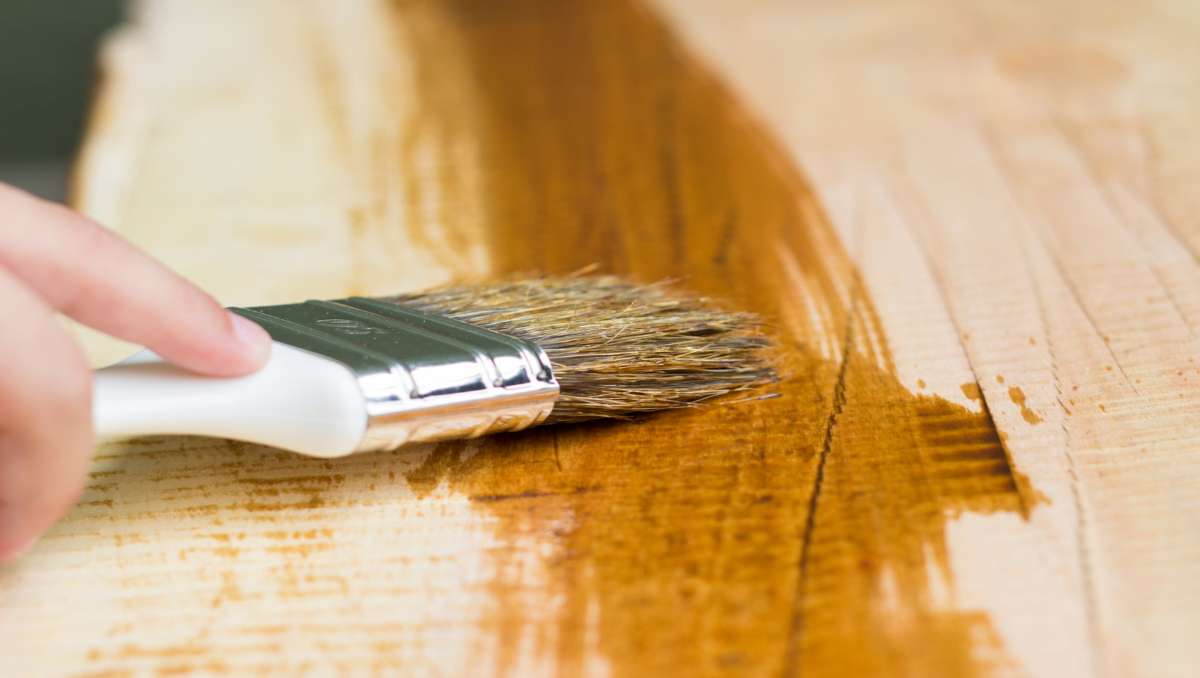
There is a timeless beauty to wood furniture. Its grain, texture, and warmth add a touch of nature and sophistication to any home. To maintain its beauty and ensure its longevity, proper care is essential. While many commercial products promise to restore and protect, nothing compares to the benefits of best natural oil for wood furniture. These oils have been used for centuries to nourish, protect, and enhance the inherent beauty of wood.
Key Takeaways:
- The best natural oils for wood furniture are linseed oil, tung oil, and walnut oil, as they penetrate deeply, nourish the wood, and add a protective finish.
- Choosing the right oil depends on your wood type, how the furniture is used, and your maintenance preferences.
In this article, we will explore the best natural oils for wood furniture, the unique properties of each, and why this age-old practice of oiling wood is more relevant today than ever.
What Are Natural Oils and Why They Matter in Wood Furniture
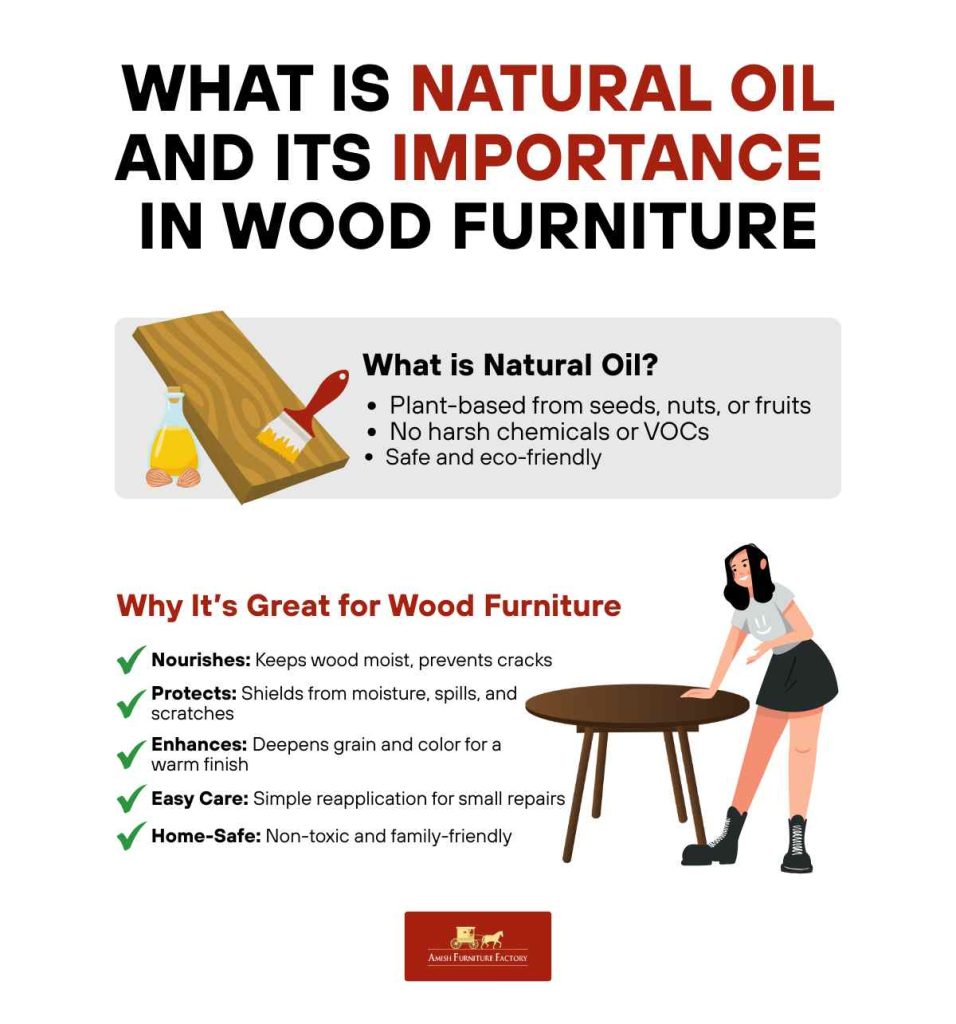
Natural oils are plant-based substances extracted from seeds, nuts, or fruits that work by penetrating deep into the wood grain. This deep absorption nourishes the fibers from within, supporting the wood’s natural structure rather than just coating the surface. In furniture, this matters because wood remains dynamic even after it’s cut and shaped; it still responds to humidity, sunlight, and temperature changes. By feeding the wood and helping it resist drying or splitting, natural oils provide lasting care and a gentle, low-sheen protection that preserves its beauty and integrity.
Justin Hossle, the owner of Relic Modern, emphasizes the repairability of this approach:
“One of the greatest things about natural oils and waxes is that if damage does occur, that specific area can be sanded and refinished to look like new, instead of having to re-finish the entire furniture piece, like most chemical varnishes require.”
Best Natural Oils for Wood Furniture
When it comes to keeping wood furniture looking its best, the right oil can make all the difference. The best natural options not only protect the surface but also nourish the wood from within for lasting beauty and strength.
Tung Oil
Tung oil is often considered the gold standard for wood furniture finish. Derived from the seeds of the tung tree, it penetrates deeply and cures to form a hard, water-resistant finish that holds up beautifully over time. Unlike some oils that remain tacky or need constant reapplication, tung oil dries to a flexible, protective layer that doesn’t yellow or crack.
Noah Redwood from Modern Loft perfectly captures the appeal of this finish:
“Tung oil is the secret sauce for furniture that looks amazing and lasts forever. There’s something deeply satisfying about seeing the grain come alive under a soft, amber sheen. Tung oil penetrates deep into the fibers, bringing out every swirl and variation, like giving your furniture a restorative soak that rewards you with richer color and texture.”
Pros: Excellent water resistance, durable, non-toxic, and food-safe when pure. Cures to a hard finish that doesn’t yellow over time.
Cons: Slower drying time, can be expensive. It’s important to use 100% pure tung oil versus “tung oil finish,” which is often a blend with varnish.
Linseed Oil
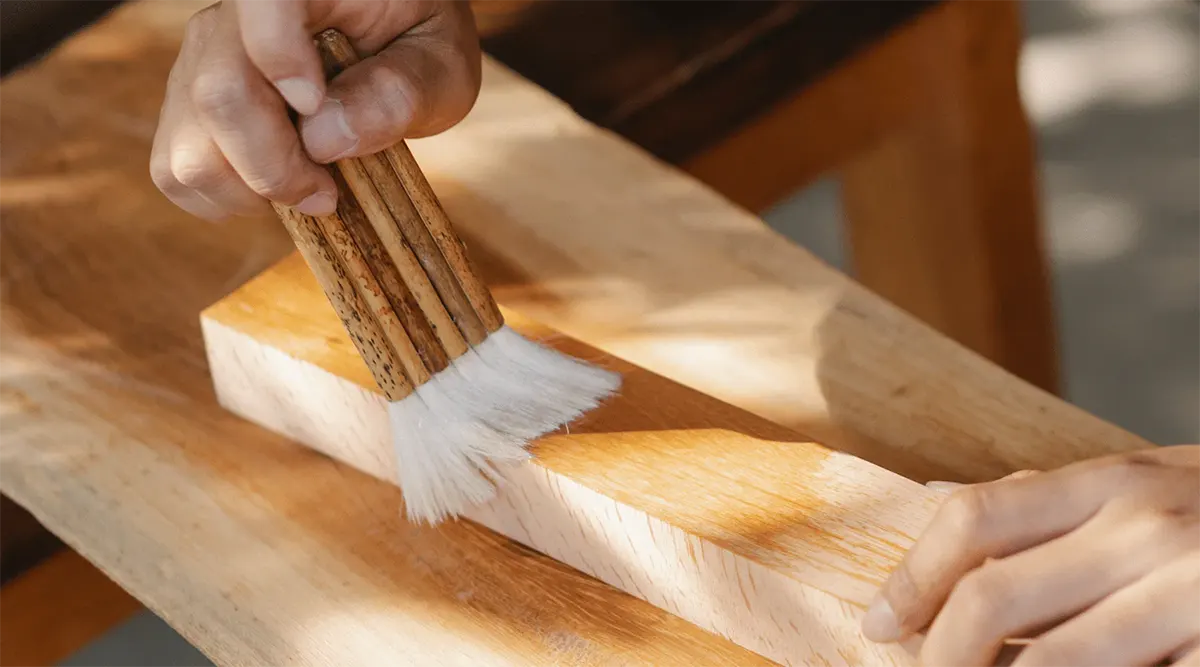
Linseed oil has been a staple in wood finishing for centuries, especially the boiled version, which dries faster and is more user-friendly than raw linseed oil. It’s made from flax seeds and offers a warm, amber glow that can make wood furniture look richer and more dimensional. While it doesn’t form as hard a finish as tung oil, linseed oil deeply conditions the wood, helping prevent cracking and drying. It’s especially well-suited for older pieces or dry wood.
Pros: Deep penetration, cost-effective, readily available, and a classic warm finish.
Cons: Can have a very long curing time, susceptible to mildew growth if not properly applied, and may yellow over time.
Walnut Oil
Walnut oil is a lesser-known but highly effective option, especially when food safety is a concern. Extracted from pressed walnuts, this oil is non-toxic and dries to a soft, satin finish, making it ideal for wooden bowls, cutting boards, and kitchen furniture. It penetrates deeply, much like linseed and tung oils, but with a slightly slower drying time. One of walnut oil’s unique benefits is that it doesn’t go rancid the way some other plant-based oils might when exposed to air over time.
Pros: 100% food-safe, non-toxic, and easy to apply.
Cons: Not suitable for those with nut allergies, can go rancid if not cured properly, and offers less protection than tung or polymerized linseed oil.
Danish Oil & Teak Oil
Danish oil and teak oil aren’t pure natural oils in the strictest sense. They’re blends, usually containing tung or linseed oil mixed with solvents or varnishes to improve drying time and durability. But they deserve mention because they combine the best of both worlds. Danish oil is a popular choice for interior wood furniture. Teak oil is tailored to resist weathering and water exposure, making it perfect for outdoor furniture.
Pros: Faster drying, easier application, and enhanced protection due to the inclusion of varnish and other additives.
Cons: Not 100% natural. Must check the label for ingredients to ensure they align with health and environmental values. These are “wiping varnishes” rather than pure oils.
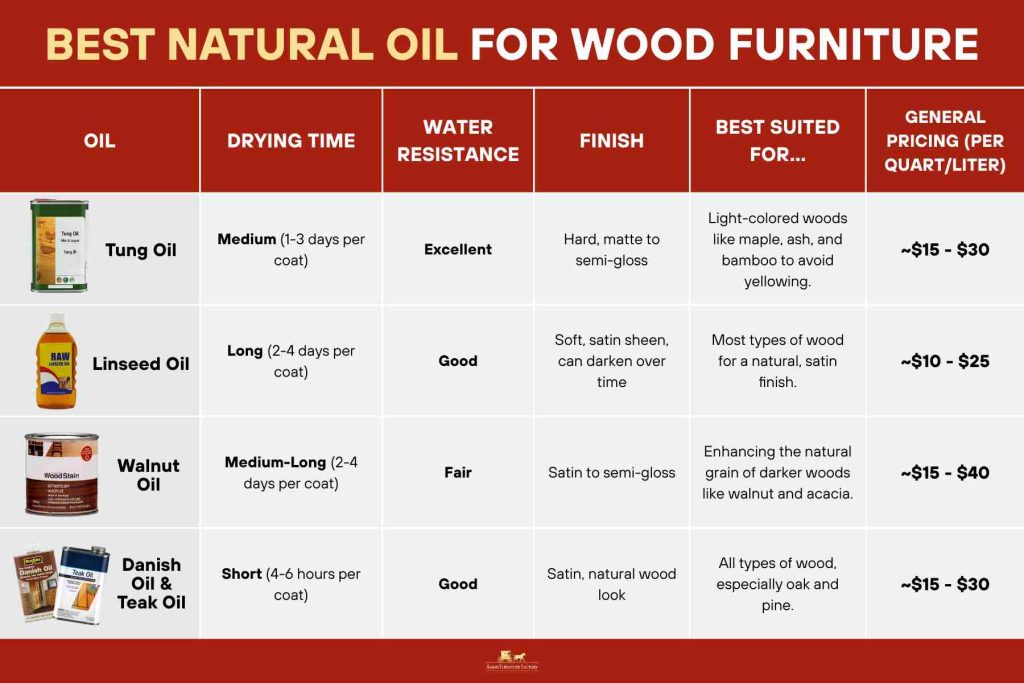
Disclaimer: Pricing is a general estimate and can vary significantly based on brand, volume, and location. Many “oils” are actually blends of different oils, varnishes, and solvents.
How to Choose the Right Oil for Your Furniture
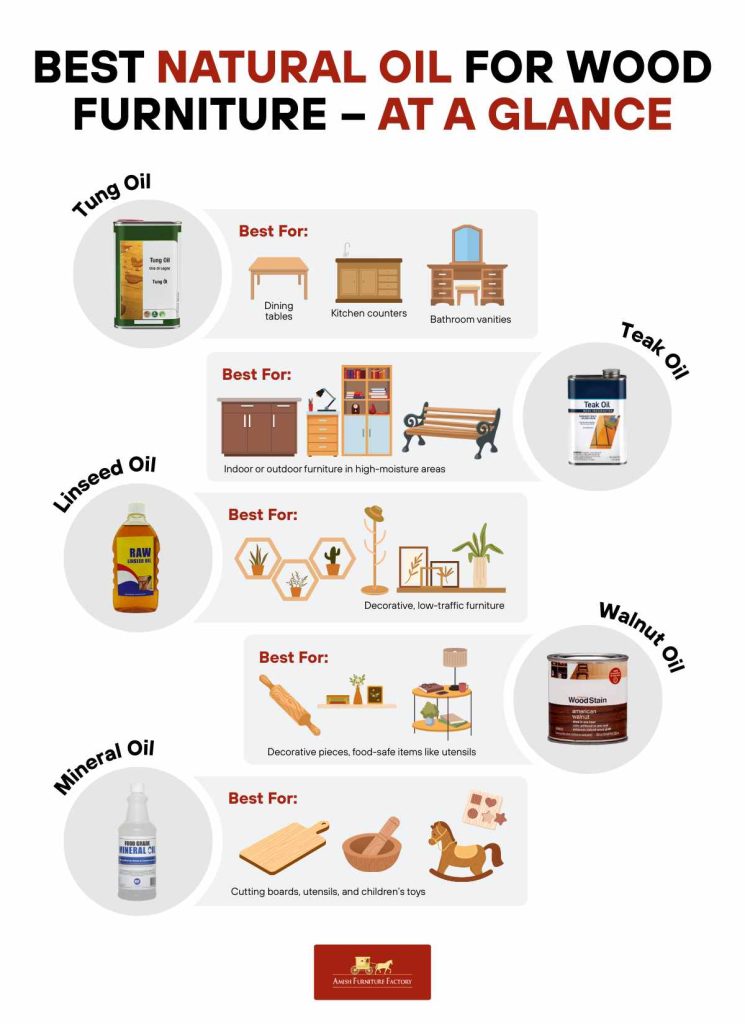
Choosing the right oil starts with understanding the type of wood you’re working with and how the furniture is used. For pieces that see a lot of handling or moisture like dining tables, kitchen counters, or bathroom vanities, tung oil or blended options like teak oil offer superior durability and water resistance. If the item is decorative or lives in a low-traffic area, linseed or walnut oil might be more than enough to enhance its natural beauty without overbuilding the finish. Food-safe options like walnut or mineral oil are best for utensils, cutting boards, or children’s toys. Each oil has its strengths, so matching those to your furniture’s function is key.
You’ll also want to consider how much time and effort you’re willing to put into the maintenance. Some oils, like raw linseed or walnut oil, require more frequent reapplication and longer drying times. Others, such as Danish or teak oil, offer a faster, more durable finish but may contain solvents if purity is a concern. The good news? Most natural oils are forgiving. You can layer them, refresh them seasonally, and build up protection over time.
How to Apply and Care for Oiled Wood Furniture
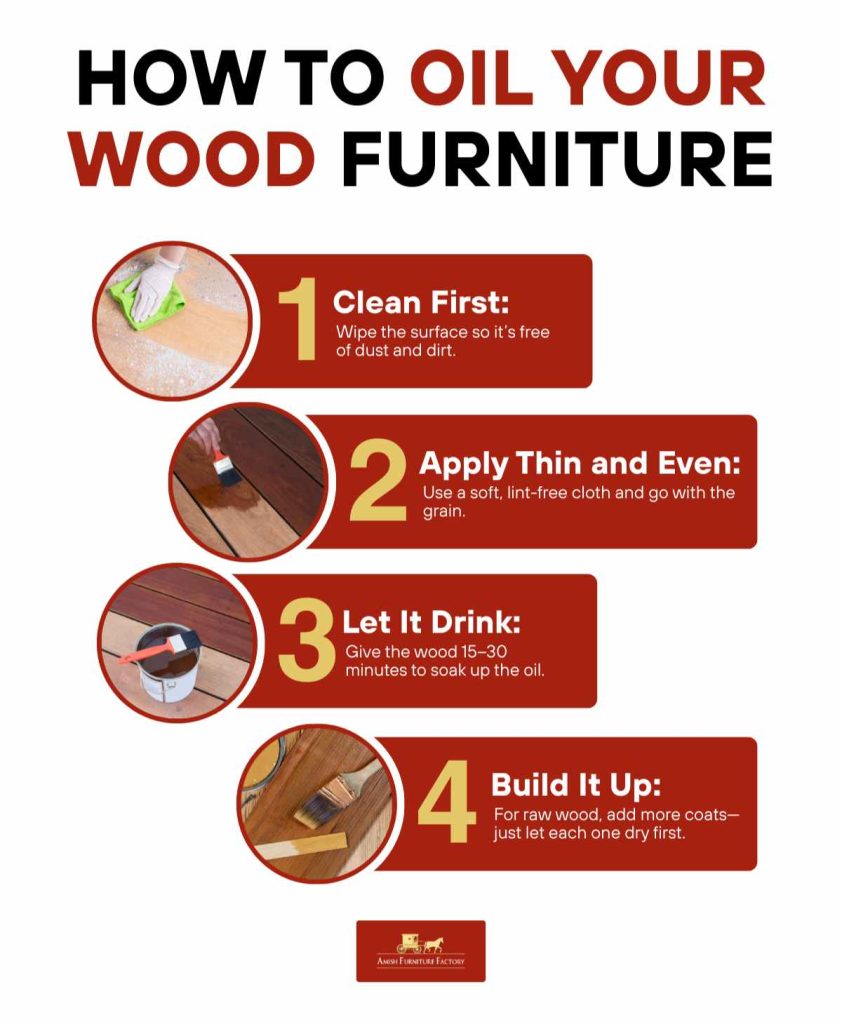
Applying natural oil or refinishing furniture is straightforward, but the right technique makes all the difference.
- Start with a clean surface, and use a lint-free cloth to apply the oil in thin, even layers, working with the wood grain.
- Let it soak in for 15 to 30 minutes, then wipe off any excess to prevent a sticky residue.
- For new or raw natural wood for furniture, you may need multiple coats, allowing for proper drying time between each application.
- For ongoing care, reapply the oil every few months or whenever the wood begins to look dry.
- Avoid harsh cleaners or overly wet cloths; a soft, damp cloth for spills and regular dusting is all you need.
In his own practice, Justin Hossle combines different oils for the best results:
“A combination of Pure Tung Oil and Boiled Linseed oil is my preferred treatment, cut with a thinner like citrus or pine solvent. These two oils provide durability, water resistance, and bring out the natural colors of the woods, giving the finished product a soft, satin sheen.”
Ready to bring the timeless beauty of Amish Mission furniture into your home? Discover the best natural oils to protect and enhance its rich, solid wood today.
Wrapping It Up: Choosing the Best Natural Oil for Wood Furniture
The beauty of natural oil finishes lies in their simplicity. They don’t just sit on the surface; they become part of the wood, enhancing its natural grain, protecting it from the inside out, and giving it a lived-in warmth that synthetic finishes often miss. In the end, choosing and using natural oils is about your furniture, your materials, and your space. These finishes invite you to slow down, get your hands a little dirty, and be part of the care process. And that’s a big part of what makes wood furniture feel so timeless in the first place.
Frequently Asked Questions
What oil penetrates wood best?
Tung oil and raw linseed oil are among the best when it comes to deep penetration. Tung oil, in particular, hardens as it cures, forming a durable layer inside the wood fibers while still allowing the surface to breathe.
What is the most natural finish for wood?
The most natural finish is one made from 100% plant-based oils without added solvents — raw linseed oil, tung oil, and walnut oil are excellent examples. These oils condition the wood without sealing it in synthetic coatings.
Can I use coconut oil on my wood furniture?
Technically, yes, but with caution. While coconut oil can temporarily enhance the wood’s sheen, it doesn’t cure or harden like tung or linseed oil, meaning it may go rancid or attract dust over time. It’s better for short-term touch-ups or very light-duty pieces.
How often should I re‑oil my wooden table to maintain protection?
Generally, every 3 to 6 months is ideal for high-use furniture like dining tables. If the surface starts to look dry or dull, that’s a good sign it’s time for another coat. Lower-traffic pieces may only need annual maintenance.
Can I mix different natural oils for better results?
In some cases, yes. But it’s best done with care. Mixing oils like tung and linseed can work, especially when blended with proper ratios and drying agents (as seen in Danish oil). However, combining oils on your own without knowing their curing properties could result in uneven finishes or tackiness. When in doubt, test on a scrap piece first.