

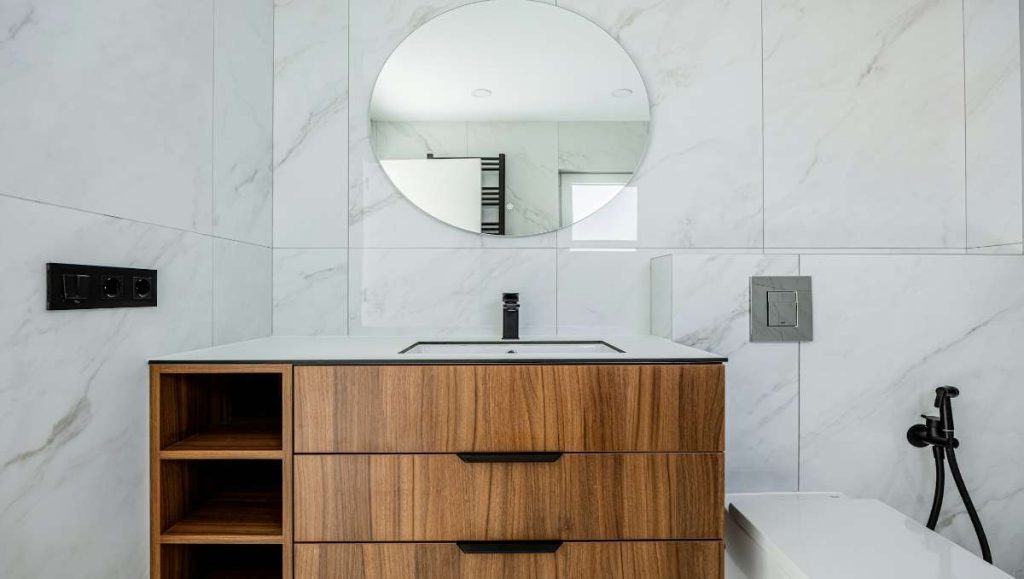
In compact bathrooms, every inch has to work harder. One cabinet that’s mounted a few inches too high or too low can throw off the entire space, making a tight bathroom feel even more cramped and awkward to use. That’s why bathroom cabinet height isn’t just a technical detail; it’s a practical design choice that affects comfort, accessibility, and how functional your bathroom feels day to day.
Key Takeaways:
- Standard bathroom cabinet heights typically range 30–34 inches.
- For small bathrooms, 30–32 inches is ideal in most cases.
- Floating or carefully proportioned cabinets can maximize space, improve accessibility, and maintain visual balance.
This guide breaks down what ideal height really means when space is limited so you can choose a cabinet that feels intentional, balanced, and tailored to how small bathrooms actually get used.
Why Bathroom Cabinet Height Matters
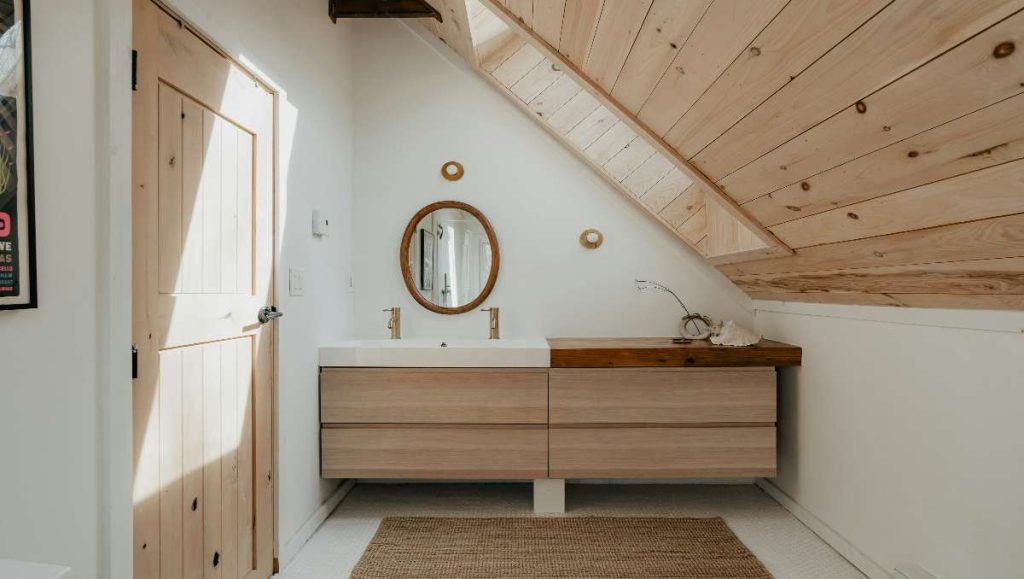
When you’re designing a small bathroom, cabinet height influences both comfort and everyday usability. A cabinet that’s mounted too high or low forces you to reach and stretch, straining your shoulders and neck. Height also affects how the bathroom looks and functions as a whole. A cabinet placed even a few inches too high or low can throw off visual balance, disrupt sightlines, and make the room feel unintentionally awkward.
From a standards perspective, traditional vanity cabinets sit around 30–32 inches, which works for many but may feel low for taller users. ADA standards provide a more universally comfortable benchmark, recommending a maximum surface height of 34 inches, along with 27 inches of knee clearance, 30 inches of width, and 19 inches of depth for easier forward access. Even if your bathroom design isn’t ADA-specific, these measurements help ensure your cabinet height supports comfort, accessibility, and better ergonomics in small spaces.
The Ideal Bathroom Cabinet Height for Small Bathrooms
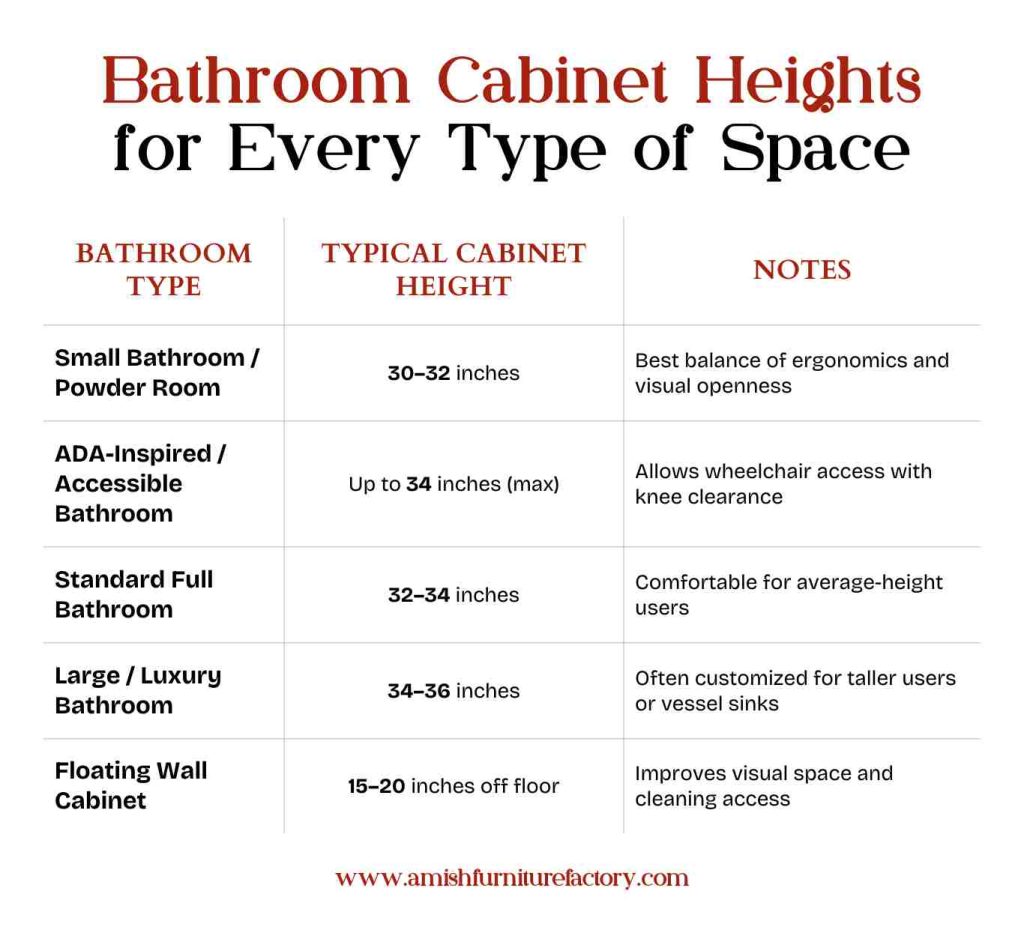
So, what is the ideal bathroom cabinet height for small bathroom spaces? In most cases, the ideal bathroom cabinet height for small bathrooms is 30–32 inches from the finished floor. This height keeps the vanity comfortable to use, visually lighter, and well-proportioned for compact layouts.
That said, “ideal” isn’t one-size-fits-all. Small bathrooms benefit from cabinet heights that balance function and proportion rather than sheer capacity. Slightly lower cabinets can make ceilings feel taller and improve sightlines, while wall-mounted or floating cabinets often sit higher (typically 15–20 inches above the floor) to create openness and easier cleaning. The key is choosing a height that supports how the bathroom is actually used.
What to Consider When Choosing Bathroom Cabinet Height
Choosing the right bathroom cabinet height is about matching the cabinet to the people using the space and the way the bathroom is laid out. These core considerations help narrow down what actually works:
User Height and Household Needs
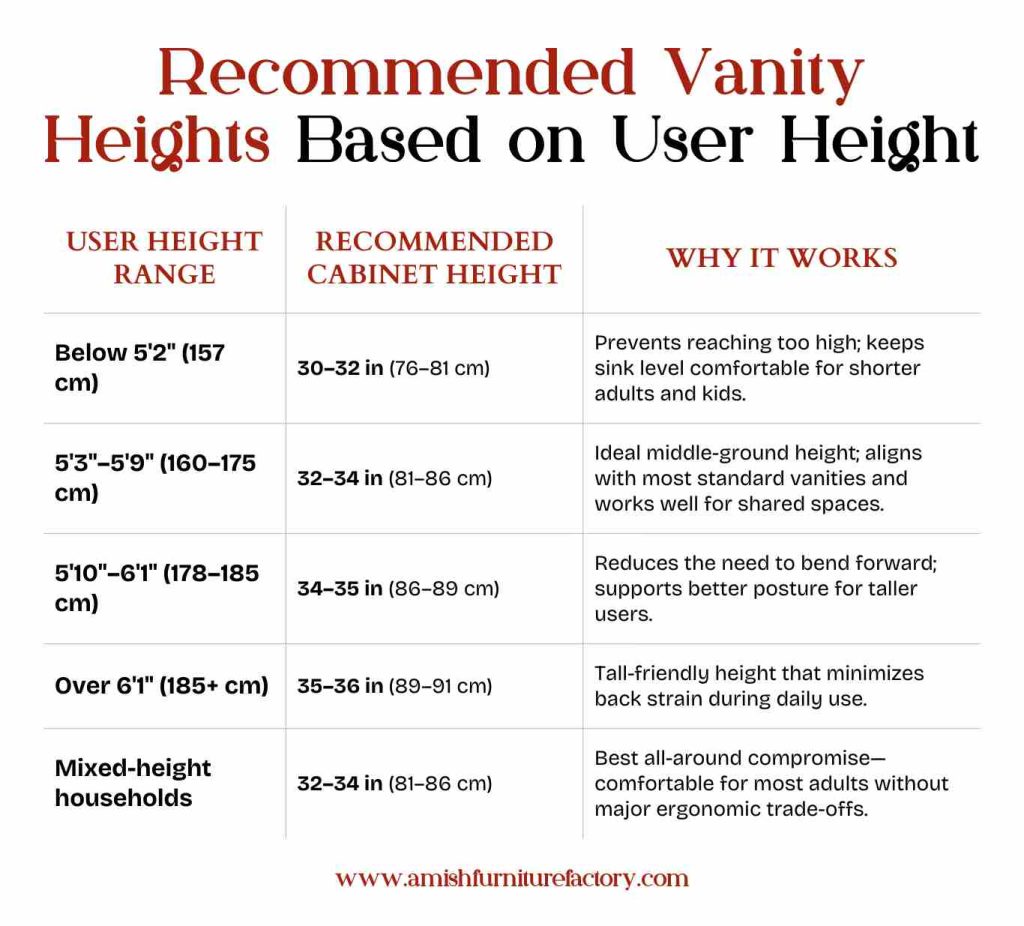
The height of the people using the bathroom should always come first. A cabinet that feels perfect for one person can be uncomfortable for another. In small bathrooms, aiming for a middle ground helps accommodate everyone without sacrificing comfort.
The table below provides a practical guide to help you choose a height that works comfortably for everyone.
Bathroom Layout and Fixture Placement
Cabinet height must work in harmony with surrounding fixtures like toilets, mirrors, and lighting. Aim for at least 4–6 inches of comfortable clearance between the top of the vanity and the bottom edge of the mirror. For lighting, keep vanity lights 75–80 inches from the floor or about 30–36 inches above the vanity height for balanced illumination without casting shadows. Cabinet height should be planned alongside fixture placement to maintain smooth sightlines.
Visual Weight and Proportion
In compact spaces, visual balance matters just as much as function. Proportion is key: the cabinet height should relate naturally to wall height, vanity width, and ceiling clearance. When these elements are in sync, even a small bathroom can feel intentional rather than cramped.
Floating vs. Floor-Mounted Cabinets
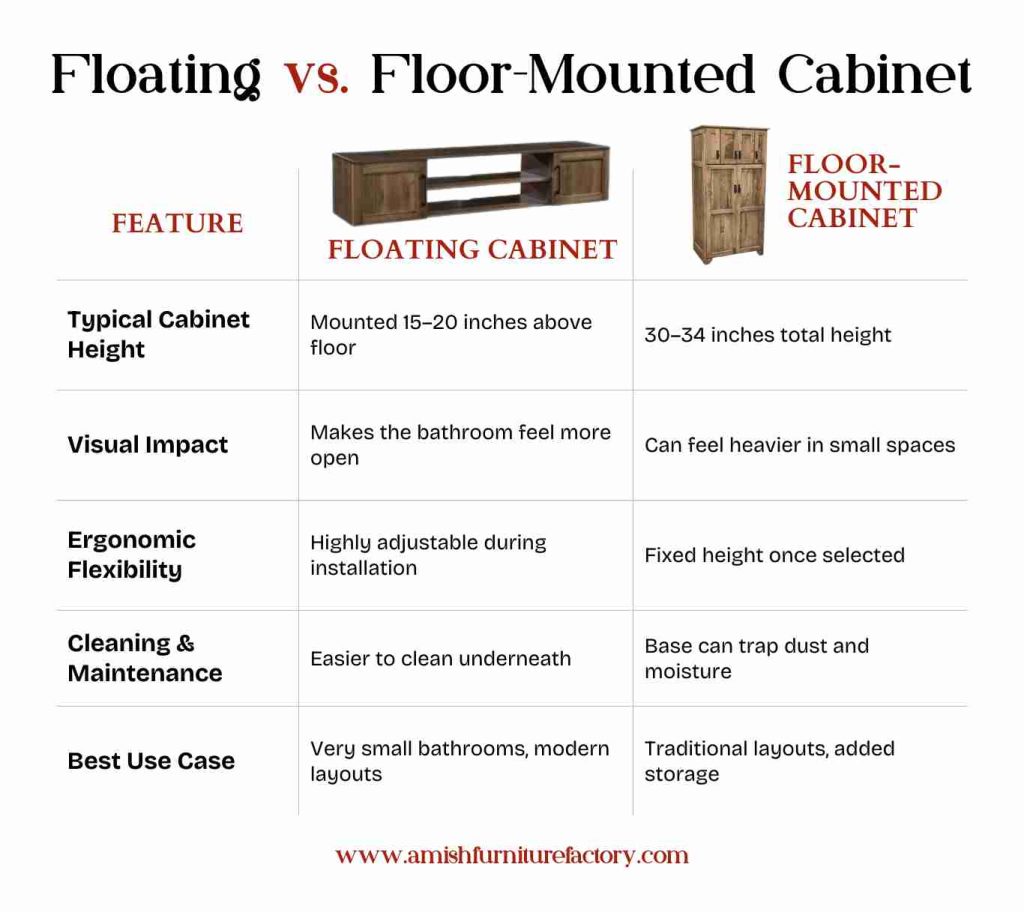
In small bathrooms, the choice between floating and floor-mounted cabinets has a noticeable impact on how open the space feels. Floating cabinets are mounted off the floor, which visually lightens the room and makes it feel larger than it actually is. Floor-mounted cabinets, on the other hand, prioritize stability and storage. They sit directly on the floor, which can make a small bathroom feel more grounded but also slightly heavier visually if the cabinet is bulky.
Here’s a side-by-side comparison:
Small Space Strategies for Bathroom Cabinet Height
When space is limited, smart height choices can make a small bathroom feel more open, functional, and less cluttered.
1. Utilize Floating Cabinets to Increase Visual Space
Floating cabinets are one of the most effective tools for small bathrooms because they lift storage off the floor and instantly create a sense of openness. By mounting the cabinet higher, you expose more floor area, which tricks the eye into perceiving a larger room.
2. Use Vertical Space Without Overwhelming the Room
Vertical storage can be a lifesaver in small bathrooms, but it needs to be handled carefully. Tall or upper cabinets should extend upward in a way that feels intentional rather than bulky, stopping short of the ceiling or aligning cleanly with mirrors and lighting.
3. Combine Cabinets With Open Shelving
Pairing closed cabinets with open shelving creates balance in tight spaces. Lower or mid-height cabinets can hide clutter, while open shelves above or beside them keep the room feeling light and accessible. This approach allows you to reduce overall cabinet height while still meeting storage needs.
If you’re looking for a custom fit that combines timeless durability with perfect proportions, explore our handcrafted Amish cabinets to elevate your bathroom’s design.
How to Choose the Right Cabinet Height for Your Small Bathroom
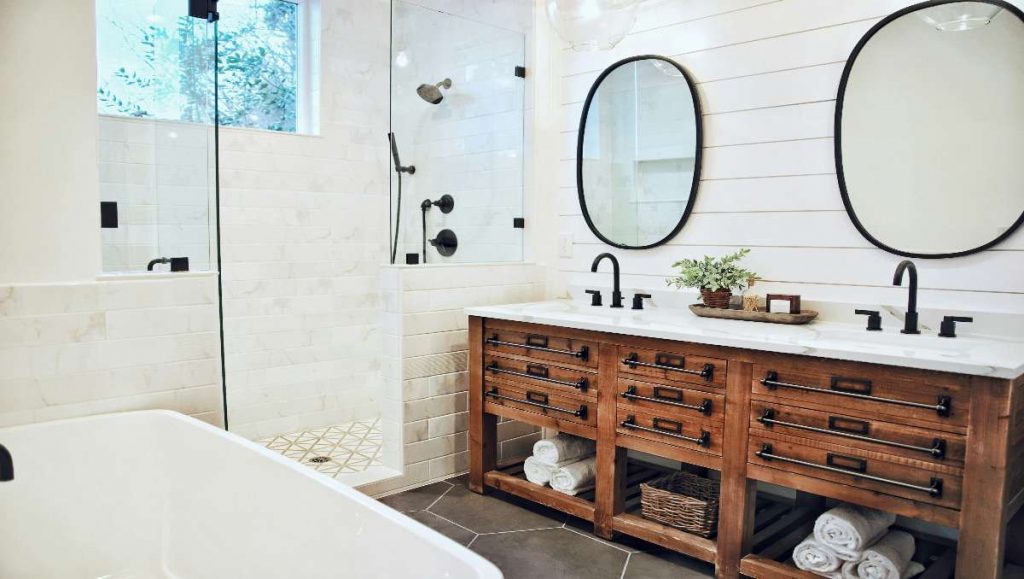
This step-by-step approach helps you land on a height that fits both the space and the people using it.
Step 1: Measure the Room, Not Just the Vanity Area
Start by measuring the entire bathroom, including wall height, ceiling height, door swings, and clear walking paths. In small bathrooms, nearby elements like towel bars, toilets, and mirrors can affect how tall or low a cabinet should sit.
Step 2: Identify the Primary User and Sink Type
The primary user’s height and the type of sink you choose will directly influence cabinet height. Vessel sinks, for example, sit higher than undermount or integrated sinks, which means the base cabinet often needs to be lower to keep the total counter height comfortable.
Step 3: Choose Base Cabinet Height First
The base cabinet sets the foundation for the entire layout, so it should always be selected before wall cabinets or mirrors. In small bathrooms, a base height of around 30–32 inches usually offers the best mix of comfort and proportion.
Step 4: Select Wall Cabinet Height for Visual Balance
Wall cabinets should complement the base cabinet rather than compete with it. In compact spaces, aligning wall cabinets with the top of the mirror or light fixture often creates the cleanest visual flow and keeps the room feeling balanced.
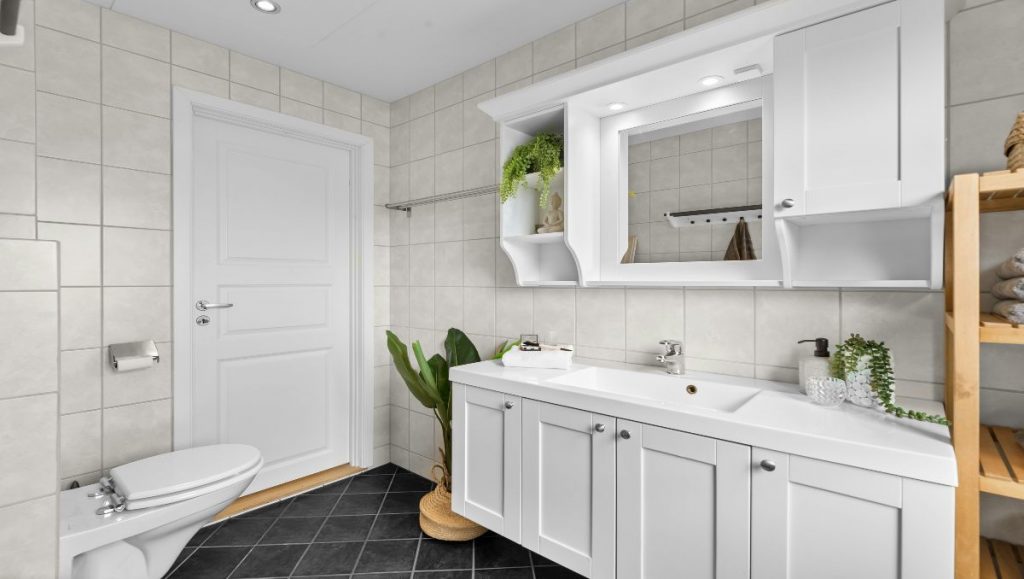
Step 5: Test the Height Before Installation
Before committing, mock it up. Use painter’s tape, cardboard templates, or temporary supports to simulate cabinet height in real space. Standing in front of a mock setup helps reveal issues that measurements alone can’t show, like awkward reach or poor sightlines.
Final Recommendation: What Is the Ideal Bathroom Cabinet Height for Small Spaces?
For most small bathrooms, the ideal bathroom cabinet height sits in the 30 to 32-inch range for base cabinets, with wall or floating cabinets positioned to preserve openness and easy reach rather than maxing out vertical storage. This height strikes the best balance between daily comfort, visual proportion, and efficient use of limited space. It works well for the majority of users, aligns cleanly with standard sinks and mirrors, and avoids making a compact bathroom feel boxed in.
But ultimately, the right height is the one that fits your space and how it’s used. If the bathroom serves multiple users, incorporates vessel sinks, or needs to feel as open as possible, adjusting slightly lower or choosing floating cabinets can make a noticeable difference. In small bathrooms, thoughtful placement beats rigid standards.
Frequently Asked Questions
What vanity height is best for small bathrooms?
For small bathrooms, a vanity height of 30–32 inches is typically the most comfortable for everyday use. This range balances ergonomics, visual proportion, and accessibility.
What size cabinet is best for small bathrooms?
A cabinet that is narrower and shallower, generally 18–24 inches deep and sized to fit the width of your vanity area, works best. Smaller dimensions prevent the room from feeling cramped while still providing enough storage for essentials.
How high should a bathroom cabinet be?
Standard base cabinets should sit around 30–32 inches from the finished floor, while wall-mounted or floating cabinets can vary, often mounted 15–20 inches above the floor to maximize openness and cleaning access.
What is the comfort height for bathroom vanities?
Comfort height vanities typically measure 34–36 inches from the finished floor. This height is similar to kitchen counters and is designed to reduce bending, making everyday tasks like washing hands or brushing teeth easier for most adults.
Is 36 inches too high for a small bathroom vanity?
A 36-inch vanity can be too high for small bathrooms if multiple users share the space or if the room already feels tight. While 36 inches works well for tall individuals, it may feel overpowering in compact layouts and can disrupt sightlines, making the room feel more cramped.