

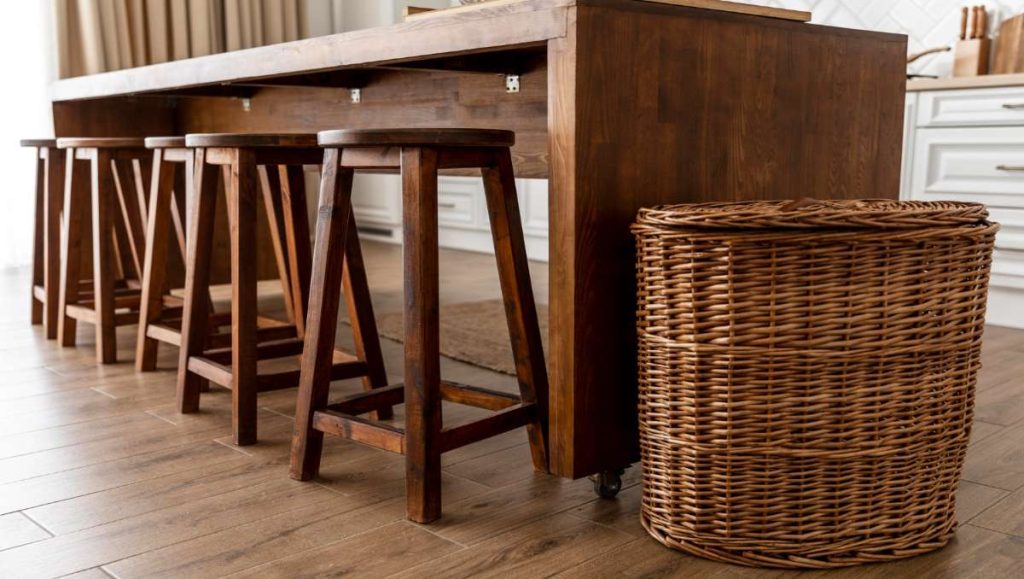
Choosing between bar stools vs counter stools sounds like a small detail until you’re staring at a tape measure in hand wondering why your kitchen island feels off. The truth is, these two types of seating might look similar at a glance, but they serve different purposes, fit different spaces, and impact the way a room feels and functions. Knowing the difference can save you time, money, and a whole lot of visual imbalance.
Key Takeaways:
- The key difference is height—bar stools are taller and meant for bar-height tables, while counter stools are shorter and suited for kitchen counters or islands.
- Counter stools are ideal for standard 36″ counters and everyday use.
- Bar stools suit 42″ surfaces and are better for entertainment areas.
- Choose stool height based on surface height, and leave enough legroom.
In this guide, we’re breaking down the real pros and cons of bar stools vs counter stools in terms of height, how they work for different rooms, lifestyles, and design goals.
What’s the Difference Between Bar Stools and Counter Stools?
When shopping for seating, it’s easy to confuse bar stools and counter stools, but they’re not the same. Choosing the right one comes down to height and where you plan to use it. Here’s a quick breakdown to help you find the perfect fit for your space.
Height and Size Differences
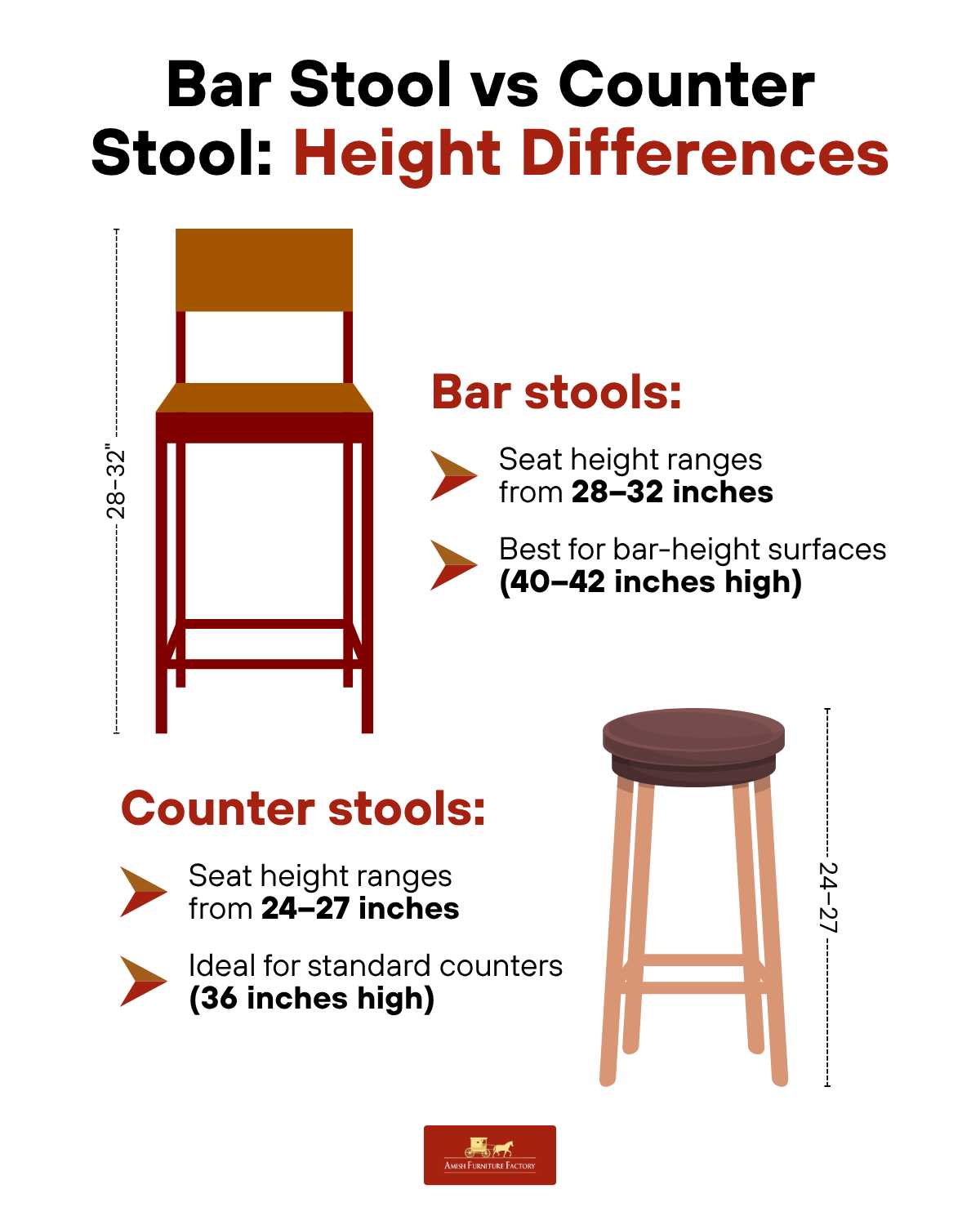
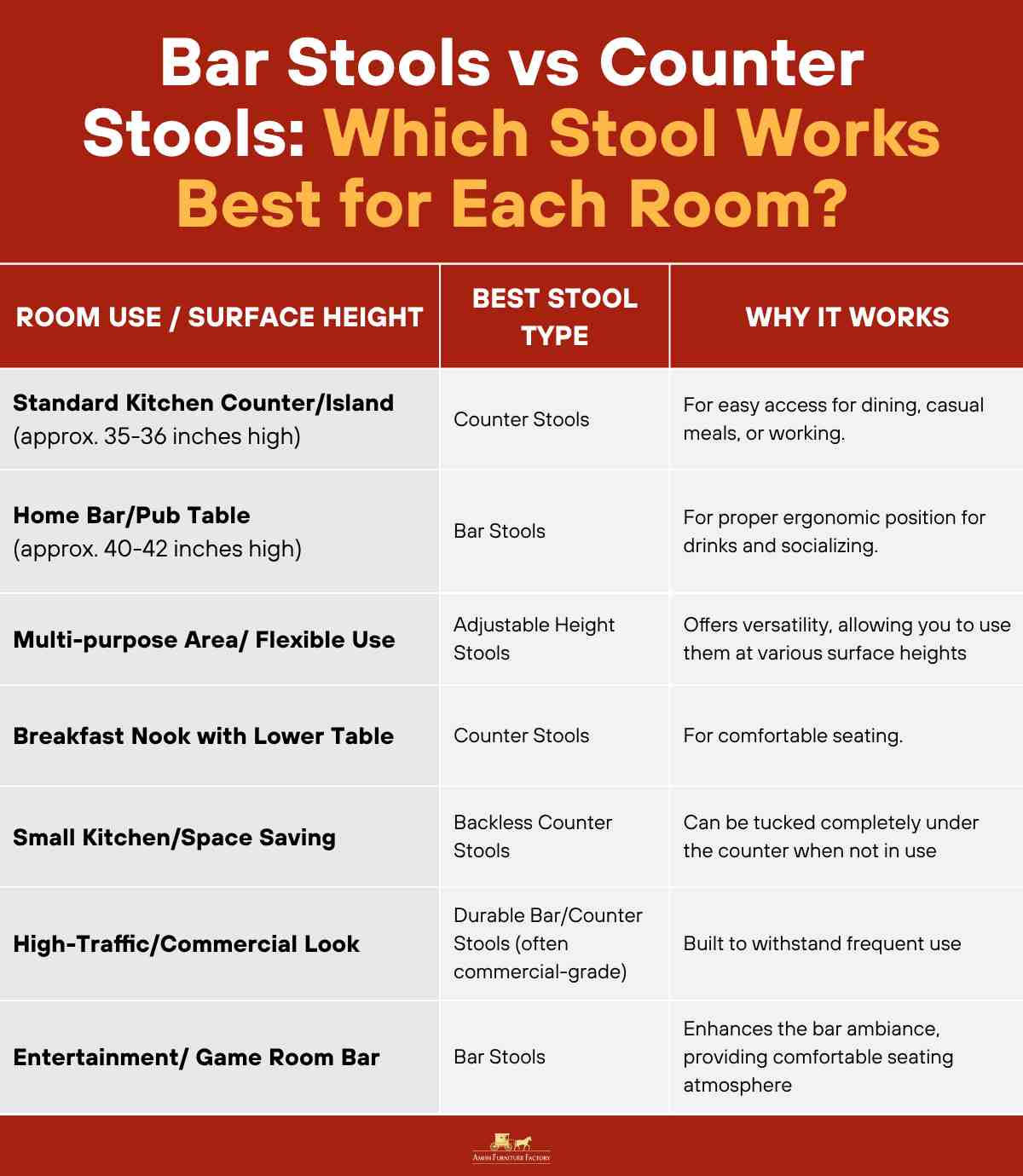
The most defining difference between the two lies in their seat height. Bar stools typically range from 28 to 32 inches in seat height and are meant for surfaces around 40 to 42 inches high. Counter stools, on the other hand, have seat heights between 24 to 27 inches, ideal for standard counters that are 36 inches tall. This few-inch gap of counter vs. bar height might not seem like much, but it can dramatically affect comfort, posture, and how easy it is to slide in and out of the seat. As Stephanie Bertha, Co-Founder of Barstool Comforts, emphasizes:
“Deciding the seat height is the most important part of choosing a bar stool. If you get a bar stool too low, you’ll feel like you’re sitting at a kid’s table. If you get a bar stool too high, you’ll feel scrunched and uncomfortable.”
Design and Ergonomics
Design-wise, counter stools tend to have a more grounded feel and are compact, often with lower backs or no backs at all. Bar stools, due to their height, often come with features like footrests, higher backs, or even armrests to help with stability and comfort. Ergonomically, it’s important to consider who will be using the stools and for how long. A breakfast nook used by kids may call for something low and sturdy, while a home bar used for long evening hangouts might benefit from extra back support.
Common Use Cases by Room Type
Counter stools are most commonly used in kitchens especially at islands or peninsula counters where families gather for meals, quick breakfasts, or homework sessions. Their height fits seamlessly into the standard kitchen layout. Bar stools, in contrast, are better suited for dedicated bar areas, man caves, game rooms, or entertainment zones where the counter height is higher and the seating is more for leisure and less for function.
Bar Stools vs Counter Stools: The Pros and Cons
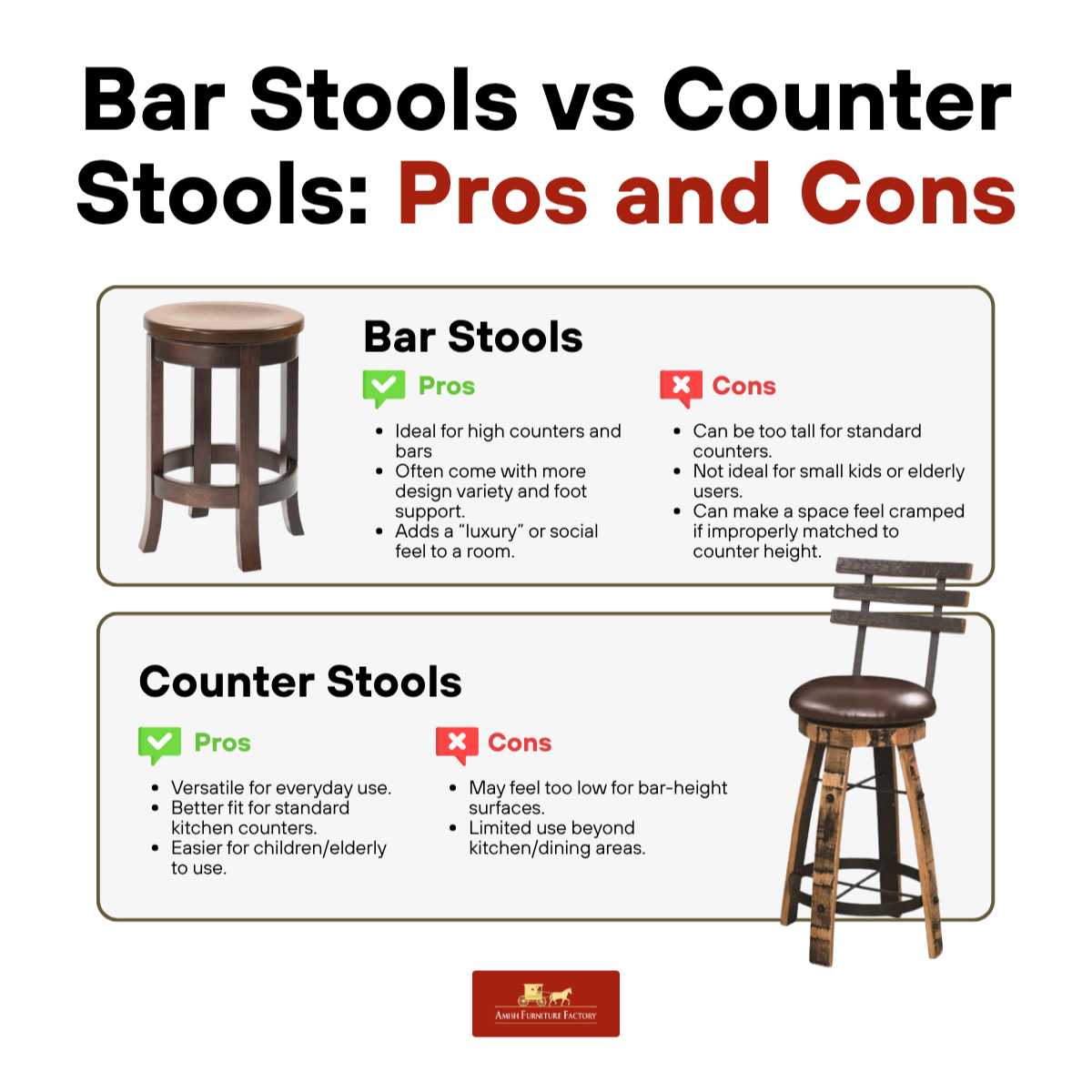
Bar stools are best suited for bar-height tables or home bars, typically around 40–42 inches tall. They offer several advantages: they can help define open-concept spaces, often come with added comfort features like backrests, swivel seats, or armrests, and they make a strong visual statement in a room. However, they also have drawbacks. Their taller height makes them incompatible with standard kitchen counters and less practical for families with young children or older adults. Additionally, bar stools take up more space, are harder to tuck away, and can feel bulky in smaller kitchens.
Counter stools, on the other hand, are designed to fit standard kitchen counters at about 36 inches high. They’re a practical choice for everyday activities like quick meals, homework, or working from a laptop. Their lower profile helps maintain an open, uncluttered look in the kitchen, and they’re generally easier to move and store. They also tend to be more accessible for kids and older adults. The main downside is that counter stools typically offer fewer comfort features and may lack the visual impact or presence that bar stools provide.
Craving the timeless elegance and durability of a solid wood bar stool for your home bar? Upgrade your seating and complete the look you’ve been dreaming of.
Choosing the Right Stool for Your Room Type
Different rooms call for different seating heights, designs, and levels of comfort.
Kitchen Islands and Dining Nooks
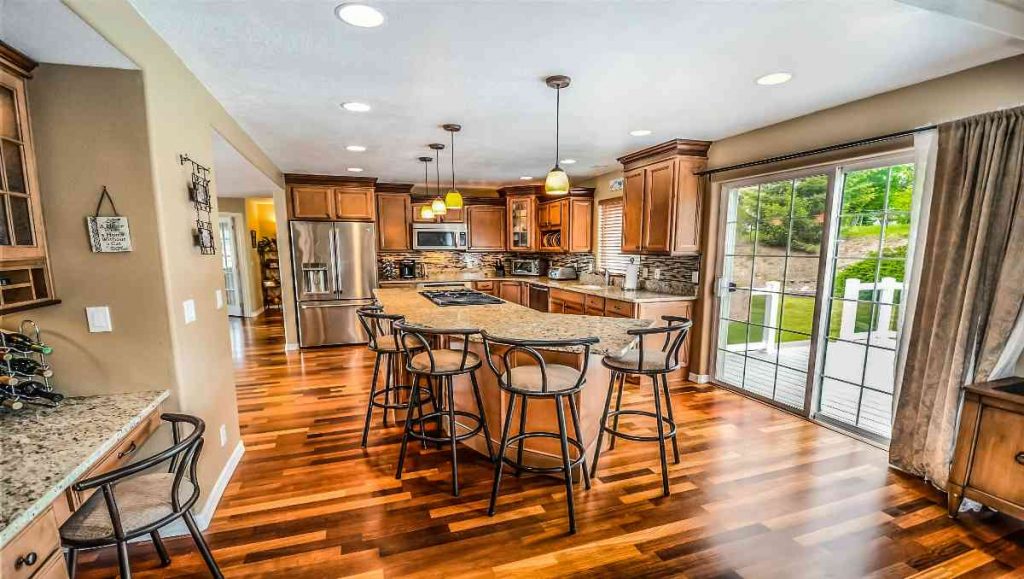
For most kitchens or dining and pubs, especially those with standard 36-inch countertops, counter stools are the better fit. They provide the right height for everyday tasks like eating breakfast, helping with homework, or casually chatting while cooking. Their approachable size makes them easy to move around and tuck under the counter when not in use, keeping foot traffic flowing smoothly in a high-use area. Stephanie also advises:
“If you are about to ask your builder to build you a kitchen island, I recommend telling them to build it at 36″ high so that you can get a 26″ seat height bar stool. This is going to be easier for everyone to get in, including elderly people. This height is a lot easier to slide into than heights that are higher.”
Home Bars and Entertaining Areas
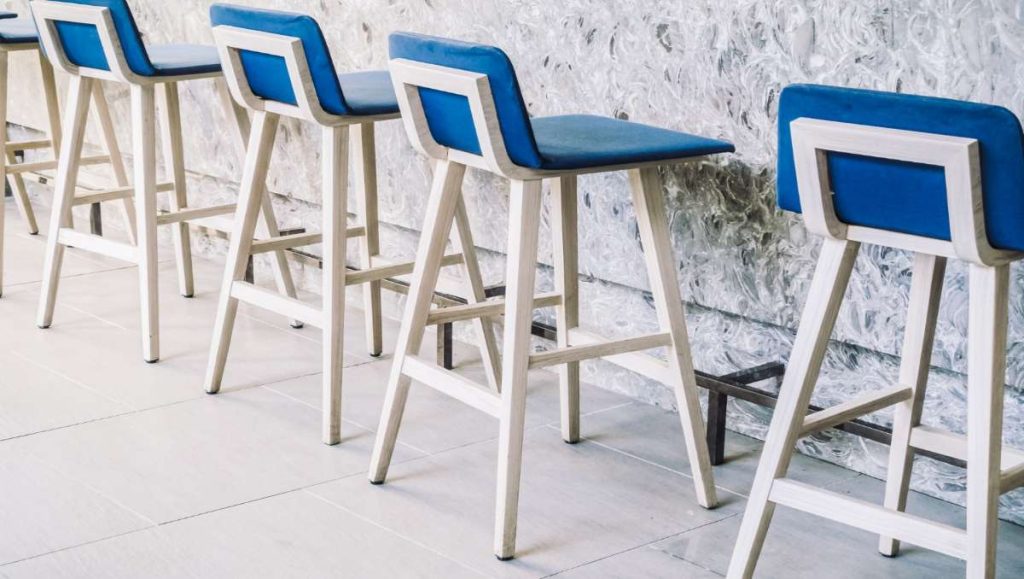
Bar stools shine in dedicated entertaining spaces. Whether you’ve set up a home bar, a basement lounge, or even a pub-style corner in the living room, the extra height helps define the space and gives it a more upscale, lounge-like vibe. Features like padded seats, armrests, and swivels make them comfortable for longer hangouts. For optimal comfort, Stephanie suggests:
“You want between 10-12 inches of space from the top of the seat of the bar stool to the top of your counter. This will give you the optimal amount of leg room to feel comfortable.”
Multi-Use or Small Spaces
If you’re tight on space or using one area for multiple purposes like a studio apartment or a kitchen-dining hybrid, counter stools offer more flexibility. Their lower profile keeps things visually open, and they can easily double as extra seating in other parts of the home. Look for stackable or backless versions to save even more space when they’re not in use.
Adjustable and Hybrid Stool Options
If you’re dealing with a nonstandard counter height, adjustable stools can be a smart fix. Many use gas-lift mechanisms to raise or lower the seat, making them flexible for guests of all ages or switching between sitting and standing. Hybrid stools—typically 26–30 inches tall—often include footrests and wider seats for added comfort. While not ideal for every space, they offer a stylish and versatile option for unique layouts. Stephanie also notes:
“Any counter height beyond 42″ and you should be shopping for a spectator height bar stool. For example, if your counter is 50″, we recommend you go with a 34″ or up to a 37″ seat height. A lot of builders are making kitchen island counters this high.”
Need more than just seating? Complete your space with handcrafted Amish Basket that combine function with timeless style.
How to Measure for the Perfect Fit
To make sure your stools look right and feel comfortable, follow these measuring tips:
1. Measure surface height first:
- Standard counter = ~36″ → Choose 24–27″ counter stools
- Bar-height surface = ~42″ → Choose 28–32″ bar stools
2. Leave 9–12 inches of legroom between the top of the seat and the underside of the counter.
3. Space stools at least 6 inches apart (or 8–10 inches if they have arms or wide seats) for comfort and ease of movement.
4. Consider overhang depth: For countertops with a short overhang (less than 8″), choose backless stools to avoid bumping into backs.
5. Test before buying, if possible: Sit down and check posture, foot placement, and ease of sliding in and out.
Final Verdict: Which One Should You Choose?
It all comes down to matching the stool to your space. If you have a standard-height kitchen counter (around 36″), counter stools are the clear winner. If you’re furnishing a taller surface (around 42″) or setting up a dedicated bar or entertainment area, bar stools are the better fit, both in form and function. But beyond height, think about how the stools will actually live in your home. When you choose based on how you use the space, you’ll end up with seating that actually works for your lifestyle.
Frequently Asked Questions
Are bar stools suitable for families with children?
Not usually. Their height can make them tricky (and a bit unsafe) for small kids to climb in and out of. Counter stools are more family-friendly due to their lower height and better stability.
Can I use bar stools for a counter-height island?
No. Bar stools are too tall for standard counters and will feel awkward. You’ll end up sitting too high with not enough legroom. Always match stool height to surface height.
What materials are easiest to clean and maintain for kitchen stools?
Metal, treated wood, and faux leather are the easiest to wipe down and maintain, especially in kitchens where spills happen. Upholstered options look great but require more care.
How many bar stools or counter stools do I need for my island/bar?
A good rule is to allow 6–10 inches of space between each stool, depending on size and whether they have arms. Most 6-foot islands can comfortably fit 3 counter stools.
Are backless stools comfortable for long periods of sitting?
Not really. Backless stools are fine for quick meals or short tasks, but for long hangouts or dinner parties, stools with backs (and even armrests) are a better bet for comfort.
Your info was very helpful in my design for the bar stools I am looking for, but haven’t found. Thx